How to Fish for Chinook Salmon in South Dakota
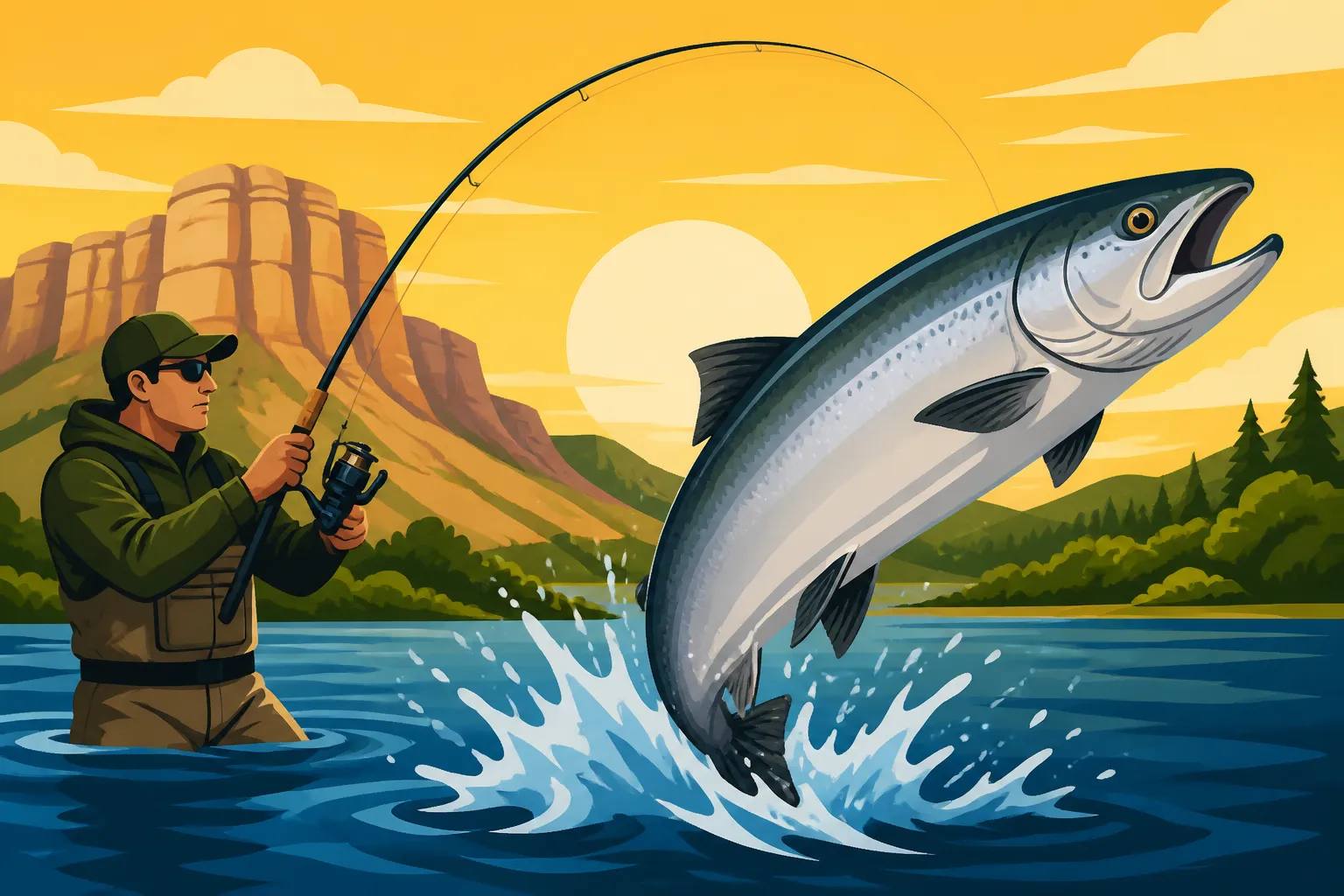
Many anglers dream of battling a powerful, ocean-going salmon, but assume it's an experience limited to coastal states. However, the unique inland fishery of South Dakota offers a thrilling opportunity to pursue Chinook salmon, primarily in the vast waters of Lake Oahe. This comprehensive guide will demystify Chinook salmon fishing in South Dakota, covering everything from understanding their habits to mastering the techniques and gear needed to successfully target these elusive and hard-fighting fish.
Understanding South Dakota's Chinook Salmon Fishery
It's natural to wonder how Chinook salmon, a species typically associated with the Pacific Ocean, ended up thriving in the heart of South Dakota. The story is a fascinating testament to fisheries management and the adaptability of these incredible fish. Unlike their anadromous ocean cousins that migrate between fresh and saltwater, the Chinook in Lake Oahe are part of a landlocked population, sustained through dedicated stocking programs by the South Dakota Game, Fish and Parks (GFP). This creates a unique angling experience, distinct from coastal salmon fishing, yet every bit as challenging and rewarding.
The Unique Lake Oahe Ecosystem
Lake Oahe, a massive reservoir on the Missouri River, stretches over 230 miles through central South Dakota and into North Dakota. It's an incredibly deep and cold-water fishery, providing the perfect environment for Chinook salmon to grow large and strong. This reservoir was formed by the Oahe Dam, creating a vast, deep lake that mimics the conditions salmon need to thrive. The sheer size and depth of Lake Oahe mean that salmon have ample room to roam, find cool water, and feed on abundant forage. The lake's deep channels, expansive main basin, and numerous bays offer diverse habitats that change with the seasons, influencing where the salmon will be found.
Crucially, Lake Oahe supports a robust population of rainbow smelt, which are the primary forage fish for Chinook salmon. Without these tiny, fatty baitfish, the salmon wouldn't have the rich diet needed to reach impressive sizes. The health of the smelt population directly impacts the growth rates and overall condition of the salmon. Anglers often focus on areas where smelt schools are concentrated, knowing that the salmon will follow their food source. Understanding the thermal structure of the lake, particularly the thermocline (the layer where water temperature changes rapidly), is also vital, as salmon tend to reside in the cooler waters below it, especially during the warmer summer months.
Stocking Programs and Population Health
The existence of a Chinook salmon fishery in South Dakota is entirely due to the diligent efforts of the South Dakota GFP. Since the late 1970s, the GFP has been stocking Lake Oahe with Chinook salmon fingerlings, creating a put-grow-and-take fishery. These stocking efforts are carefully planned to ensure a sustainable population, as the landlocked salmon typically do not reproduce effectively on their own in the reservoir. Millions of young salmon are released each year, primarily sourced from the Whitlock Bay Spawning Station near Gettysburg, which plays a critical role in collecting eggs and milt from adult salmon during their fall spawning run.
The success of these stocking programs is evident in the quality of the fishery, with anglers regularly catching salmon in the 5 to 15-pound range, and occasionally much larger trophy fish. Monitoring the overall health of the salmon population and its forage base is an ongoing process for the GFP. They track factors like South Dakota Chinook Salmon Average Size, growth rates, and disease prevalence to adjust stocking numbers and management strategies. This commitment ensures that Lake Oahe continues to offer a world-class salmon fishing experience for years to come. Anglers interested in the history and science behind this unique fishery can learn more about the South Dakota Chinook Salmon Stocking History.
Life Cycle and Behavior of Lake Oahe Chinook
Understanding the life cycle and behavior of Lake Oahe Chinook salmon is key to consistently catching them. Unlike their wild Pacific counterparts, these landlocked salmon spend their entire lives in the freshwater environment of the reservoir. They are fast-growing fish, reaching maturity relatively quickly, typically within three to five years. Throughout most of their lives, they are highly pelagic, meaning they cruise the open water, often suspending at specific depths in search of rainbow smelt. Their powerful, torpedo-shaped bodies are built for speed and endurance, making them formidable fighters once hooked.
As summer progresses and water temperatures rise, salmon tend to move deeper, seeking out the cooler, oxygen-rich water found below the thermocline. This makes precise depth control a critical factor for summer fishing. In the fall, typically from late September through October, a fascinating transformation occurs as the mature salmon begin their spawning run. They instinctively head towards the areas where they were stocked, primarily Whitlock Bay, to attempt to spawn. During this period, their appearance changes, becoming darker, and the males develop a distinct "kype" or hooked jaw. While natural reproduction is minimal, this fall run creates a unique shore-fishing opportunity as salmon gather in shallower water, offering a different challenge to anglers. This annual event is a prime time to target these fish, and you can learn more about Chinook Salmon Spawning Run Dates on Lake Oahe.
Where to Find Chinook Salmon in South Dakota
When it comes to Chinook salmon fishing in South Dakota, there's really only one game in town: Lake Oahe. This vast impoundment of the Missouri River is the sole location where a thriving, stocked population of these majestic fish exists. Covering hundreds of miles, Lake Oahe presents both incredible opportunity and a significant challenge due to its immense size. Knowing where to focus your efforts within this gigantic body of water is paramount to success. It's not about randomly casting; it's about understanding the specific areas that consistently hold salmon at different times of the year.
Key Areas on Lake Oahe
Lake Oahe can be broadly divided into several key regions, each offering unique characteristics that attract Chinook salmon. The central and northern portions of the lake, particularly around Mobridge and Pierre, are often considered prime salmon territory.
- Whitlock Bay (Near Gettysburg): This area is arguably the most famous and productive for Chinook salmon, especially during the fall spawning run. The Whitlock Bay Spawning Station is located here, and salmon instinctively congregate in the bay and surrounding waters as they prepare to spawn. During late summer and fall, you'll find boats trolling the main lake points and deeper channels leading into the bay. When the salmon move shallow in October, it becomes a hotspot for casting from shore or jigging from a boat. Anglers specifically seeking fall action might want to research Whitlock Bay Salmon Spawning Station Fishing.
- Mobridge Area: Further north, the Mobridge area is renowned for its excellent walleye fishing, but it's also a fantastic place to target salmon. The deep waters of the main lake and the numerous feeder creeks and bays provide ample habitat and forage. Early season and summer trolling often produce good results here, especially in the deeper channels and near underwater structure. The salmon tend to be more spread out here than during the fall run, requiring more extensive trolling patterns.
- Pierre Area (Oahe Dam Tailwaters): Near the state capital, the waters around the Oahe Dam can also hold salmon. While not as consistently productive as Whitlock Bay or Mobridge for salmon specifically, the deep, cold water here is always a possibility. The tailwaters below the dam are more famous for walleye, but stray salmon can be found. Further up the lake, near Pierre, you'll find excellent boat ramps and access points to the main body of Lake Oahe. You can read more about Lake Oahe Fishing Access Near Pierre.
Salmon often relate to deep points, submerged islands, and channels where they can intercept schools of smelt. Looking for temperature breaks and concentrations of baitfish on your electronics will often lead you to salmon in these key areas.
Shore Access vs. Boat Fishing Hotspots
While boat fishing undoubtedly offers the most flexibility and access to the vast expanse of Lake Oahe, there are specific opportunities for shore-bound anglers, particularly during the fall.
- Boat Fishing: For most of the year, from spring through early fall, a boat is essential for effectively fishing Lake Oahe for Chinook salmon. The salmon are typically found suspended in deep water, often miles from shore, making trolling from a properly equipped boat the most effective technique. Boat ramps are plentiful across the lake, including those at Whitlock Bay, Indian Creek Recreation Area, and near Mobridge. A good fishing boat, often a deep-V aluminum or fiberglass model, equipped with downriggers, planer boards, and advanced sonar, is the standard setup. You can find essential boat safety information by checking South Dakota Boat Safety Equipment Requirements. For those without a boat, guided fishing trips are an excellent option to experience this unique fishery.
- Shore Fishing Hotspots (Primarily Fall): The primary time for productive shore fishing for Chinook salmon is during their fall spawning run. As the salmon move into shallower bays and river mouths to attempt to spawn, they become accessible from the bank. Whitlock Bay is the premier location for this, with anglers casting large spoons, spinners, or even jigging from the shoreline. The crowds can be significant during peak times, but the opportunity to catch a trophy salmon from shore is a major draw. Beyond the fall run, shore fishing for Chinook salmon on Lake Oahe is extremely challenging, as the fish spend most of their lives in open, deep water. However, some anglers might find success casting from points near deep water early or late in the season, but it's generally a low-percentage game compared to boat trolling. If you plan to fish from shore during the fall, it's worth checking out How to Catch Chinook Salmon From Shore on Lake Oahe for specific tips and strategies.
Best Time of Year for Chinook Salmon Fishing
Timing is everything when it comes to Chinook salmon fishing on Lake Oahe. Their behavior, depth, and location shift dramatically with the seasons, largely influenced by water temperature and their biological drive to feed and eventually spawn. Knowing what to expect and how to adapt your strategies throughout the year is crucial for consistent success and helps you understand the South Dakota Fishing Seasons Explained.
Spring and Early Summer Strategies
As the ice retreats and Lake Oahe awakens from winter, Chinook salmon begin to become more active. Spring, typically from April through early June, sees salmon transitioning from their deep wintering grounds to more accessible waters.
- Early Spring (Ice Out to Mid-May): Right after ice-out, salmon can be found relatively shallow, often in the top 30 feet of the water column. They are actively feeding after a period of lower metabolism, and the water temperatures are still quite cool throughout the lake. Trolling spoons and crankbaits that mimic rainbow smelt can be very effective. Look for them around major points and submerged structures where baitfish might be congregating. The fish are often scattered, so covering a lot of water with various lures and depths is a good approach. This is also a fantastic time for trophy walleye, but salmon are certainly on the menu for opportunistic anglers.
- Late Spring to Early Summer (Mid-May to June): As the water warms, the thermocline begins to set up, and salmon will start to orient themselves to these thermal breaks. They'll follow schools of smelt into deeper waters but might still make forays into shallower areas during low light conditions. Trolling with downriggers becomes increasingly important to precisely target the depth where fish are holding. Depths of 40-70 feet are common during this time. Focus on the main lake basin, particularly near major points and channels where currents might concentrate bait. This period offers exciting action as salmon are strong and actively feeding, preparing for the heat of summer.
Peak Summer Action
Summer, from July through early September, brings consistent warmth to Lake Oahe, forcing Chinook salmon into their deep-water havens. This is when the fishery truly becomes a test of an angler's electronics, knowledge of the thermocline, and precision trolling skills.
- Mid-Summer (July-August): The thermocline is well-established, and salmon will be concentrated below it, seeking cooler, oxygenated water. This often means depths of 60-100 feet or even deeper, depending on the specific conditions of the lake. Successful summer salmon fishing revolves around locating the thermocline and then finding schools of rainbow smelt within or just above it. Downriggers are absolutely indispensable for presenting lures at these exact depths. Spoons, flasher-fly combinations, and deep-diving crankbaits are the go-to choices. Early mornings and late evenings can sometimes bring salmon higher in the water column as they chase bait, but most of the day's action will be deep. For those using modern technology, a good fish finder is critical, and you can explore Best Fish Finders for South Dakota Lakes.
- Late Summer (August-Early September): As summer wanes, some mature salmon will begin to show signs of their impending spawning run, though they are still actively feeding. They might start moving towards the northern end of the lake and into areas like Whitlock Bay. The tactics remain similar to mid-summer, focusing on deep, cool water, but anglers might start to observe more salmon congregating. The fish are often at their fattest and strongest during this time, making for incredible fights. Pay close attention to GFP reports and local bait shops for updates on fish movements, as this can give you a crucial edge.
Fall Spawning Run Excitement
The fall spawning run, typically from late September through October, is perhaps the most unique and anticipated time for Chinook salmon anglers on Lake Oahe. This is when mature salmon, driven by instinct, make their journey towards the Whitlock Bay Spawning Station.
- Early Fall (Late September-Early October): Salmon begin to stage in the deeper waters outside of Whitlock Bay and other potential spawning areas. They are still actively feeding, but their focus is starting to shift. Trolling remains effective, often targeting depths of 30-60 feet as they start to move shallower. Large spoons and flasher-fly combos are still very productive. This period can offer some of the biggest salmon of the year, as they are fully mature and packing on weight for the arduous journey.
- Peak Spawning Run (Mid-October): This is the moment many anglers wait for. The salmon push into the shallows of Whitlock Bay and surrounding areas. This is when shore fishing becomes a viable, even primary, option. Anglers will line the banks, casting heavy spoons and spinners, or jigging from boats in shallower water. The salmon are no longer primarily feeding at this point; they are focused on spawning, making them more aggressive to territorial intrusions rather than hunger. Their meat quality starts to decline as their bodies transform for spawning, but the thrill of hooking a powerful salmon from shore is unmatched. It's a truly spectacular event, drawing anglers from across the region. Knowing the Chinook Salmon Spawning Time on Lake Oahe is crucial for planning.
- Late Fall (Late October-November): After the peak run, the salmon will die, having completed their life cycle. A few stragglers might still be caught, but the intensity of the bite diminishes rapidly. This signals the end of the salmon season and the transition to other cold-water species or ice fishing.
Essential Gear for South Dakota Chinook Salmon
Tackling Lake Oahe's Chinook salmon isn't like casting for panfish in a farm pond. These are powerful, deep-water predators, and they demand specialized gear to be consistently successful. Investing in the right equipment isn't just about catching more fish; it's about making the experience more enjoyable and ensuring you can handle the fight of a trophy salmon. Trying to skimp on gear will quickly lead to frustration and lost fish.
Rods, Reels, and Line for Trolling
When it comes to the primary method of targeting Lake Oahe Chinook – trolling – your rod, reel, and line setup are critical. You need equipment that can handle heavy lures, significant drag from downriggers or planer boards, and the powerful runs of a hooked salmon.
- Rods: For trolling, you'll want medium-heavy to heavy power rods, typically 8 to 10 feet long, with a moderate to moderate-fast action. The length helps spread out multiple lines and absorbs the shock of a strike while trolling. Brands like Daiwa and Shimano offer excellent options, but there are also more budget-friendly rods available on Amazon that can get the job done. Fiberglass or composite blanks are often preferred for their durability and parabolic bend under load. You might want to explore Best Walleye Trolling Rods for some crossover considerations, though salmon generally require a heavier setup.
- Reels: Levelwind baitcasting reels are the standard for salmon trolling. Look for models with a high line capacity (at least 200-300 yards of 20-30 lb line), a smooth, powerful drag system, and a line counter. A line counter is almost non-negotiable for trolling, as it allows you to precisely replicate productive depths and distances from the boat. Popular brands like Penn, Okuma, and Daiwa make reliable trolling reels. A good quality reel will be able to withstand the constant pressure of trolling and the strong pulls of a salmon.
- Line: The choice of line is paramount. Many salmon anglers opt for a main line of 20-30 lb monofilament or braided line. Braided line offers superior sensitivity and strength for its diameter, but it has no stretch, which some anglers find can lead to hooks pulling out if not careful. If using braid, a leader of 15-25 lb fluorocarbon is highly recommended, as fluorocarbon is virtually invisible underwater and offers good abrasion resistance. For downrigger fishing, some anglers use monofilament main lines, while others prefer braid with a mono or fluoro leader. The important thing is to have strong, fresh line, as a big salmon will test it to its limits.
Lures, Baits, and Attractors
Chinook salmon on Lake Oahe feed almost exclusively on rainbow smelt, so your lures and baits need to mimic this forage. Experimentation is key, but there are some consistent producers.
- Spoons: Spoons are arguably the most popular and effective lure for Lake Oahe salmon. Their wobbling action imitates a wounded baitfish, and they come in a vast array of sizes, shapes, and colors. Common sizes range from 3 to 6 inches. Silver, blue/silver, green/silver, chartreuse, and sometimes even orange or hot pink are popular color combinations. Brands like Northern King, Dreamweaver, and Magnum are staples in many salmon anglers' tackle boxes. Having a good selection of spoons in different colors and sizes is essential.
- Flasher-Fly Combinations: These are incredibly effective, especially when paired with downriggers. A "flasher" is a large, often paddle-shaped attractor that rotates, creating flash and vibration in the water to draw salmon in. Behind the flasher, a short leader (typically 18-30 inches) is attached to a "fly," which is essentially a Mylar-and-feather imitation of a smelt. The action of the flasher imparts a life-like swimming motion to the fly. This setup often triggers aggressive strikes from salmon. Different colors of flashers and flies can be experimented with to find what the fish prefer on a given day.
- Crankbaits: Deep-diving crankbaits can also be effective, particularly in spring and early summer when salmon might be slightly shallower. Look for models that dive to appropriate depths and have a tight wobbling action. Smelt patterns (silver, blue, green) are best. These are often trolled on their own or with the aid of snap weights.
- Cut Bait: While less common than artificials for trolling, some anglers will use strips of cut herring or smelt, often on a flasher rig, for added scent. This can sometimes entice finicky fish. During the fall spawning run, while salmon aren't actively feeding, some anglers will use larger spoons or even stickbaits cast from shore.
- Attractors: Beyond flashers, dodgers are another type of attractor that can be used with spoons or flies. They have a different, side-to-side rocking motion that can be appealing to salmon. Experimenting with different attractors can make a big difference.
Electronics and Accessories
Modern electronics and essential accessories can significantly increase your success rate and make your fishing trips more efficient.
- Fish Finder/Sonar: A high-quality fish finder is non-negotiable for Lake Oahe salmon fishing. You need it to locate schools of rainbow smelt, identify the thermocline, and mark suspended salmon. Features like side imaging and down imaging can help you see structure and fish off to the sides of your boat. Brands like Humminbird, Lowrance, and Garmin offer excellent units with various features. Having a clear, large screen is a huge advantage when scanning for bait and fish. For more detailed information, consider reading up on Best Fish Finders for South Dakota Lakes.
- GPS/Chartplotter: Integrated into most modern fish finders, a GPS unit allows you to mark waypoints for productive areas, track your trolling passes, and navigate the vastness of Lake Oahe safely. Knowing precisely where you got a bite allows you to return to that spot and replicate the successful troll.
- Downriggers: These are essential for consistently presenting lures at specific, deep depths where salmon often hold. A downrigger uses a heavy lead ball (cannonball) attached to a cable, which is lowered to a desired depth. Your fishing line is then clipped to the downrigger cable with a release clip, allowing your lure to run at the same depth as the cannonball. When a fish strikes, the line pops free from the clip, and you fight the fish directly. Having two or more downriggers allows for multiple presentations at varying depths.
- Planer Boards: While downriggers get your lures deep, planer boards get them out to the sides of your boat, covering a wider swath of water and avoiding the "boat shy" fish directly beneath you. These boards attach to your line and pull the lure away from the boat, either in-line (directly on the fishing line) or as a mast system (where lines are clipped to a main line running from a mast). Both are effective for expanding your trolling spread.
- Landing Net: A large, sturdy landing net with a deep hoop is crucial for bringing in a powerful salmon. Trying to lift a 10-pound salmon into the boat by the line is a recipe for disaster.
- Cooler and Ice: Salmon are excellent table fare, but their quality deteriorates quickly if not properly cooled. A large cooler packed with plenty of ice is essential to preserve your catch, especially on long summer days. You can find quality coolers on Amazon that are designed for extended ice retention.
- Other Essentials: Pliers, line cutters, a strong hook remover, extra leaders, spare split rings, and a variety of weights (snap weights, in-line weights) should all be in your tackle box. Don't forget safety gear like life jackets, a first-aid kit, and navigation lights if fishing early or late.
Effective Fishing Techniques for Chinook Salmon
Catching Chinook salmon on Lake Oahe is not typically a passive endeavor. It demands specific techniques, often involving active trolling and precise lure presentation. While there are some opportunities for casting, mastering the art of trolling is paramount for consistent success on this vast reservoir. Understanding how to present your lures effectively at the right depth and speed will unlock the secrets to a productive salmon outing.
Trolling with Downriggers and Planer Boards
Trolling is, without a doubt, the most effective and widely used method for targeting Chinook salmon on Lake Oahe. These pelagic fish often suspend in open water, making it necessary to cover large areas and present lures at specific depths.
- Downrigger Precision: As mentioned earlier, downriggers are your best friend for deep-water salmon. The key is to run your lures at the exact depth where you are marking baitfish or salmon on your sonar. Salmon are incredibly sensitive to depth, and being even a few feet off can mean the difference between a busy day and a slow one. Experiment with running some lures directly at the thermocline, some just above it, and some just below it, as fish might orient to different parts of this temperature break. Vary your setback (the distance your lure trails behind the downrigger ball) as well, typically 20-100 feet. Often, a longer setback in clear water can be more productive. For specific downrigger setup, check out How to Set Up a Downrigger for Salmon.
- Expanding Your Spread with Planer Boards: Planer boards allow you to present additional lures out to the sides of your boat, covering a much wider path. This is crucial for attracting salmon that might be boat-shy or for simply increasing your chances of running a lure past a curious fish. When running multiple lines, stagger your depths to avoid tangles and cover different parts of the water column. For example, you might run a downrigger at 70 feet, another at 60 feet, and then a planer board line with a snap weight to get a lure to 40 feet, all while trolling. Proper use of planer boards can significantly increase your efficiency. You can find out more about How to Use Planer Boards for Walleye and apply similar principles for salmon.
- Trolling Speed and Pattern: The ideal trolling speed for Chinook salmon on Lake Oahe typically ranges from 1.8 to 3.0 miles per hour, though this can vary depending on lure type, water temperature, and fish activity. Faster speeds might impart more action to spoons, while slower speeds might be better for flashers and flies. Pay attention to how your lures are performing in the water; you want them to have a lively, natural action. Varying your trolling speed slightly by making S-turns or gentle curves can often trigger strikes as lures speed up or slow down on the turns. This change in action can be irresistible to following fish.
Casting and Jigging from Shore or Boat
While trolling dominates the salmon fishery, there are specific times and places where casting and jigging can be incredibly effective, particularly during the fall spawning run.
- Fall Shore Casting: During the peak of the fall spawning run at Whitlock Bay, casting from shore becomes a viable and exciting technique. Large, heavy spoons (often 1/2 oz to 1 oz) in bright colors like orange, red, chartreuse, or even firetiger patterns are cast out and retrieved with a moderate, steady retrieve. The idea is to trigger an aggressive, territorial strike from the salmon rather than appealing to their hunger. Strong spinning rods and reels with heavy braid and a fluorocarbon leader are the standard setup. Anglers often make long casts and fan them out across the bay. You can learn more about Casting for Salmon From Shore.
- Jigging in Congregation Areas: When salmon are concentrated, either in deep staging areas before the spawning run or in shallower channels during the run, vertical jigging can be effective. Heavy jigs (1/2 oz to 1 oz or more) with soft plastic trailers, spoons, or even blade baits can be dropped to the depth where fish are marked and worked with a sharp lift-and-drop retrieve. This technique is more boat-centric, allowing you to position directly over fish. It requires good boat control, often using a bow-mount trolling motor with GPS Spot-Lock, especially in windy conditions.
- Casting from a Boat (Limited but Possible): Outside of the fall run, casting from a boat for salmon is less common but can sometimes work if you locate schools of actively feeding fish near the surface or around structure. Large spoons, lipless crankbaits, or even heavy jerkbaits can be cast and retrieved. This is often more opportunistic fishing, targeting fish that might be busting bait on the surface early or late in the day.
Matching the Hatch: Baitfish Imitations
The phrase "matching the hatch" refers to selecting lures that closely resemble the natural forage of the fish you're targeting. For Lake Oahe Chinook salmon, this almost always means mimicking rainbow smelt.
- Size Matters: Pay attention to the size of the smelt in the lake. Fisheries biologists monitor smelt populations, and their size can vary year to year. If the smelt are small, use smaller spoons and flies. If they are larger, upsizing your lures might be more effective. Most salmon lures are designed to imitate the general size range of smelt.
- Color Cues: Silver is a universal color for smelt, so silver-backed spoons and flies are perennial producers. Blue and green hues, often combined with silver, are also excellent choices, as these colors mimic the subtle iridescence of live smelt. In stained water or on overcast days, brighter colors like chartreuse, orange, or even glow-in-the-dark options can sometimes trigger strikes by increasing visibility. It's always a good idea to have a variety of colors in your tackle box and let the fish tell you what they prefer on a given day.
- Action and Vibration: Beyond size and color, the action of your lure is critical. Spoons should have a tempting wobble, flies should flutter naturally behind a flasher, and crankbaits should have a tight, realistic swim. The goal is to make your lure look like an easy meal for a hungry salmon. Pay attention to your trolling speed to ensure your lures are working correctly. Sometimes, a slight adjustment in speed can bring a lure to life and generate more bites. On Amazon, you can find a wide array of lure brands and styles that effectively imitate smelt, allowing you to stock up for your next trip.
Reading the Water and Fish Behavior for Salmon
Fishing for Chinook salmon in the vast, deep waters of Lake Oahe is a dynamic puzzle. It's not enough to simply drop a line; you need to constantly read the subtle clues the water provides, understand the behavior of both the salmon and their prey, and effectively interpret the data from your onboard electronics. Becoming proficient at this "fish detective" work is what separates good salmon anglers from great ones.
Understanding Water Temperature and Thermocline
Water temperature is arguably the single most critical factor influencing where Chinook salmon will be found in Lake Oahe, especially during the warmer months. Salmon are cold-water fish and have a preferred temperature range, typically in the 40s and 50s Fahrenheit.
- The Thermocline as a Highway: As summer progresses, Lake Oahe stratifies into layers, forming a thermocline. This is a distinct band of water where the temperature drops rapidly. Above it, the water is warmer; below it, it's colder. Salmon, along with their primary food source, rainbow smelt, will often orient themselves directly to or just below this thermocline. Think of it as their preferred highway in the water column. Your fish finder should be able to clearly display the thermocline as a distinct band.
- Finding the Comfort Zone: Your goal as an angler is to locate this comfort zone and present your lures within it. The depth of the thermocline can vary depending on the time of year, weather patterns, and even different sections of the lake. It might be at 40 feet in early summer and drop to 70-80 feet by mid-August. Monitoring your surface water temperature and using your electronics to identify the thermocline's depth is the first step in successful salmon fishing. Regularly checking water temperature at various depths with a temperature probe can provide invaluable insights. You can read more about Water Temperature That Triggers the Salmon Spawn.
- Seasonal Temperature Changes: In spring, before the thermocline fully establishes, salmon might be found shallower, as the entire water column is still cool. In fall, as the lake begins to cool and "turn over" (mixing the water layers), salmon might again be found at different depths as they stage for their spawning run. Adapting your depth to these seasonal temperature shifts is paramount.
Locating Forage and Baitfish Schools
Chinook salmon are predators, and like all predators, they are constantly on the hunt for food. On Lake Oahe, their diet consists almost exclusively of rainbow smelt. Therefore, finding the smelt is often synonymous with finding the salmon.
- Sonar is Your Eye Underwater: Your fish finder is your most important tool for locating baitfish. Look for dense clouds or schools of small baitfish on your screen. These are almost certainly rainbow smelt. Salmon will rarely be far from their food source. Once you locate a school of bait, you can be fairly confident that salmon will be in the vicinity, often just below or cruising the edges of the school.
- Following the Migration: Smelt populations move throughout the lake, often influenced by temperature, current, and light levels. Salmon will follow these migrations. If you find a pattern of baitfish in a particular area or depth, stick with it. Don't be afraid to move if you're not seeing bait; empty water usually means no salmon.
- Surface Activity: While salmon are primarily deep-water fish, occasionally you might see surface activity, especially during low light conditions in summer or early fall. This could indicate salmon busting through schools of smelt near the surface. If you see this, it's a prime opportunity to quickly cast a spoon or crankbait into the fray. This isn't common, but when it happens, it's incredibly exciting!
Interpreting Sonar and GPS Data
Modern marine electronics are incredibly powerful tools, but they are only as good as your ability to interpret the information they provide. Learning to effectively read your sonar and utilize your GPS data will give you a significant advantage.
- Distinguishing Fish Marks: On your sonar screen, individual salmon will often appear as distinct, strong arches, sometimes larger and more defined than smaller fish. Learn to differentiate these from smaller baitfish schools. Sometimes, you'll see large arches "underneath" or "through" a baitball, indicating a salmon actively feeding. Adjusting your gain and sensitivity settings can help clarify these returns.
- Recording Success: When you get a bite or land a salmon, immediately mark that spot on your GPS as a waypoint. Also, record the depth, lure, speed, and even conditions (wind, clouds) in a mental or physical log. This data is invaluable for developing patterns. If you catch a fish at 65 feet on a blue/silver spoon at 2.2 mph near a specific point, you now have a template for success. Your How to Read Contour Lines on a Lake Map skills also become very important here.
- Analyzing Trolling Paths: Use your GPS to review your trolling paths. Were you holding a specific depth contour? Were you crossing a distinct structural element? Did you get all your bites on a particular turn? Analyzing your track will help you understand where and why you were successful, allowing you to replicate those patterns on future trips. Don't be afraid to experiment with different trolling patterns – straight lines, S-turns, figure-eights – and observe how the fish respond on your sonar.
Handling and Care for Chinook Salmon
Catching a magnificent Chinook salmon from Lake Oahe is a thrilling experience, but the job isn't done once the fish is in the net. Proper handling, whether for release or for keeping, is crucial. These are powerful fish, and mishandling them can lead to injury for both angler and fish, or compromise the quality of your hard-earned catch. Respect for the resource extends beyond the fight.
Proper Landing and Release Practices
Even if you plan to keep your salmon, proper landing and initial handling are important. If you intend to release the fish, these practices become even more critical to ensure its survival.
- The Net is Your Friend: Always use a large, soft-mesh landing net. A net with rubberized or knotless mesh is ideal as it minimizes damage to the fish's protective slime coat and fins. Avoid using gaffs unless you are absolutely certain you will be keeping the fish and it's within regulations. A swift, smooth netting motion is best to minimize the fight and stress on the fish.
- Minimize Time Out of Water: If releasing, get the fish back into the water as quickly as possible. Prolonged exposure to air is extremely stressful and damaging to a fish's gills and internal organs. If you must take a photo, do it quickly and hold the fish horizontally with two hands, supporting its belly. Avoid hanging fish vertically by the jaw or gills.
- Revive If Necessary: A long, hard fight can exhaust a salmon. If the fish appears sluggish or unable to swim away strongly, hold it gently in the water, facing into the current (or create current by moving your boat slowly forward) until it regains its strength and swims off on its own. This is especially important for larger fish. Ensure your hands are wet when handling the fish to protect its slime coat.
Keeping Your Catch Fresh
Chinook salmon is fantastic table fare, known for its rich, flavorful meat. However, its quality rapidly deteriorates if not handled correctly after being caught. A little effort at the boat can make a huge difference in the taste on your plate.
- Bleed Immediately: This is perhaps the most important step for preserving meat quality. As soon as the fish is landed and you decide to keep it, bleed it. A quick cut to the gills or severing the artery behind the pectoral fins will allow the blood to drain out. This removes lactic acid and other metabolic byproducts, resulting in cleaner, better-tasting fillets.
- Ice Down Promptly: After bleeding, immediately place the fish in a cooler full of ice slurry (a mix of ice and water). The colder, the better. Rapid chilling prevents bacterial growth and keeps the meat firm. Don't just throw a few cubes on top; fully submerge the fish in the ice. A good quality cooler that holds ice for extended periods is a worthy investment. You can find many excellent options on Amazon.
- Protect from Sun and Heat: Never leave your catch exposed to direct sunlight or warm boat decks. The sun will quickly spoil the meat. Always keep your cooler closed and in the shade if possible.
Filleting and Preparing Salmon
Once you're off the water, the final step to enjoying your Chinook salmon is proper filleting and preparation.
- Sharp Knives are Key: A sharp, flexible fillet knife is essential for cleanly filleting a salmon. Many anglers prefer electric fillet knives for their speed and ease, especially on larger fish.
- Standard Filleting: The most common method is to remove the fillets from each side of the backbone. Start behind the gill plate, cut down to the backbone, and then turn your knife to run along the backbone all the way to the tail. Repeat on the other side. You can then choose to remove the skin (often easier if done with the fillet lying skin-side down on a board, cutting between the skin and meat) and remove any pin bones with a pair of pliers.
- Diverse Cooking Options: Chinook salmon is incredibly versatile in the kitchen. It can be grilled, baked, pan-fried, smoked, or even used for ceviche or sushi if handled with extreme care and confidence in its freshness. The rich, fatty meat holds up well to various cooking methods. For some, nothing beats a fresh grilled salmon fillet with a squeeze of lemon. You can also explore Best Eating Fish in South Dakota for comparisons.
Regulations and Conservation for Chinook Salmon
Fishing on Lake Oahe for Chinook salmon, like all fishing in South Dakota, is governed by specific regulations designed to ensure the sustainability and health of the fishery. These rules are in place not to make your life harder, but to protect the resource for current and future generations of anglers. It's every angler's responsibility to understand and abide by these guidelines. Failing to do so can result in fines, loss of fishing privileges, and harm to the very fishery you enjoy.
Daily Limits and Size Restrictions
One of the most important aspects of salmon regulations revolves around how many fish you can keep and their minimum sizes. These limits are set based on biological studies and population assessments to manage the fishery responsibly.
- Daily Limits: The South Dakota Game, Fish and Parks (GFP) sets a daily limit on Chinook salmon, which dictates the maximum number of fish an angler can legally harvest in one day. This limit is subject to change, so always check the most current South Dakota Fishing Regulations Explained or the GFP fishing handbook before you head out. These limits are crucial for spreading out the harvest among anglers and preventing overfishing, especially given that the salmon population is maintained through stocking.
- Possession Limits: Beyond the daily limit, there is usually a possession limit, which is the total number of fish you can have in your possession, including those at home, in your vehicle, or at your lodging. This limit is often two or three times the daily limit and prevents anglers from stockpiling large quantities of fish over multiple days.
- Size Restrictions: While less common for Lake Oahe Chinook than for some other species like walleye, size restrictions (minimum length limits) can be implemented. These measures ensure that fish have a chance to grow to a certain size or spawn at least once before being harvested. Always verify if any specific length restrictions apply to Chinook salmon on Lake Oahe. For example, some regulations might apply to South Dakota Chinook Salmon Regulations if a slot limit or minimum size is in effect. These regulations might also change based on the health of the smelt population or salmon growth rates.
Snagging and Other Prohibited Methods
Maintaining an ethical and fair chase fishery is paramount. Certain fishing methods are explicitly prohibited because they can harm fish, lead to excessive harvest, or are simply not considered sporting.
- Snagging: Snagging, which involves intentionally hooking a fish in any part of its body other than the mouth, is strictly prohibited for Chinook salmon in South Dakota. This practice is often associated with the fall spawning run when salmon are concentrated and can be easily "snagged" due to their aggressive, territorial behavior rather than actively biting a lure. The rule is in place to ensure fair chase and to prevent injury to fish that might be released. You can review South Dakota Snagging Regulations for Salmon to understand the specifics. Using lures with excessive hooks, or methods clearly designed to foul-hook fish, can fall under this prohibition.
- Other Prohibited Methods: Beyond snagging, other methods like spearfishing or using explosives (obviously!) are illegal. It’s also illegal to keep fish caught by illegal means. Always use legal rod and reel methods. The number of lines an angler can use at one time is also regulated; typically, an angler is limited to two lines in the water, but this can vary. Check the Number of Fishing Lines Allowed Per Angler in South Dakota for exact details.
- Waste of Game Fish: South Dakota regulations also prohibit the waste of game fish. This means you must make a reasonable attempt to process and consume the fish you harvest. You cannot simply catch and discard fish without utilizing them, which aligns with the principles of responsible harvest.
Protecting the Fishery for Future Generations
Conservation is not just about following the rules; it's about being a proactive steward of the environment. The unique Chinook salmon fishery in Lake Oahe is a testament to conservation efforts, and every angler plays a role in its future.
- Clean, Drain, Dry: Preventing the spread of aquatic invasive species (AIS) is critical. Always remember to Clean, Drain, and Dry your boat, trailer, and all fishing gear after leaving any body of water, especially Lake Oahe. This simple practice helps prevent the transfer of unwanted plants, animals, and pathogens to other lakes. This isn't just a suggestion; it's often a legal requirement.
- Respect Private Property and Access Points: Be mindful of private property signage and respect designated public access points. Maintaining good relationships with landowners and respecting infrastructure ensures continued access for all anglers.
- Report Violations: If you witness a fishing violation, report it to the South Dakota Game, Fish and Parks. Conservation officers rely on the eyes and ears of responsible anglers to help enforce regulations and protect the resource.
- Support Conservation Efforts: Consider purchasing a South Dakota Habitat Stamp Explained with your fishing license. These stamps directly fund projects that improve fish and wildlife habitat, benefiting all species, including Chinook salmon. Your license fees and stamp purchases directly contribute to the management and stocking programs that sustain this incredible fishery. Every little bit helps ensure that the thrilling pursuit of Chinook salmon remains a staple of South Dakota angling for generations to come.
Disclaimer
The information provided in this guide is for general informational purposes only and is subject to change. Fishing regulations, season dates, and limits are set by the South Dakota Game, Fish and Parks (GFP) and can be updated at any time. It is the angler's responsibility to consult the most current South Dakota fishing regulations before engaging in any fishing activities. Always prioritize safety and adherence to all local, state, and federal laws.