Kayak Fishing Techniques for Beginners
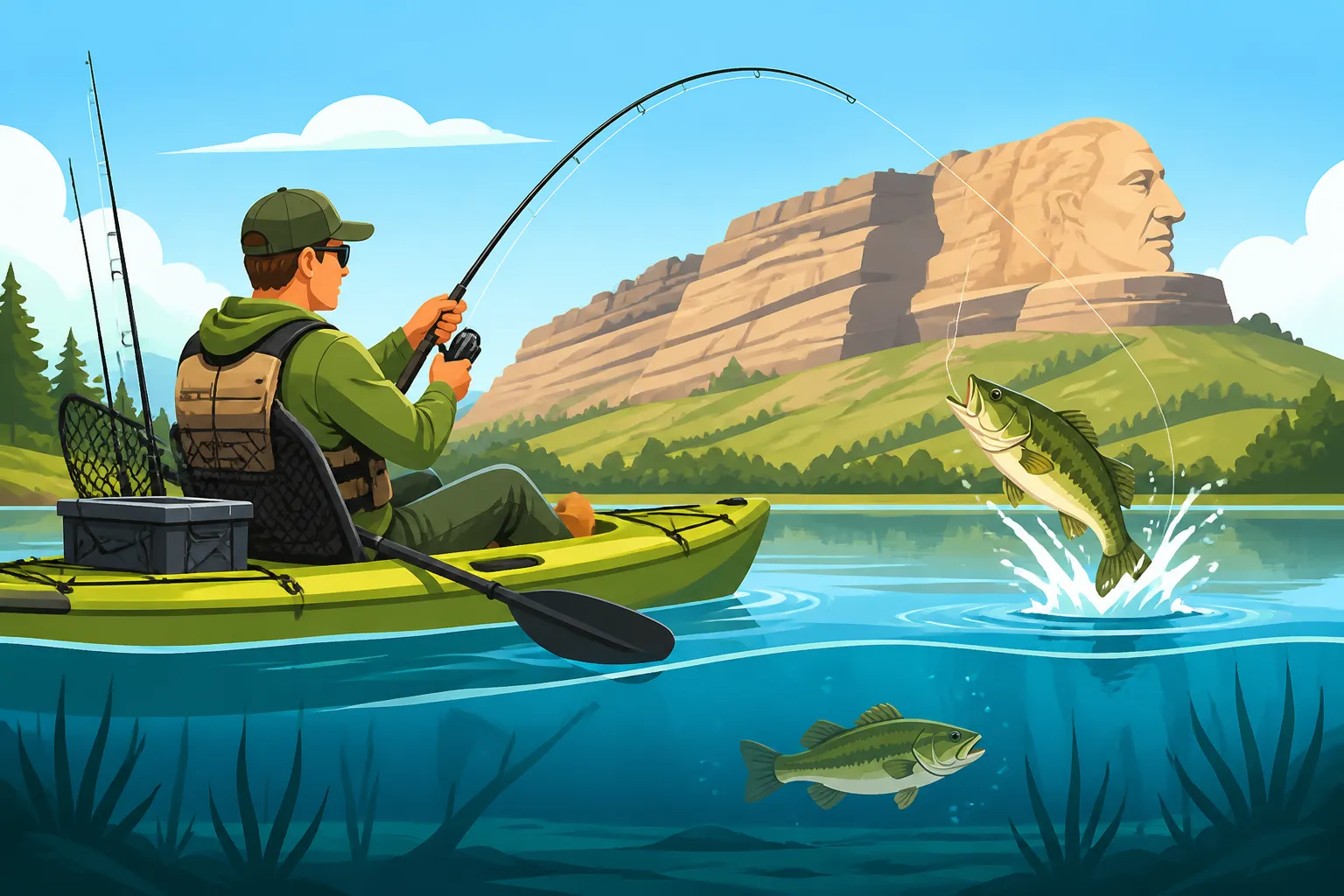
The thought of getting out on the water, silently gliding through a hidden bay, casting to untouched spots where the big fish hide—it’s a dream for many anglers. But for those new to kayak fishing, especially in a state with diverse and sometimes challenging waters like South Dakota, the learning curve can feel steep. This guide is here to demystify kayak fishing for beginners, offering practical tips and techniques to help you launch safely, navigate confidently, and start catching fish from your paddle-powered vessel.
Why Kayak Fishing in South Dakota Offers Unique Advantages
South Dakota's vast and varied fishing landscape, from the expansive Missouri River reservoirs to the serene Glacial Lakes and the winding Black Hills streams, presents incredible opportunities for kayak anglers. However, these waters can also be intimidating. Unlike large bass boats or pontoons, kayaks offer a distinct blend of stealth, access, and simplicity that, once mastered, can unlock incredible fishing experiences.
The Stealth Factor and Access to Undisturbed Waters
One of the biggest draws of kayak fishing is the ability to approach fish with unparalleled stealth. Kayaks are incredibly quiet, gliding through the water with minimal disturbance, which means you can get closer to wary fish without spooking them. Imagine paddling silently into a shallow bay on Lake Oahe, where traditional motorboats might struggle with depth or create too much noise, and casting right into a school of actively feeding walleye. This quiet approach often leads to more strikes and better fishing success.
Beyond stealth, kayaks provide access to areas that larger boats simply cannot reach. Think about those hidden pockets of weeds, narrow channels, or shallow flats that are perfect ambush points for northern pike or largemouth bass. Whether it's weaving through flooded timber on Lake Francis Case or navigating the smaller, less-traveled glacial lakes in eastern South Dakota, your kayak becomes a key that unlocks these secret fishing spots. This unique access lets you explore untouched corners and discover angling havens that remain hidden from the typical boat traffic, giving you a true sense of adventure and discovery.
Simplicity and Cost-Effectiveness Compared to Motorized Boats
Getting into fishing with a motorized boat can be a significant investment, not just in the initial purchase but also in ongoing costs like fuel, maintenance, and storage. Kayak fishing, on the other hand, offers a refreshingly simpler and more cost-effective entry point. The initial outlay for a quality fishing kayak and essential gear is substantially lower, making it an accessible option for many who might otherwise be priced out of boat ownership.
The beauty of kayak fishing lies in its minimal fuss. You don't need a heavy-duty truck to tow a large boat; many kayaks can be transported on car top racks or even in the bed of a pickup. This ease of transport translates into more spontaneous trips – no need for elaborate launch plans or worrying about fuel consumption. Furthermore, maintenance is often as simple as a quick rinse after each outing. This low barrier to entry and ongoing affordability makes kayak fishing a fantastic way for beginners to dive into the sport without breaking the bank, allowing you to focus more on the fishing itself rather than the logistics and expense of a boat.
Essential Gear for Your First Kayak Fishing Trip
Before you even think about casting a line, getting the right gear is paramount, especially when you're just starting out in a kayak. Safety always comes first, followed closely by comfort and functionality. Trust me, the right setup makes all the difference between a frustrating paddle and a successful day on the water. You'll want to check out a comprehensive South Dakota Fishing Gear Checklist to make sure you're fully prepared.
Kayak Selection and Basic Safety Equipment
Choosing the right fishing kayak is your first big step. For beginners in South Dakota, stability is key. Sit-on-top kayaks are generally favored by anglers because they are stable, easy to get in and out of, and allow for a lot of deck space for gear. Brands like Perception, Old Town, and Hobie offer excellent fishing-specific models. Pedal-drive kayaks (like those from Hobie) are also incredibly popular for fishing, as they free up your hands for casting, but they come at a higher price point. If you're on a budget, a paddle-powered sit-on-top will serve you well. Remember, you'll need to understand the South Dakota Kayak and Canoe Registration Rules if your kayak is of a certain length or powered by a motor.
| Kayak Type | Pros | Cons | Best For |
|---|---|---|---|
| Sit-On-Top | Stable, easy re-entry, gear space | Can be slower, less shelter from elements | Beginners, warm weather, open water |
| Sit-In (Recreational) | Faster, more shelter, lighter | Less stable, harder re-entry, less gear space | Flat water, touring, cold weather (with skirt) |
| Pedal Drive | Hands-free fishing, often faster | Expensive, heavier, more maintenance | Experienced anglers, long distances, trolling |
Once you have your kayak, safety equipment is non-negotiable. A U.S. Coast Guard-approved Personal Flotation Device (PFD) is number one – and you must wear it. Accidents happen fast, and even strong swimmers can be caught off guard by cold water or sudden waves on larger reservoirs like Lake Sharpe. Beyond the PFD, always carry a whistle to signal for help, and consider a paddle leash so you don't lose your paddle if you capsize or set it down. A bright flag on your kayak mast can increase visibility, especially on busy waters or foggy mornings. Having a dry bag for your phone, keys, and any other essentials is also a smart move, protecting them from splashes or an unexpected swim.
Essential Fishing Add-ons and Storage Solutions
Outfitting your kayak for fishing goes beyond just a rod and reel. For kayak anglers, specialized add-ons make the experience much smoother. Rod holders are a must-have, allowing you to paddle hands-free or keep multiple lines in the water if regulations permit. Many fishing kayaks come with flush-mount holders, but adjustable rail-mounted holders offer more versatility. You'll find a wide selection of these, as well as paddle leashes and other small accessories, readily available on platforms like Amazon.
An anchor system is another crucial piece of gear, particularly when dealing with wind or current on South Dakota's larger bodies of water. An anchor trolley system, which allows you to deploy your anchor from either the bow or stern of the kayak, is highly recommended. This flexibility helps you orient your kayak against the wind or current for optimal casting and drift control. For storage, waterproof tackle boxes that fit securely in your kayak’s storage wells or bungee areas are perfect. Many anglers also use milk crates or specialized kayak fishing crates that can be customized with additional rod holders and tackle storage, keeping everything organized and easily accessible without cluttering your limited deck space.
Mastering Launch and Landing Techniques
One of the most intimidating parts for new kayak anglers is getting in and out of the boat gracefully, especially with all your fishing gear. There's nothing quite like that awkward moment where you nearly take an unplanned swim right at the ramp. But with a few simple techniques and a little practice, you'll be launching and landing like a seasoned pro in no time, even at busy boat ramps along the Missouri River.
Launching Your Kayak from Various Access Points
Launching your kayak successfully depends a lot on the type of access point you're using. If you're at a sandy beach or a very shallow bank, the process is usually straightforward. You can often push the kayak into just a few inches of water, get in, and then use your paddle to push off into deeper water. This method is great for smaller ponds or quieter sections of rivers like the James River.
However, many prime fishing spots in South Dakota, especially on the large reservoirs, mean launching from traditional concrete boat ramps or rocky shorelines. At a boat ramp, aim for the shallower edges or designated kayak launch areas if available. Gently slide your kayak into the water, keeping one end on shore. Load your gear while the kayak is stable, then straddle the kayak and slowly lower yourself into the seat. Use your hands to push off from the shore or dock. For rocky shorelines, scouting a path where you can slide the kayak in without scraping the hull too much is key. Always use caution, especially if the rocks are wet and slippery. Practice these techniques a few times in calm, shallow water before heading out to a busy spot.
Graceful Entry and Exit Strategies
Getting into and out of your kayak can feel like a clumsy dance at first, but mastering a graceful entry and exit prevents capsizes and keeps you (and your gear) dry. The most common entry method involves straddling the kayak from the side or stern, placing your paddle across the cockpit or gunwales for stability, and then carefully lowering your rear into the seat first. Once seated, bring your legs in one at a time. The key is to keep your weight centered and low throughout the process.
For exiting, reverse the process. If you’re at a low bank or shallow water, place your paddle across your lap, brace your hands on the gunwales, and push yourself up into a straddling position. Then, swing your legs out and stand up onto solid ground. If you're using a dock, you might need to use the "dock walk" method: keep your kayak parallel to the dock, transfer one leg to the dock while maintaining contact with the kayak, and then slowly pivot out of the boat. Remember, practice makes perfect. Try these maneuvers in a calm, shallow area first to build confidence before you're out on the wide-open waters of a place like Lake Francis Case.
Kayak Control and Navigation on South Dakota Waters
Once you're in the kayak, the next hurdle for beginners is effective control and navigation. South Dakota's waters can be unpredictable, with sudden winds, strong currents on the Missouri River system, and vast expanses to cover. Learning how to move efficiently and stay on course will significantly enhance your fishing success and overall enjoyment.
Efficient Paddling and Steering Techniques
Efficient paddling is about more than just brute strength; it’s about technique. For beginners, a common mistake is using only arm strength. Instead, engage your core muscles and back. A good paddle stroke starts by reaching forward, dipping the paddle blade fully into the water near your feet, and pulling it back along the side of the kayak towards your hip. Rotate your torso with each stroke, which will give you more power and reduce fatigue over longer paddles, especially if you're exploring areas like the sprawling Lake Oahe.
Steering is equally important. To turn your kayak, apply more power to the paddle stroke on the opposite side of the direction you want to turn. For example, a stronger stroke on the right side will turn your kayak to the left. For sharper turns or to quickly correct your course, you can use sweep strokes, where you paddle in a wide arc from front to back on one side. Learning to manage crosswinds is crucial on South Dakota’s open lakes. Often, paddling more frequently on the upwind side helps keep your kayak tracking straight. Getting comfortable with these basic strokes will give you the confidence to explore more of the Best Fishing Spots in South Dakota from your kayak.
Managing Wind, Current, and Anchoring
Wind and current are two of the biggest challenges for kayak anglers, especially in South Dakota. On the large Missouri River reservoirs, even a moderate breeze can make paddling and fishing difficult. Always check the weather forecast before heading out, paying close attention to wind speed and direction. When paddling into the wind, keep your strokes powerful and consistent, angling slightly into the waves. When paddling with the wind, you might need to use shorter, corrective strokes to avoid being blown off course.
Current, particularly in the tailwaters below dams like those on Lake Sharpe, requires a different strategy. Learn to "read the water" to identify eddies, seams, and calmer areas where you can rest or hold your position. An anchor trolley system becomes invaluable here. It allows you to quickly adjust your anchor point, letting you swing your kayak to fish different angles of a current seam without having to pull up and redeploy your anchor. For effective anchoring, use a lightweight, collapsible anchor, usually 1.5 to 3 pounds, suitable for kayaks. Deploy your anchor slowly and retrieve it carefully to avoid capsizing, always ensuring your anchor line is not tangled around your feet or gear.
Basic Fishing Techniques from a Kayak
Fishing from a kayak requires some adjustments compared to boat or shore fishing. Space is limited, movement is restricted, and stability is always a factor. However, with a few adapted techniques, you can be just as effective—if not more so—than your counterparts in bigger boats.
Casting and Presentation from a Seated Position
One of the first things you'll notice is that casting from a seated position in a kayak feels different. You won't have the same range of motion as standing in a boat, so you'll need to adapt your casting style. Many kayak anglers favor a shorter, more controlled casting stroke, often relying on sidearm or roll casts, especially when dealing with overhanging trees or fishing tight quarters. Precision becomes more important than raw distance.
Focus on accurate short to medium casts that place your lure exactly where you want it. This is where the stealth of a kayak truly shines; you can get closer to cover or structure without making a ruckus, negating the need for extremely long casts. When presenting your bait or lure, remember that your retrieve angle will be lower to the water. Pay close attention to how your lure is moving and how fish are reacting. Experiment with different retrieve speeds and cadences to find what works best on any given day, whether you're chasing South Dakota Walleye Limits or looking for a feisty smallmouth.
Managing Fish, Nets, and Your Catch
Successfully landing a fish from a kayak can be an exhilarating, if sometimes awkward, experience. Your priority should always be safety and maintaining balance. When you hook into a fish, especially a larger one, let your rod do the work. Avoid aggressive pulls that could destabilize your kayak. Keep the rod tip low to absorb runs and steer the fish towards the side of your kayak where you have the most control.
A net is an absolute game-changer for kayak anglers. A long-handled, rubberized net is ideal as it protects the fish and prevents hooks from tangling. Once the fish is alongside, quickly scoop it headfirst into the net. For species like walleye or smallmouth bass, you can often bring the net into your lap or secure it beside you to unhook the fish. If you plan to keep your catch, a soft cooler or a fish stringer (carefully tethered to your kayak and ideally in the water) will keep your fish fresh. Just be mindful of how a stringer might affect your kayak's movement or attract larger predators in some areas.
Targeting Specific South Dakota Fish Species from a Kayak
South Dakota offers a rich diversity of fish species, and kayak fishing opens up new ways to target many of them. Whether you're after the prized walleye, aggressive northern pike, or fighting smallmouth bass, understanding their behavior and adapting your techniques to the kayak environment will lead to greater success.
Walleye on the Missouri River Reservoirs
Walleye are the undisputed king of South Dakota fishing, and they can be fantastic targets for kayak anglers, especially on the vast Missouri River reservoirs like Lake Oahe, Lake Sharpe, Lake Francis Case, and Lewis and Clark Lake. The stealth of a kayak allows you to quietly drift over structure, sneak into shallow bays during low light, or work the edges of weed lines where walleye ambush baitfish. For South Dakota Walleye Fishing Guide, remember that these fish often relate to subtle changes in depth, submerged humps, or current breaks.
From a kayak, vertical jigging with a lead-head jig tipped with a minnow or soft plastic is incredibly effective, allowing you to precisely target depths. Trolling with crankbaits is also very popular, though it requires a bit more effort without a motor. You can use your paddle to maintain a slow, consistent speed, especially along contours or across flats. Consider mounting a basic fish finder to help locate structure and schools of baitfish, enhancing your chances significantly. Don't be afraid to explore areas that are difficult for larger boats to navigate, as these can hold some of the biggest walleyes.
Bass and Pike in Glacial Lakes and Shallow Cover
The Glacial Lakes region in eastern South Dakota, as well as many of the state's smaller impoundments, are fantastic for targeting smallmouth bass, largemouth bass, and northern pike from a kayak. These species often inhabit shallower waters and heavy cover, which is where a kayak truly excels. Smallmouth bass, known for their powerful fights, often relate to rocky shorelines, riprap, and submerged timber. Fishing for South Dakota Smallmouth Bass Fishing Guide involves casting crankbaits, jigs, or soft plastics close to these structures.
Northern pike, with their aggressive strikes, love to hide in weed beds and along emergent vegetation. When targeting South Dakota Northern Pike Limits or other species in these areas, your kayak allows you to silently approach these ambush points and cast into tight pockets. Spinnerbaits, spoons, and large swimbaits are excellent choices for pike. The key here is precise casting and the ability to maneuver your kayak into spots that other anglers might overlook. Always be mindful of line management when casting around dense cover to avoid snags, and use a robust leader to prevent pike from biting through your line.
Panfish and Trout in Smaller Waters and Black Hills Streams
For a more relaxed and family-friendly kayak fishing experience, panfish like crappie and perch are abundant in many South Dakota lakes. They are generally easier to catch, making them perfect for beginners or a fun day out. Kayaks allow you to paddle quietly into coves or around docks where panfish often congregate. Small jigs, bobber rigs with live bait, or tiny spinners are all highly effective. For crappie, look for submerged brush piles or standing timber, especially in lakes like Lake Poinsett or Bitter Lake. You can find detailed information on Crappie and Panfish Possession Limits to ensure you're fishing responsibly.
For those venturing into the western part of the state, kayak fishing for trout in some of the larger Black Hills lakes and reservoirs, or even slower sections of streams, can be incredibly rewarding. While fly fishing from a kayak on fast-moving streams can be challenging for beginners, paddling a kayak on lakes like Sheridan Lake or Pactola Reservoir to target stocked rainbow or brown trout is a unique experience. Small spoons, inline spinners, or drifting powerbait under a bobber can be very productive. Always check specific regulations for Black Hills Stream Trout Regulations as some waters have special restrictions.
Practical Tips for a Successful Kayak Fishing Trip
Embarking on a kayak fishing adventure in South Dakota is an incredible experience, but a little preparation and knowledge of best practices can turn a good day into a great one. These practical tips will help you stay safe, comfortable, and productive on the water.
Planning Your Trip and Weather Awareness
Successful kayak fishing starts long before you ever hit the water. Planning your trip carefully is essential, especially given South Dakota's often unpredictable weather. Always check the forecast for wind speed and direction, temperature, and potential for storms. Remember that conditions on large bodies of water like the Missouri River reservoirs can change rapidly. A calm morning can quickly turn into a windy, choppy afternoon, making paddling challenging and potentially dangerous. If the forecast calls for sustained winds over 10-15 mph, particularly on open water, it might be best to choose a more sheltered location or reschedule.
Beyond weather, research your chosen fishing spot. Look at maps to identify potential launch points, structure, depth changes, and access to sheltered areas in case conditions worsen. Knowing the local regulations, such as South Dakota Fishing Season Dates and Limits and any specific rules for the body of water you're visiting, is crucial. Informing someone of your float plan – where you're going, when you expect to return, and who to contact if you don't – is a critical safety measure, even for short trips. This kind of thoughtful preparation not only keeps you safe but also sets you up for a more enjoyable and productive day on the water.
Staying Comfortable and Prepared for the Elements
Comfort is key to enjoying your time on the water, especially during longer kayak fishing trips. Invest in a good quality, quick-drying fishing shirt and pants, as you will inevitably get wet from splashes or handling fish. Layering is important, even on warm days, as temperatures can fluctuate, and you might encounter cool breezes. Sun protection is non-negotiable: a wide-brimmed hat, polarized sunglasses, and sunscreen will protect you from South Dakota's strong sun. Polarized sunglasses, in particular, will help you see into the water, spotting fish or submerged structure.
Staying hydrated is also vital. Carry plenty of water, especially during the hot summer months, and consider electrolyte-replenishing drinks. Snacks are also a good idea to keep your energy levels up. For cooler weather, consider neoprene gloves and perhaps a dry suit or dry top to protect against cold water immersion, especially during spring and fall. A small first-aid kit is also a wise addition to your gear, tucked away in a dry bag. Being well-prepared for the elements ensures that minor inconveniences don't turn into major problems, allowing you to focus on the joy of fishing.
Disclaimer
The information provided in this guide is for general informational purposes only and does not constitute legal or professional advice. Fishing regulations and conditions in South Dakota can change frequently. Always consult the official South Dakota Game, Fish and Parks (GFP) website or their current fishing handbook for the most up-to-date rules, regulations, and safety guidelines before heading out on the water. Fishing inherently involves risks, and safety should always be your top priority.