Best Trolling Speed for Salmon
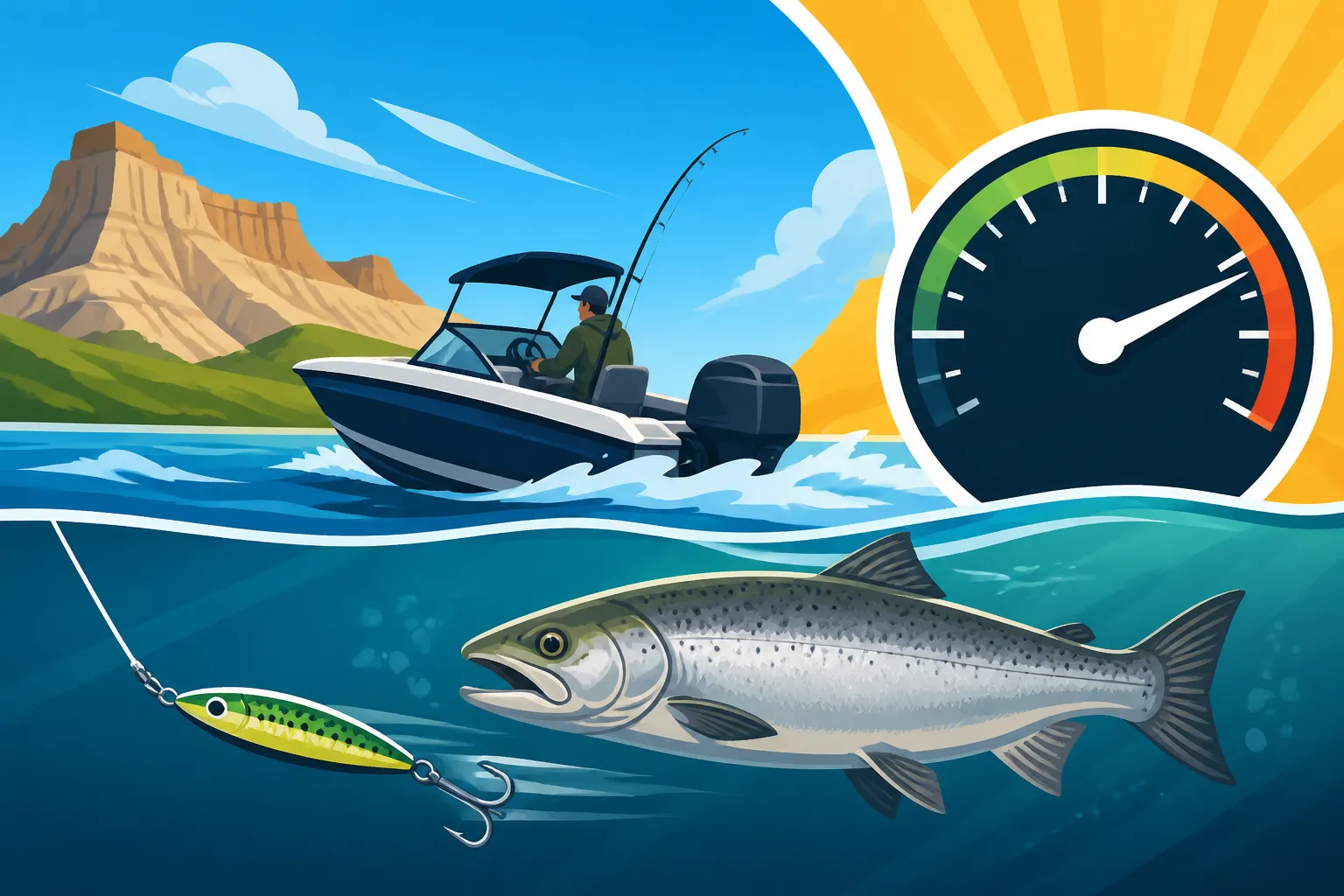
One of the most common frustrations anglers face when targeting Chinook salmon on vast waters like South Dakota's Lake Oahe is inconsistent success, often stemming from overlooking seemingly small details. Getting your lure to behave just right is paramount, and a huge part of that is dialing in your trolling speed. This guide will dive deep into understanding and optimizing your trolling speed to dramatically improve your salmon catches.
Why Trolling Speed is Your Salmon Fishing Secret Weapon
When you're out on the water, especially on a huge expanse like Lake Oahe, it's easy to get caught up in the big picture: where are the fish, what lures should I use, and what depth am I at? But seasoned salmon anglers know that the subtle dance of your lure through the water, dictated almost entirely by your trolling speed, is often the difference between a limit and a goose egg. It's not just about getting your lure in the water; it's about making it irresistible.
Think about it from the salmon's perspective. These are powerful, predatory fish, but they're also opportunistic. A lure that's wobbling, darting, or flashing exactly like a panicked baitfish is far more likely to trigger a strike than one that's just lazily dragging along or moving too erratically. The right speed imparts the intended action to your specific lure, whether it's the tight wiggle of a spoon or the roll of a plug. Get it wrong, and even the "best" lure becomes little more than a piece of metal or plastic.
Moreover, salmon are often focused on specific prey items. If they're keying in on slender rainbow smelt, your lure needs to mimic that profile and movement. If they're more interested in larger forage, a different lure action at a different speed might be necessary. Understanding how speed affects this presentation is crucial for adapting to what the fish are actually feeding on that day. It truly is one of the most fundamental yet often overlooked aspects of consistently catching these magnificent fish.
Factors Influencing Optimal Trolling Speed
There isn't a single magic number for trolling speed because salmon fishing is an art form influenced by countless variables. What works perfectly one day, or even one hour, might not get a bite the next. Success comes from understanding these factors and constantly adjusting your approach.
Water Temperature and Fish Metabolism
Water temperature is a huge driver of fish behavior, and salmon are no exception. Colder water typically means a slower metabolism for the fish. They're less inclined to chase down fast-moving prey, conserving energy. In these conditions, a slower trolling speed often yields better results, as your lure presents an easier target. Conversely, warmer water (within their comfortable range, of course) can mean more active, aggressive fish. They might be willing to exert more energy to strike a faster-moving lure.
It's not just about the surface temperature either; salmon often inhabit specific thermal layers, or "thermoclines," where the water temperature is ideal. Pay attention to your electronics to find these layers, and then consider the temperature within that depth range to fine-tune your speed. A subtle temperature change of just a few degrees can completely alter how salmon respond to your presentation.
Lure Type and Intended Action
Different lures are designed to perform optimally at specific speeds. A slender spoon like a Little Cleo or a Daredevil might have a wide, enticing wobble at a slower speed, but become erratic and unnatural if trolled too fast. Plugs, like those from Rapala or Walleye Nation Creations, often have a specific "sweet spot" where their unique rolling or diving action is maximized. Trolling flies, especially when used behind a dodger or flasher, rely heavily on the attractor's action to impart movement.
It's vital to experiment with each lure type. Watch your rod tip: a steady, rhythmic pulse usually indicates good lure action. If your rod tip is violently bouncing or stagnant, your speed is likely off. Many lure manufacturers even provide suggested speed ranges, which are great starting points. You can often find a wide variety of these specialized lures and their associated gear on Amazon if you're looking to expand your tackle box.
Water Clarity and Light Conditions
The visibility of your lure to salmon is directly impacted by water clarity and available light. In clear water, fish can spot your lure from a greater distance, and they have more time to inspect it. This might mean you can get away with slightly faster speeds, as the fish have more time to react. However, sometimes in very clear conditions, a slower speed allows them to "commit" to a strike without feeling rushed or spooked.
In murky or stained water, or during low-light conditions like dawn, dusk, or heavily overcast days, salmon's visibility is reduced. Your lure needs to create more vibration and be presented for longer in their strike zone. Slower speeds are often more effective here, giving the fish more time to locate and track the lure using their lateral line and other senses. Conversely, a faster speed might simply pull the lure out of their limited field of vision too quickly.
Forage Fish Behavior and Location
Salmon are predators, and their behavior is intrinsically linked to their prey. If you can identify the primary forage fish (like rainbow smelt or cisco on Lake Oahe) and understand their typical swimming patterns, you're one step closer to success. Are the baitfish tightly schooled and moving quickly, or are they scattered and moving more leisurely?
Your trolling speed should mimic this. If baitfish are scattering from a perceived threat, a faster, more erratic lure might trigger a reaction strike. If they're calmly grazing, a slower, more deliberate presentation might be more effective. Your fish finder is an invaluable tool here for locating bait balls and seeing how they're behaving. Adjusting your speed to match what you're seeing on your electronics can be a game-changer. For additional details on specific fish, you might want to read our guide on South Dakota Chinook Salmon Average Size.
Recommended Trolling Speeds for South Dakota Chinook Salmon
While there are many variables, experienced anglers have found general speed ranges that tend to be productive for Chinook salmon, especially on large reservoirs like Lake Oahe.
General Speed Ranges for Chinook Salmon
Most anglers targeting Chinook salmon in South Dakota, particularly on Lake Oahe, find success trolling between 1.5 to 3.0 miles per hour (mph). This range provides a good starting point, but remember, the exact speed can fluctuate even within this narrow window by just a tenth of a mile per hour and make all the difference.
- 1.5 – 2.0 mph: This slower end of the spectrum is often effective in colder water, during post-frontal conditions when fish might be lethargic, or when using larger, slower-action plugs or natural baits that require a more subtle presentation. It also gives the fish more time to identify and commit to a strike in lower light or murky water.
- 2.0 – 2.5 mph: This is often considered the "sweet spot" for many anglers, especially when using a variety of spoons and plugs. It's a versatile speed that works well in average conditions, mimicking a cruising baitfish without being too fast to chase or too slow to be uninteresting.
- 2.5 – 3.0 mph: When the water is warmer, fish are aggressive, or you're trying to cover a lot of water to find active fish, bumping up to this faster range can be productive. It's excellent for spoons that need a bit more speed to achieve their best flash and wobble, or for eliciting reaction strikes from active salmon.
Keep in mind that factors like wind and current can significantly impact your true boat speed over ground versus your speed through the water. A good GPS unit or a fish finder with GPS capabilities will show you your speed over ground, which is often what you need to track.
Speed Adjustments for Specific Lure Types
Matching your speed to your lure is non-negotiable for salmon.
- Spoons: Most trolling spoons, like the popular Bay Rat Lures, Michigan Stinger, or Silver Horde brands, typically perform best between 2.0 to 3.0 mph. At the slower end, they'll have a wider, lazier wobble. As you speed up, the wobble tightens, and the flash increases. Experimentation is key to finding the specific speed that makes your spoon dance perfectly.
- Plugs: Diving plugs often have a very specific speed range where they "run true" and exhibit their intended action. This can be anywhere from 1.8 to 2.8 mph. Too slow, and they might just drag; too fast, and they can blow out or spin unnaturally. Again, watch your rod tip and even run the lure alongside the boat briefly in clear water to observe its action.
- Flasher/Dodger Combinations with Flies: When you're using an attractor like a dodger or flasher ahead of a fly (like an Atalanta or a homemade fly), the attractor itself is what creates the movement that draws fish and imparts action to the trailing fly. Dodgers typically require slower speeds (1.0 – 2.0 mph) to get their rhythmic side-to-side action. Flashers, on the other hand, often work better at slightly faster speeds (2.0 – 2.5 mph) to maximize their erratic rotation and flash. The fly itself has minimal action without the attractor's influence.
Understanding the nuances of these combinations is essential for productive salmon fishing. For more insight into effective strategies, check out our South Dakota Chinook Salmon Trolling Techniques guide.
Trolling Speed Considerations Table
Here's a quick reference table to help guide your speed decisions:
| Condition/Lure Type | Recommended Speed Range (mph) | Notes |
|---|---|---|
| General Starting Point | 2.0 – 2.5 | Good all-around speed for diverse conditions and lures. |
| Cold Water / Lethargic Fish | 1.5 – 2.0 | Slower presentation, easier target. Ideal for early spring or late fall fishing. |
| Warm Water / Active Fish | 2.5 – 3.0 | Faster presentation, appeals to aggressive biters. Great for summer fishing if salmon are deep in cool water. |
| Clear Water / High Sun | 2.0 – 2.8 | Fish have good visibility; can react to a faster lure, but sometimes a subtle, slower presentation prevents spooking. |
| Murky Water / Low Light | 1.5 – 2.2 | Slower speeds allow fish more time to find the lure via vibration and limited sight. |
| Spoons | 2.0 – 3.0 | Varies greatly by spoon design; observe rod tip for optimal wobble and flash. |
| Plugs / Crankbaits | 1.8 – 2.8 | Watch for smooth, consistent action; avoid blowing out or erratic spinning. |
| Dodgers with Flies | 1.0 – 2.0 | Dodgers need slow speed for their unique rhythmic action to impart movement to the fly. |
| Flashers with Flies | 2.0 – 2.5 | Flashers often work better at slightly higher speeds for their erratic rotation and strong flash. |
| Live Bait / Cut Bait | 0.8 – 1.5 | Slower, more natural presentation is usually best for mimicking wounded or cruising baitfish. |
| Strong Current | Adjust as Needed | Monitor "speed over ground" vs. "speed through water." Upstream troll might need more throttle, downstream less. |
Troubleshooting Your Trolling Speed for Better Results
Even with the best information, getting the right trolling speed is often a process of trial and error. Don't be afraid to constantly adjust and experiment; that's where the real learning happens.
Using Your Electronics to Dial In Speed
Your boat's electronics are your best friends when it comes to refining your trolling speed. Your GPS will give you your speed over ground, which is crucial for repeatable patterns. However, you also need to understand your "speed through water," especially when dealing with currents or strong winds. A paddlewheel transducer, often integrated into more advanced fish finders, can provide this. The difference between these two speeds can tell you how the water itself is moving.
Beyond speed, your fish finder helps you read fish behavior. Are the salmon tightly schooled and moving fast, suggesting an aggressive mood? Or are they scattered and seemingly disinterested, which might call for a slower, more deliberate approach? Pay attention to baitfish schools too; if they're holding tight, a slower, more cautious presentation might be in order, whereas scattered bait might mean a predator is on the prowl, and a faster retrieve is warranted. Understanding How to Read a Fish Finder for Walleye can also be applied to salmon, as the principles of identifying structure and baitfish remain similar.
The Art of the "S-Turn" and Speed Changes
One of the oldest tricks in the book for a reason, the "S-turn," or subtle changes in boat direction, can be incredibly effective. As your boat turns, your inside lines will slow down, and your outside lines will speed up. This momentary change in lure action can often be the trigger for a strike, especially from followers or less aggressive fish. Many anglers mark the boat's position or a specific contour on their GPS where they get a bite, and then try to replicate that exact turn.
Even without full S-turns, small, gradual changes in your throttle can create a similar effect. Accelerate slightly for a few seconds, then back off. This makes your lures dart and fall, mimicking a wounded baitfish. These subtle speed fluctuations can be more natural than a perfectly consistent speed and can entice bites when a steady troll isn't producing. Always have a close eye on your rods for any indication of a strike during these maneuvers.
Adjusting for Wind and Current
South Dakota's major fishing waters, particularly the Missouri River reservoirs, are known for their wind and current. These forces can play havoc with your intended trolling speed. If you're trolling with the current, you'll need less throttle to achieve your desired speed over ground. Against the current, you'll need more power. Strong crosswinds can push your boat sideways, making it difficult to maintain a straight line and affecting the presentation of your outside lines.
Using a good autopilot or a strong electric trolling motor can help immensely in these conditions. By setting your course and letting the motor compensate for wind and current, you can focus on maintaining your optimal speed. It's also critical to have sufficient weight on your lines or use downriggers to ensure your lures are reaching and staying at the desired depth, regardless of how wind or current might be affecting your boat's motion. If you're setting up specialized gear, you can find a lot of reliable options like specific downrigger weights or heavy-duty line on Amazon. Don't forget, understanding How to Set Up a Downrigger for Salmon is also a key piece of the puzzle.
Essential Gear for Precision Trolling
Having the right gear isn't just about catching fish; it's about being able to execute your plan effectively and consistently. Precision trolling demands specific tools.
Line Counter Reels and GPS Units
These two pieces of equipment are non-negotiable for serious salmon trolling. A line counter reel allows you to deploy your lure to a precise distance behind the boat, ensuring that if one rod gets a bite, you can replicate that exact lead length on other rods or after re-rigging. This consistency is vital for finding patterns. Many great line counter reels can be found through a quick search online.
A reliable GPS unit, often integrated into a quality fish finder, provides your true speed over ground. This is far more accurate than relying solely on your boat's speedometer, which measures speed through water and can be heavily influenced by current. GPS also allows you to mark waypoints, track your trolling paths, and record productive stretches of water. Knowing your exact speed and location is the foundation of repeatable success. For broader navigation and regulatory advice, you might want to look into the South Dakota Boat Registration Guide.
Downriggers and Planer Boards
For reaching precise depths and spreading out your lines, downriggers and planer boards are invaluable. Downriggers allow you to present lures at specific depths, which is critical when salmon are holding tightly to a thermocline or specific structure. They release the line when a fish strikes, leaving you to fight the fish without the drag of the heavy ball. Knowing Best Downriggers for Salmon Trolling can really make a difference.
Planer boards, on the other hand, take your lines out to the side of the boat, covering a wider swath of water and preventing tangles when running multiple lines. This is especially useful in clear water where fish might shy away from the boat's shadow or motor noise. Using them in combination allows you to effectively present multiple lures at various depths and distances, greatly increasing your chances.
Final Thoughts on Mastering Salmon Trolling Speed
Ultimately, mastering the best trolling speed for salmon in South Dakota, particularly on waters like Lake Oahe, is a journey of continuous learning and adaptation. There's no single answer that holds true every day, but by understanding the variables, paying close attention to your gear and electronics, and constantly experimenting, you'll dramatically increase your success.
Start with the recommended speed ranges, but then listen to what the fish and your lures are telling you. Watch your rod tips, observe your sonar, and don't be afraid to make subtle changes. Every small adjustment in speed, every S-turn, every shift in lure choice is a piece of the puzzle that will help you unlock the mysteries of these incredible fish. Remember, successful salmon fishing isn't just about luck; it's about diligent preparation and relentless adaptation on the water. For more information on fishing guidelines, be sure to check out the South Dakota Fishing License Guide.
Disclaimer
This article is for general informational purposes only and does not constitute professional advice. Laws, prices and regulations vary by location and change over time. Consult a qualified professional for guidance on your specific situation.