How to Catch Northern Pike in Weed Beds
Trying to catch northern pike in South Dakota's lakes and rivers can be incredibly frustrating when they bury themselves deep in thick weed beds. You know they're in there, lurking and ready to ambush, but getting your lure to them without snagging every other cast feels like an impossible mission. This comprehensive guide is here to unravel the mysteries of fishing for pike in dense vegetation, equipping you with the strategies, gear, and confidence to pull those toothy critters out of their green strongholds.
Understanding Northern Pike Behavior in Weed Beds
Northern pike are apex predators, and their entire existence revolves around finding food and cover. Weed beds, often seen as an angler's nemesis, are actually prime real estate for these aggressive fish. Understanding why they love these green jungles is the first step to successfully targeting them.
Why Pike Love the Green Stuff
Imagine you're a northern pike. You're a long, slender, olive-green machine, built for explosive speed and sudden strikes. What's better than a dense patch of underwater vegetation? Absolutely nothing! Weed beds, whether they are coontail, milfoil, cabbage, or even lily pads, offer a multi-faceted haven for pike.
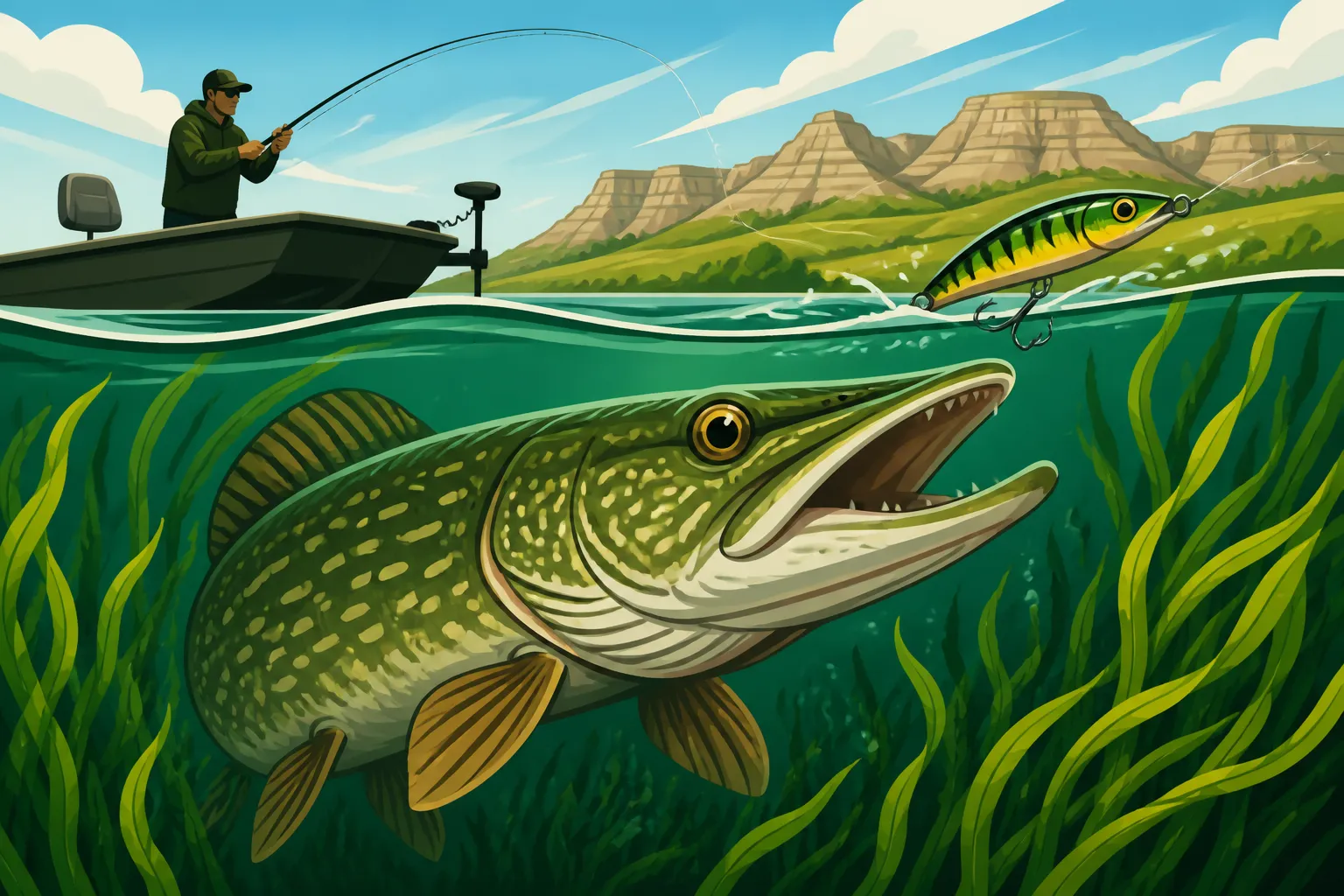
First and foremost, weed beds are incredible ambush points. Pike are not typically open-water cruisers. They prefer to sit and wait, camouflaged perfectly within the stalks and leaves, ready to dart out and annihilate unsuspecting baitfish. These dense areas provide countless pockets, lanes, and edges where a pike can position itself, blending seamlessly with its surroundings. Think of it like a hunter in a deer blind; the weeds are their natural hideout. Secondly, these aquatic gardens are nurseries and dining halls for smaller fish. Perch, minnows, shiners, and young panfish all seek refuge and food within the weeds, creating a constant buffet for hungry pike. If you find healthy weed growth, you'll almost certainly find the forage fish, and where there's forage, there are predators like pike. They're just following their food source. Lastly, weeds provide essential cover from other larger predators (though pike are often at the top of the food chain in many South Dakota waters, they still seek security) and, crucially, from the sun. In clear, shallow waters, direct sunlight can be uncomfortable, and the weeds offer shade and cooler temperatures, especially during the scorching summer months.
Seasonal Movements and Weed Bed Preferences
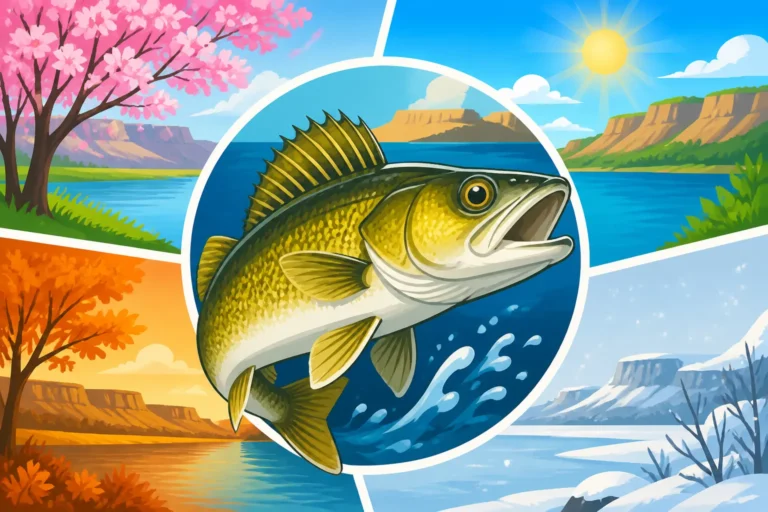
A pike's relationship with weed beds isn't static; it changes with the seasons, dictated by water temperature, spawning cycles, and baitfish movements. Knowing these patterns will help you zero in on the right type of weed bed at the right time.
In the spring, immediately after ice-out and after they've completed their spawning rituals, pike are often found shallow. They seek the warmer water that permeates the shallower weed beds, especially those along northern shores that receive more direct sunlight. These newly emerging weeds or the remnants of last year's growth offer both warmth and immediate ambush opportunities for post-spawn recovery feeding. This is a fantastic time to target them with shallow-running lures or even topwater presentations if the water is calm. As the water warms through summer, pike tend to move deeper, seeking the cooler, more oxygenated parts of the weed beds. They might still use the shallower edges during low-light conditions (dawn and dusk) or on overcast days, but their primary haunts will be the deep weed lines, points, and humps within the weeds. Look for lush, green weeds that extend down to about 10-15 feet or even deeper, depending on the lake's clarity. They'll also hold in thick, matted weeds that provide dense shade and cooler temperatures below.
Fall is a fantastic time for trophy pike, as they go on a feeding frenzy to pack on weight before winter. During this season, they become incredibly aggressive and will often be found patrolling the deeper weed edges, drop-offs adjacent to weed beds, and even open water near large weed flats. The weeds might start to die back, creating distinct lines and sparse patches that funnel baitfish and provide excellent ambush points. This is when you can often find them cruising the perimeter of still-green weed beds. When winter arrives and the ice forms, pike will continue to relate to weed beds. They'll often be found suspended just above or within the deep weed lines, particularly where there's still healthy oxygen-producing vegetation. During ice fishing season, using a flasher to identify these submerged weed beds and targeting the fish holding within or around them can be incredibly productive. Remember, their activity level will be lower, so slower, more subtle presentations are often key.
Essential Gear for Targeting Weedy Pike
Tackling pike in their weedy strongholds requires a specific setup. You can't go in with your panfish rod and expect to pull a 10-pound northern out of a dense mat of coontail. This is about power, abrasion resistance, and weed-shedding efficiency.
Rods, Reels, and Line Built for Battle
When it comes to battling big pike in heavy cover, your gear needs to be robust. Think heavy-duty.
For rods, you'll want something with a strong backbone and a fast to extra-fast action. A medium-heavy to heavy power rod, typically in the 7-foot to 7-foot 6-inch range, is ideal. This power allows you to cast heavier, often cumbersome, weedless lures, and the fast action provides the sensitivity to feel subtle bites and the quick hook-setting power needed to drive a hook through a pike's bony mouth. Many anglers prefer baitcasting setups for pike because they offer superior line control, casting accuracy, and cranking power, all crucial when you're working tight pockets in the weeds or trying to wrench a big fish out of thick vegetation. Brands like Shimano, Abu Garcia, or Daiwa offer excellent options for these heavier setups. You can often find a great selection of these on sites like Amazon, which provides a convenient way to compare different models and read reviews.
The reel should match the rod's power. A baitcasting reel with a strong drag system and a good gear ratio for quick line retrieval is preferred. Look for models with a high retrieve rate (e.g., 7.1:1 or higher) to help you keep tension on the line and quickly pick up slack after a strike.
Line choice is perhaps one of the most critical elements. Forget monofilament for this kind of fishing. You'll want braided line, hands down. Braided line offers incredible strength for its diameter, no stretch (which means better sensitivity and more powerful hook sets), and, most importantly, superior abrasion resistance. A 30 to 50-pound test braided line is a good starting point. The low diameter of braid also helps it slice through some of the lighter weeds rather than getting bogged down. Because braid is visible in clear water and can be a bit stiff, you'll still want a leader. A 10-20 pound test fluorocarbon leader, about 18-24 inches long, provides a bit of stealth, but here's the crucial part: a wire leader is absolutely non-negotiable for pike. Their razor-sharp teeth will slice through fluorocarbon or monofilament like butter. A short, 6-12 inch wire leader (often steel or titanium) attached to your main line/fluorocarbon leader via a small barrel swivel is essential to prevent costly bite-offs. Without it, you're just donating lures to the pike gods. When selecting your line and leaders, consider checking out the wide range of options available on Amazon to ensure you have the right setup for battling these toothy predators.
Lures That Conquer the Green Jungle
The biggest challenge with fishing weed beds is finding lures that can get through them without constantly snagging. Luckily, there's a whole category of "weedless" lures designed specifically for this purpose.
Your tackle box for South Dakota pike in weeds should be stocked with these workhorses:
- Weedless Spoons: These are classics for a reason. Spoons like the Johnson Silver Minnow are designed with a single, upturned hook that is protected by a weed guard. They flutter and flash through the water, mimicking an injured baitfish, and are remarkably effective at shedding weeds. They can be cast directly into thick cover, allowed to fall into pockets, and retrieved with a wobbly action.
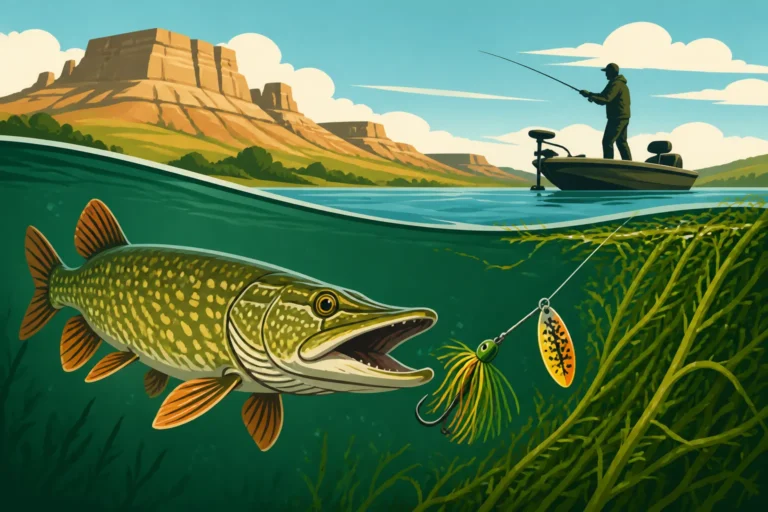
- Spinnerbaits: Another excellent choice for working weed edges and submerged vegetation. Spinnerbaits feature a "V" shaped wire frame that helps deflect weeds away from the hook. The flash and vibration from the blades, combined with a skirted body, make them irresistible to pike. Opt for models with sturdy wire frames and good weed guards.
- Soft Plastic Jerkbaits/Swimbaits: When rigged "Texas style" (with the hook point embedded in the plastic body), soft plastics become incredibly weedless. Large fluke-style jerkbaits or paddle-tail swimbaits can be twitched through open pockets or slowly reeled along weed edges. The erratic action often provokes a strike.
- Topwater Lures (Frogs, Buzzbaits, Walkers): For those times when pike are shallow and holding under thick mats of weeds or lily pads, topwater lures are deadly. Hollow-bodied frogs can be retrieved directly over the top of matted vegetation without snagging, eliciting explosive, heart-stopping strikes. Buzzbaits create surface commotion that calls fish out of cover, and "walking" baits can be worked along the outside edges of weed beds.
Here's a quick reference table for choosing your weed-bed weaponry:
| Lure Type | Best Use Case in Weed Beds | Why it's Effective | Weedless Feature |
|---|---|---|---|
| Weedless Spoons | Casting into dense weeds, lily pads | Wiggles and flashes, mimics injured baitfish | Single, upturned hook, guard |
| Spinnerbaits | Working weed edges, submerged vegetation | Creates vibration and flash, deflects off cover | V-wire frame, single hook |
| Soft Plastic Jerkbaits | Open pockets within weeds, twitching | Erratic darting motion, realistic profile | Texas-rigged hook |
| Hollow-Body Frogs | Mats of weeds, thick surface cover | Gurgling and walking action, draws explosive strikes | Double upturned hooks |
| Buzzbaits | Shallow weed lines, early morning/late evening | Surface commotion, calls fish from cover | Propeller, upturned hook |
When you're stocking up, remember that you might lose a few lures in the really nasty stuff, so having a good supply is wise. Many anglers find great deals and a wide variety of these specialized lures available on platforms like Amazon, allowing them to equip their tackle boxes effectively.
Proven Techniques for Extracting Pike from Weeds
Having the right gear is only half the battle; knowing how to use it effectively in dense weed beds is where true success lies. These techniques will help you present your lures to those hidden pike and coax them into striking.
Casting Strategies for Dense Cover
Accuracy is paramount when casting into weed beds. You're not just casting at the weeds; you're looking for specific targets within them.
- Targeting Pockets and Lanes: Observe the weed bed closely. Look for open pockets, lanes, or channels where baitfish might congregate or where a pike might be staging. Your cast needs to be precise, landing your lure directly into these openings. A baitcasting reel really shines here, allowing for pinpoint accuracy. Cast beyond the target if possible, then retrieve your lure into the sweet spot.
- Working Weed Edges: Pike love to patrol the edges of weed beds, where they can dart out into open water to intercept prey. Cast your lure parallel to the weed line, allowing it to run just along the outside edge. Vary your retrieve speed and add pauses or twitches to mimic an injured baitfish. This is also a good technique for targeting areas where the deep weeds meet a drop-off.
- Slow and Erratic Retrieves: Pike are ambush predators, so don't be afraid to slow down your retrieve. Often, a lure that is retrieved slowly, with frequent pauses or erratic twitches, will trigger a strike from a pike that might ignore a fast, steady retrieve. Let your weedless spoon flutter down into a pocket, twitch a soft plastic jerkbait aggressively, or slowly grind a spinnerbait along a submerged weed line.
- Topwater Action Over Mats: If you're fishing over dense, matted weeds or lily pads, cast your hollow-bodied frog directly onto the vegetation. Work it slowly, using short twitches and pauses, making it "walk" or gurgle across the surface. This can lead to exhilarating, explosive strikes as pike explode through the mat.
Trolling and Drifting Weed Edges
While casting into the thick stuff is effective, sometimes the pike are holding along expansive weed edges, and covering more water can be beneficial. Trolling or drifting these edges can be a highly productive strategy.
- Finding the Outside Lines: This technique primarily focuses on the outer edges of large weed beds. Use your fish finder or GPS to identify these edges. Many modern electronics, especially those with side imaging, can clearly show the transition from weeds to open water, and even reveal pockets or points within the weeds. When fishing South Dakota lakes like Lake Oahe or Lake Sharpe, understanding how to read these contour lines and weed beds on your electronics can be a game-changer for Walleye Fishing Depth Charts by Season and other species.
- Controlled Trolling: Using an electric trolling motor allows you to move silently and precisely along these weed lines. Maintain a slow, consistent speed. The goal is to present your lure just above or alongside the weed tops, not to bury it within them. Shallow-running crankbaits, lipless crankbaits, or spinnerbaits with a heavy weight might be effective here. Experiment with different depths until you find where the fish are holding. When considering which tools to use for this, don't forget the convenience of ordering specialized trolling gear and accessories from trusted online retailers like Amazon.
- Drifting with the Wind: If there's a gentle breeze, you can use it to your advantage. Position your boat upwind from a productive weed edge and allow the wind to slowly push you along. This natural drift often presents your lure in a very enticing way. Again, focus on keeping your lure just above the weeds. You can use a drift sock to control your speed if the wind is too strong.
- Depth Control is Key: Whether trolling or drifting, pay close attention to the depth of your lures. You want them to be in the strike zone without constantly fouling up with weeds. Experiment with different lure weights, line lengths, and even downriggers (though less common for pike in weeds) to achieve the right depth.
Vertical Presentations for Deep Weed Lines (Ice Fishing)
The tactics change drastically once the hard water arrives, but pike still relate strongly to weed beds during the winter months.
- Locating Submerged Weeds: When ice fishing, a good understanding of the lake's bottom structure from your summer fishing, or an advanced ice fishing flasher unit (like a Vexilar or Humminbird Ice Helix) is essential. These units can clearly show the "grass" on the bottom, indicating submerged weed beds. Drill your holes strategically around and within these areas. For a full breakdown on this topic, check out our South Dakota Ice Fishing Guide.
- Jigging in Pockets: Pike often suspend just above or within the deeper, healthier weed beds during winter. Use heavier jigging spoons (1/2 to 1 ounce) or larger lipped jigs tipped with a minnow. Drop your lure down to the top of the weeds and then jig it aggressively, letting it flutter back down. Watch your flasher for fish rising out of the weeds to investigate. Sometimes a more subtle approach, like dead-sticking a large minnow just above the weed tops, is what triggers a bite.
- Patience is a Virtue: Winter pike can be less aggressive than their warm-water counterparts. Don't be afraid to leave your lure in the strike zone for extended periods. A slow, methodical jigging motion, combined with long pauses, often elicits a strike from a cold-water pike.
Dealing with Snags and Landing Pike
Fishing in weeds means you're going to get snagged. It's part of the game. But how you deal with it and how you land your catch makes a big difference.
- Sharp Hooks: Always ensure your hooks are razor-sharp. This helps penetrate the pike's tough, bony mouth on the hook set, which is especially important when you might have weeds interfering. A small hook sharpener is an essential item in your South Dakota Fishing Gear Checklist.
- Clear the Weeds: If your lure picks up a lot of weeds, reel it in, clean it off, and cast again. A fouled lure rarely gets bit.
- Heavy-Duty Net or Landing Glove: Once you hook a pike, especially a big one, getting it into the boat or onto the ice safely is crucial. A large, rubberized landing net is ideal, as it's gentle on the fish and less likely to tangle hooks. Alternatively, a tooth-proof landing glove can allow you to grab the pike firmly by the gill plate (carefully, avoiding the sharp gills themselves) for control.
- Pike Handling: Pike have very sharp teeth. Always use a pair of long-nosed pliers or a jaw spreader to safely remove hooks. Avoid putting your fingers near their mouth. If you plan to release the fish, handle it as little as possible, keeping it in the water if you can. For more information on safely managing your catch, refer to the South Dakota Fishing Regulations Explained.
Best Practices for Success and Conservation
Beyond the techniques and gear, a thoughtful approach to pike fishing in weed beds will lead to more success and ensure the continued health of South Dakota's fisheries.
Scouting and Reading the Water
Becoming a successful pike angler in weed beds means more than just throwing lures; it means being a detective, constantly observing and interpreting your surroundings.
- Identify Healthy Weed Beds: Not all weeds are created equal. Healthy, green weeds, particularly those like coontail, milfoil, or northern water-milfoil, are often the most productive. These provide good oxygenation and robust cover. Dying or sparse weed beds might hold some fish but are generally less productive.
- Use Your Electronics: Your fish finder is your best friend. Use it to map out weed lines, identify submerged weed humps, and locate open pockets within larger mats. Side imaging technology is particularly effective at showing the contours and density of weed beds, allowing you to pinpoint ambush points without having to drive over them. Modern electronics also help you find where fish species average life spans.
- Observe Baitfish Activity: If you see schools of baitfish flickering around the edges of a weed bed, or hear splashes indicating feeding activity, you're likely in a productive area. Pike are always where the food is, so follow the bait.
- Consider Current and Wind: Even in relatively still lakes, subtle currents or wind-driven drifts can concentrate baitfish and, consequently, pike. Fish the "down current" side of a weed point or the wind-blown side of a weed line, as these areas often funnel food to waiting predators.
Safety and Responsible Angling
Pike fishing can be thrilling, but it comes with responsibilities, especially regarding safety and conservation.
- Personal Safety: As mentioned, pike have formidable teeth. Always carry long-nosed pliers, a jaw spreader, and a heavy-duty, tooth-proof glove. Never reach bare-handed into a pike's mouth. Accidents happen quickly, and a trip to the emergency room for a lacerated finger can quickly ruin a great day on the water.
- Catch and Release Best Practices: Many anglers choose to release pike, especially larger females which are vital for healthy populations. If you plan to release, handle the fish minimally. Keep it in the water as much as possible, use a net, and use your tools to quickly and gently remove the hook. Avoid dragging the fish onto hot surfaces or keeping it out of the water for extended photo sessions. A quick photo, then a gentle release, ensuring the fish swims away strong. Knowing the South Dakota Northern Pike Limits is essential for compliance and conservation.
- Understand Regulations: Always consult the current South Dakota Fishing Regulations Explained before heading out. This includes knowing the daily limits, possession limits, and any specific rules for the body of water you're fishing. Some areas might have special regulations for certain species or times of year.
- Respect the Environment: Pack out everything you pack in. Avoid leaving tangled line, broken lures, or any other trash in or near the water. The health of South Dakota's beautiful lakes and rivers depends on all of us doing our part.
By embracing these strategies and respecting the environment, you'll not only increase your chances of landing impressive northern pike from their weedy lairs but also contribute to the lasting enjoyment of South Dakota fishing for generations to come. Good luck, and tight lines!
Disclaimer
Please note that fishing regulations, conditions, and fish behavior can change. Always consult the latest South Dakota Game, Fish and Parks (GFP) official regulations before any fishing trip. This guide is for informational purposes only and does not supersede official state regulations.