Best Month for Smallmouth Bass on Lake Francis Case
Oh, the elusive smallmouth bass on Lake Francis Case! It's a question I hear all the time: "When's the absolute best time to hit the water for those feisty bronze-backs?" Anglers often get frustrated trying to pinpoint that perfect window when the smallmouth are most active and predictable. This guide is here to cut through the guesswork and reveal the prime month for targeting smallmouth bass on Lake Francis Case, along with all the tips and tricks to make your trip a roaring success.
Understanding Smallmouth Bass Behavior on Lake Francis Case
Before we dive into the "when," it's really helpful to understand the "why." Smallmouth bass are fascinating creatures, and their behavior, particularly their feeding and spawning patterns, is heavily influenced by water temperature. Lake Francis Case, being a massive Missouri River reservoir, experiences significant seasonal changes, which directly impact where smallmouth hang out and what they're willing to bite. You can't just show up any time of year and expect the same results, and knowing their general habits is key to consistent catches.
Pre-Spawn Aggression
As the ice retreats and the days get longer in early spring, a subtle shift happens in the waters of Lake Francis Case. The smallmouth bass, sensing the upcoming spawn, start to move out of their deeper wintering holes and into shallower areas, though still sticking close to structure. This pre-spawn period is characterized by fish becoming incredibly aggressive as they fuel up for the monumental task of reproduction. They're looking for protein-rich meals, and if you can hit this window, you're in for some exciting action. The water temperature dictates this period, generally when it's still cool, but rising steadily.
They aren't quite ready to build nests yet, but they're exploring potential sites and defending their feeding grounds. This often means they'll strike out of pure territoriality, not just hunger. For anglers, this can be a fantastic time because the fish are concentrated and willing to chase down a variety of baits. However, timing this can be tricky, as a sudden cold front can send them scurrying back to deeper water, making them lethargic. You need to keep an eye on the weather and water temperatures to perfectly catch this brief, but explosive, phase.
Post-Spawn Recovery and Summer Patterns
Once the smallmouth have completed their arduous spawning duties, typically when water temperatures are firmly in the upper 50s to mid-60s, they enter a period of recovery. For a short while after spawning, they might be less active, guarding their fry or simply recuperating from the energy expended. However, as they regain their strength, they'll transition into summer feeding patterns. This usually means moving to deeper, cooler waters during the heat of the day, often associated with ledges, humps, and submerged timber, especially in a large system like Lake Francis Case.
During summer, smallmouth bass on Lake Francis Case will often relate to current, seeking out eddies and breaks in the flow where baitfish congregate. They become more opportunistic feeders, and while they can be caught, it often requires different tactics, like fishing deeper or targeting them during low-light conditions. The scattered nature of the fish and their tendency to suspend over deep water can make them harder to locate than during the concentrated pre-spawn period. It's a different game entirely, requiring patience and good electronics.
Fall Feeding Frenzy
Just as spring sees a pre-spawn build-up, fall brings another surge of activity as smallmouth prepare for winter. As water temperatures begin to cool, the smallmouth go on a major feeding binge, trying to pack on as much weight as possible. They'll chase baitfish relentlessly, often schooling up in predictable locations. This can be another fantastic time to fish, with aggressive bites and the potential for larger fish.
They'll often return to shallower points and rock piles during this time, especially on sunny days, soaking up the warmth. However, like spring, a sudden, sharp drop in temperature can slow things down quickly. The bite can be phenomenal one day and completely off the next, making consistency a challenge. This fall period can stretch for several weeks, offering some incredible action for those willing to brave the cooler weather, and it's a great alternative if you miss the spring rush.
The Prime Month: May on Lake Francis Case
If you're looking for the absolute sweet spot, the month that consistently offers the best action for smallmouth bass on Lake Francis Case, hands down, it's May. This month perfectly encapsulates the transition from pre-spawn aggression to the active post-spawn bite, offering a fantastic blend of big fish and consistent opportunities.
Why May is the Sweet Spot
May is when Lake Francis Case truly comes alive for smallmouth bass. The water temperatures are typically rising into the prime spawning and post-spawn recovery zones, usually ranging from the mid-50s to low 60s Fahrenheit. This warmth triggers intense activity from the smallmouth. They are either actively spawning, aggressively feeding in the pre-spawn phase, or recovering quickly and feeding heavily in the post-spawn phase. The fish are concentrated in shallower areas, making them easier to locate and target. Rocky points, riprap shorelines, gravel flats, and transition zones where shallow water meets deeper structure become smallmouth highways.
The weather in May is often more stable than in early spring, reducing the likelihood of sudden cold fronts that can shut down the bite. The days are long, allowing for extended fishing hours, and the scenery around Lake Francis Case is absolutely beautiful, making for a truly enjoyable experience. Many anglers consider Lake Francis Case Smallmouth Bass Fishing in May to be the gold standard for a reason—it’s when these powerful fish are at their most vulnerable and aggressive, ready to smash a variety of presentations.
May's Best Techniques and Baits
To maximize your success in May, you need to match your techniques and baits to the smallmouth's current mood and location. Since fish might be in pre-spawn, spawning, or early post-spawn, versatility is key.
- Jigs and Plastics: Tube jigs are legendary for smallmouth, especially those in natural crawfish colors. Fishing them on rocky bottoms or around submerged timber can be incredibly effective. Smallmouth often mistake them for crawfish, a primary food source. A football head jig with a creature bait trailer is another fantastic option, allowing you to cover bottom structure effectively. You can often find a wide array of options for these on Amazon.
- Crankbaits: Medium-diving crankbaits that mimic shad or perch are deadly when smallmouth are actively chasing baitfish. Look for models that dive to 8-12 feet and retrieve them with a stop-and-go action, especially along rocky shorelines and points. The erratic movement often triggers a reaction strike from aggressive fish.
- Spinnerbaits and Bladed Jigs: These are excellent for covering water and eliciting reaction strikes, particularly in slightly stained water or on overcast days. A chartreuse and white spinnerbait or a bladed jig fished near rocky banks can be incredibly effective at drawing out aggressive fish. The flash and vibration can be irresistible.
- Topwater Lures: If water temperatures are on the warmer side (upper 50s and into the 60s), especially during low light conditions or on calm evenings, topwater lures like poppers, walking baits, or prop baits can produce explosive strikes. Nothing beats the thrill of a smallmouth blowing up on a topwater lure. This is a classic tactic for South Dakota Smallmouth Bass Fishing Guide.
Remember, presentation is key. Work your baits with varying retrieves, experimenting until you find what the fish prefer on that particular day. Sometimes a slow, methodical drag is best; other times, a fast, erratic retrieve will get the job done.
Maximizing Your May Smallmouth Success
Knowing May is the best month is a huge step, but there are still critical details to consider if you want to truly load up on those bronze beauties. From pinpointing their exact locations to having the right tools in your arsenal, a little extra preparation goes a long way on Lake Francis Case.
Locating Smallmouth in May
Smallmouth bass are structure-oriented fish, and this is especially true during the spawning period in May. They're looking for hard bottoms, often gravel or rock, near deeper water access.
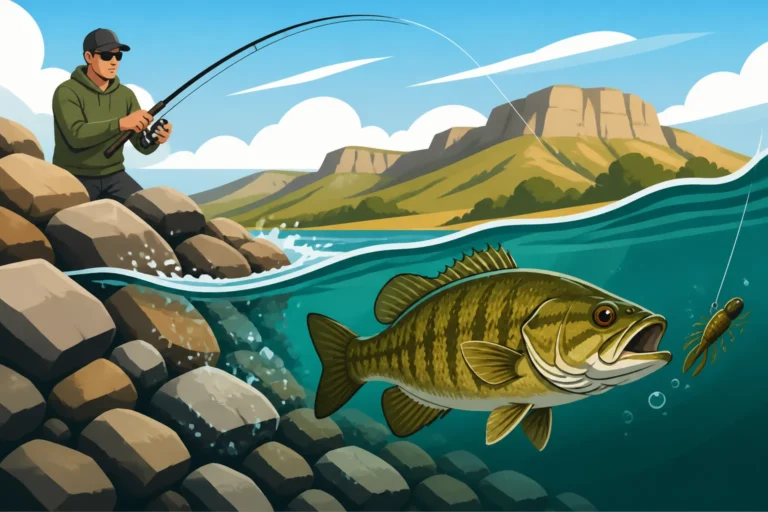
- Rocky Points and Riprap: These are classic smallmouth havens. The rocks absorb heat, and baitfish are often concentrated around them. Cast parallel to these structures, letting your bait fall into deeper pockets. These areas are excellent for Smallmouth Bass Fishing Techniques for Rocky Shorelines.
- Submerged Humps and Ledges: Use your electronics to find these underwater features. Smallmouth will relate to them, especially as they move between shallow and deeper water. Work jigs and dropshots over these structures.
- Transition Zones: Look for areas where different types of bottom meet—say, a gravel flat transitioning into a muddy drop-off, or where submerged timber gives way to open water. These edges are natural ambush points.
- Shallow Bays with Cover: Don't overlook calmer, shallower bays with some form of cover like sparse weeds, fallen trees, or large boulders. These can be prime spawning areas. Once the spawn is complete, males will often stay to guard the fry for a period.
Keep an eye on any current. Even subtle current in Lake Francis Case can position fish, often on the "downstream" side of a point or hump where food is washed to them.
Essential Gear for Lake Francis Case Smallmouth
Having the right gear makes all the difference, especially when you're battling feisty smallmouth in a big water system.
- Rods and Reels: For versatile smallmouth fishing, a medium-light to medium-heavy spinning rod (6'6" to 7'2") paired with a quality 2500 or 3000 series spinning reel is ideal. This setup provides the sensitivity for light bites and the backbone to fight strong fish. For heavier applications, especially with bigger crankbaits or casting jigs, a medium-heavy baitcasting setup (6'8" to 7'4") will give you more power and control. You can find excellent options for Best Baitcasting Reels for Smallmouth Bass on retailers like Amazon.
- Line Selection: I typically spool my spinning reels with 8-10 lb braided line, adding a 6-8 lb fluorocarbon leader for stealth and abrasion resistance. Fluorocarbon is nearly invisible underwater and holds up well against rocky bottoms. For baitcasters, 10-12 lb fluorocarbon or a heavier braided line with a fluorocarbon leader is a solid choice.
- Lures and Terminal Tackle: Beyond the specific baits mentioned earlier (tubes, jigs, crankbaits, spinnerbaits), make sure you have a good selection of hooks, weights (dropshot weights, jig heads), and swivels. It's always a good idea to have a variety of colors and sizes for your soft plastics, as smallmouth can be picky about their preferences on any given day. Don't forget a pair of pliers for hook removal and a net for landing those bigger fish. You'll want a tackle box with plenty of compartments, easily available on Amazon, to keep everything organized.
Investing in quality gear ensures you're ready for whatever Lake Francis Case throws at you and can handle those powerful runs and acrobatic jumps smallmouth are famous for.
Other Productive Times and What to Expect
While May clearly shines as the top choice, that doesn't mean other months are duds for smallmouth bass on Lake Francis Case. Fishing is an all-season sport, and with a bit of adaptation, you can find success during other periods as well. It's all about understanding the fish's seasonal movements and adjusting your approach. For a general overview of when various species are biting, check out our comprehensive guide on South Dakota Fishing Seasons Explained.
Early Spring: April's Potential and Challenges
April on Lake Francis Case can be a bit of a gamble, but it holds incredible potential for trophy smallmouth. This is typically the very beginning of the pre-spawn staging. The water is still quite cold, often in the upper 40s to low 50s, but it's warming up. The fish are just starting to become active after their winter lethargy. The challenge is that a late cold snap or strong spring winds can really set them back and make them tough to catch.
However, if you hit a stable warm spell, the fishing can be exceptional. Fish will be concentrated in deeper pre-spawn staging areas, often adjacent to prime spawning grounds. Slow-moving baits like hair jigs, blade baits, or suspending jerkbaits fished meticulously can be very effective. This is a time for patience and precise boat control, but the rewards can be massive, as the biggest fish are often caught just before the main spawn. This early period requires specific Pre-Spawn Bass Fishing Techniques to be successful.
Early Summer: June's Opportunities and Adaptations
Once May's peak action begins to wane, June ushers in the full swing of summer smallmouth patterns. By this point, most of the smallmouth have completed their spawning rituals, and they are actively feeding to regain energy. The water is warmer, and fish will often be found deeper during the brightest parts of the day, moving shallower during dawn and dusk. This transition period is still highly productive, but it requires different strategies. If you're planning a trip specifically for this month, our guide on Lake Francis Case Smallmouth Bass Fishing in June offers more targeted advice.
Smallmouth in June will relate more strongly to offshore structure—deep points, humps, ledges, and channels. Drop-shot rigs, Carolina rigs, and deep-diving crankbaits become incredibly effective. They might be suspended over deeper water, chasing schools of baitfish, so keeping an eye on your fish finder is crucial. The bite can still be fantastic, but it's a bit more of a "seek and find" mission compared to the more concentrated nature of the May bite. Understanding Post-Spawn Bass Fishing Techniques will be vital here, as the fish are transitioning from their spawning grounds to their summer feeding areas.
The key to June smallmouth fishing on Lake Francis Case is to adapt to their depth preferences and be willing to explore offshore structure. They're still aggressive, but they're often not as accessible as they were in May.
Table: Smallmouth Bass Activity on Lake Francis Case by Season
To give you a quick visual, here's a general guide to smallmouth bass activity on Lake Francis Case throughout the prime fishing seasons. Remember, these are general trends, and local conditions can always vary!
| Season | Month(s) | Smallmouth Activity Level | Primary Location | Preferred Baits | Notes |
|---|---|---|---|---|---|
| Early Spring | April | Moderate-High (Pre-Spawn) | Deeper points, channel swings, rocky staging areas | Hair jigs, suspending jerkbaits, blade baits, swimbaits | Fish are lethargic in cold water, but trophy potential is high. |
| Peak Season | May | Very High (Pre/Post-Spawn) | Rocky points, riprap, gravel flats, shallow bays | Tubes, jigs, crankbaits, spinnerbaits, topwater (late May) | THE BEST MONTH: Aggressive and concentrated fish. |
| Early Summer | June | High (Post-Spawn/Summer) | Deeper ledges, humps, current breaks, offshore structure | Drop-shots, Carolina rigs, deep crankbaits, swimbaits | Fish move deeper, more spread out, but still very catchable. |
| Mid/Late Summer | July/Aug | Moderate-High | Deep structure, main lake points, current seams | Deep jigs, drop-shots, shaky heads, night fishing | Hotter water pushes fish deeper; early/late day bites best. |
| Fall | Sept/Oct | High (Feeding Frenzy) | Shallow to mid-depth points, rock piles, humps | Crankbaits, jigs, spinnerbaits, jerkbaits, spoons | Fish aggressively feed before winter; often schooling up. |
So, there you have it! While Lake Francis Case offers fantastic smallmouth fishing across multiple seasons, May truly stands out as the ultimate month to chase these incredible fish. Good luck out there, and don't forget your camera for those trophy photos!
Disclaimer
This article is for general informational purposes only and does not constitute professional advice. Laws, prices and regulations vary by location and change over time. Consult a qualified professional for guidance on your specific situation.