How to Fish a Weed Line for Pike
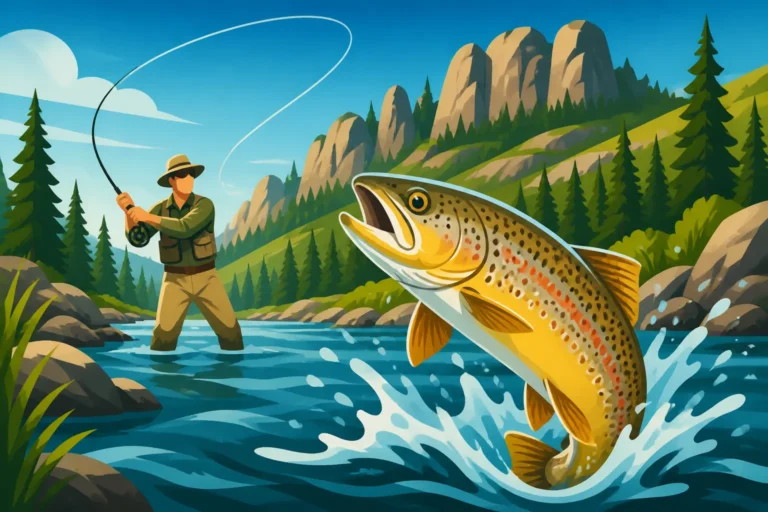
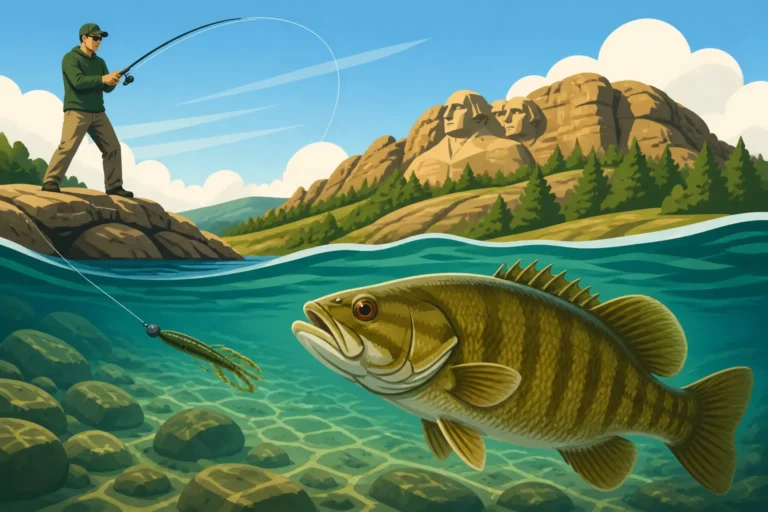
There’s nothing quite like the heart-stopping strike of a northern pike, especially when it explodes from a dense weed line. But let's be honest, those beautiful, thick beds of aquatic vegetation can feel more like a tackle graveyard than a prime fishing spot if you don't know how to approach them. Many anglers get frustrated by constant snags and lost lures, convinced that fishing weeds is more trouble than it's worth. This guide is here to change that, offering practical, actionable advice on how to effectively target and land northern pike that call South Dakota's intricate weed lines home, turning those frustrating snags into thrilling strikes.
Understanding Northern Pike and Their Weed Line Habits
Northern pike are apex predators in many South Dakota waters, and they have a distinct preference for habitat that allows them to hunt efficiently. Those thick weed lines aren't just random patches of vegetation; they're bustling underwater cities for these toothy fish. Learning why pike gravitate to these areas and what kind of weed lines are most productive is your first step to consistent success.
Why Pike Love Weed Lines
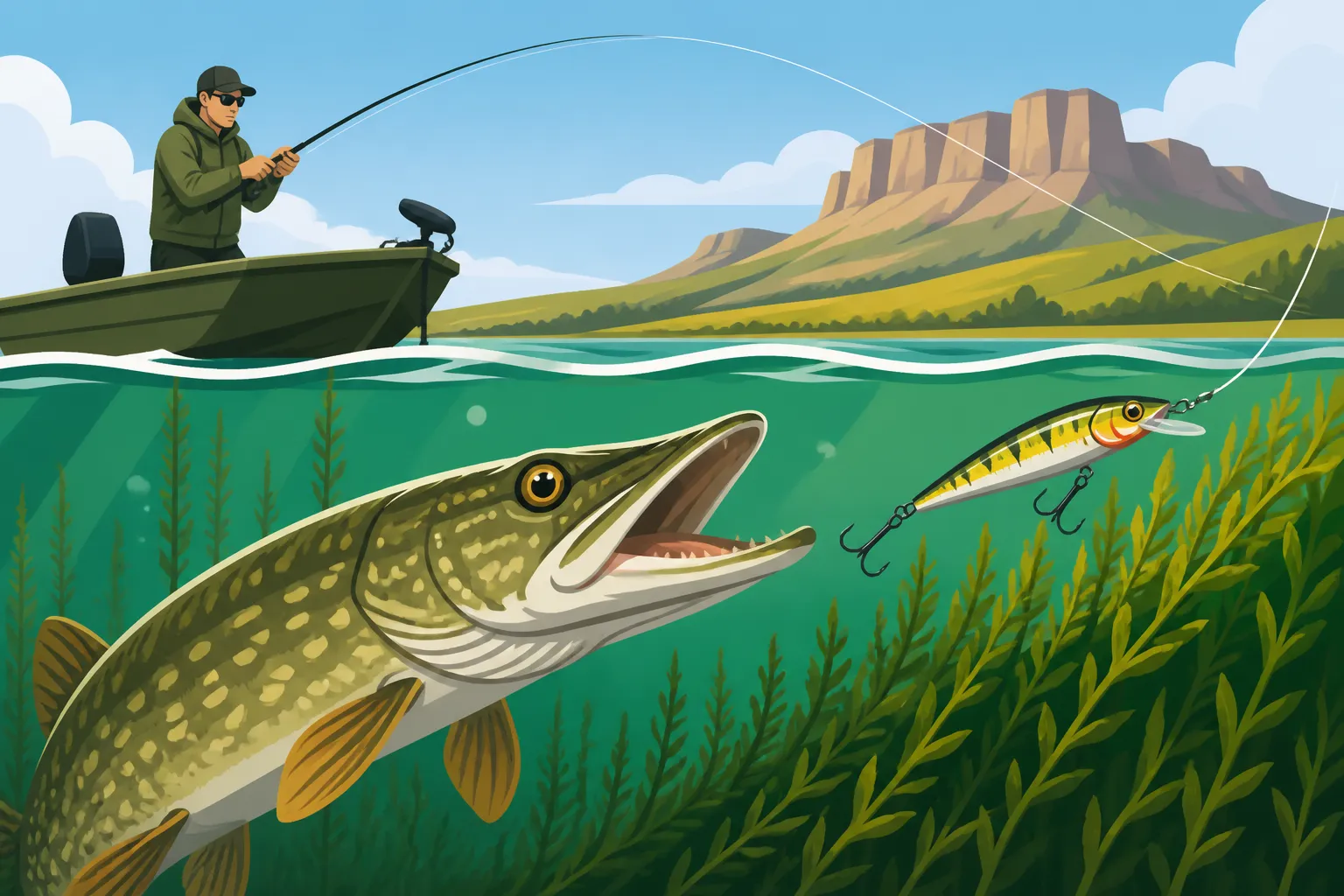
Pike are masters of ambush, and aquatic vegetation provides the perfect cover for their hunting style. Imagine yourself as a pike: you're long, sleek, and quick, but you don't want to expend energy chasing down every meal in open water. Instead, you'd hide, perfectly camouflaged, waiting for an unsuspecting baitfish to swim by. Weed lines offer that precise advantage.
Beyond just cover, these green havens are often teeming with the very baitfish that pike gorge on. Perch, minnows, and smaller panfish all seek refuge and food within the weeds, creating a natural buffet for a hungry pike. It's a classic predator-prey relationship playing out right before your eyes (or under your boat!).
Weed lines also play a crucial role in the pike's comfort and survival, especially as seasons change. In the scorching South Dakota summer, dense vegetation provides shade and often holds cooler, more oxygenated water than the open, sun-baked flats. Conversely, in the cooler months, these same weeds can retain a bit more warmth, offering a slightly more comfortable environment. It's a dynamic ecosystem that supports pike year-round.
Identifying Productive Weed Line Structures
Not all weed lines are created equal, and understanding the nuances of different structures within these vegetated areas is key to finding the most active pike. Simply casting into a vast, unbroken field of weeds is often a recipe for snags and frustration. Instead, look for edges, pockets, and transitions.
The "outside edge" of a weed line, where the dense growth meets open water, is often a high-traffic area. Pike will patrol these boundaries, darting out to snatch prey that ventures too close to the safety of the weeds. However, don't overlook the "inside edge," particularly in bays or protected coves, where pike might tuck deeper into the cover.
More subtle features like "pockets" – small openings or clearings within the dense weed bed – are absolute goldmines. These natural ambush points allow a pike to hide completely, yet still have a clear view to launch an attack. Similarly, "points" where a weed line juts out into open water, or "channels" and lanes that cut through the vegetation, act like highways for baitfish and prime hunting grounds for pike. Areas where different types of weeds meet, like a transition from lily pads to submerged coontail, can also be highly productive as they create unique micro-habitats.
Essential Gear and Tackle for Weed Line Pike
Fishing for pike in dense cover demands robust gear. You’re not just trying to catch a fish; you’re often trying to extract a powerful, thrashing predator from a tangled mess of vegetation. Having the right rods, reels, line, and lures will significantly increase your success rate and reduce tackle loss.
Rods, Reels, and Line Selection
When it comes to battling pike in the weeds, think "power." A medium-heavy to heavy power fishing rod, typically in the 7 to 8-foot range, is your best friend. This extra backbone gives you the leverage needed to both set the hook firmly and muscle a fish out of heavy cover without snapping your rod. Whether you prefer a baitcasting or spinning reel is a personal choice, but ensure it's a robust model with a strong drag system that can handle the sudden surges of a big pike.
Your fishing line is arguably the most critical component. Braided line is almost non-negotiable for weed fishing. Its incredible strength-to-diameter ratio means you can use a lighter, more sensitive line with impressive pulling power. More importantly, braided line has virtually no stretch, allowing for immediate feedback on bites and powerful, direct hooksets. It also tends to "cut" through weeds better than monofilament, reducing fouling. A 30 to 50-pound test braided line is a good starting point, and you can find many excellent options for braided line and leaders on Amazon.
Crucially, you absolutely must use a bite-proof leader. Pike have incredibly sharp teeth that will effortlessly sever fluorocarbon or monofilament mainlines. A steel leader (either multi-strand wire or single-strand) or a very heavy fluorocarbon leader (60-80 pound test) is essential. While fluorocarbon offers stealth, steel provides ultimate protection. Attach your leader to your main line with a strong knot, and use a high-quality snap swivel at the end of the leader to quickly change lures. If you're looking for different leader options, check out the information in our South Dakota Fishing Gear Checklist for general gear considerations that often apply to pike.
Lure Choices That Excel in Weeds
The key to fishing weed lines successfully is choosing lures that are designed to be "weedless" or can at least navigate vegetation with minimal snagging. There’s nothing more disheartening than losing your favorite lure to a submerged log or a thick clump of milfoil.
Weedless spoons are a classic for a reason. Lures like the Johnson Silver Minnow, with its single upturned hook and metal guard, can glide over and through dense weeds with surprising ease. Their wobbling action and flash are irresistible to pike. Spinnerbaits are another fantastic option. Their single upward-pointing hook and wire arm (which deflects weeds) make them remarkably weed-resistant. The flash and vibration from the spinning blades call in pike from a distance, even in stained water.
Soft plastic jerkbaits or swimbaits, rigged "Texas style" with a weighted wide-gap hook, are incredibly versatile. The hook point is embedded in the plastic, making it virtually snag-proof. You can twitch and pause these through open pockets, or slowly swim them over submerged weed tops. Topwater lures, such as frogs, mice, or buzzbaits, offer exhilarating strikes as pike explode on them from below. These are effective over matted weed beds where submerged lures would be impossible to fish. You'll find a wide selection of these effective weedless lures on Amazon, perfect for bulking up your tackle box. For more ideas on what to stock, take a look at Best Tackle Box Setup for South Dakota Anglers.
Mastering Techniques for Weed Line Pike Fishing
Having the right gear is only half the battle; knowing how to use it effectively in challenging weed line environments is where your angling skills truly shine. Precision, patience, and power are your allies here.
Casting and Retrieval Strategies
Accuracy in casting is paramount when fishing weed lines. You're not just casting at the weeds; you're often trying to place your lure into specific pockets, along a precise edge, or through a narrow lane within the vegetation. Practice casting to targets on the lawn to hone your precision. An errant cast into the dense stuff often means a snag and a lost lure, wasting valuable fishing time.
Once your lure hits the water, experiment with your retrieval speed and cadence. Sometimes, a fast, erratic retrieve that mimics a fleeing baitfish will trigger a reaction strike from a pike. Other times, a slower, more methodical approach, with frequent pauses or subtle twitches, is what's needed to entice a reluctant fish. Pay close attention to what the fish are telling you on a given day. Don't be afraid to let a weedless spoon flutter down into a pocket, or twitch a soft plastic jerkbait aggressively near a weed clump.
Consider working your lure not just along the weed line, but also into it slightly and then out again. Pike often lie just inside the cover. Bringing your lure to the edge and then drawing it out can simulate a baitfish attempting to escape, triggering that predatory instinct.
Approaching and Presenting Your Lure
Stealth is a virtue, especially when fishing shallower weed lines. Northern pike, like many predators, are sensitive to vibrations and shadows. Approach weed beds quietly, whether you're in a boat or fishing from shore. Minimize sudden movements, and if you're in a boat, use your trolling motor sparingly and at low speeds, or better yet, drift silently with the wind or current. For guidance on appropriate boat types, especially for navigating various South Dakota waters, consider checking out Best Fishing Boat Types for the Missouri River, as the principles of maneuverability apply broadly.
When presenting your lure, think about fan casting. Start by casting parallel to the weed line, then make subsequent casts at slightly different angles, gradually covering the entire productive area. This ensures you hit any hidden pockets or points you might have missed with a single cast. If you're targeting a specific opening or isolated clump, make several casts to that exact spot from different angles before moving on. Pike often need to be aggravated into striking.
Always remember that pike often face outward, ready to ambush. Presenting your lure so it comes from the open water towards the weed line, or passes along the edge, can often be more effective than casting directly into the dense cover and pulling it straight out. This simulates a baitfish trying to enter or exit their hiding spot.
Hooksets and Fighting Fish in Cover
This is where many anglers lose weed line pike. The instant you feel a strike, a strong, sweeping hookset is crucial. Pike have bony mouths, and you need to drive that hook home quickly and decisively. Because you're using braided line, there's little stretch, so your hookset will be very direct.
Once hooked, the fight is on, and it's often a brutal tug-of-war. Pike will instinctively try to bury themselves deep in the weeds to throw the hook or break your line. Your immediate goal is to keep the fish's head up and pointed towards open water. Do not let it turn its head back into the cover. Maintain constant, heavy pressure with your rod, using its backbone to "power" the fish out. If it does manage to get tangled, keep a tight line and try to pull steadily. Often, the pike will shake itself free, or the braided line will help cut through lighter vegetation.
It's a delicate balance: you need to fight hard and apply pressure, but avoid overtly horsing the fish to the point of breaking your line or ripping the hook out. Let your drag do its job on powerful runs, but be ready to reel down quickly and keep the pressure on as soon as the fish slows. Remember, a powerful fish in thick cover requires an assertive, yet controlled, fight. This is where a good Best Fishing Rods and Reels for Walleye setup, adapted for pike, really shines.
Seasonal Considerations and Advanced Tips
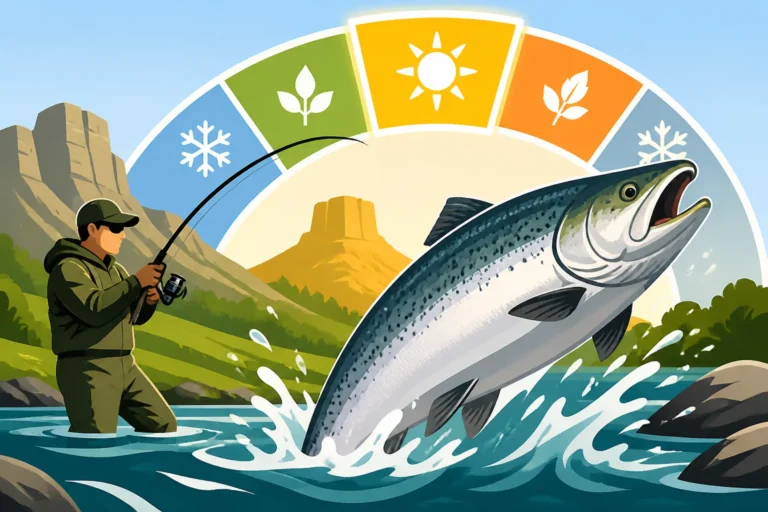
Pike behavior in weed lines can shift with the seasons, and understanding these changes will make you a more versatile and successful angler. Adapting your approach based on the time of year and environmental conditions will unlock more consistent results.
Weed Line Pike Through the Seasons
The life cycle of aquatic vegetation and the changing water temperatures dictate where pike will be found in relation to weed lines throughout the year.
In spring, after the ice has melted (or during the early open water period), pike are often found in shallower weed beds, especially those in protected bays that warm up faster. These areas are crucial for spawning. The weeds might not be fully grown yet, but emergent cattails, bulrushes, and sparse submerged growth will hold fish. Your lures should be worked slowly and deliberately during this colder water period. This is often a great time to target pike as they become more active, much like the walleye strategies described in South Dakota Spring Walleye Fishing Techniques.
Summer brings lush, dense weed growth. Pike will relate to these thick beds, either hiding deep within them for cover and cooler temperatures, or patrolling the outside edges where they can ambush prey. As the summer progresses and water temperatures peak, look for weed lines in deeper water, or those with access to immediate deep water, as these spots often offer better oxygen levels and cooler refuge. Topwater action can be fantastic over matted weeds during low-light conditions.
By fall, as water temperatures drop and the weeds begin to die off, pike go on a feeding frenzy. They're trying to pack on weight for the upcoming winter. While some weeds will still be green and productive, particularly submerged cabbage or milfoil, pike will also key in on dying weed lines that still offer cover. Often, the remaining green weed patches, even if isolated, become magnets for both baitfish and pike. During this time, they're often aggressive, making it an excellent period for casting large spinnerbaits and spoons. Think about how this mirrors the active feeding of other species, as highlighted in South Dakota Fall Walleye Fishing Techniques.
Reading Water and Environmental Factors
Successful weed line fishing isn't just about technique; it's also about being a keen observer of your environment. Factors like water clarity, wind, and sunlight can significantly influence pike behavior.
Water clarity dictates how visible your lure is and how deep a pike will hold in the weeds. In clear water, pike might be deeper within the cover, relying more on stealth, and you might need more natural lure colors. In stained or turbid water, they might be bolder on the edges, and bright, flashy, or noisy lures become more effective.
Wind plays a huge role. A good chop on the water surface breaks up light penetration, making pike less wary and more apt to venture out of cover. Wind also pushes baitfish into certain weed lines or concentrates them along windy points, making these areas prime fishing spots. Fish the windy side of a weed bed if it's safe to do so.
Sunlight and cloud cover also influence activity. Overcast days or low-light periods (dawn and dusk) often see pike more active and willing to cruise the weed edges. Bright, sunny days might push them deeper into the thickest cover, requiring you to cast more directly into pockets. Even something as subtle as barometric pressure can impact their willingness to bite; a stable or rising barometer often correlates with more active fish.
Safety and Responsible Angling in Weedy Areas
Pike are incredible fish, but their powerful jaws and razor-sharp teeth demand respect and careful handling. Responsible angling, especially when targeting these feisty predators in dense cover, is paramount for both your safety and the health of the fish.
Always carry essential tools: a long-nosed pair of pliers or forceps, and a jaw spreader are non-negotiable. Pike can swallow lures deep, and trying to reach in with your bare hands is a surefire way to get injured. The jaw spreader keeps their mouth open safely, allowing you to use the pliers to quickly and gently remove the hook. Don't forget to grab a good set of long-nosed pliers – you can find them easily on Amazon, often in sets with other useful tools.
When using lures with treble hooks, exercise extra caution, particularly in heavy weeds where snags are frequent. Consider replacing treble hooks with single, barbless hooks for easier release and less harm to the fish, especially if you're practicing catch and release. This also reduces the chance of a hook getting embedded in your finger or the net. For more details on species limits and responsible angling, refer to the South Dakota Northern Pike Limits or the comprehensive South Dakota Fishing Regulations Explained.
Finally, practice proper catch and release techniques. Minimize the time the fish is out of the water. Support its body horizontally, especially larger pike, to avoid damaging its internal organs. If a fish is deeply hooked and cannot be safely unhooked, consider cutting the line as close to the hook as possible rather than tearing at its gills or throat. Ensuring the health of the pike population means these magnificent fish will be there for future generations of South Dakota anglers.
| Lure Type | Weed Resistance | Pike Attraction | Retrieval Style in Weeds | Ideal Conditions |
|---|---|---|---|---|
| Weedless Spoon | Excellent | High | Slow retrieve, fluttering pauses, ripping | Dense weeds, open pockets |
| Spinnerbait | Excellent | High | Steady retrieve, varying speeds, bumping weeds | All weed types, especially around edges |
| Soft Plastic Jerkbait | Excellent | Medium | Twitch-pause, erratic action, slow swim | Pockets, lanes, over sparse weeds |
| Topwater Frog/Mouse | Superior | High | Walk-the-dog, popping, crawling | Matted weeds, lily pads, thick surface cover |
| Swim Jig | Good | Medium-High | Hopping, swimming through cover | Submerged weeds, patchy areas |
Disclaimer
This article is for general informational purposes only and does not constitute professional advice. Laws, prices and regulations vary by location and change over time. Consult a qualified professional for guidance on your specific situation.