South Dakota Fly Fishing for Black Hills Trout
There's a special kind of magic that calls to anglers when you talk about fly fishing in the Black Hills of South Dakota. It's not just about catching fish; it's about the crisp mountain air, the sound of rushing water, and the challenge of fooling a wary trout in a truly stunning setting. Many folks arrive eager to experience this renowned fishery, only to feel overwhelmed by the sheer variety of streams, the subtle nuances of fly selection, and the often-finicky nature of mountain trout. This comprehensive guide is here to untangle those complexities, offering a roadmap to successful and enjoyable fly fishing adventures in the heart of the Black Hills.
The Unique Appeal of Black Hills Trout Fishing
For many anglers, the Black Hills isn't just another fishing destination; it's a sanctuary. Tucked away in the southwestern corner of South Dakota, this ancient, forested mountain range offers a stark and welcome contrast to the vast prairies that dominate much of the state. It's a place where cold, clear streams tumble through granite canyons and pine forests, providing the perfect habitat for a thriving trout population.
Why the Black Hills Stand Out for Fly Anglers
What makes the Black Hills truly special for fly fishermen is the sheer density and diversity of its trout waters. Unlike many regions where prime trout streams are few and far between, the Black Hills boasts hundreds of miles of fishable water, from tiny, intimate creeks that demand stealth and precision to larger rivers with deeper runs and more challenging currents. The consistent cold water temperatures, even during the heat of summer, are a lifeline for trout, ensuring active feeding windows throughout the seasons. This allows for year-round fishing opportunities, including some fantastic, albeit chilly, winter fly fishing.
Beyond the abundance of fish, the Black Hills offers an unparalleled aesthetic experience. Imagine casting a delicate dry fly under the shade of towering Ponderosa pines, with deer occasionally peeking from the underbrush and the only sounds being the gurgle of the stream and the whisper of the wind. It’s a place that reconnects you with nature in a profound way, far removed from the hustle and bustle. The opportunities range from serene, solitary stretches to more accessible waters near towns like Rapid City, making it versatile for all levels of experience.
Understanding the Black Hills Trout Species
The Black Hills is home to three primary species of trout, each with its own characteristics and preferred habitats, offering a varied challenge for the dedicated fly angler. Understanding these differences is key to tailoring your approach and increasing your success.
First up are the Rainbow Trout. These vibrant, often acrobatic fish are a favorite among many anglers for their spirited fights and willingness to rise to a dry fly. They are widely stocked throughout the Black Hills and thrive in many of the larger, more accessible streams like Rapid Creek and Spearfish Creek. Rainbows tend to prefer moderate currents and are often found in riffles, runs, and the heads of pools where oxygen levels are high and food is abundant. They are opportunistic feeders, taking nymphs, emergers, dry flies, and even small streamers. Their silver flanks with a distinctive pink stripe make them easily recognizable.
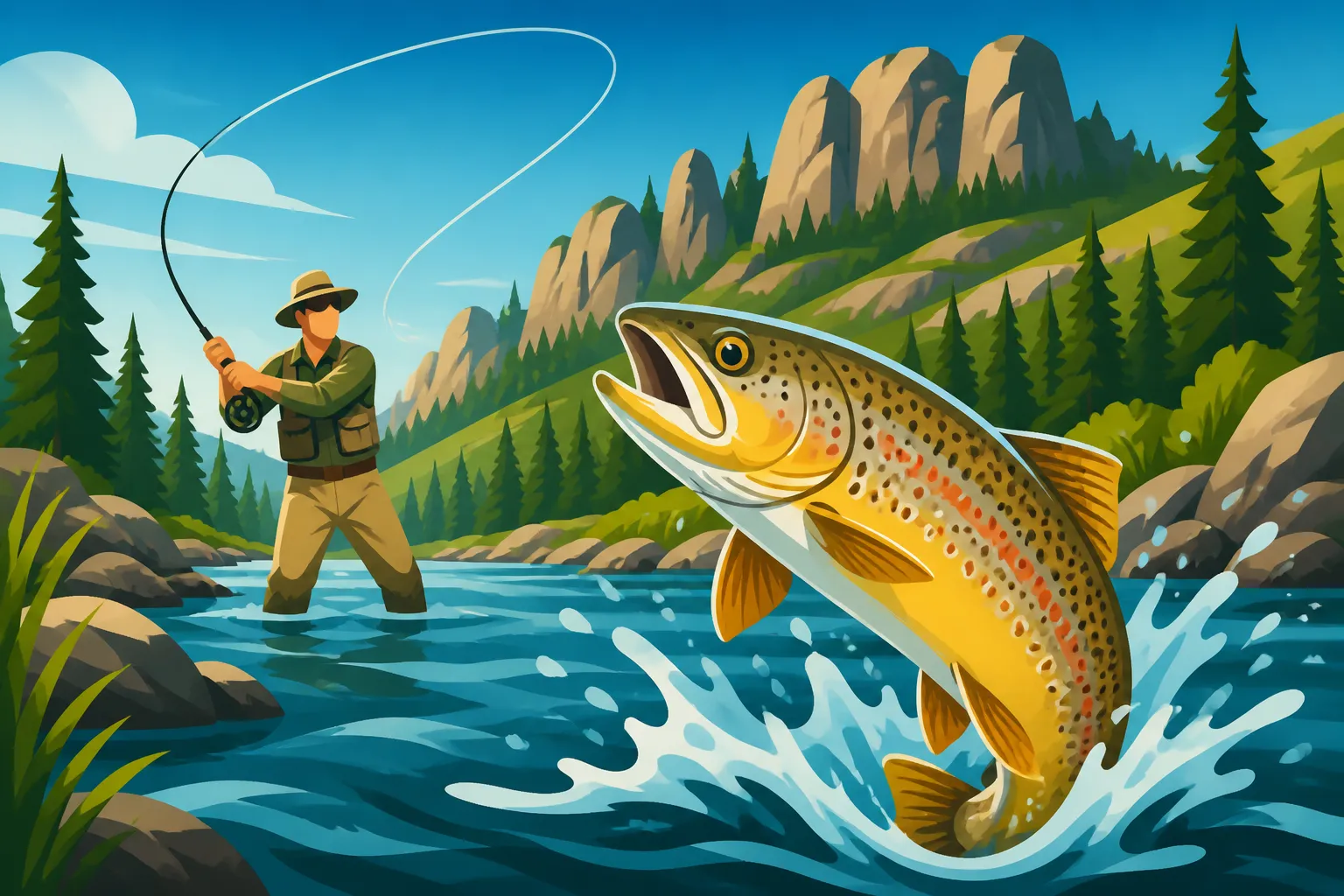
Next, we have the elusive and often larger Brown Trout. These fish are known for their beautiful golden-brown coloring, spotted patterns, and cunning nature. Brown trout are more wary than rainbows and tend to be structure-oriented, preferring to hide under undercut banks, logs, and large rocks. They are often most active during low light conditions, particularly at dawn, dusk, and even at night. While they will take nymphs and dry flies, especially larger terrestrials in summer, they have a strong predatory instinct and are often best targeted with streamers, especially when pursuing larger specimens. You'll find healthy populations of these beautiful fish in places like the catch-and-release section of Rapid Creek and in many of the wilder, less accessible tributaries. Learn more about South Dakota Brown Trout in the Black Hills.
Finally, for those who love a challenge and seek out true gems, there are the native Brook Trout. These smaller, exquisitely colored fish sport worm-like markings on their backs and vibrant red or orange spots surrounded by blue halos on their sides, making them arguably the most beautiful of the Black Hills trout. Brook trout typically inhabit the smaller, colder, and higher-elevation streams, often in more remote areas. They are less tolerant of warmer water and prefer pristine conditions. While they don't grow to the size of rainbows or browns, their aggressive takes and stunning appearance make them highly sought after. They are typically eager to hit a small dry fly or nymph. Anglers should consult the South Dakota Brook Trout Streams guide to find these charming fish.
Essential Gear for Black Hills Fly Fishing
Having the right tools for the job can make all the difference between a frustrating day on the water and a truly memorable one. Black Hills fly fishing, with its varied stream sizes and conditions, calls for a thoughtful approach to gear selection.
Choosing the Right Rod, Reel, and Line
For general-purpose trout fishing in the Black Hills, a 3-weight or 4-weight fly rod is often considered the sweet spot. These lighter rods offer a delicate presentation essential for fooling wary trout in clear mountain streams, yet they still provide enough backbone to handle a feisty 16-inch brown or rainbow. A medium-fast action rod is a versatile choice, allowing for precise dry fly casts while still providing the power needed for nymphing or throwing small streamers. If you plan on focusing solely on larger streamers or fishing on windy days, a 5-weight might be beneficial, but for most Black Hills scenarios, lighter is better for sensitivity and finesse.
When it comes to reels, a reliable single-action fly reel with a smooth drag system is perfectly adequate. You don't need anything overly fancy or expensive, as most of the fight will be absorbed by the rod itself. The reel's primary purpose is to hold your line and provide some balance to the rod. Make sure it's spooled with a good quality, weight-forward floating fly line that matches your rod weight. A weight-forward line helps with casting distance and turnover, which can be useful in varying stream conditions. For those looking for quality gear without breaking the bank, you can often find great value fly fishing combos and individual components on marketplaces like Amazon.
Waders, Boots, and Essential Accessories
Staying comfortable and safe on the water is paramount, especially when navigating slippery stream beds and dealing with variable weather. Breathable chest waders are highly recommended, even in summer, as the Black Hills waters can be quite cold. Look for waders that fit well and allow for layering underneath. Combine these with a sturdy pair of wading boots that offer excellent ankle support and reliable traction. Rubber soles with studs are generally preferred for grip on slippery rocks, though some anglers still prefer felt soles. It's always a good idea to check specific regulations for any potential restrictions on felt soles, although South Dakota currently allows them.
Beyond the basics, several accessories will significantly enhance your Black Hills fly fishing experience. A net with a rubberized mesh is crucial for safely landing and releasing fish, minimizing harm to their protective slime coat. A good pair of forceps or hemostats is indispensable for quickly and gently removing hooks, especially when practicing catch-and-release. Don't forget line nippers for trimming tag ends and a leader straightener. A vest or pack to hold your fly boxes, tippet, indicators, and other small essentials will keep everything organized and within easy reach. Given the changeable mountain weather, a lightweight rain jacket and proper layering are always smart additions to your gear bag.
Mastering Black Hills Fly Selection and Techniques
Fooling a trout with a feathered hook is an art form, and in the Black Hills, it often requires both the right "bug" and the perfect presentation. Understanding the local entomology and adapting your techniques accordingly will greatly increase your success.
Go-To Fly Patterns for Black Hills Trout
The key to successful fly selection in the Black Hills, as anywhere, is "matching the hatch" or at least "matching the general profile." This means observing what insects are active in, on, or around the water and selecting a fly that imitates them.
Nymphs are arguably the most consistent producers, as trout spend the vast majority of their time feeding subsurface. Every Black Hills angler should have a healthy supply of these. The Pheasant Tail Nymph and Hare's Ear Nymph are quintessential patterns, imitating a wide variety of aquatic insects. For a bit more flash, the Prince Nymph can be deadly. When conditions are tough, or during the colder months, tiny Midge Larva or Pupae patterns can be incredibly effective. Don't overlook attractor nymphs like the Walt's Worm or even the sometimes-controversial Squirmy Wormy, especially after a rain or when water levels are up. These patterns can imitate worms washed into the stream and often elicit aggressive strikes.
Dry Flies provide some of the most exciting visual fishing. When trout are looking up, nothing beats seeing a fish sip your fly from the surface. Classic patterns like the Adams and various Caddis imitations (like the Elk Hair Caddis) are always good choices. During late spring and early summer, look for larger mayfly hatches, and be prepared with patterns like the Parachute Adams or Blue-Winged Olive (BWO). As summer progresses, terrestrials become increasingly important. Think Grasshoppers, Ants, and Beetles. A well-presented foam hopper or ant on a warm August afternoon can lead to explosive strikes.
Finally, Streamers are essential, especially when targeting larger, more predatory brown trout. The Woolly Bugger in various colors (black, olive, brown) is the undisputed king of streamers for a reason – it simply catches fish. Other effective patterns include the Clouser Minnow or small Sculpin imitations. These flies mimic baitfish, leeches, or larger aquatic insects, and often entice aggressive strikes from opportunistic feeders, particularly around undercut banks, submerged logs, and deeper pools.
Key Fly Fishing Techniques for Black Hills Streams
Beyond simply knowing which fly to tie on, mastering the presentation is critical. Black Hills trout are often pressured and can be incredibly discerning.
Nymphing is a workhorse technique, especially during periods when trout aren't actively rising. The most common approach is indicator nymphing, where a strike indicator (a small bobber) is attached to your leader, and one or two weighted nymphs are suspended below it. The goal is to get your nymphs drifting naturally at the trout's feeding depth. Pay close attention to the indicator for any hesitation, drag, or movement that signals a strike. Alternatively, tight-line nymphing (also known as European Nymphing or contact nymphing) involves fishing without an indicator, maintaining direct contact with your flies to detect subtle takes. This technique is incredibly effective in complex currents and for truly feeling the bite. Learn more about Nymph Fishing Techniques for Trout Streams.
When trout are feeding on the surface, Dry Fly Fishing offers the ultimate thrill. The key here is a drag-free drift. This means your fly must float downstream at the exact same speed as the surrounding current, without any unnatural tugging or pulling from your line. Achieving this requires accurate casting, typically upstream or up-and-across, and careful mending – manipulating your line in the air or on the water to prevent drag. Focus on presenting your fly gently and accurately to rising fish or into likely holding lies near structure. Patience and observation are your best friends here.
Streamer Fishing is a more aggressive technique, often used for larger trout or when nothing else seems to be working. You'll cast your streamer across or downstream and then retrieve it with various stripping techniques, imparting movement that mimics a fleeing baitfish. Vary your retrieve speed and retrieve pattern (long strips, short jerks, pauses) until you find what triggers a strike. This technique is particularly effective in deeper pools, along undercut banks, or during periods of higher water when trout are less likely to rise. Reading the water and understanding where predatory fish might ambush prey is crucial for successful streamer fishing.
Top Black Hills Trout Streams and Access Points
The Black Hills are crisscrossed with numerous trout streams, each offering a unique character and angling experience. Knowing where to go and how to access these waters is vital for planning your trip.
Exploring Rapid Creek and Its Diverse Sections
When you talk about fly fishing in the Black Hills, Rapid Creek is often the first name that comes to mind, and for good reason. It offers a wide range of experiences, from challenging technical fishing to more accessible urban stretches.
One of the most renowned sections is the Catch-and-Release Water below Pactola Dam. This approximately 4-mile stretch is a true gem, famous for its abundant and often large brown and rainbow trout. The cold, consistent flows from the bottom of Pactola Reservoir create ideal conditions year-round, making it a fantastic fishery even in winter. Access is relatively easy, with designated parking areas and walking trails along the creek. You'll find a mix of runs, riffles, and deeper pools, often with significant weed growth that provides excellent cover for trout. This section is strictly artificial flies and lures only, and all trout must be immediately released. Anglers often find success with a variety of nymph patterns, small streamers, and dry flies during specific hatches. You can find more details in the Pactola Reservoir Fishing Guide and specifically about the Black Hills Catch-and-Release Trout Streams.
Further downstream, Rapid Creek flows directly through Rapid City, transforming into a surprisingly productive urban fishery. While it's a different experience than the wilder sections, it offers incredible convenience and often good fishing, especially for rainbow trout. Public access points are plentiful within the city parks, and fish can be found around bridges, culverts, and park structures. This section is generally more forgiving for beginners, and a wider range of techniques can be effective. It’s a great spot to practice your casting and enjoy a quick fishing session without venturing deep into the wilderness.
Other Productive Black Hills Trout Waters
While Rapid Creek might steal some of the spotlight, the Black Hills is home to many other fantastic trout streams that deserve attention. Each has its own charm and provides excellent opportunities for the discerning angler.
Spearfish Creek is another iconic Black Hills fishery, often compared to some of the famous western trout streams. Flowing through the picturesque Spearfish Canyon, this creek boasts stunning scenery and a healthy population of wild brown trout, along with some stocked rainbows. The canyon walls provide shade and maintain cool water temperatures, making it productive even during warmer months. Access can be found along Highway 14A, with numerous pull-offs and designated fishing areas. The creek is characterized by a faster flow, deep pockets, and rocky structure, requiring precise casting and careful wading. Small nymphs and streamers are often very effective, and dry fly opportunities can be exceptional during hatches.
Castle Creek offers a more intimate experience. This beautiful stream flows out of Deerfield Lake and offers excellent fishing for both rainbow and brown trout. Portions of Castle Creek are also managed as catch-and-release, providing similar quality fishing to the Rapid Creek special regulations area, but often with less angler pressure. The stream is smaller and requires a stealthier approach, making it perfect for those who enjoy sight fishing and delicate presentations. Access points are available along Forest Service roads and within Custer State Park.
For those seeking a true wilderness experience and the chance to target native brook trout, streams like French Creek and Spring Creek are worth exploring. These smaller, higher-elevation tributaries often flow through more rugged terrain, requiring some hiking to reach prime spots. The reward, however, is the chance to catch brightly colored brook trout in a truly pristine environment, often with little to no competition. These smaller streams are ideal for a short, lightweight fly rod and small dry flies or nymphs. Always check the specific regulations for these smaller streams, as some may have unique rules regarding tackle and limits. Don't forget to consult a comprehensive Black Hills Trout Stream Fishing Guide for detailed information on these and many other productive waters.
Regulations and Conservation for Black Hills Trout
Responsible angling is not just about catching fish; it's about preserving the resource for future generations. In the Black Hills, understanding and adhering to regulations, along with practicing sound conservation principles, is paramount to maintaining these precious trout fisheries.
Understanding Special Regulations and Limits
South Dakota Game, Fish and Parks (GFP) implements specific regulations to manage the Black Hills trout populations, and these can vary significantly from one stream or even one section of a stream to another. It is absolutely crucial to consult the current South Dakota Fishing Regulations Explained pamphlet or the GFP website before heading out.
One of the most important aspects to understand is the presence of catch-and-release areas. As mentioned earlier, the stretch of Rapid Creek below Pactola Dam is a prime example, where all trout must be immediately released. These areas often have further restrictions, such as artificial lures and flies only, meaning no bait can be used. Other streams or sections might have specific size and possession limits for different trout species. For instance, there might be a slot limit on brown trout, meaning fish within a certain size range must be released, while smaller or larger fish can be kept. These regulations are designed to protect spawning populations and ensure a healthy age structure within the fishery.
For those interested in the intricacies of the local fish populations, specific species limits like South Dakota Trout Limits in the Black Hills are detailed. It's also important to be aware of the overall South Dakota Fishing Season Dates and Limits, as some areas might have seasonal closures, though many Black Hills streams offer year-round trout fishing. Always carry your South Dakota fishing license and a copy of the current regulations, or have them readily accessible on your phone, to ensure compliance. Ignorance of the law is never an excuse, and violating regulations can result in hefty fines and the loss of fishing privileges.
Practicing Responsible Angling and Conservation
Beyond the written rules, responsible angling involves a commitment to conservation ethics. The concept of "Leave No Trace" is central to preserving the pristine beauty and ecological health of the Black Hills. This means packing out everything you pack in, including all trash, discarded fishing line, and even organic waste like fruit peels. Avoid disturbing wildlife and stay on established trails whenever possible to prevent erosion and habitat damage.
Proper fish handling is another critical component, especially when practicing catch-and-release. Always use wet hands when handling a trout; dry hands can remove the fish's protective slime coat, making it vulnerable to disease. Try to keep the fish in the water as much as possible, especially during warm weather. If you must remove it for a quick photo, do so gently and quickly, minimizing its air exposure. Use barbless hooks, or pinch down the barbs on your hooks, as this makes hook removal much easier and less traumatic for the fish. For deeply hooked fish, it's often best to cut the line as close to the hook as possible rather than attempting to rip the hook out.
Additionally, be mindful of invasive species prevention. Although South Dakota doesn't have a widespread felt sole ban, always clean, drain, and dry your waders, boots, and gear between different waterways to prevent the transfer of aquatic invasive species. These small actions contribute significantly to maintaining the delicate balance of the Black Hills ecosystem and ensuring that future generations can enjoy the same incredible fishing experiences we do today.
Seasonal Strategies for Black Hills Trout
The Black Hills trout streams offer year-round opportunities, but success often hinges on understanding how trout behavior and insect activity change with the seasons. Adapting your approach to these natural rhythms is key.
Spring and Summer Tactics
Spring in the Black Hills can be a dynamic time. Early spring, often right after ice-out, sees trout becoming more active as water temperatures begin to rise. Midge hatches can be prolific on warmer days, and small nymph patterns are consistently effective. As snowmelt increases, streams might experience runoff, leading to higher, murkier water. During these periods, larger, heavier nymphs and even streamers that can cut through the current become more productive. As flows stabilize and water clarity improves, you'll start to see more consistent dry fly activity, with a variety of mayfly and caddis hatches emerging. This is a great time to target fish that are just shaking off their winter lethargy and are eager to feed.
Summer fishing in the Black Hills offers some of the most enjoyable conditions, with warmer air temperatures and long daylight hours. However, it also presents its own challenges. The best dry fly fishing often occurs during the early morning and late evening hours when insect activity is highest and water temperatures are at their coolest. Terrestrial patterns – think grasshoppers, ants, and beetles – become incredibly effective as these insects are accidentally blown or fall into the water from streamside vegetation. During the warmer midday hours, trout will often seek refuge in deeper, cooler pools or oxygenated riffles. This is a prime time for deep nymphing or fishing small streamers. Focus on shady areas and the cooler sections of the stream. Monitoring water temperature is crucial; if it gets too warm (typically above 68-70°F), it’s best to give the trout a break to minimize stress on the fish.
Fall and Winter Considerations
Fall in the Black Hills is arguably one of the most beautiful and productive seasons for fly fishing, especially for brown trout. The changing foliage provides a stunning backdrop, and the cooler water temperatures energize the fish. Mayfly hatches, particularly Blue-Winged Olives (BWOs), can be abundant, providing excellent dry fly opportunities. More importantly, fall is when brown trout begin their spawning preparations. This makes them incredibly aggressive, especially larger males, and they become highly susceptible to streamers. Targeting them in deeper runs and around potential spawning beds (though it's critical not to disturb actively spawning fish) can yield trophy-sized fish. This is a fantastic time for the dedicated angler to seek out that memorable catch.
Winter fly fishing in the Black Hills is not for the faint of heart, but it can be incredibly rewarding for those willing to brave the cold. Many streams remain open and fishable, thanks to groundwater springs or dam releases that keep them from freezing solid. The key to winter success is patience and a focus on subtle presentations. Midge fishing is paramount, as midges are often the only insects actively hatching. Small nymph patterns, fished very slowly and deep, are also effective. Trout become less active and move slower in the cold water, so their feeding windows are shorter and their strikes are incredibly subtle. Focus on the slowest, deepest pools and runs, and fish during the warmest parts of the day. You'll often have the streams largely to yourself, making for a peaceful and solitary angling experience. Keep an eye on local conditions, as excessive ice or snow can make stream access difficult or dangerous.
Here's a quick look at the fantastic trout species you'll encounter in the Black Hills:
| Trout Species | Identifying Features | Preferred Habitat | Key Fly Patterns |
|---|---|---|---|
| Rainbow Trout | Pink/red stripe, small dark spots, silvery sides | Moderate currents, riffles, heads of pools | Pheasant Tail, Hare's Ear, Elk Hair Caddis, Adams |
| Brown Trout | Dark spots with halos, golden-brown color | Undercut banks, logs, deep pools, slow water | Prince Nymph, Woolly Bugger, Hoppers, Caddis |
| Brook Trout | Worm-like markings, red/orange spots with blue halos, white fin edges | Small, cold, high-elevation streams | Small Dry Flies (Adams, Midges), Small Nymphs |
Remember, while these are general guidelines, local conditions, recent weather, and specific hatches will always dictate the best approach. Staying adaptable and observing your surroundings will lead to the most consistent success.
Disclaimer
Fishing conditions and regulations in South Dakota can change frequently. Always consult the official South Dakota Game, Fish and Parks (GFP) website or their most current fishing handbook before heading out on any fishing trip. This guide is for informational purposes only and does not supersede official regulations. Stay safe and fish responsibly.