Nymph Fishing Techniques for Trout Streams
It’s a common frustration among anglers: you’re on a beautiful South Dakota trout stream, the sun is shining, but the fish just aren't biting on the surface. Many folks assume trout aren't active, but the truth is, most of their feeding happens underwater. This guide will dive deep into nymph fishing techniques, unraveling the mysteries of subsurface presentations to help you consistently catch trout when they’re not looking up.
Understanding Nymphs and Trout Behavior
Nymph fishing is arguably the most effective way to consistently catch trout. It’s all about understanding what trout eat most of the time, and that’s not typically the adult insects dancing on the water's surface.
What Exactly Are Nymphs?
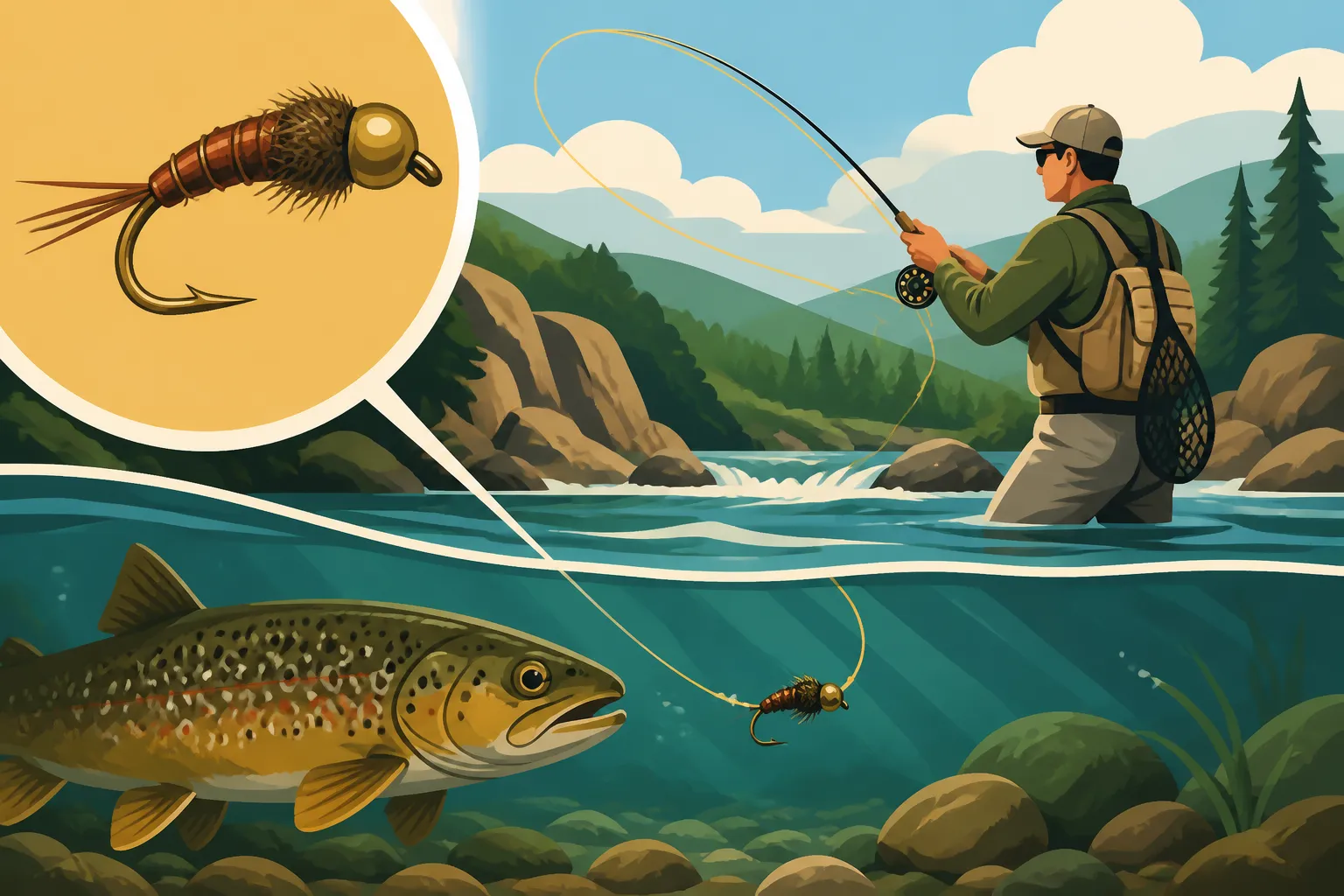
Nymphs are the aquatic larval or immature stages of many common stream insects, such as mayflies, caddisflies, and stoneflies. Unlike their adult counterparts, which have short lifespans above water, nymphs live for months, sometimes even years, clinging to rocks, submerged logs, and vegetation on the stream bed. They form the vast majority of a trout's diet, often making up 90% or more of what a fish consumes throughout the year. When you hear anglers talk about "hatches," they're usually referring to the emergence of these nymphs as adult insects, but the nymphs themselves are a constant food source.
For us anglers, this means that even when there's no visible surface activity, trout are almost certainly feeding on nymphs below. In many of the pristine Black Hills streams, like Rapid Creek near Rapid City or Spearfish Creek, there's a continuous supply of various nymph species. Learning to identify the prevalent nymphs in your chosen fishing spot—their size, shape, and color—is a fundamental skill that significantly boosts your chances of success. It’s a core component of any South Dakota Fly Fishing Guide.
Trout's Diet and Subsurface Feeding Habits
Trout are incredibly efficient predators. They aren't going to waste precious energy chasing down a meal if they can simply let the current deliver it to them. Because of this, they strategically position themselves in "feeding lies" – areas where food naturally funnels, and where they can expend minimal energy to grab a meal while also staying safe from predators and strong currents. These lies might be behind large rocks, in the slower seams of current, at the head or tail of a pool, or along undercut banks. From these positions, they wait for dislodged nymphs, worms, or other aquatic invertebrates to drift by.
The key takeaway here is that trout are accustomed to food being delivered to them passively. They don't typically chase nymphs with aggressive lunges; instead, they make subtle, energy-efficient movements to intercept drifting food. This is precisely why presenting your artificial nymph with a natural, drag-free drift is so critical. Any unnatural movement, speed, or presentation will immediately signal to the trout that something isn't right, often leading to them ignoring your offering completely. This holds true for all trout species you might encounter, from the resident South Dakota Brown Trout in the Black Hills to native brookies.
Mimicking Natural Drifts
Achieving a "drag-free drift" is the holy grail of nymph fishing. This means your artificial nymph needs to move at precisely the same speed as the surrounding current, just like a real nymph would if it were tumbling downstream. Any tension on your fly line or leader that pulls your nymph faster, slower, or in an unnatural direction is called "drag," and it's the fastest way to spook a discerning trout. Trout have incredible eyesight and can easily spot an artificial fly that isn't behaving naturally.
Consider dropping a real dead leaf or twig into the current. It floats and tumbles with the water, completely at its mercy. Your nymph should do the same. This isn't always easy, especially in complex river currents where different speeds of water can pull on various parts of your line. Mastering various casting techniques, such as stack mends, aerial mends, and reach casts, along with effective line management on the water, are indispensable skills for maintaining that crucial drag-free drift. When you nail it, your nymph becomes virtually indistinguishable from the natural food sources, making it an irresistible meal for waiting trout.
Essential Nymph Fishing Gear and Tackle
Having the right tools for the job can make a huge difference in your nymphing success, especially when you're navigating the varying conditions of South Dakota's trout streams.
Rods, Reels, and Lines for Nymphing
When it comes to nymph fishing, your rod, reel, and line setup plays a critical role in presentation and detecting subtle strikes. For most South Dakota trout streams, a fly rod in the 9 to 10-foot range, typically a 3 or 4-weight, is ideal. The longer rod length provides better line control, allowing you to keep more line off the water and achieve those coveted drag-free drifts, especially important in pocket water or when reach-mending. Brands like Redington or Orvis offer excellent mid-range options that are both durable and sensitive. A longer rod also helps with managing longer leaders, which are common in nymphing.
Your reel should simply balance your rod and hold your fly line comfortably, along with a bit of backing. It's less about the drag system and more about capacity. As for fly line, a weight-forward floating line that matches your rod weight is standard. However, many dedicated nymph anglers, particularly those employing European nymphing techniques, might opt for a specialized thin diameter nymphing line or even use monofilament leaders that are extremely long (15-20 feet) directly connected to their backing or a short stub of fly line. This setup significantly reduces drag and increases sensitivity, allowing you to feel even the most delicate takes. You can find a vast selection of these specialized lines and leaders on Amazon, often at competitive prices. For a deeper dive, check out our guide on Best Fly Rods for Black Hills Trout.
Indicator and Leader Setups
The indicator, often called a "strike indicator," is your visual cue that a fish has taken your nymph. It's like a bobber for fly fishing, but with much more finesse. Common types include small foam indicators (like Thingamabobbers or Air-Locks), yarn indicators, or even a buoyant dry fly in a "dry-dropper" rig. The choice often depends on water conditions, depth, and personal preference. For turbulent water, a larger, more visible indicator might be necessary, while clear, slow water calls for something smaller and more subtle. Placement of the indicator is crucial; it should be set at about 1.5 to 2 times the depth of the water you are fishing to ensure your nymph is drifting near the bottom.
Your leader setup for nymphing is typically longer and more complex than for dry fly fishing. A standard tapered leader (7.5 to 9 feet) is often extended with sections of monofilament or fluorocarbon to reach lengths of 10 to 15 feet, sometimes even more for tight-line nymphing. Fluorocarbon is preferred for the tippet section (the final segment where your nymph is tied) because it's nearly invisible underwater and sinks faster than monofilament. You'll often be running two nymphs at a time (where regulations allow, always check the South Dakota Fishing Regulations Explained), so understanding how to tie droppers off your main tippet is an essential skill.
Must-Have Nymph Patterns for South Dakota Streams
Having a well-stocked fly box with a variety of nymph patterns is key to adapting to different conditions and trout preferences. While specific "hot" patterns can change, some staples consistently produce in South Dakota's trout streams.
- Pheasant Tail Nymph: This classic imitation works almost everywhere and imitates a wide range of mayfly nymphs. Carry it in sizes #12-20.
- Hare's Ear Nymph: Another versatile pattern, mimicking a variety of mayflies, caddis larvae, and scuds. Sizes #12-18 are good to have.
- Prince Nymph: An attractor pattern that doesn't imitate any single insect but looks "buggy" and enticing. Effective in sizes #10-16.
- Caddis Larva/Pupa Patterns: Caddis are abundant in many South Dakota streams. Green Caddis Larva or LaFontaine's Sparkle Pupa in sizes #12-18 are excellent choices.
- Stonefly Nymphs: Especially important in freestone streams where larger stoneflies are present. Pat's Rubber Legs or a traditional Golden Stone Nymph in sizes #6-12 can tempt bigger fish.
- Scuds: These freshwater shrimp are a year-round food source in many waters, particularly those with good aquatic vegetation. Size #14-18 scud patterns are vital.
- Worms/Eggs: Sometimes, especially after rain or during spawning seasons, trout key in on these. Squirmy Wormies or various egg patterns can be deadly.
Don't forget to vary the weight of your nymphs (beadhead vs. non-beadhead, tungsten vs. brass beads) to get them down to the fish quickly. You can explore a huge selection of these patterns, often in multi-packs, on Amazon.
Key Nymph Fishing Techniques
There are several effective nymphing techniques, each with its advantages depending on the water you're fishing and the preferences of the trout.
The Indicator Nymphing Method
Indicator nymphing is perhaps the most widely used and easiest technique for beginners to learn, though advanced anglers still rely on it heavily. The principle is simple: a strike indicator is attached to your leader, and your nymph(s) hang below it. The indicator serves two main purposes: it suspends your nymph at the desired depth, and it visually signals when a fish takes your fly. When the indicator dips, pauses, or moves unnaturally, you set the hook!
This method is incredibly effective for fishing pools, runs, and riffles where you need to get your flies down to the bottom. Cast your rig slightly upstream and across, allowing the indicator and nymphs to drift naturally downstream at the speed of the current. The biggest challenge is managing your line to eliminate drag. Continual mending (flipping sections of your fly line upstream to reposition it) is essential to keep the indicator drifting freely. Experiment with different indicator depths until you consistently tick the bottom without constantly snagging.
Tight-Line Nymphing (Euro Nymphing)
Tight-line nymphing, often referred to as Euro nymphing or contact nymphing, has exploded in popularity over the last decade due to its incredible effectiveness. Unlike indicator nymphing, this technique uses no strike indicator on the surface. Instead, a specialized long, thin leader (often with a sighter built-in, a section of brightly colored monofilament) is used to maintain direct contact with your nymphs, which are usually weighted heavily. The angler feels for the subtle "tick" of the fish taking the fly or watches for the sighter to twitch.
This method excels in faster, broken water, pocket water, and in situations where pinpoint depth control and sensitivity are paramount. You typically cast a short distance, keeping your rod tip high and your line tight to the nymphs, almost "leading" them through the current. The direct contact allows for immediate strike detection and precise control over the depth and speed of your flies. It takes practice to develop the "feel" for strikes, but once mastered, it's an incredibly powerful technique for targeting trout in their feeding lanes, especially in the technical waters of a Black Hills Trout Stream Fishing Guide.
Dry-Dropper Rigs
The dry-dropper rig is a fantastic hybrid approach that offers the best of both worlds: the visual excitement of a dry fly take combined with the subsurface effectiveness of a nymph. In this setup, a buoyant dry fly acts as your strike indicator and is tied to your leader. Then, a section of tippet (usually 12-24 inches) is tied from the bend of the dry fly's hook to a nymph, which drifts below. The dry fly holds the nymph at a desired depth and, crucially, signals when a fish takes either the dry fly or the nymph.
This rig is particularly useful when trout are occasionally rising to surface insects but are primarily feeding subsurface. It allows you to prospect both the surface and the subsurface simultaneously. It’s also excellent for shallower water or when you want a more subtle presentation than a large foam indicator provides. Popular dry flies for this rig include Chubby Chernobyls, large Stimulators, or Hopper patterns, as they are buoyant enough to support a weighted nymph. When using a dry-dropper, remember to keep your mends precise to avoid dragging the dry fly unnaturally, which can pull the nymph out of its natural drift.
Reading the Water and Presentation Strategies
No matter how perfect your flies or gear, if you don't understand where the fish are holding and how to present your fly naturally, you'll struggle. Reading the water is a critical skill for all nymph anglers.
Identifying Prime Trout Lies
Trout are masters of efficiency, as we've discussed. They position themselves in "lies" where they can expend minimal energy to feed while staying safe. Learning to spot these prime locations will dramatically increase your success. Look for:
- Current Seams: These are lines where fast water meets slow water. Trout often sit in the slower water, waiting for food to be swept from the faster current into their feeding zone.
- Pocket Water: Areas behind large rocks, logs, or other obstructions where the current slows down, creating a "pocket" of calm water. These are classic trout hiding spots.
- Undercut Banks and Overhanging Vegetation: These areas provide excellent cover and shade, making them safe havens where trout can ambush drifting food.
- Tailouts of Pools: As a pool shallows out into a faster run, the "tailout" area often concentrates food and can be a fantastic spot, especially for larger fish.
- Confluences: Where two currents or streams meet, food often funnels and concentrates, attracting trout.
Don't just cast blindly. Take a moment to observe the water, identify potential lies, and plan your approach. A few minutes of scouting can save you hours of fruitless casting. Understanding where these spots are is crucial for effective trout fishing, especially if you're exploring Black Hills Catch-and-Release Trout Streams.
Achieving a Drag-Free Drift
Achieving a drag-free drift is the most important aspect of nymphing. As noted earlier, this means your fly needs to move at the same speed as the surrounding current. Here’s how you can work towards it:
- Upstream Casts: Often, casting upstream and slightly across allows your flies to sink and begin drifting naturally before they reach the trout's feeding zone.
- Reach Casts: This involves casting your line, and then, before it lands, moving your rod tip upstream to "reach" the line further upstream. This creates a longer initial drag-free drift.
- Mending: As your line drifts downstream, different current speeds will pull on various parts of your line, creating drag. Mending involves lifting a section of your line off the water and flipping it upstream to reposition it, thus removing the drag. This is a continuous process as your fly drifts.
- High Sticking: Keeping your rod tip high, sometimes almost vertical, helps to keep as much of your fly line off the water as possible, reducing the amount of line subject to conflicting currents. This is particularly effective in tight-line nymphing.
It takes practice, but the better you get at controlling your line and achieving drag-free drifts, the more fish you will hook. Remember, it's not about how far you cast; it's about the quality of your drift.
Casting and Line Management in Current
Fishing in moving water, especially the varied currents of South Dakota's trout streams, presents unique challenges for casting and line management. The goal is always to deliver your nymphs precisely to the target lie and then manage your line to maintain that perfect drift.
- Angle of Approach: Try to cast from an angle that allows your flies to enter the feeding lane upstream of the trout and drift naturally through it. Often, this means casting slightly upstream and across.
- Slack Line Management: While "tight line" nymphing might suggest no slack, some controlled slack can actually help absorb differences in current speed and prolong a drag-free drift. The key is controlled slack – just enough to allow the fly to drift, but not so much that you can't detect a strike.
- Anticipate the Drift: Look at the currents and visualize how your flies will drift. Anticipate where drag might occur and pre-emptively mend your line before it becomes a problem. This proactive approach is far more effective than reacting after drag has already started.
- Leader First: Aim to have your leader and flies land on the water first, followed by your fly line. This helps minimize splash and allows your flies to start sinking immediately, crucial for getting them down to the fish quickly. This is where a slightly longer rod can really shine, giving you more control during the cast.
Practicing these techniques will help you become a more versatile and effective nymph angler, unlocking the potential of these incredible fisheries.
Seasonal Considerations for Nymphing in South Dakota
Trout behavior and nymph availability change throughout the year, so adapting your nymphing strategy to the seasons is crucial for consistent success in South Dakota.
Spring and Early Summer Nymphing
Spring in South Dakota's trout country, from April through June, is a time of awakening. As snow melts and water temperatures begin to rise (usually reaching the mid-40s to low 50s Fahrenheit), trout become increasingly active after their winter lethargy. During this period, stream flows can be higher and water can be off-color due to runoff, but this also means more food is being washed downstream. Heavy, large nymph patterns are often the ticket during these higher flows. Think big stoneflies (#6-10), large caddis larvae, and attractor patterns like the Prince Nymph. Getting your flies down quickly is paramount, so don't be afraid to add split shot above your leader if needed.
Early summer, typically June and early July, often sees a burst of insect activity. Caddis hatches can be prolific, leading to hungry trout aggressively feeding on caddis pupae. Mayfly hatches also become more consistent. This is an excellent time for prospecting with a variety of nymph patterns. As water levels stabilize and clear, you might be able to scale down your nymph size slightly, perhaps to #14-16, and reduce the amount of weight. Dry-dropper rigs become very effective as trout may occasionally look to the surface. For detailed information on specific dates and regulations, always consult the official South Dakota Fishing License Guide and the GFP handbook.
Summer Low Flows and Hatches
Mid-summer, usually late July and August, often brings warmer temperatures and lower, clearer water conditions to many South Dakota streams. While this can make trout more wary, it also means that specific hatches become more predictable. Terrestrial insects like grasshoppers, ants, and beetles often fall into the water, and trout will key into larger dry flies. However, subsurface nymphing remains incredibly effective. During these times, smaller nymphs (#16-20) that imitate blue-winged olives, tricos, or small caddis pupae are often more productive.
With clear, low water, stealth becomes paramount. Approach fishing spots carefully, use longer, lighter tippets (5x or 6x fluorocarbon), and focus on precise, drag-free drifts. Fishing during cooler parts of the day – early morning or late evening – can also be more productive. The deeper, cooler sections of pools and runs will hold fish. This is also a fantastic time to explore smaller, cooler tributaries for South Dakota Brook Trout Streams where they thrive in pristine conditions.
Fall and Winter Nymphing Tactics
Fall is a favorite time for many trout anglers in South Dakota. As temperatures cool and leaf litter begins to fall, trout often go on a feeding binge to pack on calories before winter. Big browns may become more aggressive as their spawning season approaches. Nymphing with a mix of larger stoneflies, scuds, and more subtle mayfly patterns can be very effective. Streamers can also be deadly during the fall, especially for targeting trophy fish. As the water cools further into winter, trout become more lethargic, but they still feed.
Winter nymphing often means targeting deeper, slower pools where trout conserve energy. Smaller, subtle nymphs (#18-22) fished on light tippet are often the key. Trout metabolism slows down, so they won't move far for a meal. Your presentation needs to be extremely precise and slow. Think slow, deliberate drifts, and be hyper-vigilant for the most subtle strike indicators. Many anglers find the peace and quiet of winter fishing to be incredibly rewarding, and it's a great way to hone your nymphing skills without the crowds. Remember to dress warmly and consider specialized gear. You can find excellent cold-weather fishing apparel, including insulated waders and gloves, on Amazon.
Troubleshooting Common Nymph Fishing Challenges
Even experienced nymph anglers face challenges. Understanding how to troubleshoot common problems can turn a frustrating day into a successful one.
Not Hooking Fish or Missed Strikes
One of the most common frustrations in nymph fishing is feeling a "take" or seeing your indicator twitch, only to set the hook and come up empty. This can be incredibly disheartening, but it's usually due to a few correctable issues:
- Delayed Hook Set: Trout often inhale and exhale a nymph very quickly. If you hesitate even for a split second, they've likely spit the fly. Practice setting the hook immediately at the slightest indication. Think of it as an instinctive reflex.
- Weak Hook Set: Ensure your hook set is firm and direct, typically an upward and slightly sideways sweep of the rod. Don't just lift gently; you need to drive the hook home.
- Too Much Slack: While a little controlled slack can aid in drift, too much slack makes it impossible to feel a subtle take or to get a solid hook set. Keep enough tension to maintain control but not so much as to cause drag. This is where techniques like high-sticking and diligent line management become critical.
- Blunt Hooks: Even new flies can sometimes have dull hooks. Always check your hook points and sharpen them with a small hook file if needed. A sharp hook penetrates easily.
- Fly Size/Pattern Mismatch: If fish are "mouthing" your fly but not taking it confidently, try a smaller size or a different pattern that more closely matches the naturals. Sometimes, a subtle change can make a huge difference.
Dealing with Snags and Break-Offs
Snags are an inevitable part of nymph fishing, especially when you're aiming to get your flies down near the bottom where trout feed. However, excessive snagging and frequent break-offs can ruin a day.
- Adjust Your Weight: If you're constantly snagging, you might be using too much weight (split shot or heavily weighted nymphs). Reduce the weight slightly or lift your rod tip a bit higher to keep your flies just above the stream bed. Conversely, if you're not ticking the bottom at all, you might need more weight. It's a delicate balance.
- Indicator Depth: Ensure your strike indicator is set at the correct depth – about 1.5 to 2 times the water depth. If it's too deep, your flies will be dragging on the bottom too much.
- Retrieve Snags Gently: When you feel a snag, don't just yank hard. Often, a gentle flick of the rod, or even wading downstream to approach the snag from a different angle, can free your flies. If you do have to pull, pull directly in line with your leader to minimize break-offs further up your tippet.
- Tippet Strength: While fine tippet (5x, 6x) is often necessary for presentation, don't go lighter than you need to. If you're consistently breaking off on fish, consider bumping up a tippet size, especially if you're targeting larger fish in heavy cover. For a general overview, consider our guide on South Dakota Trout Fishing Guide.
Adjusting to Different Water Conditions
South Dakota's trout streams can vary wildly, from clear, low summer flows to high, murky spring runoff. Being able to adapt your nymphing approach is paramount.
- High and Murky Water: When flows are high and water is off-color (e.g., after heavy rains), trout will often hug the banks or seek refuge in slower pockets. Use larger, darker, and heavier nymphs. Flashy attractor patterns can also be effective. The reduced visibility means trout rely more on scent and vibration, so patterns with rubber legs can work well. Focus your efforts on the slower seams and eddies where fish are likely holding out of the main current.
- Low and Clear Water: In contrast, very low and clear water makes trout incredibly spooky. You'll need to scale down your flies to smaller sizes (#18-22), use longer, lighter fluorocarbon tippets (5x-7x), and be extra stealthy in your approach. Cast from a distance, keep a low profile, and ensure your drifts are absolutely perfect. Fish during low light conditions (early morning, late evening) if possible.
- Temperature Changes: Water temperature significantly impacts trout metabolism and activity. In cold water (below 40°F), trout are lethargic; fish deeper, slower pools with small, subtle nymphs presented very slowly. In warmer water (above 60°F), trout are more active; they might move into faster, oxygenated riffles, and more aggressive retrieves or larger patterns could be effective, though careful attention to fish stress is important if temperatures get too high. Learning to read the water and adapt your strategy is a lifelong pursuit, but these tips will give you a solid foundation for consistent success.
Nymph Pattern Selection Chart
To help you choose the right nymph, here's a quick reference chart for common patterns and their uses in South Dakota trout streams.
| Nymph Pattern | Primary Imitation | Best Sizes | Ideal Conditions | Notes |
|---|---|---|---|---|
| Pheasant Tail | Mayfly Nymphs | #12-20 | Year-round, clear to stained water | Extremely versatile, a must-have. Carry various weights. |
| Hare's Ear | Mayfly Nymphs, Caddis Larvae, Scuds | #12-18 | Year-round, especially in slower currents | "Buggy" appearance, effective when specific hatches are unknown. |
| Prince Nymph | Attractor, Stonefly, Caddis Pupae | #10-16 | Fast water, higher flows, stained conditions | Eye-catching, good search pattern. |
| Pat's Rubber Legs | Stonefly Nymphs | #6-12 | High water, cold water, large trout | Great for prospecting bigger fish; adds movement. |
| Green Caddis Larva | Caddis Larvae | #12-18 | When caddis are active, year-round | Match the natural green color found in your stream. |
| Squirmy Wormie | Worm, Attractor | #10-16 | Post-rain, muddy water, high flows | Super effective, but some consider it "controversial" bait. |
| Scud (Tan/Olive) | Freshwater Shrimp | #14-18 | Lakes, spring creeks, good vegetation | Vital in waters with dense aquatic plant growth. |
Disclaimer
Fishing regulations and conditions can change. Always consult the official South Dakota Game, Fish and Parks (GFP) website or the current fishing handbook before heading out. This guide is for informational purposes only and should not replace official regulations or expert advice. Be aware of local conditions and practice safe angling.