Smallmouth Bass Fishing Techniques for Rocky Shorelines
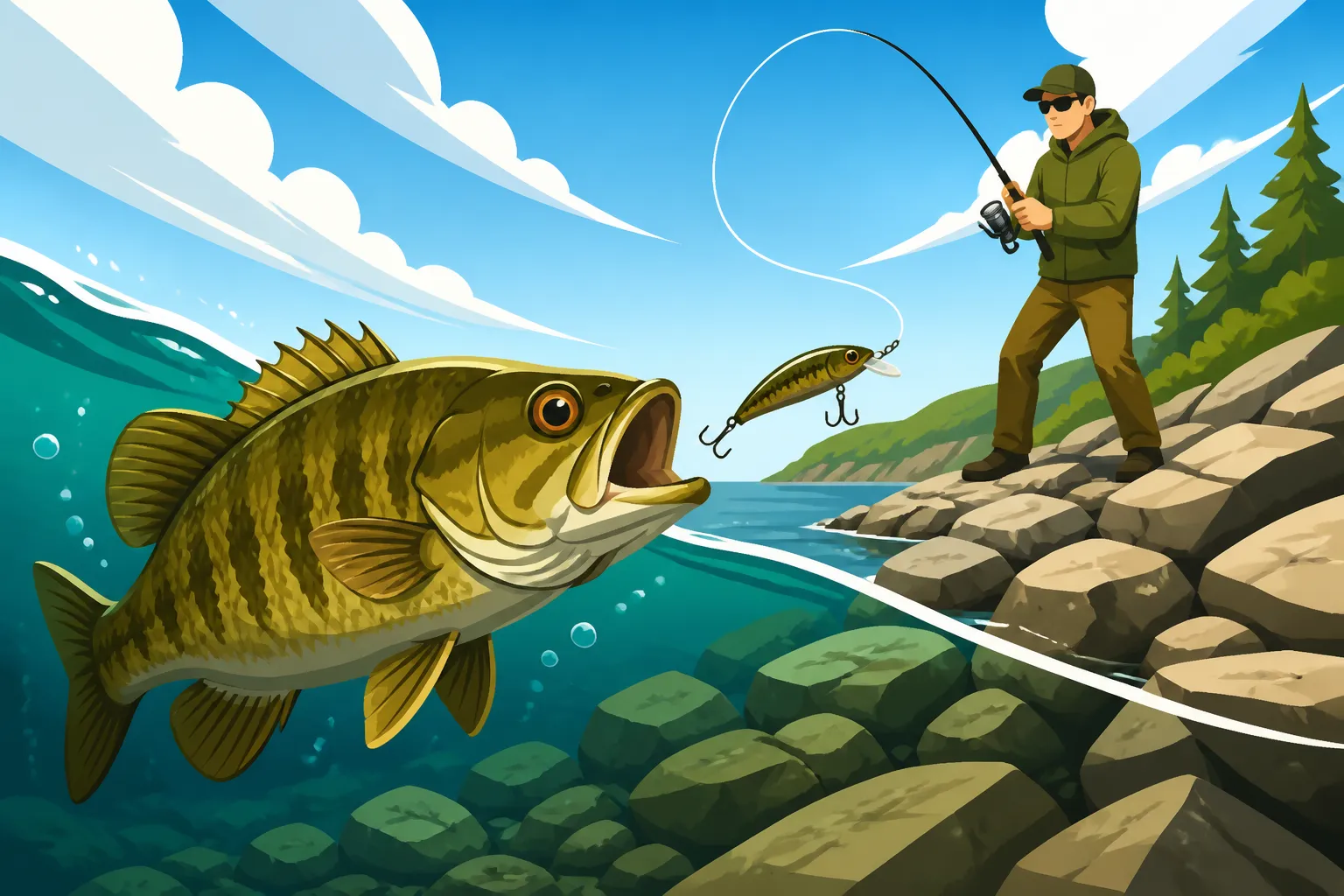
There’s nothing quite like the raw power of a South Dakota smallmouth bass, especially when you hook into one that's been feasting on the crayfish and baitfish hiding among rocky shorelines. These feisty fish are notorious for their strong fights and acrobatic jumps, making them a true joy to catch. However, deciphering where they're holding and what presentation they prefer can sometimes feel like trying to crack a secret code. This guide is dedicated to helping you unlock the secrets of smallmouth bass fishing on rocky shorelines, providing you with proven techniques to turn those tough days into memorable catches.
Why Rocky Shorelines are Smallmouth Havens
Rocky shorelines aren't just pretty scenery; for smallmouth bass, they're prime real estate. These areas offer a complex ecosystem that caters to all of a smallmouth's needs, from shelter to abundant food sources. Understanding why smallmouth gravitate to these particular habitats is the first step in consistently finding and catching them. It's not just about throwing a lure; it's about understanding their world.
Understanding the Structure and Cover
Think of a rocky shoreline as a multi-story apartment complex for smallmouth. You've got everything from giant boulders, submerged ledges, and jagged rock piles to small gravel patches. Each of these elements offers a different type of cover and structure. Smallmouth are ambush predators, and these rocks provide countless nooks and crannies to hide from unsuspecting prey. The bigger rocks create shadows, offering relief from harsh sunlight, especially on bright, clear days. These structures also disrupt current, creating slack water pockets where bass can conserve energy while still being close to the food highway.
Furthermore, the irregularities of a rocky bottom often extend into deeper water, forming critical drop-offs and transitions. These underwater highways allow bass to move quickly between shallow feeding grounds and deeper, more comfortable holding areas. Identifying these transitions, where a flat rocky shelf suddenly plunges into deeper water, is absolutely critical. These are often high-traffic zones for smallmouth, especially during prime feeding windows or when water temperatures fluctuate. Knowing how to "read" these underwater contours, even if you can't see them, is a game-changer.
Prime Forage Opportunities
Rocky shorelines are bustling with life, creating a constant buffet for hungry smallmouth. Crayfish are perhaps the most famous residents of these rocky domains, and they are a top food source for smallmouth bass. Flipping over a rock will often reveal these crunchy crustaceans scurrying for cover, and smallmouth definitely know it. Mimicking a fleeing crayfish is a presentation that often triggers aggressive strikes from even the most lethargic bass.
Beyond crayfish, these areas also attract a multitude of baitfish species that seek shelter and food among the rocks. Smaller minnows, darters, and even juvenile panfish will congregate here, making them easy targets for opportunistic smallmouth. Think about how many times you've seen schools of minnows darting around rocks near the shore. Smallmouth are watching, and so should you. The presence of these baitfish provides another layer of attraction for smallmouth, ensuring they have a diverse and readily available food supply.
Preferred Water Conditions
Smallmouth bass, unlike their largemouth cousins, generally prefer cooler, clearer water. Rocky shorelines, especially on large reservoirs like Lake Oahe or Lake Francis Case, often provide these ideal conditions. The lack of excessive vegetation means less decaying matter, leading to better water clarity. Clear water allows smallmouth to rely heavily on their eyesight to hunt, making lure selection and presentation even more important.
Temperature also plays a significant role. Rocks absorb and radiate heat, which can be a double-edged sword. In colder months, shallow rocky areas can warm up faster, attracting bass seeking comfort and warmth. Conversely, in the scorching heat of summer, deeper rock piles and ledges provide cooler, more oxygenated water. Understanding What Water Temperature Triggers Smallmouth Bass Spawning is crucial for timing your trips, as smallmouth will stage on these rocky bottoms when conditions are right for their annual ritual. Always keep an eye on water temperature and clarity; they're huge indicators of where the bass will be.
Essential Gear for Rocky Shoreline Success
Fishing rocky shorelines effectively requires specific gear choices that can stand up to the abrasive environment and the hard-fighting nature of smallmouth bass. Using the wrong equipment can lead to endless snags, lost fish, and a lot of frustration. Let's make sure you're properly equipped for battle.
Rods, Reels, and Line Choices
For most rocky shoreline smallmouth applications, a medium-light to medium power spinning rod, around 6'6" to 7'0" in length, is a versatile choice. This provides enough backbone for powerful hooksets and fighting bigger fish, while still having a sensitive tip to detect subtle bites. For those who prefer baitcasting, a medium-heavy rod paired with a good Best Baitcasting Reels for Smallmouth Bass can be excellent for throwing heavier jigs or crankbaits in deeper water or heavy current. The key is balance – a setup that allows for accurate casting and good feel.
When it comes to line, you'll want something durable. Fluorocarbon is an excellent choice for a main line or leader because of its low visibility and abrasion resistance, which is vital when fishing around sharp rocks. Many anglers opt for a braided main line (10-20 lb test) with a fluorocarbon leader (8-12 lb test). The braid offers superior sensitivity and casting distance, while the fluorocarbon leader provides stealth and protection against cuts. For general purpose fishing, a good quality 8-10 lb test monofilament can also work, but be prepared for more line fray and break-offs. You can find excellent options for all these line types on Amazon.
Must-Have Lure Categories
Your tackle box for rocky shorelines should be stacked with baits that excel in this environment. Jigs are paramount; football jigs, swim jigs, and hair jigs in sizes from 1/8 to 1/2 ounce with various trailers (like craws or grubs) are deadly. The football head design helps them crawl over rocks without snagging as easily. Soft plastics, such as tube baits, grubs, and creature baits, rigged on jig heads or Texas-rigged, are also highly effective, especially in clear water. Think about how a tube bait mimics a crayfish when dragged along the bottom – irresistible!
Crankbaits are another essential, especially those with durable lips designed to deflect off rocks. Square bill crankbaits in shallower water and deeper diving crankbaits for ledges and drop-offs are key. Colors mimicking crayfish, shad, or sunfish are always good starting points. Topwater lures, like poppers and walking baits, can be absolutely electrifying during low-light conditions or when bass are actively feeding on the surface. Don't forget small jerkbaits or swimbaits for covering water and triggering strikes from suspended fish. For inspiration, check out our guide on Best Lure Colors to Carry for Clear Water.
Practical Accessories for Bank and Boat
Beyond your primary rod and reel setup, a few accessories will make your rocky shoreline smallmouth pursuit much more enjoyable and effective. A quality pair of polarized sunglasses is non-negotiable. They cut the glare off the water, allowing you to see submerged rocks, breaks, and even cruising bass, giving you a huge advantage. A pair of sturdy wading boots or boat shoes with good grip is also crucial, as rocky shorelines can be notoriously slippery. Safety first!
If you're fishing from a boat, a good anchor or trolling motor with spot-lock capabilities will be your best friend. This allows you to hold your position precisely and thoroughly work a promising stretch of rock without constantly drifting. For those fishing from shore, a small backpack or tackle bag to carry your essentials, along with a pair of pliers for unhooking fish and cutting line, will be invaluable. And of course, a reliable cooler to keep your snacks and drinks, or if you plan to keep a few for dinner, to keep your catch fresh for the ride home, like those discussed in Best Coolers for Keeping Fish Fresh.
Mastering Techniques for Rocky Terrain
Successfully fishing rocky shorelines isn't just about having the right gear; it's about employing the right techniques and presentations that imitate natural forage and entice smallmouth bass to strike. These fish can be cunning, and adapting your approach to their behavior and the specific underwater structure is vital.
Casting and Retrieve Methods
When targeting rocky shorelines, accuracy in casting is paramount. You want to place your lure as close to the rocks, ledges, or submerged cover as possible without getting snagged. Sometimes this means a gentle flip or pitch, other times a longer cast. Once your lure hits the water, the retrieve method becomes critical. For jigs and soft plastics, a slow, deliberate drag or hop along the bottom is often most effective. You want to feel every rock, every pebble, every subtle change in bottom composition. This "bottom contact" often mimics a crayfish trying to escape.
For crankbaits, the "deflection" retrieve is key. Cast your crankbait out and retrieve it at a speed that allows it to occasionally collide with the rocks. When it hits a rock, pause for a split second or give it a slight twitch; this erratic movement often triggers an instinctual strike from a following bass, as it looks like a baitfish trying to flee. Experiment with retrieve speeds and pauses. Sometimes a steady retrieve is all it takes, but often, adding some unpredictability is what seals the deal.
Jigging and Bottom Contact Tactics
Jigging is incredibly effective on rocky shorelines, especially when bass are holding tight to structure or in deeper water. Whether you're vertical jigging from a boat over a specific rock pile or casting and retrieving from shore, the goal is to keep your bait in the strike zone and make it appear alive. For football jigs or tube baits, cast out, let it sink to the bottom, then use short hops and drags of your rod tip to crawl it over and around rocks. Pay close attention to your line; many bites will feel like a slight "tick" or simply added weight.
Another highly effective bottom contact method, particularly when fishing from a boat over deeper ledges or humps, involves drop-shotting. This technique keeps your bait suspended just above the bottom, making it less prone to snags while still being in the smallmouth's strike zone. A small soft plastic, like a finesse worm or minnow imitation, rigged on a drop-shot rig can be deadly. Smallmouth will often pick up the subtle, quivering bait when they might ignore more aggressive presentations.
Leveraging Drops and Ledges
Drops and ledges are absolute goldmines for smallmouth bass. These are the highways and resting spots that connect shallow feeding areas to deeper comfort zones. When fishing these areas, start by positioning yourself to cast parallel to the drop-off line. This allows your lure to stay in the prime depth zone for a longer period. For deep ledges, heavy football jigs, Carolina rigs, or deep-diving crankbaits are excellent choices. Let your lure sink to the bottom, then work it slowly up and down the face of the ledge, paying close attention to any changes in depth or structure.
Utilize your fish finder, if you have one, to identify these contours. If you're bank fishing, look for visual cues that indicate a drop, like a sudden change in rock size or water color. Sometimes, simply knowing the general layout of the lake bottom from a good map can guide your casts. Smallmouth will often sit right on the lip of a drop-off, waiting for prey to swim by. They're also prone to congregating in areas where a smaller point or rock pile extends out from a larger ledge. For specific fishing locations, checking out Lake Francis Case Smallmouth Bass Fishing or Lake Sharpe Smallmouth Bass Near Big Bend Dam can give you an idea of where these structures exist.
Seasonal Strategies for South Dakota Smallmouth
Smallmouth bass behavior on rocky shorelines changes significantly with the seasons, largely dictated by water temperature and their reproductive cycle. Understanding these seasonal shifts will allow you to adapt your techniques and increase your chances of success throughout the year.
Spring: Pre-Spawn to Post-Spawn Tactics
Spring is arguably one of the most exciting times to target smallmouth on rocky shorelines. As ice recedes and water temperatures begin to climb, bass move from their deeper wintering grounds towards shallower, rocky staging areas. In the pre-spawn phase, when water temperatures are typically in the 40s to low 50s Fahrenheit, smallmouth are looking to feed aggressively to build energy for spawning. This is an excellent time for jerkbaits, lipless crankbaits, and tube baits worked slowly along rocky points and transition areas. They're often grouped up, so if you catch one, there are likely more around. Many effective approaches during this time mirror Pre-Spawn Bass Fishing Techniques.
Once water temperatures hit the mid-50s to low 60s, smallmouth move into their spawning phase, often choosing sheltered, gravelly pockets on rocky shorelines for their nests. While it's generally best practice to leave spawning fish undisturbed, understanding their locations can inform your strategy for post-spawn. After the spawn, bass are often exhausted and scattered. They may hold a bit deeper on nearby rocky ledges, recovering and beginning to feed again. This Post-Spawn Bass Fishing Techniques period calls for slower presentations like Ned rigs, small finesse jigs, or even live minnows, as they regain their strength.
Summer: Heat, Depth, and Current
Summer can be a challenging but rewarding time for smallmouth on rocky shorelines, especially as water temperatures rise significantly. During the hottest parts of the day, smallmouth will often retreat to deeper, cooler water, seeking the comfort of thermal refuge. This means targeting deep rock piles, underwater humps, and the deep sides of ledges, often at depths of 20 feet or more. Heavy football jigs, Carolina rigs, and deep-diving crankbaits are excellent for reaching these fish. Look for areas with current, as the moving water often brings cooler temperatures and concentrates baitfish, creating ideal ambush points for bass.
However, don't completely abandon shallower rocky areas. During early mornings, late evenings, or on overcast days, smallmouth will push into shallower rocks to feed. Topwater lures can be incredibly effective during these low-light periods, offering thrilling blow-ups. Additionally, areas with consistent wind blowing into a rocky bank can create a "current" that pushes baitfish and plankton, attracting smallmouth. On lakes like Pactola Reservoir, where depths can be significant, understanding these movements is paramount.
Fall: The Autumn Feast
Fall fishing for smallmouth bass on rocky shorelines is often legendary. As water temperatures begin to cool, smallmouth embark on a major feeding binge to put on weight for the upcoming winter. They become incredibly aggressive and can be found in a variety of depths along rocky banks, points, and ledges. This is a fantastic time for a wide array of lures, including crankbaits, jerkbaits, spinnerbaits, and larger tube jigs. They're often chasing schools of baitfish, so lures that mimic these forage species are particularly effective.
The cooling water also brings smallmouth back into shallower rocky areas more consistently throughout the day. Look for rocky flats adjacent to deep water access, or long tapering points. The fish can be quite nomadic during this period, moving around a lot as they follow bait. Covering water efficiently with search baits like crankbaits or bladed jigs can help you locate active schools. Once you find them, you can often switch to slower presentations like jigs or drop-shots to pick off more fish.
Reading the Water and Adapting Your Approach
Fishing rocky shorelines isn't just about showing up; it's about observation and adaptation. Every shoreline is different, and the conditions can change by the hour. Learning to "read" the water and adjust your tactics accordingly is what separates consistent anglers from those who just get lucky.
Interpreting Submerged Structure
The most crucial skill for fishing rocky shorelines is learning to interpret what lies beneath the surface. Visual cues are your first line of defense: look for subtle changes in current, darker patches of water that might indicate deeper rocks, or ripples that betray a submerged boulder field. However, much of the structure will be invisible. This is where a good fish finder comes into play, mapping out contours, drop-offs, and even individual rocks or baitfish schools. On large bodies of water like Lake Oahe, a detailed map and GPS are invaluable for identifying promising rocky points and humps.
Even without electronics, your rod and line can be powerful tools. Pay attention to how your lure feels as it contacts the bottom. A sharp "thunk" could be a large boulder, while a "gritty" feel might indicate gravel. Learn to differentiate between a rock, a snag, and a bite. If your lure consistently gets hung up in a specific area, it tells you there's dense cover there, which could be a prime holding spot for bass. Instead of giving up, try a different, more snag-resistant lure or adjust your angle of retrieve.
The Impact of Wind and Current
Wind and current are two of the most significant factors influencing smallmouth bass behavior on rocky shorelines. Wind, in particular, can be your friend or foe. A gentle breeze blowing into a rocky bank can push baitfish and warm surface water, concentrating forage and making that shoreline a hotspot. This "wind-blown bank" often makes smallmouth more aggressive and willing to chase. However, a strong, direct wind can make boat control difficult, casting challenging, and make it harder to feel subtle bites. In such cases, seeking out a more sheltered rocky point or cove might be a better strategy.
Current, especially on rivers or reservoirs with significant flow like the Missouri River system in South Dakota, is a constant consideration. Smallmouth love current breaks – areas where the flow is disrupted by structure, allowing them to sit out of the main current and ambush passing prey. Look for eddies behind large boulders, points that jut out into the current, or depressions on the downstream side of ledges. Fishing current requires heavier jigs or lures that can maintain depth and presentation without being swept away too quickly. Our general guide on South Dakota Missouri River Fishing Techniques offers great insights into fishing current.
Adjusting to Water Clarity
Water clarity dictates how smallmouth hunt and, consequently, what lures and presentations will be most effective. In very clear water, which is common on many South Dakota lakes with rocky bottoms, smallmouth rely heavily on their eyesight. This means fluorocarbon leaders are crucial, and subtle, natural-looking baits are often best. Finesse techniques like drop-shotting, Ned rigs, and natural-colored tube baits excel. You'll also want to make longer casts to avoid spooking fish, as they can see you just as easily as you can see them.
Conversely, in stained or slightly murky water, visual cues become less important, and bass rely more on their lateral line to detect vibrations. This is when more aggressive, noisy, or brightly colored lures shine. Chatterbaits, spinnerbaits with thumping blades, and crankbaits with rattles in chartreuse, orange, or firetiger patterns can be incredibly effective. Don't be afraid to experiment with brighter, more "unnatural" colors when the water isn't crystal clear; sometimes the flash and vibration are what gets their attention.
Table of Recommended Lures for Rocky Shorelines
Here's a quick reference for some top lure choices for smallmouth bass on rocky shorelines, categorized by their primary use:
| Lure Type | Best Use Case | Key Features | Common Colors | Pros | Cons |
|---|---|---|---|---|---|
| Football Jig | Deep rocks, ledges, slow bottom dragging | Football-shaped head, weed guard, brush or skirted body | Green pumpkin, brown, black | Excellent bottom feel, crayfish imitation | Can snag in very heavy cover |
| Tube Bait | Finesse, mimicking crayfish, bottom hopping | Hollow, cylindrical soft plastic with tentacles | Green pumpkin, smoke, watermelon | Versatile, subtle, good snag resistance | Can twist line if not rigged properly |
| Crankbait (Squarebill) | Shallow rocky flats, banging off cover | Wide, flat bill for deflection, tight wobble | Crawfish, shad, chartreuse | Covers water, triggers reaction strikes | Prone to snagging on sharp edges |
| Jerkbait | Suspended fish, clear water, cold water | Long, slender, suspending or slow-floating bait | Silver, clear, perch, clown | Excellent for triggering follow-ups, erratic | Can be less effective on the bottom |
| Swimbait (Small) | Covering water, mimicking baitfish, light current | Soft plastic or hard body, realistic profile | Shad, bluegill, perch | Realistic presentation, appeals to larger fish | Can be expensive, prone to tear on soft versions |
| Ned Rig | Finesse, pressured fish, slow bite | Small mushroom-head jig with a small, buoyant soft plastic | Green pumpkin, natural, black | High hook-up ratio, subtle, snag-resistant | Very light, hard to cast in wind |
Common Mistakes and How to Avoid Them
Even seasoned anglers can fall into common traps when fishing for smallmouth on rocky shorelines. Identifying and correcting these mistakes can significantly improve your success rate and make your time on the water more productive and enjoyable.
Fishing Too Fast or Too Shallow
One of the most frequent mistakes, especially when the bite is tough, is fishing too quickly. Smallmouth bass, particularly when water temperatures are cold or hot, are often lethargic and prefer a slow, deliberate presentation. If you're constantly ripping your crankbait or quickly hopping your jig, you might be zooming past fish that need a little more time to commit. Slow down! Really take your time to work an area thoroughly. This means more pauses, slower retrieves, and ensuring your bait stays in the strike zone longer. This also ties into not fishing shallow enough if the bass are deeper, or vice versa. Always consider the season and water temperature to gauge the appropriate depth and speed. Remember to consult guides like Best Time of Day to Catch Walleye in Summer for general principles that can often be adapted to bass behavior.
Another aspect of this mistake is assuming all the bass are in the obvious shallow rocks. While many are, especially in spring and fall, often the biggest smallmouth, or the most consistently active ones, are holding on the subtle, deeper rocky structures that extend out from the shoreline. These could be submerged points, humps, or even just a slight depth change from 10 to 15 feet. Don't be afraid to cast further out into deeper water or utilize electronics to find those less obvious underwater structures.
Ignoring Subtle Bites
Smallmouth bites, especially in cold water or during high-pressure periods, can be incredibly subtle. It's not always the violent thud or rod-ripping strike you dream of. Often, it's a light "tick," a feeling of added weight, or simply your line going slack or moving sideways. If you're not paying close attention to your line and the feel of your lure, you'll miss a lot of fish. This is where sensitive rods and low-stretch lines like braided or fluorocarbon become invaluable.
Train yourself to set the hook at the slightest irregularity. If something feels "different," even if you're not sure it's a fish, go ahead and set the hook. More often than not, it will be a smallmouth. Many times, they will pick up a bait and simply hold it in their mouth, moving slightly, which feels like a snag. Waiting for the "sure thing" often results in the bass spitting the hook or burying itself in cover. Develop a quick, instinctive hookset.
Using the Wrong Presentation
Choosing the wrong lure or presentation for the conditions or the specific rocky structure is another common pitfall. For instance, throwing a massive, treble-hooked crankbait into an area choked with jagged boulders is a recipe for snags and frustration. Similarly, trying to finesse a tiny Ned rig in a heavy current might not allow you to reach the strike zone effectively. Always consider the depth, clarity, current, and density of the cover when selecting your bait.
For example, if you're fishing shallow, visible rock gardens, a square bill crankbait or a topwater lure might be perfect. If you're targeting a deep, sharp drop-off, a football jig or a deep-diving crankbait will be more appropriate. If the water is crystal clear and the bass are finicky, a small tube bait or drop-shot rig might be the ticket. Don't be afraid to change lures frequently until you find what the fish are responding to. Having a diverse selection of baits on hand, easily accessible from your tackle box (which you can restock from Amazon), allows for this flexibility.
Disclaimer
Fishing regulations and conditions can change. Always consult the latest South Dakota Game, Fish and Parks regulations handbook before heading out on the water. This guide is for informational purposes only and does not constitute legal advice. Adhere to all local, state, and federal laws and practice safe boating and fishing habits.