Lake Sharpe Smallmouth Bass Near Big Bend Dam
Oh, the thrill of chasing smallmouth bass! If you've spent any time on the water in South Dakota, you know how frustrating it can be to pinpoint those elusive bronze bombers, especially in a vast system like Lake Sharpe. Many anglers find themselves motoring around aimlessly, wondering why the smallmouth bite seems to vanish, particularly when they're hoping to hit that sweet spot near a major landmark. But fear not, fellow angler! This comprehensive guide is dedicated to unraveling the mysteries of successfully targeting smallmouth bass specifically around the Big Bend Dam area on Lake Sharpe, giving you the insights, spots, and techniques you need to turn those frustrating outings into triumphant tales.
Understanding Lake Sharpe's Smallmouth Bass Haven Near Big Bend Dam
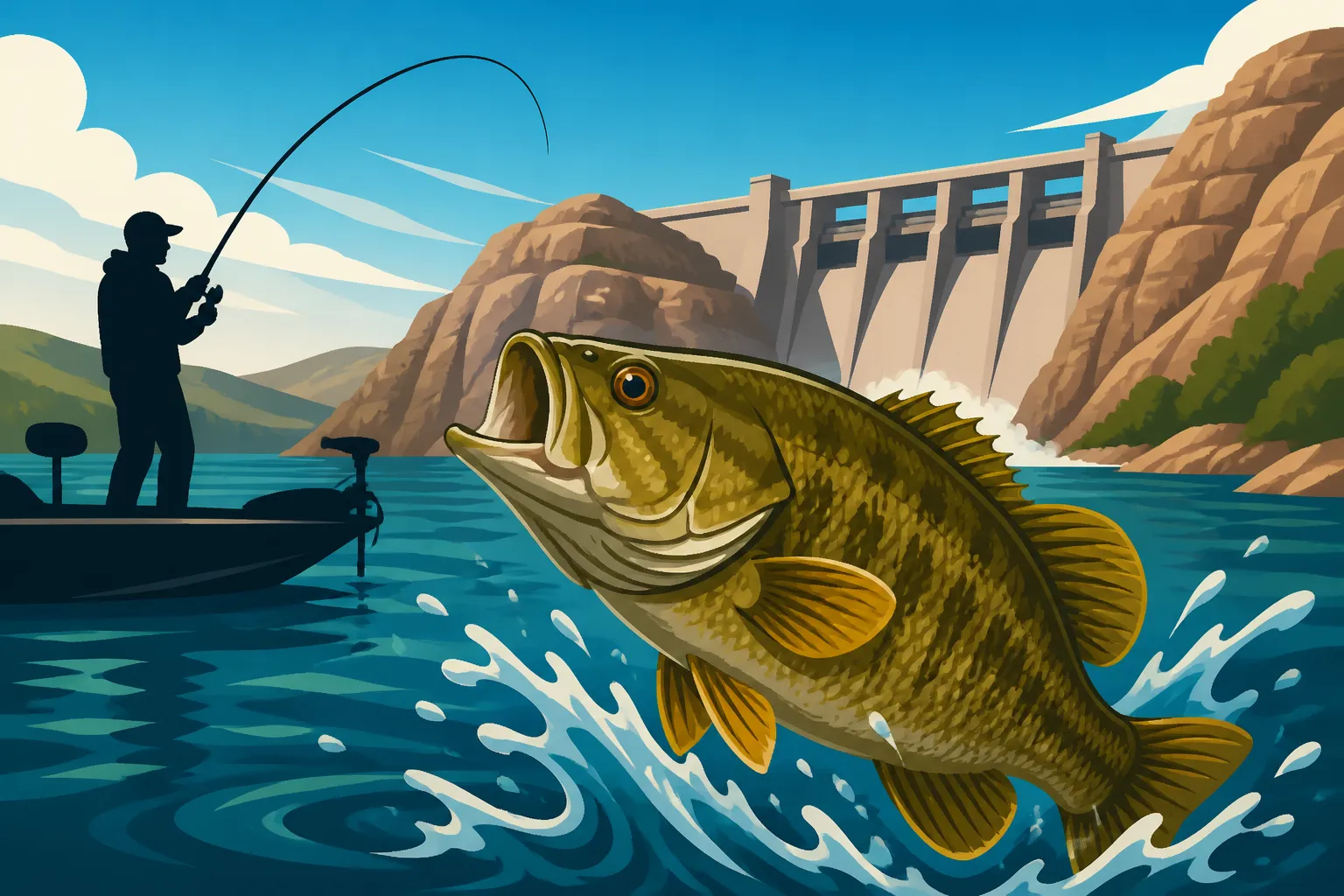
Lake Sharpe, a reservoir on the Missouri River, stretches for miles, offering diverse fishing opportunities. However, for smallmouth bass enthusiasts, the section closest to the Big Bend Dam presents a truly unique and highly productive environment that's distinct from other areas of the lake. It's not just another stretch of water; it's a dynamic ecosystem shaped by the dam itself, creating a haven for these feisty fighters.
The Unique Environment of Lake Sharpe Below Big Bend Dam
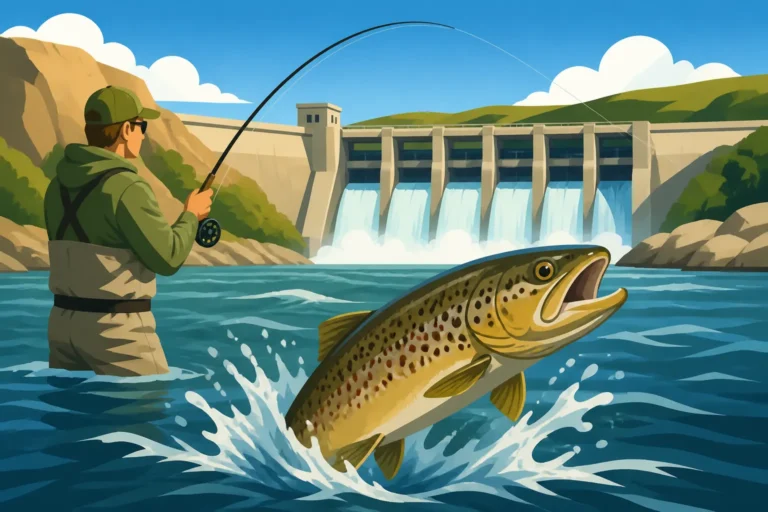
The area immediately downstream from the Big Bend Dam is a tapestry of powerful currents, rocky structures, and varying depths, all working in concert to create prime smallmouth habitat. The dam's operation dictates the water flow, which in turn constantly scours the riverbed, exposing a natural bedrock and rock rubble bottom that smallmouth absolutely adore. This is a stark contrast to some of the softer, muddier bottoms found further downstream or in shallower bays.
Imagine the water surging through the turbines, carving out deep scour holes and depositing rocks and gravel. This constant movement keeps the water well-oxygenated, a critical factor for active fish, especially during the warmer months. You'll find intricate current breaks behind boulders, along riprap, and where the river channel itself changes course. These eddies and slack water pockets are precisely where smallmouth lie in wait, conserving energy while ambush feeding on unsuspecting baitfish and crayfish swept down from the dam. Understanding the South Dakota Missouri River Fishing Techniques often starts with appreciating these dynamic conditions. It’s a different ball game compared to still-water fishing, requiring keen observation of the current lines and seams to identify where bass are likely holding.
Why Smallmouth Thrive in This Specific Zone
Smallmouth bass are opportunistic predators, and the Big Bend Dam area provides an all-you-can-eat buffet coupled with ideal living conditions. The primary forage here includes an abundance of gizzard shad, emerald shiners, and crayfish. The rocky substrate and riprap banks serve as perfect hiding places for crayfish, a favorite delicacy of smallmouth. When the dam generates power, these food sources can get disoriented or swept into current breaks, making them easy targets for waiting bass.
Beyond the food, the structural complexity is paramount. Smallmouth are structure-oriented fish. The sheer amount of rock, ledges, and depth changes in the dam's tailwaters offer endless ambush points and protective cover. They can tuck into crevices, hide behind large boulders, or patrol along sharp drop-offs, all while remaining in close proximity to food. The consistent water flow also helps maintain stable water temperatures, preventing stagnation or extreme fluctuations that can stress fish in other parts of the lake. This combination of rich forage, plentiful structure, and optimal water conditions makes the Big Bend Dam area an undeniable hotspot for smallmouth bass, offering an experience you won't easily forget.
Prime Fishing Spots and Structure for Smallmouth Bass
Finding smallmouth bass in the vastness of Lake Sharpe, even near the dam, can feel like searching for a needle in a haystack if you don't know where to start. But once you understand their preferred hangouts and how to identify key structures, you'll be well on your way to consistent success. The Big Bend Dam tailwaters are a maze of potential hot spots, each requiring a slightly different approach.
Navigating the Tailwaters and Shoreline Access
The immediate tailwaters below Big Bend Dam are fantastic, but also demand respect due to strong currents. For boat anglers, launching from access points like West Bend Recreation Area or Joe Creek offers a direct route to the prime fishing grounds. Once on the water, focus your attention on the rocky points and riprap shorelines that line the river. These areas, particularly where the current creates a visible seam or eddy, are classic smallmouth holding spots. Bass will often position themselves on the current side of a point, just out of the main flow, ready to dart out and snatch a meal. You can learn more about general access in the area by looking at Lake Sharpe Fishing at West Bend Recreation Area.
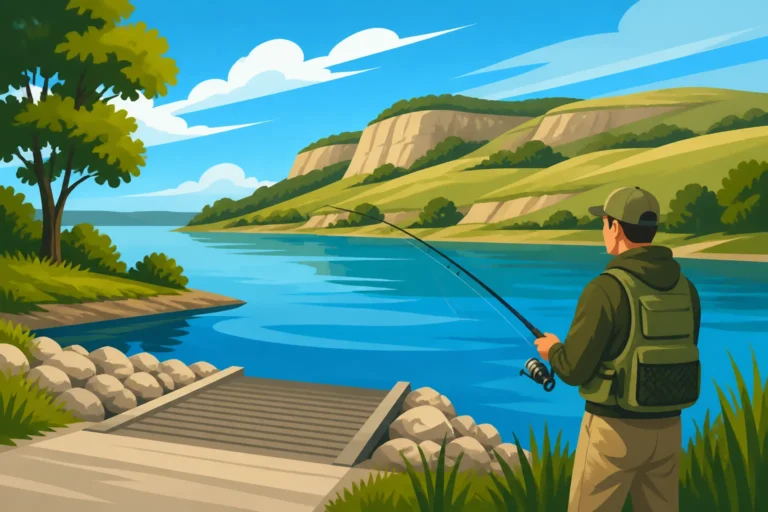
Shore anglers aren't left out either! There are numerous public access points along the shorelines below the dam that offer excellent bank fishing opportunities. Look for rocky outcrops, jetties, or any area where the bank transitions from dirt to significant rock or concrete. These structures extend into the water, providing excellent current breaks and attracting forage. Many of the Best South Dakota Shore Fishing Spots are found precisely in these dam tailwater areas, so don't feel like you absolutely need a boat to get in on the action. Just be mindful of safety, especially when dealing with slippery rocks and strong currents. Always wear appropriate footwear and consider a PFD, even when fishing from shore.
Finding the Hidden Gems: Humps, Drops, and Current Breaks
Beyond the obvious shoreline features, the real "honey holes" often lie beneath the surface, hidden in plain sight. Smallmouth bass are notorious for relating to subtle changes in underwater topography. This means paying close attention to humps, ledges, and significant depth changes. A 5-foot rise in the riverbed or a sharp drop-off from 15 feet to 25 feet can concentrate fish like nothing else. Using your electronics, like a good fish finder with side imaging, is absolutely critical here. Look for schools of baitfish congregating around these structures, as smallmouth are never far behind their food.
Current breaks are another vital piece of the puzzle. These aren't just visible eddies on the surface; they are underwater anomalies that disrupt the main flow, offering a reprieve for fish. This could be a large submerged boulder, a cluster of woody debris (if regulations allow fishing near it), or even a subtle indentation in the riverbed. Cast your lures or present your bait to the upstream side of these breaks, allowing the current to carry it naturally into the slack water where bass are likely holding. The immediate vicinity of the Big Bend Dam itself, with its complex underwater structures and powerful discharge, offers some of the most dynamic current breaks and depth contours on the entire lake, making it a truly unique and challenging, yet rewarding, fishing ground.
Essential Techniques and Baits for Big Bend Smallies
Smallmouth bass are known for their aggressive strikes and powerful fights, making them a favorite among anglers. But to consistently hook into these bronze beauties around Big Bend Dam, you need to employ a variety of techniques and choose the right baits that match their feeding patterns and the challenging river environment. Adaptability is key when fishing these waters.
Mastering Artificial Lures for Aggressive Bites
When smallmouth are actively feeding, artificial lures can be incredibly effective. One of the most exhilarating ways to target them is with topwater baits during low light conditions or when the water is calm. Poppers, walking baits like Heddon Super Spooks, or even subtle wakebaits can provoke explosive strikes as bass ambush from below. Imagine a calm morning, a slight ripple on the water, and then BAM! a smallmouth erupting on your lure – it’s pure adrenaline.
For covering water and probing different depths, crankbaits are indispensable. Shallow-diving crankbaits work well along riprap and rocky points, imitating fleeing baitfish. Medium to deep-diving crankbaits are perfect for exploring those underwater humps and drop-offs we talked about earlier. Choose colors that mimic local forage like shad (chrome, white, chartreuse) or crayfish (brown, red, orange). Lipless crankbaits can also be very effective, especially when yo-yo’d over structure or ripped through grass beds, though heavy current might make them less effective in the immediate tailwaters.
When the bass are tight to structure or holding in deeper current, jigs become your best friend. Football jigs with craw trailers are fantastic for bouncing along the bottom, mimicking crayfish. Swim jigs, often rigged with a paddle-tail swimbait, can be reeled steadily through current breaks or around submerged timber. Make sure your jig weight is heavy enough to maintain bottom contact in the current. Lastly, soft plastics offer a versatile array of options. Tube jigs, grubs, and finesse swimbaits can be fished on lighter jig heads for a more subtle presentation. Plastic jerkbaits, retrieved with a "twitch-twitch-pause" cadence, can also entice hesitant biters. For a deeper dive into techniques, you might want to explore Smallmouth Bass Fishing Techniques for Rocky Shorelines. While we often discuss Best Lures for South Dakota Walleye, many of the principles of matching lure action and color to current and forage apply across species, so don't be afraid to experiment!
Utilizing Live Bait and Finesse Tactics When the Bite is Tough
There are days when the smallmouth seem to have lockjaw, or perhaps the conditions (like a post-cold front bite or unusually clear water) make them more finicky. This is when live bait and finesse tactics truly shine. Live bait can often tempt even the most reluctant bass. Minnows, particularly shiners or fatheads, rigged on a plain hook with a small split shot or under a bobber, are deadly. Crayfish, if you can legally catch or purchase them, are arguably the most effective live bait for smallmouth. Rig them through the tail and let them drift naturally near rocky structure. Nightcrawlers, fished whole or in pieces, can also produce, especially when bass are looking for an easy meal. Always double-check current South Dakota Game, Fish and Parks regulations regarding live bait use in specific bodies of water, as rules can vary.
When it comes to finesse tactics with artificials, consider techniques like drop-shotting. This involves tying a hook directly to your main line with a weight attached to the tag end, allowing your bait (usually a small soft plastic worm or minnow imitation) to suspend at a specific depth above the bottom. It’s incredibly effective for vertical presentations to fish spotted on your electronics. Ned rigs, featuring a small mushroom-shaped jig head paired with a short, buoyant soft plastic, are another fantastic finesse option. Their subtle, stand-up presentation is irresistible to pressured fish. Wacky rigging, where a stick worm is hooked through its center, offers a tantalizing slow fall that often triggers bites. These methods require patience and a lighter touch, but they can be the key to unlocking a challenging bite near Big Bend Dam.
Seasonal Strategies for Consistent Smallmouth Success
Understanding the seasonal movements and behaviors of smallmouth bass is paramount to consistent success on Lake Sharpe near Big Bend Dam. Their patterns shift dramatically with water temperature and spawning cycles, so what works in spring might be entirely ineffective in fall. Tailoring your approach to the season will dramatically increase your catch rates.
Spring and Early Summer: Pre-Spawn and Post-Spawn Hotspots
Ah, spring! This is when the smallmouth bass really start to wake up and get active as water temperatures climb. In the pre-spawn period, typically late April to early June depending on the year, smallmouth will begin to move from their deeper wintering grounds towards shallower, rocky areas with access to deeper water. They're looking for warmer water and abundant food to bulk up before the arduous spawning process. Focus your efforts on rocky points, shallow humps, and riprap banks adjacent to the main river channel or significant drop-offs. These "staging" areas are prime spots where bass will feed heavily. Look for water temperatures in the mid-50s Fahrenheit as a trigger.
Once the water temperature consistently reaches the low to mid-60s, smallmouth will begin to spawn. They prefer hard, rocky bottoms in shallower water, typically 2-10 feet deep, often in protected bays or on the lee side of islands or points to avoid strong current. During this time, they become extremely protective of their nests. While it's tempting to target them on beds, practicing catch and release and minimizing disturbance during the spawn is crucial for the long-term health of the fishery. If you do catch a spawning bass, release it quickly and gently. For more general insights into early season fishing, you might find some parallels with South Dakota Spring Walleye Fishing Techniques, as both species respond to warming water. For specific bass behavior, dive into resources like Pre-Spawn Bass Fishing Techniques and Post-Spawn Bass Fishing Techniques.
After the spawn, during the post-spawn phase, smallmouth often disperse and can be a bit more challenging to locate immediately. They need to recover from spawning and will often move to slightly deeper, still rocky areas to rest and feed. This period usually sees them moving back and forth between shallow feeding flats and deeper recovery spots. They'll be looking for easy meals, so power fishing with crankbaits or spinnerbaits can be effective for covering water and finding active fish. By early summer, as water temperatures rise further, they'll settle into their summer patterns, often relating to deeper structure.
Late Summer and Fall: Deep Water and Transition Patterns
As late summer arrives and the scorching South Dakota sun heats Lake Sharpe, smallmouth bass will typically retreat to deeper, cooler water. They'll seek out offshore humps, deep rock piles, ledges, and channels where the water is more comfortable and oxygen levels are stable. This is when your electronics become absolutely critical for locating fish. Look for bass suspending over deep structure or holding tight to the bottom in 20-40 feet of water. Trolling deep-diving crankbaits or vertical jigging with heavy spoons or soft plastics can be very effective. This period demands a more technical approach to fishing. Insights from Deep Water Summer Fishing Techniques can be particularly useful here, even though it may reference different species.
Then comes the glorious fall, arguably one of the best times to target trophy smallmouth near Big Bend Dam. As water temperatures begin to cool, signaling the approach of winter, smallmouth enter an intense feeding frenzy. They know winter is coming and they need to pack on calories. They'll often move back shallower, particularly to rocky points and flats where baitfish are abundant, but they won't abandon the deeper structure entirely. You might find them in a wider range of depths throughout the day, following schools of shad.
During this fall transition, a variety of tactics can work, from power fishing with crankbaits and spinnerbaits in the morning to finesse tactics with jigs and soft plastics in the afternoon. The key is to be mobile and follow the baitfish. Look for surface activity like schooling shad being chased by bass. This is often when you can catch some of the biggest smallmouth of the year. The Fall Fishing in South Dakota article can provide broader context for this productive season across various species.
Gear Up for the Fight: Rods, Reels, and Electronics
Tackling the hard-fighting smallmouth bass of Lake Sharpe near Big Bend Dam requires more than just a lure and a line; it demands the right tools to stand up to their power and the challenging environment. Having the appropriate rods, reels, and electronics can make all the difference between a frustrating day and a memorable one.
The Right Rod and Reel Setup for Hard-Fighting Smallies
When it comes to rods, versatility is key, but so is sensitivity and backbone. For most smallmouth applications, you’ll want a selection. A medium-light to medium-power spinning rod (6'6" to 7'2" in length) with a fast action tip is perfect for finesse techniques like drop-shotting, Ned rigs, or throwing lighter jigs and soft plastics. This setup allows for long casts with light baits and provides the sensitivity to detect subtle bites. Pair this with a 2000 or 2500 series spinning reel spooled with 6-10 lb fluorocarbon or braided line with a fluorocarbon leader. For a bit more power, a medium-heavy power fast action spinning rod (7' to 7'6") is excellent for slightly heavier jigs, tubes, and topwater baits.
For those who prefer baitcasting, a medium-heavy power fast action baitcasting rod (6'10" to 7'4") is a workhorse for throwing crankbaits, spinnerbaits, heavier jigs, and plastic jerkbaits. This setup provides the power to drive hooks home and control larger fish in current, which is crucial around the dam. Match this with a quality baitcasting reel with a gear ratio appropriate for your chosen technique (faster for topwater/jigging, slower for deep cranking). To find some excellent options, check out guides like Best Baitcasting Reels for Smallmouth Bass. While a guide for Best Rod and Reel Setup for Walleye Trolling might feature heavier gear, understanding the principles of balancing rod action and power with the fish and technique is universal.
Line choice is another critical factor. Fluorocarbon line (8-12 lb test) is a fantastic all-around choice for its low visibility, excellent abrasion resistance (great for rocky areas), and sensitivity. Braided line (10-20 lb test) is incredibly strong and sensitive with no stretch, making it ideal for detecting bites in deep water or strong current. However, its visibility often necessitates tying on a fluorocarbon leader (6-12 lb test) for wary smallmouth. Monofilament (8-12 lb test) still has its place, particularly for topwater baits where its buoyancy can be an advantage.
Electronics and Accessories to Enhance Your Smallmouth Hunt
In a complex environment like Lake Sharpe near Big Bend Dam, marine electronics are not a luxury; they are a necessity. A good fish finder with CHIRP sonar, Side Imaging, and Down Imaging capabilities will be your eyes underwater. Brands like Humminbird and Lowrance offer excellent units that can help you identify submerged humps, rock piles, current breaks, and even individual fish. Side Imaging is especially useful for scanning wide areas to locate structure that might be off to the side of your boat, saving you countless hours of unproductive casting. Knowing How to Read a Fish Finder for Walleye can be directly applied to smallmouth, as the principles of identifying structure and baitfish remain the same. For a broader look at units, refer to Best Fish Finders for South Dakota Lakes.
GPS and mapping are equally important. High-definition mapping chips (like Navionics or Garmin LakeVü) provide detailed contour lines, allowing you to pinpoint subtle depth changes and plan your drifts or trolling passes with precision. Marking waypoints on your GPS for productive spots, baitfish schools, or key pieces of structure will allow you to return to them easily.
Finally, consider a quality trolling motor with GPS capabilities (like those from Minn Kota with Spot-Lock or MotorGuide with Pinpoint GPS). These units allow you to precisely hold your boat in position against the current, make subtle adjustments, or follow contour lines hands-free, freeing you up to focus on fishing. For those looking for an edge, perhaps considering a guided trip through a service like FishingBooker could provide access to seasoned captains who are already equipped with top-tier electronics and know the local nuances of operating them effectively in these challenging waters. Don't forget essential accessories like a good pair of polarized sunglasses to cut glare and spot structure or fish in shallower water, a long-handled net for landing those acrobatic smallmouth, and a reliable cooler to keep your lunch and drinks cold.
Preserving the Fishery and Responsible Angling
As much as we love the thrill of catching smallmouth bass near Big Bend Dam, it's our collective responsibility to ensure that this incredible fishery remains vibrant for generations to come. Responsible angling practices, starting with a clear understanding of regulations and a commitment to careful catch and release, are absolutely critical.
Understanding Regulations and Catch Limits
Before you even make your first cast, it is imperative to familiarize yourself with the current South Dakota Fishing Regulations Explained by the Game, Fish and Parks (GFP) department. These regulations are designed to manage fish populations sustainably and can change from year to year. You can usually find the most up-to-date information on the GFP website or in their annual fishing handbook.
For smallmouth bass, specific size limits, daily limits, and possession limits are in place for Lake Sharpe. These rules are not arbitrary; they are based on scientific data about the bass population's health and growth rates. For example, there might be a minimum length requirement, meaning any bass caught under that size must be immediately released. There might also be a daily creel limit, dictating how many bass you can keep in a single day, and a possession limit, which is the total number of fish you can have on your person or in your vehicle at any given time. Ignorance of the law is not an excuse, and violating these regulations can lead to fines and loss of fishing privileges. Make sure to consult the specific Smallmouth Bass Daily Limits for Lake Sharpe to avoid any issues. Always carry a copy of the current regulations with you, whether digitally on your phone or a printed copy, to ensure you're always compliant.
Practicing Catch and Release for Sustainable Fishing
Many anglers, especially those targeting smallmouth bass, prefer to practice catch and release, particularly for larger, trophy-sized fish. This is a fantastic way to contribute to a sustainable fishery and ensure those bigger fish can continue to spawn and grow. However, simply tossing a fish back isn't enough; proper catch and release techniques are vital to minimize stress and injury to the fish, significantly increasing its chances of survival.
Here are some best practices:
- Handle Fish Gently: Avoid touching the fish's eyes or gills. If possible, keep the fish in the water while unhooking it.
- Minimize Air Exposure: Smallmouth bass, like all fish, need water to breathe. Keep their time out of the water to an absolute minimum, ideally less than 10-15 seconds for a photo.
- Use Barbless Hooks: Crushing the barbs on your hooks or using barbless hooks makes removal much easier and less damaging to the fish's mouth.
- Use Appropriate Gear: Avoid excessively light tackle that prolongs the fight, as this can exhaust the fish.
- Revive If Necessary: If a fish appears lethargic, hold it gently in the water, facing into the current, until it can swim away under its own power. Do not simply toss it back if it's struggling.
Many professional fishing guides, including those found through services like FishingBooker, are experts in responsible fish handling and promote these practices on their charters. They understand the importance of preserving the resource that provides their livelihood and our recreation. By adopting these habits, every angler contributes to a healthier, more robust smallmouth bass population in Lake Sharpe for everyone to enjoy for years to come.
South Dakota Smallmouth Bass Techniques and Spots at a Glance
For a quick reference on how to target Lake Sharpe smallmouth bass, especially near Big Bend Dam, here's a helpful overview:
| Season | Key Location Types | Recommended Techniques | Primary Lures/Baits | Key Considerations |
|---|---|---|---|---|
| Spring | Rocky points, shallow humps, riprap near channels | Casting, slow rolling, finesse presentations | Jerkbaits, crankbaits, jigs, tube baits, live minnows | Pre-spawn staging, water temp 50-60°F, protect beds |
| Early Summer | Spawning flats (release), recovering deeper rocks | Power fishing, pitching, flipping | Spinnerbaits, swim jigs, soft plastics, topwater | Post-spawn recovery, increasing water temp, active bite |
| Late Summer | Deep offshore humps, ledges, channel drops | Vertical jigging, deep trolling, drop-shotting | Heavy jigs, spoons, deep crankbaits, soft plastics | Fish often suspend, use electronics, water temp 70°F+ |
| Fall | Rocky points, humps, transitions to deep water | Power fishing, casting, finesse (varying by day) | Crankbaits, jigs, soft plastics, topwater (early fall) | Feeding frenzy, follow bait, highly aggressive fish |
Disclaimer
The information provided in this guide is intended for general informational purposes only and is based on typical conditions and regulations. Fishing conditions, fish behavior, and specific regulations from the South Dakota Game, Fish and Parks (GFP) department can change rapidly and without notice. Always consult the most current South Dakota Fishing Regulations Explained handbook or the official GFP website before heading out on the water. It is the angler's responsibility to know and abide by all applicable laws and regulations, including license requirements, bag limits, and size restrictions. Neither the author nor the publisher assumes any liability for actions taken based on the information presented herein. Fish responsibly and safely.