Best Baitcasting Reels for Smallmouth Bass
There's nothing quite like the heart-stopping strike of a feisty smallmouth bass, especially when you're fishing the diverse waters of South Dakota. But let's be honest, trying to find the perfect baitcasting reel that can handle their aggressive fights and help you present lures with precision can feel like looking for a needle in a haystack. Many anglers get frustrated trying to choose among countless models, unsure which features truly matter for these powerful fish. This comprehensive guide is here to cut through the noise, helping you understand exactly what to look for in the best baitcasting reels to dominate the smallmouth game in our beautiful state.
Understanding Smallmouth Bass and Their Habitat in South Dakota
Before we even talk about reels, let's take a moment to appreciate the incredible fish we're targeting: the smallmouth bass. These aren't your lazy largemouth cousins; smallmouth are known for their fierce fights, acrobatic jumps, and their preference for clear, rocky waters. Understanding their habits and habitats in South Dakota is the first step to choosing the right gear to outsmart them.
Where South Dakota Smallmouth Live
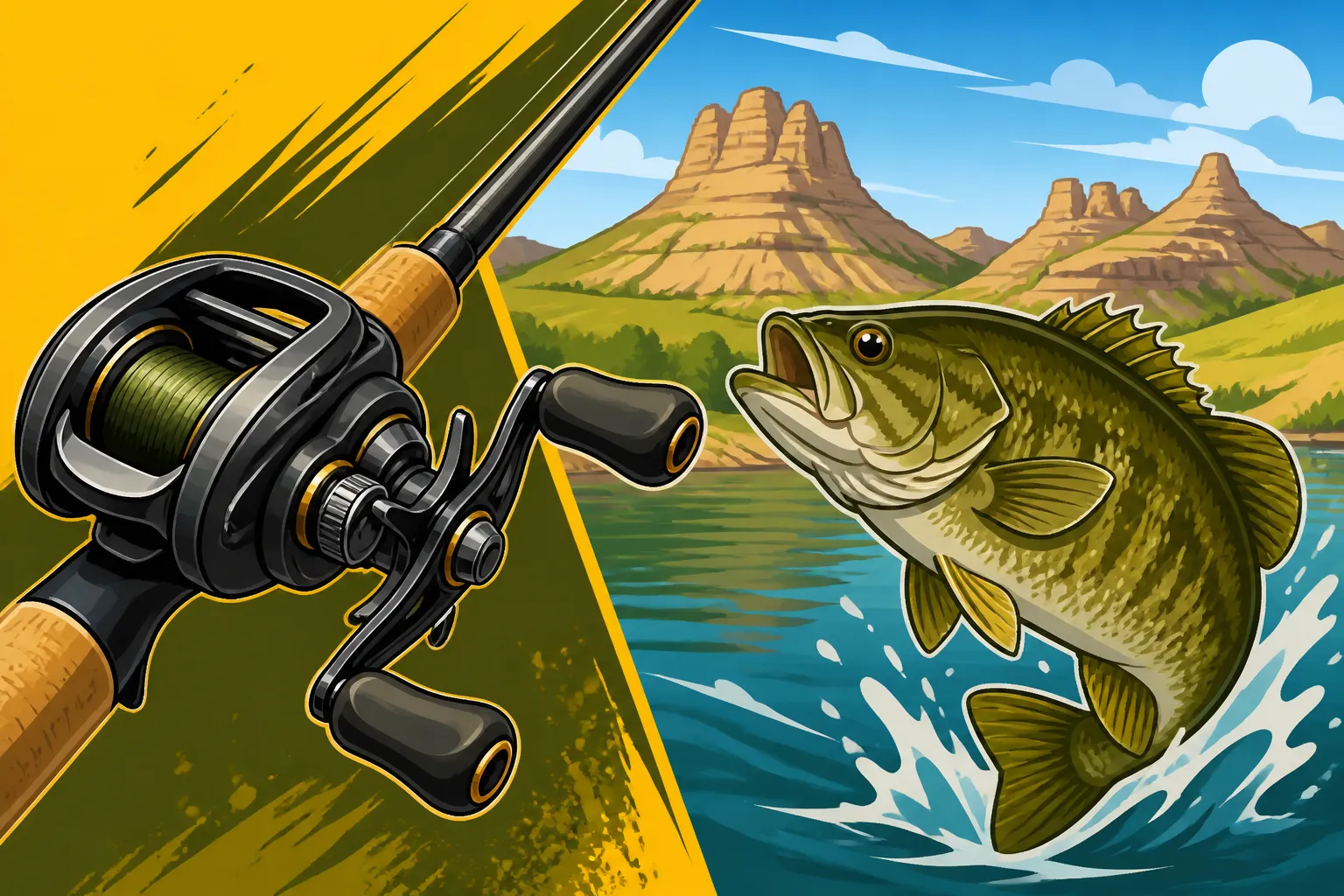
South Dakota offers some fantastic smallmouth bass fishing, primarily in its expansive reservoirs along the Missouri River and in many of the clearer lakes in the Black Hills. These are often vast, sometimes windswept environments that demand specific gear capabilities. Think about Lake Francis Case with its countless rocky points and submerged humps, or the clearer sections of Lake Sharpe where current can play a major role. You'll find them lurking around riprap, submerged timber, rock piles, and distinct changes in depth. In the Black Hills, lakes like Pactola Reservoir and Sheridan Lake also hold smallmouth, often in cooler, deeper waters, again preferring rocky structures. These varying environments mean your reel needs to be versatile enough to handle different casting distances, retrieve speeds, and the sheer power these fish can exert. You can dive deeper into where to find these amazing fish by checking out our South Dakota Smallmouth Bass Fishing Guide.
Imagine a scenario: You're out on Lake Sharpe near Big Bend Dam, targeting a prominent rock outcropping where you know smallmouth like to ambush baitfish. You need a reel that can accurately pitch a jig to that precise spot, handle a powerful hookset, and then crank that fish back through potential snags before it can dive into deeper cover. The wrong reel could lead to missed opportunities or even lost fish.
How Smallmouth Behave and Why It Matters for Gear
Smallmouth bass are opportunistic predators with an aggressive streak. They often feed on crayfish, minnows, and aquatic insects. Their behavior dictates certain aspects of your gear choice. When they strike, it's usually sudden and violent. This means you need a reel with a strong drag system that won't falter under pressure, and robust internal components that can withstand repeated battles. They also tend to fight hard all the way to the boat, often making sudden runs or jumping clear of the water. This is where a smooth retrieve and a comfortable handle become crucial, allowing you to maintain control and apply steady pressure.
Consider the challenge of fishing a deep drop-off where smallmouth are suspended. You might be vertical jigging or slowly working a bottom bait. For this, sensitivity in your rod and the smooth operation of your reel are paramount to detect subtle bites. Conversely, if they're chasing topwater lures during a morning bite, you need a high-speed reel to quickly pick up slack and ensure a solid hookset when they explode on your bait. Understanding these nuances in Smallmouth Bass Fishing Techniques for Rocky Shorelines can make all the difference in your gear selection.
Why a Baitcasting Reel for Smallmouth Bass?
When it comes to bass fishing, the age-old debate often centers around baitcasting versus spinning reels. For smallmouth bass, especially when you're targeting bigger fish or employing certain techniques, a baitcasting reel often pulls ahead. It's not just about looking "pro"; there are genuine performance advantages that make it an invaluable tool.
Advantages Over Spinning Reels
While spinning reels have their place for lighter lures and finesse presentations, baitcasting reels offer several distinct advantages for smallmouth. The primary benefits revolve around power, accuracy, and line control.
- Power and Torque: Baitcasting reels are designed with a direct drive system, meaning the spool rotates directly in line with the crank handle. This design provides significantly more cranking power and torque than spinning reels, which translates to easier retrieves of heavy lures and better control over strong, fighting fish. When a large smallmouth decides to dive into a brush pile on Lake Oahe, that extra power can be the difference between landing it and losing it.
- Accuracy and Precision Casting: Once mastered, a baitcaster offers unparalleled casting accuracy. The thumb bar release and precise spool control allow for pinpoint presentations, whether you're skipping a jig under a dock or dropping a tube bait precisely on a submerged rock. This accuracy is crucial when targeting structure-oriented smallmouth, where a cast just a few feet off can mean the difference between a bite and no bite.
- Line Capacity and Heavier Line: Baitcasting reels generally handle heavier line diameters, like robust fluorocarbon or braided lines, with greater ease and efficiency. This is vital when fishing around abrasive cover like sharp rocks, timber, or dense weeds common in many South Dakota smallmouth spots. The larger arbor on most baitcasters also allows for better line management and less line memory compared to the coils that can form on a spinning reel spool.
- Better Hooksets: The direct line pull of a baitcasting reel often leads to more solid hooksets, especially with single-hook presentations like jigs or Texas-rigged plastics. When you feel that thump, you can lean into the fish with confidence, driving the hook home effectively.
When to Choose a Baitcaster
So, when does a baitcaster truly shine for smallmouth? It comes down to technique and the type of lures you're throwing.
- Heavier Lures and Baits: If you're tossing anything over 1/4 ounce, a baitcaster is usually the more comfortable and efficient choice. This includes crankbaits, spinnerbaits, heavier jigs, swimbaits, and topwater frogs. The added weight of these lures helps load the rod and prevents the "helicoptering" effect you sometimes get with lighter lures on spinning gear.
- Targeting Dense Cover: When smallmouth are tucked away in thick cover – think submerged cedar trees in the Missouri River reservoirs or dense weed beds in shallower glacial lakes – you need the power to extract them. A baitcaster, paired with braided line, gives you the brute force to pull fish out of snags and avoid break-offs.
- Precision and Flipping/Pitching: For close-quarters combat, like flipping jigs into specific pockets of cover or pitching soft plastics to isolated rocks, a baitcaster is king. The ability to feather the line with your thumb provides unmatched control over your cast and presentation. Many anglers targeting specific points on Lake Francis Case rely on this precision.
- Specific Lure Presentations: Techniques like power fishing with deep-diving crankbaits or fast-retrieving spinnerbaits are simply more efficient and less fatiguing with a baitcasting reel due to its superior gearing and leverage. For these presentations, the baitcaster truly excels.
Key Features to Look for in a Smallmouth Baitcasting Reel
Alright, you're convinced a baitcaster is the way to go. Now, how do you sort through the dizzying array of options out there? It's easy to get bogged down in jargon, but focusing on a few key features will guide you to the right reel for South Dakota's smallmouth.
Gear Ratio: Speed and Power for Different Techniques
The gear ratio tells you how many times the spool rotates with one full turn of the handle. This is arguably one of the most critical factors when choosing a baitcaster for smallmouth, as it directly impacts your retrieve speed and cranking power.
- Lower Gear Ratios (5.X:1 to 6.X:1): These reels offer more cranking power but a slower retrieve. They are ideal for techniques where a slow, deliberate retrieve is key, or when you need maximum power to turn a fish away from heavy cover. Think deep-diving crankbaits that require a lot of resistance to pull through the water, or large spinnerbaits that you want to slow-roll along the bottom. If you're using oversized lures in deep water, these reels make the retrieve much less fatiguing. This also applies when Deep Water Summer Fishing Techniques are in play.
- Example: A 5.4:1 ratio means the spool turns 5.4 times for every handle rotation. This provides excellent torque for battling stubborn fish or burning big blades.
- Medium Gear Ratios (6.X:1 to 7.X:1): These are the most versatile workhorses. They offer a good balance of speed and power, making them suitable for a wide range of smallmouth techniques. If you're just starting with baitcasters or want an all-around reel, a medium gear ratio (like a 7.1:1 or 6.8:1) is an excellent choice. They handle everything from jigs and Texas rigs to jerkbaits and medium-depth crankbaits.
- Example: A 7.1:1 ratio allows you to quickly pick up slack line after a cast or when a fish charges the boat, but still has enough power for most fighting scenarios.
- High Gear Ratios (8.X:1 and higher): These reels are built for speed. They retrieve line very quickly, which is essential for techniques where you need to pick up slack fast, keep up with a fast-moving fish, or make repeated quick casts. Topwater baits, frogging, pitching, and flipping are prime examples. When a smallmouth explodes on a popper, you need to reel down quickly to set the hook effectively, and a high-speed reel excels here.
- Example: An 8.1:1 ratio means you're bringing in a lot of line with each turn, perfect for burning baits back to the boat for another cast, or for quickly reeling in a fish that's swimming directly at you.
Many serious smallmouth anglers will have multiple reels with different gear ratios to match specific presentations. A 6.X:1 for cranking, a 7.X:1 for all-around jig and soft plastic work, and an 8.X:1 for topwater and pitching.
Braking Systems and Spool Tension
This is where the magic (and sometimes the frustration) of a baitcaster happens. The braking system and spool tension control how fast your spool rotates during a cast, preventing that dreaded "bird's nest" or backlash. Getting this dialed in is key to a smooth casting experience.
- Spool Tension Knob: This is the most basic adjustment, typically located next to the star drag. It controls the initial speed of the spool as the lure falls. You want to adjust it so that when you drop your lure, it falls slowly to the ground without the spool overrunning, then stops when the lure hits. This is your first line of defense against backlash.
- Braking Systems: Modern baitcasting reels employ two main types of braking systems, or sometimes a combination of both:
- Centrifugal Brakes: These systems use small weights (pins) inside the reel that move outwards due to centrifugal force as the spool spins. The more pins engaged, the more braking force is applied. They offer strong braking at the beginning of the cast, which then tapers off as the spool slows. This is great for longer casts and can be adjusted internally.
- Magnetic Brakes: These systems use magnets to create resistance against the spool. They are typically adjusted externally with a dial, allowing for quick on-the-fly changes. Magnetic brakes apply consistent braking force throughout the cast and are often favored by beginners for their ease of adjustment.
- Dual Braking Systems: Some higher-end reels combine both centrifugal and magnetic brakes, offering the best of both worlds and maximum adjustability. This can be especially useful when fishing in varied South Dakota wind conditions, where you might need to quickly adapt your casting.
Properly setting your spool tension and braking system is crucial. Too loose, and you'll backlash. Too tight, and you'll limit your casting distance. It takes practice, but once you master it, you'll appreciate the control. Learning How to Find Your South Dakota Fishing License Number won't help you with backlash, but knowing how to manage your reel will certainly make your fishing trips more enjoyable!
Bearings, Frame Material, and Durability
These often-overlooked features contribute significantly to a reel's performance, longevity, and overall feel, especially when dealing with the elements and hard-fighting smallmouth.
- Bearings: More bearings don't always mean better, but good quality bearings are essential for smoothness and long-term performance. Look for reels with at least 5-7 high-quality, corrosion-resistant bearings. Stainless steel or ceramic bearings are preferred for their durability and smooth operation, particularly in freshwater environments that can still be tough on gear. Quality bearings contribute to a silky-smooth retrieve and make winding in a powerful smallmouth feel effortless.
- Frame Material: The frame is the backbone of your reel. It needs to be rigid to prevent flex under load, which can lead to misalignment of gears and premature wear.
- Aluminum: Many high-quality baitcasters feature aluminum frames, often machined for precision. Aluminum offers excellent rigidity and strength while keeping weight down. It's also durable against impacts.
- Graphite/Composite: Lighter and generally more affordable, graphite frames are common in entry-level and mid-range reels. While lighter, they can be more prone to flex under heavy pressure, which might be a consideration if you're consistently battling trophy smallmouth. However, modern composites are surprisingly strong.
- Durability and Corrosion Resistance: South Dakota fishing means exposure to water, dirt, and sometimes even mud or sand, especially during windy days on the reservoirs. A reel designed with corrosion-resistant components, sealed bearings, and a robust finish will stand up better to the rigors of frequent use. Look for brands that prioritize internal component strength, as smallmouth fights can put a lot of strain on gears.
Matching Your Reel to Smallmouth Bass Techniques
The beauty of smallmouth fishing is the variety of techniques you can employ. Matching your baitcasting reel's specifications to these techniques will drastically improve your success and enjoyment on the water.
Topwater and Jerkbaits
These exciting techniques demand a fast retrieve and impeccable casting accuracy.
- Reel Choice: For topwater baits like poppers, walking baits, and buzzbaits, or for jerkbaits that require a lot of slack to be picked up quickly, a high gear ratio (7.X:1 to 8.X:1) is almost mandatory. This allows you to quickly gather slack line after a twitch or a pause, ensuring you're ready for the strike and can set the hook efficiently. When a smallmouth explodes on a topwater, it often creates slack, and a fast reel helps you manage that.
- Casting: Both topwater and jerkbaits often involve repeated, accurate casts to specific targets. A reel with a smooth braking system (whether magnetic or centrifugal, or a dual system) that allows for consistent long casts and short, accurate pitches is ideal. You'll be making dozens, if not hundreds, of casts in a session, so a reel that casts effortlessly is a joy to use.
- Line: Many anglers prefer monofilament or braided line for topwater, as mono floats and braid has no stretch for solid hooksets at a distance. Your reel should handle these lines well, especially managing the tendency of braid to "dig in" on the spool under heavy pressure.
Imagine those calm mornings on Lake Sharpe where smallmouth are busting bait on the surface. You cast a walking bait, walk it a few times, then BAM! A big smallmouth craters the water. With a high-speed reel, you can reel down instantly, set the hook, and keep the fish from getting the upper hand.
Jigging and Finesse Presentations
While spinning reels are often associated with finesse, baitcasters can be incredibly effective for jigging and heavier finesse applications, offering more control and power.
- Reel Choice: For jigs, Texas rigs, Carolina rigs, and other bottom-contact baits, a medium gear ratio (6.X:1 to 7.X:1) is generally preferred. This provides a good balance of power for working baits on the bottom and enough speed to pick up slack and retrieve. Sensitivity is also key here, so a reel with quality bearings and a rigid frame will transmit subtle bites up the line and rod.
- Casting: These techniques often involve pitching and flipping to specific pieces of cover. The controlled casting offered by a baitcaster, where you can thumb the spool to stop the lure precisely, is invaluable. This is particularly true when you're fishing vertical structure or isolated rock piles on Lake Francis Case Smallmouth Bass Fishing grounds.
- Line: Fluorocarbon is often the line of choice for jigging due to its low stretch and invisibility underwater. A baitcasting reel handles fluorocarbon well, minimizing line twist and memory that can plague spinning gear.
Picture yourself working a football jig along a deep rocky ledge on Lake Oahe. You feel a subtle "tick." With a sensitive setup and a good baitcaster, you set the hook hard, and the power of the reel helps you quickly lift that smallmouth out of the structure before it can wrap you up.
Cranking and Spinnerbaits
Power fishing techniques like cranking and throwing spinnerbaits are where baitcasting reels truly shine, showcasing their strength and line capacity.
- Reel Choice: For deep-diving crankbaits, lipless crankbaits, and spinnerbaits, a lower to medium gear ratio (5.X:1 to 6.X:1) is often the best bet. The reduced speed translates to increased torque, making it much easier to retrieve these high-resistance baits all day long without fatiguing your arm. A reel with a strong frame and durable gearing is essential to withstand the constant pressure.
- Casting: Long, accurate casts are often required to cover water effectively with crankbaits and spinnerbaits. A baitcaster, properly tuned, allows you to launch these heavier lures a considerable distance, covering more potential smallmouth holding areas.
- Line: Monofilament or fluorocarbon is commonly used for these techniques, depending on the desired action and depth. Mono offers some stretch and helps with treble hook baits, while fluorocarbon gets crankbaits deeper faster. Your reel needs to manage these lines effectively.
Think about fishing a long point on Lewis and Clark Lake with a deep-diving crankbait. You're making long casts, grinding that lure down to where the smallmouth are. A low gear ratio reel makes it feel like you're barely working, even when a powerful smallmouth hammers the bait far from the boat.
| Gear Ratio | Typical Application for Smallmouth Bass | Advantages | Disadvantages |
|---|---|---|---|
| 5.X:1 – 6.X:1 | Deep-diving crankbaits, large spinnerbaits, big swimbaits, slow-rolling | Maximum power/torque, less fatigue with high-resistance baits, good for big fish | Slower retrieve for quick slack pickup, less ideal for topwater/flipping |
| 6.X:1 – 7.X:1 | Jigs, Texas rigs, Carolina rigs, medium crankbaits, jerkbaits, all-around | Versatile, good balance of power and speed, covers most techniques efficiently | Not specialized for extreme speed or extreme power applications |
| 7.X:1 – 8.X:1+ | Topwater, pitching, flipping, frogging, quickly picking up slack | Very fast retrieve, excellent for covering water, quick hooksets on surface bites | Less cranking power, can feel "weak" with high-resistance baits over time |
Setting Up and Maintaining Your Baitcasting Reel
Getting a baitcasting reel is one thing; making it perform optimally and last for years of South Dakota fishing adventures is another. Proper setup and regular maintenance are crucial.
Spooling Line and Adjusting the Reel
The way you spool your line has a huge impact on casting performance and preventing backlash.
- Spooling Line: When spooling braid, it's often a good idea to put a small amount of monofilament backing on the spool first. This prevents the braid from slipping on the bare metal arbor. Make sure to spool line under moderate tension, keeping it tight and even. An unevenly spooled reel is a recipe for backlash.
- Braided Line: Excellent for strength, sensitivity, and casting distance. Great for heavy cover.
- Fluorocarbon Line: Nearly invisible underwater, low stretch, and good abrasion resistance. Ideal for finesse and clear water.
- Monofilament Line: More stretch (good for treble hook baits), easy to cast, and floats.
Consider the specific technique you'll be using. For instance, if you're throwing a Best Lures for Fall Walleye on Lake Oahe on a baitcaster, you might want a different line choice than for smallmouth.
- Initial Reel Adjustments (The "Drop Test"):
- Spool Tension: Attach a lure to your line. With the rod tip up, loosen the spool tension knob until the lure slowly falls to the ground.
- Braking System: Set your external magnetic brake to a medium-high setting, or engage a few pins on an internal centrifugal system.
- Practice Casts: Start with gentle overhead casts, keeping your thumb lightly on the spool to prevent overrun as the lure hits the water. As you gain confidence, you can gradually reduce the braking.
Overcoming Backlash and Mastering Casting
Ah, the infamous bird's nest. Every baitcaster user has experienced it, especially beginners. Don't get discouraged; it's part of the learning curve!
- Causes of Backlash:
- Improper Reel Settings: Too little spool tension or brake force.
- Incorrect Casting Technique: Too much wrist flick, not enough rod load, or letting off the thumb too early.
- Wind: Headwinds are the enemy of smooth baitcaster casts.
- Lure Weight: Using a lure too light for the rod and reel.
- Tips for Mastering Casting:
- Start Slow: Begin with heavier lures that are easier to cast.
- Thumb Control is Key: Your thumb is your second brake. Keep it lightly on the spool throughout the cast, especially as the lure slows down or hits the water.
- Smooth, Deliberate Motion: Let the rod do the work. A smooth, sweeping cast is better than a jerky, powerful one.
- Practice, Practice, Practice: The backyard is your friend. Cast at targets (like a bucket or cone) until it becomes muscle memory.
- Adjust for Conditions: Always adjust your brakes and spool tension for wind, lure weight changes, and casting style. A strong headwind will require more braking.
Learning to pitch and flip accurately, which many smallmouth techniques require, is a separate skill that builds on basic casting mastery. This control is critical when fishing around specific structures found in Lake Sharpe Smallmouth Bass Near Big Bend Dam.
Basic Maintenance for Longevity in South Dakota Conditions
Just like your boat needs regular care, your baitcasting reel benefits from routine maintenance to ensure it performs flawlessly year after year.
- After Each Trip:
- Wipe Down: Use a damp cloth to wipe down the exterior of the reel, removing any dirt, slime, or water spots.
- Rinse (Carefully): If fishing in very dirty or silty water, a light rinse with fresh water can be beneficial, but never spray directly into the gears or drag. Just a gentle stream on the outside.
- Dry Thoroughly: Allow the reel to air dry completely before storing to prevent corrosion.
- Regular Cleaning and Lubrication (Seasonal or Every 10-15 Trips):
- Light Oil: Apply a tiny drop of high-quality reel oil to the spool shaft bearings, handle knobs, and worm gear (the long screw that moves the line guide).
- Light Grease: A very small amount of reel grease can be applied to the main gear and pinion gear, if you're comfortable opening the side plate. Refer to your reel's manual.
- Inspect and Tighten: Check for any loose screws, especially on the handle and side plates.
- Check Drag: Ensure the drag system is clean and operating smoothly. Loosen the drag completely when storing the reel for extended periods to prevent the drag washers from compressing.
- Deep Cleaning (Annually or as Needed): For more extensive cleaning, consider taking your reel to a professional or consult a detailed guide if you're mechanically inclined. This involves disassembling, cleaning all components, and re-lubricating.
Maintaining your gear, much like understanding South Dakota Fishing Season Dates and Limits, is a crucial part of being a successful and responsible angler.
Recommended Baitcasting Reel Considerations for South Dakota Anglers
So, which reels should you actually be looking at? It's not about one single "best" reel, but rather finding the right fit for your budget, preferred techniques, and the unique challenges of South Dakota fishing.
Brands and Models
The fishing industry is packed with excellent baitcasting reel manufacturers. While I can't give specific model names or prices, I can guide you on what to look for from reputable brands. Many popular brands offer a range of reels from entry-level workhorses to high-performance machines.
- Entry-Level/Mid-Range: These reels often utilize a blend of graphite and aluminum, good quality bearings, and reliable braking systems. They are perfect for anglers just getting into baitcasting or those who want solid performance without breaking the bank. You'll find a ton of options that are perfectly capable of handling South Dakota smallmouth.
- High-Performance: These reels typically feature fully machined aluminum frames, top-tier bearings, advanced braking systems, and ergonomic designs. They offer maximum durability, smoothness, and casting distance. If you're a serious smallmouth angler who spends a lot of time on the water, the investment in a high-performance reel can be well worth it for the improved feel and longevity.
When you're browsing for reels, whether online or in person, many anglers find great selections at places like Bass Pro Shops or by looking for highly-rated options on Amazon. These retailers offer a wide variety of models and often have detailed product descriptions that highlight features like gear ratio, bearing count, and frame material. Don't be shy about reading reviews from other anglers; they can offer real-world insights into a reel's performance for specific species like smallmouth bass.
Budget-Friendly vs. High-Performance Options
It's tempting to think you need the most expensive reel to catch fish, but that's simply not true. What's important is getting the best value for your money and understanding what you gain at different price points.
- Budget-Friendly Options (Often less expensive):
- What to Expect: These reels provide a solid foundation. They'll cast, retrieve, and have a reliable drag. They might use more composite materials, have fewer or less refined bearings, and possibly simpler braking systems.
- Ideal For: Beginners, casual anglers, or those on a tight budget. They're great for learning and will still land plenty of smallmouth. Just ensure you still prioritize a reasonable gear ratio for your intended techniques and look for decent reviews on durability.
- Real-World Scenario: If you're just starting to explore South Dakota Glacial Lakes Walleye Fishing or trying a baitcaster for the first time on smallmouth, a well-regarded entry-level reel will give you the functionality you need without a huge financial commitment.
- Mid-Range Options (Moderate pricing):
- What to Expect: This is often the sweet spot for many anglers. You'll see more aluminum components, better quality bearings, more refined braking systems (often dual), and improved ergonomics. These reels offer a noticeable step up in smoothness, durability, and casting performance compared to entry-level models.
- Ideal For: Anglers who fish regularly, want reliable performance, and appreciate a good balance of features and cost.
- High-Performance Options (Premium pricing):
- What to Expect: The pinnacle of baitcasting technology. Expect lightweight, fully machined aluminum frames, the highest quality corrosion-resistant bearings, advanced internal components, highly adjustable braking systems, and often unique ergonomic features. They are designed for maximum casting distance, extreme durability, and buttery-smooth operation.
- Ideal For: Tournament anglers, avid enthusiasts who spend countless hours on the water, or those who simply demand the very best performance and feel. These reels are built to withstand the heaviest use and last for many seasons.
Remember, regardless of the price point, the most important thing is that the reel feels comfortable in your hand and balances well with your chosen rod. Don't overlook the importance of a good rod and reel pairing. The best reel in the world won't perform if it's on an unbalanced or unsuitable rod. Happy fishing, and may your next smallmouth fight be an epic one!
Disclaimer
This article is for general informational purposes only and does not constitute professional advice. Laws, prices and regulations vary by location and change over time. Consult a qualified professional for guidance on your specific situation.