Best Boat Size for Fishing the Missouri River
Choosing the right boat size for fishing the mighty Missouri River in South Dakota can feel like a daunting task. It's not just a river; it's a series of vast reservoirs like Oahe, Sharpe, Francis Case, and Lewis and Clark, each with its own personality and challenges, and then you have those powerful tailwaters below the dams. You're probably scratching your head wondering if that trusty little fishing boat from the local lake will cut it, or if you need something much bigger to tackle those open waters. This guide is here to walk you through all the nuances of boat size, type, and features so you can confidently pick the best vessel for your South Dakota Missouri River angling adventures.
Understanding the Missouri River's Diverse Character
Before we even talk about boat sizes, it's crucial to grasp just how varied the Missouri River system is in South Dakota. It's not a uniform waterway, and what works beautifully in one section might be entirely unsuitable or even unsafe in another. This diversity is what makes the fishing so incredible, but it also means you need to be smart about your gear, especially your boat.
Reservoirs vs. River Sections
The Missouri River in South Dakota is dominated by four massive reservoirs: Lake Oahe, Lake Sharpe, Lake Francis Case, and Lewis and Clark Lake. These aren't your typical calm, narrow rivers; they are immense bodies of water, often miles wide, resembling large inland seas. On these reservoirs, wind can whip up quickly, creating significant waves that can challenge even experienced boaters. You can go from glassy calm to whitecaps in a blink, especially during a summer thunderstorm or a strong frontal passage. This is where a boat's length, beam (width), and hull design truly come into play for safety and comfort.
In contrast, you have the actual river sections, often found below the major dams as tailwaters. These areas, like the stretches below Oahe Dam or Big Bend Dam, are characterized by strong currents, sometimes shallower water, and often more confined spaces. Here, maneuverability becomes a key factor, and a boat designed for navigating powerful flows and precise positioning might be more appropriate. These areas can also have hidden snags or sandbars that demand a different kind of boat handling and draft. It’s a dynamic environment, and thinking about these different zones is the first step in finding your perfect match.
Impact of Wind and Waves
Anyone who has spent time fishing on the big Missouri River lakes knows the wind is a constant companion, and sometimes, a formidable foe. A calm morning can turn into a white-knuckle ride by afternoon. This is where boat size directly correlates to safety and comfort. A smaller, lighter boat, say under 16 feet, will get tossed around much more violently by 2-foot waves compared to a 20-foot deep-V rig. This doesn't just impact your ride; it impacts your ability to hold a line, deploy your trolling motor effectively, or even stand up to cast without losing your balance.
When you're out on Lake Oahe chasing walleye or Chinook salmon, being able to cut through chop rather than just riding over it can make or break your day. A boat that handles waves well also keeps you drier and reduces fatigue, which means more enjoyable fishing and less time worrying about the conditions. Consider the sheer size of these lakes – you can be miles from shore, and if the weather turns, you want a boat that inspires confidence, not dread.
Key Factors for Choosing Your Boat Size
So, with the river's character in mind, let's break down the practical considerations for selecting your ideal boat size. It’s a balancing act between capacity, handling, and logistics.
Fishing Style and Target Species
Your primary fishing methods will heavily influence the best boat size and type for you. Are you a dedicated walleye angler who trolls crankbaits for hours on end? Or do you prefer casting jigs for smallmouth bass along rocky shorelines? Perhaps you're after those elusive Chinook salmon in the deeper waters of Lake Oahe.
- Trolling for Walleye and Salmon: If trolling is your game, especially on the larger reservoirs, a longer boat with a wider beam provides stability. This helps manage multiple fishing lines, planer boards, and downriggers without tangling. A larger boat also has more storage for extra rods, tackle boxes, and safety gear. Boats in the 18-22 foot range are incredibly popular for this style of fishing on the Missouri River system, offering a great balance of comfort and fishability. Think about how much gear you bring and how many lines you typically run. You don’t want to feel cramped. You can find excellent trolling rods and accessories at Best Fishing Rods and Reels for Walleye or through general retailers like Bass Pro Shops or Amazon.
- Jigging and Casting: For more active fishing like vertical jigging in the current below the dams or casting to structure, a boat with a stable casting platform and good maneuverability is key. While a larger boat still offers comfort, precision in boat control can be easier with a slightly more compact vessel. Good electronics are also vital for finding fish while jigging; check out Best Fish Finders for South Dakota Lakes for more information.
- Catfish and Bank Fishing Support: If you're primarily targeting catfish in slower current areas or supporting bank anglers, you might prioritize open deck space and stability at rest. A robust jon boat or a utility V-hull could be an excellent, more economical option, particularly if you're not planning long runs in big waves.
Number of Passengers and Gear
This is a straightforward, yet often overlooked, factor. How many people will typically be in your boat? Is it just you and a buddy, or do you often take the whole family, including kids and their gear? Every person adds weight, and every piece of gear takes up space.
| Boat Length (Approx.) | Ideal Passengers | Typical Fishing Style | Pros | Cons |
|---|---|---|---|---|
| 14-16 feet | 1-2 | Small lakes, calm river sections, jigging | Easier to launch/retrieve, economical, good for solo | Rougher ride in waves, limited storage, less stable |
| 17-19 feet | 2-3 | Versatile for reservoirs & rivers, walleye trolling | Good balance of size/maneuverability, decent storage | Can still be challenging in big waves, less deck space than larger boats |
| 20-22 feet | 3-4+ | Large reservoirs, rough water, dedicated trolling | Excellent wave handling, ample storage, stable platforms | More expensive, harder to tow/store, higher fuel consumption |
| 23+ feet | 4+ | Big water, serious offshore (salmon), guide boats | Maximum comfort/safety, huge deck space, high capacity | Very expensive, requires large tow vehicle, challenging to launch in some areas |
Keep in mind that published boat capacities are usually for calm water, and for active fishing, you want more space per person than simply fitting the maximum. If you're regularly bringing three or four people with full tackle boxes, coolers, and rain gear, a 20-foot boat starts to feel "just right," whereas a 16-foot boat would be a tight squeeze and potentially unsafe in rough water. You also need to think about required safety equipment, like life jackets, and whether you'll have room for a Best Coolers for Keeping Fish Fresh to bring home your catch.
Towing Vehicle and Storage Limitations
A boat isn't just about what's on the water; it's about how you get it there and where you keep it. A larger boat means a heavier boat, which demands a more capable towing vehicle. Do you have a truck or SUV that can comfortably handle a 4,000-pound boat and trailer combination, or are you limited to something smaller? Overloading your tow vehicle is not only dangerous but also illegal.
Storage is another real-world consideration. Do you have space in your garage, driveway, or at a local storage facility for a 22-foot boat plus its trailer? Or are you limited to a smaller footprint? Larger boats can also incur higher storage fees. Don't let the excitement of a new boat overshadow these practicalities. Many anglers find themselves compromising on a slightly smaller boat than they initially envisioned simply because of the logistics of getting it to and from the water, and keeping it safe and secure when not in use.
Common Boat Types and Their Suitability for the Missouri River
Now, let's explore some of the most common boat types you'll see on the Missouri River and how their design features align with different fishing needs and river conditions.
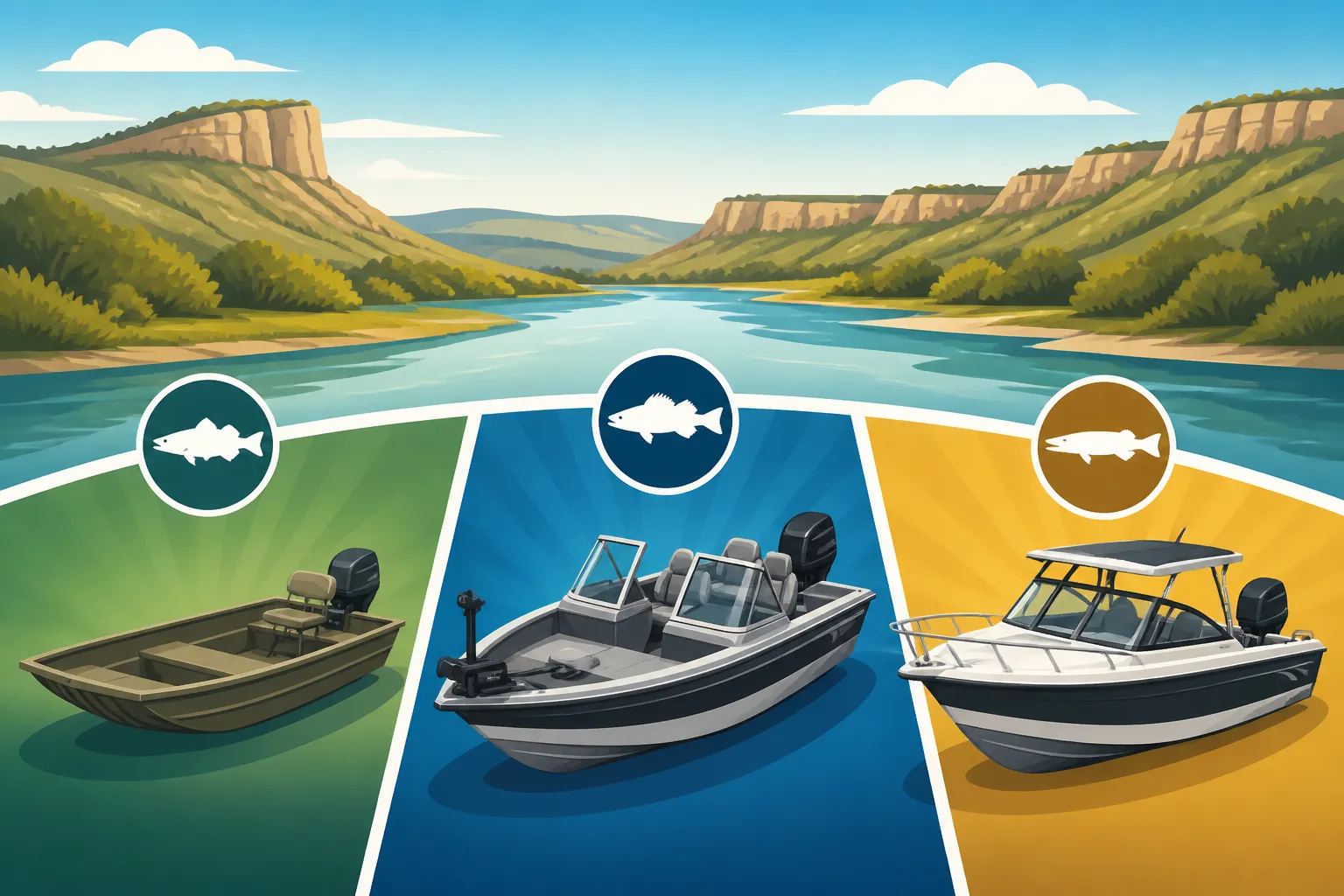
Deep-V Aluminum Boats (Walleye Rigs)
These are arguably the most popular choice for serious anglers on the South Dakota Missouri River reservoirs, and for good reason. They typically range from 17 to 22 feet in length, feature a deep-V hull that cuts through waves, and are built to handle the often-choppy conditions of large lakes like Oahe and Sharpe. The "V" hull provides a smoother, drier ride in rough water, making those long runs across the lake much more comfortable.
- Pros: Excellent wave handling, stable at rest (especially wider models), ample storage for gear and multiple rods, often equipped with powerful outboards and advanced electronics. Many models come with livewells, baitwells, and spacious casting decks. Ideal for trolling.
- Cons: Can be heavier and require a larger tow vehicle, generally more expensive than shallower V or jon boats, and might draw more water, limiting access to very shallow areas.
- Best for: Walleye trolling, salmon fishing, fishing larger bodies of water like Lake Oahe Fishing Guide or Lake Sharpe Fishing Guide. Great for handling wind and waves. You'll see brands like Lund, Ranger, Alumacraft, and Crestliner heavily represented in this category. For a deeper dive, read Best Boats for South Dakota Reservoir Fishing.
Jet Boats and Flat-Bottom Jon Boats
While less common for open-water trolling on the main reservoirs, these boats have their niche, especially in shallower river sections or specific applications.
- Jet Boats: These use an impeller to suck in water and expel it, rather than a propeller. This means they can operate in incredibly shallow water, making them ideal for navigating skinny river sections, rapids, or areas with numerous sandbars where a prop would get damaged.
- Pros: Superior shallow-water capability, no exposed propeller (safer in some situations), excellent maneuverability in current.
- Cons: Can be less fuel-efficient, generally not as good in rough, choppy water, and can be noisier.
- Best for: Upstream river sections, exploring shallow tributaries, or areas known for extreme shallows that propeller boats cannot access. Less common for the vast open waters of the major reservoirs.
- Flat-Bottom Jon Boats: Often simpler, lighter, and more affordable, jon boats offer a stable platform for casting and excellent shallow-water draft.
- Pros: Very stable for casting while standing, excellent shallow-water access (though often limited by a prop motor), economical to buy and operate, easy to launch.
- Cons: Extremely poor wave handling – they will pound you relentlessly in chop and are generally unsafe in large waves. Limited storage and amenities.
- Best for: Calm backwaters, small feeder creeks, or supporting bank fishing on calmer days. Not recommended for open reservoir fishing due to safety concerns in rough water.
Fiberglass Multi-Species Boats
Similar to their aluminum deep-V counterparts, fiberglass multi-species boats (often referred to as bass boats or bay boats for other regions) offer premium features, exceptional ride quality, and often more horsepower. They are usually a bit heavier than aluminum boats, giving them an even smoother ride in some rough conditions.
- Pros: Very smooth ride, luxurious interiors, high performance, often faster, and incredibly stable. Built for serious fishing with lots of amenities.
- Cons: Typically the most expensive option, heaviest to tow, and require more maintenance. Can also have a slightly deeper draft than some aluminum boats.
- Best for: Anglers seeking the ultimate in comfort and performance, often targeting multiple species across the large reservoirs. You'll often see these used for guiding or serious tournament fishing. Check out models from manufacturers like Skeeter, Nitro, or Ranger, often found at retailers like Bass Pro Shops.
Pontoons and Utility Boats
While not primarily designed for serious fishing on the big Missouri River, pontoons and larger utility boats do have their place for specific users.
- Pontoons: Pontoons offer incredible deck space and stability, making them fantastic for family outings, cruising, and casual fishing in calm conditions.
- Pros: Huge deck space, very stable at rest, comfortable for large groups, great for swimming and relaxing.
- Cons: Terrible in waves – the large surface area catches wind, and they tend to "slap" waves rather than cut through them, making for a rough and wet ride. Generally slow and difficult to maneuver in strong currents.
- Best for: Family trips, casual fishing in sheltered bays, or on very calm days on the reservoirs. Not suitable for serious fishing or rough water on the Missouri River system.
- Larger Utility Boats/Work Skiffs: These are typically heavy-duty, open boats, sometimes used for commercial purposes or by those who need a no-frills, robust platform.
- Pros: Extremely durable, large open space for gear, can handle heavy loads.
- Cons: Bare-bones, often slower, and not designed for comfort.
- Best for: Hauling gear, short runs, or specific utility tasks where comfort and speed are secondary.
Practical Considerations Beyond Size
Once you've narrowed down the ideal boat size and type, there are a few more crucial elements to consider that will impact your overall satisfaction and safety on the Missouri River.
Horsepower and Performance
Don't skimp on horsepower, especially for the larger Missouri River reservoirs. You're often covering vast distances, and being able to quickly get to your fishing spot or, more importantly, get back to the ramp when a storm rolls in, is paramount. An underpowered boat will struggle against current and wind, burn more fuel trying to keep up, and ultimately limit your fishing range.
Most deep-V boats in the 18-22 foot range will be paired with outboards from 115hp up to 250hp or more. While a smaller engine might save you a bit upfront, the long-term benefits of adequate power – better hole shot, higher top speed, improved fuel efficiency at cruise, and added safety margin – are well worth the investment. Think about how far you typically travel and how quickly you want to be able to respond to changing conditions. You'll want to ensure your boat is well-matched with its engine, possibly even considering a kicker motor for trolling and backup power. Learn more about boat safety by checking out South Dakota Boat Safety Requirements.
Electronics and Navigation
Modern fishing on the Missouri River demands good electronics. A reliable fish finder with GPS capabilities is non-negotiable for finding structure, marking waypoints, and navigating safely, especially on unfamiliar waters. Best Fish Finders for South Dakota Lakes will give you a great overview of what to look for. Side imaging, down imaging, and detailed mapping are invaluable tools for locating walleye, smallmouth bass, and even catfish.
Consider a unit with a large, clear screen that's easy to read in direct sunlight. Make sure it has detailed South Dakota mapping, especially for the Missouri River reservoirs. You'll be able to mark those productive humps on Lake Oahe, follow contour lines on Lake Francis Case, or pinpoint submerged trees on Lake Sharpe. Having a second unit at the bow for the trolling motor is also a common setup for serious anglers, allowing for precise boat control while fishing.
Budget and Maintenance
Let's be realistic – boats are an investment, and the larger they are, the more they typically cost, not just to purchase, but to maintain and fuel. Beyond the initial price tag, consider:
- Fuel Consumption: A bigger engine uses more fuel, especially when running long distances at speed. Calculate your estimated fuel costs based on your typical outings.
- Insurance and Registration: Larger boats usually have higher insurance premiums and registration fees. Make sure you understand all the South Dakota Boat Registration Fees Explained before committing.
- Maintenance: More complex boats with bigger engines require more regular maintenance. Can you perform some tasks yourself, or will you rely on a marine mechanic? Factor in winterization costs too – How to Winterize a Boat in South Dakota is a great resource.
- Accessories: Don't forget the cost of essential accessories like life jackets, anchors, ropes, fenders, and safety gear. You'll likely be adding a trolling motor, extra batteries, and possibly an onboard charger. These add-ons can quickly increase the total investment. Many of these items can be found readily on Amazon or at local sporting goods stores like Bass Pro Shops.
Ultimately, the best boat size for fishing the Missouri River in South Dakota is the one that safely and comfortably accommodates your primary fishing style, the number of people you typically fish with, and fits within your logistical and financial realities. For most anglers serious about tackling the big reservoirs for walleye and salmon, a deep-V aluminum boat in the 18-20 foot range will offer the best blend of performance, safety, and versatility. Always prioritize safety, especially when dealing with the vast and unpredictable waters of the Missouri River.
Disclaimer
This article is for general informational purposes only and does not constitute professional advice. Laws, prices and regulations vary by location and change over time. Consult a qualified professional for guidance on your specific situation.