Best Boat Size for Fishing Lake Oahe
Choosing the right boat size for fishing Lake Oahe can feel like a daunting task, and believe me, many anglers have faced the frustration of being under-gunned (or even over-gunned) for its vast and often unpredictable waters. This isn't just about fitting your fishing buddies; it's about safety, comfort, and ultimately, your success on the water. This comprehensive guide will walk you through all the crucial factors, from Oahe's unique characteristics to your personal fishing style and practical considerations, helping you confidently select the ideal vessel to conquer South Dakota's largest reservoir.
Understanding Lake Oahe's Unique Demands on a Fishing Boat
Lake Oahe is not your average fishing pond. It's a massive, sprawling reservoir on the Missouri River, stretching for over 200 miles with countless bays, points, and open water sections. Its sheer size and position in the heart of the Great Plains mean it presents challenges that demand thoughtful boat selection. You can't just pick any boat and expect it to handle everything Oahe throws at you.
The Vastness and Open Water Challenges
One of the first things newcomers realize about Lake Oahe is just how big it is. From the North Dakota border all the way down to the Oahe Dam near Pierre, you're looking at an immense body of water. This isn't a lake where you can just motor a few minutes from the ramp and be on your spot. Often, getting to prime fishing locations, especially for walleye or Chinook salmon, means covering significant distances across wide-open expanses. A smaller boat, while easier to launch and trailer, might feel incredibly slow and vulnerable on these long runs, particularly if the weather decides to turn.
Imagine a beautiful calm morning giving way to an afternoon squall. Suddenly, those miles you zipped across feel like an ocean voyage in a small craft. The size of the lake necessitates a boat that can handle these distances efficiently and comfortably, allowing you to get to and from your fishing grounds without feeling exhausted or unsafe. For many, this means a boat with a reasonable top speed and enough fuel capacity to explore without constant worry.
Furthermore, the scale of Oahe means that popular fishing spots can be spread far apart. If you're planning a trip where you want to hit multiple locations, perhaps starting near Mobridge for walleye and then running south for a different bite, the ability to cover water quickly and safely becomes paramount. This vastness can quickly expose the limitations of a boat that's more suited for smaller, calmer inland lakes, leading to frustration and lost fishing time.
Dealing with Wind and Waves
South Dakota is known for its wind, and Lake Oahe, being a wide-open body of water, catches a lot of it. A calm morning can quickly transform into a white-capping, boat-rocking afternoon, even with a moderate breeze. Waves on Oahe can build quickly and become surprisingly large and choppy, especially on the main lake basins. This isn't just an inconvenience; it can be a serious safety concern and will absolutely dictate your comfort and fishing effectiveness.
A boat that's too small or has a shallow-V hull will pound mercilessly in these conditions, making it uncomfortable to ride in and nearly impossible to fish effectively. Trying to jig or even troll in 2-3 foot waves in a flimsy boat is a recipe for seasickness and poor fishing results. A deeper V-hull, more substantial beam (width), and adequate length are critical for cutting through waves, providing a smoother ride, and offering a stable platform for fishing. You want to spend your day catching fish, not bracing for the next big chop.
Many experienced Oahe anglers will tell you that the ability to handle rough water is often the most important factor, even more so than just speed. Being able to safely and comfortably navigate back to the ramp when the wind picks up is priceless. It allows you to stay out longer when the bite is hot and ensures you're not constantly checking the horizon with dread. This is where you really start to appreciate a boat designed for big water.
Water Levels and Access Considerations
Lake Oahe's water levels can fluctuate throughout the year, sometimes significantly. This means that boat ramps that are perfectly usable in spring might become challenging or even inaccessible in late summer or fall, especially on some of the smaller, less-maintained access points up the river arms. A boat that draws a lot of water (sits deep in the water) might find itself grounded more easily in these situations, or you might struggle to launch and load from shallow ramps.
While deeper V-hulls are great for waves, they can sometimes be a hindrance at shallow access points. It's a trade-off, and you need to consider how and where you plan to launch. If you frequent remote, unimproved ramps, a boat with a shallower draft might offer more flexibility. However, for most primary ramps around popular areas like Pierre, Mobridge, or Gettysburg, the facilities are typically adequate for a wide range of boats.
Furthermore, knowing the general trends in South Dakota Boat and Water Access Rules is always a good idea. Some of the more developed boat ramps might have length restrictions, though this is rare for typical fishing boats. The main concern is ensuring your boat and trailer can safely navigate the ramp conditions, whatever the water level might be. Often, this isn't about the boat's length as much as its draft and your trailer's capabilities.
Matching Boat Size to Your Primary Fishing Style
Your fishing method is probably the biggest factor in determining the ideal boat size for Lake Oahe. Are you a hardcore walleye troller, a nimble jig fisherman, or do you prefer a versatile boat for family outings? Each style benefits from different boat characteristics.
Walleye Trolling on Main Lake Basins
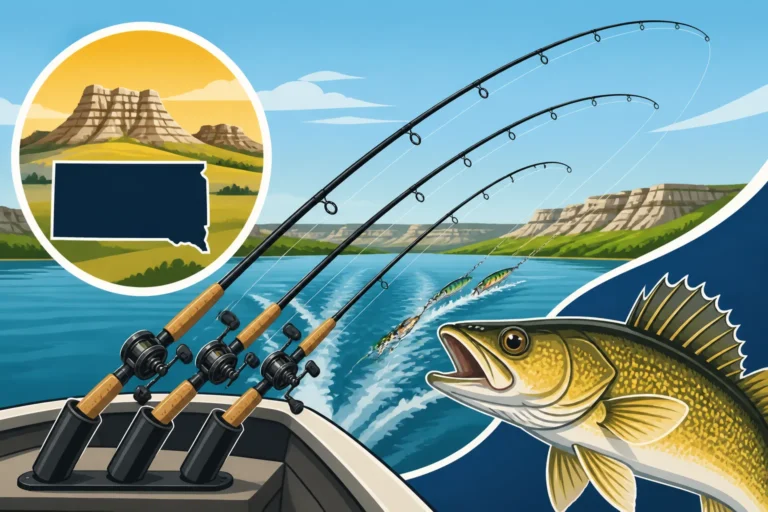
If your dream day on Lake Oahe involves covering miles of open water, dragging crankbaits or spinner rigs for those elusive walleye, you're going to want a boat that excels at trolling. This typically means a longer, wider boat with a deep-V hull. Why? Stability is key when trolling. You're moving slowly, often broadside to the waves, and a larger, heavier boat will handle the chop much better, keeping your lines tracking smoothly and reducing angler fatigue.
Many serious walleye anglers opt for boats in the 18-to-22-foot range, sometimes even larger. These boats provide ample deck space for multiple rod holders, a well-organized spread of lines, and the necessary electronics. A longer boat also tracks straighter in waves, which is crucial for consistent trolling speeds and presentations. Think about popular walleye tournament boats – they are almost universally long, wide, and heavily built to withstand sustained trolling in all but the most extreme conditions. You'll often see brands like Lund, Ranger, or Warrior boats designed specifically for this purpose.
A smaller boat trying to troll a large spread of lines in typical Oahe conditions can quickly become a tangled mess. The waves will toss it around, making it difficult to maintain speed and direction, and the lack of space makes managing multiple rods a headache. If Trolling for Walleye on Lake Oahe is your primary goal, leaning towards the larger end of the spectrum for a dedicated fishing boat will pay dividends in comfort, safety, and fish in the livewell.
Jigging and Casting Near Structure
Perhaps your fishing preference leans towards targeting walleye, smallmouth bass, or northern pike by jigging or casting near points, submerged humps, or the abundant riprap found along Oahe's shorelines. This style often requires more maneuverability than open-water trolling. You might want to get into tighter bays, anchor precisely on a contour line, or quietly slip into a weed bed. For this, a slightly smaller, more agile boat might be more appealing.
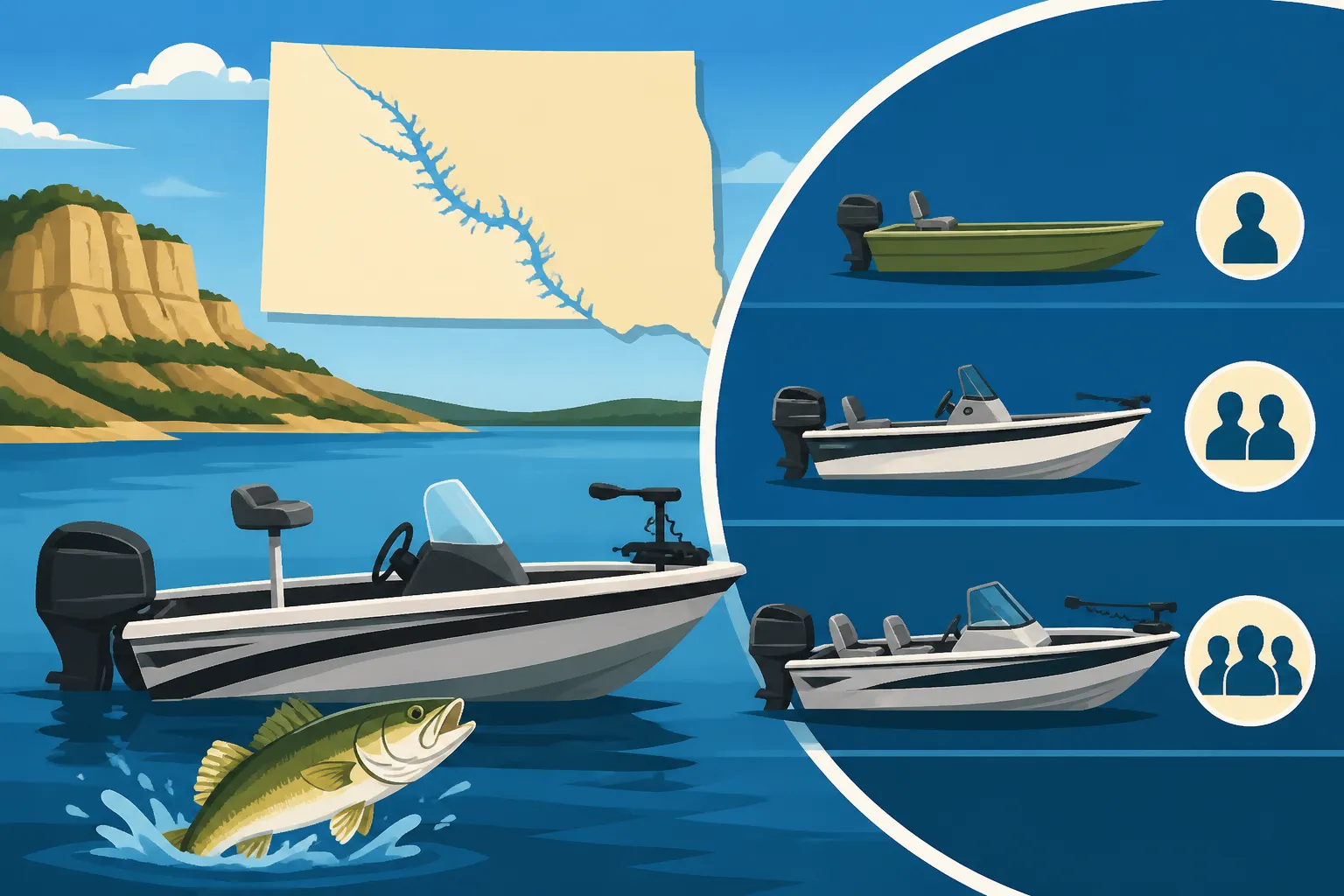
Boats in the 16-to-18-foot range can be excellent for this style of fishing. They are easier to position with a trolling motor (like those found at Bass Pro Shops or online through Amazon), allowing you to hug structure or follow breaks effectively. While they won't handle big waves quite as well as their larger cousins, they are still capable of navigating Oahe's main lake on calmer days and are much more practical for working tight spots. They often have flatter decks for casting and can be easier to launch from less-developed ramps.
This isn't to say a larger boat can't jig, but its size can sometimes be a hindrance for precise boat control in tight quarters. The key is finding a balance between wave-handling capability for getting to your spots and the nimbleness required for your chosen technique once you're there. If you're targeting smallmouth bass in the riprap or crappie in flooded timber, a boat that offers good stability for casting and isn't a behemoth to position is a huge advantage.
Multi-Species and Family-Friendly Adventures
Many anglers aren't just about one species or one technique; they want a versatile boat that can do a bit of everything, perhaps even accommodate family members for cruising, swimming, or tubing in addition to serious fishing. For these multi-species or family-friendly purposes, a versatile sport-utility boat or a larger multi-species fishing boat often hits the sweet spot.
Boats in the 17-to-20-foot range are popular choices here. They offer enough room for 3-4 people to fish comfortably, have higher sides for safety (especially with kids), and often come with comfortable seating, a swim ladder, and plenty of storage for coolers and gear. They can still troll effectively, jig adequately, and handle Oahe's waves reasonably well. These boats strike a good balance, providing enough capability for serious fishing while still offering the creature comforts for a day out with the family. They are often a compromise, but a good one for anglers who want maximum flexibility from their single investment.
When looking at these types of boats, think about how the layout supports both fishing and recreation. Can the bow cushions be removed for a casting deck? Is there a good livewell for fish, but also plenty of cooler space for drinks and snacks? These boats are often designed with adaptability in mind, allowing you to switch from a serious fishing trip to a leisurely family day with relative ease. Checking out models at a large marine dealer or browsing boat reviews on Amazon can give you a good idea of the features available in this category.
Practical Considerations Beyond Length: Hull Type, Power, and Features
While overall length is a major factor, it's far from the only one. The type of hull, the horsepower of your engine, and the specific features your boat includes can dramatically impact its performance and suitability for Lake Oahe.
The Importance of Hull Design
The shape of your boat's hull is arguably more important than its length when it comes to handling waves. For a body of water like Lake Oahe, a deep-V hull is generally preferred. The "V" shape at the bow (front) helps the boat cut through waves, providing a smoother ride and reducing pounding. The deeper the V, especially towards the front, the better it typically handles choppy conditions.
Conversely, flatter-bottomed boats, like many smaller aluminum jon boats, will ride on the waves rather than cutting through them, leading to a much rougher, wetter, and less comfortable experience. While these might be great for shallow rivers or smaller, calm ponds, they can be downright dangerous on a windy Lake Oahe. The deadrise (the angle of the V at the transom, or back of the boat) also plays a role in stability at rest and tracking while underway. A moderate deadrise provides a good balance between stability and wave-cutting ability.
Another factor is the material. Aluminum boats are generally lighter and often more fuel-efficient, and they can be more forgiving if you accidentally bump a submerged log or rock. Fiberglass boats, on the other hand, are typically heavier, offer a smoother ride in rough water due to their mass, and can have more complex hull designs for optimal performance. Both types of boats come in designs suitable for Lake Oahe, but a high-quality, substantial aluminum deep-V or a well-built fiberglass walleye boat will be far superior to a lightweight, flat-bottomed craft. Consider how the hull design contributes to your safety and comfort when battling typical Oahe conditions.
Engine Power and Fuel Capacity
Once you've settled on a potential boat size and hull type, don't overlook the importance of adequate engine power. Lake Oahe is vast, and you'll often be running long distances. An underpowered boat will struggle to get on plane, burn more fuel, and take forever to reach your fishing spots, especially with a load of gear and passengers. Maxing out the horsepower rating for your chosen boat, or at least getting close to it, is almost always a wise decision for a lake of this size.
More horsepower means you can get to your spots faster, outrun developing storms more easily, and maintain a comfortable cruising speed without straining the engine. It also means you'll have the power to deal with heavy chop more effectively. When comparing boats, don't just look at the top speed; consider how quickly it gets on plane and how it performs at different RPMs. You'll thank yourself when you're making a long run back to the ramp in choppy conditions.
Equally important is fuel capacity. A small boat with a small fuel tank might require multiple trips to the gas pump in a single day of extensive Oahe fishing. Larger boats designed for big water typically come with larger integrated fuel tanks, allowing you to spend more time fishing and less time worrying about running dry. Always carry extra fuel in approved containers as a safety precaution, but having a substantial primary tank reduces constant anxiety. Planning your trips and understanding your boat's average fuel consumption is part of being a prepared angler on such a large body of water.
Essential Features for Oahe Fishing
Beyond the basic size and hull, certain features become absolutely essential for a successful and enjoyable Lake Oahe fishing experience. These aren't just luxuries; they're critical tools that enhance safety, convenience, and fishing effectiveness.
| Feature | Why It's Essential for Lake Oahe |
|---|---|
| Deep V-Hull | Cuts through waves for a smoother, safer ride in choppy conditions. |
| High Transom/Freeboard | Provides safety against waves washing over the stern and keeps occupants dry. |
| Livewell (Aerated) | Keeps your catch healthy for tournaments or the dinner table. |
| Trolling Motor (Bow-Mount) | Crucial for precise boat positioning, especially when jigging or casting. |
| GPS/Fish Finder Combo | Navigates vast waters, marks waypoints, and locates fish-holding structure. |
| Multiple Rod Holders | Essential for setting up a trolling spread for walleye or salmon. |
| Storage (Rod & Gear) | Keeps expensive equipment protected and the deck clear of clutter. |
| Strong Trailer | Handles heavy boats and long drives to and from distant ramps. |
| Large Fuel Tank | Allows for extended range and fewer trips to the gas pump. |
| Navigation Lights | Required by law and essential for safety during early morning or late evening trips. |
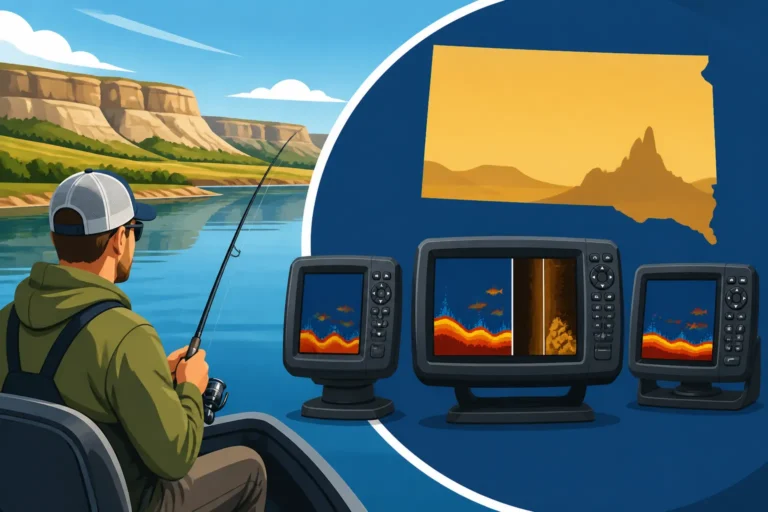
A quality bow-mount electric trolling motor, for example, is indispensable for precise boat control, whether you're working a weed line for pike or holding position over a walleye school. You can find excellent options and accessories for these at Bass Pro Shops. A good GPS/fish finder combination is also non-negotiable for navigating Oahe's vastness and locating productive structure. A reliable unit, perhaps sourced through Amazon, will save you countless hours of searching. Don't forget ample rod storage, either in-floor or side compartments, to protect your valuable gear. And, of course, a well-aerated livewell is a must if you plan on keeping your catch fresh or participating in catch-and-release tournaments. These features collectively turn a boat from a mere vessel into a highly effective fishing machine tailored for Lake Oahe.
Financial and Logistical Factors in Choosing Your Oahe Boat
Let's be realistic: a boat is a significant investment. Beyond the sticker price, there are ongoing costs and logistical challenges that need to be considered. Choosing the right size also impacts your wallet and your sanity.
Budgeting for Your Oahe Rig
The cost of a boat goes far beyond the initial purchase price. When budgeting for a Lake Oahe boat, you need to think about the entire package. This includes the boat itself, the motor, the trailer, and all the essential electronics and accessories. A larger boat will inherently be more expensive, not just in its initial cost, but also in its ongoing expenses.
Consider fuel costs: a bigger boat with a larger engine will consume more fuel, especially when making those long runs across Oahe. Maintenance is another factor; larger engines and more complex systems can lead to higher service bills. Don't forget insurance, registration fees (check out South Dakota Boat Registration Fees Explained), and winterization costs (How to Winterize a Boat in South Dakota). These add up quickly and can make a seemingly affordable boat much more expensive over time.
It's tempting to want the biggest, fastest boat, but it's crucial to balance desire with reality. Many anglers find excellent success on Lake Oahe with well-equipped boats in the 17-19 foot range, which offer a good balance of capability and affordability. Carefully consider your budget for the entire ownership experience, not just the initial purchase, to avoid buyer's remorse down the road. Sometimes, a slightly smaller, more manageable boat that you can afford to fuel and maintain regularly will get you on the water more often and provide greater long-term enjoyment.
Storage and Trailering Realities
This is where the rubber meets the road, or rather, the trailer hits the pavement. A bigger boat is harder to store and trailer. Do you have a garage or storage facility large enough to accommodate an 18-foot boat plus its trailer? Many standard garages struggle with anything over 20 feet in total length. Parking a large boat in your driveway might also be an issue depending on local ordinances or homeowner association rules.
Trailering a large boat also requires a capable tow vehicle. A 20-foot fiberglass walleye boat, motor, and trailer can easily weigh several thousand pounds, necessitating a full-size truck or a large SUV with a robust towing capacity. Maneuvering a big boat and trailer, especially backing down unfamiliar ramps or into tight campsites, takes practice and can be incredibly stressful for the inexperienced. This is where a slightly smaller, lighter boat often wins out in terms of convenience.
Think about how frequently you'll be trailering your boat. If you plan to leave it docked at a marina on Oahe all season, storage is less of a concern, but then you're adding dockage fees to your budget. If you're trailering every weekend, the ease of hitching, towing, launching, and retrieving becomes a major factor in your overall enjoyment. A boat that's a struggle to handle on land will eventually dampen your enthusiasm for getting out on the water.
Maintenance and Long-Term Costs
All boats require maintenance, but bigger, more complex boats can mean bigger, more complex maintenance bills. A single large outboard engine might be simpler than twin engines, but it still requires regular servicing, oil changes, lower unit fluid checks, and winterization. The more electronics you have – multiple fish finders, radar, trolling motors – the more potential points of failure and the more expensive it becomes to diagnose and repair issues.
Consider the cost of tires for a larger boat trailer, which will also wear out over time. If you damage a prop on a larger, higher-horsepower engine, replacement costs can be substantial. Even routine cleaning and detailing take more time and effort on a larger vessel. While these aren't deal-breakers for passionate anglers, they are realistic considerations that influence the total cost of ownership.
Many anglers find that a well-maintained boat holds its value fairly well, especially popular brands known for their quality. However, the initial depreciation can be steep. Thinking long-term about resale value, ease of finding parts, and the reputation of the manufacturer (like Bass Pro Shops' various boat brands) can also play a subtle role in your decision. Ultimately, a boat that fits your budget for not just buying, but owning and maintaining, will be the one that brings you the most joy on the vast waters of Lake Oahe.
Conclusion
Choosing the best boat size for fishing Lake Oahe isn't a one-size-fits-all decision. It's a careful balance between safety, comfort, your preferred fishing style, and your logistical and financial realities. For the average angler planning to tackle Lake Oahe's diverse waters, a robust, deep-V multi-species boat in the 17 to 20-foot range often strikes the ideal balance. It offers enough length and beam to handle the infamous Oahe chop, ample space for serious fishing, and the versatility to accommodate various techniques and even a family outing.
However, if you're a hardcore walleye troller who lives for long runs and big spreads, you might lean towards the upper end of that spectrum, perhaps 19-22 feet, prioritizing stability and deck space. Conversely, if you prioritize jigging tight structures and easier trailering, a well-equipped 16-18 footer could be your perfect match. Regardless of the size, ensure it has a capable engine, a sturdy trailer, and the essential electronics to navigate and fish safely.
Take your time, research different models, talk to experienced Oahe anglers, and even try to get out on the water in different boat sizes if possible. Consider your personal comfort level with waves and wind, your budget, and how much effort you're willing to put into trailering and storage. By carefully weighing all these factors, you'll be well on your way to selecting the perfect vessel to create countless memorable fishing adventures on Lake Oahe.
Disclaimer
This article is for general informational purposes only and does not constitute professional advice. Laws, prices and regulations vary by location and change over time. Consult a qualified professional for guidance on your specific situation.