Best Rod Length for Trolling Walleye
Choosing the right fishing rod for trolling walleye in South Dakota can feel like a guessing game, leaving many anglers wondering if their setup is truly optimized for those big Missouri River system fish or the vast glacial lakes. It's frustrating to invest time and money, only to feel like your gear is holding you back from that perfect presentation or handling a hard-fighting walleye. This guide is here to untangle that confusion, meticulously explaining how rod length impacts your trolling success and helping you select the best stick for targeting walleye across our beautiful state.
Understanding the Role of Rod Length in Walleye Trolling
When you think about trolling, it's not just about getting a lure behind the boat; it's a delicate dance of presentation, control, and fish-fighting power. And believe it or not, the length of your rod plays a far more critical role in this dance than many anglers realize. It's not just a matter of preference; it's a strategic decision that affects everything from how your bait tracks to how you battle a trophy walleye.
Leverage and Line Control
One of the most immediate benefits of a longer rod, particularly when trolling, is the enhanced leverage it provides. Imagine having a big, angry walleye on the end of your line, digging its head into the current or making a sudden dash. A longer rod distributes the strain more effectively, acting as a larger shock absorber. This means less fatigue for you during those long days on the water, and more control over the fish when it decides to make a run. It literally changes the physics of the fight, allowing the rod to do more of the work for you, protecting your line and increasing your chances of landing that fish.
Furthermore, rod length directly influences your line control. A longer rod positions more line away from the boat, which can be crucial for achieving and maintaining specific depths, especially when you're not using sophisticated electronics or heavy weights. It allows for a more subtle, natural presentation, as the line enters the water at a shallower angle, reducing drag and making your lure behave more realistically. Think about the clear waters of Lake Sharpe – a subtle presentation can make all the difference when walleye are finicky. This also gives you more control when making slight steering adjustments; a longer rod tip will move your lure further with less steering input, allowing for more nuanced tracking.
Spacing Your Spread Effectively
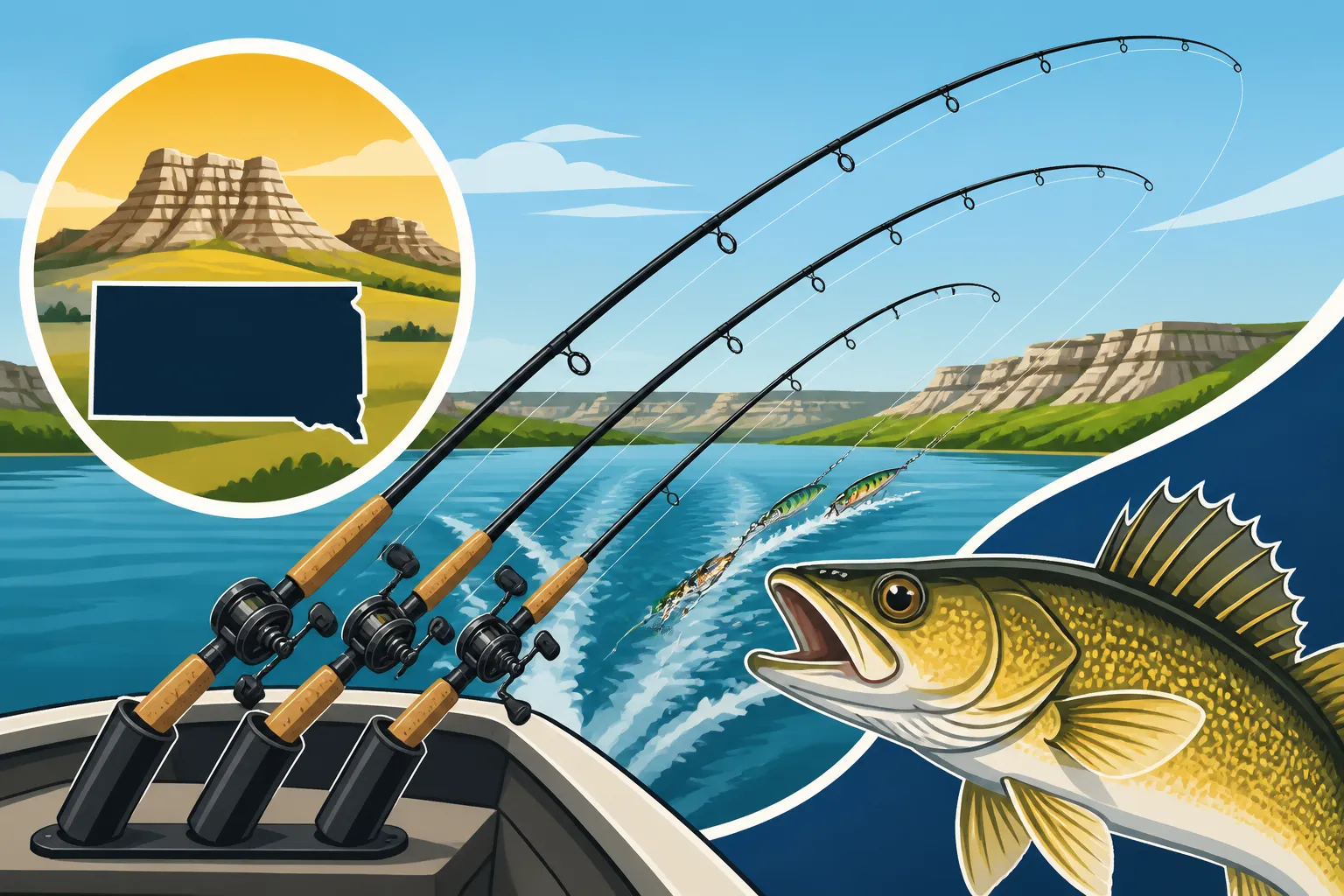
If you've ever trolled with multiple lines out, you know the headache of tangled lines. This is where rod length truly shines in its ability to space your spread effectively. Longer rods allow you to spread your lines out wider from the boat, significantly reducing the chances of lines crossing and tangling, especially during turns or when battling a fish. This is absolutely paramount when you're running a full arsenal, perhaps a couple of flat lines directly behind the boat, some lead core, and then a pair of planer boards pushing your lures far off to the sides.
On a big body of water like Lake Oahe, where you might be covering miles of water, running a wide, clean spread is key to maximizing your coverage and keeping your baits in the strike zone. If you're using shorter rods for your outside planer board lines, you'll quickly find your lines collapsing towards the boat or even crossing over each other, especially if you're trying to fish close to structure or along a contour line that requires frequent, subtle turns. Longer rods simply give you more physical separation, allowing you to run a more complex and ultimately more effective spread. You can purchase specialized long trolling rods online from retailers like Amazon or find a wide selection at a local Bass Pro Shops, designed specifically for this purpose.
Key Factors When Choosing Your Trolling Rod Length
Selecting the perfect rod length isn't a one-size-fits-all situation. It depends heavily on your specific trolling style, the kind of boat you're in, and even the conditions you're fishing. Neglecting these factors can lead to an inefficient setup that costs you fish and adds unnecessary frustration to your day. Let's delve into the nuances that should guide your decision.
Your Trolling Method and Gear
The way you troll fundamentally dictates the optimal rod length. Different techniques call for different tools, and trolling rods are no exception.
- Planer Boards: If you're utilizing planer boards to get your lures away from the boat, especially on the wide expanses of the Missouri River reservoirs, longer rods are practically a necessity for your outside board lines. Rods in the 8 to 10-foot range, or even longer, help achieve maximum spread, ensuring your lures are running well outside your boat's wake. This not only covers more water but also allows you to keep your inside lines closer, creating a diverse presentation. The extra length also aids in handling the drag and tension from the planer board, providing a smoother ride for your lure and better shock absorption when a fish hits. Imagine trying to run an outside board with a 6-foot rod – it would be a chaotic mess of crossed lines!
- Direct Trolling (Flat-lining/Lead Core): For those times when you're simply letting out line directly behind the boat – whether it's with monofilament, fluorocarbon, or lead core for deeper presentations – a slightly shorter rod can be perfectly adequate. Rods ranging from 7 to 8.5 feet offer excellent control directly behind the boat. They are more manageable to deploy and retrieve, and because you're not trying to achieve extreme horizontal separation, the extra length isn't as critical. Many anglers find these lengths offer a good balance of fighting power and ease of handling in the boat.
- Downriggers: If downriggers are part of your trolling arsenal, rod length considerations change again. Since the downrigger ball carries your lure to the desired depth, and the line is "released" when a fish strikes, the rod's primary job is to fight the fish. Here, rods in the 7 to 8.5-foot range are generally preferred. The downrigger dictates the depth and, to a degree, the horizontal spread, so an excessively long rod can actually be cumbersome to handle in the boat during setup and when reeling in a fish. You still want good flex to absorb the initial strike, but extreme length isn't beneficial here.
Boat Size and Configuration
The size and layout of your fishing vessel are practical considerations that can't be ignored. What works beautifully on a 20-foot multi-species boat might be completely impractical on a 16-foot utility boat.
- Smaller Boats: If you're fishing from a smaller boat, say a 16-foot aluminum rig, you might find that extremely long rods (10+ feet) become a liability rather than an asset. They can be difficult to manage within the confines of a smaller deck, prone to tangling with other rods, and challenging to net a fish with due to their length. In such cases, sticking to the 7 to 9-foot range for your trolling rods might be more practical, allowing for easier maneuverability and less hassle. You'll have to be more mindful of your turns to avoid tangles.
- Larger Boats/Deck Space: Anglers with larger boats, especially those designed for serious trolling with ample deck space and numerous rod holders, have more flexibility. On a big rig on Lake Oahe, running 10-foot or even 12-foot rods for outside planer board lines is perfectly feasible and often preferred for maximum coverage. The extra room allows for easier deployment, retrieval, and fighting of fish without getting tangled in the boat's infrastructure or with other anglers. Consider your existing rod holders too; some are designed to accommodate longer rods better than others.
Target Walleye Size and Water Conditions
While rod length isn't the sole determinant, it does play a supporting role in how you handle different fishing scenarios, from big fish to choppy water.
- Big Fish (Trophy Walleye): For those truly colossal walleye South Dakota is known for, particularly on the Missouri River, the combination of rod length, action, and power is key. While power and action dictate the true backbone of the rod, a longer rod offers additional shock absorption, cushioning head shakes and powerful runs. This can be critical in preventing pulled hooks or broken lines, especially when a big fish makes a last-ditch effort boat-side. The flex of a longer rod helps "wear down" a strong fish more efficiently. If you're chasing trophy walleye, ensure your rods, regardless of length, have the appropriate power rating.
- Wind/Waves: Trolling in windy or wavy conditions, which is common on large bodies of water like Lake Oahe, can be challenging. Longer rods, paradoxically, can be both a blessing and a curse. They can help keep your lines clear of boat spray and chop, ensuring your lures run smoothly. However, in extremely heavy winds, managing a very long rod can be more difficult, acting like a sail and adding strain to your hands or rod holders. It's a balance you learn through experience; often, moderate lengths (8-9 feet) strike the best compromise for handling typical South Dakota weather. You can often find durable trolling rods suitable for these conditions from major outdoor retailers like
Bass Pro Shopsor throughAmazon.
Recommended Rod Lengths for Common Walleye Trolling Scenarios
Now that we've covered the "why," let's talk about the "what." What specific rod lengths should you be looking at for different walleye trolling situations in South Dakota? This isn't just theory; it's about practical application to put more fish in your boat.
All-Around Versatility (7' – 8'6")
If you're an angler who enjoys various fishing methods or has limited space for multiple specialized rods, a trolling rod in the 7-foot to 8-foot 6-inch range is an excellent starting point for versatility. This length provides a fantastic balance of control, fighting power, and manageability, making it suitable for a wide array of walleye trolling techniques.
Think about a typical day on Lake Francis Case or Lake Sharpe. You might start out flat-lining some crankbaits directly behind the boat in the morning, then transition to using a lead core setup to reach deeper walleye in the afternoon. A rod in this length category handles both scenarios beautifully. It's long enough to offer good line control and spread when running a couple of lines, but not so long that it becomes cumbersome to store or difficult to manage in a smaller boat. Many anglers consider a 7'6" medium-heavy power rod with a moderate-fast action to be their go-to workhorse for general walleye trolling. This size allows for good hook sets, a smooth fight with the fish, and decent presentation for most common lures. It’s also a good choice if you're experimenting with different methods as described in our South Dakota Trolling Techniques for Walleye guide.
Planer Board Powerhouses (8'6" – 10'6"+)
When you commit to using planer boards, especially for the wide-open spaces of Lake Oahe, your rod length strategy needs to shift. These situations demand longer rods, typically ranging from 8 feet 6 inches all the way up to 10 feet 6 inches or even longer for dedicated outside lines. The objective here is maximum horizontal separation and a truly spread-out presentation.
For your inside planer board lines, a rod in the 8'6" to 9'6" range is often ideal. This length provides enough reach to keep your lines clear of the boat and each other, while still being manageable to handle. However, for your outside planer board lines, pushing your baits as far as possible from the boat, a 9'6" to 10'6" or even 12-foot rod becomes incredibly valuable. These longer rods allow your lines to clear the boat's side easily, reducing the risk of tangles during turns and maximizing your coverage. They also absorb the shock of a big walleye strike beautifully, preventing the board from diving erratically. Many of these longer rods are designed as telescopic or multi-piece models, making them surprisingly easy to store in your boat or vehicle despite their extended length. If you're serious about covering water and spreading out your attack on those big walleye, especially during the peak seasons mentioned in South Dakota Summer Walleye Fishing Techniques, these longer rods are indispensable tools.
Specialty Trolling (Shorter & Longer Extremes)
While the mid-to-long ranges cover most walleye trolling scenarios, there are niche situations where shorter or even exceptionally longer rods might come into play.
- Shorter Rods (Under 7'): It's quite uncommon to use rods under 7 feet for dedicated walleye trolling, as they generally lack the leverage and line control benefits of longer rods. However, an angler might opt for a shorter rod (e.g., 6'6") if they are only running one or two lines very close to the boat, perhaps in an extremely small craft, or if they are primarily targeting walleye by drifting with live bait and occasionally slow-trolling. In these very specific, close-quarters scenarios, the compact size might be an advantage for handling fish directly beside the boat. However, for true trolling, these are generally not recommended due to their limited ability to create an effective spread.
- Longer Rods (Over 10'6"): On the other end of the spectrum, some dedicated trolling pros, especially those fishing tournament circuits or guiding on vast waters, might employ rods exceeding 10 feet 6 inches, sometimes reaching 12 or even 14 feet. These ultra-long rods are exclusively for achieving the widest possible spreads with planer boards, often running four or more boards per side of the boat. This allows them to cover an immense amount of water, which can be critical for locating schools of walleye on featureless flats or covering expansive areas of Lake Oahe, as highlighted in our Trolling for Walleye on Lake Oahe guide. These rods require specialized rod holders and boat setups, and while effective, they are a significant commitment both in terms of gear and boat management. If you're looking for the absolute maximum spread, these are the rods, but for most anglers, the 8'6" to 10'6" range provides ample performance.
Beyond Length: Action, Power, and Material Considerations
While rod length is our primary focus here, it's crucial to remember that it's only one piece of the puzzle. A rod's action, power, and material work in concert with its length to create a functional and effective tool for walleye trolling. Overlooking these aspects can lead to a rod that feels unbalanced or performs poorly, even if its length is theoretically perfect. For a deeper dive into overall rod selection, check out our Best Fishing Rods and Reels for Walleye article.
Rod Action and Power for Trolling
These two characteristics describe how a rod bends and how much force it can withstand.
- Action: This refers to where along the blank the rod bends. For walleye trolling, a moderate or moderate-fast action is usually preferred.
- A moderate action rod bends primarily in the upper half or even the upper two-thirds of the blank. This slower bend allows the rod to load up more slowly and deeply, which is fantastic for trolling. It provides a more forgiving tip that absorbs the sudden shock of a walleye strike without pulling the lure out of the fish's mouth. This also allows the fish to fully commit to the bite before the hook set, which is especially important with light-biting walleye.
- A moderate-fast action bends closer to the middle, offering a good balance of shock absorption and responsiveness. It's versatile for a variety of trolling presentations. You generally want to avoid "fast" or "extra-fast" actions for trolling, as these rods bend only in the tip, making them too stiff and prone to pulling hooks or snapping lines on sudden strikes, particularly with larger fish.
- Power: This describes the rod's lifting strength or resistance to bending. For walleye, a medium or medium-heavy power rod is typically the sweet spot for trolling.
- A medium power rod has enough backbone to handle most average-sized walleye (1-5 pounds) and can manage lighter trolling setups with smaller crankbaits or spinner rigs.
- A medium-heavy power rod is excellent for larger walleye, heavier lures, and managing the drag of planer boards. It offers the necessary strength to fight bigger fish and bring them to the net without overworking the rod. It's often the preferred choice for those targeting trophy walleye on big water. Using a rod that's too light can lead to exhausting fights and potentially lost fish, while one that's too heavy might lack the sensitivity to detect subtle bites or the flex to properly present lighter baits.
Material and Handle Design
The construction of your rod plays a significant role in its durability, weight, and feel, impacting your comfort during long hours of trolling.
- Material: Trolling rods are commonly made from fiberglass, graphite, or a composite blend of the two.
- Fiberglass rods are known for their incredible durability and a slower, more moderate action. They tend to be heavier but are very forgiving, making them excellent shock absorbers. If you're prone to bumping your rods or fishing in rough conditions, fiberglass can take a beating.
- Graphite rods are much lighter and more sensitive, offering a crisper feel and often a faster action. While more sensitive, they can be more brittle than fiberglass. For trolling, too much sensitivity isn't always a benefit since you're often relying on the rod tip to show vibration or strike.
- Composite rods blend the best of both worlds, offering a good balance of durability, moderate action, and reduced weight. Many modern trolling rods are composites, designed to withstand the rigors of constant pulling and powerful fish. When shopping online or at stores like
Bass Pro Shops, you'll find a wide variety of these materials, often reflected in the price.
- Handle Design: Don't underestimate the importance of the rod handle. For trolling, you'll often have your rods in holders for extended periods, so the handle needs to be compatible. Look for long, comfortable handles made of cork or EVA foam that provide a good grip, even when wet. The butt section of the handle should be sturdy enough to withstand the pressure of a rod holder, and its length can impact how easily you can grab the rod when a fish strikes. A well-designed handle can prevent fatigue and make those long days chasing walleye much more enjoyable. It's worth trying out different handles to see what feels best for your hands and how they fit into your existing rod holders.
Choosing the right rod length for trolling walleye is a strategic decision that empowers you to fish more effectively and enjoy your time on the water more. By considering your trolling method, boat size, and the interplay of rod action and power, you can build a setup that's perfectly tailored to South Dakota's fantastic walleye fishing.
Here's a quick reference table to help visualize common rod recommendations:
| Trolling Method | Recommended Rod Length (Feet) | Typical Action | Typical Power | Key Benefit |
|---|---|---|---|---|
| Flat-lining/Lead Core | 7'0" – 8'6" | Moderate-Fast | Medium | Versatile, good boat control, easy handling |
| Inside Planer Boards | 8'0" – 9'6" | Moderate | Medium-Heavy | Good spread, manage board tension, softer tip |
| Outside Planer Boards | 9'6" – 12'0"+ | Moderate | Medium-Heavy | Maximum spread, clear boat, absorbs strong strikes |
| Downriggers | 7'0" – 8'6" | Moderate | Medium | Direct fish fight, easy handling in the boat |
Note: The table above focuses purely on trolling applications. For techniques like jigging for walleye, shorter rods with faster actions would typically be preferred, prioritizing sensitivity and quick hook sets rather than line spread and shock absorption.
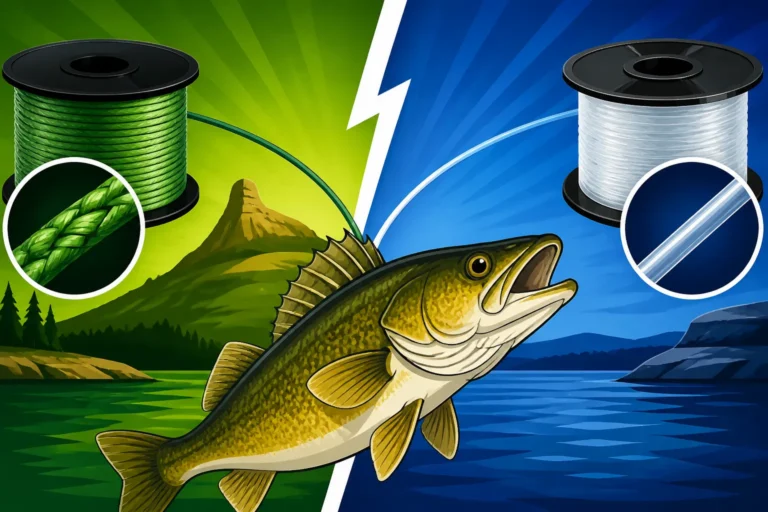
Remember, this is about refining your approach, not just buying the most expensive gear. A thoughtful choice in rod length will genuinely enhance your walleye trolling experience, allowing you to maximize your chances on the water, whether you're on the massive Missouri River or a smaller glacial lake. Don't forget that your line choice also plays a role in your overall setup, so you might want to look into Braided Line vs Monofilament for Walleye Fishing to complete your trolling kit. Happy fishing, and may your rod tips be bending with big walleyes!
Disclaimer
This article is for general informational purposes only and does not constitute professional advice. Laws, prices and regulations vary by location and change over time. Consult a qualified professional for guidance on your specific situation.