Best Rod Action for Ice Fishing Walleye
There's nothing quite as frustrating as being out on the ice, feeling that tell-tale thump or a delicate tick-tick on your line, setting the hook with all your might, only to reel in nothing but slack. When you're chasing those elusive walleye through a hole in the ice, especially in the challenging conditions of a South Dakota winter, having the right gear can make all the difference between a memorable catch and a story of "the one that got away." This guide is here to demystify one of the most critical aspects of your ice fishing setup: rod action, helping you understand which rod will give you the best chance at landing those prized walleye.
What is Rod Action Anyway? Breaking Down the Bend
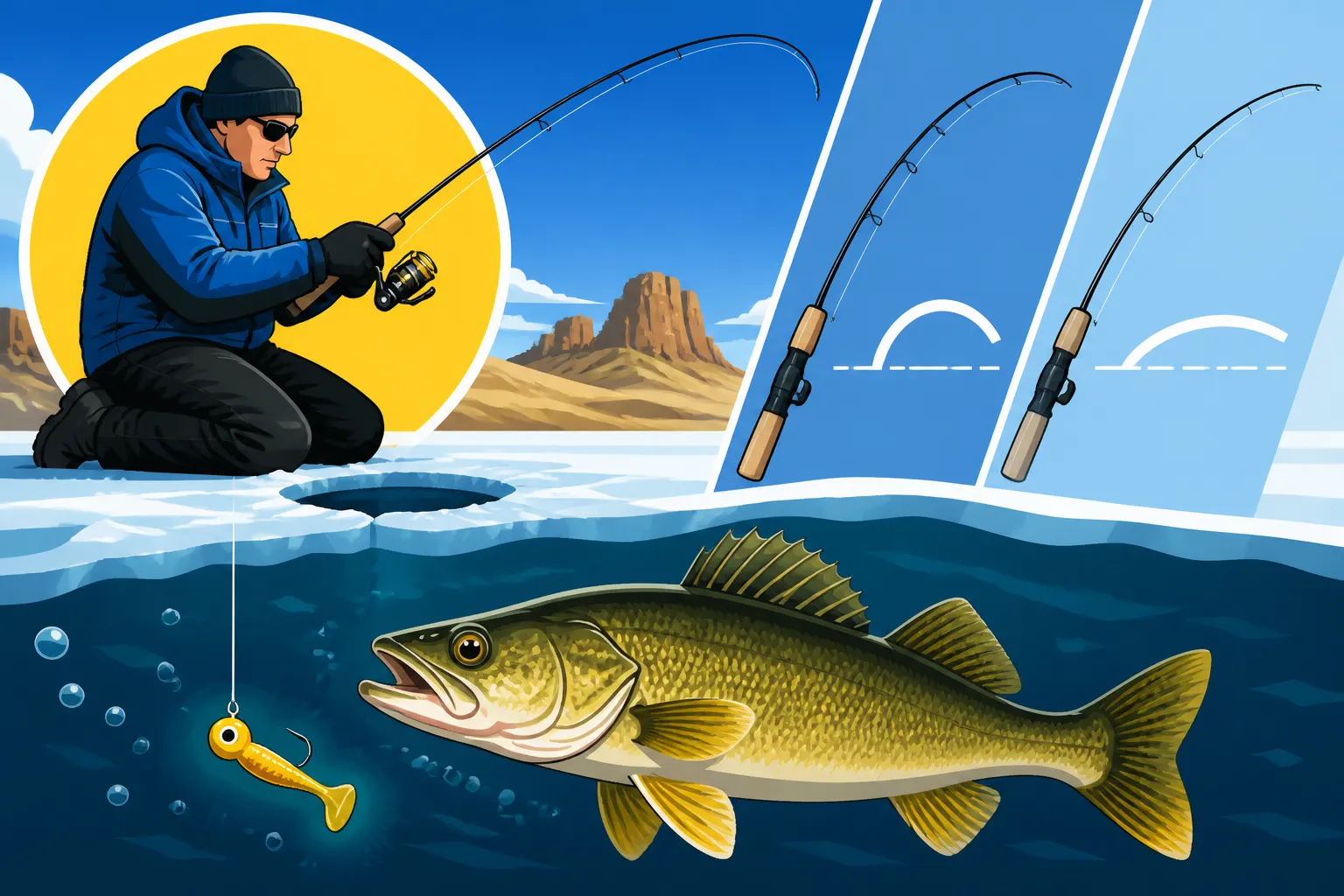
Before we dive into the specifics of walleye ice fishing, let's get a handle on what "rod action" actually means. It's not about how fast you can twitch your wrist, but rather where on the rod blank it bends when pressure is applied. Think of it as the flexibility profile of your rod. This characteristic dictates how a rod performs during hook sets, fighting a fish, and even how well you can work your bait. Understanding these differences is foundational to selecting the perfect tool for your chosen technique.
Fast Action: The Quick Response
A fast action rod bends primarily in the top third, or sometimes just the tip section, of the blank. This design offers a very quick and sensitive response, which is often highly desirable in ice fishing. When you feel a bite, that limited flex means the rod quickly transfers the force to your line, allowing for incredibly fast and precise hook sets. It’s like having an extension of your own nervous system, sending every subtle nibble or bump directly to your hand.
For walleye, whose bites can be notoriously light, especially in cold water, this immediate feedback is invaluable. You'll often feel the slightest hesitation or change in resistance before the fish fully commits, giving you that split-second advantage to react. However, with less overall bend, fast action rods can sometimes be less forgiving if a fish makes a sudden run, putting more stress on your line and hook. They demand a bit more finesse from the angler to avoid breaking off.
Medium Action: The Versatile Performer
Moving down the spectrum, a medium action rod (sometimes called moderate-fast) bends in the top half of the blank. This provides a good balance between sensitivity and flexibility. You still get a decent amount of feel for those lighter bites, but the deeper bend in the rod offers more give when a fish tugs hard. It’s a fantastic all-around choice for many fishing scenarios because of its versatility.
For walleye ice fishing, a medium action rod can be a great compromise. It's responsive enough to detect many bites, yet flexible enough to absorb sudden head shakes and powerful surges from a hooked fish. This reduces the chance of pulling the hook out of a walleye's often boney mouth or snapping your line. If you're going to carry just one rod onto the ice, a medium action is often a solid contender for general walleye work across diverse conditions.
Slow Action: The Soft Touch
A slow action rod bends almost from the butt section all the way to the tip, creating a deep, parabolic curve when under pressure. This is the most forgiving type of action, offering maximum flex throughout the entire rod. While typically less common for specific walleye ice fishing applications where sensitivity is paramount, it does have its niche uses.
The significant bend in a slow action rod acts like a shock absorber, cushioning violent strikes and allowing lighter lines to withstand more pressure. The trade-off is often a reduction in sensitivity, making it harder to feel those truly subtle bites. Hook sets can also feel less direct because of the greater bend required to transmit force to the hook. For walleye, this might mean a missed opportunity if the fish is just mouthing the bait softly. However, for targeting panfish or for specific deadsticking techniques where the fish is allowed to fully engulf the bait, a slow action can shine.
Why Rod Action Matters for Ice Fishing Walleye
Understanding rod action isn't just academic; it directly impacts your success on the ice, especially when dealing with the nuanced world of walleye. These fish can be incredibly finicky, and their behavior changes dramatically with water temperature and fishing pressure. The action of your rod directly influences your ability to detect strikes, set the hook, and ultimately, bring that walleye up through the hole.
Detecting Subtle Bites
Walleye, particularly in the cold waters of a South Dakota winter, are not always aggressive predators. Their metabolism slows down, and their bites can be incredibly subtle – sometimes just a slight "mushy" feeling, a tiny lift in the weight of your jig, or a barely perceptible tap. This is where a rod's action becomes critical.
A fast-action rod, with its stiff backbone and sensitive tip, excels at transmitting these faint signals. Every vibration from your lure, every brush against the bottom, and most importantly, every delicate bite, is amplified and sent straight to your hand. Imagine fishing on Lake Oahe Walleye Hotspots Near Mobridge where the walleye are picking up a small spoon ever so gently; a fast-action rod will scream "bite!" where a slower rod might only whisper, or even stay silent. This enhanced sensitivity means you're aware of the fish's presence even before it fully commits, giving you precious milliseconds to prepare for the hook set.
Setting the Hook Effectively
Once you've felt that bite, the next crucial step is setting the hook firmly. Walleye have tough, bony mouths, and a weak hook set often results in a lost fish. The rod's action plays a huge role here.
With a fast-action rod, the tip bends quickly, but the strong backbone engages almost immediately. This allows for a swift, powerful, and direct hook set with minimal energy lost in the rod's flex. It's like a spring-loaded strike. For a jigging rap or a spoon that needs to penetrate a hard jaw, this responsiveness is invaluable. In contrast, a medium or slow action rod will absorb more of that initial force, requiring a longer, more sweeping hook set to achieve the same penetration. While a medium action can still be effective, especially with a solid hook set, a slow action might struggle to drive the hook home before the walleye spits the bait. When you're dealing with the South Dakota Walleye Daily Limit on a busy day, you want every hook set to count.
Fighting Finicky Walleye
Getting the hook set is one thing; keeping the fish on the line and guiding it up through the ice hole is another. Walleye can be tenacious fighters, especially larger ones, making sudden head shakes and deep dives. The rod action helps manage these powerful movements.
A faster action rod, while excellent for hook sets, offers less "give" throughout the blank. This means more strain is placed on your line, hook, and knot, especially if the fish suddenly thrashes at the hole. You, as the angler, need to be more adept at working your drag and actively "pumping" the fish to maintain control. A medium action rod, with its deeper bend, acts as a shock absorber. It allows the rod to flex and bend with the fish's movements, cushioning sudden runs and head shakes, reducing the likelihood of a pulled hook or a broken line. This added forgiveness can be a huge asset when fighting a decent-sized walleye from Lake Sharpe that just doesn't want to come up. It lets you apply steady pressure without overstressing your tackle.
| Rod Action | Primary Bend Location | Sensitivity | Hook Set Power | Forgiveness (Fighting Fish) | Ideal Walleye Use |
|---|---|---|---|---|---|
| Fast | Top 1/3 (Tip) | High | Very Direct | Low to Moderate | Aggressive jigging, light bites, vertical jigging, spoons, Rattle Baits |
| Medium | Top 1/2 | Moderate | Balanced | Moderate to High | All-around jigging, deadsticking with active presentation, lipless cranks |
| Slow | Entire Blank (Parabolic) | Low | Less Direct | High | Deadsticking with static bait, very finicky fish, light line protection |
Choosing the Right Rod Action for Your Walleye Strategy
Now that we've dug into what rod action means and why it's so important, let's talk practical application. Your choice of rod action for ice fishing walleye should align directly with the specific techniques you plan to use and the conditions you expect to encounter. There isn't a single "best" action; instead, it's about matching the tool to the task.
Aggressive Jigging and Heavy Baits
If your strategy involves aggressively working heavier lures like larger jigging spoons, substantial jigging raps, or even lipless crankbaits, you'll generally want a rod with a faster action. These lures demand a certain snap and retrieve to make them dance properly, and a fast action rod delivers that direct, crisp movement. You're trying to elicit a reaction strike, and the rod helps you impart maximum action to your bait.
Consider a scenario on Lake Kampeska Walleye Fishing Report where you're aggressively jigging a half-ounce spoon to attract attention. A fast action rod allows you to make sharp, upward rips that send the spoon flashing and fluttering on the fall. When a walleye slams it, that fast action ensures immediate feedback and a solid hook set, even if they're just swatting at the lure. The quick recovery of the rod tip also means you can maintain better control of your lure and detect subtler takes as the lure settles. You can find a wide array of these specialized fast-action ice rods at retailers like Bass Pro Shops, designed specifically for these more vigorous presentations.
Finesse Presentations and Light Bites
On the other hand, if you're fishing with lighter jigs, small plastics, or live bait rigs and focusing on enticing those incredibly tentative walleye bites, a medium-fast or even medium action might be your best friend. While a fast action can provide sensitivity, sometimes a slightly softer tip allows the fish to take the bait without feeling immediate resistance. This can be crucial when walleye are just "mouthing" or inspecting the bait.
Imagine fishing a small tungsten jig tipped with a minnow head on a quiet evening in the Black Hills, perhaps in an area with special trout regulations but also some walleye possibilities, and the fish are barely breathing on the line. A medium-fast action rod will still have enough sensitivity to telegraph those light taps, but the slightly softer tip will give the walleye a moment longer to commit before it feels the rigid rod. The deeper bend also reduces the chance of ripping the bait away from a hesitant fish too soon. For really finicky biters, some anglers even lean towards a medium-action rod paired with lighter line, letting the rod's overall flexibility protect the delicate setup. Many of these rods are readily available for purchase online through platforms like Amazon, offering convenience and a broad selection.
Deadsticking and Setlines
When it comes to deadsticking, a technique where a rod is left stationary with live bait, or using setlines, the requirements for rod action shift significantly. Here, the primary goal is often to let the fish take the bait naturally, without feeling any resistance, until it's fully committed.
For a true deadstick rig, where a minnow dangles below a bobber or is fished on a bottom rig, a medium or even slow action rod can be ideal. The deep, parabolic bend allows the fish to pull the line with very little initial resistance from the rod itself. This gives the walleye ample time to inhale the bait, ensuring a deeper, more secure hookup. Imagine leaving a rod set with a lively minnow, waiting for a walleye to come by and gulp it down. The soft action ensures that when the walleye takes the bait, it doesn't feel a hard pull back from the rod, which might make it drop the offering. Instead, the rod slowly bows, indicating a solid take. While sensitivity isn't the priority here, the forgiving action acts as a buffer between the fish and your line, crucial for ensuring the fish has truly eaten the bait before you pick up the rod to set the hook. This approach is often paired with a secondary rod that is actively jigged, offering a contrasting presentation to the walleye.
Beyond Action: Other Rod Considerations for Walleye
While rod action is paramount, it's just one piece of the puzzle. When selecting your ultimate ice fishing setup for South Dakota walleye, there are several other critical factors to consider that work in conjunction with action to create a harmonious and effective fishing tool. Ignoring these can mean you're still missing out on bites, even with the "perfect" action.
Rod Power: The Lifting Strength
Closely related to action, but distinct, is rod power. This refers to the rod's strength or backbone – how much weight it takes to bend the rod blank. Common power ratings range from ultralight to heavy. For walleye, you'll generally be looking at light, medium-light, or medium power rods.
- Light Power: Excellent for very light jigs, small spoons, and finesse presentations. It protects lighter lines well and provides maximum feel. However, it can struggle with heavier baits or larger walleye in current.
- Medium-Light Power: A very popular choice for walleye. It offers a great balance, handling a good range of typical walleye lures while still providing sensitivity and enough backbone to fight most fish.
- Medium Power: Better for larger jigs, heavier spoons, and when you expect to encounter bigger walleye or fish in stronger currents. It sacrifices a bit of finesse but gives you more authority over the fish.
Think about the conditions on Lake Sharpe Smallmouth Bass Near Big Bend Dam. If you're targeting walleye there, the currents below the dam might necessitate a medium power rod to effectively work your lures and control a hooked fish. Conversely, on a calm, shallow glacial lake, a medium-light power might be perfect for subtle presentations.
Rod Length and Handle Design
Ice fishing rods come in various lengths, typically from 24 to 36 inches for walleye. Shorter rods (24-28 inches) are great for fishing inside ice shelters, offering precise lure control and making it easier to land fish in tight quarters. Longer rods (30-36 inches) give you a wider sweep for powerful hook sets, can help absorb runs from larger fish, and are often preferred for open-air fishing or when sitting further back from the hole. Your height and how you hold the rod also play a role; a longer rod might feel unwieldy if you're shorter or fishing in a small flip-over shelter.
The handle design is also critical for comfort and sensitivity. Many ice rods feature cork or EVA foam handles. Ensure the handle fits comfortably in your hand, allowing you to grip it securely even with gloves. Some rods have exposed blank sections near the reel seat, designed to maximize sensitivity by letting your fingers directly touch the rod blank, transmitting even the faintest vibrations.
Reputable Brands and Where to Look
Investing in a quality ice fishing rod pays dividends in performance and durability. While there are countless brands out there, some have built a strong reputation specifically for ice fishing gear. Brands like St. Croix, Fenwick, and Clam offer a wide range of ice rods designed for various species and techniques. These companies often spend considerable time on research and development, ensuring their rods have the right blend of action, power, and sensitivity.
When you're ready to make a purchase, you have several excellent options. Local tackle shops in South Dakota are a great resource, as they often stock rods tailored to regional fishing conditions and can offer personalized advice. Larger outdoor retailers like Bass Pro Shops and Cabela's have extensive selections, allowing you to physically handle different rods and compare them side-by-side. Don't forget the convenience of online retailers like Amazon, which often have competitive pricing and a vast inventory, sometimes including brands or models you might not find locally. Just be sure to check reviews and return policies when buying online, as feeling the rod in your hand is always ideal before committing. When considering your overall setup, you might also be looking at Best Ice Fishing Rods and Reels to ensure a balanced system, or even Best Ice Augers for South Dakota Ice Fishing to get to your spot efficiently.
Remember, the "best" rod action for ice fishing walleye isn't a one-size-fits-all answer. It's a personal choice that depends on your fishing style, the techniques you employ, and the conditions you face. By understanding the nuances of rod action, power, length, and pairing it with a quality reel and line, you'll be well on your way to a more successful and enjoyable experience chasing walleye across the frozen waters of South Dakota.
Disclaimer
This article is for general informational purposes only and does not constitute professional advice. Laws, prices and regulations vary by location and change over time. Consult a qualified professional for guidance on your specific situation.