Gas vs Electric Ice Auger for Ice Fishing
There's nothing quite like the crisp air and serene silence of a South Dakota winter day out on the ice, waiting for that tell-tale tug on your line. But before you even drop a jig, one of the biggest decisions you'll face is what kind of ice auger to bring along. Many anglers grapple with the age-old question: do you stick with the tried-and-true rumble of a gas auger, or embrace the quiet efficiency of a modern electric model? This guide will cut through the noise (and the ice) to help you choose the best power-drilling partner for your South Dakota ice fishing adventures, validating the frustrations many face with each option.
The Classic Choice: Gas-Powered Ice Augers
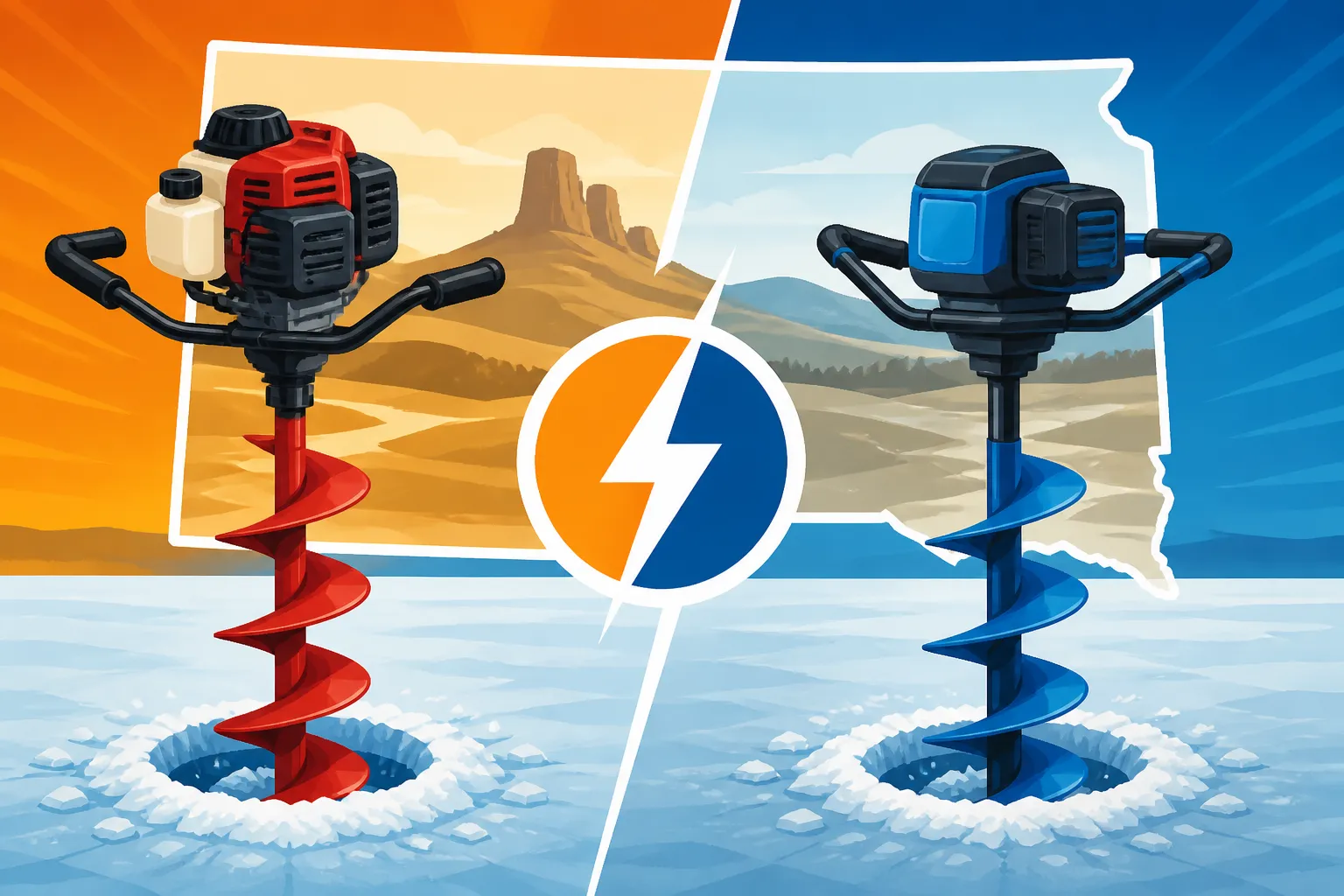
For decades, gas-powered augers have been the undisputed champions of the ice. They're what most seasoned anglers grew up with, and for good reason. There's a certain reliability and brute force that comes with a small combustion engine that's hard to argue with, especially when you're facing down several feet of solid South Dakota ice.
Understanding the Raw Power and Endurance
One of the primary reasons anglers cling to their gas augers is their sheer power and endurance. When you're drilling dozens of holes on a vast expanse like Lake Oahe or Lake Sharpe, especially if the ice is pushing two or three feet thick, a gas auger can churn through it with remarkable speed and consistency. You just keep adding fuel, and it keeps drilling. This capability is a huge advantage for those who move around a lot, searching for those active schools of walleye or perch, or for guides who need to set up multiple clients quickly.
Consider a scenario where you're on a multi-day trip up near Mobridge, hitting different spots on Lake Oahe. You might need to drill 50 or even 100 holes over a long weekend. With a gas auger, as long as you have extra fuel, you're pretty much unstoppable. You don't have to worry about battery levels; you just top off the tank, pull the cord (hopefully a few times at most!), and you're back in business. The power means less strain on you, and faster access to the water below, which can make all the difference on a slow bite.
However, this raw power comes with its own set of challenges. The weight of a gas auger, plus a fuel can, can be a real drag, especially if you're pulling a sled a long distance across the snow or trying to navigate uneven ice. Then there's the noise – it can be quite disruptive to the peaceful solitude of ice fishing, and sometimes, to the fish themselves! And let's not forget the exhaust fumes, which are particularly unpleasant if you're trying to re-drill holes inside a portable ice fishing shelter.
Maintenance and Portability Considerations for Gas Augers
Gas augers demand a bit more tender loving care than their electric counterparts. You're dealing with a small engine, which means regular maintenance. This includes mixing the right ratio of oil to gas (a common frustration for many, leading to fouled spark plugs if done incorrectly), checking the spark plug, and ensuring the carburetor is clean. Cold starts can be notoriously finicky, especially on those frigid South Dakota mornings when the thermometer dips well below zero. Many an angler has pulled the starter cord until their arm aches, only for the auger to sputter and die.
Portability is another significant factor. While some newer models are lighter, gas augers are generally heavier and bulkier than electric ones. Hauling a gas auger, a fuel can, and all your other gear can be a workout in itself. Safety is also paramount when transporting fuel; you certainly don't want a leaky gas can inside your vehicle or ice shelter. When the season wraps up, you'll need to properly winterize the engine, which usually involves running it dry or adding fuel stabilizer to prevent gumming up the carburetor during storage.
Despite these hurdles, many anglers remain loyal to gas augers. They appreciate the independence of not relying on electrical outlets and the confidence that comes with having a powerful machine ready to tackle any ice thickness. For those who enjoy tinkering and don't mind the added weight or noise, a reliable gas auger can still be the heart of a productive ice fishing setup. You can often find a wide selection of replacement parts and even service manuals through retailers like Bass Pro Shops, which can be a lifesaver when you need a quick fix.
The Modern Contender: Electric Ice Augers
In recent years, electric ice augers have revolutionized the world of ice fishing, offering a compelling alternative to the traditional gas models. They've addressed many of the frustrations associated with gas augers, quickly winning over a new generation of anglers and even converting some old-school enthusiasts.
The Quiet Revolution: Benefits of Electric Power
The most immediate and striking advantage of an electric auger is its quiet operation. Imagine drilling a hole with barely a whisper, then dropping your line without scaring away a nearby school of South Dakota Walleye Limits. This silence is not only a treat for the angler but also less disruptive to wildlife and potentially, to the fish you're trying to catch. Furthermore, the complete absence of exhaust fumes is a game-changer. No more choking on fumes inside your ice shack, no more smelling like a gas station at the end of the day, and a much cleaner overall experience.
Electric augers also boast superior ease of use. They start instantly with the press of a button, no choke, no priming, no endless cord pulling, which is a huge relief on a frosty morning. They are typically much lighter than gas models, making them easier to carry across the ice, especially for solo anglers or those who value mobility. This lighter weight makes setting up and moving between holes less of a chore. For a quick afternoon trip to a local state park pond, electric augers are perfect for drilling a few holes without all the hassle of gas. You can set up your gear, drill your holes, and be fishing in minutes, maximizing your time on the water.
Maintenance is also significantly reduced. With no carburetor to clean, no spark plug to replace, and no fuel mix to worry about, electric augers require minimal upkeep. Beyond keeping the blades sharp (which is crucial for any auger) and caring for the battery, there's little else to do. This simplicity means more time fishing and less time troubleshooting, allowing you to fully focus on South Dakota Ice Fishing Guide strategies.
Battery Management and Cold Weather Performance
The main Achilles' heel of electric augers, especially in a place like South Dakota, is battery life and performance in extreme cold. Most electric augers run on powerful lithium-ion batteries, which are fantastic, but their efficiency can drop significantly in sub-zero temperatures. A battery that might drill 50 holes in mild conditions might only manage 20-30 holes when it's biting cold. This reality means anglers need to be strategic about battery management.
One common strategy is to keep spare batteries warm, perhaps inside your jacket pocket or in a small insulated cooler with a hand warmer, until you need them. While buying extra batteries can be an upfront expense, it's often a worthwhile investment for peace of mind on the ice. You can typically find a good selection of compatible batteries and chargers online from retailers like Amazon, or pick up specific brands from Bass Pro Shops if you prefer to see them in person. Recharging also requires access to an electrical outlet, which isn't always convenient on remote trips or if you're camping without power.
The challenge of battery life can be a genuine concern if you're planning a full day of aggressive hole-hopping or fishing on large, unpredictable bodies of water where ice thickness varies greatly. You need to consider how many holes you realistically plan to drill and factor in the cold. However, for many anglers, the trade-offs are worth it for the quiet, clean, and effortless operation. The technology is also constantly improving, with newer batteries offering longer runtimes and better cold-weather resilience, steadily eroding the advantage gas once held. How Cold It Gets Ice Fishing in South Dakota can greatly impact battery performance, so planning ahead is key.
Making the Right Choice for Your South Dakota Ice Fishing Adventures
Choosing between a gas and electric auger isn't about one being inherently "better" than the other; it's about finding the best fit for your specific fishing style and the conditions you typically encounter in South Dakota. Each type has its ideal user and scenario.
Matching Auger Type to Your Fishing Style
Your personal fishing habits play a huge role in this decision. Are you a solo angler who prefers quiet solitude and drills just a few holes in a familiar spot? An electric auger would likely be your ideal companion. Its lighter weight and silent operation make for a stress-free experience, perfect for a day trip to a small lake or a Rapid City Urban Fishing Spots. You can easily carry it, quickly punch your holes, and enjoy the peace.
On the other hand, if you're regularly fishing with a group, running guided trips, or targeting vast bodies of water like Lake Oahe where you might need to cover a lot of ground and drill dozens of holes through potentially thick ice, a gas auger's sustained power might be more appropriate. Imagine setting up five different tip-ups across a wide area – a gas auger will get those holes drilled faster and keep going without needing a battery swap. If you're tackling Best Ice Fishing Techniques for Lake Oahe which often involves covering significant areas, the endurance of gas can be hard to beat.
Consider also the average ice thickness you expect. If you primarily fish early and late season when the ice is thinner, an electric auger will handle it with ease. But if you're out mid-winter when the ice is at its thickest, particularly in northern South Dakota, the extra torque of a gas auger can be reassuring. The distance you have to travel from your vehicle to your fishing spot also matters; hauling a lighter electric auger is a clear advantage over the heavier gas unit and a separate fuel can.
Cost, Durability, and Long-Term Value
When it comes to the financial aspect, the initial cost of both types of augers can be quite similar, though electric models with extra batteries can sometimes push the higher end. However, the long-term costs diverge. Gas augers require continuous fuel purchases, oil mix, and occasional maintenance parts like spark plugs or carburetor cleaner. Electric augers, conversely, have higher upfront costs if you buy spare batteries, but then your ongoing expense is primarily electricity for charging. Battery replacement is the big long-term cost for electric, while engine repairs can be for gas.
Durability is another consideration. Gas engines, when properly maintained, are robust and can last for many years. Electric augers, with fewer moving parts, can also be very durable, but the life of their lithium-ion batteries is a key factor. Battery technology is improving rapidly, offering more charge cycles and better cold performance, which increases the long-term value of electric models.
Ultimately, both types of augers represent a significant investment, and the "value" will be in how well it serves your specific needs and how much enjoyment it adds to your fishing trips.
| Feature | Gas-Powered Ice Auger | Electric Ice Auger |
|---|---|---|
| Power/Speed | High, consistent, excellent for thick ice/many holes | Good, instant torque, suitable for most conditions |
| Noise | Loud, engine rumble | Very quiet, almost silent |
| Fumes | Present, exhaust smell | None |
| Weight | Heavier, bulkier (plus fuel) | Lighter, more portable |
| Starting | Manual pull start, can be tricky in cold | Instant push-button start |
| Maintenance | Higher (fuel mix, spark plug, carburetor) | Lower (battery care, blade sharpening) |
| Runtime | Limited by fuel supply, extended with extra fuel | Limited by battery capacity, extended with spares |
| Cold Performance | Can be hard to start, but runs strong once warm | Battery life reduced, needs warmth |
| Environmental | Emissions present | Zero emissions during operation |
| Best For | Aggressive anglers, guides, very thick ice, many holes | Mobile anglers, quiet preference, day trips, most ice |
Practical Tips for Both Auger Types in South Dakota's Climate
Regardless of which auger you choose, there are some universal best practices that will ensure your equipment performs optimally in South Dakota's often harsh winter environment and keeps you safe on the ice.
Cold Weather Best Practices
For gas augers, always use fresh, high-quality fuel mixed with the correct two-stroke oil ratio. It's a small detail, but it makes a massive difference in cold starting and engine longevity. Consider using non-ethanol fuel if available, as ethanol can cause issues with small engines over time, especially during storage. Store your gas auger in a warmer place before you head out, if possible, to aid in easier starting. If it's stored in a cold garage, bring it inside for an hour or two before heading to the lake.
For electric augers, battery care is paramount. Keep your batteries as warm as possible, especially when not in use. This means storing them inside your ice shack or insulated cooler with a Best Portable Heater for an Ice Shanty or chemical hand warmers. Never leave spare batteries exposed to the elements on your sled. When charging, ensure the battery is at room temperature for optimal charging and to extend its overall lifespan. Understanding South Dakota Fishing License Expiration Date is also a good reminder to check your gear before the season begins.
No matter the power source, the blades are the most critical component of your auger. Dull blades will make any auger, gas or electric, feel underpowered and inefficient. Always check your blades for nicks and sharpness before each outing. Many anglers carry a spare set of blades, especially on extended trips. Changing blades on the ice is a simple procedure that can save you a lot of frustration and effort.
Safety First on the Ice
Safety should always be your top priority when ice fishing. Operating an auger requires respect and caution. Always wear safety glasses when drilling, and ensure no one is standing too close to the cutting area. When moving between holes, always engage the blade guard – those blades are incredibly sharp and can cause serious injury if exposed.
For gas augers, be mindful of carbon monoxide poisoning, especially if you're drilling holes inside an enclosed shelter. While electric augers eliminate this risk, if you're running a propane heater in your Best Ice Fishing Shelters for South Dakota Winters, always ensure proper ventilation and consider carrying a portable carbon monoxide detector. These simple precautions can make a world of difference in ensuring a safe and enjoyable day out on the ice. Remember to always verify How Thick Ice Should Be Before Fishing in South Dakota before venturing out.
Disclaimer
This article is for general informational purposes only and does not constitute professional advice. Laws, prices and regulations vary by location and change over time. Consult a qualified professional for guidance on your specific situation.