How Much Anchor Rope You Need for Deep Water
There's nothing quite like dropping anchor in that perfect fishing spot on a calm South Dakota morning, only to have a sneaky gust of wind or an unexpected current drag you off your mark. It’s frustrating, isn't it? Losing that prime position because your anchor just won't hold is a common pain point for many anglers. This guide is dedicated to helping you understand exactly how much anchor rope you need for deep water fishing in South Dakota, ensuring your boat stays put so you can focus on catching fish.
The Golden Rule of Anchor Rode Length: Scope
When you're trying to hold your boat steady in deep water, especially on expansive reservoirs like Lake Oahe Fishing Guide or Lake Sharpe Fishing Guide, the length of your anchor line – or "rode" – isn't just about reaching the bottom. It's about giving your anchor the right angle to dig in and hold fast. This crucial concept is known as "scope," and it's the bedrock of effective anchoring.
Understanding the Concept of Scope
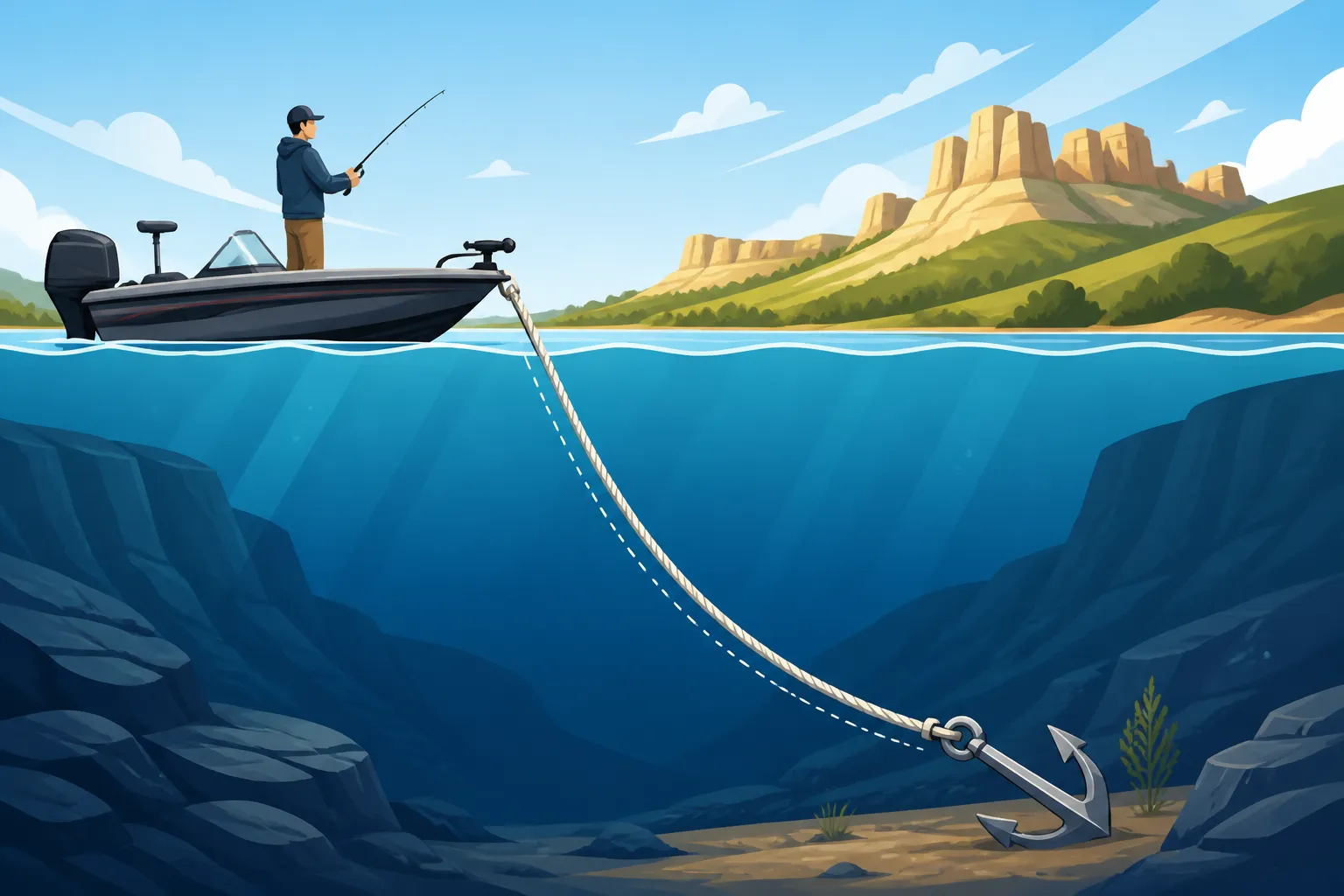
Simply put, scope is the ratio of the deployed length of your anchor rode (rope + chain) to the vertical distance from your boat's bow to the anchor on the bottom. Imagine a line stretching from your boat's bow to the anchor. If that line goes straight down, it doesn't offer much leverage for the anchor to bite into the bottom. But if the line stretches out at a long, shallow angle, the anchor can dig in horizontally, creating maximum holding power. This is why having enough scope is absolutely critical.
On a massive body of water like the Missouri River reservoirs, where depths can change dramatically and winds can kick up without warning, understanding scope isn't just a nicety—it's a necessity. You might find yourself drifting over that perfect walleye structure, or worse, into a dangerous situation, if you haven't given your anchor enough scope. It's a common oversight, especially for those new to these vast waters, but one that can easily be corrected with a little planning.
Calculating Ideal Scope Ratios
The ideal scope ratio isn't a single magic number; it varies depending on conditions. A generally accepted minimum for decent holding power in calm conditions is around 5:1 (meaning five feet of rode for every one foot of depth, measured from the bow roller to the bottom). However, for deep water, strong winds, or significant current, you'll want to increase that ratio significantly. Most seasoned anglers in South Dakota's big waters will tell you they aim for 7:1 or even 10:1 in challenging situations.
Let's say you're fishing a spot that's 30 feet deep, and your boat's bow sits 5 feet above the water line. Your total vertical depth to the anchor point is 35 feet.
- 5:1 Scope: 35 feet (depth) x 5 (ratio) = 175 feet of rode.
- 7:1 Scope: 35 feet (depth) x 7 (ratio) = 245 feet of rode.
- 10:1 Scope: 35 feet (depth) x 10 (ratio) = 350 feet of rode.
As you can see, the amount of rode needed increases substantially with depth and desired scope. This is why having ample rope onboard is paramount for deep water fishing. It's always better to have too much than too little.
Here’s a quick reference table for calculating your anchor rode length based on depth and desired scope:
| Total Vertical Depth (Feet) | 5:1 Scope (Rode Length) | 7:1 Scope (Rode Length) | 10:1 Scope (Rode Length) |
|---|---|---|---|
| 20 | 100 feet | 140 feet | 200 feet |
| 30 | 150 feet | 210 feet | 300 feet |
| 40 | 200 feet | 280 feet | 400 feet |
| 50 | 250 feet | 350 feet | 500 feet |
| 60 | 300 feet | 420 feet | 600 feet |
| 70 | 350 feet | 490 feet | 700 feet |
Note: Total Vertical Depth = Water Depth + Distance from waterline to bow roller.
The Importance of a Rode Calculator (Mental Math or App)
While the table above is handy, you'll need to do these calculations on the fly when you're out on the water. A quick mental estimate is often sufficient, especially once you get the hang of it. Rounding up is always a good practice. For instance, if you're in 40 feet of water and want a 7:1 scope, knowing you need "around 280 feet" lets you manage your deployment.
There are also many handy apps for smartphones that act as anchor rode calculators, taking into account depth, desired scope, and even boat length. These can be lifesavers for precise anchoring, especially when conditions are less than ideal. Always remember to factor in the height of your boat's bow off the water into your "depth" calculation, as that's part of the vertical distance your rode needs to cover before it even hits the water. It’s a small detail that can make a big difference in how well your anchor performs, and it's a critical component of South Dakota Boat Safety Requirements.
Factors Influencing Your Anchor Rope Needs in South Dakota's Deep Waters
South Dakota's diverse fishing environments, from the vast Missouri River reservoirs to the glacial lakes, present unique challenges for anchoring in deep water. It's not just about the depth itself; several other factors play a significant role in determining how much anchor rode you truly need to stay put.
Water Depth: The Obvious Starting Point
Naturally, the deeper the water, the more anchor rode you'll require. This isn't just a linear relationship; as discussed with scope, the sheer volume of rope needed can quickly become substantial. Imagine trying to anchor in a 60-foot deep channel on Lake Oahe – suddenly, you're talking about needing 400-600 feet of rode for a reliable hold. Many anglers are caught off guard by these requirements, especially if they're used to shallower lakes.
The Missouri River system, specifically lakes like Oahe, Sharpe, Francis Case, and Lewis and Clark, are notorious for their deep channels and drop-offs. These aren't your average farm ponds. When you're targeting fish holding in these deeper zones, your anchoring strategy has to evolve beyond simply dropping a heavy weight. Merely having an anchor that reaches the bottom isn't enough; it needs enough horizontal travel along the bottom to dig in effectively. This is where understanding South Dakota Missouri River Fishing Techniques becomes critical, as anchoring often plays a huge role in successful fishing there.
Bottom Composition: Holding Power and Potential Snags
The type of bottom you're anchoring in dramatically affects how well your anchor will hold, and thus, how much scope you might need.
- Mud or Silt: These soft bottoms require a "fluke" or "Danforth" style anchor, which has large, flat flukes designed to dig in deep. They offer excellent holding power with proper scope.
- Sand: Similar to mud, sand allows fluke anchors to bury themselves. Scoop-style anchors also work well here.
- Rock or Gravel: This is where things get tricky, especially in areas like the tailwaters below the Missouri River dams. A "river" anchor (often a mushroom or grappling hook style) or a "navy" anchor might be used. These can be prone to snagging and require a robust anchor retrieval system. You might also need to deploy more scope to ensure the anchor can find a purchase between rocks rather than just bouncing over them. Losing an anchor on a rocky bottom is a common, frustrating experience that can quickly ruin a fishing trip.
- Weed Beds: While usually not in deep water, dense weed beds can foul anchors, preventing them from setting.
Knowing the typical bottom composition of your chosen Best Fishing Spots in South Dakota will help you choose the right anchor and determine how much rope you'll need to confidently set it. If you’re often fishing rocky areas, you might err on the side of more scope and a stronger rode to minimize the chance of your anchor dragging or getting stuck.
Wind and Current: The Unseen Forces
South Dakota can be a windy state, and the vast open waters of its reservoirs often amplify these conditions. Strong winds create significant drag on your boat, pushing it across the water. The stronger the wind, the more pulling force on your anchor, and thus, the more scope you'll need to maintain a solid hold. A boat with a high profile (like a pontoon boat) will be more affected by wind than a low-profile bass boat, requiring even more rode.
Likewise, current, particularly in river sections or the tailwaters of the Missouri River dams, is a powerful force that can pull your boat downstream. When anchoring in current, you're essentially fighting a constant pull. This demands a much higher scope ratio (often 10:1 or more) to ensure your anchor has enough leverage to dig in and resist the flow. It’s not uncommon for anglers fishing in strong currents to deploy several hundred feet of rode, even in moderately deep water, just to avoid dragging. Always be mindful of changing wind and current conditions, as a sudden shift can compromise your anchoring position.
Boat Size and Type: Your Vessel's Influence
The size and type of your boat also play a crucial role in determining your anchor rode needs. A small, lightweight aluminum fishing boat might get by with less rode than a heavy fiberglass multi-species boat or a large pontoon.
- Boat Weight: Heavier boats have more inertia and require more force to move, but they also place more stress on the anchor when current or wind pushes against them.
- Boat Profile (Windage): Boats with high sides or large cabin structures (like some of the bigger walleye boats you see on Lake Oahe) catch more wind. This increased "windage" means they'll be pushed harder by the wind, necessitating more scope to prevent dragging.
- Boat Shape: Even the shape of your hull can influence how your boat drifts and how much force it exerts on the anchor.
Understanding these factors is part of being a responsible boater, and it ties into the broader subject of South Dakota Boat Registration Guide and overall boating practices. Always match your anchoring system, including rode length, to the size and weight of your vessel and the conditions you expect to encounter.
Practical Considerations for South Dakota Anglers
Beyond the physics of scope and environmental factors, there are some very practical things South Dakota anglers need to think about when assembling their deep-water anchoring setup. Having the right gear and knowing how to manage it can make all the difference.
Anchor Rode Materials: Rope vs. Chain
Your anchor rode isn't just one long piece of rope. A proper setup, especially for deep water, involves a combination of chain and rope.
- Anchor Chain: This is indispensable. A short length of heavy chain (typically 6-15 feet, depending on your boat size) attached directly to your anchor serves several vital purposes:
- Keeps the Anchor Laying Flat: The weight of the chain helps keep the anchor shank parallel to the bottom, allowing the flukes to dig in properly. Without chain, the anchor often stands up, reducing its holding power significantly.
- Abrasion Resistance: Chain protects the first few feet of your rode from chafing against rocky bottoms or sharp debris, a common issue in the Missouri River system.
- Shock Absorption (to some extent): While nylon rope is the primary shock absorber, the chain adds a little more give.
You can often find good quality anchor chain and hardware at outdoor retailers like Bass Pro Shops or through online vendors like Amazon.
- Anchor Rope (Nylon): For the main length of your rode, three-strand nylon rope is the best choice. Nylon is strong, durable, and most importantly, it has excellent stretch. This stretch acts as a shock absorber, cushioning your boat against waves and gusts of wind, preventing sudden jerks that can dislodge your anchor. Polyesters and other ropes don't have the same elastic properties and can lead to your anchor breaking free. For deep water, you'll want a substantial length of this rope – often 200 to 400 feet, sometimes more, as discussed earlier.
Storage and Management of Long Anchor Rodes
Okay, so you've got several hundred feet of rope and chain. Now what? Storing and managing such a long rode can be a challenge, especially on smaller fishing boats where space is at a premium.
- Anchor Locker/Box: The ideal scenario is a dedicated anchor locker in the bow of your boat. This keeps the rope contained and prevents tangles. If you don't have one, a sturdy plastic tub or a specialized anchor bag (available at Bass Pro Shops or other marine suppliers) works well.
- Coiling Techniques: Learning a proper coiling technique, such as a figure-eight or daisy chain, will prevent frustrating knots and tangles when you need to deploy quickly. Never just throw the rope in a pile!
- Marking Your Rode: This is incredibly helpful for managing scope. Use permanent markers or small, colored zip ties (spaced every 25 or 50 feet) to mark your rope. This way, you can easily tell how much rode you've deployed without guessing. It saves time and ensures you're getting the right scope every time.
- Power Winches: For very long and heavy rodes, a power anchor winch is a fantastic investment, especially if you fish deep water frequently. It eliminates the back-breaking work of pulling up hundreds of feet of rope and chain, allowing you to quickly reposition if the bite isn't there.
Anchoring Safely and Responsibly
Anchoring isn't just about holding position; it's about safety, too.
- Deployment: Always deploy your anchor slowly, paying out rode as your boat drifts backward. This helps the chain and anchor settle on the bottom without tangling. Never just heave the anchor over the side in deep water, as it can foul the rode.
- Setting the Anchor: Once you've deployed enough rode for the desired scope, gently "set" the anchor by slowly motoring backward (or letting the wind/current do the work) to ensure it digs in firmly. Feel for that solid "thunk" as it bites.
- Retrieval: When it's time to move, motor slowly towards your anchor point, picking up the slack as you go. Once directly over the anchor, pull straight up to dislodge it. If it's stuck on a rocky bottom, a clever trick is to tie a buoy to the anchor line and motor in a large circle to pull the anchor from a different angle.
- Environmental Responsibility: Always be mindful of where you're anchoring. Avoid sensitive aquatic vegetation or structures that could be damaged. Respect South Dakota Fishing Regulations Explained regarding protected areas or methods.
- Secondary Anchoring: For extreme conditions, or simply for peace of mind in very deep or windy areas, consider carrying a second anchor. You can deploy two anchors from the bow at a wide angle for maximum stability, or one from the bow and one from the stern to prevent swinging. This can be particularly useful when you need to hold your boat precisely over a structure.
Having sufficient anchor rode and knowing how to use it safely and effectively isn't just about catching more fish; it's about making your time on South Dakota's beautiful, deep waters enjoyable and worry-free. Make sure your South Dakota Fishing Gear Checklist includes a well-maintained, appropriately sized anchor and plenty of robust rode!
Disclaimer
This article is for general informational purposes only and does not constitute professional advice. Laws, prices and regulations vary by location and change over time. Consult a qualified professional for guidance on your specific situation.