Best Trailers for Fishing Boats
For many South Dakota anglers, the journey to the perfect fishing spot is as important as the destination itself, yet issues with boat trailers often turn excitement into frustration. From bearing blowouts on the highway to struggles at shallow ramps, an ill-suited or poorly maintained trailer can derail your entire fishing trip. This comprehensive guide is designed to equip you with the knowledge needed to choose, maintain, and safely operate the best trailer for your fishing boat, ensuring smooth travels to your favorite lakes and rivers.
Decoding Boat Trailer Types: Bunks vs. Rollers
When you first start looking at boat trailers, you'll quickly notice two main types: bunk trailers and roller trailers. Each has its own set of advantages and disadvantages, and understanding these differences is crucial for picking the right one for your boat, your typical launch sites, and your personal comfort level. There's no single "best" option; it all depends on your specific needs as a South Dakota angler.
Bunk Trailers: The Sturdy Foundation
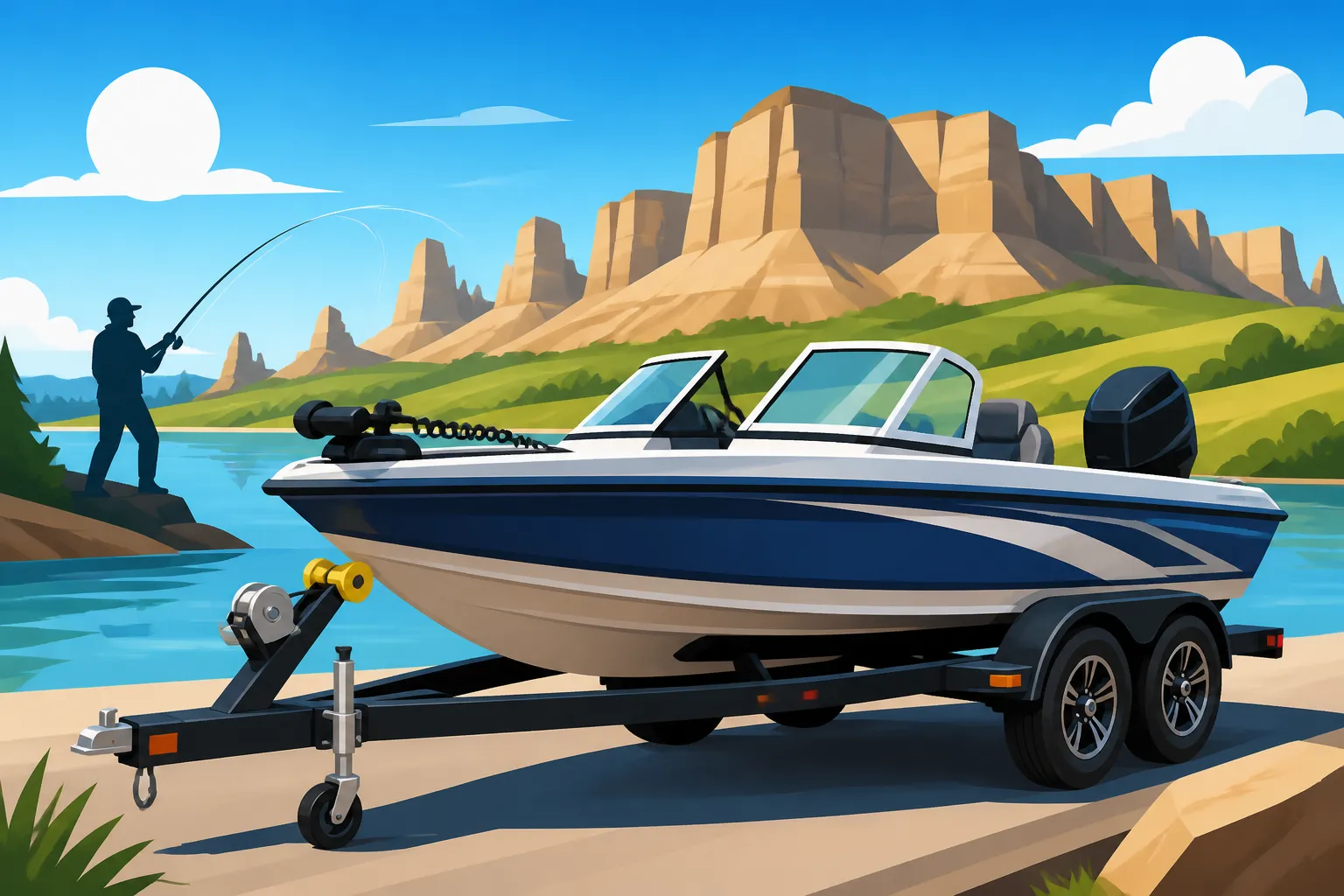
Bunk trailers are arguably the most common type you'll see on South Dakota roads, and for good reason. They feature carpeted wooden beams, known as bunks, that support the boat's hull along its length. This design provides excellent support for the boat, distributing its weight evenly and minimizing stress on the hull, which is particularly beneficial for fiberglass boats or those with deeper V-hulls.
The main advantage of a bunk trailer is its robust support system. Your boat rests securely on those bunks, cradled much like it would be in the water. This firm contact is often preferred for long-distance hauls across the state, like if you're pulling your boat from Sioux Falls all the way to Lake Oahe Fishing Guide for a week of walleye fishing. The bunks offer a large surface area of support, reducing the chances of hull damage from trailering vibrations or bumps. However, loading and unloading can sometimes be a bit more challenging, especially on shallow ramps. You often need to back the trailer deeper into the water to get enough flotation for the boat to slide on or off the bunks smoothly. If you're often fishing smaller, less developed lakes with steep or short ramps, this can be a real workout.
Roller Trailers: The Ease of Launch and Retrieval
Roller trailers, as their name suggests, use a series of polyurethane or rubber rollers mounted on axles to support the boat. These rollers allow the boat to glide on and off the trailer with significantly less effort than a bunk trailer. This design makes roller trailers particularly popular with anglers who frequently launch and retrieve their boats, or those who often fish at ramps with shallow water conditions where backing a bunk trailer deep enough is a challenge.
The ease of use is the standout feature of roller trailers. You can often launch or load your boat with minimal submersion of the trailer, which is a huge benefit if you're fishing alone or just prefer a quicker, less strenuous process. Imagine being at a busy ramp on Lake Sharpe; a roller trailer can get you in and out faster, keeping the line moving. However, this ease comes with a trade-off. The concentrated pressure points of the rollers can, in some cases, put more stress on a boat's hull, especially thinner aluminum boats, if not properly adjusted. They also have more moving parts, meaning more potential points of failure and more maintenance down the line compared to the simpler bunk design. For instance, the rollers themselves can degrade over time or become stiff, requiring replacement or lubrication.
Aluminum vs. Galvanized Steel: Material Matters
Beyond bunks or rollers, the material of the trailer frame itself is a critical consideration, especially when thinking about the diverse conditions in South Dakota. The two primary materials are galvanized steel and aluminum. Each offers different benefits regarding weight, durability, and corrosion resistance.
Galvanized steel trailers are built from steel that has been hot-dipped in zinc, creating a protective coating that resists rust and corrosion. These trailers are generally heavier and more affordable than aluminum models. The added weight of a steel trailer can sometimes be a benefit for stability on the highway, especially with larger boats, but it also means your tow vehicle needs to handle that extra poundage. They are incredibly durable and can withstand a lot of abuse, which is a plus if you're frequently traveling on less-than-perfect gravel roads to remote fishing spots. However, if the galvanized coating is scratched or damaged, the underlying steel can begin to rust, and corrosion can be a particular concern if you're frequently dunking your trailer in the water.
Aluminum trailers, on the other hand, are lighter and naturally more resistant to corrosion. This makes them an excellent choice for anglers who are concerned about maximizing their tow vehicle's capacity or who simply prefer less weight to pull. Their inherent resistance to rust means they generally hold up better over time, even with frequent water immersion. While they tend to be more expensive upfront, their longevity can make them a worthwhile investment. However, aluminum is a softer metal than steel, so aluminum frames might be more susceptible to bending or denting under extreme stress, though modern designs are incredibly robust. When considering a trailer, especially from a big retailer like Bass Pro Shops, you'll find options in both materials, and it's worth comparing the long-term value based on your specific usage and budget.
Essential Trailer Features for the South Dakota Angler
A boat trailer is far more than just a frame with wheels. Modern trailers come equipped with a host of features designed to enhance safety, improve functionality, and make your life easier out on the water. For a South Dakota angler, understanding these features and prioritizing them based on your boat and your fishing habits is key to a successful purchase.
Axles, Brakes, and Suspension: The Foundation of Safety
These three components form the backbone of your trailer's structural integrity and road performance. Getting them right is paramount for safe towing.
Axles are where the rubber meets the road, quite literally. Smaller, lighter fishing boats might do just fine on a single-axle trailer. These are simpler, often more maneuverable, and generally less expensive. However, if you have a heavier boat or plan on long-distance hauls, a tandem-axle trailer offers significant advantages. Tandem axles distribute the load over four tires instead of two, providing greater stability, especially at highway speeds or when encountering crosswinds on the vast plains of South Dakota. Furthermore, if you experience a tire blowout on a tandem axle, you still have three other tires supporting the load, allowing you to often safely pull over rather than being stranded immediately. For very large boats, triple-axle trailers are also an option, offering even more stability and carrying capacity.
Brakes are non-negotiable for safety, especially with heavier boats. Most states, including South Dakota, have regulations dictating when trailer brakes are required based on gross vehicle weight. Disc brakes generally offer superior stopping power and are less prone to fading compared to drum brakes, particularly after being submerged in water. Surge brakes, which activate when the tow vehicle slows, are common and reliable. Electric brakes require a brake controller in your tow vehicle but offer more precise control over braking power, which can be a real benefit when navigating slippery ramps or steep grades.
Suspension helps absorb road shocks, protecting both your boat and the trailer itself from excessive bouncing and jarring. Leaf spring suspensions are traditional, robust, and relatively inexpensive to maintain. However, they can be a bit stiffer. Torsion axles, on the other hand, offer independent suspension for each wheel, leading to a smoother ride and better tracking behind your tow vehicle. This can be especially important for boats carrying sensitive electronics or gear, or for long trips across varied terrain, ensuring your valuable equipment arrives in pristine condition at your destination, whether it's the Missouri River system or a remote glacial lake.
Lighting and Wiring: Visibility and Compliance
Trailer lights are not just a legal requirement; they are a critical safety feature, ensuring other drivers can see your intentions on the road. Navigating rural South Dakota roads, especially at dawn, dusk, or in inclement weather, makes reliable lighting non-negotiable.
Modern trailers increasingly feature LED lighting systems over traditional incandescent bulbs. LEDs are significantly brighter, draw less power, and have a much longer lifespan, making them a wise investment. They are also less susceptible to breakage from vibration and are often fully sealed and submersible, preventing common issues related to water intrusion when launching and retrieving your boat. Look for fully sealed, waterproof wiring harnesses to minimize corrosion and connectivity problems. Nothing is more frustrating than a taillight going out mid-trip, causing a roadside stop or even a potential fine. Regular inspection of your lights before each trip is essential. South Dakota Boat Safety Requirements includes details that often overlap with trailer light expectations. Many boaters now carry spare bulbs or even a spare tail light assembly for quick fixes if their wiring isn't completely sealed.
Winches, Straps, and Tongue Jacks: Secure and Easy Handling
These accessories might seem minor, but they significantly impact the ease and safety of using your trailer.
A reliable winch is essential for pulling your boat onto the trailer. Manual winches are simple, effective, and require no power, though they can demand some muscle, especially with larger boats. Electric winches offer push-button convenience, making loading a breeze, but they require a power source, typically from your tow vehicle's battery. Ensure the winch strap or cable is strong, in good condition, and rated for your boat's weight.
Transom tie-down straps are non-negotiable. These secure the stern of your boat to the trailer frame, preventing the boat from shifting rearward or bouncing vertically during transport. This is crucial for preventing hull damage and maintaining stability, particularly during sudden stops or on bumpy roads. Similarly, a strong bow safety chain or strap provides an additional layer of security, keeping the bow attached to the trailer in case of winch failure.
A tongue jack makes maneuvering the trailer when unhitched much easier. Whether you opt for a swivel jack that folds up out of the way or a heavier-duty wheeled jack, it's a small investment that pays off every time you hook up or unhook your boat. Many tongue jacks come with a wheel, allowing for easy repositioning of the trailer in your driveway or at the ramp. These features, often available as upgrades or standard on quality trailers, like those you might find on Amazon or at Bass Pro Shops, are critical for both convenience and safety.
Proactive Maintenance: Keeping Your Trailer Lake-Ready
A boat trailer takes a beating. It’s exposed to road grime, water, sun, and heavy loads. Neglecting maintenance isn't just inconvenient; it can be dangerous, leading to breakdowns far from home, especially on a long drive to a remote fishing location. Regular, proactive maintenance is key to extending the life of your trailer and ensuring safe travels across South Dakota.
Wheel Bearings and Tires: Keeping You on the Road
These are arguably the most critical components for keeping your trailer rolling smoothly and safely. A wheel bearing failure on the highway is a nightmare scenario that can cause serious damage and put you and others at risk.
Wheel bearings need regular inspection and lubrication. Water intrusion, especially from submerging the trailer during launching and retrieving, can wash out grease and lead to corrosion. Many modern trailers come with "bearing buddies" or similar systems that allow you to easily add grease, creating positive pressure that helps keep water out. Even with these, it's a good practice to periodically remove, inspect, and repack your bearings, or have a qualified mechanic do it. Listen for any unusual noises – grinding, rumbling, or squealing – as these are often early warning signs of bearing trouble.
Your tires are also constantly under stress. Always check your tire pressure before each trip. Under-inflated tires can overheat, leading to blowouts, and over-inflated tires can wear unevenly and reduce traction. Inspect the sidewalls for cracks and the tread for uneven wear, which could indicate alignment issues or suspension problems. Trailer tires, unlike car tires, are often designed for heavier loads and less frequent use, so they can "age out" even if they have good tread. Always carry a properly inflated spare tire, along with a jack and lug wrench specifically for your trailer. This preparedness can save your fishing trip if you're pulling your boat to a distant location like the Belle Fourche Reservoir and hit a nasty pothole.
Rust Prevention and Frame Inspection
South Dakota weather can be tough on equipment, and trailers are no exception. Road salt in winter, combined with frequent water immersion, creates a perfect storm for rust.
Rust prevention starts with routine cleaning. After every trip, especially if you've been on roads treated with salt or have launched in brackish water, give your trailer a good washdown with fresh water. Pay particular attention to crevices and joints where water can collect. For galvanized steel trailers, a good wash helps preserve the zinc coating. For aluminum trailers, it removes corrosive elements.
Beyond cleaning, routinely inspect the trailer frame for any signs of rust, corrosion, or structural damage. Look for paint chips or scratches on steel trailers that might expose bare metal. Check all welds for cracks, especially around stress points like the axle mounts, hitch coupler, and suspension components. A small crack can propagate quickly under the stress of towing. Ensure all nuts and bolts are tight. Loose fasteners can indicate excessive vibration or wear. Addressing these issues early can prevent them from becoming major safety hazards or expensive repairs down the road. Remember, South Dakota Boat and Water Access Rules often imply that well-maintained equipment contributes to a safe experience for all.
Electrical System Care and Troubleshooting
Nothing is more frustrating than getting ready to hit the road only to find your trailer lights aren't working. Electrical issues are common but often preventable with simple care.
The first line of defense is ensuring all electrical connections are clean and secure. Use dielectric grease on exposed terminals, especially at the connection point to your tow vehicle, to prevent corrosion and improve conductivity. Periodically check all wires for fraying, pinches, or cuts that could lead to shorts. Critters sometimes like to chew on wires when the trailer is stored!
If you encounter a problem, troubleshooting usually starts at the source. Check your tow vehicle's wiring harness and fuses first. Then, move to the trailer's main connection, working your way back to individual lights. Blown bulbs are common, especially with older incandescent systems. Keep a few spares on hand. If you have an LED system and a single light is out, it might indicate a wiring issue rather than a bulb. A simple test light can be invaluable for diagnosing where the power stops. Being familiar with your trailer's wiring diagram, or having the ability to quickly look it up, can save you a lot of time and headache on the side of the road.
Mastering the Road: Safe Trailering Practices in South Dakota
Trailering a boat isn't like driving a regular vehicle. It adds significant length, weight, and complexity to your driving experience. Understanding and practicing safe trailering techniques is vital for your safety, the safety of other motorists, and the longevity of your boat and trailer, especially when navigating the varied landscapes of South Dakota.
Proper Hitching and Weight Distribution
The very first step to safe trailering begins before you even leave your driveway: proper hitching and ensuring correct weight distribution. A poorly hitched or unbalanced trailer is an accident waiting to happen.
First, always ensure your hitch ball matches your trailer's coupler size (e.g., 2-inch ball for a 2-inch coupler). Never mix sizes. After lowering the coupler onto the hitch ball, lock the coupler down securely and insert the safety pin. Then, cross your safety chains under the coupler and attach them to the tow vehicle's frame. Crossing them creates a cradle that can prevent the tongue from digging into the road if the coupler detaches. Finally, connect your electrical wiring harness for lights and brakes. Give everything a good visual inspection and a tug to ensure it's all secure.
Weight distribution is paramount. Ideally, the tongue weight – the downward force exerted by the trailer's tongue on the hitch – should be 10-15% of the total loaded trailer weight. Too little tongue weight can cause severe trailer sway, making your setup unstable and dangerous, particularly at higher speeds or in windy conditions, which are common on South Dakota's open roads. Too much tongue weight can overload your tow vehicle's rear axle, affecting steering and braking. You can adjust tongue weight by shifting gear within your boat or on the trailer. A good strategy is to keep heavier items forward, over the trailer axles. You can buy a tongue weight scale at places like Amazon to get a precise reading.
Driving Practices with a Trailer
Once you're hitched up, your driving habits need to change significantly. You are now operating a much longer, heavier, and less maneuverable vehicle combination.
Your stopping distance will increase dramatically. Leave significantly more space between your vehicle and the one in front of you. Anticipate stops and begin braking earlier and more gently. Sudden, hard braking can cause your trailer to push your tow vehicle, potentially leading to a jackknife. When turning, remember your trailer will cut corners, so you need to make wider turns to avoid hitting curbs, signs, or other vehicles. This is especially important in urban areas or tight boat ramp entrances.
Maintain awareness of your surroundings at all times. Use your mirrors frequently, and consider adding extended towing mirrors if your view is obstructed. Be mindful of highway speeds, especially with smaller boats. While the legal limit might be higher, a comfortable and safe towing speed is often lower. High winds, common in South Dakota, can significantly impact trailer stability; be prepared to slow down or even pull over if conditions become unsafe. Additionally, be extra cautious when ascending or descending hills, as the added weight can strain your engine and brakes. When heading to a steep launch on a lake in the Black Hills, understanding your vehicle's capabilities is crucial.
Pre-Trip Checks and Roadside Preparedness
Before every single trip, no matter how short, perform a quick but thorough pre-trip inspection. This simple routine can prevent major headaches and ensure a safe journey.
Your pre-trip checklist should include:
- Tires: Check pressure and condition (sidewalls, tread).
- Lights: Verify all running lights, brake lights, turn signals, and reverse lights are operational.
- Hitching: Confirm coupler is latched, safety pin is in, safety chains are crossed and attached, and electrical harness is connected.
- Straps: Ensure boat is securely strapped down at the bow and transom.
- Load: Confirm all gear in the boat is secure and won't shift.
- Fluid Leaks: Check for any leaks from wheel hubs or your tow vehicle.
Despite all precautions, breakdowns can happen. Being prepared can turn a major crisis into a minor inconvenience. Always carry essential roadside emergency gear: a spare tire (for both your tow vehicle and trailer), a jack capable of lifting your trailer, a lug wrench, a basic tool kit (wrenches, pliers, screwdriver), jumper cables, and a first-aid kit. Having a charged cell phone and knowing your route, especially if you're venturing into areas with spotty service, is also smart. Consider reviewing your South Dakota Fishing Gear Checklist to include these items.
Selecting the Perfect Fit: Size, Capacity, and Materials
Choosing the right boat trailer is a balance of matching it precisely to your boat, understanding its capabilities, and considering the long-term wear and tear it will endure. It's an investment that protects your primary investment—your fishing boat.
Matching Trailer to Boat Length and Weight (GVWR)
This is perhaps the most critical aspect of trailer selection. A trailer that is too small or too weak for your boat is not only unsafe but also illegal and will likely fail prematurely.
Always know your boat's fully loaded weight. This isn't just the boat itself; it includes the motor, fuel, battery, and all your fishing gear. The trailer you choose must have a Gross Vehicle Weight Rating (GVWR) that exceeds this total weight. The GVWR is the maximum permissible weight of the trailer and its contents. Trying to tow a boat that exceeds your trailer's GVWR puts undue stress on every component—axles, tires, frame, and brakes—leading to premature wear and a significant safety hazard.
Similarly, the trailer's length must be appropriate for your boat. The bunks or rollers should support the vast majority of the hull, usually extending to just past the transom. A boat that hangs excessively off the back of the trailer can put too much stress on the unsupported hull and create an unstable towing situation with improper tongue weight. Conversely, a trailer that's too long can be difficult to maneuver, especially at crowded ramps. Taking precise measurements of your boat and knowing its dry weight, plus estimated gear weight, is the first step to finding the perfect match.
Axle Configuration: Single, Tandem, or Triple
The number of axles on your trailer directly relates to its weight capacity and towing characteristics.
- Single-Axle Trailers: These are typically sufficient for smaller, lighter fishing boats (often under 20 feet and less than 3,000-3,500 pounds total loaded weight). They are simpler, easier to maneuver in tight spaces, and generally less expensive to buy and maintain (fewer tires, fewer bearings). However, if you have a tire blowout on a single axle, you're immediately stranded, and they offer less stability for very long hauls or at higher speeds.
- Tandem-Axle Trailers: The preferred choice for most mid-sized to larger fishing boats (often 20-25 feet, 3,500-7,000+ pounds total loaded weight). With two axles and four tires, they distribute the weight better, provide superior stability on the highway, and offer a crucial safety net in case of a tire failure (you can often limp to a safe spot on three tires). They also tend to track better behind the tow vehicle, reducing sway. The trade-off is slightly higher cost, more maintenance points, and they can be a bit harder to move around manually.
- Triple-Axle Trailers: Reserved for very large, heavy boats, often approaching or exceeding 25 feet and 7,000-10,000+ pounds. They offer maximum weight capacity and stability. While less common for typical South Dakota fishing boats, they are essential for serious offshore rigs or larger cruisers.
| Trailer Type | Best Use Case | Pros | Cons | Axle Type (Common) |
|---|---|---|---|---|
| Bunk Trailer | Fiberglass, deep V-hulls, long-term storage | Excellent hull support, less maintenance, generally lower cost | Can be harder to launch/load in shallow water, requires deeper submersion | Single or Tandem |
| Roller Trailer | Frequent launching, shallow ramps, solo anglers | Easy launch/retrieval, less trailer submersion needed | More moving parts (maintenance), potential for hull pressure points, higher cost | Single or Tandem |
| Galvanized Steel | Heavy-duty use, durability, budget-conscious | Very strong, corrosion resistant (if coating intact), often cheaper | Heavier, can rust if coating is breached, less aesthetic (for some) | All |
| Aluminum | Lighter weight, maximum corrosion resistance | Lightweight, naturally rust-proof, often better resale value | Higher upfront cost, can be less rigid than steel, not ideal for all boats | All |
Custom-Fit vs. Universal Trailers
Just like a good pair of waders, a trailer that perfectly fits your boat will provide the best support and towing experience.
Custom-fit trailers are designed specifically for a particular boat model or hull shape. The bunks or rollers are precisely positioned to match the contours of your hull, providing optimal support and weight distribution. This prevents stress points, reduces hull flex during transit, and makes launching and loading consistently smooth. Many boat manufacturers offer custom trailers designed to complement their specific models. The downside is they are typically more expensive and less versatile if you ever decide to change boat types. When you buy a boat from a dealership, they often pair it with a custom-fit trailer that ensures proper fit and support.
Universal or adjustable trailers, on the other hand, are designed to accommodate a range of boat sizes and hull shapes through adjustable bunks, rollers, and winches. While more versatile and often less expensive, it's crucial to spend time properly adjusting them to your specific boat. A poorly adjusted universal trailer can create unsupported areas on your hull, leading to potential damage over time. However, for anglers with slightly unusual boat dimensions or those who might upgrade boats in the future, the flexibility of a well-adjusted universal trailer can be appealing. Many trailer manufacturers, and even major retailers, offer a variety of adjustable trailers that can be fine-tuned to fit many common fishing boat models. Be sure to check online reviews or ask for advice at stores like Bass Pro Shops or on online forums if you're unsure about fitting an adjustable trailer to your specific model.
Understanding South Dakota Boat Registration and Trailer Laws
Navigating the rules and regulations around boat trailers in South Dakota is just as important as knowing how to fish South Dakota Walleye Limits. Ignoring these laws can lead to fines, safety issues, and a ruined fishing trip. It’s not just about getting on the water; it’s about getting there legally and safely.
South Dakota Trailer Registration Requirements
Just like your boat and your tow vehicle, your boat trailer often needs to be properly registered with the state of South Dakota. The specifics can vary slightly, but generally, if your trailer operates on public roads, it needs to be licensed.
In South Dakota, trailers are titled and licensed through your county treasurer's office, similar to other vehicles. You'll need proof of ownership (title or manufacturer's statement of origin), and you'll pay a registration fee. Once registered, you'll receive a license plate that must be prominently displayed on the rear of the trailer. This registration needs to be renewed periodically, so make sure to keep track of your expiration dates. Failing to register your trailer or having expired tags can result in a traffic stop, a ticket, and potentially even having your trailer impounded. This is a hassle you definitely want to avoid, especially if you're on your way to fish Lake Francis Case Fishing Guide. Make sure to read up on the current South Dakota Boat Registration Fees Explained to avoid any surprises.
Essential Safety Equipment and Inspection
Beyond registration, South Dakota law, and common sense, requires certain safety equipment to be present and functional on your boat trailer. These items are designed to protect you, your boat, and other drivers on the road.
Lights are at the top of the list. Your trailer must have operational taillights, brake lights, and turn signals. These need to be visible from a certain distance and function in sync with your tow vehicle. Side marker lights and reflectors are also often required, especially for longer trailers, to ensure visibility from the side. As mentioned earlier, keeping these well-maintained and waterproofed is crucial.
Brakes are also critical, particularly for heavier trailers. South Dakota law mandates trailer brakes for any trailer with a gross weight exceeding 3,000 pounds. This is a very important safety threshold. If your loaded boat and trailer exceed this weight, you must have working brakes on your trailer. Disc or surge brakes are common choices, and ensuring they are maintained and properly adjusted is paramount for safe stopping distances.
Finally, safety chains are a non-negotiable requirement. Two independent safety chains, strong enough to hold the trailer if the primary hitch connection fails, must be connected between the trailer tongue and the tow vehicle frame, crossed under the coupler. These are a last line of defense against a runaway trailer. Regular pre-trip checks of all this equipment are not just good practice; they're the law. If you're unsure about any specific requirements, the South Dakota GFP Fishing Handbook Guide or the state's motor vehicle department website are excellent resources.
Avoiding Common Legal Pitfalls
Even experienced anglers can sometimes overlook small details that lead to legal issues. Being aware of these common pitfalls can save you time, money, and aggravation.
One common mistake is overloading the trailer. Not only is this extremely dangerous, putting excessive strain on tires, axles, and brakes, but it's also illegal. Always ensure your total loaded boat weight (boat + motor + fuel + gear) is well within the trailer's GVWR. Another pitfall is improperly secured loads. Your boat must be firmly secured to the trailer with transom straps and a bow strap. Any loose gear within the boat must also be secured to prevent it from flying out during transit. Imagine losing a valuable tackle box on I-90!
Expired tags or missing plates are easily avoidable problems that often lead to traffic stops. Double-check your registration dates annually. Furthermore, ensure your trailer's tires are in good condition and properly inflated. Blowouts can be a safety hazard and draw unwanted attention from law enforcement. Lastly, be mindful of any special regulations for oversized loads if you have a particularly wide or long boat. While most fishing boats don't fall into this category, it's worth knowing. Ultimately, the spirit of these laws is to ensure everyone's safety. Adhering to them means you can focus on the fishing, not the legal woes. Just like knowing the rules about South Dakota Fishing Without a License Penalties, understanding trailer laws is part of being a responsible outdoor enthusiast.
Disclaimer
This article is for general informational purposes only and does not constitute professional advice. Laws, prices and regulations vary by location and change over time. Consult a qualified professional for guidance on your specific situation.