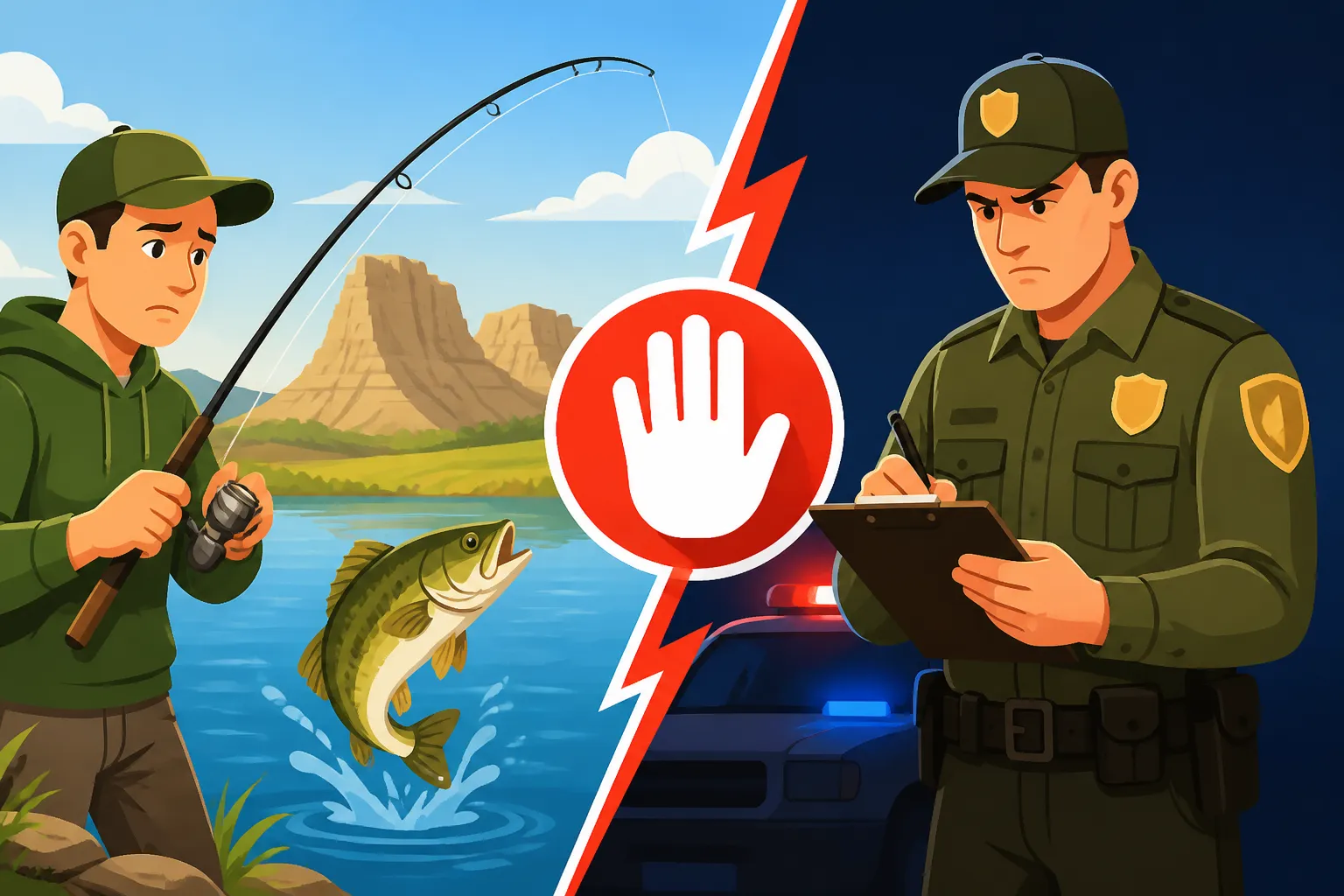
South Dakota Fishing Without a License Penalties
We've all been there: you're itching to get on the water, the weather's perfect, and your fishing gear is practically calling your name. But in the excitement, or maybe just out of a simple misunderstanding, you might forget one crucial detail – your South Dakota fishing license. It's an honest mistake that many anglers make, but unfortunately, fishing without a license in South Dakota can lead to some pretty significant headaches and legal troubles. This guide is here to break down exactly what happens if you're caught without the proper paperwork, what penalties you might face, and how to ensure you're always fishing on the right side of the law.
The Absolute Necessity of a Fishing License in South Dakota
Fishing in South Dakota is a treasured pastime, deeply woven into the fabric of our outdoor culture. From the mighty Missouri River reservoirs to the serene Black Hills streams, our waters offer incredible opportunities. But with great opportunity comes great responsibility, and that includes adhering to the rules designed to protect our natural resources.
Why Licenses and Habitat Stamps Matter
At its heart, buying a fishing license isn't just about paying a fee; it's an investment in the future of fishing in South Dakota. The funds generated from fishing license sales and the associated South Dakota Habitat Stamp Requirements are directly funneled back into critical conservation efforts. This money goes towards fish stocking programs, habitat restoration projects, access development, research, and enforcement by the South Dakota Game, Fish and Parks (GFP). Without these funds, the vibrant fisheries we enjoy today simply wouldn't be sustainable. When you purchase your license, you're becoming a steward of the environment, playing an active role in ensuring that future generations can experience the same joy of reeling in a trophy walleye or a beautiful Black Hills trout. It's a system that benefits everyone, from the fish to the angler, ensuring healthy ecosystems and abundant catches.
Who Needs a License and Who is Exempt
It might seem straightforward, but understanding who actually needs a South Dakota fishing license can sometimes get a little murky. Generally, any resident angler 16 years of age or older, and any nonresident angler age 12 or older, must possess a valid fishing license. This includes all forms of fishing, whether you're casting from a boat, shore, or through the ice. There are specific guidelines for South Dakota Nonresident Fishing License Rules and South Dakota Resident Fishing License Options that vary in cost and duration, so it's always best to check the latest regulations.
However, there are some notable South Dakota Fishing License Exemptions. For instance, children under a certain age (typically under 16 for residents and under 12 for nonresidents) do not need a license. Additionally, there are special provisions for certain groups, such as eligible disabled veterans or those participating in designated South Dakota Free Fishing Days. It's absolutely critical to confirm if you fall under any of these exemptions before you cast your line. Misunderstanding an exemption is not a valid defense if a conservation officer approaches you, and you could still face penalties for fishing without a license. Always consult the official South Dakota GFP Fishing Handbook Guide or the GFP website for the most current and accurate information. For example, if you're wondering, Do Kids Need a Fishing License in South Dakota?, the answer depends on their age and residency, so a quick check can save a lot of trouble. Likewise, for our elder anglers, understanding Do Seniors Need a Fishing License in South Dakota? is key to a worry-free outing.
Immediate Consequences: What Happens When You're Caught
The sudden appearance of a conservation officer can send a shiver down any angler's spine, especially if you're unsure about your license status. It's an encounter that can quickly shift from a pleasant day on the water to a serious legal matter.
The Initial Encounter with a Conservation Officer
Imagine you're out on Lake Sharpe, the walleye are biting, and you're having an incredible day. Suddenly, a boat with the GFP emblem pulls up alongside you, or an officer approaches you on the bank. Their first question will almost invariably be to ask for your fishing license and possibly your photo ID. This is where the truth comes out. If you genuinely forgot it at home, or worse, never purchased one, that calm day quickly turns into a stressful one. Conservation officers are trained professionals, and while they might be understanding of simple oversights, their job is to enforce the law. Your demeanor and cooperation can certainly influence the interaction, but ultimately, the lack of a valid license is a violation.
Even if you have your license on your phone as a digital copy, make sure it's accessible. Technology can fail, so it's always wise to either have a physical copy or be absolutely certain you can pull it up reliably. The officer will verify your license details against the state's database. If no valid license is found for you, the process will begin for a citation. This isn't just a friendly reminder; it's a formal legal action that carries consequences. The conversation might be polite, but the reality is that you are now facing a legal infraction that will require your attention.
Understanding the On-the-Spot Violation
When a conservation officer determines you are fishing without a license, they will issue you a citation, much like a traffic ticket. This document will detail the specific violation, which is typically "fishing without a valid license" (SDCL 41-12-11.1 for instance, though specific codes can vary and you should always check the current statutes). This citation is a legal summons, meaning you'll likely have to appear in court or pay a fine by a specified date. It's not something you can ignore, as failing to respond to a summons can lead to even more severe penalties, including warrants for your arrest.
The officer might also inquire about your knowledge of the law and if you've ever been cited before. Your responses can play a role, but the act of fishing without the required license is a clear violation. They may also inform you of the potential South Dakota Fishing Without a License Penalties right there and then, which can include fines, court costs, and even the confiscation of your fishing equipment or any fish you've caught. It's important to remember that while the initial interaction might feel like a minor inconvenience, it's the gateway to a more involved legal process that could impact your wallet and your future fishing privileges.
The Financial Hit: Fines and Court Costs
Let's be honest, nobody wants to get a ticket, especially when you're trying to enjoy a relaxing day outdoors. But when it comes to fishing without a license in South Dakota, the financial consequences can be a real sting. It's more than just a slap on the wrist.
Typical Fine Ranges for Fishing Without a License
The exact fine for fishing without a valid South Dakota fishing license can vary depending on several factors, including whether it's your first offense, the discretion of the issuing officer, and the judge in court. However, generally speaking, initial fines can range from around $100 to $200. For example, a common fine for fishing without a license might be in the ballpark of $150 plus court costs. This can quickly add up, especially when you consider that a regular annual resident fishing license costs significantly less – often under $30.
It's important to understand that this fine is typically for the primary offense of not possessing a license. If you are also caught violating other regulations, such as exceeding daily limits, using illegal bait, or fishing during a closed season as outlined in the South Dakota Fishing Regulations Explained, those will be separate citations with their own fines, exponentially increasing your financial burden. For instance, if you were found fishing without a license and also had three walleye over the possession limit on Lake Oahe, you'd be looking at multiple, compounding fines. It's a stark reminder that staying informed and licensed is far more economical in the long run.
Additional Costs and Potential for Increased Fines
Beyond the base fine, there are several other costs that can quickly accumulate. Court costs are almost always assessed, adding another chunk of money, sometimes $50 or more, to your bill. If you choose to contest the citation and hire legal counsel, attorney fees will drastically increase your expenses. Furthermore, judges have the discretion to impose higher fines, especially if you have a history of wildlife violations or if the circumstances of your offense were particularly egregious (e.g., you were combative with the officer, or it was clear you were actively trying to avoid purchasing a license).
In some cases, if you failed to purchase a required Habitat Stamp alongside your license, that can also result in an additional fine. This often catches anglers by surprise, as they might think they only need the fishing license itself. The Habitat Stamp is a mandatory addition for most residents and non-residents when purchasing an annual fishing license, with few exceptions. So, what might seem like a small omission can result in an additional financial penalty on top of the license violation. The lesson here is clear: the cost of a proper fishing license and stamp is a minimal expense compared to the potential financial fallout of being caught without one.
Beyond the Fine: Other Legal Repercussions
While the financial penalties can be a significant deterrent, fishing without a license in South Dakota can lead to consequences that go far beyond just a monetary hit. These additional legal repercussions can impact your ability to fish in the future and even result in the loss of valuable equipment.
License Revocation and Future Fishing Privileges
One of the most impactful consequences of fishing without a license, especially for repeat offenders or in conjunction with other serious violations, is the potential revocation of your fishing privileges. The South Dakota Game, Fish and Parks Commission has the authority to suspend or revoke your fishing license, and potentially your hunting privileges as well, for a specified period. This means you might be legally barred from fishing in South Dakota waters for anywhere from a year to several years. Imagine not being able to join your friends or family on an annual fishing trip to Lake Francis Case because your license was revoked. This can be a devastating blow for passionate anglers.
Furthermore, a violation in South Dakota could potentially impact your ability to obtain fishing licenses in other states through interstate compacts. If your privileges are suspended in South Dakota, other states might also deny you a license, making it difficult to fish anywhere. It's a severe penalty that underscores the state's commitment to conserving its resources and ensuring compliance with regulations. Getting caught fishing without a license isn't just a one-time fine; it can have long-lasting effects on your cherished outdoor activities.
Confiscation of Gear and Harvested Fish
Another less commonly known, but equally serious, consequence of fishing without a license is the potential for confiscation of your fishing gear and any fish you've caught. Conservation officers have the authority to seize your rod and reel, tackle, and even your boat if it's deemed to have been used in the commission of a serious violation. While a first-time, simple fishing-without-a-license offense might not immediately lead to boat confiscation, it is a possibility, especially if other offenses are involved or if you are uncooperative.
More commonly, any fish you've caught while illegally fishing will be confiscated. This can be particularly frustrating if you've managed to land a trophy-sized walleye or a stringer full of crappie. Not only do you lose the fish, but you also lose the bragging rights and the meal you were planning. The state views these fish as illegally obtained, and they will be taken and often donated to local charities or institutions. The thought of losing your prized fishing rod, a gift from a loved one, or the delicious meal you envisioned, is often enough to make anglers double-check their licenses before heading out. For the serious angler, this can be a painful reminder that following the rules is paramount.
Preventing a Violation: Getting Your South Dakota Fishing License
Avoiding the headache of penalties for fishing without a license is incredibly easy, thankfully. With modern technology and readily available resources, there's really no excuse for not having the proper documentation before you head out.
Easy Ways to Purchase Your License
South Dakota has made it incredibly convenient to purchase a fishing license, recognizing that anglers want to spend their time fishing, not jumping through hoops. The easiest and often quickest way for many is through the official South Dakota Game, Fish and Parks website. You can purchase your license online, print it out instantly, or save a digital copy to your phone. This option is available 24/7, meaning you can even buy a license on your way to the lake if you suddenly realize you forgot. This is precisely why we recommend checking out South Dakota Online Fishing License Purchase.
If you prefer a more traditional route, licenses are also sold at hundreds of licensed vendors across the state. These include sporting goods stores like Cabela's, some Walmart locations, local bait shops, and even county treasurer offices. These locations can often print a durable, physical license for you on the spot. Even if you're a nonresident, obtaining your license is straightforward. Check out How to Buy a South Dakota Fishing License Online for a step-by-step guide. It's a good idea to confirm business hours for in-person purchases, especially if you're planning an early morning trip. Regardless of your preferred method, the key is to ensure you have a valid license in hand, or on your device, before your line ever touches the water.
Double-Checking Your License and Regulations
Purchasing your license is the first step, but it's equally important to double-check that you have the correct license for your situation and that you understand the current regulations. Are you a resident or a nonresident? Did you purchase an annual license, or a shorter-term option like a South Dakota One-Day Fishing License or South Dakota Three-Day Fishing License? Is your Habitat Stamp included if required? Sometimes, anglers mistakenly purchase the wrong type of license, which can still lead to issues if it doesn't cover their specific circumstances.
Beyond the license itself, always, always consult the most current South Dakota Fishing Regulations Explained. These regulations are updated annually, and sometimes even within a season, to reflect changes in fish populations, environmental conditions, or management strategies. What was legal last year might not be this year. Pay particular attention to fish limits and size restrictions (like South Dakota Walleye Limits or South Dakota Trout Limits in the Black Hills), bait restrictions, and special regulations for specific bodies of water. The South Dakota GFP provides a comprehensive handbook and an easily navigable website to ensure you're always informed. A quick review of the rules can save you from an embarrassing and costly violation, keeping your fishing trips enjoyable and stress-free.
Specific Scenarios and Common Misconceptions
The rules around fishing licenses can sometimes feel like a maze, especially with various exceptions and situations that aren't immediately clear. Let's clear up some common areas of confusion.
Fishing on Private Land and Its Nuances
A common misconception is that if you're fishing on private land, you don't need a fishing license. While it's true that some states have different rules for private ponds, in South Dakota, the general rule is that a valid South Dakota fishing license is required regardless of whether you are fishing on public or private property, unless you fall under one of the specific exemptions mentioned earlier (like age or free fishing days). This applies to private lakes, ponds, or streams that are either connected to public waters or contain publicly stocked fish.
The only real exception might be a completely landlocked, privately owned pond that has no connection to any other public waterway and is solely stocked by the landowner. Even in these rare cases, it's always best to err on the side of caution and verify with the GFP or purchase a license. The assumption that "it's private, so I'm fine" has led many anglers to receive citations. When in doubt, get the license. It's a small price to pay for peace of mind and to avoid the hassle of a fine and potential legal entanglements. Plus, the funds still go to supporting our state's broader aquatic ecosystems, which benefits everyone, even those fishing on private acreage.
Free Fishing Days and Other Exemptions Clarified
South Dakota does offer special days when a fishing license is not required, usually once a year. These South Dakota Free Fishing Days are a fantastic opportunity for families, beginners, or those just curious about the sport to try fishing without the initial investment of a license. However, it's crucial to understand that all other fishing regulations still apply on these days. This means bag limits, size restrictions, bait rules, and methods of taking fish must still be followed. You can't just go out and keep as many fish as you want just because the license requirement is waived.
Beyond free fishing days, other exemptions exist. For instance, residents of nursing homes or residents with certain intellectual disabilities are often exempt. Also, disabled veterans may qualify for a free or reduced-cost license. However, these exemptions typically require specific documentation or applications to be processed before fishing. You can't simply claim an exemption without the proper paperwork in hand. Again, relying on what you "think" might be an exemption, rather than verifying it with the GFP, is a risky gamble. Always consult the official GFP guidelines for a comprehensive list of exemptions and their specific requirements. Ignorance of the law or misunderstanding an exemption is rarely accepted as a valid defense in court.
Summary of Penalties and Prevention
To help illustrate the typical consequences and how to avoid them, here’s a quick overview:
| Violation | Typical First Offense Fine | Additional Consequences | How to Prevent It |
|---|---|---|---|
| Fishing Without Valid License | $100 – $200 (plus court costs) | License revocation, gear confiscation, fish confiscation, additional fines for other violations. | Always purchase your South Dakota Fishing License Guide online or from a vendor. Carry physical or digital proof. |
| No Required Habitat Stamp | $50 – $100 (plus court costs) | Same as above. | Ensure your license purchase includes the mandatory habitat stamp, especially for annual licenses. |
| Failure to Comply/Court No-Show | Increased fines, arrest warrant | Extended license revocation, more severe legal action. | Respond to citations promptly. If you can't make court, contact them immediately. |
| Fishing on Private Land (without license) | Same as general fishing without license | Same as above. | Verify specific rules with GFP; generally, a license is still needed on private land unless fully isolated and privately stocked. |
Remember, the goal is to enjoy the incredible fishing South Dakota has to offer, and doing so legally ensures those opportunities continue for everyone.
Disclaimer
The information provided in this article is intended for general guidance and informational purposes only, and does not constitute legal advice. Fishing regulations and penalties in South Dakota are subject to change by the South Dakota Game, Fish and Parks (GFP) and legislative bodies. It is the responsibility of every angler to consult the most current official South Dakota Fishing Regulations Handbook or the GFP website to ensure full compliance with all applicable laws and regulations before engaging in any fishing activities.