How Long a Trolling Motor Battery Lasts
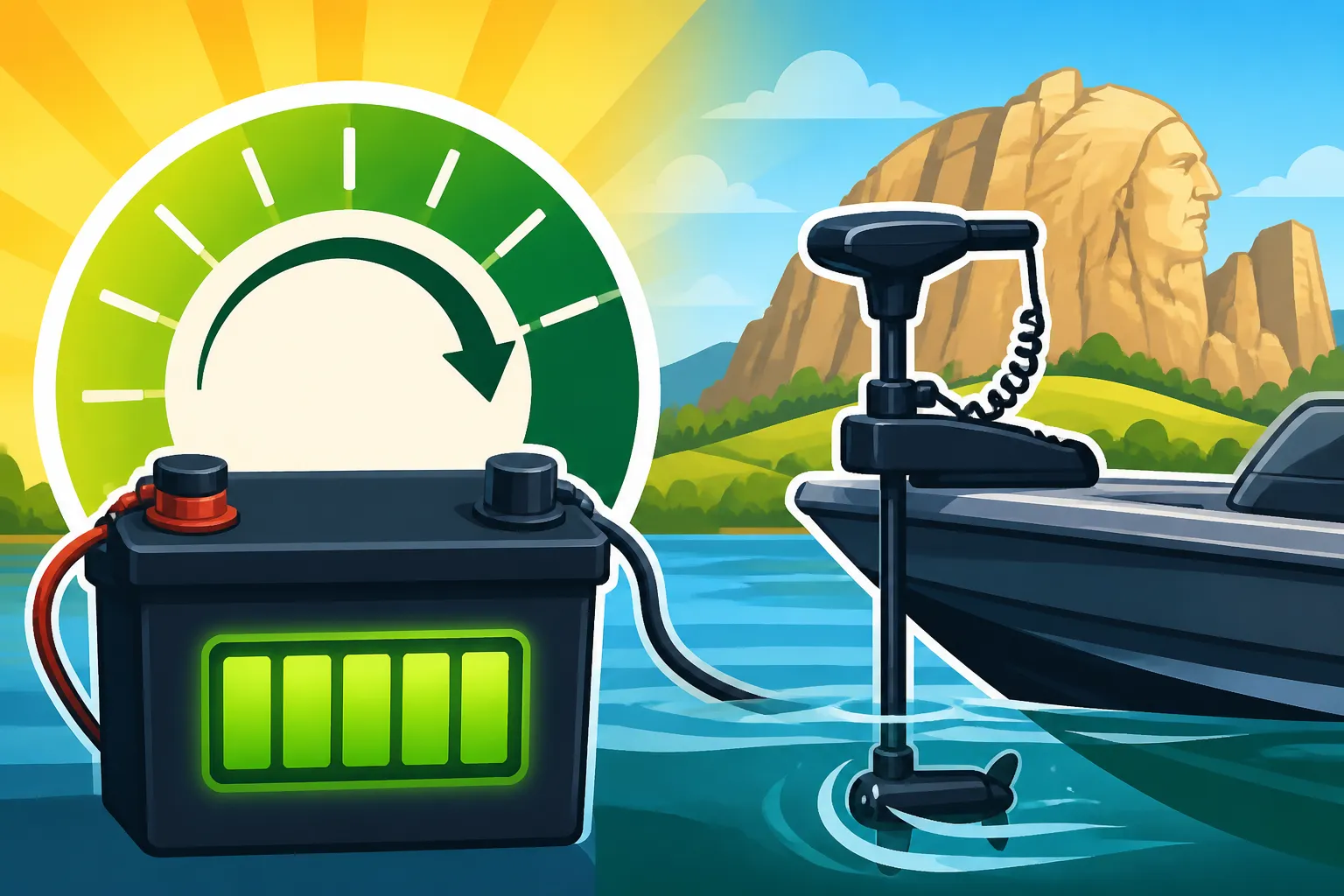
There’s nothing worse than being out on the vast, beautiful waters of Lake Oahe or navigating the currents of the Missouri River, only to have your trolling motor sputter and die hours before you planned to head back to shore. It’s a frustrating reality for many anglers, especially when you’ve found the perfect walleye bite. Understanding how long a trolling motor battery lasts isn't just about a number; it's about predicting your day, managing your power, and making sure your fishing trip isn't cut short by a dead battery. This guide will walk you through the nitty-gritty of battery life, from what makes them tick to how you can squeeze every last minute out of them.
The Core Factors Influencing Trolling Motor Battery Life
When you’re out chasing South Dakota Walleye Limits or cruising for Lake Oahe Chinook Salmon Fishing at Whitlock Bay, the performance of your trolling motor battery is paramount. It’s not just a single factor that determines how long it will power your boat; it’s a delicate dance of several key elements working together. Understanding these can vastly improve your on-water endurance.
Battery Type and Quality
Let's be real, not all batteries are created equal, and the type you choose will dramatically affect its longevity and performance.
- Flooded Lead-Acid Batteries: These are often the most affordable upfront. They work by using a liquid electrolyte solution, which means they require regular maintenance, like checking and refilling water levels. While they’re workhorses, they tend to have a shorter overall lifespan when subjected to deep discharge cycles, which is common in trolling motor applications. They’re fine for casual anglers or shorter trips, but if you’re planning on an all-day troll on a windy Lake Sharpe, you might find yourself wanting more.
- Absorbed Glass Mat (AGM) Batteries: A step up from flooded batteries, AGMs are sealed, maintenance-free, and much more resistant to vibration and deep cycles. They recharge faster and typically last longer than flooded batteries, offering more consistent power throughout their discharge. Many serious anglers swear by AGMs for their reliability and power delivery, especially when fishing in rougher conditions or needing to maneuver through heavy cover. You'll find a good selection of these at places like Bass Pro Shops.
- Lithium-Ion (LiFePO4) Batteries: Ah, the Cadillac of trolling motor batteries! These are lighter, last significantly longer per charge, and can be discharged much deeper without damaging their lifespan. They also maintain a more consistent voltage throughout their discharge cycle, meaning your motor performs at peak longer. The initial investment is higher, but their extended cycle life (often thousands of cycles) and lighter weight can pay off in the long run, especially for those who spend countless hours on the water. They are virtually maintenance-free and often come with built-in battery management systems.
The quality within each type also varies. A higher quality battery, regardless of its type, will generally offer more consistent performance and a longer overall lifespan because it’s built with better materials and more robust construction.
Trolling Motor Thrust and Usage
This one seems obvious, right? The more power your trolling motor demands, the quicker your battery drains. But it's more nuanced than just high vs. low speed.
- Thrust Rating: A 55 lb thrust motor on a small jon boat will sip power compared to a 112 lb thrust motor on a 20-foot fiberglass walleye boat. Each motor has a maximum amp draw, and the higher the thrust, the higher the maximum draw. When you're constantly running your motor at 70-80% power to fight a stiff breeze on Lake Oahe, you’re pulling a lot of amps. If you're looking into buying a new motor, you might want to read up on Best Trolling Motor Thrust for a Fishing Boat.
- Continuous vs. Intermittent Use: A day of constant trolling across a large flat will deplete your battery much faster than a day of spot-locking over a submerged structure with intermittent short bursts of power. If you’re constantly adjusting your position in the current on the Missouri River, your battery is working harder than if you’re drifting quietly on a calm glacial lake.
- Speed Setting: Running your motor at full throttle uses exponentially more power than running it at half throttle. For instance, running at 100% might use three or four times the amps compared to 50%, not just double. Learning to manage your speed and only use the power you need can be a huge battery saver. This is especially true for long days chasing South Dakota Walleye Fishing Guide.
Water Conditions and Boat Size
The environment you fish in and the vessel you’re using play a critical role in how hard your battery has to work.
- Wind and Current: Picture this: you're trying to hold your boat over a submerged reef on Lake Francis Case, battling a steady 15 mph wind and a subtle current. Your trolling motor is constantly working, making small adjustments, consuming power the entire time. Contrast that with a dead calm morning on a small Black Hills lake where you might only use the motor for short moves between casting spots. The tougher the conditions, the faster your battery will drain. The strong currents in parts of the South Dakota Missouri River Fishing Guide can be particularly demanding.
- Weeds and Obstacles: Pushing through thick weed beds or shallow muddy bottoms requires more effort from your motor, leading to higher amp draw and quicker battery depletion. If you frequently fish areas known for heavy vegetation, be prepared for shorter run times.
- Boat Size and Weight: A heavier, larger boat requires more energy to move and hold in place. A 20-foot fiberglass bass boat will require significantly more battery power than a 14-foot aluminum fishing boat, even with the same trolling motor. Every extra pound of gear, every passenger, contributes to the overall weight your motor has to push, directly impacting battery life.
Decoding Battery Capacity: Amperage-Hours (Ah) and Reserve Capacity (RC)
Understanding what the numbers on your battery mean is crucial to predicting its performance. It’s not just about bigger numbers; it’s about the right numbers for your setup. Think of it like understanding your fishing license – you need the right kind for where and how you’re fishing, just like you need the right battery for your motor. South Dakota Fishing License Costs aren't the same for everyone, and neither is battery capacity.
Understanding Ah Ratings: Your Fuel Tank Size
The most common rating you'll see on a trolling motor battery is its Ampere-Hour (Ah) rating. This is essentially the size of your battery's "fuel tank."
- What it Means: An Ah rating indicates how many amps a battery can deliver over a certain period. For example, a 100 Ah battery theoretically can deliver 100 amps for one hour, or 10 amps for 10 hours, or 5 amps for 20 hours. However, this is usually measured under ideal conditions (often a 20-hour discharge rate), and the actual usable capacity can vary, especially with high amp draws.
- Matching to Motor Draw: To estimate how long your battery might last, you need to know your trolling motor's amp draw at various speed settings. Most trolling motor manuals or manufacturer websites will provide this information. If your motor draws 20 amps at a medium speed, a 100 Ah battery might last around 5 hours (100 Ah / 20 A = 5 hours), though remember, deep cycles and efficiency losses will reduce this slightly. You'll want to check the manufacturer's specific charts for more accurate run times.
- The Deeper the Discharge, the Shorter the Lifespan: While a 100 Ah battery could theoretically last 5 hours at a 20 amp draw, repeatedly discharging a lead-acid battery much below 50% of its capacity will significantly shorten its overall lifespan (the number of charge/discharge cycles it can handle). Lithium batteries are far more tolerant of deep discharges. This is why having more Ah than you think you need is often a good idea for longevity.
The Role of Reserve Capacity (RC): Your Emergency Supply
Another important, though sometimes overlooked, specification is Reserve Capacity (RC). This gives you a slightly different perspective on battery endurance.
- What it Measures: RC is the number of minutes a fully charged battery can deliver 25 amps at 80°F (27°C) before its voltage drops below 10.5 volts. This standard 25-amp draw is a common load for many trolling motors at moderate speeds.
- Real-World Application: If your battery has an RC of 180 minutes, it means it can sustain a 25-amp draw for three hours. This provides a direct, easy-to-understand metric for estimating your run time under a specific, common load. If your motor typically draws more or less than 25 amps at your preferred trolling speed, you'll need to adjust your expectations accordingly.
- Comparing Batteries: RC is a great way to compare the stamina of different batteries, especially within the lead-acid category. A higher RC generally means more usable power for typical trolling motor use. When you’re at Bass Pro Shops or browsing Amazon for a new battery, always check both Ah and RC ratings.
Series vs. Parallel Wiring: Expanding Your Power Options
For higher thrust trolling motors (24V or 36V systems), you’ll need multiple 12V batteries. How you wire them makes a big difference to your usable capacity.
- Series Wiring (for higher voltage): When you wire batteries in series, you combine their voltages. For a 24V system, you link two 12V batteries; for a 36V system, you link three. In this configuration, the Ah capacity of the system remains the same as a single battery, but the voltage increases. For example, two 100 Ah, 12V batteries wired in series for a 24V system still provide 100 Ah of capacity at 24V.
- Parallel Wiring (for higher capacity at the same voltage): If you wire batteries in parallel, the voltage remains the same, but the Ah capacity combines. So, if you have two 100 Ah, 12V batteries wired in parallel for a 12V system, you now have 200 Ah of capacity at 12V, effectively doubling your run time. This is less common for trolling motors but useful for house battery banks on larger boats.
- Importance of Matching Batteries: When wiring batteries in series or parallel, it’s absolutely crucial to use batteries of the same type, age, and Ah rating. Mixing and matching can lead to uneven discharge, overcharging of one battery, and significantly reduce the lifespan of the entire bank. This is a common mistake that can lead to premature battery failure. When choosing your setup, you might consult resources like Best Battery Size for a Trolling Motor to ensure you're making an informed decision.
| Battery Type | Typical Ah Range (Single 12V) | Key Characteristics | Maintenance | Lifespan (Cycles) | Pros | Cons |
|---|---|---|---|---|---|---|
| Flooded Lead-Acid | 70-120 Ah | Liquid electrolyte, requires venting | High (water) | 100-400 | Low initial cost, widely available | Heavy, sensitive to deep discharge, maintenance required |
| Absorbed Glass Mat (AGM) | 75-120 Ah | Electrolyte absorbed in glass mats, sealed | Low (terminals) | 400-800 | Maintenance-free, good deep cycle, vibration resistant | Higher cost than flooded, still heavy |
| Lithium-Ion (LiFePO4) | 50-100 Ah (effective) | Solid-state electrolyte, built-in BMS | Very Low | 2000-5000+ | Lightweight, long life, consistent power, fast charge | High initial cost, cold weather charging limitations (some) |
Note: Cycle counts are approximate and vary by brand, usage, and discharge depth.
Practical Strategies for Extending Your Trolling Motor Battery's Lifespan
Having a good battery is one thing, but keeping it healthy and getting the most out of every charge is another. These strategies aren't just about run time; they're about extending the overall life of your investment. Because let’s face it, no one wants to replace expensive batteries more often than they have to.
Proper Charging Practices: The Lifeblood of Your Battery
How you charge your battery is perhaps the single most important factor in its longevity. Neglecting proper charging can drastically shorten its life.
- Charge Promptly After Use: This is critical, especially for lead-acid batteries. Don't let your battery sit in a deeply discharged state for days. Sulfation can build up on the plates, permanently reducing capacity. Get it on the charger as soon as you get home from your fishing trip. Even if you only used it for an hour, top it off.
- Use a Smart Charger: Invest in a multi-stage smart charger that is specifically designed for marine deep cycle batteries. These chargers automatically adjust the charging current and voltage based on the battery's state of charge, preventing overcharging and desulfating plates. They often have specific modes for flooded, AGM, and lithium batteries, ensuring optimal charging for your specific type. A cheap trickle charger can slowly damage your battery over time by not properly managing the charging cycle.
- Avoid Overcharging or Undercharging: A good smart charger will prevent overcharging. Undercharging, however, is a common issue when anglers use chargers that aren't powerful enough or don't complete the full cycle. Always let the charger complete its cycle and indicate a full charge before disconnecting.
- Temperature Matters: Charging in extreme cold or heat can impact efficiency and battery health. If possible, charge your batteries in a moderate temperature environment. For lithium batteries, some models have low-temperature cutoffs to prevent damage if you try to charge them when they're too cold, which can be a real consideration during South Dakota Ice Fishing Guide.
Maintenance and Storage: Keeping Your Battery Primed
Even sealed batteries benefit from a little TLC, and proper storage is non-negotiable for preserving capacity.
- Clean Terminals Regularly: Corrosion on battery terminals creates resistance, reducing power flow and making your battery work harder. Regularly clean terminals with a wire brush and a baking soda/water solution, then apply a dielectric grease or battery terminal protector. This simple step can prevent a surprising amount of power loss.
- Check Water Levels (Flooded Batteries): For flooded lead-acid batteries, regularly check the electrolyte levels. If the plates are exposed to air, they will be damaged. Only use distilled water to top them off, never tap water, which contains minerals that can harm the battery.
- Secure Your Batteries: Ensure your batteries are firmly secured in your boat. Constant vibration and jostling can damage internal components, especially in lead-acid batteries.
- Winter Storage: If you live in a cold climate like South Dakota and store your boat over winter, proper battery storage is essential. Fully charge your batteries, disconnect them from all loads, and store them in a cool, dry place where they won't freeze. Lead-acid batteries that are discharged can freeze and crack, rendering them useless. Periodically check the charge and top them off every month or two during storage. For a comprehensive guide, check out How to Winterize a Boat in South Dakota.
Smart On-Water Management: Conserving Power in the Moment
It’s not just about the battery itself; it's about how you operate your boat. Your habits on the water directly impact how long your battery lasts during a fishing trip.
- Conserve Power Strategically: Instead of running your trolling motor at full blast to cover ground, consider using your main outboard or a kicker motor for longer runs, then switch to the trolling motor for fine-tuning or holding position. Think about your energy budget for the day.
- Utilize Spot-Lock/Anchor Mode Wisely: While invaluable, spot-lock uses a fair amount of power as the motor constantly adjusts. If you're going to be stationary for a long period in calm conditions, consider dropping a traditional anchor if it's feasible. If the wind is howling on Lake Oahe Fishing Guide, spot-lock is a lifesaver, but be mindful of the drain.
- Vary Your Speed: As mentioned before, running your motor at 100% is a huge amp draw. If you can achieve your desired boat control at 50-70% power, you'll significantly extend your run time. Many experienced anglers learn the "sweet spot" speed for their boat and motor combination to maximize efficiency.
- Monitor Battery Levels (if equipped): Many modern trolling motors have built-in battery indicators. Pay attention to these! Don't wait until your motor starts losing power before you think about heading in or switching to your main engine. Some Best Fish Finders for South Dakota Lakes also integrate with trolling motor batteries to show remaining life.
- Reduce Other Draws: Ensure any other electronics connected to your trolling motor batteries (like some fish finders) are powered down when not in use, or ideally, run them off a separate dedicated cranking/house battery. While often a small draw, every little bit adds up over a long day. If you're using a South Dakota Fishing Gear Checklist, remember to consider all your power needs.
Choosing the Right Battery for Your South Dakota Fishing Adventures
Picking the perfect battery isn't a one-size-fits-all situation, especially with the diverse fishing opportunities across South Dakota, from the vast Missouri River reservoirs to the intimate Black Hills streams. It's about finding the best fit for your specific boat, motor, and fishing style.
Matching Battery to Motor and Usage
Before you even start looking at brands, consider what you're asking your battery to do.
- Motor Voltage (12V, 24V, 36V): This is non-negotiable. If your trolling motor is 24V, you need two 12V batteries wired in series. If it’s 36V, you need three. You cannot run a 24V motor effectively on a 12V system, nor should you attempt to use more voltage than specified.
- Boat Size and Weight: As discussed, a larger, heavier boat demands more power. If you have a substantial rig for fishing Lake Oahe Walleye Hotspots Near Mobridge, you’ll want higher Ah rated batteries or a more robust battery type like AGM or lithium to ensure you have enough juice for a full day, especially if conditions get windy. For a smaller kayak fishing setup on a local pond, a single, less powerful battery might suffice. For more on boat considerations, check out Best Boats for South Dakota Reservoir Fishing.
- Typical Trip Duration: Are you usually out for a quick two-hour evening troll, or do you dedicate full, dawn-to-dusk days to chasing fish? Longer trips in challenging conditions will warrant higher capacity batteries. If you find yourself consistently running out of power, it’s a clear sign you need more Ah or a different battery type.
- Fishing Style: Are you a "run and gun" angler using the motor mainly for short moves and casting? Or do you rely heavily on constant trolling or spot-locking for hours on end, especially when Trolling for Walleye on Lake Oahe? High-demand fishing styles will benefit significantly from higher capacity and more resilient battery types like lithium. If you're into Best Walleye Trolling Rods, you're likely spending a lot of time on the motor.
Where to Purchase and What to Look For
Once you know what you need, it's time to shop. The market for marine batteries is robust, with options ranging from budget-friendly to high-performance.
- Reputable Retailers: Stores like Bass Pro Shops, Cabela's, and even online giants like Amazon offer a wide selection of trolling motor batteries. Local marine supply stores or outdoor retailers in South Dakota, such as those near Pierre or Rapid City, are also great resources, often providing expert advice specific to the region's fishing.
- Warranty: A good warranty is a strong indicator of a manufacturer's confidence in their product. Look for batteries with solid warranties, especially for AGM and lithium-ion options, as they represent a larger investment.
- Cycle Life Rating: For deep cycle batteries, some manufacturers will provide a "cycle life" rating, indicating how many full discharge-recharge cycles the battery is expected to last. A higher number here translates to a longer overall battery lifespan. This is particularly relevant for lead-acid batteries, where deep cycles are more detrimental.
- Weight and Size: While battery capacity is key, consider the physical size and weight of the battery. Lithium batteries offer significant weight savings, which can be a huge advantage for smaller boats or for anglers trying to reduce overall boat weight for better performance and fuel economy. Make sure the battery will fit in your boat's battery compartment.
- Battery Management System (BMS) for Lithium: If you're opting for lithium-ion, ensure it has a robust, integrated Battery Management System. The BMS protects the battery from overcharging, over-discharging, over-current, and temperature extremes, which are crucial for safety and longevity.
By taking the time to understand these factors and apply them to your specific fishing needs, you can choose a trolling motor battery that not only lasts longer on each trip but also serves you reliably for many seasons of South Dakota fishing. It's about making an informed choice that enhances your time on the water, rather than cutting it short. Best Time of Year to Fish in South Dakota means different demands on your gear, so plan accordingly.
Disclaimer
This article is for general informational purposes only and does not constitute professional advice. Laws, prices and regulations vary by location and change over time. Consult a qualified professional for guidance on your specific situation.