Best Downrigger Weight for Salmon Trolling
One of the biggest head-scratchers when you're gearing up for a serious salmon trolling adventure, especially on vast waters like South Dakota's Lake Oahe, is figuring out just how much weight you actually need to get your lure into the strike zone. It's a frustrating dance: too light, and your cannonball sails back like a kite; too heavy, and you're just dragging excess iron. This guide is here to untangle that mystery, helping you confidently choose the best downrigger weight to consistently put your bait in front of those elusive Chinook salmon.
The Critical Role of Downrigger Weight in Salmon Trolling
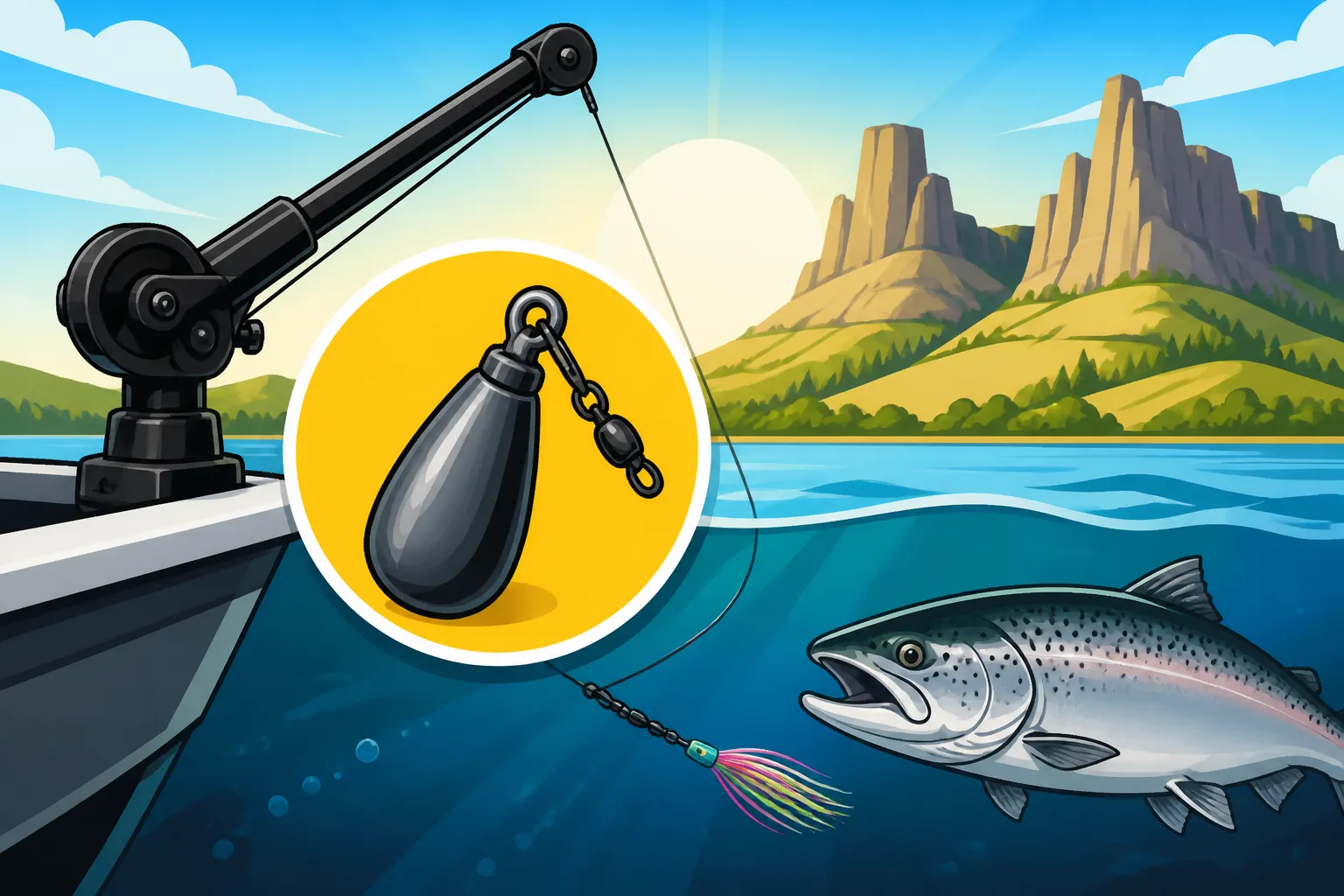
When you're chasing Chinook salmon, particularly in the deep, expansive waters of Lake Oahe, simply casting a line won't cut it. These powerful fish often suspend at very specific depths, sometimes hundreds of feet down, feeding on baitfish like smelt or ciscoes. This is where a downrigger becomes your best friend, allowing you to present your lures at precise depths, far below the surface. But the downrigger itself is only as good as the weight pulling your line down.
Why Weight Selection Isn't Just a "More is Better" Game
It’s tempting to just grab the heaviest cannonball you can find, thinking it'll solve all your depth problems. However, that’s not always the case, and it can actually create new headaches. An overly heavy weight requires more effort from your downrigger, puts more strain on your equipment, and can even make it harder to detect subtle bites if you're not paying close attention. On the flip side, a weight that's too light for your trolling speed or current conditions will "blow back," meaning it won't track directly beneath your boat. Instead, it'll drag behind, and your lure will be much shallower than your downrigger counter indicates. This "blowback" is one of the most common frustrations for salmon anglers. If you're consistently marking fish at 70 feet but your light downrigger weight is actually pulling your lure to only 50 feet due to speed and current, you're missing out.
How Downrigger Weights Impact Lure Presentation
The main goal of your downrigger weight is to get your lure to a specific depth and keep it there, relatively unaffected by surface turbulence or boat movement. The shape and density of the weight play a significant role in its hydrodynamics. A well-chosen weight allows your lure to run true, tracking predictably as you troll. This consistent presentation is absolutely vital for enticing salmon, which can be finicky eaters. Furthermore, the efficiency of your weight affects the clarity of your fish finder readings. Excessive blowback or a poorly tracking weight can make it harder to pinpoint where your lure actually is relative to the fish you're marking. It's all about precision when you're targeting fish like Chinook salmon that often hug tight depth contours or suspend over vast open water. For more details on how to get your gear set up, check out How to Set Up a Downrigger for Salmon.
Key Factors Influencing Downrigger Weight Choice
Choosing the right downrigger weight isn't a one-size-fits-all situation; it's a dynamic decision based on several variables you'll encounter on the water. Understanding these factors will help you make an informed choice that maximizes your fishing success.
Trolling Speed and Depth
Your trolling speed is arguably the most critical factor in determining how much downrigger weight you need. The faster you troll, the more water resistance your cannonball encounters, and the more it will "blow back" or rise in the water column. For salmon, especially Chinook on Lake Oahe, typical trolling speeds can range from 1.5 to 3.0 miles per hour, sometimes even faster depending on the desired action of your lure and the fish's mood.
Let's say you're trying to hit a consistent 80-foot depth. At 1.8 mph, a 10-pound cannonball might get you there with minimal blowback. But crank up the speed to 2.5 mph, and that same 10-pound weight could be riding 15-20 feet shallower than intended. Conversely, if you're targeting shallower depths, say 30-40 feet, and trolling slowly, a lighter weight will do the trick and be easier on your downrigger system. It's a balance. Always consider the target depth you're aiming for and the speed you need to give your lure the right action. You can learn more about this balance in Best Trolling Speed for Salmon.
Water Current and Lake Conditions
Even in a seemingly calm body of water like Lake Oahe, currents exist. These can be driven by wind, inflows from rivers, or even temperature differences. A strong subsurface current will exert additional force on your downrigger line and weight, causing more blowback than you'd experience in still water at the same speed. On a breezy day, surface chop can also affect your boat's stability and thus the consistent depth of your downrigger weights.
Consider a scenario where you're trolling against a slight current near a river mouth on Lake Oahe. Your boat speed might be 2 mph, but your actual speed over the ground could be 1.5 mph. The current, however, is still pushing against your downrigger cable, demanding more weight to maintain depth. Being aware of these subtle currents, often detectable by monitoring your GPS ground speed versus your boat's transducer speed, will help you adjust your weight accordingly.
Lure Type and Line Diameter
The type of lure you're pulling can also influence the necessary downrigger weight. Large, broad-faced plugs or dodgers with flashers create significant drag in the water. This added drag will pull your downrigger line and weight backward and upward, exacerbating blowback. If you're running a bigger flasher and a spoon combo, you'll likely need a heavier downrigger weight than if you were pulling a small, streamlined spoon directly behind the cannonball.
Similarly, the diameter of your downrigger cable or braid plays a minor but noticeable role. Thicker lines create more drag, contributing to blowback. While most downriggers use standard-issue stainless steel cable or specialized braided downrigger line, if you ever deviate from standard, remember that a thinner line will cut through the water more efficiently. This often means you can use a slightly lighter weight. Most anglers stick with common cable or braid, but it’s worth noting the principle.
Common Downrigger Weight Options and Their Uses
Once you understand the factors at play, it's time to look at the tools available. Downrigger weights come in various shapes and sizes, each designed with specific applications in mind.
Ball Weights: The Traditional Choice
The classic "cannonball" shape is the most common and widely recognized downrigger weight. These spherical or teardrop-shaped weights are generally made from lead and are known for their simplicity and effectiveness. They provide a good balance of weight-to-size, sinking efficiently through the water column. You'll find these in a range of sizes, typically from 6 pounds up to 15 pounds or even heavier.
For most salmon trolling on Lake Oahe, you'll find anglers primarily using 8, 10, or 12-pound ball weights. An 8-pound ball is often sufficient for shallower depths (under 60 feet) or slower trolling speeds (under 1.8 mph). When you push past 60 feet or increase your speed towards 2.0-2.5 mph, a 10-pound ball becomes the workhorse, offering a good compromise between minimizing blowback and not overburdening your downrigger. For those really deep presentations, 80-100 feet or more, or when you're battling stronger currents or faster speeds (2.5 mph+), a 12-pound ball will provide the necessary stability. Some anglers even go up to 15 pounds in extreme conditions or for particularly large, draggy lure setups. You can often find a good selection of these standard cannonballs at outdoor retailers like Bass Pro Shops.
Pancake and Fin Weights: Specialized Solutions
Beyond the traditional ball weights, you'll also encounter pancake or "fish" weights, and weights with integrated fins. Pancake weights, as the name suggests, are flatter and wider. Their design is intended to reduce blowback, especially at higher trolling speeds, by offering less resistance through the water. They tend to "track" more directly beneath the boat, which can be advantageous when precision depth is absolutely paramount.
Fin weights, on the other hand, incorporate a small fin or stabilizer, similar to the tail of an airplane, designed to keep the weight running straighter in the water and prevent it from rotating or spinning. While traditional ball weights generally track well, a finned weight can offer an extra layer of stability, especially if you're noticing your downrigger line twisting or if you're trying to maintain a very specific depth in variable conditions. These specialized weights might be a bit harder to find locally but are readily available through online retailers like Amazon.
Material and Coatings
Most downrigger weights are made from lead due to its high density and affordability. However, some newer options are emerging that use alternative materials, often with environmental considerations in mind. For the average angler, traditional lead weights are the standard. You might also find weights with specialized coatings, often in bright colors like chartreuse or reflective finishes. While the primary purpose of the weight is to get your lure down, some anglers believe these bright weights can also act as an additional attractor, especially in deep, dark water. The jury is still out on their effectiveness as an attractor, but they certainly don't hurt!
Here's a quick comparison of common downrigger weights and their typical applications:
| Weight Size | Shape | Typical Speed (MPH) | Typical Depth (Feet) | Best Use Case | Considerations |
|---|---|---|---|---|---|
| 8 lbs | Ball | 1.5 – 2.0 | 30 – 60 | Shallower trolling, slower speeds, less current | Good for initial drops, minimal blowback at low speed, less strain on gear. |
| 10 lbs | Ball | 1.8 – 2.5 | 50 – 80 | General purpose, moderate speeds & depths | Workhorse for many Lake Oahe salmon anglers. Good balance. |
| 12 lbs | Ball | 2.0 – 3.0 | 70 – 100+ | Deeper water, faster speeds, stronger currents | Reduces blowback at higher speeds/depths, more strain on downrigger. |
| 15 lbs | Ball | 2.5 – 3.0+ | 90 – 120+ | Very deep water, aggressive trolling, heavy lures | For extreme conditions or large, high-drag lure setups. |
| 10 lbs | Pancake | 2.0 – 3.0 | 50 – 90 | Reduced blowback, precise depth at speed | Cuts water more efficiently than a ball, often tracks straighter. |
| 12 lbs | Fin | 2.0 – 3.0 | 70 – 100+ | Enhanced stability, anti-twist, precise tracking | Ideal for minimizing line twist and maintaining consistent lure presentation. |
Mastering Your Downrigger: Tips for Optimal Performance
Choosing the right weight is a huge step, but getting the most out of your downrigger system for salmon trolling involves more than just the cannonball itself. A few practical tips can make a world of difference in your fishing success. If you're just starting your salmon journey, don't miss our comprehensive guide on South Dakota Chinook Salmon Fishing Guide.
Monitoring Blowback and Adjusting on the Fly
Understanding and managing blowback is key to consistent depth control. Modern downriggers often have line counters, but these only tell you how much cable is out, not the actual depth of your weight. To accurately gauge blowback, many serious anglers use a blowback indicator on their downrigger, or more commonly, rely on their fish finder. By watching your fish finder screen, you can often see your downrigger weight as a distinct mark on the sonar. If you're running at 2.2 mph and your downrigger counter says 80 feet, but your sonar shows the weight mark at 65 feet, you know you have 15 feet of blowback.
When you notice excessive blowback, you have a few options:
- Increase weight: If you’re running an 8-pound ball and experiencing significant blowback at your desired speed and depth, move up to a 10-pound or even a 12-pound weight.
- Reduce speed: If the fish aren't biting aggressively or you're getting too much blowback, consider slowing down your trolling speed slightly. Even a half-mile-per-hour reduction can make a big difference in how your weight tracks.
- Change lure: If you’re pulling a high-drag lure, consider switching to something more streamlined if fish aren't responding.
It's a constant process of observation and adjustment out on the water. Don't be afraid to experiment!
Matching Gear to Conditions
Beyond the weight, your entire downrigger setup plays a role. Ensure your downrigger itself is in good working order, with a smooth retrieve and release. Use quality downrigger release clips that hold your line securely but release reliably when a salmon hits. Different clips have different tension settings, so choose one appropriate for the size of fish you're targeting and the tension you want on your fishing line. For those longer days on the water, you'll appreciate having a solid South Dakota Fishing Gear Checklist to make sure you have everything you need.
Also, be mindful of your main fishing line. While not directly part of the downrigger system, a thinner diameter fishing line (e.g., smaller pound test monofilament or braid) will experience less drag in the water, allowing your lure to run more naturally and potentially deeper behind the downrigger release, reducing the overall resistance affecting your downrigger weight.
Safety and Maintenance of Downrigger Weights
Downrigger weights are heavy, dense objects, and handling them requires care. Always be mindful of their position, especially when deploying or retrieving them. Ensure they are securely fastened when running at high speeds or trailering your boat. Dropping a 10-pound cannonball on your foot (or worse, overboard without a safety cable!) is a mistake you only want to make once.
Regularly inspect your downrigger cables, particularly where they connect to the weight and the downrigger itself. Fraying cables are a serious safety hazard and can lead to lost weights. If you use snap swivels or clips to attach your weights, check them for wear and tear. A little bit of preventative maintenance goes a long way in ensuring your downrigger system operates flawlessly and safely throughout the fishing season, especially when you're out on big water like Lake Oahe targeting those mighty Chinook salmon near spots like Lake Oahe Chinook Salmon Fishing at Whitlock Bay.
Ultimately, selecting the best downrigger weight for salmon trolling in South Dakota boils down to understanding the interplay between your trolling speed, the depths you’re targeting, and the conditions of the water you’re fishing. By carefully considering these factors and making adjustments as needed, you'll be well on your way to consistently presenting your lures effectively and enjoying the thrill of landing those impressive South Dakota salmon.
Disclaimer
This article is for general informational purposes only and does not constitute professional advice. Laws, prices and regulations vary by location and change over time. Consult a qualified professional for guidance on your specific situation.