Best Sunglasses Lens Color for Sight Fishing
There's nothing quite as frustrating as being out on the water, knowing the fish are there, but simply not being able to see them. Whether you're trying to spot a cruising walleye in a clear lake, identify submerged structure where smallmouth bass are hiding, or pick out a trout in a shallow Black Hills stream, glare and poor visibility can absolutely ruin your day. It’s a common challenge for anglers across South Dakota, where conditions can shift from bright, sunny skies reflecting off vast reservoirs to overcast, muted light filtering through trees along a winding creek. This guide is all about helping you cut through that visual clutter by choosing the best sunglasses lens color for sight fishing, giving you that crucial edge.
The Critical Role of Sunglasses in South Dakota Sight Fishing
When you think about fishing gear, rods, reels, and bait probably come to mind first. But for anyone serious about sight fishing—that is, actively spotting fish or key underwater features with your eyes—a good pair of sunglasses is just as vital as your most trusted lure. It's not just about protecting your eyes from the sun, though that's important too; it's about seeing into the water, not just at it.
Why Sight Fishing Demands Specialized Lenses
Imagine you're on Lake Sharpe, the sun high in the sky, and you're trying to find those subtle disturbances that indicate a walleye cruising the flats, or perhaps scanning the rocky shoreline of Lake Francis Case for smallmouth bass. Without the right lenses, all you're going to see is a shimmering, reflective surface – a blinding wall of light. Specialized sunglasses, particularly polarized ones, are designed to strip away that surface glare, revealing the world beneath.
This becomes even more critical when you’re dealing with spooky fish. A trout in a crystal-clear Black Hills stream like Rapid Creek will bolt at the slightest shadow or unnatural movement. Being able to see that fish from a distance, assess its behavior, and present your fly without spooking it is a game-changer. It’s the difference between a frustrating morning and a memorable catch. Subtle movements, like a fin flick or a shadow shifting over a log, become visible details rather than missed opportunities. Even for ice fishing, sunglasses can significantly reduce the strain from bright snow and ice, allowing you to see into your hole more clearly, especially on sunny winter days. South Dakota Ice Fishing Guide covers more on adapting to winter conditions.
Understanding Glare and Its Impact
Glare is essentially light reflected off a flat, non-metallic surface, like water, snow, or even a wet road. When sunlight hits the water, a significant portion of it bounces back at a specific angle, creating that intense, shimmering brightness we all know. This reflected light is horizontally polarized, meaning its waves are vibrating on a horizontal plane. Our eyes aren't great at distinguishing between this horizontally polarized light and the unpolarized light coming from deeper in the water, which carries the visual information we actually want.
The result is a frustrating wash-out of detail. You can't penetrate the surface, making it impossible to see structure, baitfish, or the actual game fish you're targeting. This is particularly prevalent on vast, open bodies of water like Lake Oahe or Lewis and Clark Lake, where there's nothing to break up the sun's reflection. Even on an overcast day, a dull, hazy glare can persist, obscuring your view. This is why just any pair of tinted sunglasses won't cut it for serious angling; you need lenses specifically engineered to block this horizontal glare.
Decoding Lens Colors: Which Tints Offer the Best Advantage?
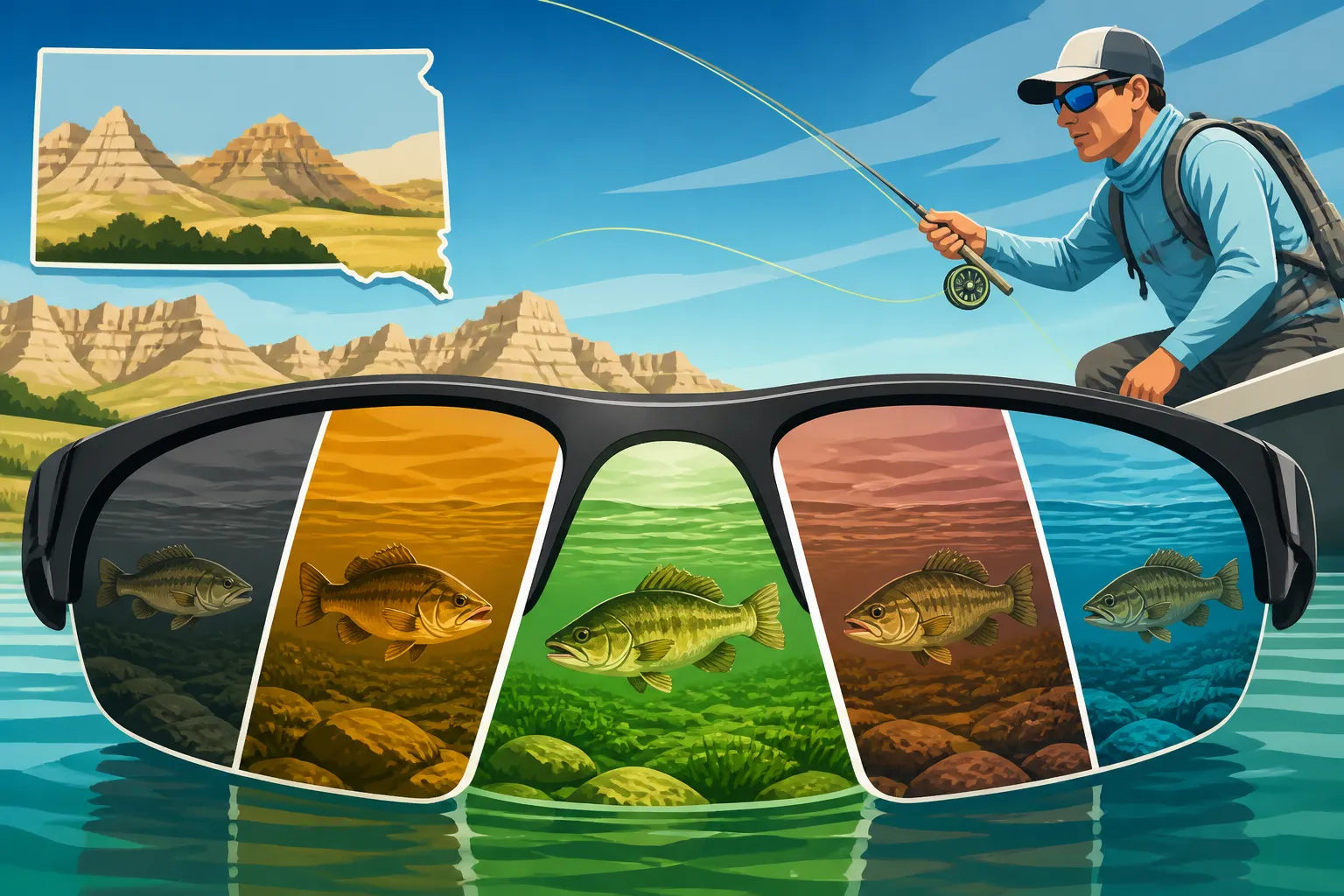
Choosing the right lens color isn't just about aesthetics; it's about optimizing your vision for specific conditions and fish species. Different tints filter light wavelengths differently, affecting contrast, color perception, and brightness. Understanding these nuances can dramatically improve your ability to spot fish.
Amber/Brown Lenses: The All-Around Workhorse
If there's one lens color that many South Dakota anglers swear by, it's amber or brown. These tints are fantastic because they enhance contrast and depth perception, especially in a wide range of light conditions. They filter out blue light, which can create haze, making greens and reds "pop" more. This means you can often distinguish fish from their surroundings, or see subtle changes in bottom structure, even in slightly stained or murky water.
Think about those days on the Missouri River system where the water might have a slight stain from runoff, or when you're fishing under partly cloudy skies. Amber or brown lenses excel here, brightening your field of vision and cutting through lingering haze. They're incredibly versatile for chasing walleye on Lake Sharpe, picking out smallmouth bass near submerged logs on Lake Francis Case, or even for general fishing on Lake Oahe when the sun isn't at its absolute brightest. Many popular fishing sunglasses from brands found at Bass Pro Shops or on Amazon will offer excellent amber or brown polarized options, often being a first choice for general purpose fishing.
Gray/Smoke Lenses: For Bright, Sunny Days
When the South Dakota sun is blazing down, and you're out on wide-open water, gray or smoke-colored lenses are your best friend. Unlike amber, which enhances contrast, gray lenses offer the most natural color rendition. This means everything you see looks true-to-life, just darker. They reduce overall brightness without distorting colors, which can be less fatiguing on your eyes over a long day.
If you're fishing on a clear, blue-sky day on a large reservoir like Lake Oahe or out on the vast Glacial Lakes, gray lenses will provide maximum glare reduction and comfort. They're perfect for bright, offshore conditions where you're dealing with intense sun and lots of reflected light. The natural color perception is also great if you're trying to discern subtle color variations in lures or bait. These are ideal for those mid-summer days when the sun feels like it's trying to burn a hole through your eyeball, keeping your vision crisp and your eyes relaxed.
Yellow/Copper Lenses: Enhancing Contrast in Low Light
Yellow or copper lenses are champions of contrast enhancement, especially in low-light conditions. They filter out a good deal of blue light, which is responsible for haze, making them excellent for overcast days, dawn or dusk fishing, or when fishing in heavily shaded areas like some of the Black Hills trout streams. While they might make colors appear a bit warmer or brighter than natural, that increased contrast can be invaluable.
Imagine yourself fly fishing for trout on a cloudy morning in Spearfish Canyon. The light is diffused, and the stream is shaded by pine trees. Yellow or copper lenses will make the rocks, logs, and any lurking trout stand out against the murk. They're also fantastic for early morning or late evening walleye bites when light levels are naturally dim. If you're often fishing during these "golden hours" or in less-than-ideal bright conditions, these lenses can give you a significant visual boost. They essentially "brighten" your view by enhancing definition, making subtle movements and shapes much more apparent. For more on angling during these times, check out Best Time of Day to Catch Walleye in Summer.
Green Mirror Lenses: Boosting Contrast and Cutting Glare
Green mirror lenses often combine the benefits of an amber or brown base tint with a reflective mirror coating. The mirror coating reflects even more light away from your eyes, providing additional glare protection, while the amber/brown base enhances contrast. This combination makes them highly effective in variable conditions where you need both excellent glare reduction and heightened contrast.
These lenses are incredibly versatile for general South Dakota fishing, especially when you might encounter a mix of sun and clouds, or when moving between open water and areas with more structure or vegetation. They'll help you spot a walleye against a mixed bottom of sand and rock, or pick out a northern pike lurking in weed lines on a glacial lake. The green mirror offers a good balance, making it a popular choice for anglers who fish a wide variety of waters and don't want to switch sunglasses constantly.
Blue Mirror Lenses: Maximum Glare Reduction for Open Water
Blue mirror lenses are the heavy hitters when it comes to extreme glare. They typically have a gray base tint, offering natural color rendition, but the blue mirror coating is specifically designed to reflect a very high percentage of visible light, especially intense, bright reflections. This makes them the ultimate choice for blindingly bright, open water conditions.
If you're spending your days trolling for Chinook salmon on Lake Oahe, navigating the vast expanse of the Missouri River system, or fishing Lewis and Clark Lake on a cloudless summer day, blue mirror lenses will provide unparalleled comfort and glare protection. They cut through surface shimmer like a hot knife through butter, allowing you to focus on your electronics or any surface activity. While they might be overkill for a shaded trout stream, for wide-open, highly reflective waters, they are absolutely the best choice for minimizing eye strain and maximizing your ability to see into the depths. For big water trolling, these are invaluable; you can find more about those techniques in South Dakota Chinook Salmon Trolling Techniques.
Factors Beyond Color: Polarized vs. Non-Polarized and Lens Material
While lens color is a huge part of the equation, it's not the only factor. Two other crucial considerations for sight fishing are whether the lenses are polarized and what material they are made from. These elements play a significant role in both performance and durability.
The Non-Negotiable Power of Polarization
Let's be absolutely clear: for sight fishing, polarized lenses are non-negotiable. If your sunglasses aren't polarized, you're missing the entire point of wearing them for fishing. Polarization is a special filter that blocks the horizontal light waves that cause glare. It's like having a built-in dimmer switch for the water's surface.
When you put on polarized sunglasses, you'll immediately notice the difference. That blinding shimmer disappears, and you can suddenly see below the surface. Rocks, logs, weed lines, and—most importantly—fish become visible. Without polarization, even the darkest tint will only make everything darker, not clearer. You'll still see that frustrating glare. Whether you're trying to follow a subtle current seam on the Missouri River or spot a school of perch moving through a weed bed in a glacial lake, polarized lenses are your number one tool. You can find a huge selection of high-quality polarized sunglasses from reputable brands at Bass Pro Shops and through online retailers like Amazon. Don't skimp on this feature; it's the single most important aspect of a good pair of fishing sunglasses.
Lens Materials and Coatings: Durability and Clarity
The material of your lenses affects clarity, weight, and durability, while coatings can add additional benefits.
- Polycarbonate: This is the most common lens material for sports and fishing sunglasses. It's lightweight and highly impact-resistant, making it a great choice for active anglers who might drop their glasses or take an errant lure to the face. While optical clarity is good, it can sometimes be slightly less sharp than glass.
- Glass: Glass lenses offer the absolute best optical clarity and are highly scratch-resistant. However, they are heavier and can shatter upon impact, which might be a concern for some anglers, especially those on boats where things can get bumpy. Many serious anglers prefer glass for its superior vision, but it comes with a trade-off in weight and durability.
- Trivex/NXT: This material is a newer option, offering a blend of polycarbonate's impact resistance with glass's optical clarity, often at a higher price point.
Beyond the base material, coatings are important:
- Anti-reflective (AR) coatings: Applied to the back surface of the lens, these coatings prevent light from reflecting off the inside of your lenses and into your eyes, which can be distracting and cause ghosting.
- Hydrophobic/Oleophobic coatings: These coatings repel water, oils, and sweat, making the lenses easier to clean and preventing water spots from obscuring your vision. This is especially useful when spray comes off the boat or when you handle fish.
Matching Your Lenses to South Dakota's Diverse Waters and Conditions
South Dakota offers an incredible variety of fishing environments, and the "best" lens color can change dramatically depending on where and when you're casting your line. Let's break down some common scenarios.
Targeting Walleye on the Missouri River System
The Missouri River system, including the massive Lakes Oahe, Sharpe, Francis Case, and Lewis and Clark, presents a mixed bag of conditions. You'll find vast open water, current seams, varying water clarity, and everything from bright, sunny days to overcast, windy ones.
- Bright, sunny, clear days on open water (e.g., Lake Oahe, Lewis and Clark Lake): Blue mirror lenses with a gray base are going to be your absolute best friend here. They'll cut through the intense glare off the expansive water, reducing eye fatigue over long hours of trolling or casting. You'll be able to spot subtle baitfish schools on the surface or follow your line more easily.
- Partly cloudy or slightly stained water (e.g., Lake Sharpe, Lake Francis Case, areas with current): Amber or brown lenses are excellent for these conditions. They enhance contrast, making it easier to pick out subtle contours on the bottom, interpret your electronics, or spot a walleye moving along a drop-off. Green mirror lenses (often with an amber base) also perform very well in these variable conditions, offering a good balance of glare reduction and contrast. Understanding the unique characteristics of these lakes, detailed in guides like Lake Oahe Fishing Guide and Lake Francis Case Fishing Guide, can help fine-tune your lens choice.
- Overcast days or low light: Copper or yellow lenses will boost visibility, making what little light is available work harder for you. They'll help you discern structure and detect fish in the dimmer conditions often experienced during a spring walleye bite or late fall fishing.
Spotting Trout in Black Hills Streams
The Black Hills streams, with their clear, cold waters and often shaded banks, present a different challenge. You're typically sight fishing for individual trout, so maximum clarity and contrast are key.
- Clear, shaded streams (e.g., Rapid Creek, Spearfish Creek): Copper or yellow lenses are often preferred here. They dramatically enhance contrast, allowing you to spot the subtle camouflage of a brown trout against a rocky bottom or a rainbow trout holding in a shaded pool. The enhanced brightness also helps in the dappled light under tree cover.
- Brighter, less shaded sections: Amber or brown lenses can still perform well, especially on brighter stretches of stream or during the middle of the day. They offer good contrast and depth perception without being overly dark. You might even find a lighter amber or rose tint beneficial. For more on navigating these beautiful waters, check out the Black Hills Trout Stream Fishing Guide.
- Pactola Reservoir or Sheridan Lake (clear, open lake fishing for trout): For larger, clearer trout impoundments, gray or green mirror lenses would be more appropriate on sunny days to manage the increased glare.
Fishing the Glacial Lakes for Perch and Pike
Eastern South Dakota's glacial lakes often feature stained water, extensive weed beds, and diverse fish species like perch, northern pike, and crappie. Visibility can be lower than in the Missouri River reservoirs, making contrast even more important.
- Stained or murky water, weed beds: Amber, brown, or copper lenses are ideal. These colors excel at increasing contrast in lower visibility conditions, allowing you to differentiate fish from vegetation or spot a pike ambushing from cover. The enhanced brightness of copper can be particularly helpful if the water is quite dark.
- Overcast days or low light on a glacial lake: Yellow or lighter copper lenses will help cut through the gloom and make it easier to see subtle movements or track your jig.
- Bright, sunny days on larger glacial lakes: Green mirror lenses with an amber base would be a good all-around choice, providing both glare protection and contrast enhancement. Gray lenses would also work for pure glare reduction, but the contrast boost of amber/green is often preferred in these water types.
It's clear that no single lens color is perfect for every single scenario you'll encounter in South Dakota. Many dedicated anglers carry multiple pairs, or at least one versatile pair (like amber/brown or green mirror) and a specialized pair for extreme bright light (like blue mirror).
Here's a quick comparison to help you visualize the choices:
| Lens Color | Best Conditions | Key Benefit | Ideal South Dakota Application |
|---|---|---|---|
| Amber/Brown | Variable light, partly cloudy, slightly stained water | Enhances contrast, good depth perception | Walleye on Missouri River system, general multi-species, smallmouth |
| Gray/Smoke | Bright, sunny, open water | Natural color, maximum brightness reduction | Open water Lake Oahe, Lewis and Clark Lake on clear days |
| Yellow/Copper | Low light, overcast, dawn/dusk, shaded areas | Boosts contrast, brightens vision | Black Hills trout streams, early/late walleye, cloudy glacial lakes |
| Green Mirror | Variable conditions, bright to partly cloudy, open water | Balances glare reduction and contrast | Versatile for walleye, pike, diverse lakes and rivers |
| Blue Mirror | Extremely bright, open, reflective water | Maximum glare reduction, eye comfort | Trolling Lake Oahe for salmon, wide-open Lewis and Clark Lake |
Remember, the goal is always to see into the water, not just at it. Experimentation is key; what works best for one angler might not be ideal for another, as everyone's eyes are different. Consider the primary type of fishing you do and the conditions you most frequently encounter. Investing in a good pair of polarized sunglasses with the right lens color is an investment in more successful, and more enjoyable, South Dakota fishing trips.
Disclaimer
This article is for general informational purposes only and does not constitute professional advice. Laws, prices and regulations vary by location and change over time. Consult a qualified professional for guidance on your specific situation.