Best Boat for Fishing in Windy Conditions
Ah, the wind. If you've spent any time fishing in South Dakota, you know it's not a matter of if it will blow, but when and how hard. That relentless South Dakota breeze can turn a perfect fishing day into a white-knuckle fight for boat control, or worse, send you packing for shore. It's a common frustration, and honestly, it can feel like you're constantly battling the elements instead of the fish. This guide is all about helping you understand what makes a boat truly perform when the wind kicks up, allowing you to stay on the water longer, fish more effectively, and most importantly, stay safe when those prairie gusts turn into a real challenge.
Understanding South Dakota's Windy Waters
South Dakota's landscape, with its vast open plains and expansive reservoirs like Lake Oahe, Lake Sharpe, and Lake Francis Case, creates a perfect storm (sometimes literally!) for wind. Unlike smaller, more protected lakes, these large bodies of water offer little to no natural windbreak. When a strong breeze funnels across these open stretches, it quickly builds into significant waves and whitecaps, making boat control incredibly difficult and potentially dangerous if you're not in the right vessel.
Imagine you're trying to hold a specific spot over a submerged structure, or precisely follow a contour line. In calm conditions, it's a breeze. Add a 20 mph wind, and suddenly your boat is drifting sideways, getting pushed off course, and you're fighting the tiller or steering wheel just to maintain a general direction. It's exhausting, frustrating, and drastically reduces your fishing effectiveness. Not only does it make boat positioning a nightmare, but the constant rocking and spraying can also make for an uncomfortable and even unsafe day on the water. Many a fishing trip has been cut short because the wind simply made it impossible to fish or even travel safely.
Key Boat Features for Handling the Wind
When it comes to battling the wind, not all boats are created equal. Certain design elements and characteristics will make a world of difference in how your boat performs, how comfortable you stay, and how safe you are on those blustery South Dakota days. It's not just about getting from point A to point B; it's about holding your position, cutting through waves, and keeping water out of the boat.
Hull Design Matters
The shape of your boat's hull is arguably the most critical factor in its wind-handling capability. A deep-V hull, characterized by a sharp, V-shaped bottom that extends from bow to stern, is king when it comes to cutting through chop and providing a smooth ride in rough water. This design displaces water efficiently, allowing the boat to slice through waves rather than slapping over them. This translates to less pounding, less spray, and a much more stable platform for fishing.
In contrast, flatter-bottomed boats, like many jon boats, tend to "slap" on top of the waves, creating a harsh, wet, and uncomfortable ride. While a modified-V hull offers a compromise, providing some V-shape for wave cutting up front that flattens out towards the stern for stability at rest, it still won't handle big waves and sustained wind as effectively as a true deep-V. When you're out on a sprawling reservoir like Lake Oahe, where winds can quickly whip up significant swells, that deep-V is your best friend.
Length, Weight, and Freeboard for Stability
Generally speaking, a longer and heavier boat will provide a more stable and comfortable ride in windy conditions. More length helps the boat span across multiple wave troughs, reducing pitching and hobby-horsing. Greater weight gives the boat more inertia, making it less susceptible to being tossed around by wind and waves. Think of it like a heavyweight boxer versus a featherweight – the heavyweight is much harder to move.
Freeboard, which is the distance from the waterline to the top of the boat's side, is another crucial factor. A boat with higher freeboard will be less prone to taking waves over the bow or sides, especially when you're drifting or on a retrieve and the boat isn't cutting directly into the waves. This means a dryer ride and significantly reduced risk of swamping the boat. When choosing a boat, especially if you plan to fish larger waters frequently, paying close attention to these dimensions will make a huge difference in your confidence and comfort.
Bow Design and Transom Height
The bow of your boat plays a significant role in how it handles head-on waves. A high, flared bow will deflect spray and keep water out of the boat more effectively than a low, blunt bow. This is especially important when you're running upwind or drifting with the bow facing the chop. Nobody enjoys getting drenched on an early spring morning run across a choppy lake.
Equally important is the transom height. A higher transom helps prevent waves from washing over the stern, which can be a real concern when you're slowing down, stopping, or backing into waves, perhaps to land a big fish or retrieve an anchor. Many modern fishing boats designed for large waters will feature a higher transom specifically for this reason, giving you an added layer of safety and peace of mind. This combination of a well-designed bow and a high transom ensures that water stays where it belongs: outside the boat.
Top Boat Types for Windy South Dakota Waters
Given the unique challenges of fishing in South Dakota's often windy environment, certain boat types rise above the rest in terms of performance, safety, and comfort. These are the workhorses you'll see most often on the big lakes, and for good reason.
Deep-V Aluminum Boats
For many South Dakota anglers, especially those targeting walleye, the deep-V aluminum boat is the quintessential choice. Brands like Lund, Alumacraft, and Crestliner have perfected this design, offering a robust, durable, and relatively lightweight option that excels in choppy conditions. The deep-V hull cuts through waves, providing a surprisingly smooth and dry ride for an aluminum boat. These boats are typically outfitted with powerful outboard motors, allowing you to cover vast distances quickly and safely, even when the wind is howling.
They are also incredibly versatile, with plenty of storage for rods, tackle, and gear, spacious livewells, and often comfortable seating. The inherent durability of aluminum means they can take a beating from rough waves or unexpected encounters with shallow rocks without the same level of concern you might have with fiberglass. Plus, they are often a more budget-friendly option compared to their fiberglass counterparts, making them a popular choice for serious anglers who need a reliable vessel to chase fish across Lake Sharpe or other big reservoirs.
Fiberglass Walleye and Multi-Species Boats
If comfort and the smoothest possible ride are your top priorities, especially in truly rough water, a fiberglass walleye or multi-species boat is hard to beat. Manufacturers like Ranger, Skeeter, and Warrior are renowned for their fiberglass designs that feature even deeper V-hulls, superior weight distribution, and often a wider beam, which all contribute to an incredibly stable and soft ride. The added weight of fiberglass helps these boats feel glued to the water, reducing bounce and chop, and keeping you drier.
These boats are often loaded with features tailored for serious fishing, including large casting decks, multiple rod lockers, state-of-the-art electronics mounting options, and advanced livewell systems. While they tend to be more of an investment than aluminum boats, the enhanced comfort, performance, and often superior storage and creature comforts make them the preferred choice for many tournament anglers or those who spend long days on large, wind-swept lakes. They excel not just for walleye, but also for smallmouth bass and northern pike, making them true South Dakota multi-species fishing boats.
| Feature | Deep-V Aluminum Boat | Fiberglass Walleye/Multi-Species Boat |
|---|---|---|
| Ride in Chop | Good, cuts through waves | Excellent, very smooth and dry |
| Durability | Very high, resists dents | High, but can spider crack on impacts |
| Weight | Moderate | Heavy |
| Maintenance | Low | Moderate, gel coat care required |
| Cost | Moderate to High | High to Very High |
| Speed | Good, efficient with strong motors | Excellent, especially in rough water |
| Fishability | Excellent, versatile | Excellent, specialized features |
| Resale Value | Strong | Very Strong |
Less Ideal Options for Windy Conditions
While fantastic for calmer waters or specific applications, certain boat types are generally less suitable for dealing with strong South Dakota winds:
- Jon Boats: With their flat bottoms and low freeboard, jon boats are prone to pounding, taking on water, and being pushed around relentlessly by even moderate winds. They are best kept to protected bays or smaller, calmer lakes.
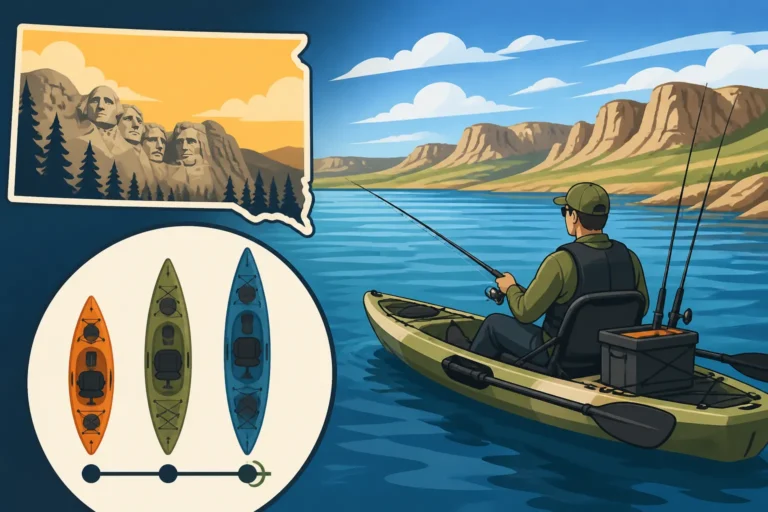
- Kayaks and Canoes: While incredibly popular for their portability and intimate connection to the water, kayaks and canoes offer very little freeboard and are entirely at the mercy of the wind. They can become extremely dangerous in anything beyond a light breeze on open water. If you do use them, stick to sheltered rivers or small ponds, and always be aware of changing weather. Even a simple Kayak Fishing Gear Guide will tell you the importance of understanding wind.
Essential Boat Accessories for Windy Condition Fishing
Having the right boat is half the battle; equipping it with the right accessories is the other. These tools don't just add convenience; they are often crucial for maintaining control, staying safe, and actually being able to fish effectively when the wind makes life difficult.
Trolling Motors with Spot-Lock Technology
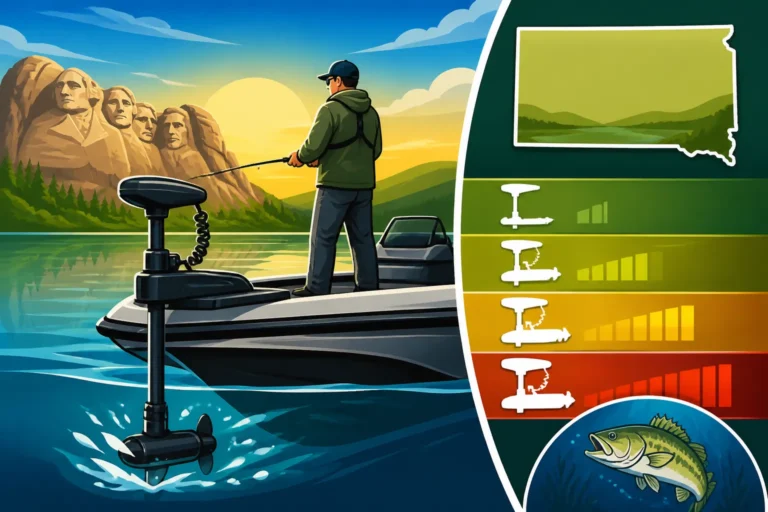
This is perhaps the single greatest innovation for windy-day fishing. A bow-mounted electric trolling motor with GPS-based "spot-lock" or "anchor" technology is an absolute game-changer. Instead of constantly fighting the wind and current with your main engine, you can simply press a button, and the trolling motor will use GPS to hold your boat precisely on a designated spot, compensating automatically for drift. This frees you up to focus on fishing, rather than steering.
Imagine trying to jig for walleye over a specific hump on Lake Sharpe with a 20 mph crosswind. Without spot-lock, you'd be drifting rapidly, making it impossible to stay on the fish. With it, you're locked in, allowing for precise bait presentation. Brands like Minn Kota (with their i-Pilot Link and Spot-Lock) and MotorGuide (with their Pinpoint GPS) dominate this market. You can often find a wide selection of these at a Bass Pro Shops or through online retailers like Amazon, so it's worth researching the different models and features to find the one that fits your boat and budget. This technology truly transforms a frustrating day into a productive one.
Anchoring Systems for Different Depths
While spot-lock is fantastic, traditional anchoring systems still have their place, especially in very deep water or when you need a truly immovable position. For shallower water (typically up to 10-15 feet, depending on the model), power poles or shallow water anchors like a Power-Pole or a Minn Kota Talon are incredibly effective. These hydraulic or electric poles deploy silently and rapidly, pinning your boat to the bottom, providing instant and rock-solid anchorage without the hassle of ropes and chains.
For deeper water, a robust conventional anchor system is essential. This means a heavy anchor (like a River Anchor or Danforth style), plenty of anchor rope (at least 3-5 times the depth of the water you're fishing), and a strong anchor cleat. Learning how to properly deploy and retrieve an anchor, especially in current and wind, is a skill every big-water angler should master. You'll want to ensure your rope is long enough to create a good anchor "scope" for maximum holding power.
Splash Guards and Wave Whackers
Even with a deep-V hull, big waves can still create a significant amount of spray, especially when you're moving or drifting in specific directions relative to the waves. Splash guards, sometimes called "wave whackers," are aftermarket accessories that attach to your transom, just above the main motor. Their primary job is to prevent waves from washing over the stern, which is a common occurrence when slowing down, reversing, or when the boat settles after hitting a large wave.
They effectively deflect water, keeping your transom area and often the back of your boat much drier. This isn't just about comfort; a significant amount of water over the stern can quickly become a safety issue, especially if it accumulates in the boat. Many South Dakota anglers consider these a necessity for comfortable and safe fishing on windy days on the Missouri River system reservoirs.
Reliable Electronics and Navigation
When the wind is blowing, visibility might be reduced, and holding a course or finding specific structure becomes harder. High-quality fish finders with GPS, detailed mapping, and side-imaging or down-imaging capabilities are invaluable. These allow you to pinpoint underwater structure, mark waypoints, and navigate safely even when whitecaps obscure visual landmarks.
A good GPS unit will also help you track your drift, understand how the wind is moving your boat, and get back to productive fishing spots. If you're running a bigger boat, a VHF radio is also a smart safety investment for communication, especially on vast bodies of water where cell service might be spotty. Remember, you're not just looking for fish, you're looking for safety and efficiency.
Strategic Considerations Beyond the Boat
While the right boat and gear are paramount, your personal approach and knowledge also play a huge role in successfully fishing windy South Dakota waters. It's about combining your equipment with smart tactics and a healthy respect for the elements.
Seamanship and Boat Handling in Wind
No matter how well-equipped your boat is, your skills as a boat operator are critical. Learning how to run your boat at different angles to the waves – sometimes cutting through them, sometimes quartering them – can make a huge difference in comfort and safety. Understanding how to use your main engine, trim, and trolling motor in conjunction to maintain control and fight drift is an art form that comes with experience.
For instance, when drifting, sometimes it's better to deploy a drift sock (sea anchor) to slow your drift down, allowing your lures to stay in the strike zone longer. When running to a new spot, knowing when to slow down and when to trim your motor for optimal performance can prevent dangerous situations. A boat operator who understands their vessel and the conditions can make even a "less-than-ideal" boat perform better, while a novice in a top-of-the-line boat might still struggle. Consider taking a boating safety course; they often cover practical seamanship skills that are incredibly useful in challenging conditions.
Weather Awareness and Planning
Never underestimate South Dakota weather. It can change rapidly, and what starts as a calm morning can quickly turn into a raging afternoon gale. Always check the forecast before heading out, paying close attention to wind speed and direction, as well as potential storm fronts. Many anglers even use marine weather apps that provide more detailed, localized wind predictions.
Beyond the forecast, constantly observe the sky and water for signs of changing conditions. Darkening clouds, a sudden shift in wind direction, or rapidly building waves are all indicators that it might be time to head for more sheltered waters or call it a day. Having a backup plan – like knowing where protected coves or marinas are located – is always a smart move. Remember, no fish is worth risking your safety.
Essential Safety Gear and Practices
Windy conditions inherently increase the risk on the water. Therefore, having all the necessary safety gear is non-negotiable. This includes:
- Properly fitting life jackets (PFDs) for everyone on board: It's not enough to have them; wear them, especially in rough water. For young anglers, ensuring they have the correct South Dakota Life Jacket Requirements met is crucial.
- A fully charged marine battery: For starting your main engine and powering your trolling motor and electronics.
- A reliable means of communication: Cell phone in a waterproof bag, VHF radio, or satellite messenger.
- Emergency signaling devices: Whistle, flares, signal mirror.
- A first-aid kit: For minor scrapes and bigger emergencies.
- A bailing device: A bucket or bilge pump to remove any water that might come into the boat.
Always let someone know your float plan – where you're going, when you expect to return, and who is with you. These simple precautions can make all the difference if an unexpected situation arises.
Conclusion
Battling the wind while fishing in South Dakota is a rite of passage, and for many, it's just part of the experience. But it doesn't have to be a miserable one. By understanding the critical features that make a boat perform well in choppy conditions, investing in the right accessories, and honing your boat handling skills, you can transform those blustery days into productive and enjoyable fishing adventures. Whether you choose a rugged deep-V aluminum boat or a smooth-riding fiberglass rig, equipping it with a GPS trolling motor and staying vigilant about weather conditions will greatly enhance your success and safety on our beautiful, but often windy, South Dakota waters. Don't let the wind keep you off the water; learn to master it!
Disclaimer
This article is for general informational purposes only and does not constitute professional advice. Laws, prices and regulations vary by location and change over time. Consult a qualified professional for guidance on your specific situation.