Is an Aluminum or Fiberglass Boat Better for Walleye Fishing?
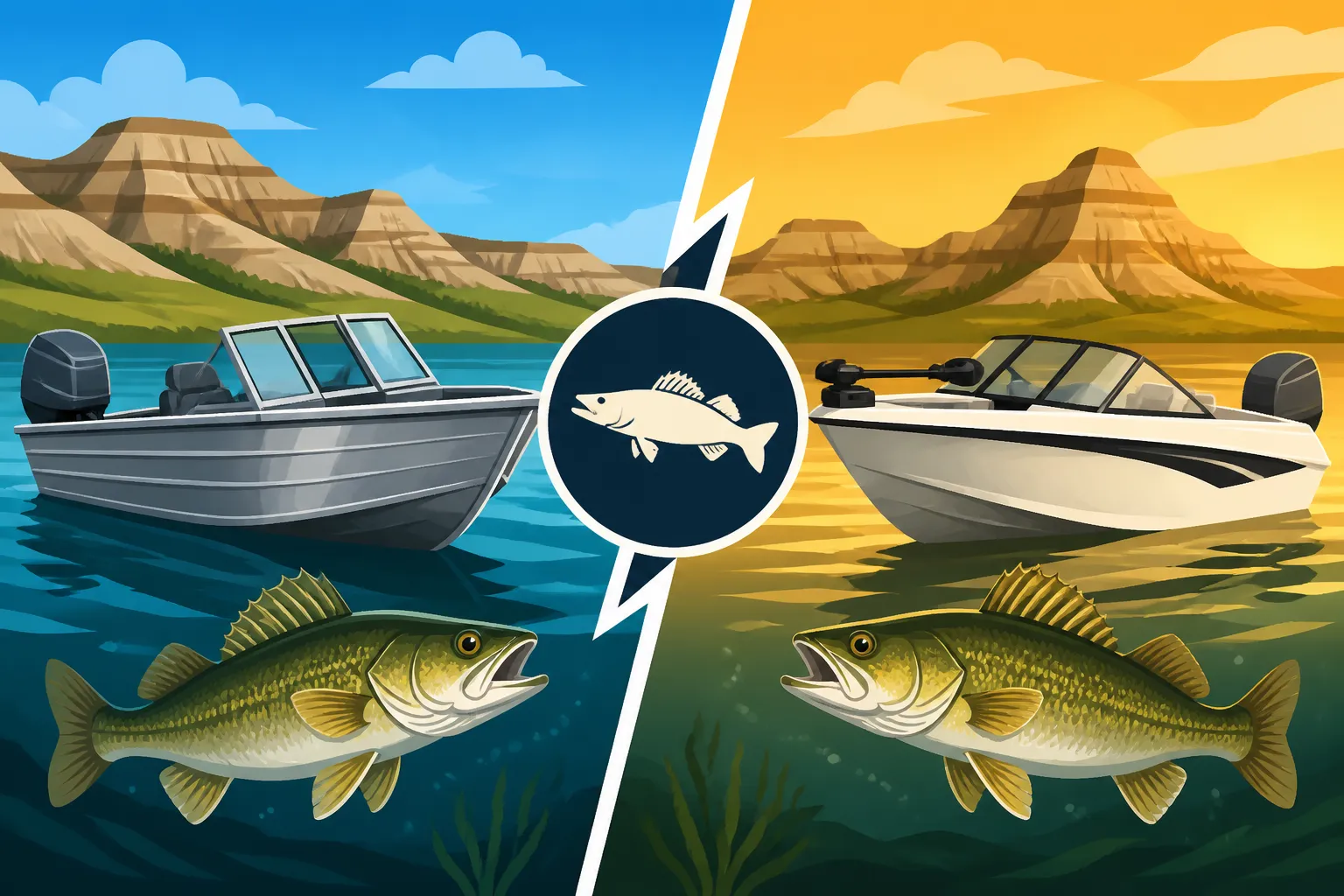
Oh, the age-old dilemma for any passionate South Dakota walleye angler: should you go with the tried-and-true aluminum boat, or splurge on the sleek, smooth-riding fiberglass beauty? It’s a question that keeps many of us up at night, staring at boat brochures or scrolling through listings, because let's face it, your boat isn't just a vessel; it's your mobile fishing headquarters, your sanctuary on the water, and a major investment. This guide is here to break down the pros and cons of both aluminum and fiberglass boats specifically through the lens of chasing those elusive South Dakota walleye, helping you make an informed decision that perfectly suits your fishing adventures and budget.
Understanding Your Walleye Fishing Environment in South Dakota
Before we dive into the nitty-gritty of boat materials, it’s crucial to understand the diverse and often challenging waters we fish here in South Dakota. Walleye are kings in many of our lakes and rivers, but the conditions can vary wildly from one body of water to the next. What works perfectly on a calm, smaller lake might leave you white-knuckling it on a windy day out on the big reservoirs.
The Mighty Missouri River Reservoirs
When you think of walleye fishing in South Dakota, often the first image that comes to mind is one of our majestic Missouri River reservoirs: Lake Oahe, Lake Sharpe, Lake Francis Case, and Lewis and Clark Lake. These are vast, incredible fisheries that stretch for miles and miles, often feeling more like inland seas than traditional lakes.
Fishing these waters means being prepared for anything. You can start your day with glass-smooth water, only to have a fierce South Dakota wind whip up three to five-foot waves in a matter of minutes. Long runs are common, especially on Lake Oahe, where you might travel dozens of miles between your launch point and a productive fishing spot near Mobridge or out by Whitlock Bay. These open-water conditions demand a boat that can handle a chop, keep you relatively dry, and get you back to the ramp safely. The sheer size of these lakes also means you're often fishing deep structure, trolling large areas, or jigging current seams. Check out our South Dakota Missouri River Fishing Guide for more on these incredible waters.
Glacial Lakes and Smaller Impoundments
Venture east, and you'll find a different kind of walleye paradise: our glacial lakes. Think of places like Lake Kampeska, Lake Poinsett, or Bitter Lake. These lakes are typically shallower than the Missouri River reservoirs, often featuring more irregular shorelines, cattail edges, and submerged weed beds. They might not have the massive waves of the "Big Mo," but they can still get quite choppy on a windy day, and navigating shallower areas or around emergent vegetation requires a boat that's not afraid of a little contact with the bottom.
Many of these glacial lakes also have submerged stumps, rock piles, or old fence lines – features that are fantastic for holding walleye but can be hard on a boat's hull. Access can sometimes be less developed, with narrower ramps or shallower approaches. These are prime spots for tactics like slip bobber fishing around weeds or casting crankbaits along breaks. You can learn more about these fisheries in our South Dakota Glacial Lakes Fishing Guide.
Black Hills Lakes
While the Black Hills are more famous for trout streams, there are several beautiful lakes that hold walleye, such as Angostura Reservoir and Belle Fourche Reservoir. These offer a unique fishing experience, combining the rugged beauty of the Hills with excellent angling opportunities. Conditions here can range from calm mornings to sudden, localized thunderstorms and gusty winds, often funneled by the surrounding terrain.
Ramps can sometimes be steeper or less forgiving, and you might encounter rocky bottoms or underwater hazards. The focus here is often on adapting to specific lake contours and depths, and while the runs aren't as epic as on the Missouri, reliable performance is still key.
The Case for Aluminum Fishing Boats in South Dakota
Aluminum boats have long been a staple in the fishing world, and for good reason. They're often seen as the workhorses of the angling community, especially among those who prioritize ruggedness and practicality.
Durability and Impact Resistance
One of the biggest selling points for an aluminum boat, particularly in South Dakota, is its sheer durability. Our lakes and rivers, while beautiful, can be unforgiving. You've got rocky shorelines, submerged timber in some areas, and the occasional shallow sandbar that seems to appear out of nowhere. If you accidentally bump a submerged rock or drag your boat up a less-than-perfect shoreline, an aluminum hull is generally much more forgiving.
Instead of a cracked gel coat or a puncture that might require extensive fiberglass repair, you're more likely to get a dent or a scrape. These minor cosmetic dings are often easily ignored or can be repaired without breaking the bank. This makes them a fantastic choice for anglers who aren't afraid to explore those "off-the-beaten-path" spots where the big walleye might be hiding, or for those of us who might be a little less meticulous about avoiding every single obstacle. If you're frequently fishing the stump fields of smaller reservoirs or shallow river backwaters, the peace of mind an aluminum hull offers is significant.
Lighter Weight and Fuel Efficiency
Aluminum boats are inherently lighter than their fiberglass counterparts, assuming similar sizes and layouts. This weight difference translates into several practical advantages, especially for anglers who travel frequently or are mindful of their budget.
Firstly, a lighter boat is easier to tow. You might not need as large or powerful a tow vehicle, potentially saving you money on gas and maintenance for your truck or SUV. If you're driving from Sioux Falls all the way to Lake Oahe near Mobridge, every gallon saved matters. Secondly, on the water, a lighter boat generally requires less horsepower to achieve similar speeds, leading to better fuel efficiency. This can add up to considerable savings over a season of chasing walleye across Lake Oahe Fishing Guide or Lake Sharpe Fishing Guide. A lighter boat is also often easier to launch and retrieve, especially at less-maintained ramps or when you're fishing solo. This is a huge benefit for those who don't want to wrestle their boat every time they hit the water.
Cost Considerations Initial Purchase & Maintenance
Generally speaking, aluminum boats tend to be more affordable than fiberglass boats of comparable size and outfitting. This lower initial purchase price makes them an attractive option for first-time boat owners, younger anglers, or anyone working with a tighter budget. It means you can often get a well-equipped walleye boat without breaking the bank, leaving more money for tackle, gas, and those vital fishing licenses.
Beyond the sticker price, the maintenance costs can also be lower. As mentioned, minor dents are cheaper and easier to fix than gel coat repairs on fiberglass. Winterizing an aluminum boat is straightforward, and they tend to hold up well to the elements. While major structural damage can be costly for any boat, routine wear and tear often favors aluminum in terms of repair expenses.
Versatility for Different Fishing Styles
Aluminum boats are incredibly versatile, making them a great fit for the diverse walleye fishing techniques employed across South Dakota. Whether you're trolling crankbaits across the wide-open expanse of Lake Francis Case, vertical jigging current seams below a dam, or casting into weed lines on a glacial lake, an aluminum boat can handle it all.
Many modern aluminum boats are designed with spacious casting decks for finesse fishing, robust transoms for powerful outboards and kickers, and ample storage for rods and gear. Their relatively shallow drafts also make them suitable for navigating skinny water that might be inaccessible to deeper-hulled fiberglass boats. This adaptability means an aluminum boat can truly be a multi-purpose fishing machine, ready for whatever How to Fish for Walleye in South Dakota you throw at it.
The Allure of Fiberglass Fishing Boats for Walleye Anglers
While aluminum boats are practical powerhouses, fiberglass boats hold a special place in the hearts of many anglers. They often offer a level of refinement and performance that is hard to match.
Superior Ride and Stability in Rough Water
This is often the number one reason anglers choose fiberglass, especially those who frequently tackle the sprawling Missouri River reservoirs. The heavier weight and different hull designs of fiberglass boats allow them to cut through and absorb waves rather than bouncing over them. This results in a much smoother, drier, and more comfortable ride, especially when those infamous South Dakota winds turn your favorite walleye spot into a washing machine.
Imagine a long run across Lake Oahe on a choppy day. In a fiberglass boat, you'll likely experience less pounding, less spray, and less fatigue, allowing you to arrive at your fishing spot feeling more refreshed and ready to fish. This stability is also noticeable when you're anchored or spot-locked, providing a more solid platform to fish from, which is a significant advantage when you're trying to land a trophy walleye in challenging conditions.
Quieter Operation and Trolling Experience
Fiberglass boats tend to be much quieter on the water. The solid, one-piece hull construction inherently dampens sound more effectively than riveted or welded aluminum. This means less "hull slap" against the waves, less noise from gear shifting around, and a generally more subdued presence on the water.
For walleye fishing, stealth can be a huge advantage. Walleye can be incredibly sensitive to noise and vibrations. A quieter boat means you're less likely to spook fish, especially in shallower water or when executing precise trolling passes. When you're Trolling for Walleye on Lake Oahe with sensitive electronics, a quiet boat allows you to hear your fish finder more clearly and focus on the subtle bumps and bites without distraction.
Deeper Hulls and Increased Storage/Features
Fiberglass construction offers designers a greater degree of flexibility in hull shape and interior layout. This often translates into deeper hulls, which contribute to that superior rough-water ride and also provide more interior depth, making for a safer feel, especially with kids or pets on board.
These boats also tend to have more integrated storage options, molded-in livewells with advanced aeration systems, and dedicated rod lockers that can accommodate longer rods. The clean, seamless finishes of fiberglass allow for highly customized layouts and integrated features like tackle management systems and electronics mounts that appear factory-installed. This level of organization and integration can make your fishing experience smoother and more efficient.
Resale Value and Aesthetics
Let's be honest, fiberglass boats are often lauded for their aesthetics. The gleaming gel coat finishes, custom graphics, and sleek lines can be truly eye-catching. While beauty is in the eye of the beholder, a well-maintained fiberglass boat generally holds its cosmetic appeal for a long time.
In terms of resale value, a well-cared-for fiberglass boat can often command a strong price on the used market. Many buyers are willing to pay a premium for the performance and aesthetic qualities that fiberglass offers. Of course, this depends heavily on maintenance, engine condition, and overall upkeep, but generally, the demand for quality fiberglass walleye boats remains high.
Key Factors to Weigh When Making Your Decision
Choosing between aluminum and fiberglass isn't about one being inherently "better"; it's about which one is better for you. It’s a deeply personal decision that should be guided by your specific needs, fishing habits, and financial situation.
Your Primary Fishing Locations and Conditions
This is perhaps the most critical factor. Ask yourself: Where do I spend most of my time walleye fishing in South Dakota?
- If you're predominantly fishing the big Missouri River reservoirs like Oahe, Sharpe, and Francis Case, and you often find yourself out in significant chop, a fiberglass boat's superior ride comfort will be a massive advantage. You'll cover those long distances more comfortably and feel safer when the wind picks up.
- If your adventures lean more towards smaller glacial lakes, rivers, or shallower impoundments where submerged hazards are a real concern, and you value the ability to get into skinny water or pull up to rocky shorelines without major worry, then an aluminum boat's ruggedness is probably a better fit.
- If you do a mix of both, you'll need to decide which conditions you're willing to compromise on. Some higher-end aluminum boats offer impressive rough-water performance, while some fiberglass boats have shallower drafts.
Considering the unpredictable South Dakota weather, wind and waves are almost always a factor, no matter where you fish. A boat that handles these conditions well will make your fishing trips much more enjoyable.
Budget and Long-Term Ownership Costs
The sticker price is just the beginning. While aluminum boats often have a lower initial cost, think about the total cost of ownership over several years.
- Initial Purchase: How much are you willing to invest upfront? Remember that the price can vary wildly depending on the size, engine, and features. You can find excellent options for specific South Dakota Fishing License Costs and boats at various price points, from entry-level aluminum jon boats to fully rigged tournament-ready fiberglass machines.
- Fuel Costs: As discussed, lighter aluminum boats can be more fuel-efficient both on the water and while towing. If you plan frequent, long trips, these savings can accumulate.
- Maintenance and Repairs: Are you handy with repairs, or will you always take it to a shop? Minor aluminum repairs might be DIY-friendly, while fiberglass gel coat work often requires a specialist. Consider what you can reasonably expect to spend on annual maintenance and unforeseen repairs.
- Insurance and Storage: Don't forget these recurring costs. Larger, more expensive boats often have higher insurance premiums. Do you have a garage or will you need to pay for storage, especially for a bigger fiberglass boat?
Towing Capacity and Storage Space
This is a practical consideration that often gets overlooked in the excitement of boat shopping.
- Tow Vehicle: Do you already own a truck or SUV capable of safely towing a heavy fiberglass boat, often with a large outboard and a full tank of gas? Or do you need a lighter package that your smaller vehicle can handle? This directly impacts not just your safety on the road but also your budget if you need to upgrade your tow vehicle.
- Storage at Home: A bigger fiberglass boat requires more space. Do you have a long enough driveway, a large garage, or dedicated off-site storage? Consider the total length of the boat on its trailer. How to Winterize a Boat in South Dakota is also an important consideration for storage.
Personal Comfort and Fishing Style
At the end of the day, your boat should enhance your fishing experience.
- Comfort: Do you prioritize a smooth, dry ride above all else, even if it means sacrificing some ruggedness or paying a higher price? Or are you content with a bouncier ride if it means greater versatility and lower cost?
- Stealth: If you often fish in clear, shallow water where spooking fish is a major concern, the quieter operation of fiberglass might appeal to you.
- Ruggedness: If you're an adventurous angler who loves exploring tight spots, navigating tricky ramps, or isn't overly concerned about cosmetic dings, the "battle scars" an aluminum boat can accumulate might be a badge of honor.
- Features and Layout: Both types of boats offer excellent features, but fiberglass often has more molded-in, integrated components, while aluminum might feel a bit more open for customization. Consider what kind of rod lockers, livewells, and electronics mounts truly matter to your style of fishing. You can often find great deals on electronics and specialized gear through retailers like Amazon or explore a vast selection of accessories at Bass Pro Shops to outfit either boat type.
To help you visualize the comparison, here's a quick rundown:
| Feature/Aspect | Aluminum Boat | Fiberglass Boat |
|---|---|---|
| Rough Water Ride | Good, can be bumpy in heavy chop | Excellent, smoother, cuts through waves |
| Durability | Very good, handles impacts (dents), rugged | Good, gel coat can chip/crack on impact (costly repairs) |
| Weight | Lighter, easier to tow and launch | Heavier, requires larger tow vehicle |
| Fuel Efficiency | Generally better (on water & towing) | Generally less efficient (on water & towing) |
| Initial Cost | Typically lower | Typically higher |
| Maintenance | Simpler repairs for minor dings | Gel coat repairs require specialized work |
| Stealth/Noise | Can be noisier (hull slap, rivets) | Quieter, less hull slap |
| Customization | More open floor plans, often bolted-on accessories | More integrated features, molded-in storage |
| Aesthetics | Functional, utilitarian look | Sleek, polished, custom finishes |
| Typical Use in SD | Smaller lakes, rivers, shallow areas, mixed use | Large reservoirs (Oahe, Sharpe), windy conditions |
Ultimately, the best boat is the one that allows you to fish more often, more safely, and more comfortably, catching more walleye in the process. Whether it's the robust simplicity of an aluminum craft or the refined performance of fiberglass, South Dakota's waters offer incredible opportunities for both. Don't forget to familiarize yourself with South Dakota Boat Registration Guide and South Dakota Boat Safety Requirements no matter what type of boat you choose. Happy fishing!
Disclaimer
This article is for general informational purposes only and does not constitute professional advice. Laws, prices and regulations vary by location and change over time. Consult a qualified professional for guidance on your specific situation.