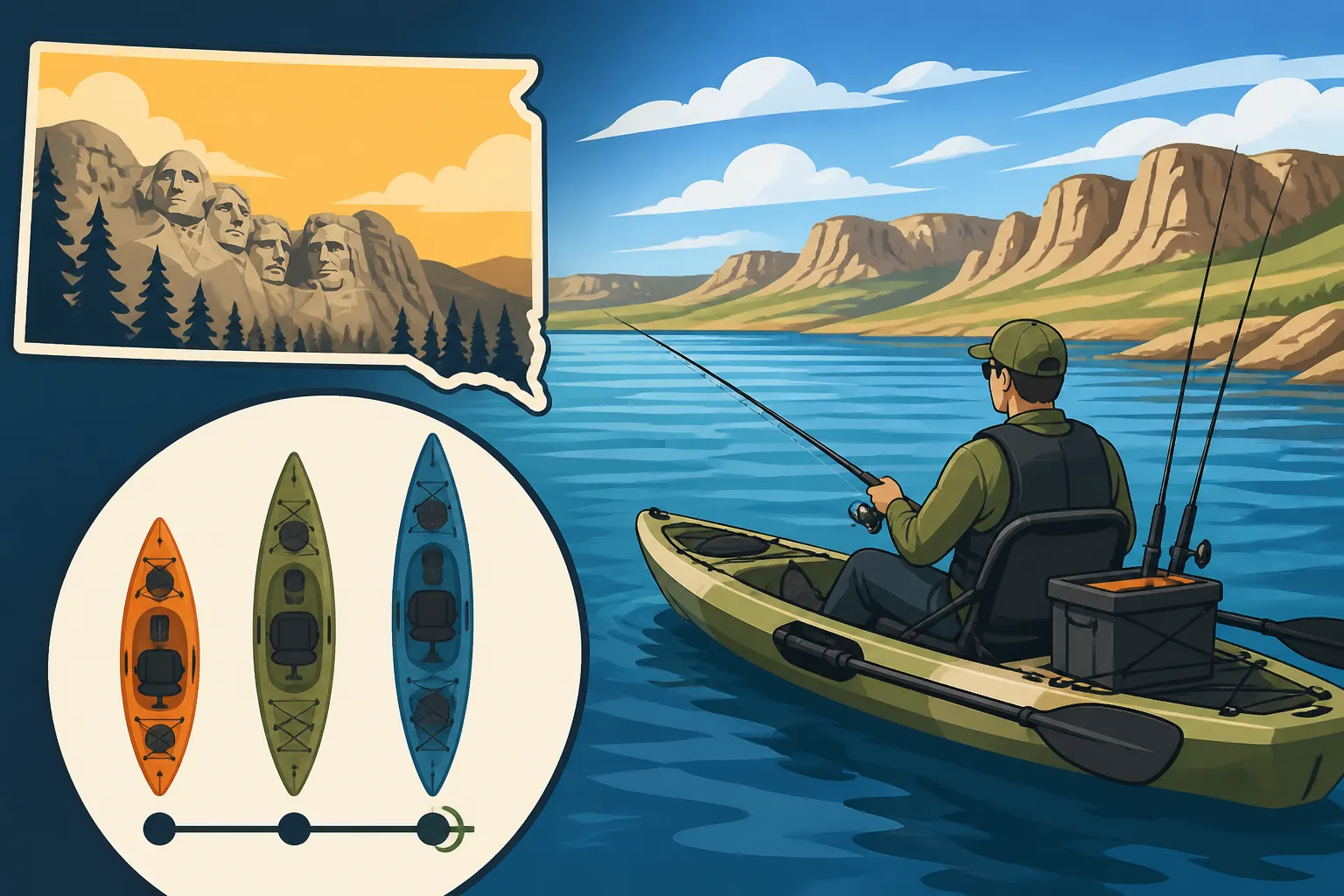
Best Kayak Length for Fishing Big Reservoirs
One of the biggest head-scratchers for any South Dakota angler looking to hit our vast lakes and reservoirs by kayak is figuring out what size boat is actually going to work. You dream of gliding across the water, casting to hidden structure, but you worry about being battered by waves or exhausted by long paddles. This guide will help you navigate the often-confusing world of kayak lengths, specifically tailored for fishing our expansive South Dakota waters.
Understanding Kayak Length Basics for Big Water
When you're out on a sprawling body of water like Lake Oahe or Lake Sharpe, it quickly becomes clear that a kayak isn't just a kayak; its length plays a huge role in your experience. What works for a calm, small pond absolutely won't cut it when you're facing down a stiff Missouri River current or a choppy day on one of our larger reservoirs. Understanding the fundamentals of kayak length is your first step toward a more enjoyable and successful fishing trip.
Why Length Matters on Large Reservoirs
The length of your kayak directly impacts three crucial aspects of its performance: speed, tracking, and stability. On big reservoirs, you're often covering significant distances, battling wind, and encountering boat wakes or natural chop. A longer kayak generally offers more hull speed, meaning you can paddle faster with less effort over the long haul. This is incredibly important when you're trying to get to a distant walleye hotspot or simply want to explore more of the lake without feeling utterly spent.
Beyond speed, tracking is paramount. This refers to a kayak's ability to hold a straight line without constantly correcting your paddle strokes. Shorter kayaks tend to wander more, making you work harder to stay on course, especially in wind or current. Imagine trying to troll for walleye across a wide-open bay on Lake Francis Case, only to find your kayak constantly veering off course – it's frustrating and inefficient. Longer kayaks, with more surface area in the water, naturally track much straighter, which conserves energy and allows you to focus on fishing. While stability is often thought of as solely a function of width, length also plays a role, especially in how a kayak handles waves. A longer boat can often bridge two wave crests, providing a smoother, more stable ride than a shorter boat that gets tossed around more easily.
The Spectrum of Kayak Lengths and Their General Characteristics
Kayak lengths fall into a general spectrum, each with its own advantages and disadvantages. Very short kayaks, typically under 10 feet, are often highly maneuverable and light, excellent for small, sheltered waters or tight streams where agility is key. As you move into the 10-12 foot range, you find a popular sweet spot for recreational paddling and smaller fishing applications, offering a decent balance of tracking and maneuverability. Then there are the medium-length boats, from 12 to about 14 feet, which start to shine on larger lakes, providing improved speed and tracking for covering more ground.
Finally, you have the longer kayaks, those 14 feet and up, which are purpose-built for efficiency, speed, and handling demanding conditions. These are the beasts of burden designed for serious touring, open-water adventures, and, yes, extensive fishing on our massive South Dakota reservoirs. Each length category comes with trade-offs in terms of portability, storage, and initial stability versus secondary stability (how stable it feels once it's already tilted).
Short Kayaks Under 12 Feet Are They Enough for Big South Dakota Reservoirs?
When you first start looking at fishing kayaks, the appeal of a shorter, lighter model is undeniable. They're often less expensive, easier to load onto a car, and simpler to store in a garage. For many fishing scenarios, especially on smaller, calmer bodies of water, these compact kayaks are absolutely perfect. But when it comes to the vastness of South Dakota's big reservoirs, you need to seriously consider their limitations.
The Appeal of Portability and Maneuverability
Shorter kayaks, typically under 12 feet, are champions of convenience. If you’re fishing a small, sheltered pond at a state park, or a narrow, winding stretch of a river where quick turns are essential, their high maneuverability is a huge asset. You can easily navigate tight spots, eddy lines, and dense vegetation without much fuss. They’re also a dream to transport; throwing a 10-foot kayak on top of your car or even in the bed of a truck is far less of a chore than wrestling with a longer, heavier model. For anglers who prioritize ease of handling off the water, a shorter kayak certainly has its merits, especially if your primary fishing is limited to smaller, more accessible spots like those found at Oakwood Lakes State Park.
They also tend to be quite stable initially, often due to a wider hull design for their length, which can feel very reassuring to beginner paddlers or those who prefer to stand and cast in very calm conditions. If your fishing adventures rarely take you beyond a few hundred yards from the launch ramp on a perfectly still day, a shorter kayak can provide a perfectly adequate experience. You might even find them to be quite nimble when casting close to shore or working specific structure in a quiet cove.
The Limitations on Expansive Waters
However, the moment you venture onto a large South Dakota reservoir like Lake Oahe or even a bigger glacial lake like Lake Kampeska, the limitations of a shorter kayak become glaringly apparent. The primary issue is tracking. A shorter waterline means the kayak is more susceptible to crosswinds and currents, forcing you to constantly correct your course with extra paddle strokes. This can be incredibly tiring over long distances, turning what should be a relaxing paddle into a strenuous workout.
Furthermore, shorter kayaks struggle with speed. Their hull design isn't optimized for efficient forward motion, meaning you'll expend far more energy to cover the same distance compared to a longer boat. This means those distant fishing spots you've marked on your Best Kayak Fish Finder Mount become much harder to reach in a reasonable amount of time. And then there are the waves. On a big reservoir, a brisk breeze can quickly whip up a chop, or passing powerboats can create significant wakes. Shorter kayaks tend to get tossed around more aggressively by these waves, leading to a much wetter, less comfortable, and potentially less safe ride. You might feel less stable, and more energy will be spent simply trying to maintain your balance rather than focusing on fishing. Imagine trying to manage a feisty walleye or northern pike while simultaneously bracing against a three-foot wave; it’s not an ideal situation.
Medium-Length Kayaks 12-14 Feet The Versatile Workhorses
If you're looking to bridge the gap between ultimate portability and big-water capability, the 12-to-14-foot kayak range often hits a sweet spot for South Dakota anglers. These are the workhorses of the fishing kayak world, offering a blend of features that make them suitable for a wide variety of fishing environments, including many of our larger, but not necessarily monstrous, reservoirs.
Balancing Performance and Portability
Medium-length kayaks really start to shine when you need a little more performance without completely sacrificing the convenience of a lighter, more manageable craft. While a 13-foot kayak is certainly heavier than a 10-footer, it's still often manageable for a solo angler to load and unload from a vehicle. The extra length, typically 12 to 14 feet, provides a noticeable improvement in tracking, meaning less zigzagging and more straight-line paddling efficiency. This is a huge benefit when you’re covering a few miles to get to your favorite fishing point or when the wind picks up a bit.
You'll find that these kayaks offer a better balance of speed and stability for general fishing applications. They're quick enough to cover decent distances, allowing you to explore more of a lake, but still offer enough width and hull design features to keep you feeling secure when casting or battling a fish. Many popular models from brands like Old Town or Hobie, often found at retailers like Bass Pro Shops, fall into this range, offering a wide array of features specifically for anglers. Whether you’re paddling or using a pedal drive system, the efficiency gained from this length means you can spend more time fishing and less time fighting your boat.
Handling the Demands of Big Reservoirs
For many of South Dakota's reservoirs, especially those not quite as vast as the mainstem Missouri River lakes, a medium-length kayak can be an excellent choice. Think about places like Lake Francis Case, with its numerous bays and arms, or even the middle sections of Lake Sharpe. While these are big bodies of water, a 13-foot kayak offers significantly better wave management and tracking than a shorter boat. You'll feel more confident navigating boat wakes and moderate chop, and your ability to maintain a steady course while trolling or simply traveling will be greatly enhanced.
This length range is particularly effective for covering moderate distances efficiently. If you're targeting smallmouth bass along rocky shorelines on Lake Francis Case or seeking crappie in brush piles a mile or two from the ramp, a 12-14 foot kayak makes those trips far more enjoyable. It cuts through the water with less resistance, and the improved tracking helps you stay focused on your destination rather than constantly correcting your paddle strokes. When considering your Best Kayaks for South Dakota Reservoir Fishing, this middle ground is often the sweet spot for anglers who want versatility without the full commitment to a truly massive vessel. You can still launch easily from most Lake Francis Case Boat Ramps and Access Points and have the confidence to venture out from the immediate shoreline.
Long Kayaks 14+ Feet The Big Water Specialists
For the dedicated angler who routinely tackles the largest, most challenging waters South Dakota has to offer, or who demands peak performance and efficiency, a long kayak—typically 14 feet and up—is often the ultimate choice. These are not for the faint of heart, or for those prioritizing easy car-topping, but they offer an unparalleled experience on vast expanses.
Max Speed, Tracking, and Stability for Serious Hauls
When you're facing down the truly expansive waters of Lake Oahe, where strong winds can whip up substantial waves in a heartbeat, or contemplating long expeditions on the South Dakota Missouri River Fishing Guide, a longer kayak truly comes into its own. These boats are designed with efficiency in mind. Their extended waterline dramatically improves hull speed, allowing you to cover vast distances with less effort and at a faster pace. Imagine wanting to hit a walleye bite five miles across a wide bay; a 15-foot kayak will get you there much quicker and with far less fatigue than a shorter one.
The tracking on longer kayaks is exceptional. They hold a straight line like a dream, even in challenging crosswinds or currents, freeing you up to focus on navigation and, most importantly, fishing. This superior tracking is invaluable for techniques like Trolling for Walleye on Lake Oahe or South Dakota Chinook Salmon Trolling Techniques, where maintaining a consistent speed and direction is crucial for presenting your lure effectively. Furthermore, while initial stability might feel similar to shorter, wider boats, the secondary stability and wave-handling capabilities of a long kayak are usually superior. They tend to ride over chop rather than being pushed around by it, offering a smoother, more secure feeling even when conditions get a bit gnarly. This enhanced stability is a major confidence booster when you're far from shore with a hefty fish on the line.
When to Opt for Max Length on South Dakota's Giants
Choosing a kayak 14 feet or longer is a commitment, but it’s a commitment that pays off handsomely if your fishing goals involve our biggest bodies of water. If you regularly fish Lake Oahe, particularly its lower sections near Pierre or across its wide-open main lake, the advantages are clear. The ability to cover ground, fight the wind, and handle significant waves becomes not just a luxury, but a necessity for comfort and safety. Long kayaks are also ideal for anglers who carry a lot of gear—think multiple rod setups, substantial tackle boxes, a cooler for drinks and fish, and maybe even a small portable depth finder. The increased storage capacity and weight limits of longer boats accommodate these needs without compromising performance.
Consider an extended trip exploring remote sections of Lake Oahe Fishing Guide or embarking on a full day of fishing on Lake Sharpe Fishing Guide. A long kayak provides the momentum and stability needed to make such journeys enjoyable rather than arduous. They might be heavier to load and require more storage space at home, perhaps even a specialized trailer or rack for transport, but for those who want to maximize their time on South Dakota's aquatic giants, the efficiency and capability of a longer fishing kayak are unmatched. You'll find many high-end fishing kayaks in this category on online retailers like Amazon, often with detailed specifications to help you weigh the pros and cons.
Key Factors Beyond Length to Consider
While kayak length is undeniably crucial for fishing South Dakota's big reservoirs, it's just one piece of the puzzle. There are several other design and functional elements that work in conjunction with length to determine how a kayak performs and, ultimately, how enjoyable your fishing experience will be. Ignoring these can lead to buyer's remorse, even if you nail the length.
Hull Design
The shape of a kayak's hull dramatically influences its performance characteristics. Even two kayaks of the same length can feel completely different on the water due to their hull design.
- Width: Wider kayaks generally offer more initial stability, which is great for standing to cast or feeling secure when new to kayaking. However, excessive width can reduce speed and make paddling more effortful over distance. Narrower hulls, while sometimes feeling less stable initially, often track better and are faster.
- Keel/Rocker: A prominent keel (a ridge running the length of the hull) helps with tracking. Conversely, a lot of "rocker" (the curve from bow to stern) increases maneuverability but sacrifices straight-line tracking. For big, open waters, you generally want less rocker for better tracking.
- Chine: The shape where the hull sides meet the bottom. Hard chines provide crisp turning and secondary stability when edged, while soft chines offer a smoother ride and often feel more stable. For reservoir fishing where stability in choppy conditions is key, many fishing kayaks employ a relatively flat bottom with some chine for a good balance.
- Pontoon-style hulls: Some fishing kayaks feature a "tunnel" or pontoon-style hull, offering incredible stability, especially for standing. This comes at the cost of speed and maneuverability, making them less ideal for covering long distances in a hurry, but potentially very comfortable for stationary fishing or working a specific piece of structure.
Weight Capacity and Storage
Don't underestimate how much gear you'll want to bring for a full day of fishing on a large reservoir. Rods, tackle boxes, a cooler with drinks and snacks, safety equipment (remember your Is a Life Jacket Required for Kayak Fishing in South Dakota?!), possibly a fish finder and battery, and if you're lucky, some fish to take home. All of this adds weight.
- Weight Capacity: Check the manufacturer's stated weight capacity carefully. This isn't just about your body weight; it includes all your gear, your paddle, and anything else you load into the boat. Overloading a kayak will compromise its stability, make it harder to paddle, and sit much lower in the water, making you more susceptible to waves. Always leave a buffer.
- Storage: Look for ample storage options. Large bow and stern hatches, a roomy tankwell (open storage area usually at the stern, often with bungee cords), and accessory tracks for mounting rod holders or other items are all crucial. The ability to secure your gear is vital, especially on choppy water where an unsecured tackle box can quickly become a swimming hazard. Some kayaks feature integrated storage pods or even livewells.
Propulsion and Comfort
How you move your kayak and how comfortable you are doing it will make or break your long-haul fishing trips.
- Paddle vs. Pedal Drive: While traditional paddle kayaks are fantastic and often lighter, pedal drive systems (like those from Hobie or Native Watercraft, often found at Bass Pro Shops) offer hands-free propulsion. This is a game-changer for fishing, allowing you to troll, cast, and fight fish without having to put your paddle down. On vast reservoirs, the efficiency of a pedal drive can be a huge advantage for covering ground, especially if you're planning on Deep Water Summer Fishing Techniques.
- Seat Comfort: This cannot be stressed enough for long days on the water. Many entry-level kayaks come with basic molded seats, which can become incredibly uncomfortable after a few hours. High-end fishing kayaks feature elevated, framed seats that offer back support, breathability, and adjustability. A comfortable seat directly translates to more time on the water and less soreness at the end of the day. Some seats are even designed to allow you to easily stand up from a seated position, which is a great feature for sight fishing or stretching.
| Kayak Length Category | Typical Length Range | Best Use for SD Reservoirs | Pros | Cons |
|---|---|---|---|---|
| Short | Under 12 feet | Calm coves, small ponds, close-to-shore fishing on calm days. | Highly maneuverable, very portable, often more affordable. | Poor tracking, slow, struggles in wind/waves, limited storage. |
| Medium | 12-14 feet | General reservoir fishing, moderate distances, varied conditions (Lake Francis Case, smaller sections of Lake Sharpe). | Good balance of speed, tracking, and portability. Handles moderate chop well. | Still challenged by strong winds/heavy chop on very large, open water. |
| Long | 14+ feet | Large, open reservoirs (Lake Oahe), long-distance travel, frequent windy/choppy conditions, serious trolling. | Excellent speed and tracking, superior wave handling, ample storage, highly efficient. | Heavier, less maneuverable, more challenging to transport/store. |
In the end, choosing the perfect kayak length for fishing South Dakota's big reservoirs comes down to honestly assessing your primary fishing locations, how far you plan to paddle, and the conditions you expect to encounter. If you're consistently hitting the vast, open waters of our Missouri River reservoirs, investing in a longer, more efficient kayak will undoubtedly enhance your experience. However, for a mix of waters and a desire for easier handling off the water, a quality medium-length boat will serve you very well. Happy paddling, and tight lines!
Disclaimer
This article is for general informational purposes only and does not constitute professional advice. Laws, prices and regulations vary by location and change over time. Consult a qualified professional for guidance on your specific situation.