Best Underwater Camera for Ice Fishing
There’s nothing quite like the crisp air and anticipation of drilling a fresh hole on a frozen South Dakota lake. But let’s be honest, there’s also nothing quite as frustrating as sitting over a promising spot for what feels like an eternity, wondering if there are even any fish down there, let alone if they’re interested in your offering. That guessing game can be brutal, making you question your bait, your jigging motion, and even your sanity! This comprehensive guide is all about banishing that uncertainty by showing you how the best underwater cameras can transform your ice fishing success, turning frustrating unknowns into exciting, visible opportunities on the hardwater.
Why an Underwater Camera is Essential for Ice Fishing in South Dakota
For years, ice fishing involved a lot of intuition, a good depth finder, and a healthy dose of hope. You'd drill, drop a transducer, see some lines on a screen, and try to visualize what was happening beneath the ice. While that still works, an underwater camera takes the guesswork out of the equation entirely, offering you a direct, real-time look into the fish's world. This isn't just a fancy gadget; it's a vital tool, especially when you're targeting specific species in diverse South Dakota waters.
Unveiling the Hidden World Beneath the Ice
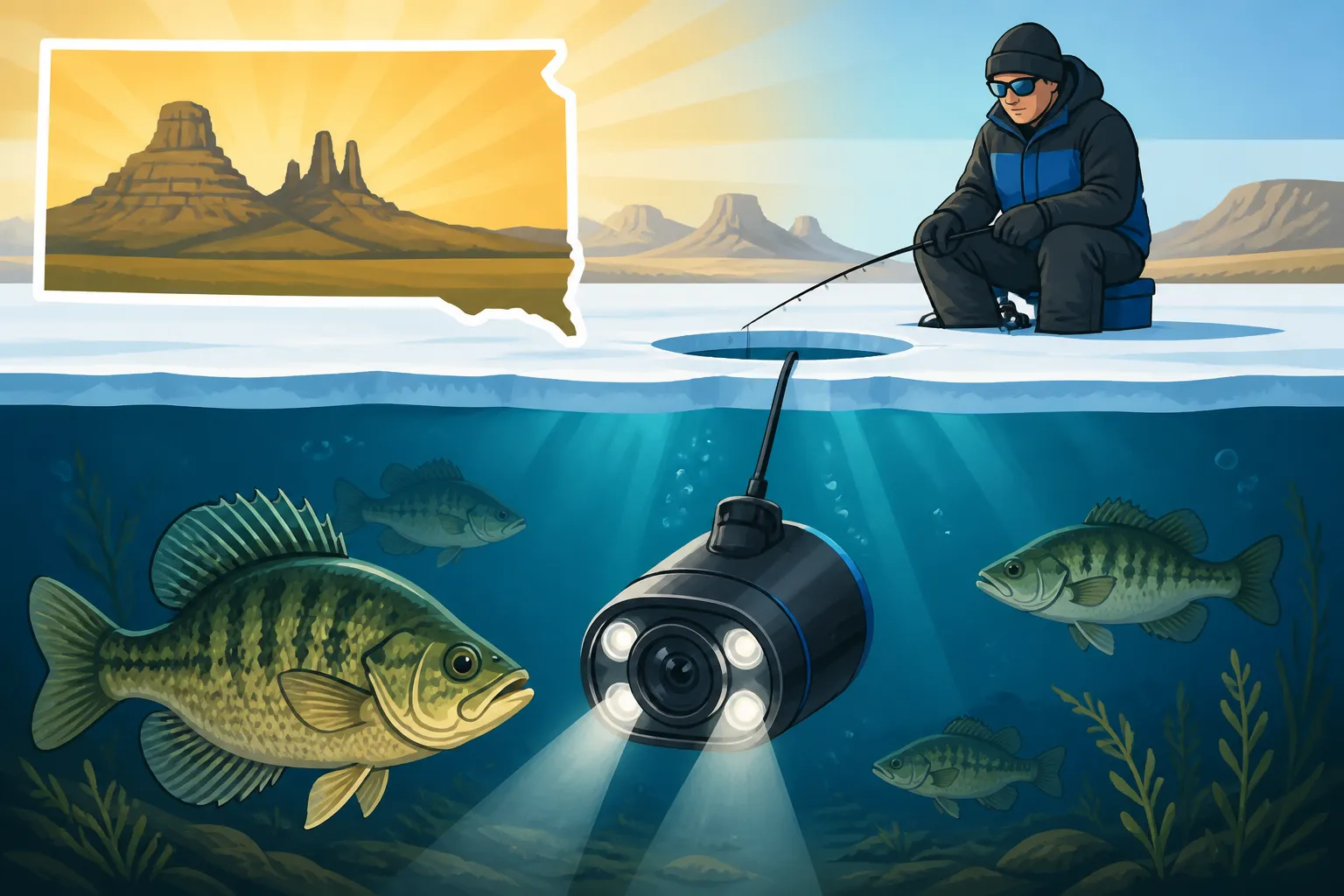
Imagine dropping your line and, instead of seeing abstract blips on a sonar screen, you’re looking at a live video feed of a school of fat yellow perch investigating your lure. Or perhaps you spot a massive walleye lurking just out of frame, slowly cruising towards your bait. An underwater camera provides exactly this kind of visual confirmation. It allows you to actually see the bottom structure – whether it's submerged weeds, rocky reefs, or subtle drop-offs – helping you understand the fish's habitat. This visual insight can be a real game-changer when you're trying to figure out if your chosen hole is even worth spending time on, or if you need to pack up and move to more promising waters. It instantly validates your decision or tells you it’s time for a change.
Often, we sit there wondering, "Are they even down there?" With a camera, that question is answered immediately. You get to observe the entire ecosystem. Maybe you see tiny baitfish schooling, which means predators are likely nearby. Or perhaps you see a turtle moseying along, confirming you're on a soft bottom. These observations inform your next move far better than just a depth reading. It's like having a scuba diver's view without having to brave the frigid water yourself!
Solving the Mystery of the Non-Biting Fish
We've all been there: the fish finder shows fish, sometimes a lot of them, but they just won't bite. It's one of the most maddening frustrations in ice fishing. An underwater camera offers a unique solution to this age-old problem. Instead of blindly trying different jigging motions or bait combinations, you can watch exactly how fish react to your presentation. Are they approaching cautiously then backing off? Are they ignoring your lure completely? Or are they just nipping at it without committing?
By observing their behavior in real-time, you can make immediate adjustments. If a walleye is inspecting your jig but not hitting it, you might try a more subtle jigging motion, a different color, or even switch to a live minnow on a plain hook. You might discover your bait is too high or too low, or that your jig is spinning in an unnatural way. This visual feedback loop is incredibly powerful. It transforms the "why aren't they biting?" frustration into an active problem-solving session. You can try a new Best Lures for Ice Fishing Walleye or vary your jigging cadence until you find what triggers a strike. It also helps you understand specific fish preferences, which can be crucial on heavily pressured waters.
Strategic Hole Placement and Target Identification
Drilling holes through thick ice is hard work, and nobody wants to waste effort on unproductive spots. An underwater camera helps immensely with strategic hole placement. Instead of relying solely on contour maps or sonar to find structure, you can actually see what's down there. You might find a small rock pile surrounded by sand, a dense weed bed, or a timber laydown that your sonar barely picked up. Seeing these details allows you to place your next hole precisely where fish are likely to congregate.
Beyond structure, cameras are fantastic for identifying the species of fish lurking below. Sometimes a blip on the sonar could be a walleye, a pike, or even a suck. With a camera, you know for sure. This is particularly useful when you're targeting a specific type of fish, like trying to catch a big perch. If you see only small panfish, you might opt to move to a different location where South Dakota Perch Fishing Guide suggests bigger ones lurk. It saves valuable time and energy, ensuring you're fishing where your target species actually lives. This kind of precise targeting is invaluable for anglers looking to maximize their time on the ice, especially when ice conditions dictate how many holes you can realistically drill and manage throughout the day.
Decoding the Specs: Key Features for Your Ice Fishing Camera
Choosing the right underwater camera for ice fishing can feel a bit overwhelming with all the options out there. However, focusing on a few core features will help you pick one that can stand up to South Dakota's harsh winter conditions and deliver the clear views you need for success. Investing wisely now means fewer headaches and more fish later.
The Display: Your Window to the Underwater World
The display screen is your primary interface with the underwater world, so its quality is paramount. You need a screen that's not only bright enough to see in glaring sunlight but also durable enough to withstand the cold and occasional bumps. Think about the size: while larger screens offer a more immersive view, they also tend to be bulkier and can drain batteries faster. Many anglers find a 5-inch to 7-inch screen to be a good balance for portability and visibility.
Look for displays with high resolution and good contrast. In bright conditions, a sun-shield or hood can be invaluable to reduce glare. Some modern units feature anti-glare coatings or even offer different display modes for various lighting conditions. If you're often fishing from inside an Best Ice Fishing Shelters for South Dakota Winters, extreme brightness might not be as critical, but outside, it's a must. The quality of the image directly impacts your ability to interpret fish behavior and subtle structure, so don't skimp here. A fuzzy, dim screen can be just as frustrating as having no camera at all.
Camera Optics: Clarity in the Cold Depths
The actual camera unit and its optics are the heart of the system. You'll want to consider several factors here to ensure you get clear images in diverse conditions. First, resolution: higher resolution cameras provide sharper, more detailed images, making it easier to identify fish species and observe fine details like a fish's fins or mouth movements. Second, low-light performance is critical. South Dakota lakes can vary widely in clarity, and even clear lakes become darker under thick ice, especially on cloudy days. Many cameras come equipped with infrared (IR) or LED lights to illuminate the area, often automatically adjusting to ambient light. IR lights are typically invisible to fish, which can be an advantage.
The camera's field of view (how wide of an area it captures) is also important. A wider field of view allows you to see more without moving the camera, but too wide can distort images. A good balance, often around 90-120 degrees, is usually ideal for ice fishing. Finally, consider the camera's cable. It needs to be durable, flexible in freezing temperatures, and long enough for the depths you typically fish. Standard lengths are often 50 to 100 feet, but some offer more. A high-quality cable won't kink, fray, or stiffen excessively in the cold, ensuring reliable performance season after season.
Powering Your Vision: Battery Life and Durability
There’s nothing worse than your camera dying just as the bite turns on. Battery life is absolutely critical for ice fishing, where power sources are limited and cold temperatures can drastically reduce performance. Most ice fishing cameras run on rechargeable lithium-ion or sealed lead-acid (SLA) batteries. Lithium-ion batteries are lighter and perform better in the cold, but often come at a higher price point. Aim for a camera that offers at least 6-8 hours of continuous run time, and ideally more, to cover a full day on the ice.
Beyond battery life, the overall durability of the unit is essential. Your gear will take a beating in sub-zero temperatures, exposed to snow, ice, and occasional bumps. Look for cameras with robust, waterproof casings (IP ratings are a good indicator). The camera housing itself should be heavy-duty to protect the lens. The connections between the camera, cable, and display also need to be solid and water-resistant. You want a unit that can withstand accidental drops, slush, and biting winds without failing. While some manufacturers specify operating temperatures, real-world testing by anglers often provides the best gauge of true cold-weather performance.
Portability and Ease of Use on the Ice
When you’re out on the hardwater, simplicity and portability can make a huge difference in your enjoyment and efficiency. An ideal ice fishing camera should be easy to transport, set up, and operate, even with gloves on. Think about the overall weight and bulk – can you comfortably carry it along with your Best Ice Fishing Gear Basics for Beginners from hole to hole? Many systems are designed to fit neatly into a bucket or come with their own carrying case, making them compact and protected.
Ease of use extends to the controls and interface. Are the buttons large and intuitive? Can you easily adjust settings like brightness or IR lights without fumbling? Some cameras offer features like a "panner" system that allows you to rotate the camera remotely from the surface, giving you a 360-degree view without manually turning the transducer in the hole. This can be a huge time-saver and prevent you from spooking fish. Consider how quickly you can deploy the camera, get a stable image, and then pack it up to move to your next spot. A camera that’s a hassle to use will quickly become a nuisance rather than an asset.
From Setup to Success: Mastering Your Camera on South Dakota Ice
Having the best underwater camera is only half the battle; knowing how to set it up correctly and interpret what you're seeing is where the real magic happens. With a little practice, you'll be reading the underwater landscape and predicting fish movements like a pro on South Dakota's frozen waters.
Optimal Deployment and Stabilization Techniques
Getting your camera in the water correctly is crucial for clear, stable viewing. First, drill your hole, making sure it’s clean of slush and ice shards. Many anglers prefer a hole slightly larger than a standard 8-inch auger hole if they plan to use a camera and fish simultaneously, as it provides more room. When How Thick Ice Should Be Before Fishing in South Dakota is considerable, clearing the hole is even more important. Gently lower the camera into the water, being mindful of the cable. The camera should ideally hang perfectly still and level for the best view.
Many cameras come with a flotation device or a finned weight to help orient the camera and keep it from spinning. Some anglers use a camera "panner" which is a small device that sits over your hole and allows you to rotate the camera 360 degrees without manually spinning the cable. This is incredibly useful for scanning a wider area or following a fish. Without a panner, you might need to slowly rotate the cable by hand. Ensure the cable is free from kinks and allows the camera to hang naturally. If fishing in current (such as in some parts of Lake Sharpe or Lake Francis Case), you might need a heavier camera weight or a more streamlined camera design to prevent excessive movement and blurry images. Experiment with deployment methods to find what works best for your specific camera and fishing conditions.
Interpreting Subsurface Clues for Better Bites
Once your camera is in the water and providing a stable image, the real learning begins. It's not just about seeing fish; it's about understanding what they're doing. Are they actively swimming, or holding tight to structure? Are they ignoring your bait, or are they subtly approaching and then retreating? Pay attention to how fish react to your lure. A sudden dart towards it, followed by a quick retreat, might tell you your jigging motion is too aggressive, or the bait is too large. A slow, cautious approach might suggest they are neutral, and you need a more enticing, subtle presentation.
Learn to distinguish between different species. A South Dakota Walleye Fishing Guide suggests they often hug the bottom or relate to structure, while perch might school in mid-water. Pay attention to their fin movements, their body posture, and how they relate to other fish. Are they chasing baitfish you can see on screen? That's a strong indicator of an active bite. Also, learn to identify structure: rocks, weeds, logs, transition lines in the bottom composition. These are all vital clues that can help you understand why fish are in a particular spot, and where to place your bait for the highest chance of a strike.
Adjusting to Varying South Dakota Water Conditions
South Dakota’s diverse waters, from the clear glacial lakes of the northeast to the often-turbid Missouri River reservoirs, present different challenges and opportunities for underwater camera use. In very clear lakes like Pactola Reservoir in the Black Hills, you might be able to see incredible distances, allowing you to scout a wider area for fish and structure. Here, the challenge might be avoiding spooking fish with the camera itself, especially in shallower water.
In contrast, murkier waters, common on parts of Lake Oahe or other reservoir sections, will limit your visibility. In these conditions, your camera still provides invaluable information, just within a smaller radius. The camera's built-in lights become more critical. You'll focus more on direct observation of your bait and any fish that come into the immediate vicinity. Don't get discouraged if you can't see 20 feet away; even a 5-foot radius can be enough to observe fish behavior and make key adjustments to your presentation. The key is adapting your expectations and using the camera to provide the best possible intel given the water clarity you're facing.
Elevating Your Ice Fishing Experience with Camera Savvy
An underwater camera isn't just a tool; it's a partner in your ice fishing adventures. By incorporating it thoughtfully into your setup and taking good care of it, you'll maximize its potential and ensure it serves you well for many seasons to come.
Integrating with Other Electronics and Gear
While an underwater camera provides visual confirmation, it works best when integrated with other essential ice fishing electronics. Your fish finder (flasher or graph) is still your primary tool for locating fish and structure over a wider area. Think of the sonar as your wide-angle lens, telling you where to look, and the camera as your zoom lens, confirming what’s there and how fish are behaving. Many anglers use a portable fish finder like a Vexilar or a Humminbird Ice Helix to initially scan an area, then deploy the camera in a promising hole. Best Electronics for Finding Winter Walleye often involves a combination of both.
You can also use your camera to double-check your depth finder’s readings regarding bottom composition. Sometimes sonar can be ambiguous about whether something is hard rock or dense weeds, but the camera provides a clear answer. Some advanced camera systems can even interface with your GPS unit, allowing you to mark specific spots where you see fish or interesting structure, making it easier to return to those productive areas on future trips. This synergistic approach maximizes your efficiency and helps you gain a comprehensive understanding of the underwater environment.
Maintenance and Longevity for Your Investment
Just like any other piece of fishing gear, proper care and maintenance will extend the life of your underwater camera system, especially given the harsh environment of ice fishing. After each outing, always wipe down the camera, cable, and display unit with a clean, dry cloth to remove any moisture, slush, or debris. Pay special attention to the camera lens, ensuring it’s spotless for clear images on your next trip.
Store your camera system in a dry, temperate place. Avoid leaving it in a cold garage or vehicle for extended periods, as extreme temperature fluctuations can be hard on electronics and batteries. If your camera has a removable battery, consider storing the battery separately and charging it periodically throughout the off-season to maintain its health. Inspect the cable regularly for any nicks, cuts, or signs of wear, as a damaged cable is a common point of failure. By investing a little time in maintenance, your camera will be ready to perform flawlessly When Ice Fishing Season Starts in South Dakota rolls around each year.
Where to Find Your Perfect Ice Fishing Camera
Ready to dive into the world of underwater ice fishing cameras? There are many reputable options available, catering to different budgets and feature needs. You can find a wide selection at dedicated outdoor retailers and online marketplaces. Many anglers start their search at places like Bass Pro Shops, where you can often see different models displayed and talk to knowledgeable staff about their features. They carry various brands and models suitable for various fishing styles and depths.
Online, sites like Amazon offer an extensive range of cameras, often with detailed customer reviews and competitive pricing. This is a great place to compare specs, read about real-world performance, and find deals. When browsing, make sure to read product descriptions carefully, paying attention to the battery life, display size, camera resolution, and cable length, keeping in mind the specific conditions you'll encounter while South Dakota Ice Fishing Guide to target your favorite species. Don't rush your decision; researching your options will ensure you get a camera that truly enhances your time on the ice.
| Feature / Model Type | Basic Entry-Level | Mid-Range Performer | Premium Advanced |
|---|---|---|---|
| Screen Size (inches) | 3.5 – 5 | 5 – 7 | 7 – 10 |
| Camera Resolution | Standard Definition | HD (720p) | Full HD (1080p) |
| Low-Light Illumination | LED | IR or Adjustable LED | IR & Adjustable LED |
| Cable Length | 50 ft | 75 ft – 100 ft | 100 ft + |
| Battery Life (hours) | 4 – 6 | 6 – 10 | 8 – 12+ |
| Portability | Very Compact | Balanced | Feature-Rich, Larger |
| Special Features | Basic View | Digital Zoom, Temp | DVR, Panner, Sonar |
| Typical Use Case | Casual, Shallow | Versatile Angler | Serious, Deep/Clear |
Disclaimer
This article is for general informational purposes only and does not constitute professional advice. Laws, prices and regulations vary by location and change over time. Consult a qualified professional for guidance on your specific situation.