South Dakota Non-Motorized Boat Registration Rules
It can be incredibly confusing to figure out what regulations apply to your favorite watercraft, especially when it comes to smaller, non-motorized vessels like kayaks, canoes, or even paddleboards. You just want to enjoy the beautiful lakes and rivers of South Dakota without a nagging worry about whether you're breaking the rules! This comprehensive guide is here to untangle the South Dakota non-motorized boat registration rules, helping you understand when and how to get your vessel properly validated so you can paddle or row with peace of mind.
Understanding South Dakota's Non-Motorized Boat Registration Basics
Before we dive into the nitty-gritty, let's establish a foundational understanding of what we're actually talking about when it comes to "non-motorized boat registration" in South Dakota. It's not always as straightforward as it seems, and often people assume that if there isn't an engine, there aren't any rules. That's a common misconception that can lead to unexpected headaches.
What Constitutes a "Boat" in South Dakota?
In South Dakota, a "vessel" is defined quite broadly, encompassing nearly every description of watercraft, other than a seaplane, used or capable of being used as a means of transportation on water. This definition is crucial because it means that your trusty kayak, your family canoe, or even that inflatable paddleboard you picked up from Amazon for summer fun, all fall under the umbrella of "vessel." While the presence of a motor is a major factor in many states' registration schemes, South Dakota has a slightly different approach for its smaller craft, especially concerning water access and conservation efforts.
It's not just about what floats; it's about its primary purpose. If you're using it for navigation, recreation, or any kind of transport across the water, it's a vessel. This broad interpretation helps ensure that all water users are contributing to conservation and safety efforts, regardless of how they propel their craft. This inclusive definition helps prevent loopholes and ensures that the resources managed by the state's wildlife agencies are supported by all users, whether they're roaring across Lake Oahe in a bass boat or quietly paddling a secluded Black Hills stream.
The Purpose Behind Non-Motorized Vessel Validation
You might wonder why a simple kayak needs any kind of state validation. The core reason lies in two main areas: conservation and access. South Dakota is incredibly proud of its natural resources and the incredible fishing and outdoor opportunities they provide. The fees collected from boat registrations, including those for non-motorized vessels, directly support the South Dakota Game, Fish and Parks (GFP) in maintaining public access points, managing fish populations, controlling aquatic invasive species, and enforcing water safety regulations. Think of it as your small contribution to keeping South Dakota's waters beautiful and accessible for everyone.
Without these funds, the very places we love to paddle and fish would degrade. Public boat ramps might fall into disrepair, fish stocking programs could be cut, and the battle against invasive species like zebra mussels would be harder to fight. So, while it might feel like a minor inconvenience to register your kayak, remember that it's an investment in the future of South Dakota's outdoors. It ensures that future generations can enjoy the same pristine waters and abundant fish that we cherish today. What Is the Habitat Stamp Fee Used For in South Dakota? provides more detail on how these funds contribute to broader conservation efforts.
When Your Non-Motorized Boat Needs to Be Registered
Now, this is where the rubber meets the road, or rather, the hull meets the water! Not every single non-motorized vessel needs to be registered in South Dakota. There are specific criteria that determine whether you need to get that validation sticker on your craft. Understanding these thresholds is key to staying compliant.
Size and Power Thresholds for Registration
In South Dakota, any vessel that is not propelled by sail or human power alone and has a motor of any kind, must be registered. However, for strictly non-motorized vessels, the rules are slightly different. South Dakota requires that any vessel principally used on South Dakota waters, which is not already federally documented, and which is twelve feet or more in length, must display a current South Dakota validation sticker. This is a critical distinction: if your canoe or kayak is 12 feet or longer, you're likely in the registration club. If it's shorter, you might be exempt from this specific requirement, though other rules might still apply.
This length requirement is a common point of confusion. Many smaller kayaks and paddleboards are indeed under 12 feet. So, if you've got a compact recreational kayak or a shorter stand-up paddleboard, you might not need to worry about the standard registration. However, if you're outfitting a longer touring kayak or a larger canoe for multi-day trips, it's highly probable you'll need that validation sticker. It's always a good idea to measure your vessel from bow to stern, not including any removable accessories, to be certain. Do You Need to Register a Kayak in South Dakota? and Do You Need to Register a Canoe in South Dakota? go into more detail on specific vessel types.
Vessels Excluded from Registration
Good news for some! Not all vessels are subject to the state's registration requirements. Beyond the under-12-foot length exemption for non-motorized vessels, there are other categories that typically don't need a state registration. These often include:
- Vessels solely propelled by human power that are less than twelve feet in length: As mentioned, this is a big one for many recreational paddlers. Your short kayak, inflatable raft, or paddleboard often falls into this category.
- Sailboards: These are generally considered exempt as well.
- Vessels owned by the United States, a state, or a political subdivision: Government-owned vessels are usually exempt.
- Lifeboats: Any vessel designated as a lifeboat on another vessel, even if motorized, is typically exempt from separate registration.
- Vessels from other states using South Dakota waters for a limited time: If your boat is legally registered in another state and you're just visiting South Dakota for a short period (generally up to 60 consecutive days), you usually don't need to re-register it in South Dakota. This is important for our nonresident visitors. South Dakota Fishing License Reciprocity Agreements might shed light on similar arrangements for fishing licenses.
It's crucial to understand that even if your non-motorized vessel is exempt from registration, it is still subject to all other South Dakota boating laws, including safety equipment requirements like carrying a properly fitted life jacket for each person on board. Ignoring these safety regulations, regardless of registration status, can lead to serious fines and dangerous situations. You can find essential safety information on websites like Bass Pro Shops or through the official GFP boating handbook.
Visiting Vessels and Nonresident Considerations
If you're an out-of-state angler or paddler planning a trip to South Dakota, you're probably wondering how these rules apply to you. The good news is that South Dakota offers a grace period for vessels legally registered in another state. Generally, if your non-motorized vessel (even if it's 12 feet or longer) is currently registered and displaying valid decals from your home state, you can typically use it on South Dakota waters for up to 60 consecutive days without needing to obtain South Dakota registration. This policy is designed to encourage tourism and make it easier for visitors to enjoy our beautiful lakes and rivers.
However, if you plan to make South Dakota your primary boating destination for longer than 60 days, or if you're becoming a South Dakota resident, then you'll need to go through the state's registration process. It's always wise to carry your home state's registration papers with you when boating in South Dakota, just in case a conservation officer has questions. Understanding these rules ensures that your vacation isn't interrupted by unexpected legal issues. For those considering a longer stay, be sure to look into Out-of-State Angler License Requirements for fishing permits as well.
The Registration Process for Non-Motorized Vessels
So, you've measured your trusty canoe, and yes, it's over 12 feet. Or perhaps you've decided to make South Dakota your permanent home, bringing your large touring kayak with you. Now what? The registration process itself isn't overly complicated, but knowing the steps and what to expect can save you time and frustration.
Where and How to Register Your Boat
Registering your non-motorized vessel in South Dakota is primarily handled through the South Dakota Department of Game, Fish and Parks (GFP) or authorized vendors. The most common place to start is at your local county treasurer's office. Many county offices throughout the state are equipped to process boat registrations, just like they handle vehicle registrations. You'll typically need to bring a few things with you:
- Proof of Ownership: This could be a manufacturer's statement of origin (MSO) for a new boat, a bill of sale from a private seller, or a previous registration document if you bought it used from out of state.
- Application Form: The GFP will have a specific form for vessel registration that you'll need to fill out.
- Payment for Fees: There will be a registration fee, and potentially a title fee if your vessel requires a title. These fees vary based on the length of the vessel and current regulations. While I can't give you exact numbers, understand that these fees contribute directly to maintaining South Dakota's waterways. South Dakota Boat Registration Fees Explained offers more insight into the fee structure.
- Identification: Your personal identification will be required to complete the process.
While you might be able to research general boating guidelines at a sporting goods store like Bass Pro Shops, always ensure you get the official forms and information directly from the GFP or a county treasurer's office. Don't rely solely on third-party sources for legal requirements.
Displaying Your Validation Sticker and Registration Number
Once your non-motorized vessel is successfully registered, you'll receive a validation sticker and, if applicable, a registration number. Properly displaying these is not just a formality; it's a legal requirement that allows law enforcement and conservation officers to quickly verify your compliance.
The validation sticker typically needs to be affixed to the forward half of the port (left) side of your vessel, above the waterline, and be clearly visible. It indicates that your registration is current for the given year. Ensure the surface is clean and dry before applying the sticker to prevent it from peeling off during use. Many paddlers look for creative ways to display these, perhaps on a durable, flat surface of their kayak or canoe, or even utilizing clear, adhesive pockets found on Amazon designed for such purposes.
If your vessel also requires a registration number (typically not for unmotorized vessels under 12 feet, but for larger ones or those that previously had a motor), it must be painted or permanently attached to both sides of the bow. The numbers and letters need to be block characters, at least three inches in height, and in a contrasting color to the hull. They must also be read from left to right. This ensures maximum visibility and ease of identification on the water. Incorrect placement or illegible numbers can result in fines, so take your time and do it right!
| Vessel Type | Motorized? | Length > 12 ft? | Needs State Registration? | Validation Sticker Location |
|---|---|---|---|---|
| Kayak | No | Yes | Yes | Port side, forward half |
| Kayak | No | No | No | N/A |
| Canoe | No | Yes | Yes | Port side, forward half |
| Canoe | No | No | No | N/A |
| Paddleboard | No | No | No | N/A |
| Rowboat | No | Yes | Yes | Port side, forward half |
| Rowboat (with small electric motor) | Yes | Any | Yes | Port side, forward half & Bow numbers |
This table provides general guidance. Always verify specific requirements with the South Dakota GFP.
Renewal and Keeping Your Registration Current
Just like your fishing license or car tabs, boat registrations in South Dakota aren't a one-and-done deal. They need to be renewed periodically to remain valid. The typical registration period is three years, after which you'll need to go through the renewal process. The GFP usually sends out renewal notices as your expiration date approaches, but it's ultimately your responsibility to ensure your registration is current.
Renewing is generally simpler than the initial registration. You can often do it online through the GFP website, by mail, or in person at your county treasurer's office. Keeping your registration current ensures you avoid penalties and continue to contribute to the vital conservation efforts in South Dakota. An expired registration means you're technically operating an unregistered vessel, which can lead to tickets and fines if encountered by law enforcement. Think of it as a small, recurring reminder of your commitment to responsible boating and to supporting the incredible aquatic environments of South Dakota. Fishing License Renewal Steps provides similar information for angling permits.
Exemptions and Special Considerations
Even with the general rules laid out, there are always a few nuances and special situations that can cause confusion. South Dakota's waters offer a diverse range of fishing and recreational opportunities, from massive reservoirs like Lake Sharpe to tranquil Black Hills streams, and these varied environments sometimes come with unique considerations.
Non-Motorized Vessels on Tribal Lands
South Dakota is home to several tribal nations, and their lands often encompass significant bodies of water that offer fantastic fishing and paddling opportunities. It's crucial to understand that state registration rules may or may not apply when you're on tribal lands or waters. Generally, if you are fishing or boating on waters within the boundaries of a reservation, you will likely need to comply with the regulations set forth by that specific tribal nation. This often means purchasing a separate tribal permit or sticker for your vessel, in addition to any state requirements you might have already met.
Always research the specific rules of the tribe whose lands you plan to visit before launching your boat. A quick call to the tribal game, fish, and parks department can save you a lot of trouble. Ignoring tribal regulations can lead to fines, confiscation of equipment, or even being banned from tribal lands. It’s a matter of respect for tribal sovereignty and ensuring you're adhering to all applicable laws. South Dakota Tribal Land Fishing Permits is an excellent resource for understanding angling rules in these areas.
Special Rules for State Parks and Other Managed Areas
Many of South Dakota's state parks, recreation areas, and public lands managed by the GFP feature lakes, ponds, or rivers ideal for non-motorized boating. While the general state registration rules apply, some of these areas might have additional local regulations, particularly regarding access, launch fees, or specific vessel types allowed. For example, some smaller park ponds might have restrictions on gas motors, but readily welcome kayaks and canoes, often without additional fees for vessel access beyond the park entrance fee.
It's always a good practice to check the specific park or area's regulations before you go, especially if you're venturing to a new spot. You can typically find this information on the South Dakota GFP website or by contacting the park office directly. They can tell you about launch points, any local restrictions, and how your non-motorized boat registration fits into their specific rules. This proactive approach ensures a smooth and enjoyable outing without unexpected surprises. South Dakota State Park Fishing Ponds offers insights into fishing opportunities in these areas.
The Role of Safety Equipment, Regardless of Registration
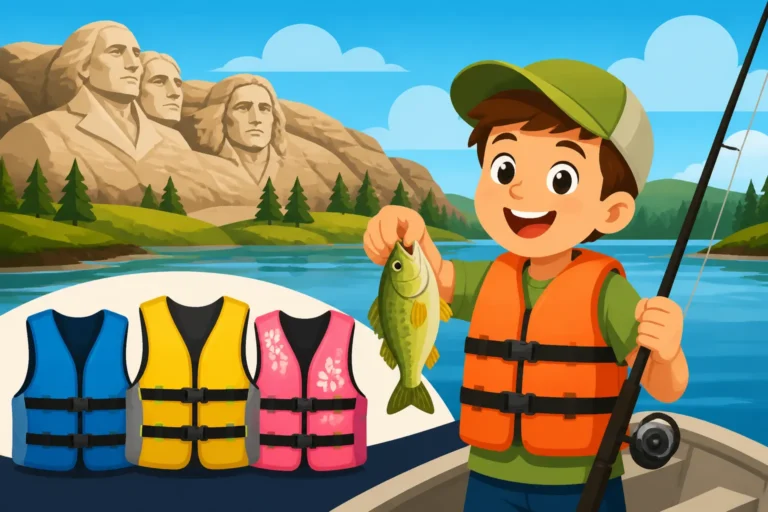
Here's a critical point that often gets overlooked: even if your non-motorized vessel is exempt from state registration because it's under 12 feet, it is never exempt from fundamental safety equipment requirements. The number one safety rule is that you must have a U.S. Coast Guard-approved wearable personal flotation device (PFD), or life jacket, for every person on board your vessel. This applies to kayaks, canoes, paddleboards, and any other boat, regardless of size or whether it has a motor.
Additionally, other safety items like a whistle or other sound-producing device are often recommended or required, especially if you plan to be out after sunset. Carrying a flashlight or navigation lights is also crucial for low-light conditions. These rules are in place to save lives, not to make your life harder. Accidents can happen quickly on the water, even on calm days. Having the right safety gear can be the difference between a minor incident and a tragedy. You can easily find approved life jackets and other safety gear at outdoor retailers like Bass Pro Shops or through online vendors like Amazon. South Dakota Life Jacket Requirements details specific rules for PFDs.
Why Non-Motorized Boat Registration Matters
Beyond simply avoiding a fine, understanding and complying with South Dakota's non-motorized boat registration rules has a much larger impact. It contributes to the overall health and safety of our aquatic ecosystems and ensures that future generations can enjoy the same opportunities we do today.
Protecting South Dakota's Waterways and Fisheries
Every dollar collected through boat registrations, including those for non-motorized vessels, plays a direct role in funding critical conservation initiatives. These funds are vital for programs such as:
- Aquatic Invasive Species (AIS) Prevention: This is a huge battle, especially in states like South Dakota with so many interconnected waterways. AIS, such as zebra mussels or curly-leaf pondweed, can devastate native fish populations, clog motors, and degrade water quality. Registration fees help fund boat inspection stations and public education campaigns to "Clean, Drain, Dry" your boat.
- Habitat Restoration and Preservation: Funds support projects that improve fish spawning grounds, restore shorelines, and protect crucial wetland habitats that are essential for a healthy ecosystem.
- Fisheries Management: This includes fish stocking programs, scientific research into fish populations, and monitoring efforts to ensure sustainable fishing opportunities for species like walleye, crappie, and smallmouth bass. When you buy a license or register a boat, you're directly supporting the very fish you love to catch.
Without the collective contribution from all water users, these essential programs would be severely limited, leading to a decline in the quality of South Dakota's waters and fishing. This is why following even the seemingly small rules for your canoe or kayak is so important.
Ensuring Fair Access and Resources for All Users
South Dakota's waters are a shared resource, and the regulations around boat registration help ensure that everyone has fair access while also contributing to their upkeep. When all users, whether they're in a bass boat or a kayak, are part of the system, the burden of maintaining and improving water access points is shared. This means better boat ramps, more accessible shorelines, and cleaner facilities for everyone to enjoy.
It also means that the GFP has a more accurate picture of how many vessels are utilizing the state's waters, which helps them allocate resources effectively. Understanding user numbers can influence decisions on where to invest in new access points, where to focus enforcement efforts, and how to best manage specific bodies of water. This comprehensive approach benefits all outdoor enthusiasts, from serious anglers chasing South Dakota Walleye Limits to families enjoying a peaceful paddle on a quiet lake.
Penalties for Non-Compliance
Let's be realistic: nobody wants to get a ticket when they're out enjoying nature. Fishing or boating with an unregistered vessel (when required) or without properly displayed validation can lead to fines. Conservation officers patrol South Dakota's lakes and rivers specifically to ensure compliance with these regulations. While they often aim to educate first, repeated or blatant disregard for the rules will result in citations.
The financial penalty can range, but it's always more costly than simply registering your boat in the first place. Beyond the fine, you might also face delays on your trip while the situation is sorted out. More importantly, operating an unregistered vessel undermines the entire system designed to protect South Dakota's precious natural resources. It's not just about avoiding a ticket; it's about being a responsible steward of the environment we all love. South Dakota Fishing Without a License Penalties offers a good parallel to the consequences of not following fishing regulations.
Knowing and following South Dakota's non-motorized boat registration rules isn't just about avoiding a fine; it's about being a responsible outdoor enthusiast and contributing to the conservation of our incredible state's natural beauty. By understanding when your kayak, canoe, or other hand-powered vessel needs to be registered and how to properly do so, you're helping ensure that South Dakota's waters remain pristine and accessible for generations to come. So, go ahead, get your validation sticker, and enjoy the peace of mind that comes with knowing you're doing your part!
Disclaimer
This article is for general informational purposes only and does not constitute professional advice. Laws, prices and regulations vary by location and change over time. Consult a qualified professional for guidance on your specific situation.