Best Crankbait Depth Range for Trolling Lake Oahe
It can be incredibly frustrating to hit the vast, beautiful waters of Lake Oahe, rods rigged and ready, only to feel overwhelmed by the sheer size of it. You know walleye are out there, but how do you get your crankbait down to where they're hiding, especially when the lake bottom seems to be an endless abyss of unknowns? This guide is here to demystify the art of trolling crankbaits on Lake Oahe, helping you understand the best depth ranges to target walleye across the seasons and how to fine-tune your presentation for success.
Understanding Lake Oahe's Depths and Structure for Trolling
Lake Oahe isn't just a big puddle; it's a massive, complex reservoir that was once the Missouri River valley, complete with submerged towns, old tree lines, roadbeds, and countless points and drop-offs. Figuring out where the walleye are holding, and at what depth, is like trying to find a needle in a haystack if you don't know what you're looking for.
The Dynamic Nature of Lake Oahe
One of the biggest challenges on Lake Oahe is its dynamic nature. Water levels can fluctuate, currents can be surprisingly strong in certain areas, and the sheer amount of forage fish—like smelt and shad—can mean walleye are constantly on the move. They don't just stay in one spot; they follow their food, seeking comfortable water temperatures and ambush points. What works today might not work tomorrow, and what's hot in one part of the lake could be dead in another. This makes understanding the general patterns and being adaptable absolutely crucial. You might find fish holding tight to a shallow flat in the morning, only for them to slide off into the deeper channel breaks as the sun gets high. It's a constant puzzle, but that's part of the fun, right? You'll want to check out our Lake Oahe Fishing Guide for a broader overview of this incredible fishery.
Reading Your Electronics for Depth Clues
Your fish finder isn't just a fancy screen; it's your eyes under the water, especially when you're trolling. Learning to interpret what it's telling you is perhaps the most critical skill for dialing in your crankbait depth. You're looking for several things: the bottom contour and composition, baitfish schools, and of course, those tell-tale arches that signify walleye.
When you're cruising along, pay attention to how the bottom is changing. Are you over a flat? A steep drop-off? Are there submerged humps or old river channel edges? These structures are walleye magnets. Furthermore, if you see dense schools of baitfish, walleye are often nearby, either directly below them or lurking on the edges, ready to strike. Your electronics will also show you the depth of these baitfish schools, giving you a strong hint about the preferred feeding zone for walleye. Sometimes, walleye will be suspended in the water column, often at the same depth as baitfish, or perhaps a bit deeper, using the cover of deeper water to ambush prey. Knowing How to Read a Fish Finder for Walleye can dramatically improve your success.
Matching Crankbait Depth to Walleye Location by Season
Walleye behavior, and thus their preferred depth, changes dramatically with the seasons on Lake Oahe. Understanding these patterns is key to choosing the right crankbait and presenting it effectively.
Spring (Pre-Spawn to Post-Spawn)
Spring on Lake Oahe is a time of transition, full of anticipation and rapidly changing conditions. As the ice recedes and water temperatures begin to climb, walleye move from their deeper wintering grounds toward shallower spawning areas.
- Pre-Spawn (early spring, 35-45 degrees F): Walleye are starting to stage near spawning grounds, often congregating in protected bays, shallower flats near river channels, and points that offer easy access to deeper water. They might be in 8-15 feet of water, often relating to submerged wood or rock piles. Trolling shallow to medium-running crankbaits that dive into this range can be very effective. The fish are often lethargic but will hit a slow-trolled bait.
- Spawn (mid-spring, 45-50 degrees F): During the actual spawn, walleye are focused on reproduction and typically move into very shallow water, sometimes just a few feet deep, over gravel or rocky bottoms. Fishing can be tough during this period, as their feeding drive is secondary. However, as they move off the immediate spawning beds, they become catchable again.
- Post-Spawn (late spring, 50-60 degrees F): After the spawn, walleye are often hungry and recovering. They'll generally move slightly deeper than their spawning areas but will still be relating to structure like points, humps, and the edges of flats, usually in the 10-25 foot range. This is a fantastic time for aggressive trolling with medium-diving crankbaits as they look to replenish energy. Focus on areas where baitfish are congregating. Understanding South Dakota Spring Walleye Fishing Techniques can give you an edge during this crucial time.
Summer (Full Warm-Water Season)
Summer means warmer water, and on Lake Oahe, walleye often seek comfort and food in deeper, cooler sections of the lake. However, they're not always on the bottom; suspended walleye are a common sight.
- Early Summer (60-70 degrees F): Walleye will spread out, often following baitfish into main lake basins, deeper points, and along the old river channel breaks. Depths can vary widely, from 15 feet early in the morning or on overcast days, down to 30-40 feet or more during bright afternoons. Medium to deep-diving crankbaits are your best bet. You'll be looking for ledges, humps, and areas with good current flow that concentrate bait.
- Mid-Summer (70+ degrees F): This is when walleye often go deep, sometimes seeking the thermocline if one forms, or simply finding the coolest water with adequate oxygen and forage. They might be found anywhere from 20 to 50+ feet, often suspended over open water or relating to very deep structure. This is prime time for deep-diving crankbaits, potentially augmented with lead core or snap weights to get them down to the target depth. Pay close attention to Water Depth Where Walleye Feed on Lake Oahe in July and other insights for navigating these conditions.
Fall (Cool-Down and Feeding Frenzy)
Fall is a favorite season for many Lake Oahe walleye anglers. As water temperatures begin to drop, walleye sense the approaching winter and go on a feeding binge, often moving shallower again.
- Early Fall (60-50 degrees F): Walleye become incredibly active and aggressive. They will move onto main lake points, large flats, and shallow to medium-depth humps (10-25 feet) to gorge on baitfish. This is often the best time for trophy walleye, as they are putting on weight for winter. Medium-running crankbaits are highly effective, and you might find fish hitting them hard even in moderate depths during the middle of the day.
- Late Fall (below 50 degrees F): As water temperatures continue to drop, walleye will start to move back towards their deeper wintering holes, often along the old river channels in 25-40 feet of water. However, they will still make forays onto shallower feeding shelves, especially during low light conditions or on warmer days. Deep-diving crankbaits or medium divers weighted down become the tools of choice. The fish are still actively feeding, but their metabolism is slowing, so sometimes a slower troll is more effective. You can find more details on general seasonal changes in our South Dakota Fishing Seasons Explained guide.
Crankbait Types and Their Diving Capabilities
Not all crankbaits are created equal. They're designed with different lip shapes and sizes that dictate how deep they'll dive. Knowing which bait to grab for a specific depth is crucial. Many anglers stock up on their favorite models from retailers like Bass Pro Shops or even through convenient online shopping from Amazon.
Shallow-Running Crankbaits (typically <10 feet)
These baits have smaller, often more vertical lips. They're designed to run in the upper water column and are fantastic for targeting walleye in shallow bays, over submerged vegetation just below the surface, or on top of shallow flats.
- When to use them: Early spring and late fall when walleye are actively feeding in shallower water, or during low-light conditions (dawn/dusk) when fish move up to feed. They're also great for covering large shallow areas quickly. Think of fishing a long, shallow point on Lake Oahe near the shore in May, or working over a submerged hump that tops out at 8 feet.
- Examples: Many classic shallow-diving baits like the Rapala Shad Rap (size 5, 7), Berkley Flicker Shad (size 5, 7), or various Bandit series that are specifically labeled as shallow runners. These typically dive 4-9 feet on a long cast or standard trolling setup with monofilament. They often have a tight wiggle, mimicking small baitfish.
Medium-Running Crankbaits (typically 10-20 feet)
This is the bread-and-butter category for much of Lake Oahe's walleye trolling. Medium runners have a more pronounced, angled lip that allows them to get deeper than their shallow-running cousins, but not so deep that they become unmanageable.
- When to use them: Most of the year, especially from late spring through fall. They are incredibly versatile for targeting walleye holding on the edges of main lake points, working transition areas where depth drops from 10 to 20 feet, or covering medium-depth flats. If you're fishing a 15-foot deep channel edge, a medium-runner is often the perfect choice. These baits can cover depths where walleye are actively feeding but aren't necessarily hugging the bottom.
- Examples: Popular choices include the Berkley Flicker Shad (size 9, 11), Bandit Walleye Shallow and Deep, and many sizes of Reef Runner (such as the 600 series). These baits, with their distinct wobbling actions, are often responsible for filling livewells. Their diving depth can be adjusted significantly with line choice and trolling speed, making them exceptionally adaptable. Our guide on Best Lures for South Dakota Walleye goes into more detail on specific models.
Deep-Diving Crankbaits (typically 20+ feet)
When walleye are holding deep, whether it's suspended in the water column or hugging the bottom in 30-40 feet of water, deep-diving crankbaits are essential. These baits have very large, often steeply angled lips.
- When to use them: Primarily during the summer months when walleye retreat to deeper, cooler waters, or in late fall when they move towards wintering grounds. If your electronics are showing fish suspended at 30 feet over 60 feet of water, or you're marking fish tight to the bottom in 40 feet along the old river channel, these are the baits to reach for.
- Examples: Larger Reef Runner (800 series), deep-diving Bandit Walleye Deep, and specific models from Bomber or Storm that are designed for maximum depth. Sometimes, you'll need to employ additional techniques like lead core line or snap weights to get these baits to their absolute maximum advertised depths, or even deeper, effectively creating a controlled dive for your lure. These baits often have a wider wobble and displacement, helping fish locate them in deeper, darker water.
| Crankbait Type | Typical Diving Range (Trolled, Mono) | Best Seasons/Conditions | Example Lures |
|---|---|---|---|
| Shallow-Running | 4-10 feet | Early Spring, Late Fall, Low Light, Shallow Flats | Rapala Shad Rap (small), Berkley Flicker Shad (small), Bandit Walleye Shallow |
| Medium-Running | 10-20 feet | Late Spring, Summer (morn/eve), Early Fall, Points | Berkley Flicker Shad (medium), Bandit Walleye Deep, Reef Runner 600 series |
| Deep-Diving | 20-30+ feet | Mid-Summer (deep water, suspended fish), Late Fall | Reef Runner 800 series, Bomber Deep Diving, Rapala Deep Husky Jerk (large) |
Fine-Tuning Your Crankbait's Running Depth
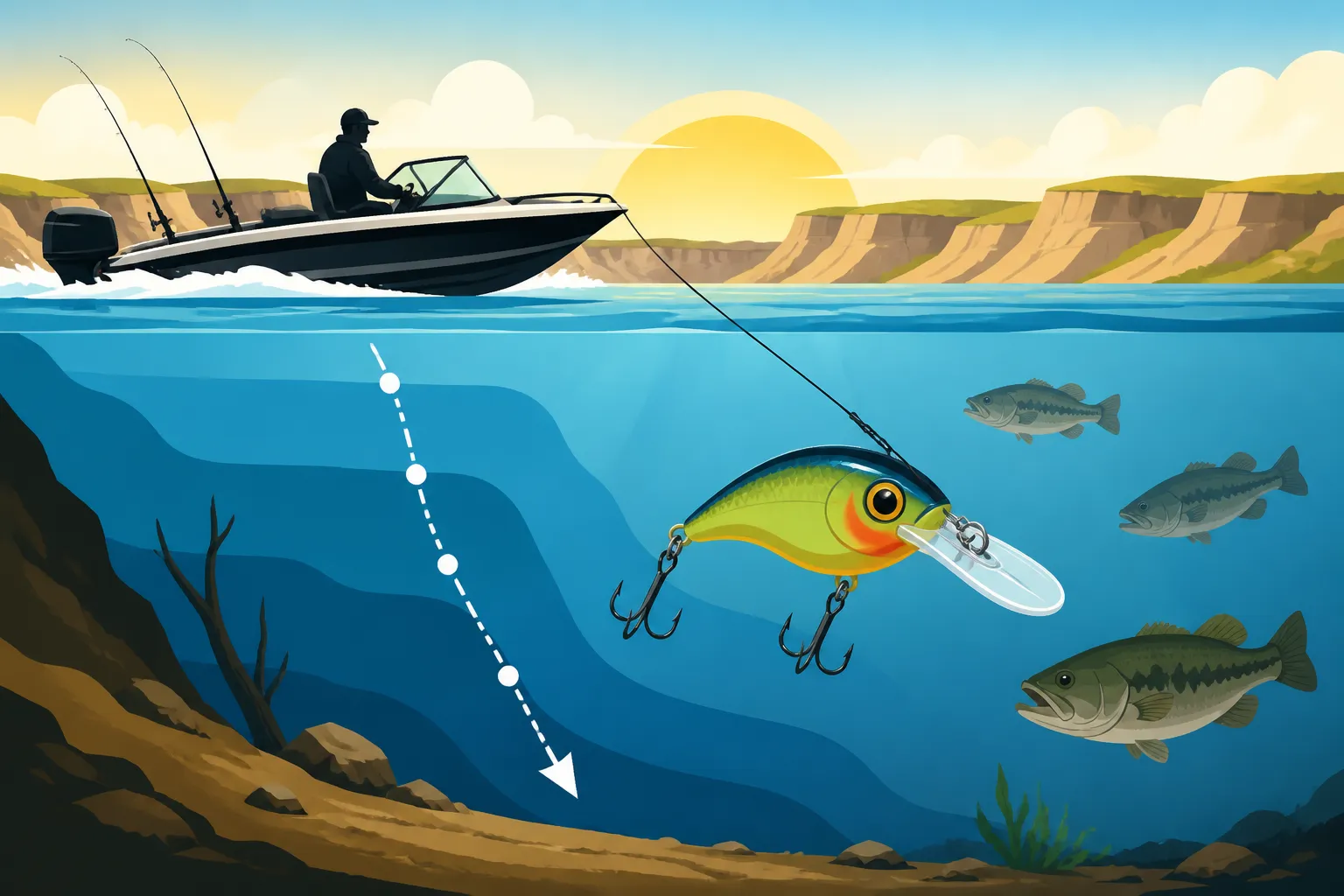
The advertised depth of a crankbait is usually a guideline, often achieved under ideal conditions (e.g., specific line type, length, and trolling speed). In the real world of Lake Oahe, you'll need to know how to adjust your setup to hit those precise depths where the walleye are holding. This is where the art of How to Troll Crankbaits for Walleye truly comes into play.
Line Type and Diameter
The type and diameter of your fishing line have a profound impact on how deep your crankbait will dive. This is due to water resistance and buoyancy.
- Monofilament: This is probably the most common line for crankbait trolling. It has some stretch, which can be forgiving, and its diameter offers a good balance. Thinner diameter monofilament will allow your crankbait to run deeper than thicker mono, all else being equal. A 10-pound test monofilament will get your bait deeper than a 15-pound test of the same brand.
- Fluorocarbon: Less stretch than mono and less visible underwater. Crucially, fluorocarbon is denser than water and sinks, which helps crankbaits dive deeper. If you want to squeeze an extra foot or two out of your bait, switching to fluorocarbon could be the answer.
- Braided Line: Braid has almost no stretch and a very thin diameter for its strength. Because it has minimal water resistance, baits can dive significantly deeper on braid than on mono or fluorocarbon. Many anglers will use a braided main line with a fluorocarbon leader for abrasion resistance and reduced visibility. The downside is that braid's lack of stretch means less forgiveness for short strikes. Remember, many of these line types are easily found and compared on sites like Amazon, helping you select the perfect match for your Best Fishing Rods and Reels for Walleye setup.
Trolling Speed and Rod Angle
Beyond line type, how fast you troll and the angle of your fishing rod can make a difference.
- Trolling Speed: Generally, trolling faster will make many crankbaits dive deeper, as the water pressure on the lip increases. However, some baits can "blow out" or run shallower if trolled too fast, losing their intended action. Experimentation is key here. A slower troll might be better in colder water when walleye are less aggressive, but a moderate speed is usually ideal for getting crankbaits to their optimal depth and action. The ideal speed also depends heavily on the crankbait's design and the specific walleye bite you're experiencing.
- Rod Angle: Holding your rod tip lower to the water reduces the amount of line exposed to wind and water, which can allow the bait to dive slightly deeper. Conversely, holding your rod tip higher will allow the line to catch more wind and water, slightly reducing depth. While these adjustments are usually subtle, they can make a difference when you're trying to tick the bottom precisely.
Using Lead Core, Snap Weights, and Diving Planers
Sometimes, even the deepest-diving crankbait isn't enough, or you need to present a shallower bait at an extreme depth. This is where specialized tools come into play.
- Lead Core Line: This is a segmented line with a lead core wrapped in a braided sheath. Each "color" (usually 10 yards) of lead core line adds a certain amount of depth. By letting out multiple colors, you can get a shallow-running crankbait down to incredible depths, often 30-50+ feet. This is a very effective technique for suspended fish or when you want to present a specific crankbait action much deeper than it would normally run. You match the number of colors to the depth you want to achieve, and you can find guides online or in the South Dakota GFP Fishing Handbook Guide on how many feet per color different trolling speeds will get you.
- Snap Weights: These are weights that clip onto your main line a certain distance in front of your crankbait. They literally drag your lure deeper. The beauty of snap weights is their adjustability; you can easily add or remove weight, or change the distance from your bait, to quickly adjust your depth. This is a great system for experimenting with different depths on the fly. Many anglers swear by a 2-ounce snap weight placed 50 feet in front of a shallow-diving bait to quickly get it into the 20-30 foot range.
- Diving Planers (e.g., Dipsy Divers, Jet Divers): These devices are designed to dive on their own and carry your lure down with them. They're often used for targeting very deep walleye or for getting multiple lines spread out away from the boat. They come in various sizes and can be adjusted to dive to different depths and even track to the side of the boat, helping to cover more water. When the fish strikes, the planer trips, reducing resistance and allowing you to fight the fish directly. These tools are often available at fishing specialty stores and online, ready for your next Lake Oahe adventure.
By mastering these techniques and understanding how your gear interacts with the water, you'll be well on your way to consistently finding and catching walleye on Lake Oahe, no matter what depth they decide to call home. Being prepared with the right crankbaits and the knowledge to get them to the strike zone will make all the difference between a frustrating day and a fantastic one.
Disclaimer
This article is for general informational purposes only and does not constitute professional advice. Laws, prices and regulations vary by location and change over time. Consult a qualified professional for guidance on your specific situation.