Water Depth Where Walleye Feed on Lake Oahe in July
Trying to pin down where walleye are hanging out in the vast expanse of Lake Oahe in the dog days of July can feel like searching for a needle in a haystack. The lake is huge, the sun is high, and those cunning walleye seem to vanish into thin air. Many anglers find themselves aimlessly trolling or casting, wondering if they're even fishing in the right postcode, let alone the right depth. This guide is here to cut through that frustration, offering clear, actionable insights into the typical water depths where walleye feed on Lake Oahe during July, and how you can consistently find them.
Understanding Walleye Movement in Lake Oahe During Mid-Summer
July on Lake Oahe marks a significant shift in walleye behavior from the spring frenzy. The scorching summer sun penetrates the upper water column, causing a thermocline to set up and pushing both walleye and their primary forage deeper. If you're still fishing the shallow breaks from May, you're likely going to come up empty-handed. Understanding these shifts is the first crucial step to unlocking successful summer walleye fishing.
The Influence of Temperature and Oxygen on Walleye Depth
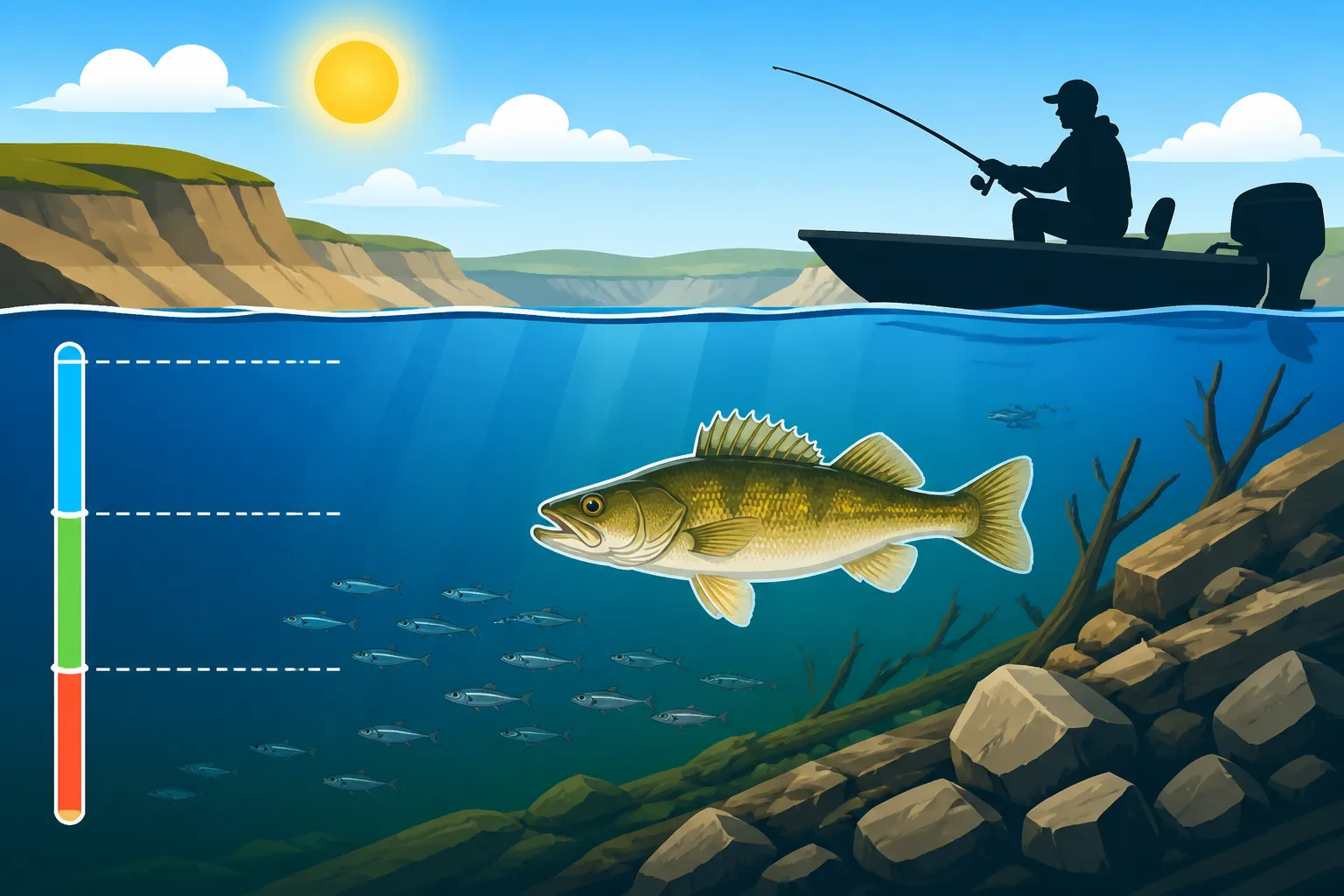
As the summer progresses, Lake Oahe, like many large reservoirs, develops a distinct thermocline. This is essentially a layer of water where the temperature changes rapidly with depth, creating a natural stratification. Above the thermocline, the water is warmer and generally has good oxygen, but it might be too warm for walleye comfort. Below it, the water is much cooler, but if it gets too deep, oxygen levels can plummet. Walleye are cold-blooded creatures, and they seek out their preferred temperature range, which typically sits in the sweet spot just above, within, or sometimes just below the thermocline where cooler, oxygen-rich water provides ideal conditions.
The exact depth of this thermocline isn't static; it can vary based on weather patterns, recent rains, wind, and even different sections of the lake. For instance, the main lake basin might have a deeper thermocline than a shallower arm or bay. It's a dynamic environment, and walleye are always adapting. Their comfort zone often dictates their depth, especially during the brightest parts of the day when they actively seek refuge from intense sunlight and warmer surface temperatures. This is why a good understanding of Reading Water Temperature for Walleye is so important during this time of year.
Forage Movement and Feeding Patterns in July
Walleye are opportunistic predators, and their location is almost always dictated by the presence of their food source. On Lake Oahe, this often means following the movements of rainbow smelt, cisco, or shiners. As the surface waters warm up, these baitfish, which are themselves temperature-sensitive, move into deeper, cooler water. And guess who follows them? That's right, the walleye. You might find massive schools of baitfish suspended in the water column, and the walleye will be lurking nearby, often positioned strategically below or on the edges of these schools, waiting for an easy meal.
During July, walleye feeding patterns can also become more concentrated around specific low-light periods, even in deep water. Early mornings, late evenings, and especially after dark can be prime times for them to become more aggressive and move slightly shallower, though still often relating to deep-water structure. They use the reduced light to their advantage, ambushing baitfish that might be less wary. Understanding these subtle shifts in feeding behavior is crucial; it’s not just about where they are, but when they’re most active at those depths.
Prime Water Depths for Walleye on Lake Oahe in July
So, now that we know why walleye go deep, let's talk about the how deep part. Pinpointing the exact depth can be challenging due to the lake's size and varied structure, but there are definitely prime depth ranges to focus on. Forget the shoreline; July is about finding those mid-lake highways and deep-water haunts.
General Depth Ranges to Target
While there's no magic number that guarantees a bite every time, July walleye on Lake Oahe typically prefer depths ranging from 20 to 45 feet. This range generally corresponds to that comfortable thermocline layer where temperatures are cooler and oxygen is still abundant. However, on clearer days or in particularly transparent sections of the lake, they might even push a bit deeper, sometimes as far as 50-60 feet, seeking maximum light penetration avoidance. Conversely, on overcast days or during prime feeding windows like sunrise or sunset, they might move up to 15-20 feet, especially if there's a good baitfish school in that zone.
It's really about finding the balance between temperature, oxygen, and bait concentration. Think of this 20-45 foot range as your starting point. You'll want to experiment within this range, perhaps starting at 25 feet and working your way deeper to 40 feet, or vice versa, until you start marking fish on your electronics or, even better, getting bites. The most successful anglers are those who continuously adjust their depth until they hit the "zone" where the walleye are holding. If you're wondering when the best time of day to target these depths is, check out our guide on Best Time of Day to Catch Walleye in Summer.
Key Structural Holds in Deep Water
Walleye, even when suspended, are almost always relating to some kind of structure. In July on Lake Oahe, this means looking for deep-water features that offer ambush points, current breaks, or access to both deep sanctuary and shallower feeding flats. These structures act as natural highways and congregating spots for both baitfish and predators.
- Main Lake Points and Submerged Humps: These are classic walleye magnets. Points that extend far into the lake and drop off steeply into deep water are ideal. Walleye will often sit on the deep edges of these points, or on top of submerged humps, waiting for baitfish to swim by. The current from the Missouri River flowing through Oahe also plays a huge role here, as walleye use these features to break the current and conserve energy.
- Deep Breaklines and Ledges: Look for areas where the bottom contour drops off sharply from a shallower flat to much deeper water. These breaklines are super highways for baitfish and offer excellent ambush points for walleye. Often, you'll find walleye suspending just off these ledges or tucked right onto the lip of the drop-off.
- Old River Channels: Before Lake Oahe was impounded, the Missouri River wound its way through the landscape. These old river channels, now submerged, create distinct troughs and varying depths that walleye love. They provide consistent deep water and act as natural pathways for fish movement. Walleye will often be found along the edges of these channels or suspended directly over them if baitfish are present.
- Tree Lines and Submerged Timber: In some areas, particularly in the upper reaches of Lake Oahe, there might be submerged timber from flooded creek beds or old shoreline. These areas can hold a lot of baitfish and offer excellent cover for walleye, though they can be snag hazards for your gear.
To successfully fish these spots, you'll need reliable electronics to not only mark the fish but also map out the underwater topography. Consider using quality gear that you might find on platforms like Amazon to ensure you're getting clear readings of the bottom.
Strategies for Locating and Catching Deep July Walleye
Finding the right depth is one thing, but knowing how to effectively target those walleye once you've located them is another. July fishing on Lake Oahe often requires a combination of advanced electronics, precise boat control, and the right presentation.
Interpreting Sonar and Electronics for Deep Walleye
Your fish finder is your absolute best friend when chasing deep walleye in July. It’s no longer just a luxury; it’s a necessity. Modern sonar units with features like Down Imaging and Side Imaging can reveal incredible detail about the underwater world. When you’re cruising over a potential walleye spot, don’t just look for big red arches. Pay attention to:
- Bait Balls: Large, dense clouds of tiny marks indicate schools of baitfish. Walleye are rarely far from these. If you see bait, start looking for larger marks just below or around the edges of the school.
- Individual Fish Arches: Walleye will often appear as distinct arches on your 2D sonar. In deep water, these arches might be smaller or stretched, but they are still clear indicators of fish. Pay attention to the depth at which these arches appear.
- Bottom Composition and Structure: Your electronics can tell you if the bottom is hard (rocks, gravel) or soft (mud), and can clearly show humps, ledges, and channels. Walleye will often be tightly associated with these features.
- Thermocline Line: Some advanced units can even show the thermocline as a distinct band on the screen. Knowing its depth helps you narrow down your search even further.
Don't just drive over a spot once; make multiple passes, approaching from different angles. This helps you confirm what you're seeing and identify the exact contours or features that are holding fish. Learning How to Read a Fish Finder for Walleye is a skill that will pay dividends, especially on a lake as large and complex as Oahe.
Effective Trolling and Drifting Techniques
Once you've identified promising depths and structures, you need to present your bait effectively. Trolling and drifting are two of the most popular and productive methods for July walleye on Lake Oahe.
- Trolling Deep-Diving Crankbaits: This is a fantastic way to cover water and present lures at specific depths. Use crankbaits designed to dive 20-40 feet, like Rapala Deep Tail Dancers, Berkley Flicker Shads, or custom crankbaits. The key is to match your lure's diving depth to the depth where you're marking fish or structure. You might need to use lead core line or snap weights to get your crankbaits even deeper. For effective Trolling for Walleye on Lake Oahe, pay close attention to boat speed, typically between 1.5 to 2.5 mph, and experiment with different colors until you find what the fish prefer on a given day.
- Bottom Bouncing with Crawler Harnesses: This is a classic walleye killer, especially when fish are relating tightly to the bottom or breaklines. A bottom bouncer allows you to present a live nightcrawler (or artificial crawler) just off the bottom at a precise depth. The weight of the bouncer helps you feel the bottom contour, and the spinning blade of the harness attracts attention. Troll or drift these slowly, keeping your line as vertical as possible. You can find a wide selection of bottom bouncers and crawler harnesses on Amazon.
- Vertical Jigging and Jigging Spoons: If you're marking a tight school of walleye directly beneath your boat, vertical jigging can be incredibly effective. Drop a heavy jig (3/8 oz to 1 oz or more, depending on depth and current) tipped with a minnow, plastic, or a jigging spoon (like a Johnson Silver Minnow or a Rapala Jigging Rap) down to the fish. Lift and drop the lure with a sharp snap, letting it flutter back down. This aggressive presentation can trigger reaction strikes from hesitant walleye. This technique is often discussed in guides about South Dakota Summer Walleye Fishing Techniques.
Remember, walleye can be finicky. Don't be afraid to change lures, colors, speeds, or even depths by a few feet until you crack the code.
Essential Gear for Deep Water Walleye Fishing in July
Having the right equipment can make all the difference when you're targeting deep-water walleye. You need gear that can handle the weight of deep-diving lures, provide sensitivity for subtle bites, and have the power to fight fish from significant depths.
Rods, Reels, and Line Selection
The standard walleye setup might need an upgrade for deep-water July fishing on Lake Oahe.
- Rods: For trolling, a medium-heavy action rod, 7 to 9 feet long, with a moderate taper is ideal. This length helps spread out your lines and absorbs the shock of strikes while trolling. For vertical jigging, a sensitive medium-light to medium-action rod, 6 to 7 feet long, with a fast tip will give you the feel you need to detect light bites in deep water. You can find excellent options for Best Fishing Rods and Reels for Walleye on Amazon.
- Reels: Durable baitcasting reels are generally preferred for trolling with heavier lines and bigger lures, as they handle the strain better and offer precise line control. For jigging, a quality spinning reel with a smooth drag system is perfect. Ensure your reel has enough line capacity for deeper deployments.
- Line: This is where things get critical.
- Braided Line: For your main line, braided line (like PowerPro or Sufix 832) in 10-20 lb test is a game-changer. It has virtually no stretch, which means incredible sensitivity for feeling bites and fantastic power for setting hooks from deep water. Its thin diameter also helps your lures dive deeper.
- Fluorocarbon Leader: Because braid can be highly visible in clear water, always tie on a 6-10 foot fluorocarbon leader (10-15 lb test). Fluorocarbon is nearly invisible underwater and has good abrasion resistance, which is important when fishing around rocky structure.
- Lead Core Line: For serious deep-water trolling with crankbaits, lead core line is essential. Each color segment (typically 10 yards) adds a certain amount of depth, allowing you to precisely control how deep your lure runs.
Lure and Bait Recommendations for Deep Walleye
Your tackle box needs to be stocked with the right tools for deep-water presentations.
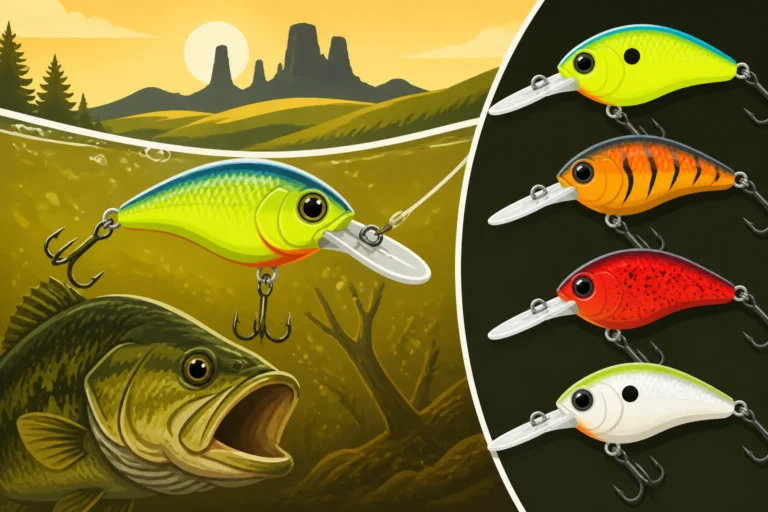
- Deep-Diving Crankbaits: As mentioned, these are staples. Look for models that specifically list dive depths in the 20-50 foot range. Popular colors often include firetiger, perch, blue/silver, and chartreuse. Having a variety of sizes and colors allows you to adapt to different conditions and forage preferences.
- Bottom Bouncers: Stock up on various weights, from 1 oz to 3 oz. The general rule is to use enough weight to maintain a 45-degree angle with your line while trolling or drifting. Pair these with brightly colored or natural-looking crawler harnesses. Live nightcrawlers are often the best bait, but artificial options like Berkley Gulp! Alive! can also be very effective.
- Jigging Spoons and Blade Baits: For vertical jigging, keep a selection of metal jigging spoons (1/2 oz to 1 oz) in silver, gold, and glow colors. Blade baits (like a Cicada or Vib-E) can also be excellent, creating a strong vibration that walleye can detect from a distance.
- Jigs: Heavy jigs (1/2 oz to 1 oz) paired with large soft plastics (like a curly tail grub or a paddle tail swimbait) or live minnows can also work wonders when you're right on top of fish.
Experimentation is key when it comes to lures and bait. What worked yesterday might not work today, and what works in one part of Lake Oahe might not work in another. Always be willing to change and try new things. You can find a vast array of Best Lures for South Dakota Walleye on Amazon, ensuring you're well-equipped for any situation.
Here's a quick reference table to help you plan your July Lake Oahe walleye attack:
| Factor | Early July Conditions | Late July Conditions |
|---|---|---|
| Typical Depths | 20-35 feet | 30-45 feet (potentially deeper in clear water) |
| Key Structures | Main lake points, sharper breaklines, outside bends | Deeper humps, old river channels, main lake basin structure |
| Forage | Smelt, shiners (often suspended) | Smelt (often deeper, tighter to thermocline) |
| Best Techniques | Trolling deep crankbaits, bottom bouncing crawler harnesses | Trolling deep crankbaits (with lead core), vertical jigging |
| Lure Colors | Bright (chartreuse, firetiger), natural (perch, smelt) | Natural (smelt, blue/silver), sometimes glow or darker |
| Water Temp | Surface: 70-75°F; Deeper: 60-65°F | Surface: 75-80°F; Deeper: 55-60°F |
Remember, these are general guidelines, and the walleye will ultimately tell you what they prefer on any given day. Don't be afraid to put in the time to explore and refine your approach. Fishing Lake Oahe for walleye in July is a rewarding challenge, and with the right knowledge and gear, you'll be consistently finding that feeding zone.
Disclaimer
Fishing conditions and regulations in South Dakota, particularly on a dynamic system like Lake Oahe, can change rapidly. Always consult the latest South Dakota Game, Fish and Parks (GFP) regulations guide before heading out on the water. This article is intended for informational purposes only and does not supersede official rules and advisories.