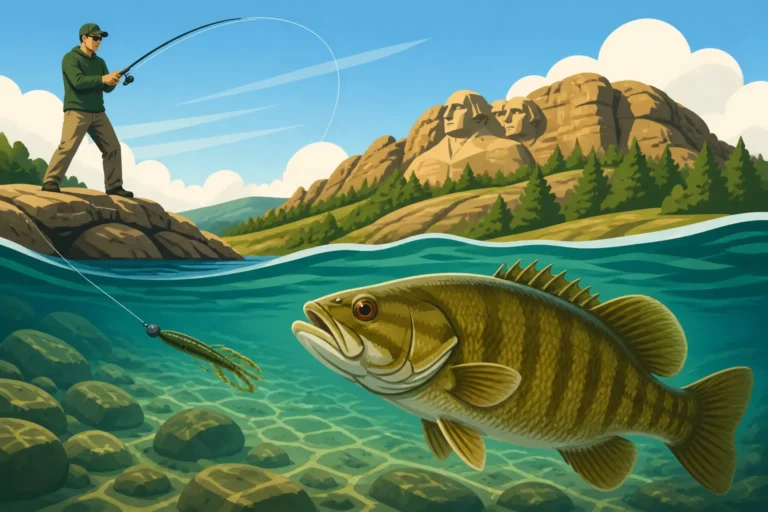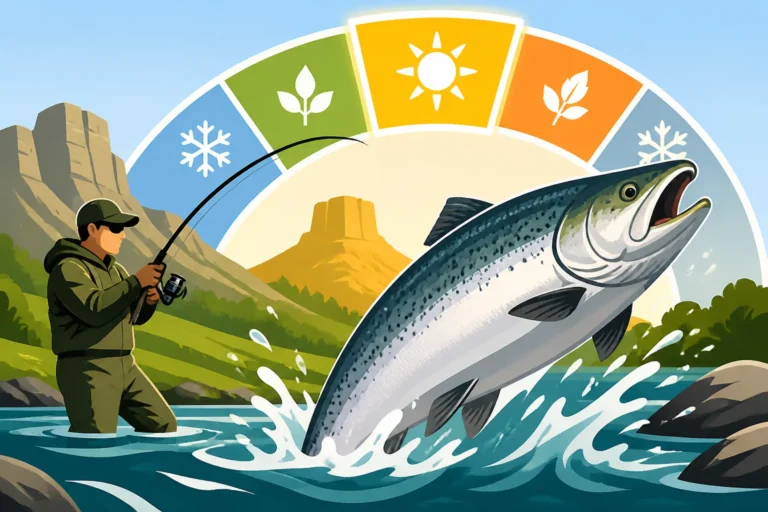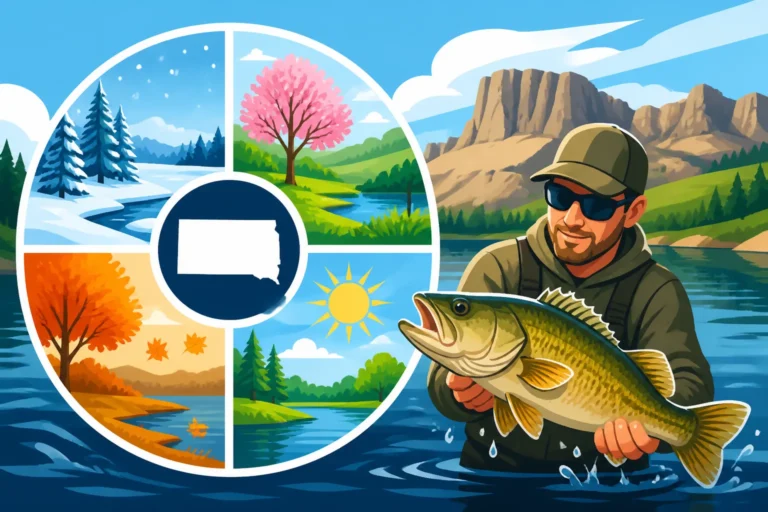
South Dakota Fishing Depth Charts by Season
As an angler, few things are as frustrating as knowing the fish are there but not being able to find them. You’ve got the right bait, the perfect lure, and the conditions feel just right, yet your efforts yield nothing. More often than not, the missing piece of the puzzle isn't your technique or your tackle, but your understanding of where fish are holding in the water column. This comprehensive guide will pull back the curtain on fishing depths in South Dakota, breaking down seasonal patterns and giving you the knowledge to confidently target fish no matter the time of year.
Why Understanding Depth is Crucial for South Dakota Anglers
Think of depth as the fish’s home address. If you don't know where they live, you'll spend all day knocking on the wrong doors. South Dakota's diverse waters, from the vast Missouri River reservoirs to the shallow glacial lakes and the cold Black Hills streams, present a constantly changing environment for fish. Factors like water temperature, oxygen levels, available forage, and even light penetration heavily influence where fish choose to hang out. Ignoring these variables means you're leaving a lot to chance.
The Impact of Water Temperature and Oxygen
Water temperature isn't just about comfort for fish; it's about survival and metabolism. Every fish species has an optimal temperature range where they are most active, feed most efficiently, and grow best. In South Dakota's often extreme climate, water temperatures can fluctuate wildly throughout the year, forcing fish to move vertically in the water column to find their ideal zone.
When summer heats up, surface waters can become too warm and lose oxygen, driving fish deeper to cooler, more oxygenated areas. Conversely, in winter, fish might seek out slightly warmer pockets in deeper water or follow baitfish that are concentrated in specific depths. Understanding these thermal and oxygen gradients, often visible on your fish finder as a "thermocline," is paramount. It's not just about finding any fish; it's about finding active fish. If they're too hot or too cold, they won't be feeding aggressively, and your efforts will likely be in vain.
Forage Location and Predatory Instincts
Fish, especially predatory species like walleye, northern pike, and bass, are constantly on the move, driven by the need to find food. And where there's food, there are usually predators. Forage fish—like shad, smelt, and various minnows—also have preferred depths and habitats. They might relate to submerged structure, weed lines, or open water, moving in schools throughout the day and night.
Your job as an angler is to put your presentation where the food is, or where the predators are waiting to ambush that food. This means constantly observing your electronics for bait balls, studying contour maps for likely ambush points like humps and breaks, and understanding the seasonal movements of both bait and game fish. Sometimes, fish will suspend in open water, chasing schools of bait that are themselves suspended. Other times, they'll be belly to the bottom, picking off crawfish or other benthic organisms. Knowing these patterns helps you select the right depth to present your lure and drastically improves your chances of success.
Spring Fishing Depths in South Dakota: The Thaw and Pre-Spawn Period
Spring is a time of transition and excitement for South Dakota anglers. As the ice recedes and water temperatures slowly climb, fish begin to shake off their winter lethargy and become more active. This period, from ice-out through the spawn and into late spring, sees a significant shift in fish depths as they prepare to reproduce and then recover.
Early Spring Shallow Water Strategies (Ice-Out to Mid-Spring)
As soon as the ice melts, particularly on the smaller glacial lakes and shallow bays of the larger reservoirs, fish like walleye and northern pike will often move into very shallow water. We're talking 3 to 10 feet, sometimes even shallower. Why? Two main reasons: warmer water and available food. These shallow areas warm up first in the spring sun, attracting baitfish and providing a comfortable zone for predators to awaken their metabolism.
This is the pre-spawn period for many species, and they are looking to feed up. Focus your efforts on northern shorelines, rock reefs, dark-bottomed bays, and shallow points that receive ample sunlight. These areas will hold the warmest water and often concentrate forage. For species like walleye, they'll be staging near spawning areas, often hard-bottomed areas like gravel or rock. Consider throwing smaller crankbaits, jigs tipped with live minnows or soft plastics, or even lipless crankbaits in these zones. It's a fantastic time for shore anglers, too, as fish are accessible without needing to venture far from the bank. For a deeper dive into these strategies, check out our guide on South Dakota Spring Walleye Fishing Techniques.
Transition to Deeper Structure (Mid to Late Spring)
As spring progresses and water temperatures continue to rise, many fish will complete their spawning rituals. Post-spawn fish, especially the females, often retreat to slightly deeper water to recover from the arduous spawning process. However, they don't go far. They'll typically be found in depths of 10 to 25 feet, often relating to the first significant breaklines, points, or submerged humps adjacent to their spawning grounds.
The males, on the other hand, might stick around the shallower spawning areas a bit longer, guarding nests or just lingering. As the water warms further, both sexes will begin to spread out and chase forage more actively. This is when fish can start suspending over deeper water if there are schools of baitfish, or they'll relate to mid-depth structure where they can easily move up to feed or down to rest. Trolling with crankbaits that reach these mid-depths, or vertical jigging presentations along breaklines, can be incredibly effective. Understanding How to Find Walleye on a New Lake during this transition can save you a lot of time.
Summer Fishing Depths in South Dakota: Seeking Comfort in the Heat
Summer in South Dakota can be brutal, with scorching heat driving surface water temperatures sky-high. This is when understanding depth becomes absolutely critical, as fish will actively seek refuge in cooler, more oxygenated waters.
The Thermocline and Deep Water Holds
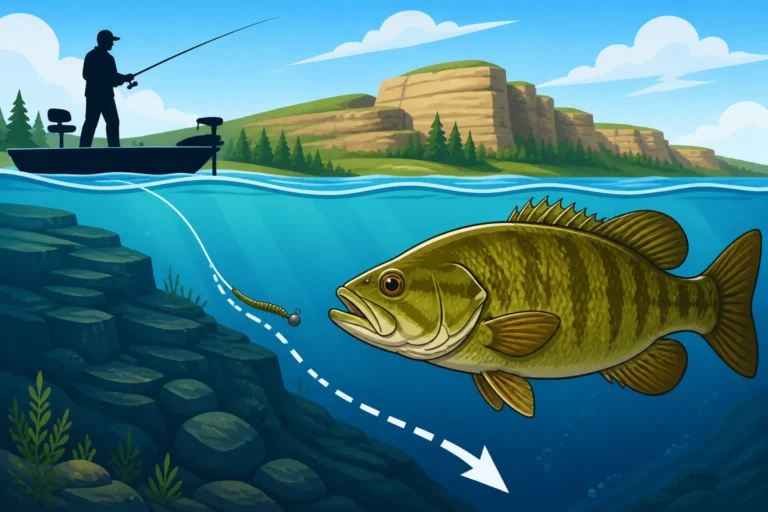
In larger, deeper lakes and reservoirs like those along the Missouri River—Lake Oahe, Lake Sharpe, Lake Francis Case, and Lewis and Clark Lake—a phenomenon called the thermocline develops during summer. This is a distinct layer in the water column where the temperature changes rapidly. Above the thermocline, the water is warmer and often lower in oxygen. Below it, the water is cooler and typically has more oxygen. Fish will often suspend right in or just above the thermocline, as it offers the best balance of temperature and oxygen, along with access to forage that also congregates there.
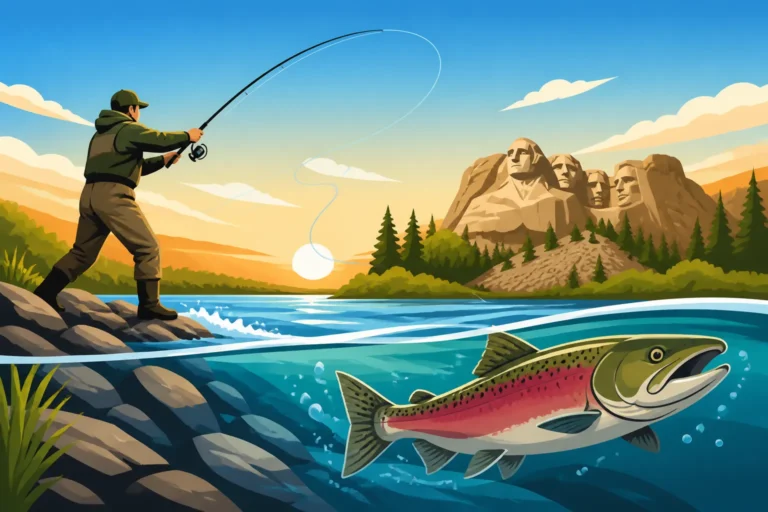
Walleye, smallmouth bass, and even catfish will move into depths of 20 to 50 feet, sometimes even deeper, depending on the specific lake and conditions. They might relate to deep points, submerged humps, channel edges, or steep drops. Trolling deep-diving crankbaits, using bottom bouncers with spinner rigs, or vertical jigging with heavy jigs and live bait are classic summer techniques. For species like Chinook salmon in Lake Oahe, they will also be found in deeper, cooler water, often suspending over open water, requiring specialized gear like downriggers to reach their preferred depths. Getting a good fish finder is key here, and many excellent models can be found on Amazon.
Night Fishing and Low Light Opportunities (Shallow Pushes)
While summer days push fish deep, the cooler temperatures and reduced light of evening and night can draw some species back into shallower water. Walleye, in particular, are notorious for moving onto shallow flats, rock piles, and points under the cover of darkness to feed on baitfish that also migrate shallow.
This means that while the daytime pattern might be 30-40 feet, after sunset, you could be catching them in 5-15 feet. Target areas adjacent to deep-water structure, or shallow points that receive heavy wave action, which can dislodge forage and provide cover. Casting crankbaits, working shallow-running stickbaits, or slip-bobbering with live bait are effective methods during these low-light periods. Night fishing can be incredibly productive for trophy walleye during the summer in South Dakota, so don't be afraid to give it a try. Our guide on Night Fishing Techniques for Summer Walleye has more tips.
Fall Fishing Depths in South Dakota: The Feeding Frenzy Before Winter
Fall is another fantastic season for South Dakota fishing, often characterized by cooler temperatures and fish entering a "feeding frenzy" mode as they fatten up for the long winter ahead. Water temperatures begin to cool, and the thermocline starts to break down, leading to more uniform temperatures throughout the water column.
Following Baitfish into Mid-Depth Zones
As autumn progresses, the cooler surface temperatures allow fish to roam more freely throughout the water column. Baitfish, which previously occupied the thermocline, will often disperse, or school up in various depths, making them easier targets for predators. Walleye and northern pike will actively chase these baitfish, leading to some of the most aggressive bites of the year.
You'll often find fish in mid-depths, anywhere from 15 to 35 feet, but they can be shallower or deeper depending on the specific lake and baitfish location. Look for them on prominent main lake points, large humps, saddles between islands, and along the edges of remaining green weed beds. Trolling crankbaits, casting jigs, or using traditional live bait rigs like slip bobbers or bottom bouncers can all be effective. Pay close attention to your electronics for schools of bait, as the game fish won't be far behind. Anglers targeting salmon in Lake Oahe will find them moving closer to shore and into shallower depths as they prepare for their spawning run, particularly in areas like Whitlock Bay, as detailed in our Chinook Salmon Spawning Run Dates on Lake Oahe article.
Late Fall Deep Water Patterns
As winter approaches and water temperatures drop further, especially in late October and November, fish will begin to transition to their wintering grounds. In many large reservoirs, this means moving into deeper basins, main river channels, and deep holes. They're not necessarily as active as they were in early fall, but they're still feeding, often in more concentrated areas.
Depths of 30 to 60 feet or even more can be productive, particularly for walleye. These fish will often be tightly bunched, making them a prime target if you can locate them. Vertical jigging with heavier jigs, blade baits, or spoons becomes very effective for these deep-water fish. Keep a keen eye on your fish finder, looking for tightly packed schools of fish relating to the bottom or suspended just off of it. This period can offer excellent opportunities for larger, healthier fish as they stock up on calories.
Winter Fishing Depths in South Dakota: Under the Ice
When the lakes freeze over, South Dakota transforms into an ice fishing paradise. While the methods change, the principle of understanding depth remains paramount. Fish still have preferences under the ice, driven by oxygen, forage, and comfort. For a complete overview, be sure to consult our South Dakota Ice Fishing Guide.
Early Ice and Active Fish in Shallow to Mid Depths
Just after "first ice"—when the ice is safely thick enough, usually 4-6 inches—fish can often be found in relatively shallow to mid-depth waters, much like early spring. They remember the fall feeding patterns and will often return to the same areas where they chased baitfish. Depths of 8 to 20 feet are prime at this time, especially on fertile glacial lakes.
Look for fish around shallow points, weed edges (if any green weeds remain), rock piles, and submerged humps. Walleye, perch, and crappie are all very active during early ice. Jigging with small spoons, tungsten jigs tipped with wax worms or minnow heads, or small Rapalas can be incredibly effective. The fish are often still actively feeding and relatively easy to trick. This is a prime time to hit those productive areas you found in late fall.
Mid-Winter Slump and Deep Water Presentations
As mid-winter sets in, and the ice gets thicker and snow covers the surface, light penetration decreases significantly, and oxygen levels can start to drop in shallower areas, especially in less oxygenated lakes. Fish often become less active and retreat to deeper, more stable environments. This is often referred to as the "mid-winter slump."
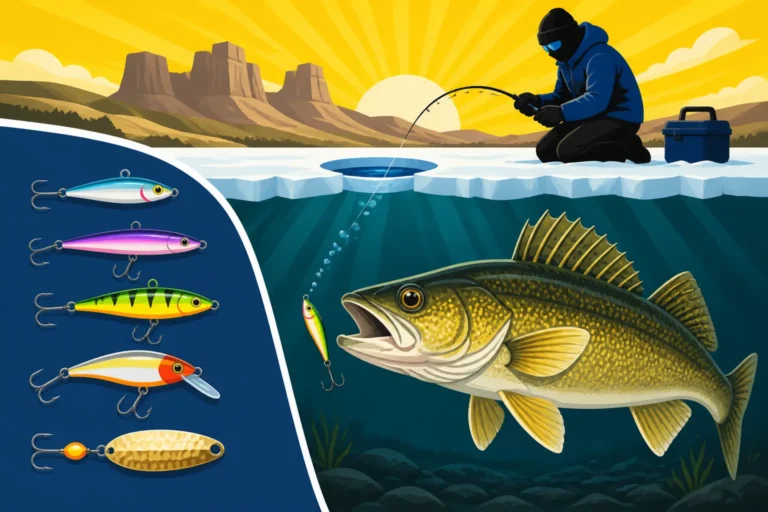
You'll typically find walleye and perch in depths ranging from 20 to 45 feet, often hugging the bottom in main lake basins, deep humps, or distinct channel edges. Crappie, being pelagic, might suspend over these deeper basins. The bite can be subtle, requiring finesse presentations and patience. Using smaller jigs, dead sticks (a rod set in a holder with live bait), or more subtle jigging motions with sensitive rods can coax reluctant bites. Your electronics are absolutely essential during this period to pinpoint these lethargic fish. Many excellent flashers and underwater cameras for ice fishing can be found on Amazon, greatly aiding in depth management.
Late Ice Opportunities and Oxygenated Zones
As late winter approaches and the days start to lengthen, sunlight penetrates the ice more effectively, and small pockets of open water might appear, bringing more oxygen into the system. This can spark another burst of activity in fish. Just before ice-out, fish will often begin to move back towards shallower areas, mimicking their early spring pre-spawn movements.
Depths of 10 to 25 feet can become productive again. Fish are anticipating the thaw and often go on a final feeding binge before the spawn. Look for areas with good oxygenation, such as points, narrows where current might be present (if safe), or areas where feeder creeks enter the lake. Aggressive jigging with larger spoons or minnow-imitating baits can be very effective. This can be one of the best times to catch trophy fish, as they are making their final push to bulk up for the spawn. However, always exercise extreme caution during late ice, as conditions can change rapidly.
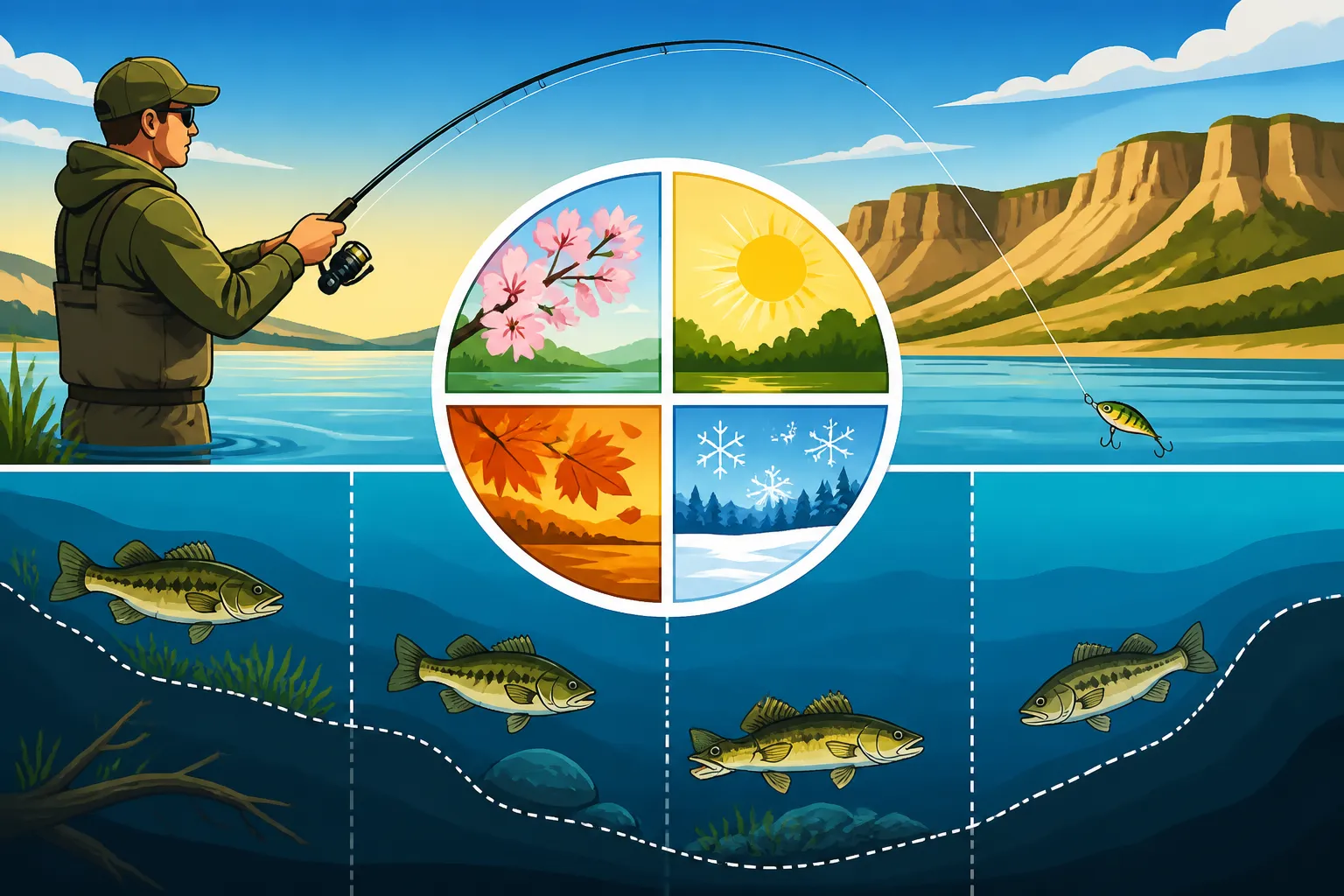
South Dakota Fishing Depth Chart by Season (General Guidelines)
This table provides general depth ranges for common South Dakota game fish in typical scenarios. Always adapt to specific conditions and water bodies.
| Season | Species (Example) | Typical Depth Range (Feet) | Key Locations & Strategies |
|---|---|---|---|
| Early Spring | Walleye, Pike | 3-15 | Shallow, dark-bottomed bays, northern shorelines, rock reefs. Pre-spawn staging. Focus on warming water. |
| Late Spring | Walleye, Bass | 10-25 | First breaklines, points adjacent to spawning areas, submerged humps. Post-spawn recovery and initial feeding. |
| Early Summer | Walleye, Bass | 15-30 | Main lake points, deep weed lines, offshore humps. Fish spreading out, active feeding before thermocline fully sets. |
| Mid-Summer | Walleye, Salmon, Catfish | 20-60+ | Thermocline layer, deep structure (channels, humps, steep breaks), open water for salmon. Seek cool, oxygenated water. Night fishing for walleye in shallows (5-15ft). |
| Early Fall | Walleye, Pike | 15-35 | Main lake points, humps, remaining green weed edges. Following baitfish as water cools and thermocline breaks. Aggressive feeding. |
| Late Fall | Walleye, Crappie | 30-60+ | Deep basins, main river channels, deep holes. Fish congregating in wintering areas, less active but still feeding. |
| Early Ice | Walleye, Perch, Crappie | 8-20 | Shallow points, green weed edges, rock piles. Active feeding, easily accessible fish. |
| Mid-Winter | Walleye, Perch | 20-45 | Deep basins, humps, channel edges. Fish are less active, often bottom-oriented. Finesse presentations. |
| Late Ice | Walleye, Crappie | 10-25 | Points, narrows, areas with improved oxygen. Fish moving shallower, final feeding before thaw. Extreme caution with ice conditions. |
Keep in mind that factors like wind, current (especially on the Missouri River reservoirs), and cloud cover can also influence fish depth. For example, strong winds can push baitfish and warm surface water, concentrating fish on wind-blown points. On cloudy days, fish might tolerate shallower depths for longer.
To really hone your skills in these specific water systems, consider checking out our in-depth guides like the Lake Oahe Fishing Guide or the South Dakota Glacial Lakes Fishing Guide. Each body of water has its own nuances, and learning them is part of the adventure!
Ultimately, becoming proficient at understanding fishing depths in South Dakota takes time, observation, and a willingness to adapt. Don't be afraid to experiment, start shallow and work your way deep (or vice versa), and always pay close attention to what your electronics are telling you. The more you learn about how fish react to their environment, the more successful and rewarding your angling experiences will be.
Disclaimer
The information provided in this guide is for general informational purposes only and is subject to change. Always consult the official South Dakota Game, Fish and Parks (GFP) regulations handbook for the most current and specific rules, limits, and safety guidelines before engaging in any fishing activities. Fishing conditions, fish behavior, and ice thickness can vary greatly. Exercise caution and good judgment in all outdoor pursuits.