Best Fillet Knife for Walleye
Trying to fillet a beautiful South Dakota walleye after a successful day on the water can be incredibly rewarding, but it can also be a real headache if you're wrestling with a dull, unwieldy knife. That distinct rib cage and those tiny Y-bones can turn a quick cleaning job into a frustrating battle, potentially wasting precious meat. This guide is here to cut through the confusion and help you find the absolute best fillet knife to make cleaning your walleye a smooth, efficient, and enjoyable part of your fishing experience.
Why a Dedicated Walleye Fillet Knife Makes All the Difference
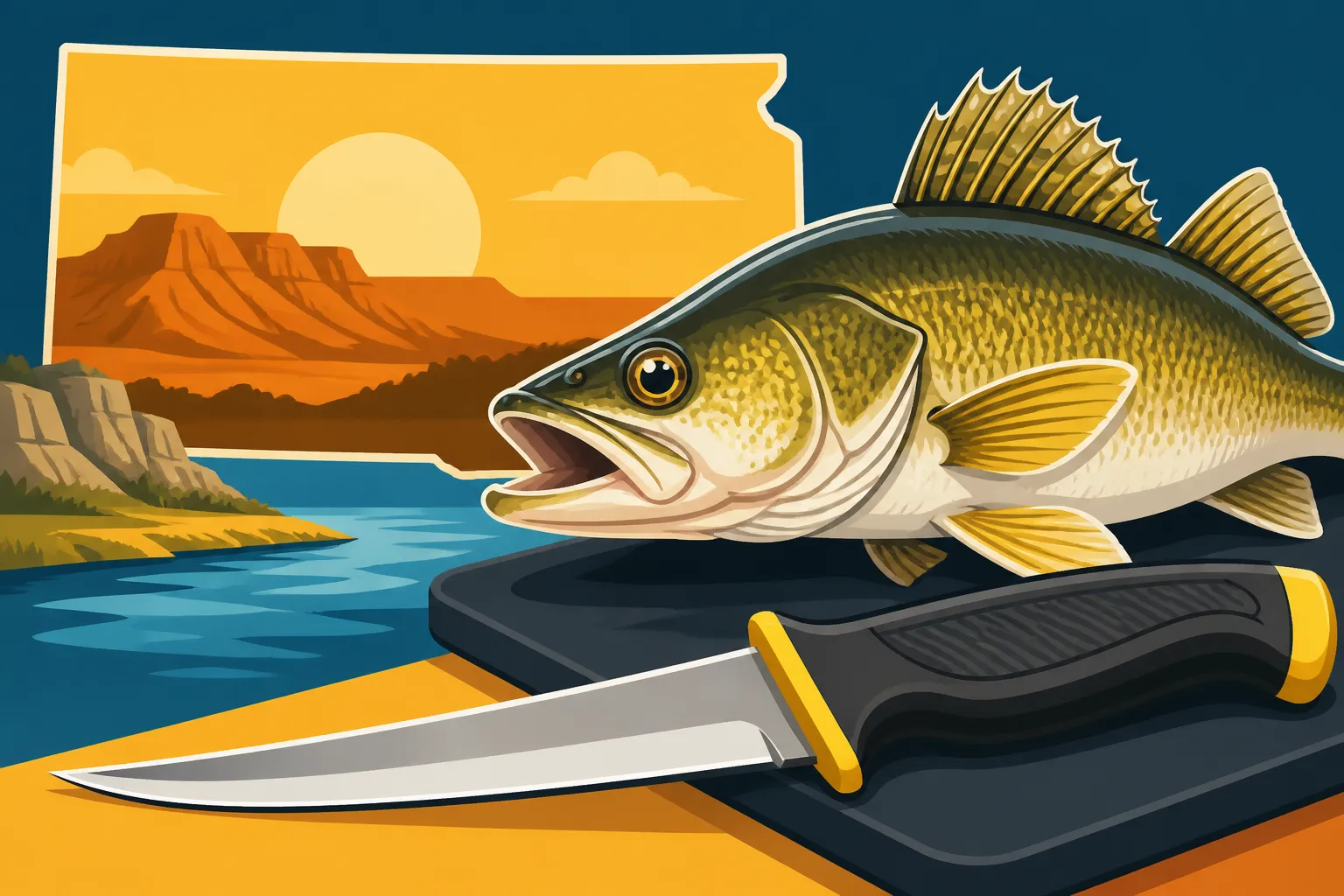
You might think any sharp knife will do, but once you've tried filleting a walleye with a purpose-built knife, you'll never go back. Walleye have a unique anatomy that demands precision, and a general kitchen knife or even an all-purpose fishing knife just won't cut it (pun intended!). The slender body and delicate rib bones of a walleye require a knife that can glide smoothly along the contours without tearing the flesh or leaving too much meat behind.
The Walleye's Unique Anatomy and Filleting Challenges
Walleye are known for their firm, flaky, and delicious white meat, but getting to that meat efficiently requires understanding their bone structure. They have a relatively shallow body cavity compared to some other fish, and their rib bones are quite fine. The biggest challenge for many anglers is navigating around the rib cage and often dealing with small, sometimes elusive, Y-bones in the shoulder area, especially on larger fish. A knife that's too rigid or too thick will make it difficult to follow these bone lines closely, resulting in either wasted meat or a frustrating, slow process.
Imagine the scenario: you've just brought in a beautiful 22-inch walleye from Lake Oahe Fishing Guide or Lake Sharpe Fishing Guide. You're tired, hungry, and ready to enjoy your catch. If your knife isn't up to the task, you'll spend extra time struggling, potentially leaving good meat on the frame. A proper walleye fillet knife is designed to minimize this struggle, allowing you to extract those pristine, boneless fillets quickly and cleanly. It's about respecting the fish and maximizing your meal, turning what could be a chore into a satisfying final step of your fishing adventure.
Efficiency and Maximizing Your Catch
Time is precious, especially after a long day of South Dakota Walleye Fishing Guide. An efficient fillet knife means less time at the cleaning station and more time enjoying the fruits of your labor. Beyond just saving time, a good knife helps you get the most meat possible from each fish. Every ounce of that delicious walleye meat is valuable, and a poorly designed or dull knife will inevitably leave some behind.
Think about the small difference a few extra ounces per fish can make over a limit. If you're catching multiple walleye, those ounces add up quickly. A sharp, flexible blade allows you to hug the backbone tightly, slice through the skin cleanly, and remove the ribs with minimal effort, ensuring you take home maximum yield. This efficiency also extends to the quality of your fillets – clean cuts mean less trimming later and a more visually appealing presentation on the plate. It's an investment that pays for itself in time saved and delicious meat recovered.
Key Features to Look for in a Walleye Fillet Knife
When it comes to choosing the best fillet knife for walleye, there are several critical features that stand out. These aren't just fancy add-ons; they are design elements specifically tailored to make filleting walleye a breeze. Focusing on these will guide you to a knife that feels like an extension of your hand.
Blade Length and Flexibility
For walleye, blade length is crucial. A knife that’s too short won't give you the necessary reach to make long, clean cuts down the length of a larger fish, leading to multiple choppy cuts. On the other hand, a knife that’s excessively long can be cumbersome and reduce precision, especially when working around the smaller rib bones or tackling smaller walleye. For most walleye anglers, a blade length between 6 to 9 inches hits that sweet spot.
Equally important is blade flexibility. A moderately flexible blade is ideal for walleye. It allows the blade to bend and follow the natural contours of the fish’s spine and rib cage, ensuring you get as much meat as possible. A completely rigid blade will make it hard to work around bones without either digging into them or leaving meat behind. Too much flexibility, however, can make it difficult to exert enough pressure for clean cuts, especially through tougher skin or fin bones. A blade with some give, but enough backbone to maintain control, is the gold standard for walleye.
Blade Material and Edge Retention
The material of your blade dictates its sharpness, how long it stays sharp, and how easy it is to maintain. Most quality fillet knives are made from stainless steel, but there are variations. High-carbon stainless steel is often preferred because it offers an excellent balance of corrosion resistance (essential when dealing with fish and water) and edge retention. A knife that holds its edge longer means less time sharpening during a cleaning session and more consistent performance.
When you're processing a full South Dakota Walleye Daily Limit, you don't want to stop every other fish to resharpen. Good edge retention means your blade stays razor-sharp from the first fish to the last. While super-hard steels might hold an edge for an incredibly long time, they can also be more brittle and harder to sharpen when they do eventually dull. Conversely, softer steels sharpen quickly but lose their edge just as fast. Finding that sweet spot in a high-carbon stainless steel blade is key. Many popular brands offer excellent options in this category, and you can often find a wide selection at retailers like Bass Pro Shops or even online at Amazon.
Handle Design and Grip
A comfortable and secure grip is non-negotiable for a fillet knife, particularly when your hands are wet and potentially slimy from cleaning fish. A knife handle should fit well in your hand, preventing fatigue and providing maximum control. Materials like rubberized grips, textured polymers, or even some composite materials offer superior non-slip properties compared to smooth wood or plastic.
Look for an ergonomic design that naturally contours to your hand. Some handles have finger grooves, while others have a more universal shape. The key is that it feels secure and comfortable to you. A slight texture or a non-slip coating on the handle will dramatically reduce the risk of accidental slips, which is a major safety concern when working with a razor-sharp blade. A good handle ensures precision and safety, allowing you to focus on the task at hand rather than worrying about the knife slipping.
Types of Fillet Knives and Their Suitability for Walleye
Just like there's a specific rod for Best Fishing Rods and Reels for Walleye or certain Best Lures for South Dakota Walleye, there are different types of fillet knives. Understanding these variations will help you pinpoint the best tool for your walleye cleaning needs.
Fixed Blade Fillet Knives
Fixed blade knives are the traditional workhorses of the filleting world. They consist of a blade that extends directly into the handle, providing maximum strength and stability. For walleye, this is often the preferred choice due to its robust nature and reliable performance. The solid construction means there are no moving parts to wobble or fail, offering consistent control throughout the filleting process.
The main advantage of a fixed blade is its sheer dependability. When you're making precise cuts around bones, you want a knife that feels solid and doesn't flex unexpectedly at the handle. They are typically easier to clean thoroughly, as there are no nooks or crannies from folding mechanisms for fish bits to get stuck in. This makes them more hygienic and extends the life of the knife. Many anglers swear by their fixed blades, citing their timeless design and unwavering performance, making them a staple in any serious angler's South Dakota Fishing Gear Checklist.
Electric Fillet Knives
Electric fillet knives have gained immense popularity, especially among anglers who process a large number of fish, like during a successful day fishing the Missouri River for South Dakota Walleye Possession Limit. These knives feature a vibrating or oscillating blade that does most of the work for you, making quick work of even tough fish.
For walleye, electric knives can be incredibly efficient, drastically reducing the physical effort and time spent filleting. They excel at quickly separating fillets from the backbone and removing skin. However, they can sometimes lack the delicate precision of a good manual knife, especially when navigating around fine rib bones or trying to maximize meat yield on smaller walleye. It's a trade-off between speed and fine control. Many anglers use an electric knife for the primary cuts and then switch to a smaller, manual knife for detailing or finicky areas. If you regularly catch your South Dakota Walleye Daily Limit, an electric fillet knife could be a game-changer for your cleaning routine, but perhaps not your only knife.
Manual vs. Electric Fillet Knives: A Comparison
Choosing between a manual and an electric fillet knife for walleye often comes down to personal preference, the volume of fish you process, and your desired level of precision. Both have their merits, and many serious anglers opt to have both in their arsenal.
| Feature | Manual Fillet Knife | Electric Fillet Knife |
|---|---|---|
| Precision | High (allows for intricate, delicate cuts) | Moderate (can be less precise around small bones) |
| Speed | Moderate (depends on skill and fish quantity) | High (significantly faster for multiple fish) |
| Effort | High (requires more physical exertion) | Low (knife does most of the work) |
| Portability | Very high (lightweight, no power source needed) | Moderate (requires power source, heavier, cord management) |
| Cost | Generally lower for quality models | Generally higher for quality models |
| Maintenance | Sharpening, cleaning | Blade replacement, motor care, cleaning |
| Best For | Single fish, smaller fish, maximum meat yield, detailed work | High volume of fish, larger fish, reducing fatigue, skinning |
Ultimately, for the best of both worlds, some anglers start with an electric knife to quickly remove the bulk of the fillet from the backbone, then use a sharp, manual fillet knife to meticulously remove the rib cage and skin, ensuring minimal waste and pristine fillets. This hybrid approach allows for both speed and precision.
Maintaining Your Walleye Fillet Knife
A great fillet knife is an investment, and like any good tool, it performs best when properly cared for. Good maintenance not only ensures your knife is always ready for action but also significantly extends its lifespan and keeps you safe.
Sharpening Techniques and Tools
A sharp knife isn't just more efficient; it's safer. A dull blade requires more force, increasing the risk of slips and accidents. For a walleye fillet knife, maintaining a razor-sharp edge is paramount for clean, precise cuts. There are several effective sharpening tools available.
Whetstones: These are traditional and incredibly effective. They come in various grits, allowing you to restore a dull edge with a coarse stone and then refine it to a razor's sharpness with finer grits. The key is maintaining a consistent angle (typically around 15-20 degrees for fillet knives) as you run the blade across the stone. This takes practice but yields exceptional results.
Ceramic Rods or Steels: While often called "sharpening steels," these are more for honing—realigning the microscopic edge of a blade that has rolled over rather than removing metal to create a new edge. Regular honing before and after each use will keep your knife performing at its peak much longer between full sharpenings.
Pull-Through Sharpeners: These are very convenient, especially for beginners. They have preset sharpening angles and guide the blade through ceramic or carbide abrasive slots. While they are quick and easy, they can remove more metal than necessary over time, and might not achieve the same level of sharpness as a skilled hand with a whetstone.
Electric Sharpeners: These provide a fast and consistent edge but can also be aggressive. Look for models designed specifically for fillet knives, with angle guides and multiple stages for coarse and fine sharpening. When choosing a sharpener, whether you prefer manual precision or electric convenience, retailers like Bass Pro Shops offer a wide array of options to keep your blade in top condition.
Proper Cleaning and Storage
After you've carefully prepared your Best Eating Fish in South Dakota fillets, proper cleaning of your knife is essential to prevent corrosion and bacteria buildup. Immediately after use, wash your knife with warm, soapy water. Pay close attention to removing all fish residue from both the blade and the handle, especially if the handle has a textured grip. Rinse thoroughly and dry the knife completely with a clean towel. Never let a fillet knife air dry, as this can lead to water spots and rust, even on stainless steel.
For storage, a blade protector or sheath is highly recommended. This not only protects the sharp edge from dulling against other utensils but also protects you from accidental cuts. Many quality fillet knives come with a custom-fit sheath. If yours doesn't, consider purchasing a universal knife guard. Store your knife in a dry place, away from excessive humidity, to further prevent rust. Proper cleaning and storage are simple steps that ensure your walleye fillet knife remains a reliable tool for years to come.
Conclusion: Making the Cut for Your Walleye Fillet Knife
Choosing the best fillet knife for walleye isn't about finding the most expensive option; it's about selecting a tool that perfectly matches the unique challenges of filleting this prized fish. By focusing on a blade length of 6-9 inches with moderate flexibility, a high-carbon stainless steel blade for excellent edge retention, and an ergonomic, non-slip handle, you'll be well on your way to mastering the art of walleye filleting.
Whether you prefer the precision of a manual fixed-blade knife or the speed of an electric model, remember that proper sharpening, cleaning, and storage are critical to maximizing your knife's performance and longevity. Investing in a quality walleye fillet knife truly elevates your entire fishing experience, turning the final step of preparing your catch into a satisfying and efficient process. So go ahead, make that perfect cut, and enjoy those delicious South Dakota walleye fillets!
Disclaimer
This article is for general informational purposes only and does not constitute professional advice. Laws, prices and regulations vary by location and change over time. Consult a qualified professional for guidance on your specific situation.