South Dakota Smallmouth Bass Fishing Guide
There's nothing quite like the heart-thumping strike of a smallmouth bass, especially in the diverse waters of South Dakota. Many anglers get laser-focused on walleye or northern pike, sometimes overlooking the sheer thrill and challenge that smallmouth offer. This guide is here to change that, diving deep into everything you need to know to successfully target and land these feisty fighters, from understanding their habits to mastering the techniques that bring them to the boat or shore.
Understanding South Dakota's Smallmouth Bass
Smallmouth bass, often called "smallies," are renowned for their aggressive strikes, acrobatic fights, and tenacious spirit. They might not grow to the massive sizes of some other sport fish, but pound for pound, they deliver an exhilarating experience that keeps anglers coming back for more. In South Dakota, these fish thrive in specific environments, offering unique opportunities for those willing to learn their ways.
Smallmouth Bass: A Fighter's Profile
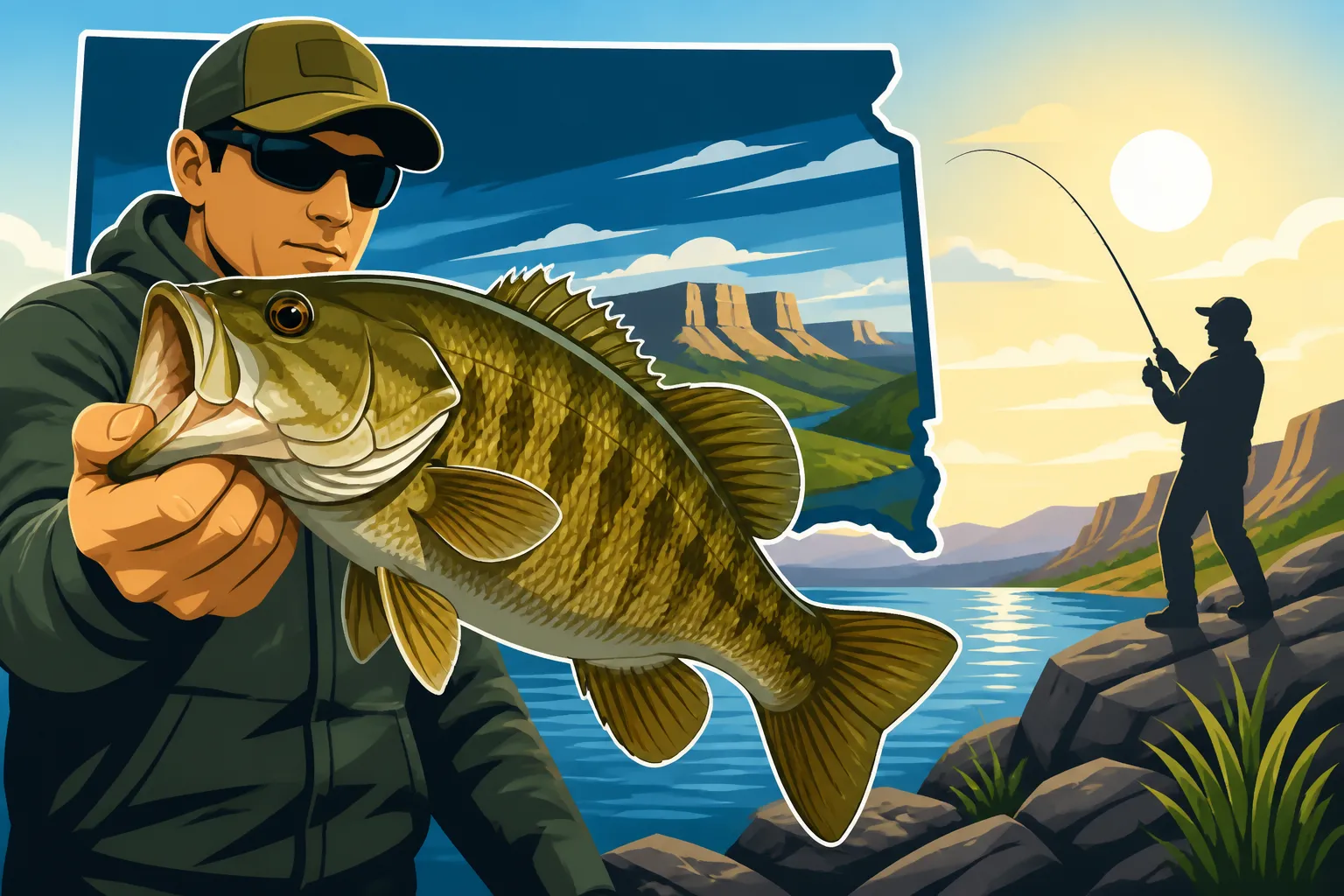
Smallmouth bass ( Micropterus dolomieu) are easily distinguished from their largemouth cousins by their jawline, which doesn't extend past the eye. Their bodies typically range in color from a brownish-green to bronze, often with dark vertical bars or spots along their flanks. What truly sets them apart, however, is their attitude. When you hook a smallmouth, prepare for an aerial display, powerful runs, and a refusal to give up until they're in the net. They are incredibly strong for their size, and their sheer fighting ability is why so many anglers specifically target them.
These fish are highly intelligent and opportunistic predators. They'll readily strike a variety of baits, but they can also be incredibly finicky, especially in clear water or under heavy fishing pressure. Their diet primarily consists of crayfish, minnows, insects, and even smaller fish, which influences the types of lures and presentations that are most effective. Understanding what they're eating and when can be a game-changer when you're on the water.
Beyond their fighting prowess, smallmouth bass are also known for their keen eyesight and sensitivity to light and water conditions. This means that factors like water clarity, sunlight intensity, and even cloud cover can dictate their behavior and where they position themselves. Learning to adapt your approach based on these environmental cues is a crucial step in becoming a consistently successful smallmouth angler in South Dakota.
Habitat Preferences in South Dakota Waters
Smallmouth bass are intrinsically linked to certain types of underwater real estate. Unlike largemouth bass, which often prefer heavy cover like lily pads, submerged timber, and thick weeds, smallmouth gravitate towards rocky environments. Think riprap, gravel beds, boulder fields, and main lake points with significant rock structure. They love areas where they can ambush prey from cracks and crevices, or hide from larger predators.
Clear, cool water is another key factor for smallmouth. While they can tolerate some turbidity, they truly flourish in environments with good water clarity, which allows them to hunt by sight. This preference often places them in the deeper, cleaner sections of reservoirs and in rivers with rocky bottoms and decent current. You'll frequently find them congregating near current breaks, underwater humps, and ledges where they can conserve energy while waiting for a meal to drift by.
In South Dakota, this means the Missouri River reservoirs are prime smallmouth habitat. The vast expanses of Lake Oahe, Lake Sharpe, Lake Francis Case, and Lewis and Clark Lake offer miles upon miles of rocky shoreline, dam riprap, and submerged structure that smallmouth adore. Even in the Black Hills, you'll find them in some of the deeper, clear-water lakes and occasionally in the larger, slower-moving streams, though trout typically dominate those cooler, higher-elevation waters.
What Makes Them Thrive Here
South Dakota's unique geography, particularly the Missouri River system, provides an ideal environment for smallmouth bass to not only survive but truly thrive. The immense reservoirs, carved out of the rolling prairie, offer a perfect blend of deep, clear water, an abundance of rocky habitat, and a rich forage base. Crayfish populations, in particular, are strong in these waters, acting as a primary food source that helps smallmouth grow big and strong.
The seasonal changes also play a significant role. The warm summers allow for ample growth, while the cooler springs and falls trigger intense feeding periods as the fish prepare for spawning or winter dormancy. The fluctuating water levels on the reservoirs, while sometimes challenging for anglers, can also create new habitat and concentrate fish in certain areas, particularly around newly submerged rock or gravel.
Furthermore, responsible fisheries management by the South Dakota Game, Fish and Parks (GFP) helps maintain healthy smallmouth populations. Regulations, stocking programs (where appropriate), and habitat improvement efforts all contribute to a robust fishery. This commitment ensures that anglers have continued opportunities to pursue these incredible fish, making South Dakota a top destination for smallmouth enthusiasts. You can always check the South Dakota Fishing Regulations Explained to stay up-to-date on specific rules for different bodies of water.
Where to Find South Dakota's Best Smallmouth Bass Fishing
South Dakota might be known for its walleye, but don't let that overshadow the incredible smallmouth bass opportunities scattered across the state. From the sprawling Missouri River reservoirs to the hidden gems of the Black Hills, there are numerous spots where you can tangle with these feisty fish. Knowing where to go is the first step in planning a successful trip.
The Missouri River Reservoirs: Prime Smallie Territory
The Missouri River system is undoubtedly the crown jewel for smallmouth bass fishing in South Dakota. These massive impoundments offer an incredible amount of prime habitat, and the smallmouth here grow to impressive sizes, frequently exceeding the 15-inch mark.
Lake Sharpe is often considered a hotspot for smallmouth. Stretching from Oahe Dam near Pierre down to Big Bend Dam, its clear waters, rocky points, and riprap shorelines are perfectly suited for these bass. Areas around the Big Bend Dam itself, with its strong current and abundant rock, are particularly productive. Anglers often find success working crankbaits, jigs, and tubes along the numerous main lake points and underwater humps. Lake Sharpe Smallmouth Bass Near Big Bend Dam is a great resource to explore this specific area.
Lake Francis Case, located further south between Fort Randall Dam and Big Bend Dam, is another fantastic smallmouth fishery. This lake features extensive rocky banks, submerged timber (though less than largemouth prefer), and current-swept areas that smallmouth love. The stretches near Fort Randall Dam, as well as the numerous creek mouths and rocky bluffs, are excellent places to target. Many anglers have found trophy-sized fish here, particularly in late spring and early summer. For more in-depth information, check out Lake Francis Case Smallmouth Bass Fishing.
Finally, Lewis and Clark Lake, formed by Gavins Point Dam near Yankton, offers excellent smallmouth fishing, especially in its lower reaches and around the dam structures. The blend of rock piles, submerged timber, and clear water provides ideal conditions. Shoreline access is decent in many areas, making it accessible for anglers without boats. The Lewis and Clark Lake Smallmouth Bass Fishing Report often provides valuable insights into current conditions and successful patterns. While Lake Oahe certainly holds smallmouth, its vastness and often murkier upper reaches sometimes make them harder to consistently pinpoint compared to its downstream counterparts.
Black Hills Lakes and Streams
While the Black Hills are primarily renowned for their trout fishing, there are some surprisingly good smallmouth bass opportunities for those willing to explore. The cooler, clearer waters of certain Black Hills lakes provide a different, yet equally rewarding, experience.
Pactola Reservoir, the largest and deepest lake in the Black Hills, is a prime example. Its rocky shoreline, steep drop-offs, and exceptional water clarity create an ideal environment for smallmouth. These fish can often be found deeper here than in the reservoirs, especially during the summer months, making vertical jigging and drop-shotting highly effective. The reservoir's beauty combined with the fight of a Black Hills smallie makes for a memorable trip.
Sheridan Lake is another popular Black Hills destination that, while smaller than Pactola, still harbors a healthy population of smallmouth. Its rocky points and submerged structure offer good cover for bass. Anglers often target the transition areas where rock meets deeper water. Though you might encounter fewer trophy-sized fish here compared to the Missouri River, the numbers can be impressive, and the scenic beauty is unparalleled. Other smaller impoundments and even some of the larger, slower-moving streams in the foothills might hold populations, though these are often more localized and require more exploratory effort.
Hidden Gems and Lesser-Known Spots
Beyond the major fisheries, South Dakota has a scattering of smaller lakes and even some river stretches that can offer fantastic, unpressured smallmouth action. These "hidden gems" often require a bit more research and exploration but can yield incredible rewards.
Many of the glacial lakes in northeastern South Dakota, while famous for walleye and perch, can also hold decent smallmouth populations, particularly those with clearer water and rocky substrates. Lakes like Big Stone Lake (on the border with Minnesota), and some others in the Coteau des Prairies region, might surprise you with their smallmouth potential. Look for areas with rocky points, old roadbeds, or submerged humps away from the main weed lines.
Additionally, certain stretches of smaller rivers and larger creeks, particularly those with a good gradient and plenty of rocky bottoms, can hold river smallmouth. These fish are often even more aggressive and hard-fighting due to living in current. Targeting them with small crankbaits, spinnerbaits, or soft plastic tubes can be incredibly effective. Access might be more limited, often requiring wading or using a kayak, but the solitude and the quality of the fish can be well worth the effort. Always ensure you have the necessary South Dakota Fishing License Guide before venturing out.
Essential Gear for South Dakota Smallmouth Bass
Getting geared up for smallmouth bass in South Dakota doesn't have to be complicated, but having the right tools for the job can dramatically increase your success. These fish are known for their strong fights and diverse habitats, so versatile and durable equipment is key. Don't worry, you don't need to break the bank, but investing in quality essentials will pay off.
Rods, Reels, and Lines: Your Core Setup
For smallmouth bass, versatility is important. You'll likely encounter situations where you need to make long casts with light lures, or powerful hooksets in deep water.
Rods: A good starting point is a medium to medium-heavy power spinning rod, typically 6'6" to 7'2" in length, with a fast action. This setup is incredibly versatile for casting jigs, tubes, dropshot rigs, and lighter crankbaits. For slightly heavier presentations like larger jerkbaits or spinnerbaits, or when fishing heavier cover, a medium-heavy baitcasting rod of similar length can be a great addition. Many anglers prefer a slightly longer rod (7' to 7'6") for covering more water and achieving longer casts, which can be crucial on the vast South Dakota reservoirs. If you're looking for a good all-around rod, brands like St. Croix or Fenwick offer excellent options that are widely available on sites like Amazon.
Reels: For spinning setups, a 2500 or 3000 size reel is perfect, offering a good balance of line capacity and smooth drag. For baitcasting, a reel with a moderate gear ratio (around 6.x:1) is versatile, allowing for both faster retrieves with crankbaits and slower presentations with jigs. Make sure the reel has a smooth, consistent drag system, as smallmouth will test it. Shimano and Daiwa are popular choices for their reliability and performance.
Lines: Your choice of line can make a big difference. For spinning reels, 8-10 lb braided line is a fantastic choice for its sensitivity and casting distance. Many anglers will then tie on a 6-10 lb fluorocarbon leader (4-8 feet long) for its invisibility and abrasion resistance, especially when fishing rocky bottom. For baitcasting setups, you can use 10-15 lb fluorocarbon directly, or a heavier braid (15-20 lb) with a fluorocarbon leader, similar to the spinning setup. The key is to balance strength with stealth, especially in the clear waters where smallmouth thrive.
Lure Selection: Matching the Hatch and Conditions
Smallmouth bass are opportunistic, but they can also be particular. Having a diverse selection of lures that imitate their natural prey is essential.
Soft Plastics: These are arguably the most versatile and effective smallmouth baits. Tube jigs, in particular, are legendary for smallmouth. Colors like green pumpkin, watermelon, and crawfish patterns are consistent producers. Pair them with a jig head that matches the depth and current. Ned rigs, soft plastic swimbaits (like Keitech Swing Impact Fat), and dropshot worms (like Strike King Dream Shot) are also incredibly effective. These can be purchased easily from Amazon or local tackle shops. The natural movement and subtle presentations of soft plastics often entice even the most wary smallmouth.
Hard Baits: Crankbaits, jerkbaits, and topwater lures round out your hard bait arsenal. Shallow-diving crankbaits (think square bills) are excellent for rocky banks, while deeper-diving models can probe humps and ledges. Jerkbaits (like the Rapala X-Rap or Lucky Craft Pointer) are phenomenal for mimicking dying baitfish and can trigger vicious strikes, especially in cooler water. Topwater lures (poppers, walking baits) are pure adrenaline when a smallmouth explodes on them in low light or calm conditions. Spinnerbaits and chatterbaits can also be effective, especially when fished around sparse cover or in slightly stained water.
Jigs: Beyond tube jigs, various other jig types excel for smallmouth. Football jigs with brush guards can be fished effectively on rocky bottoms, especially when tipped with a creature bait or chunk trailer. Hair jigs, especially smaller ones, are a classic choice for clear, cold water and can be incredibly subtle. Underspins with a small swimbait can imitate a fleeing baitfish and are great for covering water. Having a range of weights for your jigs is crucial to adapt to different depths and currents. Consider adding a variety of these to your Best Lures to Keep in a South Dakota Tackle Box.
Kayaks, Boats, and Accessories for Access
Accessing prime smallmouth habitat in South Dakota often means getting on the water. Whether you prefer a quiet paddle or the speed of a bass boat, consider your options.
Boats: For the vast Missouri River reservoirs, a fiberglass bass boat or a deep-V aluminum boat offers the speed to cover water and the stability to handle choppy conditions. These boats allow you to quickly move between spots and fish comfortably in various weather. However, they come with maintenance and storage considerations. If you're going to use a boat, understanding South Dakota Boat Safety Requirements and South Dakota Boat Registration Guide is crucial.
Kayaks and Canoes: For accessing shallower areas, smaller lakes, or specific river stretches, a fishing kayak or canoe can be an unbeatable tool. They offer stealth, maneuverability, and the ability to get into spots larger boats can't reach. Look for stable models designed for fishing, with comfortable seats and ample storage for your gear. Many anglers equip their kayaks with small fish finders and trolling motors for added advantage. Just remember to check if your Do You Need to Register a Kayak in South Dakota? or canoe needs to be registered.
Accessories: Beyond your primary craft, several accessories enhance your smallmouth fishing experience. A quality fish finder (with side imaging if possible) is invaluable for locating structure and fish, especially in deep water. Polarized sunglasses are a must for spotting fish and structure in clear water. A good pair of pliers or forceps for hook removal, a sturdy landing net (with a rubberized mesh to protect fish), and a tackle management system (like a soft-sided tackle bag or a traditional tackle box) are also essential. And of course, a comfortable life jacket is non-negotiable for any on-water activity.
Effective Techniques for Catching South Dakota Smallmouth Bass
Once you're geared up and know where to find them, the next step is understanding how to entice these aggressive fish to bite. Smallmouth bass respond to a variety of presentations, and adapting your technique to the conditions is a hallmark of successful anglers.
Casting and Retrieving Strategies
One of the most common and effective ways to catch smallmouth is through various casting and retrieving methods. This approach allows you to cover a lot of water and present lures that mimic fleeing or injured baitfish.
When fishing rocky shorelines, riprap, or main lake points, casting crankbaits is a go-to strategy. Aim your cast so the crankbait hits the rocks or just above them, then retrieve it in a way that allows the lure to deflect off the bottom or structure. This erratic action often triggers a reaction strike from an ambushing smallmouth. Different retrieve speeds and occasional pauses can also be key. For specific strategies, consider exploring Smallmouth Bass Fishing Techniques for Rocky Shorelines. Remember, the Missouri River reservoirs have extensive riprap along causeways and dams that are perfect for this technique.
Jerkbaits are another excellent choice for casting, especially when smallmouth are slightly lethargic or suspended. Cast your jerkbait, twitch it two or three times, and then pause for a moment. The duration of the pause can be critical—sometimes a short pause works, other times a long, deliberate pause is what it takes. This stop-and-go action perfectly imitates a struggling baitfish, making it irresistible to hungry bass. Experiment with retrieve depths; some jerkbaits dive shallow, while others get down deeper.
Spinnerbaits and chatterbaits, while more commonly associated with largemouth, can also be effective for smallmouth, especially in areas with sparse weeds or slightly stained water. Their flash and vibration can draw fish from a distance. Cast them along drop-offs, points, or around submerged cover, varying your retrieve speed until you find what the fish prefer. The key with all these casting techniques is experimentation—don't be afraid to change lures, retrieve speeds, or even angles until you crack the code.
Vertical Jigging and Drop-Shotting
When smallmouth move to deeper water, especially during the summer or when they're congregated on specific structures, vertical presentations like jigging and drop-shotting become incredibly effective. These techniques allow you to precisely target fish holding close to the bottom or suspended over deep structure.
Vertical jigging involves dropping a jig (often a tube jig, hair jig, or a blade bait) directly over a fish or piece of structure and working it with short, sharp lifts and drops of the rod tip. The goal is to make the lure appear like an injured baitfish or crawfish trying to escape. This technique is incredibly precise and allows you to keep your bait in the strike zone for extended periods. It's particularly deadly when you've located a school of fish on your fish finder, perhaps near a deep break line or an underwater hump on Lake Sharpe or Lake Francis Case. Pay close attention to your line for subtle bites, as smallmouth will often just "tick" the bait.
Drop-shotting is a finesse technique that keeps your bait suspended at a specific depth above a weight, allowing for a very natural presentation. This is ideal for finicky smallmouth in clear water or when they are suspended off the bottom. Rig a small soft plastic worm or minnow imitation to a hook, tie it directly to your main line, and then attach a weight to the tag end of the line, usually 8-24 inches below the hook. You can then shake or twitch your rod tip, making the bait dance enticingly without moving the weight from the bottom. This method is incredibly effective for targeting individual fish you see on your electronics or for working specific, small pieces of structure.
Both vertical jigging and drop-shotting require sensitive rods to detect subtle bites. A medium-light to medium power spinning rod with a fast or extra-fast tip is ideal for these techniques. The sensitivity of braided line with a fluorocarbon leader also plays a huge role in feeling those light takes.
Topwater and Jerkbait Action
There's something uniquely thrilling about a topwater strike from a smallmouth bass. When conditions are right, these aggressive fish will smash a surface lure with an explosive force that will get your adrenaline pumping.
Topwater lures like poppers, walking baits (e.g., Heddon Super Spook), and prop baits are incredibly effective, particularly during low-light conditions (dawn, dusk), on overcast days, or when the water is calm. The key is to work these lures with varying retrieves. For a popper, try short pops followed by a pause. For walking baits, a "walk-the-dog" retrieve creates an enticing side-to-side sashay. Experiment with the length of your pauses and the aggressiveness of your retrieve until you find what triggers the bites. Topwater fishing is not just about catching fish; it's about the visual excitement of the strike, making it a favorite for many anglers.
While jerkbaits were mentioned in casting strategies, it's worth emphasizing their specific action. The "jerk-pause" retrieve is what makes them so lethal for smallmouth. The erratic, darting motion mimics a disoriented baitfish, and the pause often seals the deal. Smallmouth will frequently strike a jerkbait as it suspends motionlessly after a series of jerks. This is particularly effective in cooler water temperatures, but it can work any time smallmouth are actively feeding on baitfish.
When fishing topwater or jerkbaits, make sure you have a rod with a fairly soft tip, but enough backbone to set the hook effectively. A medium action spinning or baitcasting rod is often ideal. Also, consider using monofilament line for topwater lures, as its buoyancy helps the lure stay on the surface and its stretch can prevent the fish from throwing the hooks during their acrobatic leaps. For jerkbaits, fluorocarbon can be a good choice for its less stretch and invisibility. Don't underestimate the power of these visual and auditory presentations when a smallmouth is in an aggressive mood.
Mastering Smallmouth Bass Seasons and Conditions
Smallmouth bass are creatures of habit, but their habits shift dramatically with the changing seasons and environmental conditions. Understanding these patterns is paramount to consistent success. What works in spring won't necessarily work in mid-summer, and vice-versa.
Spring: Pre-Spawn and Spawning Strategies
Spring is a highly anticipated time for smallmouth anglers in South Dakota. As water temperatures begin to rise, smallmouth emerge from their wintering areas and begin to move towards shallower waters in preparation for spawning. This pre-spawn period is one of the most productive times to catch large, aggressive fish.
During the early spring, when water temperatures are still cool (around 45-55°F), smallmouth will often be found transitioning from deep wintering holes to shallower points and rock piles. Slow-moving baits like jerkbaits, blade baits, and tubes are excellent choices. Fish these lures slowly, allowing for long pauses. As the water warms further, towards the upper 50s and low 60s, smallmouth become more active. This is when they start to feed heavily to build energy for the spawn. Crankbaits, spinnerbaits, and soft plastic swimbaits become very effective as fish cruise shallower areas looking for food. Focusing on sunny, north-facing banks that warm up quicker can be particularly fruitful. This crucial period is well covered in Pre-Spawn Bass Fishing Techniques.
Once water temperatures hit the mid-60s, smallmouth will begin to spawn. They seek out shallow, gravelly or rocky flats, often near points or protected coves. During the actual spawn, smallmouth can be territorial and protective of their nests. While sight-fishing for bedding bass can be effective, it's also a time when fish are vulnerable. Many anglers choose to avoid targeting spawning fish directly to ensure future populations. However, fish moving to and from spawning areas will still readily bite. Post-spawn, the fish are often exhausted but quickly resume feeding to recover, often moving to slightly deeper edges near their spawning grounds. You can find more details on this transition in Post-Spawn Bass Fishing Techniques.
Summer: Deep Water and Low-Light Tactics
South Dakota summers can be hot, and as water temperatures climb, smallmouth bass often retreat to deeper, cooler water, though they remain active. This is when understanding structure and using your electronics becomes critically important.
During the heat of the day, smallmouth will often congregate on deep structure such as submerged humps, rock piles, ledges, and channel breaks. These areas offer cooler water and easy access to baitfish. This is prime time for vertical jigging, drop-shotting, and using deep-diving crankbaits. Focus on finding schools of baitfish, as smallmouth will almost certainly be nearby. Paying attention to contour lines on your map and identifying underwater anomalies with your fish finder will be invaluable. The key is to get your lures down to where the fish are holding and keep them in the strike zone.
However, don't overlook low-light periods during the summer. Early mornings, late evenings, and even night fishing can be incredibly productive, especially for larger smallmouth. During these times, bass will often move shallower, onto flats or rocky points, to ambush baitfish under the cover of darkness or reduced light. This is when topwater lures can shine, as can shallow-running crankbaits and jerkbaits. Fishing during these cooler periods can offer a reprieve from the summer heat and some of the most explosive strikes of the year.
The presence of current, particularly in the Missouri River reservoirs, also dictates summer smallmouth behavior. Smallmouth will often orient themselves in current breaks behind submerged rocks or points, waiting for an easy meal to be swept by. Fishing eddies and current seams with jigs or tubes can be highly effective.
Fall: Feeding Frenzy Before Winter
Fall is another fantastic time to target smallmouth bass in South Dakota, often rivaling spring in terms of productivity and the chance for trophy fish. As water temperatures begin to cool, smallmouth sense the approaching winter and embark on a feeding frenzy to put on weight.
In early fall, smallmouth will still be found on many of their summer haunts – deep humps, points, and rocky ledges – but they become much more aggressive. Fast-moving baits like crankbaits, spinnerbaits, and even larger jerkbaits can be incredibly effective as the fish are actively chasing down prey. The cool, crisp air and often stable weather make for pleasant fishing conditions. As leaves begin to turn and water temperatures drop into the 50s, smallmouth will often migrate from widespread summer patterns to more concentrated areas. They might school up in deeper main lake areas, around distinct humps, or near baitfish concentrations.
Later in the fall, as water temperatures dip into the 40s, smallmouth will begin to transition to their deep wintering holes. This doesn't mean they stop biting, but their metabolism slows, and they require a slower presentation. Tubes, drop-shots, and hair jigs fished vertically and slowly can be very effective during this period. Finding these deep concentrations of fish can lead to incredible days, as you might find large schools packed into a small area. The key is to slow down your retrieve, downsize your baits, and be incredibly patient. South Dakota's long fall season, especially on the large reservoirs, offers ample opportunity for this aggressive, yet tactical, fishing.
Smallmouth Bass Regulations and Conservation in South Dakota
As anglers, we have a responsibility to protect and preserve our fisheries for future generations. Understanding and adhering to South Dakota's fishing regulations, practicing responsible catch-and-release, and being mindful of conservation efforts are crucial for maintaining healthy smallmouth bass populations.
Understanding Limits and Size Restrictions
South Dakota has specific regulations in place for smallmouth bass, which can vary by body of water. It's not a "one size fits all" situation, so always consult the latest South Dakota Game, Fish and Parks (GFP) fishing handbook or website before you head out. This is where South Dakota Fishing Regulations Explained becomes an invaluable resource.
Typically, there will be a daily limit, which specifies the maximum number of fish you can keep per day, and a possession limit, which is the total number of fish you can have in your possession at any given time (including those at home in your freezer). Additionally, many bodies of water have length restrictions, such as a minimum size limit or a "slot limit." A minimum size limit means any fish shorter than that length must be immediately released. A slot limit protects fish within a certain size range (e.g., all smallmouth between 15-18 inches must be released), often allowing anglers to keep fish smaller than the slot and one or two fish larger than the slot. These regulations are designed to protect the breeding stock and allow fish to reach trophy sizes.
It's critical to know the specific rules for the lake or river you are fishing. For instance, regulations on the Missouri River reservoirs might differ from those on a smaller Black Hills lake. Carrying a measuring device (like a bump board or ruler) and being able to quickly and accurately measure your fish is essential to ensure compliance and avoid penalties. Ignorance of the law is not an excuse, so take the time to review the rules for your chosen destination.
Catch and Release Best Practices
Smallmouth bass are incredibly resilient, but improper handling can still cause harm or even mortality. Practicing good catch-and-release techniques is vital, especially for larger, older fish that are important for the gene pool.
When you land a smallmouth, try to minimize the time it spends out of the water. Handle the fish gently with wet hands to avoid removing its protective slime coat. If you plan to take a photo, do it quickly and hold the fish horizontally, supporting its belly, rather than vertically by the jaw, which can damage its internal organs. Use needle-nose pliers or forceps to quickly remove hooks, especially if the fish has swallowed the lure. Barbless hooks can also make hook removal easier and less stressful for the fish.
If a fish appears stressed or exhausted after a long fight, take the time to revive it before releasing. Hold the fish gently in the water, facing into any current, allowing water to flow over its gills. Gently move it back and forth until it regains its strength and can swim away under its own power. Sometimes, this can take a few minutes. Observing the fish swim away strongly is a rewarding experience and ensures it lives to fight another day.
Protecting Our Smallmouth Fisheries
Conservation goes beyond individual catch-and-release practices. It involves being mindful of our broader impact on the ecosystem. Preventing the spread of invasive species is one of the most significant conservation challenges facing South Dakota's waters.
Invasive species, such as zebra mussels or Eurasian watermilfoil, can outcompete native species, alter habitats, and disrupt the food chain, negatively impacting smallmouth populations. Always "Clean, Drain, Dry" your boat, trailer, and all fishing gear (including waders and nets) before moving from one body of water to another. This simple act is incredibly effective in preventing the spread of these harmful organisms. Inspect your boat thoroughly for any plant matter or clinging organisms, drain all livewells and bilge water, and allow everything to dry completely.
Supporting conservation organizations and understanding where your fishing license fees go is also important. The revenue from South Dakota Fishing License Costs directly funds fisheries management, habitat improvement projects, and research that benefits smallmouth and other fish species. By being informed, responsible, and actively participating in conservation, we can ensure that South Dakota's smallmouth bass fishing remains excellent for generations to come.
Advanced Tips for Trophy Smallmouth Bass
Catching smallmouth bass is one thing; consistently catching trophy-sized smallmouth is another. It requires a deeper understanding of their behavior, the environment, and how to leverage modern technology. For those chasing that truly exceptional fish, these advanced tips can make all the difference. Knowing the potential for South Dakota Smallmouth Bass Record Sizes can certainly fuel that ambition!
Reading Water and Structure
Trophy smallmouth bass are not found by accident; they are found in specific, high-percentage areas. Learning to "read the water" means understanding how current, depth changes, and bottom composition create ambush points and feeding zones.
Current: In riverine systems and large reservoirs like the Missouri River chain, current is a major factor. Trophy smallmouth often hold in subtle current breaks—the calmer water immediately behind a large boulder, a point, or a submerged hump. These areas allow them to conserve energy while waiting for prey to be swept past. Look for eddies, seams where fast water meets slow water, and any structure that disrupts the flow. Learning to identify these spots, even on a broad lake, is crucial. The larger the current break, the more likely it is to hold a bigger fish.
Structure: Beyond obvious rocky points and riprap, look for less obvious but equally productive structures. This includes deep main lake humps, steep drops, rock piles on flat bottoms, old roadbeds, and even isolated timber in predominantly rocky areas. Smallmouth, especially trophy ones, will often relate to the transition zones – where rock meets gravel, where a flat drops into a channel, or where current hits a submerged break. These transition lines are key ambush points. Understanding how South Dakota Fishing Depth Charts by Season can also help pinpoint where fish are holding.
Bottom Composition: While smallmouth love rock, pay attention to variations. A section of bowling-ball-sized boulders might hold fish when pea-sized gravel doesn't, or vice-versa. Sometimes, a subtle patch of sand amidst rocks, or a small area of hard clay, can be a magnet for crayfish, and thus, for big smallmouth. Look for these nuances, and if you catch a fish in a particular spot, try to replicate that exact bottom composition elsewhere.
The Role of Electronics
Modern marine electronics have revolutionized bass fishing, and for trophy smallmouth, they are indispensable tools. Investing time in learning how to use your fish finder, side imaging, and mapping features effectively will put more big fish in your net.
Fish Finders (Sonar/Down Imaging): These are your eyes beneath the surface. Use your traditional 2D sonar to locate baitfish schools, identify schools of bass, and mark bottom transitions. Down imaging provides a clearer, photo-like view directly beneath your boat, helping you discern specific structures like individual boulders, brush piles, or subtle ledges. For trophy smallmouth, being able to pinpoint specific pieces of cover in deeper water is critical, as they often relate tightly to these areas.
Side Imaging: This technology is a game-changer for covering vast areas and identifying offshore structure that you might otherwise miss. Side imaging sends sonar beams out to the sides of your boat, painting a detailed picture of the bottom, showing rock piles, humps, and even individual fish well away from your boat's path. Use it to scan wide expanses of a reservoir, find isolated rock veins, or identify points that extend far from shore. Once you spot promising structure or fish on side imaging, you can then mark a waypoint and move in closer to fish it with traditional sonar or by casting.
GPS and Mapping: Modern units come with incredibly detailed mapping capabilities, often showing contour lines, submerged roads, and even historical riverbeds. Use your GPS to navigate to specific spots, mark waypoints where you catch fish or find promising structure, and track your drifts. This allows you to build a personal "milk run" of productive spots over time. The ability to precisely return to a productive spot, even in a vast reservoir, is invaluable when targeting trophy smallmouth. Companies like Humminbird and Lowrance offer excellent units that you can research on Amazon for features and price comparisons.
Seasonal Movements and Patterns
Understanding the general seasonal patterns is a good start, but truly advanced anglers recognize the subtle nuances and how to exploit them for trophy fish. Big smallmouth don't always follow the crowd.
Pre-Spawn Staging: While many smallmouth move shallow to spawn, the largest females often stage on slightly deeper break lines and points adjacent to spawning flats for an extended period. They are feeding aggressively here. Targeting these deeper staging areas with larger jerkbaits, hair jigs, or slow-rolled spinnerbaits can yield exceptional results. These fish are often the first to move up and the last to leave.
Summer Deep Water Migration: In summer, when many smallmouth disperse, trophy fish often relate to specific, isolated deepwater structures. It might be one particular rock pile on a flat, a specific bend in an old creek channel, or a single humped area that offers a reliable food source and deep-water refuge. These spots can be very subtle and hard to find, but once located, they can be highly productive year after year. Learning to identify these "sweet spots" through electronics and persistent effort is key.
Fall Baitfish Migration: As fall progresses, large smallmouth will often follow schools of baitfish (like ciscoes or shiners) into specific areas. This can lead to incredible feeding frenzies. Identifying these baitfish schools with your electronics and then presenting lures that mimic them (large crankbaits, swimbaits, or flutter spoons) can lead to multiple trophy fish. Sometimes, these baitfish will concentrate near specific river mouths or main lake points. The key is to be mobile and willing to chase the bait.
By combining a deep understanding of smallmouth behavior, meticulous observation of water and structure, and expert use of modern electronics, you'll be well on your way to consistently landing those truly unforgettable South Dakota smallmouth bass.
| Season | Key Locations | Preferred Baits | Retrieve Speed & Action | Notes |
|---|---|---|---|---|
| Spring (Pre-Spawn) | Rocky points, secondary points, shallow flats near deep water | Jerkbaits, crankbaits, tube jigs, spinnerbaits | Slow to moderate, with pauses for jerkbaits; bouncing off structure for crankbaits | Fish are moving up, actively feeding to gain energy. Target warmer water. |
| Spring (Spawn/Post-Spawn) | Shallow, gravelly/rocky flats, protected coves | Tubes, Ned rigs, dropshot, small swimbaits | Slow, subtle presentations; twitching | Focus on edges of spawning areas. Fish may be protective or recovering. Minimize disturbance. |
| Summer (Daytime) | Deep humps, main lake points, ledges, current breaks, submerged rock piles | Drop-shot, vertical jigs (tubes, hair jigs, blade baits), deep-diving crankbaits | Slow, precise presentations; shaking for dropshot; jigging motion | Fish relate to cooler, deeper structure. Electronics are crucial for locating. |
| Summer (Low-Light/Night) | Shallow rocky points, riprap, flats | Topwater, shallow crankbaits, jerkbaits | Moderate to fast for topwater and crankbaits; jerk-pause for jerkbaits | Fish move shallow to feed under cover of low light or darkness. Explosive bites possible. |
| Fall (Early) | Summer haunts but more aggressive; main lake points, rock piles | Crankbaits, spinnerbaits, large jerkbaits, swimbaits | Moderate to fast; aggressive searching | Fish are feeding heavily for winter. Cover water to find active schools. |
| Fall (Late) | Deep wintering holes, concentrated baitfish schools | Tubes, hair jigs, blade baits, dropshot | Very slow, subtle; vertical presentations over schools | Fish are moving deep and slowing down. Precision and patience are key. Find dense concentrations. |
Disclaimer
This article is for general informational purposes only and does not constitute professional advice. Laws, prices and regulations vary by location and change over time. Consult a qualified professional for guidance on your specific situation.