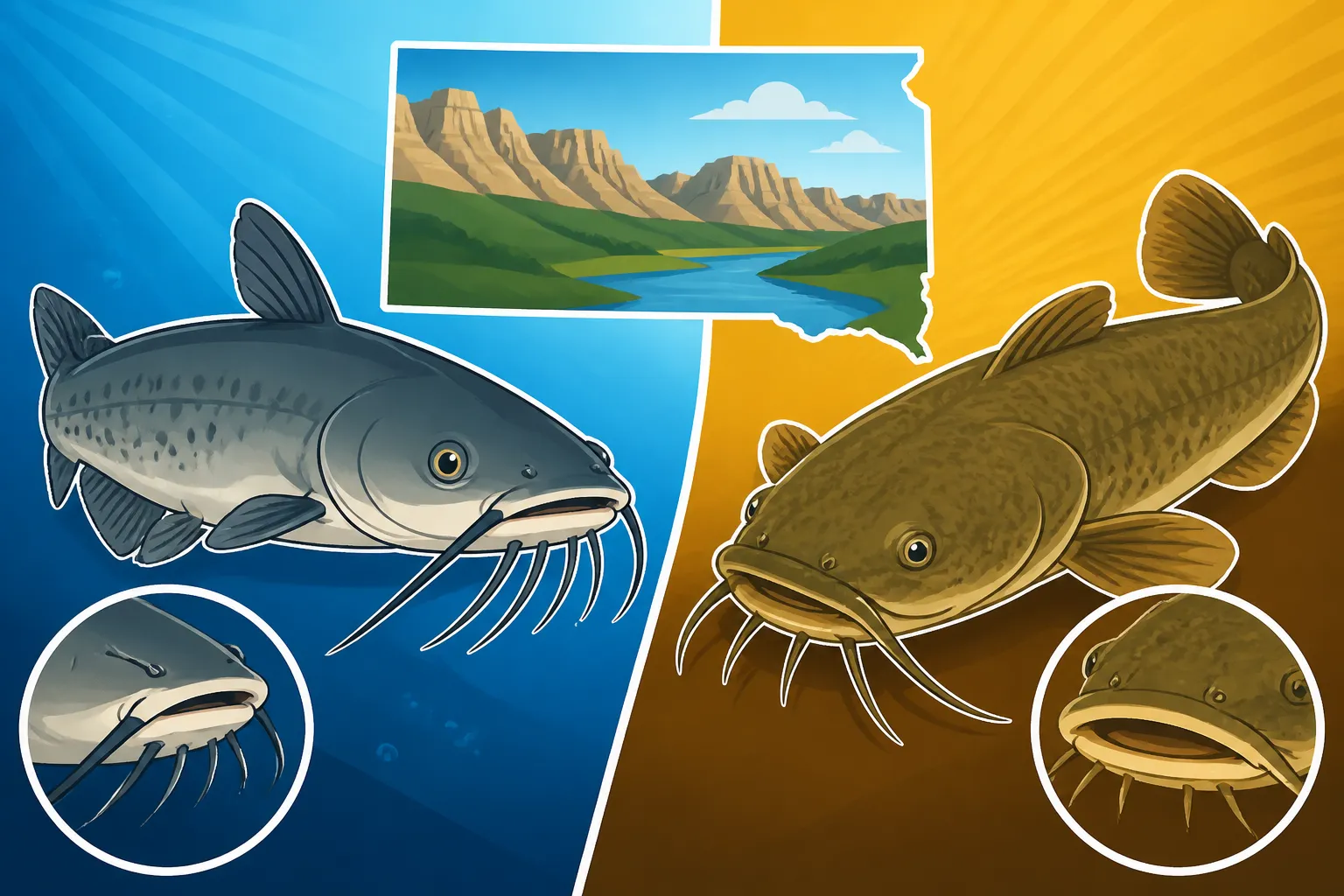
How to Tell a Channel Catfish From a Flathead Catfish
One of the most common head-scratchers for us anglers, especially when the bite is hot and the adrenaline is pumping, is definitively telling the difference between a Channel Catfish and a Flathead Catfish. You've just pulled up a big, whiskered beauty, and in the excitement, it can be tough to be 100% sure what you've got. This guide is here to walk you through the tell-tale signs, ensuring you can confidently identify your catch, understand their unique behaviors, and comply with South Dakota's fishing regulations.
Why Distinguishing Catfish Species Matters for Anglers
It might seem like a small detail, but knowing whether you've landed a Channel Catfish or a Flathead Catfish can make a big difference, not just for compliance but for your fishing strategy and even your dinner plate! Trust me, I've seen plenty of folks at the cleaning station scratching their heads, and it's always better to know before you get there.
Impact on Regulations and Limits
South Dakota, like many states, often has different regulations for different species. This isn't just arbitrary; it's based on population health, growth rates, and conservation efforts. For instance, you might find that the daily creel limits or even the size restrictions, sometimes called slot limits, are different for Channel Cats compared to Flatheads. Imagine having a fantastic day on the Missouri River, reeling in several impressive catfish, only to realize later that you accidentally kept one too many of a specific species because you misidentified it. That's a real bummer and could lead to penalties. It's crucial to consult the South Dakota Fishing Regulations Explained or the South Dakota GFP Fishing Handbook Guide to stay updated, as these rules can change seasonally or annually. Knowing your fish is the first step to being a responsible angler.
Moreover, certain waters might have special management rules. While general statewide rules apply, specific lakes or river stretches, particularly on the Missouri River system, might have nuances for different fish. For example, some areas might have more protective measures for larger, older Flatheads due to their slower growth rate and predatory nature, making correct identification paramount for legal take.
Understanding Behavior and Habitat
These two catfish, while both whiskered bottom dwellers, have distinctly different personalities and preferences when it comes to where they hang out and what they like to eat. A Channel Catfish is often found cruising more open waters, willing to venture from deep holes into shallower, current-swept areas, especially if there's a good scent trail in the water. They're opportunistic feeders, which means they're not too picky.
Flatheads, on the other hand, are true ambush predators. They love heavy cover – think log jams, submerged trees, rock piles, or undercut banks – places where they can hide and dart out to snatch unsuspecting live prey. If you're targeting one specifically, knowing these habitat preferences will inform your choice of fishing spots. Trying to catch a Flathead with a piece of cut bait in the middle of a sandy flat is probably going to be less successful than trying to catch a Channel Cat there. This insight can drastically improve your success rate and lead to a more enjoyable day on the water. For more specific insights into where these magnificent fish reside, check out Missouri River Catfish Fishing Spots.
Taste and Culinary Considerations
Yes, even the dinner plate can be a reason to tell them apart! Both Channel and Flathead Catfish are excellent table fare, but many anglers have a strong preference, and it often comes down to their diet and habitat. Channel Catfish, being more omnivorous, can sometimes have a slightly "muddy" taste if caught from stagnant or overly warm waters, although from clean, flowing rivers like the Missouri, they are superb. Their flesh is typically white, flaky, and mild.
Flathead Catfish, however, due to their almost exclusively predatory diet of live fish, often have a cleaner, firmer, and sweeter white meat. Many consider them the prime eating catfish, especially the smaller to medium-sized ones (under 10-15 pounds). The larger, older Flatheads can develop a stronger flavor and tougher texture, which is why some anglers prefer to release those giants. Understanding these differences can help you decide which fish you'd like to take home for a meal and which ones you might prefer to release for future generations or bigger bragging rights. If you're looking for guidance on preparing your catch, our Best Way to Clean a Catfish guide might be helpful.
Key Visual Differences: Head and Mouth
When you pull a catfish out of the water, the first things many anglers notice are the whiskers and the sheer size. But to truly differentiate a Channel from a Flathead, you need to zoom in on their distinctive head and mouth features. These are often the most reliable indicators.
The Channel Catfish Head: Sleek and Pointed
Picture a classic catfish, and you're likely imagining a Channel Cat. Their head is generally more torpedo-shaped and streamlined, tapering smoothly from the body to a somewhat pointed snout. It's not overly large in proportion to their body. When you look at it from above, it has a more triangular appearance. The eyes are usually positioned more to the sides of the head. This sleek design helps them move efficiently through the water, especially in current, as they forage for food.
Their head structure also reflects their diverse diet. A Channel Cat's mouth is terminal, meaning it's located at the very front of the head, almost like a typical fish mouth. This allows them to easily scoop up food from the bottom, snatch prey from the water column, or even bite at surface insects. The mouth itself is of moderate size, not excessively large or small, and their jaws are usually of equal length or the upper jaw extends slightly beyond the lower. This makes them perfectly adapted for consuming a wide range of items, from crawfish and insects to smaller fish and even decaying matter.
The Flathead Catfish Head: Broad and Flattened
Now, for the Flathead. The name really says it all! Their head is unmistakably broad, wide, and noticeably flattened, especially when viewed from above. It has a robust, almost shovel-like appearance that seems disproportionately large compared to their body size, particularly in younger fish. The eyes are set higher on the head and are relatively small, which makes sense for a fish that primarily ambushes prey from the shadows. The sheer mass of their head gives them a powerful, almost prehistoric look.
The mouth of a Flathead is also a dead giveaway: it's subterminal, meaning it's located slightly underneath the snout, with the lower jaw protruding noticeably beyond the upper jaw. This unique mouth structure is perfectly adapted for their predatory lifestyle. It's designed to engulf live prey whole, sucking it in like a vacuum cleaner. Think of it like a gaping maw that's ready to swallow anything that swims too close to its hiding spot. This difference in mouth placement is one of the easiest and most reliable ways to distinguish the two species, even for a beginner.
Mouth Shape and Jaw Structure
Let's really hone in on the mouth because it's such a critical identifier. The Channel Catfish has a mouth that is more typically "fish-like." As mentioned, it's a terminal mouth, meaning it's right at the tip of the snout. The upper and lower jaws are roughly equal in length, or the upper jaw might protrude just a touch. When you look at a Channel Cat, their mouth doesn't seem like it's specialized for a single type of feeding. This versatility aligns with their omnivorous diet and their willingness to eat a variety of baits, from stink baits to cut bait and even worms.
In stark contrast, the Flathead Catfish possesses a distinct subterminal mouth with a prominent lower jaw that extends beyond the upper jaw. This configuration creates a natural scoop, perfect for engulfing prey. It also hints at their aggressive, predatory nature. They aren't sifting through mud for morsels; they're waiting to ambush. This is why live bait – small sunfish, suckers, or other panfish – is almost always the preferred choice for targeting Flatheads, especially the bigger ones. Their wide, flat head and massive mouth are designed for one purpose: to consume other fish. If you're debating How to Catch Catfish on the Missouri River, your bait choice will definitely be influenced by which species you're after.
Body Shape, Coloration, and Fin Characteristics
Beyond the head, the body and fins offer equally important clues to differentiate these two common South Dakota catfish. From their overall physique to the subtle patterns on their skin and the unique shapes of their tails, each species tells its own story.
Channel Catfish Body and Color: Spotted and Streamlined
The Channel Catfish is truly built for speed and agility. Its body is more slender and streamlined, tapering gracefully towards the tail. It generally appears more athletic and less "chunky" than a Flathead of similar length. Young Channel Cats are easily identified by the distinct black or dark spots scattered along their sides, especially prominent on their silvery-gray to olive-brown bodies. As they mature and grow larger, these spots can fade significantly, sometimes disappearing almost entirely in very old, big fish, making identification a bit trickier, but usually, a faint remnant remains.
Their coloration can also vary widely depending on the water clarity and substrate of their environment. Fish caught from clear, sandy-bottomed lakes or rivers like parts of Lake Sharpe might be lighter, almost silvery-blue, while those from muddier, darker waters might be a deeper olive or brown. This adaptive camouflage helps them blend into their surroundings, whether they're lurking in a deep hole or darting through a weed bed. However, the overall sleekness and tendency for spotting (even faded) remain key identifiers.
Flathead Catfish Body and Color: Mottled and Robust
In contrast, the Flathead Catfish boasts a much more robust, stout, and somewhat stocky body. They have a powerful, almost muscular appearance that speaks to their strength and predatory lifestyle. Their body is less streamlined and often appears thicker through the middle. When it comes to coloration, Flatheads are masters of camouflage, sporting a distinctive mottled, blotchy pattern of brown, olive, and yellow. This "calico" or "splotchy" appearance, often with dark spots and irregular patches over a yellowish or olive base, allows them to disappear seamlessly into the submerged log jams and rocky crevices they call home.
Their underside is typically a creamier yellow or white, creating a countershaded effect that helps them blend in whether viewed from above or below. This irregular patterning is a key visual clue that rarely fades with age, unlike the spots on a Channel Cat. If you're staring at a fish with a broad, flat head and a body covered in these beautiful, irregular blotches, you've almost certainly got a Flathead. These are the bruisers you often hear about in stories of Biggest Flathead Catfish Caught in South Dakota.
The Distinctive Fin Features
Perhaps one of the most definitive ways to tell these two apart, especially when spots might be faded or colors are misleading, is by looking at their tail (caudal fin) and anal fin.
The Channel Catfish has a deeply forked tail. Think of it like a swallow's tail – a very pronounced V-shape with distinct upper and lower lobes. This deeply forked tail is a classic indicator of a fish built for bursts of speed and agility, allowing them to quickly change direction and pursue prey or escape danger. They also possess a rounded anal fin (the fin on the underside near the tail) with 24-29 rays. While counting fin rays isn't practical on the water, the generally rounded shape is noticeable.
The Flathead Catfish, on the other hand, has a tail that is distinctly different. It's either squared off or, at most, very slightly notched, but never deeply forked. It often looks like a sturdy, straight-edged paddle. This less hydrodynamic tail reflects their ambush predator strategy; they don't need to chase prey far but rather use powerful bursts from a stationary position. Their anal fin is also shorter and more rounded, containing 14-17 rays. Again, the number of rays is for identification guides, but the overall shorter, more rounded appearance compared to the Channel Cat's anal fin can be observed. This difference in fin shape is one of the most reliable features for positive identification, regardless of the fish's size or age.
Habitat and Diet: Where and What They Eat
Understanding the preferred habitat and diet of Channel and Flathead Catfish isn't just academic; it's a game-changer for your fishing success. If you know what they like to eat and where they like to hang out, you're halfway to putting them in your net.
Channel Catfish: The Omnivorous Scavenger
Channel Catfish are incredibly adaptable and, frankly, a bit opportunistic. They're often found in a wide variety of environments across South Dakota, from the big Missouri River reservoirs like Lake Oahe and Lake Sharpe, to glacial lakes in the eastern part of the state, and even smaller ponds and rivers. They prefer areas with moderate to slow currents, often congregating in deeper holes, channels, or near structure like submerged timber, riprap, and bridge pilings, especially if there's a good current bringing food to them. They're also very tolerant of varying water conditions, which contributes to their widespread distribution.
When it comes to diet, Channel Cats are true omnivores. They'll eat just about anything that smells appealing. This includes insects, crawfish, mollusks, smaller fish (both live and dead), aquatic vegetation, and even fruits or berries that fall into the water. This diverse palate makes them relatively easy to catch on a variety of baits. Think prepared stink baits, cut bait (like shad or sucker chunks), chicken livers, nightcrawlers, and even corn or hot dogs. If you're looking for Best Bait for South Dakota Catfish, you'll find Channel Cats are quite receptive to a broad spread. This adaptability in diet is part of why they thrive in so many South Dakota waters and why they are such a popular target for anglers, whether you're bank fishing or from a boat.
Flathead Catfish: The Predatory Bottom Dweller
Flathead Catfish have a much more specialized lifestyle. They are primarily solitary ambush predators, preferring to hide in heavy cover and wait for prey to come to them. Their ideal habitat consists of deep holes, log jams, submerged trees, undercut banks, and large rock piles, especially in slow-moving to moderate-current sections of large rivers like the Missouri River. They love structure that offers both cover and a current seam where baitfish might be pushed by. You won't typically find them in vast, open flats or clear, shallow lakes. They are creatures of concealment and power.
Their diet reflects their predatory nature: Flatheads almost exclusively eat live fish. They are not scavengers in the way Channel Cats are. Their diet consists of sunfish, suckers, carp, drum, and any other smaller fish they can ambush and swallow whole. This means if you're targeting Flatheads, your bait choice is critical. Live bait, presented close to their preferred cover, is almost always the key. Using small sunfish, suckers, or even large shiners, hooked carefully to stay alive and active, is your best bet. Forget the stink bait for Flatheads; they want a meal with a heartbeat! This makes fishing for them a unique challenge that many dedicated catfishing enthusiasts absolutely love, pursuing the thrill of that powerful, initial strike. When considering Catfish Limits and Size Rules, remember that Flatheads generally grow much larger and older, and responsible angling means understanding their specific conservation needs.
To help visualize these key differences at a glance, here’s a handy table summarizing the main points:
| Feature | Channel Catfish | Flathead Catfish |
|---|---|---|
| Head Shape | Sleek, conical, somewhat pointed snout | Broad, wide, noticeably flattened |
| Mouth Position | Terminal (at the tip of the snout) | Subterminal (underneath the snout) |
| Lower Jaw | Equal to or slightly shorter than upper jaw | Protrudes noticeably beyond upper jaw |
| Body Shape | Streamlined, slender, athletic | Robust, stout, stocky, powerful |
| Coloration | Silvery-gray to olive-brown, often with spots (especially when young), fades with age | Mottled, blotchy pattern of brown, olive, yellow, irregular patches, rarely fades |
| Tail (Caudal Fin) | Deeply forked | Squared off or slightly notched (never deeply forked) |
| Anal Fin | Rounded, longer (24-29 rays) | Shorter, more rounded (14-17 rays) |
| Diet | Omnivorous (insects, crawfish, small fish, dead bait, vegetation) | Predatory (almost exclusively live fish) |
| Preferred Habitat | Moderate currents, deeper holes, channels, riprap, diverse waters | Heavy cover: log jams, submerged trees, undercut banks, deep holes, strong current breaks |
Ultimately, whether you're chasing the widespread and feisty Channel Cat or the powerful, reclusive Flathead, knowing how to identify your catch enhances your entire fishing experience. It allows you to tailor your techniques, respect the regulations, and appreciate the unique characteristics of each species. Happy fishing, and may your lines be tight! You can find a lot of useful gear, from fishing books to tackle, on sites like Amazon to help you prepare for your next trip. Remember, the more you learn about the fish you pursue, the better and more rewarding your time on the water will be! Always double-check the current South Dakota Fishing License Guide and specific regulations before heading out.
Disclaimer
This article is for general informational purposes only and does not constitute professional advice. Laws, prices and regulations vary by location and change over time. Consult a qualified professional for guidance on your specific situation.