How to Catch Catfish on the Missouri River
Many anglers, whether seasoned locals or first-time visitors, often stare at the mighty Missouri River and wonder how to even begin to tackle its legendary catfish population. It’s easy to feel a bit lost amidst the powerful currents, endless stretches of water, and the sheer variety of baits and rigs out there. You might have tried a few spots, but if consistent success has eluded you, don't worry – you're in good company. This guide is crafted to cut through the confusion and provide you with a detailed, practical roadmap for consistently catching catfish on the Missouri River in South Dakota.
Understanding Missouri River Catfish and Their Habits
Before you even cast a line, it helps to understand who you're fishing for. The Missouri River is a dynamic ecosystem, and the catfish living within it are adapted to its ever-changing conditions. Knowing their habits is half the battle won, giving you a huge advantage in pinpointing where they'll be and what they'll be willing to bite.
Species You'll Encounter: Channel, Blue, and Flathead Catfish
When you're fishing the Missouri, you're primarily targeting three distinct species of catfish, each with its own preferences and characteristics. Understanding these differences can significantly impact your approach and success.
Channel Catfish are by far the most abundant and widespread catfish in the Missouri River system. They're recognized by their slender, somewhat cylindrical bodies, deeply forked tails, and scattered dark spots, particularly on younger fish. Channels are opportunistic feeders, meaning they'll eat just about anything, which makes them a fantastic target for anglers of all skill levels. They typically range from a couple of pounds up to 15-20 pounds in the river, though larger ones are certainly possible. Their diet is incredibly varied, consuming insects, crawfish, smaller fish, and even decaying organic matter. They have an excellent sense of smell, which is why stinky baits are so effective. You can find them in a wide array of habitats, from shallow flats to deeper holes and around submerged cover.
Blue Catfish are the true giants of the Missouri River. While not as prevalent as channel cats in South Dakota's stretches, they are present and offer a chance at a truly trophy-sized fish. Blues have a more robust, stocky body, a slightly humped back, and a deeply forked tail, but they lack the spots of the channel cat. Their coloration is typically steely blue to gray. Unlike channel cats, blue catfish are primarily piscivorous, meaning they prefer to feed on live or cut fish. They are often found in deeper, swifter currents, favoring main river channels, deep holes, and around structural elements like wing dikes, bridge pilings, and submerged timber. Catching a blue catfish often requires heavier gear and a more patient approach, but the reward is undeniable. They can easily exceed 50 pounds in the Missouri River.
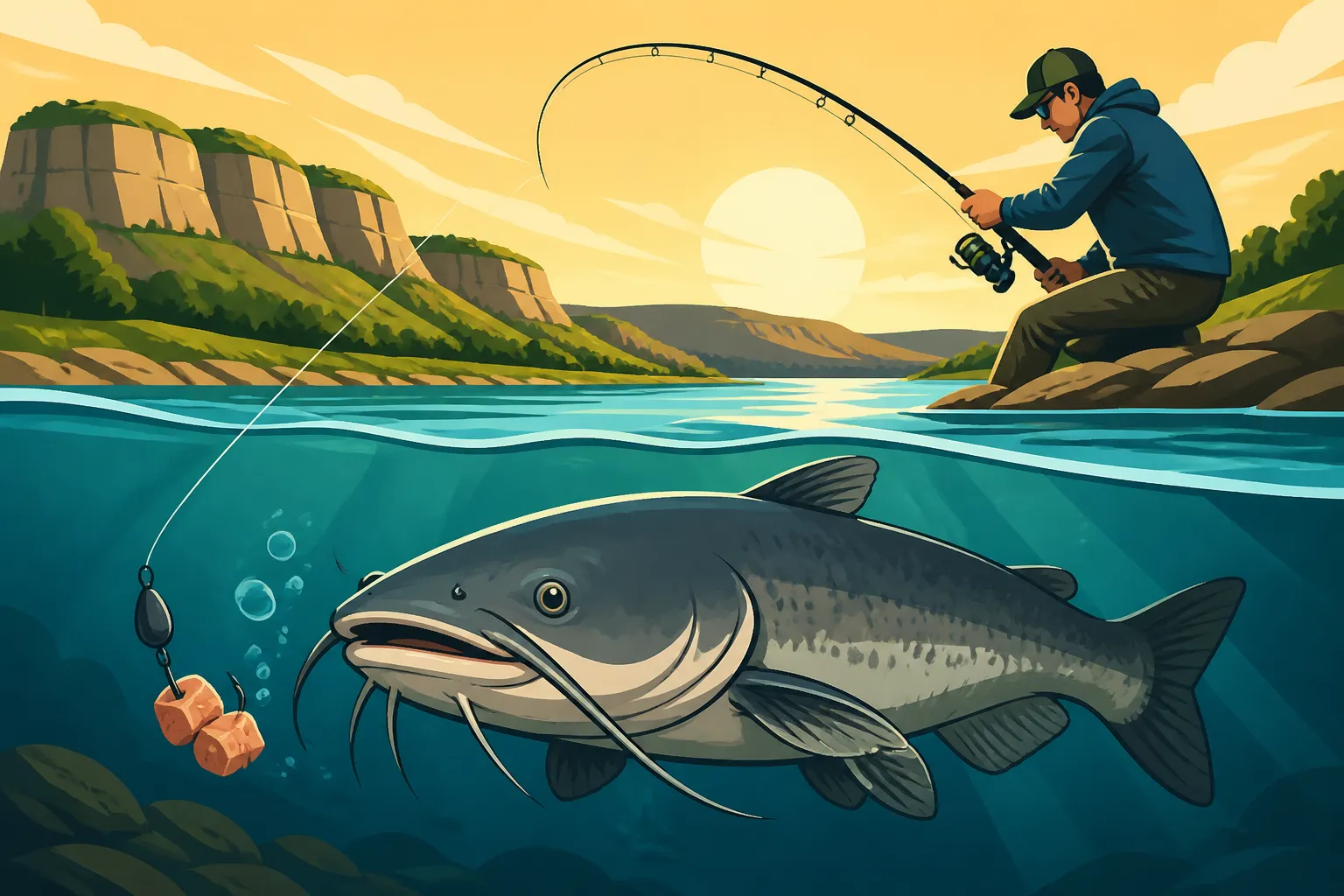
Flathead Catfish are the brawlers of the catfish world, known for their distinct appearance and predatory nature. They have a flattened head, a lower jaw that protrudes past the upper jaw, and a squared-off tail that is only slightly notched, not deeply forked. Their coloration is mottled brown and yellow, providing excellent camouflage against rocky or woody bottom structures. Flatheads are strict predators; they almost exclusively feed on live fish. This means your bait choice will be different if you're specifically targeting them. They are ambush hunters, preferring to lie in wait in heavy cover—like log jams, root wads, and undercut banks—especially in slow-moving eddies or deep pools adjacent to current. Landing a flathead is an experience, as they fight dirty, using their weight and the cover to their advantage. They can also grow to immense sizes, often reaching 30-60 pounds or more in the Missouri River, and are prized for their firm, white flesh.
Seasonal Movements and Prime Fishing Times
Catfish, like most fish, are highly influenced by water temperature and food availability. Their movements and feeding patterns will shift throughout the year, so understanding these cycles is crucial for consistent success.
During spring, as the ice recedes and water temperatures begin to climb into the 50s and 60s Fahrenheit, catfish become very active, feeding heavily to regain energy lost over winter and prepare for spawning. This is an excellent time to target them. They'll often move into shallower areas, especially mud flats, creek mouths, and riprap banks warmed by the sun, looking for easy meals. The post-spawn period, usually late spring to early summer when temperatures are in the upper 60s to low 70s, sees an intense feeding frenzy as the fish recover. Look for them along current breaks and seams, where food is swept to them without them expending too much energy.
Summer is prime time for catfishing on the Missouri River. With water temperatures consistently in the 70s, catfish are highly active. However, they'll often move to deeper holes during the heat of the day, seeking cooler, oxygen-rich water. Early mornings, late evenings, and especially at night, they will move into shallower feeding flats or along the edges of the main channel. This is when the bigger blues and flatheads are particularly active. Remember that during the warmer months, catfish can be caught throughout the day, but those low-light periods are often most productive for the biggest fish. If you're wondering Is Night Fishing Legal on the Missouri River?, the answer is generally yes, but always double-check current regulations.
As fall approaches and water temperatures begin to drop into the 60s and then 50s, catfish engage in another strong feeding period as they bulk up for winter. They'll often be found in deeper holes and along channel edges, but they'll still make forays into shallower feeding areas. This can be a fantastic time for trophy catfish. As winter sets in and temperatures dip below 50 degrees, catfish activity slows significantly. They tend to congregate in the deepest holes and slack water areas, conserving energy. While not impossible, catching them in winter requires a much slower presentation and often specialized techniques like vertical jigging in those deep holes.
River Conditions and How They Affect Catfish Behavior
The Missouri River is a living entity, constantly changing with water levels, current speed, and clarity. These factors profoundly influence where catfish will position themselves and how aggressively they'll feed.
Water Level: High water, often due to heavy rains or dam releases, can push catfish into newly flooded areas, like submerged vegetation along banks or upstream into tributaries where there's less current. This can create new feeding opportunities, but also make them harder to find as they spread out. Low water concentrates fish into remaining deeper channels and holes, making them easier to locate but sometimes pickier due to increased pressure. Always keep an eye on river gauges and local reports to understand current conditions.
Current Speed: Catfish, especially flatheads and blues, are powerful swimmers, but they still prefer to conserve energy. They'll often position themselves in current breaks – behind submerged logs, boulders, wing dikes, bridge pilings, or in eddies and seams where slower water meets faster currents. These spots offer a perfect ambush point where food is swept to them, but they don't have to fight the main flow constantly. A subtle current is often ideal; too much current can make fishing difficult, and too little might mean less food delivery.
Water Clarity: The Missouri River often carries a significant sediment load, so perfectly clear water is rare. Catfish, with their excellent senses of smell and touch (via their barbels), are well-adapted to murky conditions. In fact, slightly stained or muddy water can often be beneficial, as it reduces visibility for both prey and predator, making the catfish feel more secure. However, extremely turbid water after a heavy rain can temporarily shut down the bite as oxygen levels fluctuate and food sources get completely scattered. Conversely, unusually clear water might make them more skittish and prone to feeding primarily at night.
Essential Gear and Tackle for Missouri River Catfishing
Fishing the Missouri River for catfish isn't about finesse; it's about power and durability. The fish are big, the currents are strong, and you're often fishing around snags. Having the right gear isn't just a suggestion; it's a necessity to avoid snapped lines, broken rods, and lost fish.
Rods, Reels, and Line: Building a Robust Setup
Your rod, reel, and line are the core of your catfishing arsenal. Skimping here will only lead to frustration.
Rods: For most Missouri River catfishing, you'll want a heavy to medium-heavy action rod, typically 7 to 9 feet long. The added length helps with casting heavier baits, provides better line control in current, and absorbs the shock of powerful runs. A good example is a sturdy Ugly Stik GX2 or a more specialized catfishing rod from brands like Berkley or Whisker Seeker. Look for rods with a strong backbone but a relatively sensitive tip to detect subtle bites. For the really big blues and flatheads, some anglers even opt for extra-heavy surf rods, especially when fishing from shore with heavy weights.
Reels: Your reel needs to match the power of your rod and the fish you're targeting. A baitcasting reel is often preferred for its robust construction, superior cranking power, and ability to handle heavy lines and weights. Look for models with a strong drag system – at least 15-20 pounds of drag is ideal – and a good line capacity. Brands like Abu Garcia, Penn, and Daiwa offer excellent heavy-duty baitcasting reels suitable for catfishing. Spinning reels can work for smaller channel cats, especially for lighter presentations, but for bigger fish and heavier setups, a quality baitcaster is the way to go. You’ll find a wide selection suitable for various budgets on platforms like Amazon.
Line: When it comes to line, braided line is a popular choice for its incredible strength, minimal stretch, and excellent sensitivity, which helps detect bites in current. A 50-80 pound test braided line is common for main lines. Pair this with a fluorocarbon or heavy monofilament leader (30-60 pound test) to provide a little stretch and abrasion resistance, especially when fishing around rocks or wood. Monofilament line in the 20-40 pound test range can also be used as a main line, particularly if you prefer its stretch for shock absorption, but you'll lose some sensitivity compared to braid. Always check your line for nicks and abrasions, especially after fighting a fish or getting snagged; even a small imperfection can lead to a lost fish. If you're interested in specific recommendations, you can find a lot of information in guides like Best Pound Test Line for South Dakota Catfish.
Key Terminal Tackle: Hooks, Weights, and Swivels
This is where the rubber meets the road – or rather, where your bait meets the fish. The right terminal tackle is non-negotiable for river catfishing.
Hooks: Forget those tiny trout hooks! You need strong, sharp hooks that can handle tough mouths and powerful fish. Circle hooks are a favorite among catfishermen, and for good reason. They are designed to hook fish in the corner of the mouth, leading to fewer gut hooks, better fish health, and easier release if desired. Sizes typically range from 5/0 to 10/0, depending on your bait size and target species. For live bait, a Kahle hook in similar sizes can also be effective. Always opt for high-carbon steel hooks known for their strength and sharpness.
Weights: The Missouri River's current demands heavy weights to keep your bait on the bottom where catfish feed. Expect to use pyramid sinkers, no-roll sinkers, or flat bank sinkers ranging from 2 ounces up to 8 ounces or more, depending on current strength. You need enough weight to anchor your bait in place without it rolling downstream. Having a variety of sizes on hand is a smart move, as river conditions can change quickly.
Swivels: Heavy-duty barrel swivels or three-way swivels are essential. They prevent line twist, especially when using cut bait that might spin in the current, and help in creating different rig setups. Swivels should be rated for a higher breaking strength than your main line to ensure they don't become a weak link.
Must-Have Accessories for River Anglers
Beyond the core fishing setup, a few key accessories will make your catfishing experience safer, more efficient, and more enjoyable.
First off, a good pair of pliers or forceps is crucial for unhooking fish, especially with those big, toothy flatheads. A heavy-duty landing net with a wide hoop and deep basket is indispensable for landing large catfish safely without damaging the fish or breaking your line at the last minute. Trust me, trying to hand-land a 20-pound channel cat in current is a recipe for disaster.
A reliable headlamp or lantern is a must if you plan on fishing into the evening or at night, which is often the best time for big catfish. A cooler with plenty of ice is essential for keeping your bait fresh and for storing your catch if you plan on taking some home for dinner. Don't forget gloves – tough ones for handling catfish with their sharp pectoral and dorsal fins, and perhaps some lighter ones for bait prep. A knife for cutting bait is also invaluable. Finally, a first-aid kit is always a good idea, as fishing around sharp hooks and slippery rocks can lead to minor mishaps. You can assemble a robust kit easily, or buy a pre-made one on Amazon.
Top Techniques for Hooking Missouri River Catfish
The Missouri River offers diverse habitats, and different techniques excel depending on the situation. While catfish are often seen as easy to catch, employing the right technique for the conditions will drastically improve your catch rates, especially for bigger fish.
Bottom Fishing: The Classic and Most Effective Method
For many, bottom fishing is synonymous with catfishing, and for good reason – it's incredibly effective on the Missouri River. Catfish spend a lot of time on or near the bottom, searching for food. This technique ensures your bait is right in their strike zone.
The most common and highly effective rig for bottom fishing is the slip sinker rig, also known as the Carolina rig for catfish. It consists of your main line, a slip sinker (pyramid or no-roll are great choices for current), a bead to protect the knot, a heavy-duty swivel, and a leader (typically 12-24 inches of heavy monofilament or fluorocarbon) tied to your circle hook. The beauty of the slip sinker is that it allows the line to run freely through the weight, so when a fish bites, it feels minimal resistance, leading to more confident takes. Once you feel a tug, resist the urge to set the hook hard. Instead, just reel down until you feel the weight of the fish, and the circle hook will do its job, typically setting itself in the corner of the mouth. This is a crucial distinction from traditional J-hooks.
To effectively bottom fish, identify prime locations. Look for areas downstream of wing dikes, behind bridge pilings, along the edges of deep channels, or in deep scour holes. These are places where current breaks occur, creating an inviting zone for catfish to rest and feed. Cast your rig upstream of your target area and let it settle to the bottom. Allow the current to subtly carry the scent of your bait downstream, attracting fish. Be patient; sometimes it takes a while for a catfish to find your bait. This method is particularly effective for channel cats and also works well for stationary flathead fishing, especially when using live bait near cover.
Drift Fishing: Covering Water for Active Fish
While bottom fishing is excellent for targeting specific spots, drift fishing allows you to cover a larger area and find active fish, especially when they are scattered or cruising. This technique is particularly popular for channel cats and can also entice active blue catfish.
There are a couple of popular ways to drift fish on the Missouri. The first is controlled drift from a boat. You can use your boat's motor (often a bow-mounted trolling motor) or a drift sock to control your speed and direction. You want to drift just slightly slower than the current, allowing your bait to bounce along the bottom. This method is excellent for covering long stretches of channel edges, mud flats, or submerged structures. You'll typically use a variation of the slip sinker rig, but with lighter weights that allow the bait to "walk" along the bottom rather than just anchoring in place. The key is to keep your line as vertical as possible, feeling every bump and bite.
Another variation is uncontrolled drift with a buoy or jug line for those who prefer a more passive approach. While not actively "fishing" in the traditional sense, this involves deploying baited lines attached to buoys or jugs and allowing them to drift with the current. This technique can be highly effective for catching numerous catfish over a wide area. However, it's essential to understand and strictly adhere to South Dakota Fishing Regulations Explained regarding the number of lines allowed, identification requirements for your jugs, and whether juglining is even permitted in the specific waters you are fishing. Typically, you'll need to stay with your jugs and retrieve them once a fish is hooked. The basic setup involves a sturdy line, a heavy weight to keep the bait near the bottom, and a hook.
Juglining and Trotlining: Advanced Techniques
For the truly dedicated catfisherman, juglining and trotlining offer the potential for large hauls, but they come with stricter regulations and a different set of skills. These are generally considered "passive" fishing methods.
Juglining involves setting out multiple independent lines, each attached to a float (often a plastic jug or specially designed fishing buoy) and typically baited with cut bait or worms. The jugs are allowed to drift freely or are tied to fixed structures, covering a wide area. You then patrol the area in your boat, checking jugs periodically for hooked fish. The advantage is that you can deploy many lines, increasing your chances of finding active catfish. Remember to review the specific South Dakota Fishing Regulations Explained for rules on jug size, color, identification, and the number of hooks allowed per jug.
Trotlining is a more stationary method, involving a long main line stretched across a river or channel, anchored at both ends. Shorter lines (snoods) with baited hooks are then attached at regular intervals along the main line. Trotlines are usually set overnight or for several hours in prime catfishing locations, such as deep channels, along submerged timber, or across creek mouths. They are highly effective for catching multiple catfish. Again, detailed knowledge of South Dakota Fishing Regulations Explained is paramount, as trotlining often has stringent rules regarding length, number of hooks, identification, and placement. Both juglining and trotlining require careful planning, attention to safety, and a commitment to checking your lines regularly.
The Bait Advantage: What Missouri River Catfish Crave
Ask any experienced catfisherman, and they'll tell you that bait choice is paramount. While catfish are opportunistic, using the right bait can make the difference between a slow day and a banner day on the Missouri River. Their incredible sense of smell and lateral line system means they can detect subtle scents and vibrations from a distance.
Natural Baits: Cut Bait, Live Bait, and Stink Baits
These are the bread and butter for most Missouri River catfishermen. Each has its place and specific target species.
Cut Bait is perhaps the most versatile and widely used bait for channel and blue catfish. The scent trail it leaves in the current is irresistible. Oily, bloody fish are best. Common choices include shad, herring, goldeye, suckers, or even smaller common carp. Cut them into chunks or strips. For larger blue catfish, bigger chunks or even half a fish can be effective. The key is to expose plenty of surface area for maximum scent dispersal. Fresh cut bait is always superior to frozen, so if you can catch your own baitfish, that's often a huge advantage. You can find more specific advice in our Best Bait for South Dakota Catfish guide.
Live Bait is the undisputed champion for flathead catfish. Flatheads are predators, and they prefer their meal alive and kicking. Smaller live fish like sunfish, bluegill, small suckers, or even small common carp are excellent choices. Ensure your live bait is healthy and lively, hooked through the back (above the lateral line) or through the lips to keep it active as long as possible. Check local regulations on what species can be used as live bait and any size restrictions. A good livewell to keep your bait fresh and lively is essential when using this method.
Stink Baits (also known as punch baits or dip baits) are commercially prepared concoctions designed to emit a powerful, attractive odor that channel catfish can't resist. These often come in paste-like forms or pre-formed balls. They are usually fished on specially designed "worm" hooks or treble hooks with sponges or springs to hold the bait. While less effective for flatheads and often overlooked by blues, stink baits are a fantastic option for channel cats, especially for bank anglers or those targeting smaller to medium-sized fish. Brands like Catfish Charlie, Sonny's, and Rippin Lips are popular choices, and you can often find a good selection at local bait shops or on Amazon. The key is to replenish the bait frequently to keep that scent trail strong.
Prepared Baits and Secret Recipes
Beyond the standard natural offerings, many anglers have their own "secret recipes" or go-to prepared baits. These can often be incredibly effective, especially for channel catfish.
Dough Balls and Cheese Baits: While less common on the fast-flowing Missouri for larger fish, dough balls (often made from cornmeal, flour, and various flavors) and cheese-based baits can still attract smaller channel catfish, especially in slower eddies or calmer backwaters. Some anglers swear by combining strong-smelling cheeses with other ingredients to create a potent catfish attractant. These are typically fished on treble hooks or small jigs designed to hold the soft bait.
Hot Dogs and Chicken Livers: These common grocery store items are surprisingly effective for channel catfish. Hot dogs can be cut into chunks, and their processed nature means they hold up reasonably well on a hook and release a scent. Chicken livers are notoriously messy but incredibly potent due to their strong smell and bloodiness. The downside is they are very soft and prone to falling off the hook with a strong cast or current. Some anglers cure them in salt or gelatin to toughen them up. These are great budget-friendly options, especially for a casual outing.
Presentation is Key: Rigging Your Bait for Success
Having the best bait in the world won't matter if it's not presented correctly. On the Missouri River, current and snags are major factors, so your rigging needs to be robust and effective.
The Carolina Rig (slip sinker rig) mentioned earlier is your bread and butter for bottom fishing with cut bait or live bait. Make sure your leader length is appropriate for the current; a longer leader (18-24 inches) allows the bait to move more naturally, while a shorter one (12-18 inches) keeps it closer to the weight in strong current.
For live bait specifically targeting flatheads in heavy cover, consider a three-way swivel rig. Tie your main line to one eye of the swivel, a short leader (6-12 inches) with a heavy sinker to a second eye, and a longer leader (18-36 inches) with your live bait hook to the third eye. This keeps your bait suspended just above the bottom, out of some of the immediate snags, while the weight holds it in place. The length of the leader can be adjusted to position your bait perfectly above structure.
When fishing around extreme snags, a breakaway rig can be beneficial. This involves tying your sinker to a lighter line (e.g., 10-20 lb test monofilament) that is then attached to your main rig. If your sinker gets snagged, the lighter line breaks, saving your main line, leader, hook, and hopefully your fish. You only lose the sinker, which is much cheaper than losing your entire setup.
Always ensure your knots are strong and secure. Use tested knots like the Palomar or improved clinch. Check your hook points frequently to ensure they are razor-sharp. A dull hook will lead to missed bites and lost fish, especially with the tough mouths of catfish.
Finding Catfish Hotspots on the Missouri River
The Missouri River is massive, and simply "fishing the river" isn't a strategy. You need to understand the types of structures and areas that consistently hold catfish. Learning to read the river and identify these hotspots is a skill that will pay dividends.
Reading the Water: Current Breaks and Depth Changes
Catfish are experts at conserving energy while maximizing feeding opportunities. This means they will almost always be found near current breaks or significant depth changes where food is funneled to them, or they can ambush prey.
Current Breaks: These are goldmines. Look for anything that obstructs the main flow of the river, creating an area of calmer water adjacent to the faster current. Prime examples include:
- Wing Dikes and Jetties: These rock structures extending out from the bank are designed to control current. Fish the upstream and downstream side, especially where the fast current sweeps around the end of the dike. The scour holes on the downstream side can be particularly productive.
- Bridge Pilings: The pilings of bridges create perfect current breaks. Fish directly behind them, in the eddies, and along the seams where the fast water meets the slow water.
- Submerged Trees and Log Jams: These natural obstructions create excellent current breaks and provide prime ambush points and cover for flathead catfish. Approach these areas carefully, as they are also notorious for snags.
- Inside Bends: The current is slower on the inside of a river bend, often depositing sediment and creating deeper holes and slack water areas. The outside bend is usually faster and deeper due to erosion.
Depth Changes: Catfish use depth changes as highways and resting areas.
- Channel Edges: The transition from shallow flats to the deeper main channel is a primary migration route and feeding zone for all catfish species. Use your sonar if you have one to identify these drops.
- Scour Holes: These are deeper depressions often found downstream of obstructions like dams, dikes, or even sharp bends. They provide sanctuary from strong currents and are prime holding areas for large catfish.
- Humps and Bumps: Any underwater topography that creates a rise or fall can congregate fish. Catfish will often sit on top of or just off the edges of these structures.
Specific Locations and Structures on the Missouri River
While general principles apply, the Missouri River in South Dakota has specific features that are known catfish magnets.
Below the Dams: The tailwater areas below major dams like Oahe, Big Bend (Fort Thompson), Fort Randall (Pickstown), and Gavins Point (Yankton) are incredibly productive. The churning water from the dam creates highly oxygenated conditions and often stuns baitfish, making them easy targets. These areas typically have very strong currents and deep scour holes, perfect for blue and channel catfish. Remember that specific regulations might apply to fishing directly below dams, so always check the South Dakota Fishing Regulations Explained for those areas. Guides often focus on the areas below these dams for the best action. You can learn more about specific spots in our Missouri River Tailwater Fishing Techniques guide.
Missouri River Tributaries: Creek and river mouths emptying into the Missouri can be fantastic, especially during spring and after rain events. These areas bring in new food sources, warmer water in spring, or cooler, oxygenated water in summer. Catfish will stage in these areas, particularly channel cats. The James River and Big Sioux River, for example, have excellent catfishing themselves and contribute to the Missouri River's population.
Reservoir Sections: While the "river" implies current, the Missouri in South Dakota is actually a series of large reservoirs: Lake Oahe, Lake Sharpe, Lake Francis Case, and Lewis and Clark Lake. These reservoir sections still have a main river channel, but also expansive flats, points, and coves. Catfish will use these areas differently than the main current. On the reservoirs, look for catfish on the main channel breaks, submerged points, old river channels, and deep coves with standing timber. Don't forget that these areas are also prime walleye habitat, as detailed in our South Dakota Walleye Fishing Guide, but the catfish will be there too, often deeper or in different structures.
Using Electronics to Your Advantage
A good fish finder can be an invaluable tool for locating catfish on the Missouri River, especially in the larger reservoir sections. Don't think of it as just for walleye!
Sonar/Down Imaging: Use your sonar to identify the main river channel, scour holes, submerged humps, and points. Look for schools of baitfish, which often indicate where predators like catfish are lurking nearby. Catfish on sonar typically appear as strong, elongated arches, often holding tight to the bottom or suspended near structure. Pay close attention to sudden depth changes and hard bottom transitions.
Side Imaging: If your unit has side imaging, it's fantastic for scanning large areas to find submerged cover like log jams, rock piles, or old roadbeds where flatheads might be hiding. It allows you to see structures off to the side of your boat, reducing the need to drive directly over them and potentially spooking fish.
GPS and Mapping: Once you find a productive spot, mark it on your GPS! Over time, you'll build up a library of waypoints that consistently hold fish under different conditions. Many modern fish finders come with detailed mapping that shows river channels, depth contours, and even submerged features, which are huge assets for navigating and targeting specific areas. Use these maps to find those hidden current breaks and depth changes even before you drop a line.
| Catfish Species | Preferred Habitat | Primary Bait | Average Size (Missouri River SD) | Noteworthy Trait |
|---|---|---|---|---|
| Channel Catfish | Diverse; current breaks, holes, flats | Cut Bait, Stink Bait, Worms | 2-15 lbs | Deeply forked tail, often spotted |
| Blue Catfish | Deep, swift current; main channels | Large Cut Bait | 10-50+ lbs | Humped back, slate blue/gray |
| Flathead Catfish | Heavy cover; log jams, undercut banks | Live Bait (fish) | 15-60+ lbs | Flat head, protruding jaw, squared tail |
Disclaimer
Fishing regulations and conditions can change rapidly. Always consult the latest South Dakota Game, Fish and Parks (GFP) fishing handbook or website before heading out on the water to ensure you are compliant with all current rules, limits, and licensing requirements. This guide is for informational purposes only and does not supersede official regulations.