Fishing Moon Phase Tips for Walleye
Have you ever stared out at the vast waters of Lake Oahe, rod in hand, feeling like the walleye just aren't biting, even though all the usual conditions seem perfect? Sometimes it feels like they have a secret schedule, doesn't it? Many anglers, myself included, have pondered if the moon phases hold a key to unlocking those elusive feeding frenzies. This guide is all about exploring the fascinating connection between the moon and walleye activity here in South Dakota, helping you understand how to use lunar cycles to your advantage on your next fishing adventure.
Understanding Moon Phases and Their Impact on Fish
It might sound a bit like old wives' tales, but there's a growing body of evidence, both anecdotal and scientific, suggesting that the moon's position profoundly influences fish behavior. Think about it: the moon literally pulls our oceans, creating tides. While South Dakota's landlocked waters don't experience oceanic tides, the same gravitational forces are at play, albeit in subtle ways, and the moon's light certainly affects nocturnal creatures.
The Basic Lunar Cycle
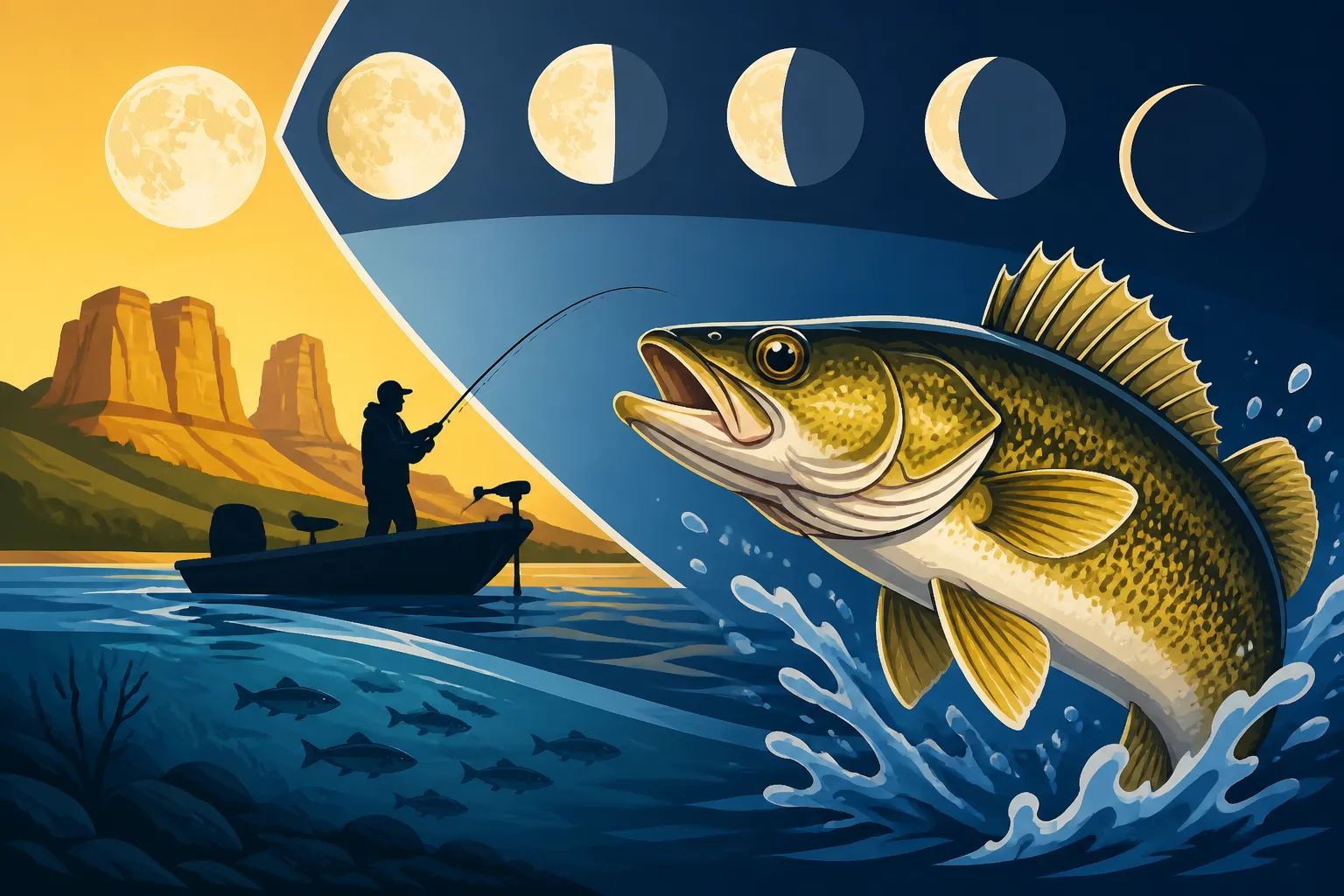
The moon cycles through its phases approximately every 29.5 days, moving from New Moon to First Quarter, then Full Moon, and finally Last Quarter before returning to New. Each of these phases presents a different amount of illuminated lunar surface visible from Earth, and it's these changes in light and gravitational pull that are believed to influence everything from baitfish movement to the predatory instincts of walleye. Understanding this basic rhythm is the first step to becoming a more intuitive angler.
Historical Beliefs Versus Modern Data
For centuries, fishermen have sworn by the moon's influence, passing down traditions about the "best" and "worst" times to fish based on lunar charts. While some might dismiss these as folklore, modern anglers and biologists are increasingly looking at solunar tables, which combine moon and sun positions, to predict peak feeding times. It's not a magic bullet, mind you, but rather another piece of the complex puzzle that helps us understand the natural world. Instead of blindly following a chart, the real trick is to integrate this knowledge with other factors like weather, water temperature, and local conditions to form a more complete picture of walleye behavior.
The Science Behind Lunar Influence on Walleye
While we might not have crashing ocean waves in South Dakota, the moon's gravitational pull is a constant, subtle force. This force, combined with changes in light levels, creates an environment that walleye and their prey react to, often in predictable patterns. It’s not about magic, but physics and biology.
Tides and Current
Even in our freshwater systems, the moon's gravitational pull creates what are often called "micro-tides" or subtle shifts in water levels and currents. These changes, though barely perceptible to us, can be significant for fish. Increased current, even slight, often stirs up the bottom, dislodging insects and small organisms, and concentrates baitfish in certain areas. This sudden availability of food can trigger a feeding response in walleye. On large impoundments like Lake Sharpe or Lake Francis Case, these subtle currents might influence where baitfish congregate, and where walleye choose to ambush them. These effects are often most pronounced around the new and full moon phases when the gravitational pull is strongest.
Light Levels and Prey Movement
This is perhaps the most direct and undeniable influence of the moon. Walleye, being low-light predators, are incredibly sensitive to changes in light. During a Full Moon, the intense moonlight can make night fishing challenging, as walleye might feed more efficiently and spread out, making them harder to locate. Conversely, a New Moon offers maximum darkness, often leading to aggressive daytime feeding as walleye feel more comfortable hunting in the low-light conditions closer to dawn and dusk. The prey fish, too, react to light. Minnows and other baitfish might school tighter or seek deeper cover under bright moonlight, changing their availability to hungry walleye. Understanding these dynamics can guide your choice of Best Lures for South Dakota Walleye and your fishing times.
Walleye Physiology and Behavior
Beyond external factors, some theories suggest that walleye themselves might have an internal clock or physiological responses tied to the lunar cycle. Hormonal changes, metabolic rates, and even spawning instincts can be influenced by the subtle shifts in the environment governed by the moon. For instance, some studies suggest that certain fish species show increased activity and metabolic rates during specific moon phases, possibly linked to evolutionary adaptations for optimal foraging. This inherent connection means that walleye might be more inclined to feed aggressively or move into specific areas during certain parts of the lunar month. It's a fascinating area of study, and one that serious anglers are always keen to explore for an edge.
Fishing During the New Moon and First Quarter
These phases often represent fantastic opportunities for walleye anglers, particularly if you understand how to leverage the changing light conditions and potential increases in activity. It’s about being observant and adapting your techniques.
New Moon: Prime Low-Light Opportunity
The New Moon phase is characterized by minimal moonlight. This intense darkness makes walleye feel more secure feeding aggressively during daylight hours, especially during those prime dawn and dusk windows. Without a bright moon illuminating their nocturnal hunts, they're often hungrier and more active when the sun is up (or just barely up/down). This is a fantastic time to target shallow flats or structural elements where walleye might move up to feed, often more boldly than during brighter moon phases.
When the New Moon rolls around, consider focusing your efforts during the low-light periods just before sunrise and after sunset. Using noisier baits like rattling crankbaits or spinnerbaits can be particularly effective, as walleye rely more on sound and vibration in darker conditions. Think about working shallow points and weed edges on lakes like Lake Thompson or Lake Kampeska where baitfish might be abundant. This is also a great time for working jigs and minnows or a live bait rig, covering water thoroughly to find those active fish.
First Quarter: Increasing Activity
As the moon waxes from New to First Quarter, the amount of visible moonlight increases, but it's still far from the full intensity. This phase often sees an upward trend in overall fish activity. The increasing light allows walleye to maintain a more consistent feeding pattern throughout the day, without the extreme sensitivity to full moonlight. The gravitational pull also begins to strengthen, which, as we discussed, can influence subtle currents and baitfish movement.
During the First Quarter, you might find walleye holding to more defined structures, like breaks, humps, or submerged points. They're still active, but perhaps not as scattered as they can be under a New Moon. Trolling crankbaits at varying depths, particularly on large bodies of water like Lake Oahe, can be highly effective during this period. Experiment with different colors and retrieve speeds until you find what triggers a bite. Pay attention to your fish finder during this time; you'll often see schools of baitfish and active walleye relating to structure.
Tackling the Full Moon and Last Quarter
While the Full Moon might sound like an exciting time to fish due to the bright light, it often presents unique challenges for walleye anglers. The Last Quarter, as the moon begins to wane, then brings another shift in behavior.
Full Moon: Nocturnal Feast or Daytime Lull?
Ah, the Full Moon. Many anglers believe it's either feast or famine. With a bright, full moon illuminating the night sky, walleye can often feed heavily throughout the night. This means they might be less active and harder to tempt during the day, having already filled their bellies under the cover of darkness. The intense moonlight can also make them more wary, sending them deeper or into denser cover during the day to avoid predators or bright conditions.
If you're out during a Full Moon, especially in the daytime, consider fishing deeper structure or areas with heavier cover where walleye can retreat from the light. You might need to slow down your presentation, perhaps using subtle jigging techniques or a Lindy Rig with a large shiner or nightcrawler. Sometimes, the best bite during a Full Moon can actually be in the hours leading up to dusk, or in the predawn twilight, before the moon truly takes over the night. If you're keen on night fishing, make sure you're geared up for it. Products available on Amazon like headlamps, glow-in-the-dark lures, and robust thermos for coffee can make all the difference for those late-night sessions. For specific regulations, be sure to consult the South Dakota Fishing Regulations Explained.
Last Quarter: Waning Influence, Shifting Patterns
As the moon enters its Last Quarter and begins to wane, the amount of visible light diminishes each night. This transition can often bring about a gradual return to more consistent daytime feeding patterns, similar to the First Quarter, but with its own nuances. The gravitational pull also begins to lessen from its full moon peak.
During the Last Quarter, walleye might start to spread out again from their deeper, full-moon haunts and become more willing to chase baits. You might find success targeting a broader range of depths and structures. This is a good time to revisit some of your favorite productive spots from the First Quarter. Pay close attention to subtle shifts in the weather and barometric pressure, as these can start to play an even more dominant role as the moon's direct influence lessens. A declining moon can sometimes offer great fishing, as walleye adjust from their nocturnal binges and start to forage more actively during daylight. Consider using different techniques, like casting crankbaits or employing a slow death rig, to cover different water columns and entice bites.
Practical Tips for Applying Moon Phase Knowledge
Knowing about moon phases is one thing, but actually using that knowledge to improve your fishing success is another. It's about combining lunar insights with other essential angling skills.
Using a Solunar Calendar
Solunar calendars and apps are readily available, some free, some for a small fee (you can often find highly-rated ones on Amazon). These tools take into account both the moon and sun's positions to predict "major" and "minor" feeding periods each day. While not foolproof, they can be a fantastic guide, especially for planning longer trips or if you have limited time on the water. A "major" period often coincides with a moonrise or moonset, while "minor" periods are linked to the moon's overhead or underfoot position.
| Moon Phase | Recommended Fishing Times | Walleye Behavior Tendency | Strategic Approach |
|---|---|---|---|
| New Moon | Dawn, Dusk (strongest); daytime (active) | Aggressive feeding in low light, spread out. | Focus shallow, noisy baits, jigs. Maximize low-light windows. |
| First Quarter | Dawn, Dusk; consistent daytime activity | Increasing activity, relating to structure. | Troll crankbaits, target breaks and humps. Steady retrieve. |
| Full Moon | Pre-Dusk, Post-Dawn; overnight (nocturnal) | Potentially sated from night feeding, deeper/wary in day. | Fish deep structure, slow presentations. Consider night fishing. |
| Last Quarter | Dawn, Dusk; returning to consistent daytime | Adjusting from nocturnal feeding, becoming more active. | Broader search, varied depths, experiment with presentation. |
Remember, these calendars are predictions. They are most useful when combined with real-time observation and experience. I always check a solunar chart before heading out, especially when planning a day of South Dakota Walleye Fishing Guide.
Adjusting Your Approach for Each Phase
The key to moon phase fishing is adaptability.
- New Moon: Maximize those low-light windows. Get on the water before dawn or stay past sunset. Use baits that create vibration and sound in the dark conditions. Think about targeting shallower areas where walleye might move up to hunt.
- First Quarter: Walleye are often more predictable. Focus on primary structures like main lake points, humps, and submerged islands on our larger bodies of water like Lake Sharpe. Trolling is often a great way to cover water and find active fish.
- Full Moon: This is when you might need to go deep and slow during the day. Consider fishing main channel breaks or deep contours on the Missouri River system. If you're adventurous and legally able, consider night fishing. Otherwise, capitalize on the brief periods of twilight when fish might still be transitioning from nocturnal feeding.
- Last Quarter: This phase is often a good time to revert to more "standard" walleye tactics. Look for fish on secondary breaks, deeper weed lines, and areas with good forage concentrations. They’re coming off their bright-moon patterns and becoming more responsive. This is also a good time to check South Dakota Fishing Season Dates and Limits to make sure your target species is in season.
Gear Considerations
Your gear choices can also be subtly influenced by the moon phase. For instance, during brighter moon phases or for targeting deeper fish during a full moon, you might want to consider heavier jigs or crankbaits that reach greater depths. For low-light situations around the new moon, dark or even glow-in-the-dark lures can be highly effective.
Having a good fish finder is always crucial, but especially so when trying to decipher subtle patterns. Look for models with good sonar clarity that can help you identify baitfish schools and walleye holding near structure. How to Read a Fish Finder for Walleye can be a game-changer. Also, ensure your line choice is appropriate for the conditions – fluorocarbon leaders can be nearly invisible in clear water, while braided line offers superior sensitivity for detecting subtle bites, especially in deeper water.
Beyond the Moon: Other Factors Affecting Walleye
While the moon is a fascinating piece of the puzzle, it's never the only factor influencing walleye activity. A truly successful angler integrates lunar knowledge with a host of other environmental cues.
Weather and Barometric Pressure
These are arguably more impactful on a day-to-day basis than moon phases alone. A stable, high-pressure system typically means tougher fishing, as fish can feel uncomfortable and less active. A dropping or low-pressure system, especially associated with a coming cold front, can often trigger aggressive feeding before the weather turns nasty. Conversely, a prolonged cold front can shut down the bite for days. Wind and Weather Fishing Tips are essential reading for any South Dakota angler, as our weather can change on a dime. Pay attention to wind direction and speed, as wind can create current, push baitfish, and oxygenate the water, all of which affect walleye.
Water Temperature and Clarity
These two elements are foundational to understanding walleye behavior. Walleye are cold-water fish, and they thrive in specific temperature ranges. Knowing the optimal water temperature where walleye feed on Lake Oahe in July or how they react to warming trends is critical. Clear water often means fish are warier and presentations need to be more subtle, while stained or turbid water allows for more aggressive tactics and brighter lures. Changes in clarity, perhaps due to heavy rains or increased current, can drastically alter where walleye hold and how they feed. Always remember that walleye will adjust their patterns based on these fundamental environmental characteristics.
Forage and Spawning Cycles
Ultimately, walleye are driven by two primal instincts: eating and reproducing. The presence and abundance of forage — whether it's smelt, shiners, or perch — dictate where walleye will be and how actively they'll feed. Understanding What Walleye Eat in Summer and how baitfish move throughout the seasons is paramount.
Similarly, the South Dakota walleye spawning calendar heavily influences their behavior. During the pre-spawn, walleye are often gorging themselves to build energy for reproduction, leading to some of the year's most aggressive bites. Post-spawn, they might be recuperating and harder to catch, before moving into their summer patterns. Fishing during these critical life cycle periods requires a nuanced approach, often overriding the subtle influences of the moon. A good example of this might be the spring walleye run on the Missouri River, where fish are highly concentrated regardless of the lunar phase, driven by the urge to spawn.
By combining an awareness of moon phases with a deep understanding of weather, water conditions, and the walleye's natural life cycle, you'll be well on your way to becoming a more consistently successful angler in the beautiful waters of South Dakota.
Disclaimer
Fishing conditions and regulations can change rapidly. Always consult the official South Dakota Game, Fish and Parks (GFP) website or their current fishing handbook for the most up-to-date information on licenses, limits, and specific water body rules before heading out on your trip. This guide is for informational purposes only and does not supersede official regulations.