Where Walleye Go in Winter
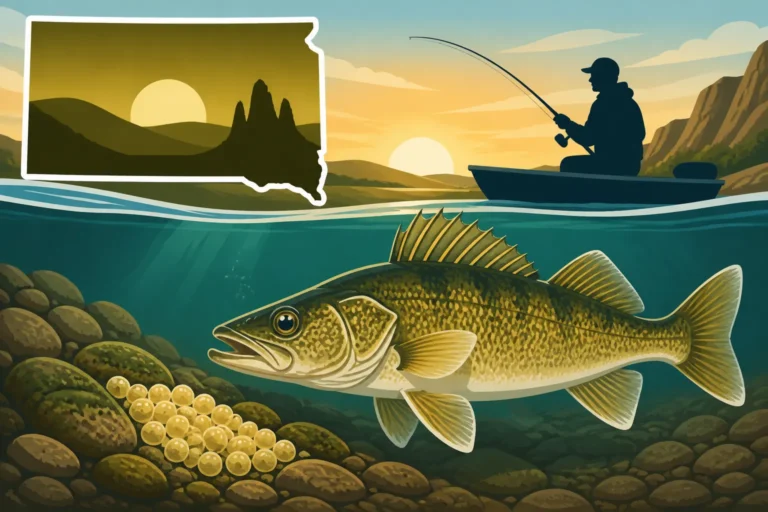
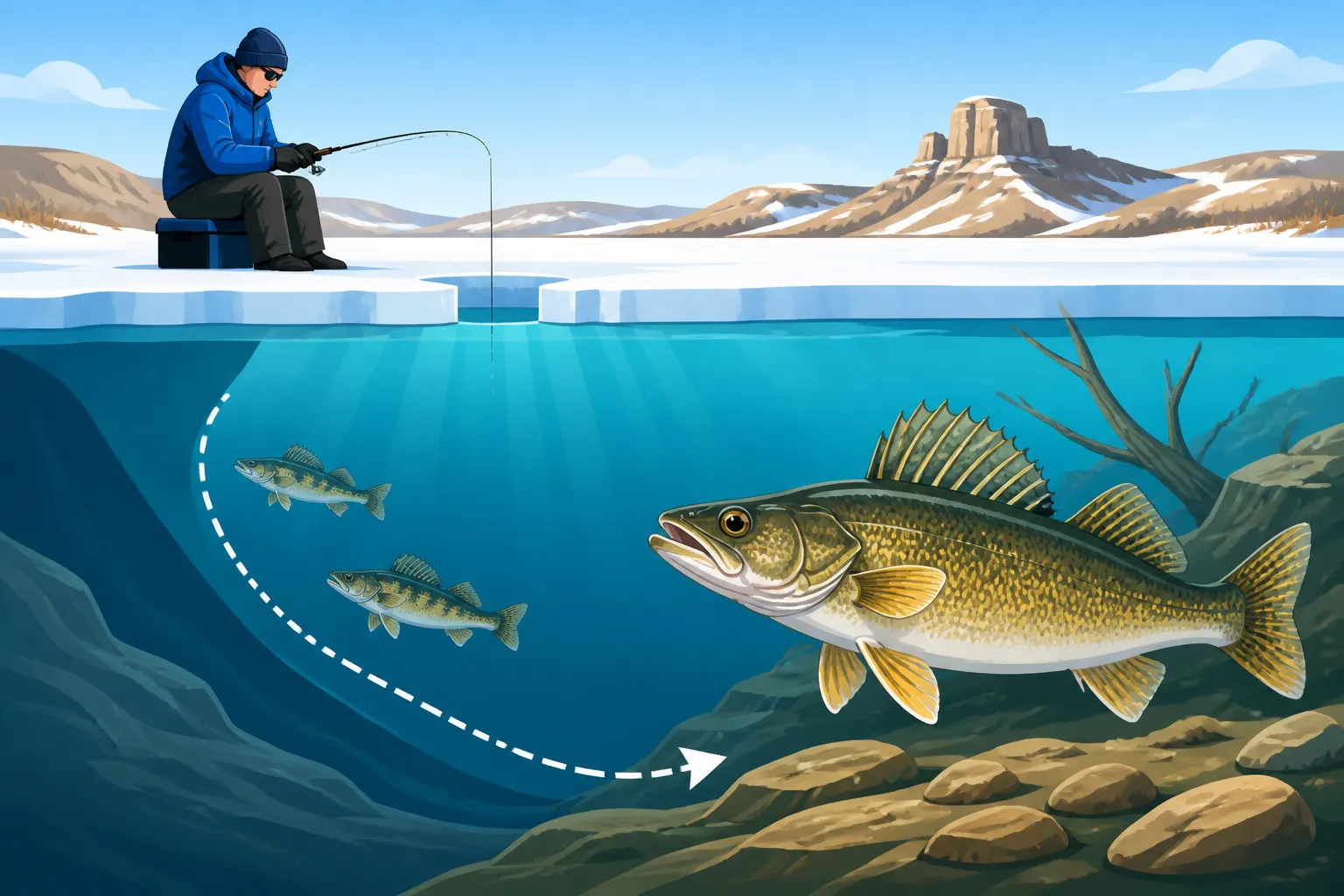
It's a common frustration for South Dakota anglers when the mercury drops and the lakes start to skim over with ice. Where do all those feisty walleye go? It can feel like they've just vanished into thin air, leaving you scratching your head and wondering if your favorite spots are suddenly barren. The truth is, walleye don't disappear in winter; they simply change their routine and relocate to specific areas to survive and feed. This guide is all about pulling back the curtain on those winter movements, helping you understand their seasonal habits so you can confidently target them whether you're ice fishing or battling the late-fall chill from your boat.
The Great Relocation: Why Walleye Change Their Winter Address
Imagine spending your summer cruising shallow flats and chasing baitfish in the warmer upper water column. Then, suddenly, temperatures plummet, and your world starts to freeze solid. Just like us, fish adapt to survive. For walleye, winter isn't a time for hibernation, but a period of metabolic slowdown and strategic positioning. Their primary drivers for this change are water temperature, oxygen levels, and the ever-present hunt for food.
Seeking Stable Temperatures
As the frigid air cools the surface water, a fascinating natural phenomenon occurs. Unlike summer, when lakes develop distinct layers of warm water on top and colder, denser water below (the thermocline), winter brings a more uniform temperature throughout the water column once the ice forms. However, even in this more consistent environment, walleye are still seeking the most comfortable and stable temperatures, which typically means deeper water. They aren't trying to find the "warmest" water, but rather the most consistent temperature where they can expend the least amount of energy.
Think about it this way: a shallow bay might be the first to freeze solid and experience drastic temperature swings, but the vast main basin of a reservoir will hold a more stable temperature at its deepest points. These deeper havens act as a refuge from the extreme cold and rapid changes that can occur closer to the surface or in shallower areas. Understanding this quest for thermal stability is your first clue to their winter whereabouts.
Following the Forage
Walleye are predators, plain and simple. Their lives revolve around finding and eating smaller fish like shiners, smelt, and yellow perch. And guess what? These baitfish also adapt to winter. As aquatic vegetation dies off and shallower waters become less hospitable, baitfish often school up and move to deeper, more structured areas themselves. This means walleye are rarely far behind.
If you can locate large schools of baitfish, you're halfway to finding walleye. On big waters like Lake Oahe or Lake Sharpe, this often means these schools will congregate in the deeper river channels or vast basins, providing an accessible food source for walleye even when their metabolism is slowed down. Their movement is less about active pursuit and more about positioning themselves where food will be readily available with minimal effort.
Oxygen Levels and Metabolic Slowdown
Cold water holds more dissolved oxygen than warm water, which is generally a good thing for fish. However, under a thick layer of ice and snow, sunlight penetration decreases, and photosynthesis (which produces oxygen) slows down significantly. While South Dakota's larger, deeper lakes rarely suffer from severe oxygen depletion in winter, it's still a factor that can influence fish behavior in shallower, smaller bodies of water.
More importantly, the walleye's metabolism slows drastically in cold water. They don't need to eat as frequently, and when they do, they prefer an easy meal. This isn't a time for high-speed chases. Instead, they become much more lethargic, conserving energy. This means your approach as an angler needs to shift from aggressive tactics to more subtle, slow presentations, focusing on putting bait directly in front of their faces. This metabolic slowdown is precisely why finding their winter holding areas is so critical – they won't go far to find your lure.
Deep Water Sanctuaries: Typical Winter Walleye Hangouts
So, if walleye are seeking stable temperatures and following their food, what does that actually look like on the water? In South Dakota, this translates into a few key types of deep-water structures and areas.
Main Lake Basins and River Channels
On the expansive Missouri River reservoirs, like Lake Oahe, Lake Sharpe, and Lake Francis Case, the old river channel is a superhighway and a primary sanctuary for walleye in winter. These channels are often the deepest contours in the lake, providing that stable thermal environment walleye crave.
Imagine the original riverbed winding its way through the bottom of the reservoir. Walleye will often stack up along the edges of these channels or suspend just above the deepest parts, particularly if there are schools of baitfish nearby. These areas offer both depth and a natural travel corridor. For instance, on Lake Oahe, targeting the old Cheyenne River or Missouri River channels, especially where they intersect with submerged points or humps, can be incredibly productive. Anglers often refer to these as "mud basins" or "main basin deeps." You can find maps that show these old riverbeds, and they are invaluable resources for winter fishing success.
Structure Near Deep Water
While walleye love deep water, they aren't just suspended in the middle of nowhere. They are almost always relating to some kind of structure that offers cover, ambush points, or concentrates baitfish. In winter, this means finding structure that drops into or is adjacent to those deeper basins and river channels.
Think about:
- Deep Points: A long point that extends out into the main lake basin and then abruptly drops off into the river channel or deepest water. Walleye will often position themselves on the deeper portions of these points, especially on the wind-sheltered side if there's any current.
- Submerged Humps and Islands: These underwater topographical features, especially those with steep sides, act like magnets for baitfish and, consequently, walleye. If a hump rises sharply from 40 feet to 20 feet, walleye might be found on the slopes or even right on top if baitfish are present.
- Break Lines and Ledges: These are the underwater "cliffs" where the bottom contour dramatically changes depth. A sharp break from 20 feet down to 40 or 50 feet is a prime ambush point for walleye. They can sit just off the break, waiting for unsuspecting bait to swim by. Understanding how to read your electronics to pinpoint these structures is key, and many anglers invest in high-quality fish finders available from retailers like Amazon for this very reason.
These structures don't have to be massive. Even a subtle change in bottom composition or a small rock pile on a deep break line can hold fish. The key is their proximity to the stable, deep water.
The Edge of the Flats
While walleye primarily inhabit deeper water in winter, they don't completely abandon shallower areas. Often, they will stage on the edges of expansive flats that are adjacent to deep water. These flats might still hold some forage, and the walleye will move onto the deeper edges, or even slightly onto the flat itself during periods of low light or increased feeding activity.
This is particularly true in areas where there's still a good supply of yellow perch, a favorite winter food source for walleye. Perch might gravitate towards these deep flats, and the walleye will be right there with them. This edge scenario becomes especially important during the "golden hours" of dawn and dusk, or even during mid-day if an active school of baitfish pushes onto the flat from deeper water. It's a nuanced spot, requiring careful observation and often a bit more probing with your electronics to determine if fish are actively feeding there.
Ice Fishing Considerations: Finding Walleye Under the Hardwater
When the ice covers the water, finding walleye demands a slightly different approach, but the principles of deep, stable water and forage remain constant. Ice fishing adds the challenge of being confined to a hole, making electronics even more invaluable. If you're new to the hardwater scene, checking out a South Dakota Ice Fishing Guide can really help you get started.
Interpreting Electronics for Winter Walleye
Your ice fishing flasher or fish finder becomes your eyes beneath the ice. Without one, you're essentially fishing blind. A quality unit will show you the bottom contour, baitfish schools, and importantly, the tell-tale arches or lines that indicate walleye. You can find a wide range of reliable ice fishing fish finders on platforms like Amazon, offering features from simple flashers to more advanced units with GPS and mapping capabilities.
When you're looking for walleye, you're not just looking for any fish. You'll be scanning for larger, more distinct marks, often hugging the bottom or suspended slightly above it, particularly in those river channels or on deep break lines. Small, scattered marks usually indicate baitfish, but if you see larger marks lurking below or within those bait schools, you're in business. Learning to differentiate between crappies, perch, and walleye on your screen takes practice, but the size and behavior of the marks are key indicators. A mark that cruises in quickly, hits your lure, and speeds off is often a walleye.
Drilling in the Right Spots
Gone are the days of just randomly drilling a hole and hoping for the best. Strategic hole placement is critical for winter walleye. This means using a good map (physical or digital) to identify those deep channels, points, and breaks, and then drilling a series of holes to explore the contours.
Instead of one hole, think in terms of a grid or a line of holes spanning a break line. Start in shallower water on the flat, then drill holes progressively deeper until you hit the main basin or channel. This allows you to "walk" the structure and locate exactly where the fish are holding. If you find one fish, drill more holes around that spot, extending in all directions, as walleye often school up in winter. Don't be afraid to move if you're not seeing fish. Ice fishing isn't always about patience; sometimes, it's about being mobile and searching. If you're targeting big walleye, knowing the South Dakota Walleye Limits is also essential to ensure you're fishing legally.
Patience and Persistence
While strategic movement is important, once you've found a promising area, patience becomes a virtue. Walleye in winter are slow-moving and less aggressive. You might need to sit on a school for a while, waiting for a feeding window. Their strikes can be incredibly subtle – sometimes just a slight "heft" or a tap that barely registers.
It's not uncommon to see fish on your flasher but struggle to get them to bite. This is where persistence and subtle changes in lure presentation come into play. Experiment with different jigging motions, pauses, and even different baits. The key is to present your lure naturally and directly in their strike zone, enticing that cold-blooded bite. Remember, they don't want to chase much, so your presentation needs to be almost passive.
Adapting Your Approach: Lures and Techniques for Winter Walleye
With walleye moving deeper and becoming less active, your fishing techniques and choice of lures need to adapt. This isn't the time for fast retrieves or aggressive power fishing. It's about finesse and putting the right offering right in front of their noses. For more general advice, consider exploring a South Dakota Walleye Fishing Guide.
Vertical Jigging and Deadsticking
These are the bread and butter techniques for winter walleye, especially when ice fishing.
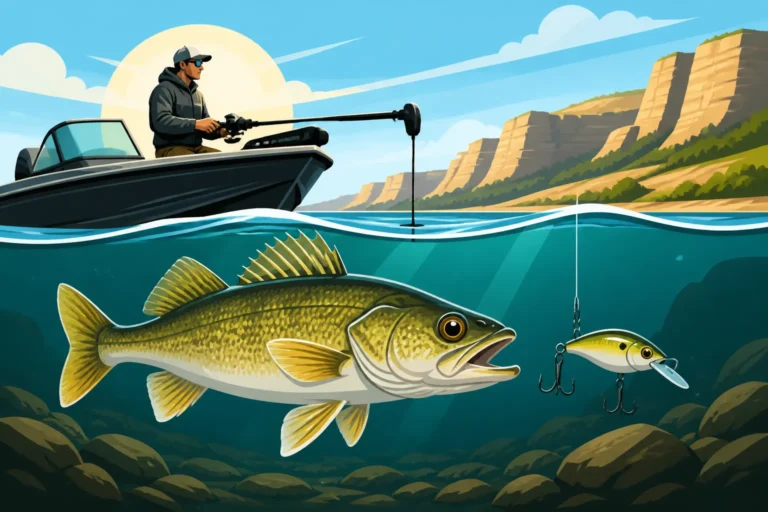
- Vertical Jigging: This involves using a jigging spoon, a specialized jig, or a lipless crankbait and working it directly beneath your hole. The motion is usually a lift-and-drop, designed to attract attention and then fall enticingly. The key is often in the pause – walleye frequently strike as the lure is falling or just after it settles. You'll want to experiment with the intensity and height of your lifts, as well as the duration of your pauses. Sometimes a subtle quiver is all it takes to trigger a bite.
- Deadsticking: This is exactly what it sounds like – using a second rod (if legal, check South Dakota Fishing Regulations Explained for line limits) with a minimal presentation, often a simple hook and minnow or a small jig tipped with bait, kept perfectly still. It provides a static target for those super-fussy walleye who might be hesitant to chase a jigging lure. Many anglers will jig with one rod to call fish in and then have a deadstick set up nearby for the more cautious biters.
Slower Presentations and Smaller Baits
Because walleye metabolisms are slower, they aren't looking for a huge, fast-moving meal.
- Scale Down: This means often using smaller jigs, spoons, and baitfish. A 1/8th or 1/4-ounce jigging spoon, or a smaller minnow, often outperforms larger offerings.
- Slow Down: Your retrieve and jigging action should be much slower than in warmer months. Longer pauses, subtle lifts, and minimal action are key. Think about imitating a lethargic baitfish that's struggling in the cold water.
- Live Bait is King: While artificial lures can be effective, live bait such as minnows (shiners or fatheads) is often superior in winter. Tipping your jigging spoon with a minnow head or tail, or using a whole minnow on a plain hook under a bobber for deadsticking, can make all the difference. The natural scent and subtle movement of live bait can be irresistible to a sluggish walleye. If you're wondering about specifics, a best bait for ice fishing walleye article could be very helpful.
Remember, winter fishing for walleye is a game of patience, precision, and understanding their cold-water behavior. It's not about them disappearing, but about us adjusting to find them in their winter homes.
| Water Body Type | Typical Winter Walleye Locations | Key Characteristics |
|---|---|---|
| Large Reservoirs | Main river channels, deep basin edges, submerged points, humps. | Abrupt depth changes, stable deep water, proximity to baitfish schools. |
| Smaller Deep Lakes | Deepest central basins, steep break lines, rock piles. | Often less current, focus on deepest contours and bottom structure. |
| Glacial Lakes | Deep holes, steep drop-offs into old stream beds, hard bottom. | Can be less defined structure, rely on finding deep pockets and baitfish. |
| Black Hills Lakes | Deepest parts of the lake, dam faces, humps and points. | Often clearer water, walleye may be deeper, less common target than trout in winter. |
For those looking to get serious about their hardwater angling, making sure you have the right setup is crucial. You might want to check out a guide on South Dakota Ice Fishing Gear Guide to be fully prepared for your next trip. Additionally, knowing when to expect the ice to be safe and when the season truly kicks off can be found in resources like When Ice Fishing Season Starts in South Dakota.
Disclaimer
This article is for general informational purposes only and does not constitute professional advice. Laws, prices and regulations vary by location and change over time. Consult a qualified professional for guidance on your specific situation.