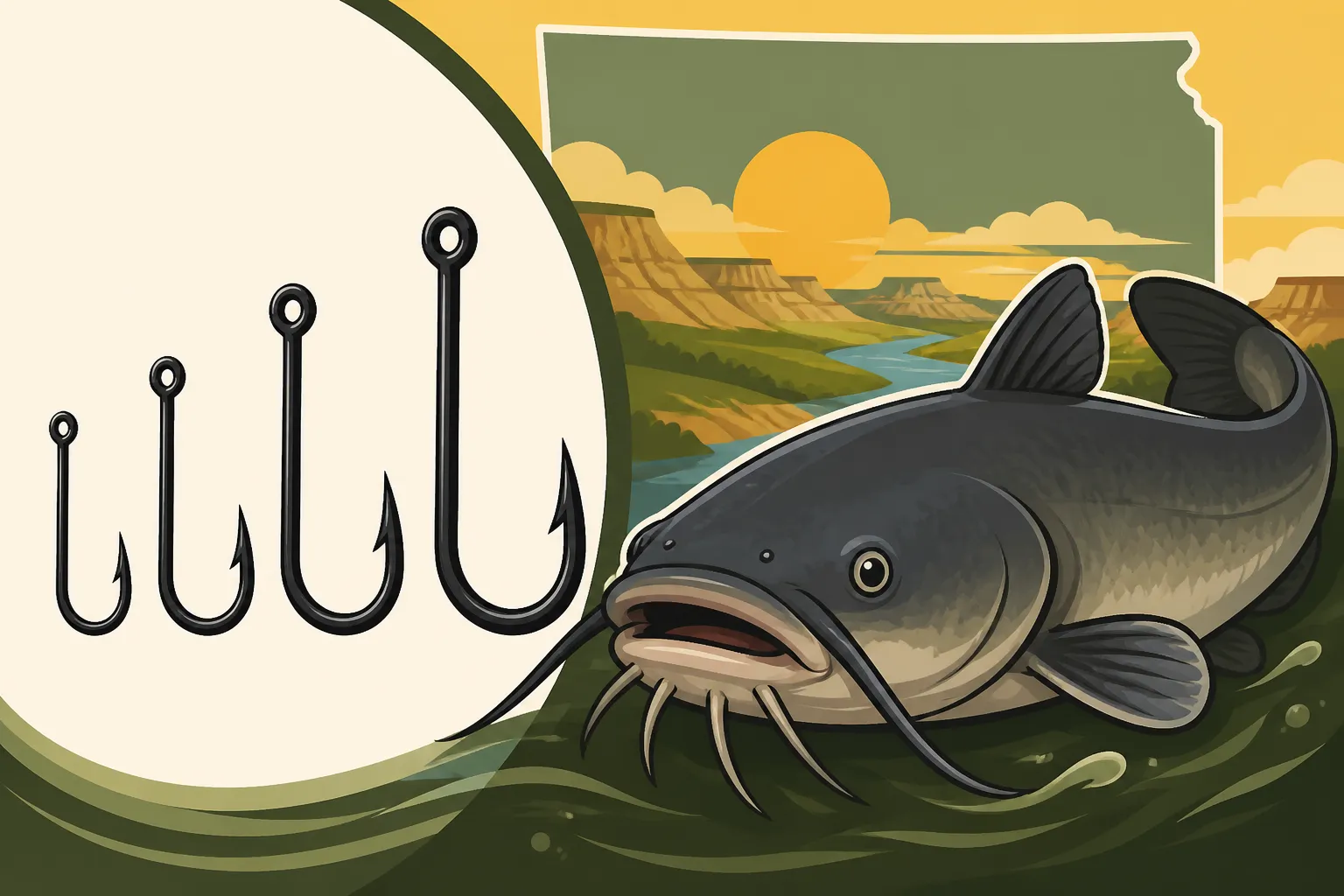
What Size Hook to Use for Catfish
There's nothing quite like the thrill of a big catfish pulling on your line, but let's be honest, it can be incredibly frustrating when you're getting bites but failing to hook up. One of the most overlooked aspects of successful catfishing in South Dakota is choosing the right hook size. This guide will help you decipher the mysteries of catfish mouths and bait presentations, ensuring you're rigged for success on your next outing.
Understanding Catfish Species and Their Mouths in South Dakota
Before you even think about what size hook to tie on, it's crucial to understand the fish you're targeting. South Dakota's waters are home to a few different species of catfish, and their feeding habits and mouth structures vary significantly. What works for a hungry channel cat might barely register with a massive flathead.
Channel Catfish – The Most Common Catch
Channel catfish are, without a doubt, the most widespread and frequently caught catfish species across South Dakota. From the smaller streams and glacial lakes of eastern South Dakota to the mighty Missouri River system, you'll find them almost everywhere. They're often eager biters, and their diet is incredibly diverse, making them a fun target for anglers of all skill levels.
However, despite their sometimes impressive body size, channel catfish actually have a relatively small, subterminal mouth – meaning it's located on the underside of their head. They're scavengers and opportunistic feeders, often sucking in food rather than aggressively striking it. This means your hook needs to be appropriately sized to fit cleanly into their mouth and then secure itself. If your hook is too large, they might "mouth" the bait, nibble around it, or even spit it out without getting hooked. On the other hand, if your hook is too small, they might swallow it deeply, making it harder to release the fish unharmed, especially if you're practicing catch-and-release. When you're fishing rivers like the James River for dinner-plate-sized channels, a well-chosen hook can make all the difference between a missed bite and a full stringer.
Flathead Catfish – The Gulper
Now, if you're talking about flathead catfish, you're entering a different league altogether. These true river monsters are predatory, preferring live bait, and they have a distinctively large, broad, and flattened head, which gives them their name. Their mouths are cavernous, designed for engulfing substantial prey. Unlike channel cats, flatheads aren't typically scavenging for tiny morsels; they're ambushing larger baitfish or crayfish.
When a flathead decides to eat, it doesn't nibble; it inhales. This aggressive feeding style, combined with their sheer power and size, means you need a much larger and significantly stronger hook. A hook that might be perfect for a 5-pound channel cat would be completely inadequate for a 30-pound flathead. Not only could a smaller hook easily bend or break under the strain of a big flathead's fight, but it also might not provide enough gap to properly secure itself in their massive jaws. If your ambition is to land a trophy flathead from the depths of Lake Francis Case or other stretches of the Missouri River, you'll need to upgrade your tackle considerably, starting with your hook. Knowing the habits of these beasts is key, and our guide on Channel Catfish vs Flathead Catfish can provide even more insight into their differences.
Key Factors Influencing Catfish Hook Size Selection
Choosing the right hook isn't just about the species; it's about the entire fishing scenario. Several factors come into play, from the size of your bait to the kind of water you're fishing. Neglecting any of these can lead to frustration and lost fish.
Bait Size and Type
This is perhaps the most critical factor after the target species. The hook's job is to present your bait effectively and then secure the fish. If your bait is too large for your hook, the hook point and barb might get buried, making a successful hookset nearly impossible. Conversely, if your bait is tiny and your hook is massive, the fish might be too wary to take it, or it could simply miss the hook entirely.
Think about what you're using. If you're dabbing a small piece of stink bait or a section of a nightcrawler for channel cats, a smaller hook is definitely in order. You want just enough hook exposed to catch the fish's mouth. However, if you're using a large chunk of cut bait, like a section of gizzard shad or a whole bluegill for flatheads, your hook needs to be substantial enough to hold that bait securely while still leaving plenty of exposed point. A common mistake is using a hook that's too small for the bait, which often results in the fish stripping the bait without getting hooked. It's a delicate balance, and often, you'll want the hook to be proportionate to your bait, allowing for a natural presentation where the hook isn't obviously sticking out or hidden completely. To delve deeper into bait options, check out our guide on Best Bait for South Dakota Catfish.
Target Fish Size and Preferred Catch Method
Your intention on the water also heavily influences hook selection. Are you heading out to fill a cooler with eater-sized channel catfish, or are you on a quest for that personal best, a true monster flathead that you intend to photograph and release?
For smaller, pan-sized channel cats, which typically range from a pound or two up to five or six pounds, a moderate-sized hook will suffice. These fish have smaller mouths and are generally less discriminating. You can often use lighter gear and still have plenty of fun. However, if you're purposefully targeting trophy catfish – those double-digit bruisers, especially flatheads – you absolutely need to scale up your hook size and strength. A bigger, thicker wire hook is essential to withstand the immense pressure exerted by a powerful fish during a prolonged fight. Furthermore, if you're practicing catch-and-release, especially with larger fish, the type of hook becomes as important as the size. Circle hooks, which we'll discuss more later, are fantastic for minimizing harm to the fish by consistently hooking them in the corner of the mouth, making for easier, quicker, and safer releases. This consideration goes hand-in-hand with heavier line and a stout rod, all part of a robust setup designed for bigger, stronger fish.
Water Conditions and Structure
The environment you're fishing in also plays a significant role in hook choice. South Dakota offers a huge variety of fishing environments, from wide-open reservoirs to snag-laden river channels.
Imagine you're fishing a section of the Missouri River where there's submerged timber, rock piles, or heavy brush. These areas are notorious for holding big catfish, but they're also notorious for snags. In such conditions, a hook made of thinner wire might straighten out or break if you get hung up or if a powerful fish tries to bury itself in the structure. You'll want a heavier gauge, more robust hook that can withstand the abuse. This doesn't necessarily mean a larger size, but a stronger construction. Conversely, if you're fishing relatively clean, open bottom in a lake like Lake Kampeska, you might get away with a lighter wire hook, especially if you're targeting smaller fish with delicate presentations. Water current is another factor; in strong currents, a hook needs to hold bait securely without constant re-baiting, and its profile might slightly affect how your bait drifts. Ultimately, matching your hook's strength to the conditions and the potential fighting power of the fish in that specific environment will save you a lot of headaches and lost fish. For general rigging advice, you might find our article on South Dakota Missouri River Fishing Techniques useful.
Popular Catfish Hook Types and Recommended Sizes for South Dakota
Alright, now let's get down to the brass tacks: specific hook types and the sizes that generally work best for South Dakota's whiskered residents. There isn't a one-size-fits-all answer, but understanding these common styles will give you a solid foundation.
Circle Hooks – The Angler's Friend
If there's one hook style that has revolutionized catfishing for many anglers, especially those who practice catch-and-release, it's the circle hook. The defining feature of a true circle hook is its point, which is turned inward and perpendicular to the hook shank. This unique design means that when a fish takes the bait and swims away, the hook slides to the corner of its mouth and, with gentle tension, rotates to set itself. The beauty of this is that it drastically reduces the chances of gut-hooking a fish, which is a major concern with traditional J-hooks. This makes for healthier fish and easier releases.
For channel catfish, I typically recommend circle hooks in the 1/0 to 5/0 range.
- 1/0 to 2/0: Great for smaller pieces of cut bait, worms, or dough baits when targeting pan-sized channels (1-5 lbs). Perfect for kids' setups or when you just want action.
- 3/0 to 5/0: Ideal for larger chunks of cut bait, small live baits, or even substantial stink baits when you're looking for those 5-15 pound channels. These sizes offer a good balance for most channel cat situations.
For the mighty flathead catfish, you need to go much bigger and stronger.
- 6/0 to 10/0+: These are the workhorses for flatheads. When you're using a whole sunfish, a large sucker, or a hefty chunk of carp as bait, these large circle hooks ensure the bait stays on and you get a solid hookset in the corner of that flathead's massive jaw. Brands like Gamakatsu or Mustad make excellent heavy-duty circle hooks that you can readily find on Amazon. Just remember, with circle hooks, resist the urge to rear back and set the hook like you would with a J-hook; simply reel into the fish until your rod loads up.
J-Hooks (Kahle, Octopus, Treble) – Traditional Choices
While circle hooks have gained immense popularity, traditional J-hooks still have their place in many catfishermen's tackle boxes. These hooks require a more active hookset but can be very effective when used correctly.
Kahle Hooks: These hooks are a hybrid of sorts, featuring a wide gap and a slightly offset, turned-up point. They're often favored by anglers who want a good hookup ratio without the deep-hooking issues sometimes associated with traditional straight-shank J-hooks. Their wide gap makes them excellent for holding larger, bulkier baits like chunks of cut bait or large worms. For channel catfish, Kahle hooks in sizes 2/0 to 6/0 are a good bet, covering a range from moderate to larger channels. For flathead catfish, you'd scale up to 7/0 or 8/0, but many serious flathead anglers prefer the more reliable self-setting action of a circle hook with live bait.
Octopus Hooks: These are another popular choice, particularly for smaller channel cats or panfish when drifting small baits. They have a short shank, a wide gap, and a slightly turned-out eye, making them excellent for snelling and smaller bait presentations. For channel catfish, especially when using smaller pieces of cut bait, shrimp, or even corn and marshmallows (yes, some cats love sweets!), sizes #4 to 1/0 are versatile. They're not generally recommended for larger flatheads due to their typically lighter wire and smaller profile.
Treble Hooks: While sometimes used with prepared baits or large chunks of meat, treble hooks are generally not recommended for catfishing, especially if you intend to release your fish. Their multiple points significantly increase the risk of gut-hooking or snagging fish in multiple places, causing undue stress and damage. Many experienced catfishermen avoid them altogether due to ethical concerns and the difficulty of removing them cleanly. However, some anglers might use them in specific situations, like with large dough baits or chicken livers where multiple points are thought to secure the soft bait better. If you must use them, be aware of the increased risk to the fish and consider barbless trebles if allowed.
Hook Material and Strength Considerations
Beyond just size and style, the actual construction of the hook matters immensely, especially when you're battling powerful South Dakota catfish.
Carbon Steel vs. Stainless Steel: Most quality fishing hooks today are made from high-carbon steel, which can be chemically sharpened to a razor-sharp point and is very strong. These hooks are often coated to resist corrosion. Stainless steel hooks are incredibly corrosion-resistant, which can be an advantage in saltwater, but they are generally softer and harder to sharpen, and if left in a fish (which should be avoided), they won't degrade as quickly as carbon steel. For South Dakota's freshwater catfishing, high-carbon steel hooks are the industry standard and preferred choice.
Wire Gauge: This refers to the thickness of the hook wire. You'll often see hooks described as "heavy wire," "medium wire," or "light wire." For catfishing, especially for flatheads and larger channels, you always want to lean towards heavy or extra-heavy wire hooks. A thin wire hook, no matter how sharp, can easily straighten out when a strong catfish surges or twists its head. Imagine finally hooking into a monstrous 40-pound flathead, only to have your hook bend open at the boat! This is where investing in quality, heavy-gauge hooks pays off.
Sharpness is Paramount: No matter the size or type, a dull hook is a useless hook. A sharp hook penetrates quickly and securely with minimal force, increasing your hookup ratio dramatically. Always check your hook points before casting, especially if you've bumped them on rocks or structure. Carry a small hook file or sharpener (like those found easily on Amazon) and give your hooks a few passes to ensure they're needle-sharp. This simple step can turn a frustrating day into a successful one. Good hooks, along with other essential items, are part of a thorough South Dakota Fishing Gear Checklist.
Practical Tips for Rigging and Presentation in South Dakota Waters
Having the right hook is only half the battle; knowing how to rig it and present it effectively is just as crucial. Catfish, while often considered less finicky than some other species, still respond to a well-presented bait.
The Slip Sinker Rig and How Hook Size Fits In
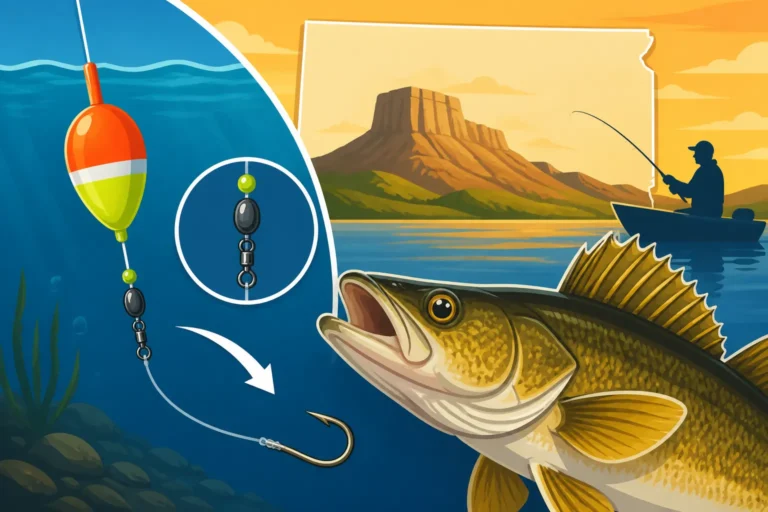
The slip sinker rig, often called a Carolina rig by bass anglers, is arguably the most popular and effective rig for still fishing for catfish, particularly in lakes and slow-moving rivers. It allows the fish to pick up the bait and move away with it without feeling the full weight of the sinker, leading to more confident bites.
Here's how to tie it and how your hook size integrates:
- Main Line: Start with your main fishing line coming off your reel.
- Sinker: Thread an egg sinker (or a no-roll sinker in current) onto your main line. The weight will depend on current and depth, but 1/2 oz to 3 oz is common.
- Bead: Slide a small plastic or glass bead onto the line after the sinker. This protects your knot from the sinker repeatedly banging against it.
- Swivel: Tie on a barrel swivel to the end of your main line. This is where your sinker and bead stop.
- Leader Line: To the other end of the swivel, tie on your leader line, typically 1 to 3 feet long. The leader should be slightly lighter than your main line in case of a snag, allowing you to break off just the hook and leader.
- Hook: Finally, tie your chosen catfish hook (circle or J-hook) to the end of your leader.
The beauty of this rig is that the main line slips through the sinker, so when a catfish takes your bait, it feels very little resistance. Your hook, attached to the leader, has a natural, uninhibited presentation. The size of your hook should be able to sit cleanly with your bait on the end of that leader. If you're using a large, heavy hook with a small, lightweight leader, the action might be off. Conversely, if your hook is too small for a long, thick leader, it might not present naturally. Ensure your hook can freely move and rotate within the bait, allowing it to do its job when a fish strikes.
Setting the Hook for Different Hook Types
The way you set the hook is just as important as the hook itself, and it varies significantly between circle hooks and J-hooks.
- Circle Hooks: This is where many anglers make mistakes. With circle hooks, you do not need to deliver a violent, sweeping hookset. In fact, doing so will often pull the hook right out of the fish's mouth. Instead, when you feel a bite – which might feel like a series of tugs or a steady pull – simply pick up your rod, point it towards the fish, and slowly reel until the rod loads up and bends over. The fish will essentially hook itself in the corner of its mouth as it moves away and the line tightens. It's a subtle process that takes a bit of getting used to, but once you master it, your hookup ratio will soar, and you'll minimize harm to the fish.
- J-Hooks (Kahle, Octopus): For traditional J-hooks, a more conventional hookset is required. When you feel a solid bite, wait for the fish to commit and start moving away with the bait, then rear back with a firm, upward or sideways sweep of your rod. The goal is to drive that hook point home. This requires paying close attention to your line and feeling the fish, which can be a skill developed over many hours on the water. When fishing the Missouri River tailwaters for big channel cats, understanding this distinction can make all the difference. Check out our guide on How to Catch Catfish on the Missouri River for more specific techniques.
Adjusting Hook Size Based on Catch Feedback
Even with the best advice, fishing often comes down to on-the-water adjustments. If you're not getting solid hookups, don't be afraid to experiment with your hook size.
- Missing Bites? If you're getting a lot of subtle bites, or feeling fish peck at your bait without getting hooked, your hook might be too large for the fish or the bait. Try downsizing by a size or two, or switching to a different hook style like an octopus hook if you were using a Kahle. Sometimes, a tiny change can make a huge difference. Conversely, if you're getting short strikes where the bait is gone but no hookup, it could also mean your hook is too small and the fish is just mouthing the bait around the hook.
- Gut-Hooking Fish? If you find you're consistently gut-hooking fish, especially smaller ones, this is a clear sign to switch to circle hooks or, if you're already using them, try a slightly larger size. A properly sized circle hook almost always hooks in the corner of the mouth, making for an easy release. It's not only better for the fish but also less messy for you.
- Observing Your Catch: Pay attention to where the fish are hooked. Are they hooked shallow in the lip, deep in the throat, or in the corner of the mouth? This feedback is invaluable. Adjust your hook type, size, and even how long you wait before setting the hook based on what the fish are telling you. Remember to always be mindful of Catfish Limits and Size Rules for your specific area in South Dakota to ensure you're compliant with regulations. For any questions about statewide fishing guidelines, our comprehensive South Dakota Fishing License Guide is an excellent resource.
| Catfish Species | Target Size (lbs) | Recommended Hook Type | Recommended Hook Size | Common Bait Examples |
|---|---|---|---|---|
| Channel Catfish | 1-5 (Eaters) | Circle, Octopus | #4 to 2/0 | Worms, Stink Bait, Shrimp, Small Cut Bait |
| Channel Catfish | 5-15 (Larger) | Circle, Kahle | 3/0 to 5/0 | Larger Cut Bait, Chicken Liver, Prepared Baits |
| Flathead Catfish | 10-30+ (Trophy) | Circle (Heavy Wire) | 6/0 to 10/0+ | Live Bait (Sunfish, Suckers), Large Cut Bait Chunks |
Disclaimer
This article is for general informational purposes only and does not constitute professional advice. Laws, prices and regulations vary by location and change over time. Consult a qualified professional for guidance on your specific situation.