How Deep to Fish for Smallmouth Bass in June
Navigating the ever-changing patterns of smallmouth bass in South Dakota can feel like a real puzzle, especially when June rolls around. After the hustle and bustle of the spawn, these feisty fighters often seem to vanish, leaving anglers wondering exactly how deep they've moved and what it takes to find them. If you've been scratching your head trying to figure out the best depths for smallmouth bass in June, this guide is here to untangle the mystery and put you on more fish.
Unraveling South Dakota Smallmouth Behavior in June
June is a month of significant transition for smallmouth bass in South Dakota, marking a distinct shift from their spring spawning rituals to more established summer patterns. Understanding what drives their movements and preferences during this time is absolutely crucial for finding consistent success. It's not just about throwing a lure; it's about thinking like a smallmouth.
The Post-Spawn Shift and Recovery
Right after the smallmouth bass finish their arduous spawning duties, typically in late May or early June in many South Dakota waters, they enter a post-spawn recovery phase. This period is marked by a certain level of fatigue as they've expended immense energy building nests, guarding eggs, and fending off predators. You won't find them as aggressive or predictable as they were during the pre-spawn feeding frenzy.
Initially, many bass will linger near the shallower spawning grounds, often in depths of 5-10 feet, but they'll be seeking nearby cover or a slightly deeper edge to recuperate. They're not actively feeding with gusto just yet, but rather looking for an easy meal as they regain their strength. Their metabolic rates are increasing with the warming water, urging them to find food, but they're still not at their summer peak.
As they recover over the first week or two post-spawn, smallmouth will begin to disperse from the immediate spawning areas, moving to slightly deeper, more secure locations. This might be a nearby rock pile, a submerged timber line, or the edges of a steep drop-off. They're often solo or in very small groups during this time, making them a bit more challenging to pinpoint. Understanding these movements is key to mastering your Post-Spawn Bass Fishing Techniques.
Key Environmental Drivers for June Depths
Several environmental factors dictate where smallmouth bass choose to hold in South Dakota during June, with water temperature leading the charge. As surface temperatures climb into the 60s and 70s, many lakes and reservoirs, especially the deeper Missouri River reservoirs like Lake Sharpe, begin to develop a thermocline. This is a distinct layer where water temperature changes rapidly with depth, creating distinct zones. Smallmouth will often relate closely to the cooler, more oxygenated water below this thermal barrier.
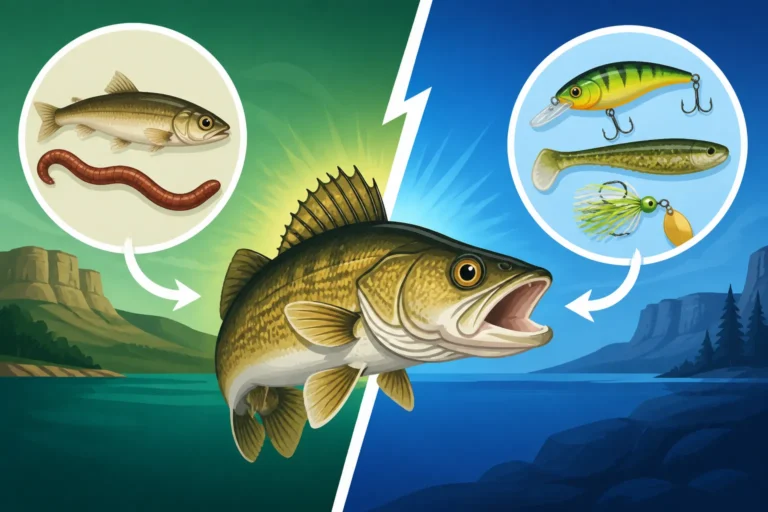
Beyond temperature, the availability and movement of forage fish play a huge role. Smallmouth are opportunistic predators, and they'll follow baitfish like shad, perch, or shiners wherever they go. If baitfish are congregating on deeper humps or ledges, you can bet the smallmouth won't be far behind. This is a fundamental aspect of the South Dakota Smallmouth Bass Fishing Guide.
Oxygen levels, while generally good in June, can sometimes become a factor in very deep, stagnant pockets, though this is less common in flowing waters like the Missouri River system. Lastly, light penetration is important. On bright, sunny days, smallmouth will often seek deeper water or denser cover to escape the intense sunlight, while on overcast or windy days, they might push shallower, feeling more comfortable in reduced light conditions.
Diving Deep: Specific Smallmouth Depth Ranges Throughout June
June is a dynamic month, and smallmouth bass won't simply hold at one depth. Their location will evolve as the month progresses and water conditions stabilize or change. Being adaptable and understanding these shifts is what separates a good angler from a great one. Let's break down the depths you can expect throughout the month in South Dakota.
Early June: Intermediate Depths Near Spawning Areas
In the initial weeks of June, particularly if the spring was cool and the spawn just wrapped up, you'll find a significant number of smallmouth in intermediate depths, typically ranging from 8 to 15 feet. These fish are still somewhat influenced by their recent spawning activities but are moving away from the absolute shallowest waters.
They often hold on secondary points, submerged rock formations, or the edges of flats that drop into deeper water, always with an escape route to security. These areas provide structure for ambush and are often adjacent to their recovery zones. For example, on lakes like Lake Francis Case, look for rocky points that extend out into the main channel, providing both depth and cover. Morning and evening hours might see them pushing a little shallower to feed, but during the bright midday sun, they'll often retreat to these intermediate depths.
Don't overlook small, isolated humps or rock piles that might be just a cast away from known spawning pockets. These are prime spots for recovering bass that don't want to travel far but still desire a bit more depth and cooler water than the very shallow flats. Finesse techniques can be highly effective during this post-spawn transition as the fish might still be a bit lethargic.
Mid-June: Following Forage to Deeper Structure
As mid-June arrives and water temperatures consistently climb, smallmouth bass often make a more definitive move to deeper offshore structure. This is when the true summer patterns start to emerge. You'll typically find them holding anywhere from 15 to 25 feet, though this can vary depending on the specific water body and prevailing conditions.
Their primary driver now is often forage. If schools of baitfish are suspending over deep water or relating to certain types of structure, the smallmouth will follow. Main lake points, underwater humps, steep breaks, and extensive rock piles in deeper water become prime targets. These features offer cooler, more stable water temperatures and ambush points for active feeding. On Lake Sharpe, for instance, targeting deep current breaks or rocky ledges near the main river channel can be incredibly productive for Lake Sharpe Smallmouth Bass Near Big Bend Dam.
Using your electronics to locate these deeper structures and identify baitfish schools or arches that indicate bass is paramount during this time. Once you locate them, you might find larger schools of smallmouth compared to earlier in the month, as they start to gather in favorable feeding zones.
Late June: Settling into Summer Haunts
By the end of June, smallmouth bass in South Dakota have often settled into their consistent summer haunts. This means they'll be holding in even deeper water, sometimes ranging from 20 to 30+ feet, especially on large, deep reservoirs with a well-established thermocline. They are now fully recovered from the spawn and actively feeding, but they're seeking comfort and efficiency.
Offshore reefs, deep main lake basins with irregular bottom contours, and deep current breaks become key areas. They're looking for stable water temperatures and a reliable food source. On sprawling bodies of water like Lewis and Clark Lake, you might find smallmouth relating to the deeper sections of the old river channel or extensive areas of submerged timber and rock. Reading the Lewis and Clark Lake Smallmouth Bass Fishing Report can give you insights into specific areas.
While they're deep, it doesn't mean they won't move. These fish can still move up onto the tops of humps or ledges to feed during low light conditions or if baitfish schools move higher in the water column. However, their base of operations will likely be in those deeper, more stable environments. Understanding these deep-water patterns is essential for consistent success as the dog days of summer approach.
Top Techniques and Tackle for June Smallmouth Depths
Once you've got a handle on where the smallmouth are likely to be, the next step is figuring out how to catch them. Fishing deeper water requires specific techniques and tackle that can effectively reach and present lures to these fish, often with precision.
Vertical Presentations: Dropshots, Jigs, and Spoons
For targeting smallmouth bass holding at precise depths, especially when they are relating tightly to structure or suspending, vertical presentations are incredibly effective.
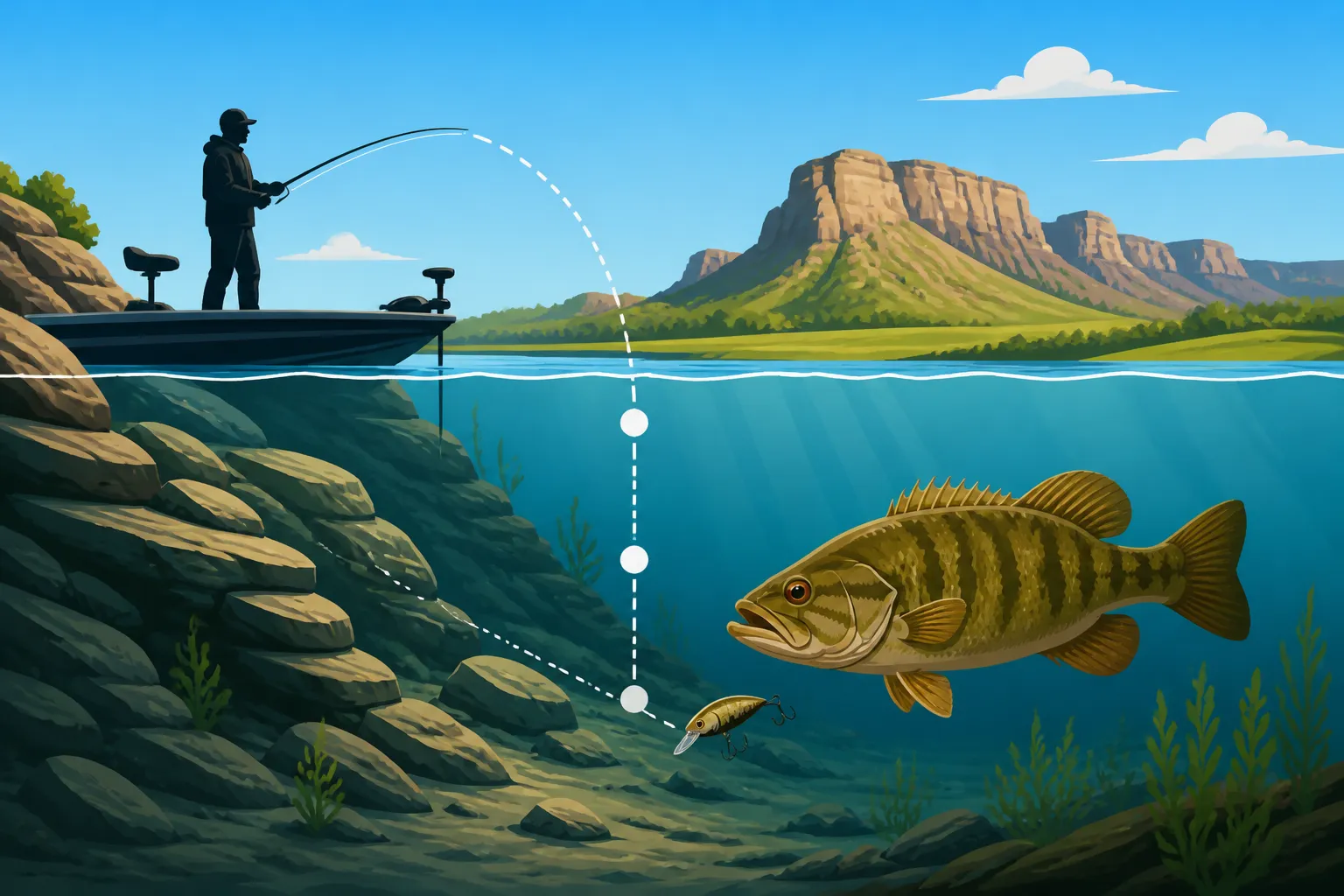
The dropshot rig is a finesse angler's best friend for deep smallmouth. By tying your hook directly to the line and leaving a tag end for a weight, you can present a small plastic bait (like a minnow imitation or a worm) at a specific depth, just above the weight, keeping it right in the fish's strike zone. This is deadly for suspended fish or those tight to the bottom. You can find excellent dropshot weights and hooks, along with a wide array of soft plastics, on Amazon. Sensitivity in your rod is key here; a medium-light spinning rod allows you to feel the subtle taps of a deep smallmouth.
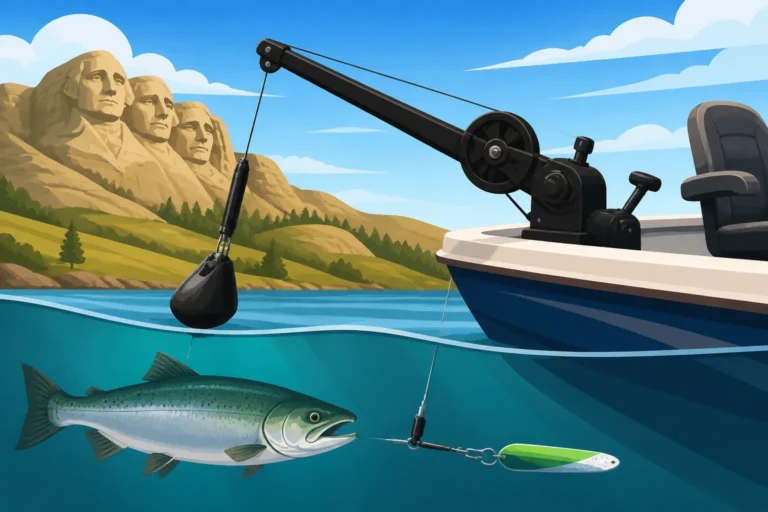
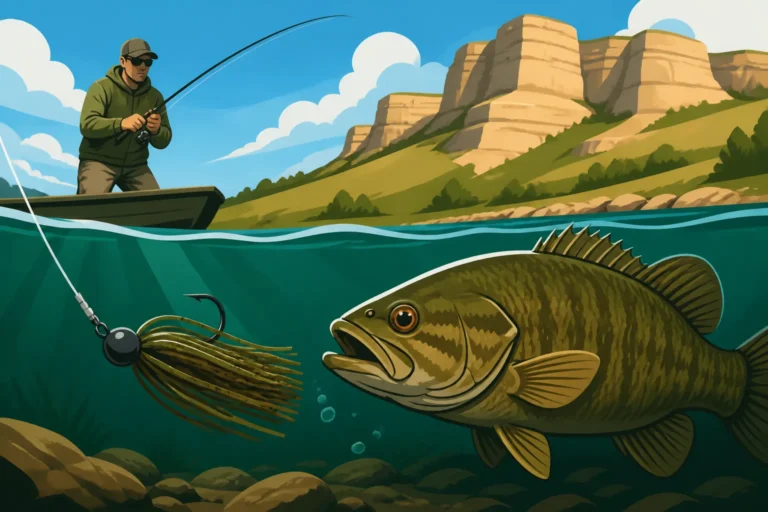
Jigging spoons are another fantastic option, especially for aggressively feeding fish or when you're trying to mimic dying baitfish. Dropping a heavy spoon down to the fish and imparting a sharp lift-and-fall motion can trigger vicious strikes. The flutter on the fall is often what seals the deal. Football jigs, paired with creature baits or craw imitations, are excellent for dragging or hopping along deep rocky bottoms, mimicking crawfish – a favorite smallmouth meal. Heavy hair jigs can also be very productive when fished slowly.
Covering Water with Crankbaits and Trolling
When smallmouth are scattered over a larger area, or when you're trying to locate schools quickly, covering water efficiently is crucial. Deep-diving crankbaits are perfect for this.
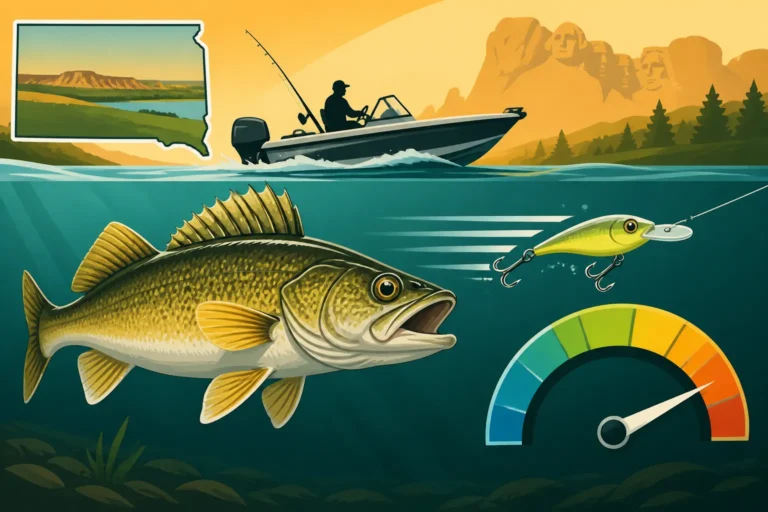
Select crankbaits that are designed to reach the depths you're targeting. Many reputable brands offer models that dive to 15, 20, or even 25 feet. Experiment with different colors – natural baitfish patterns often excel in clear South Dakota waters, while brighter colors might work better in stained water. Vary your retrieve speed; sometimes a steady retrieve is best, other times a stop-and-go or a deflection off structure will trigger a strike. Trolling deep-diving crankbaits is also a highly effective method on large reservoirs like Lake Oahe or Lake Sharpe to systematically cover vast areas and find active fish. It allows you to present your lure at a consistent depth for extended periods.
For those venturing into the South Dakota Missouri River Fishing Techniques, trolling can be especially valuable to cover long stretches of river channel ledges where smallmouth are known to congregate.
Finesse Approaches for Pressured or Finicky Fish
There will always be days when the smallmouth are tight-lipped, or when fishing pressure is high. This is where finesse techniques truly shine, offering subtle presentations that can entice even the most reluctant bass.
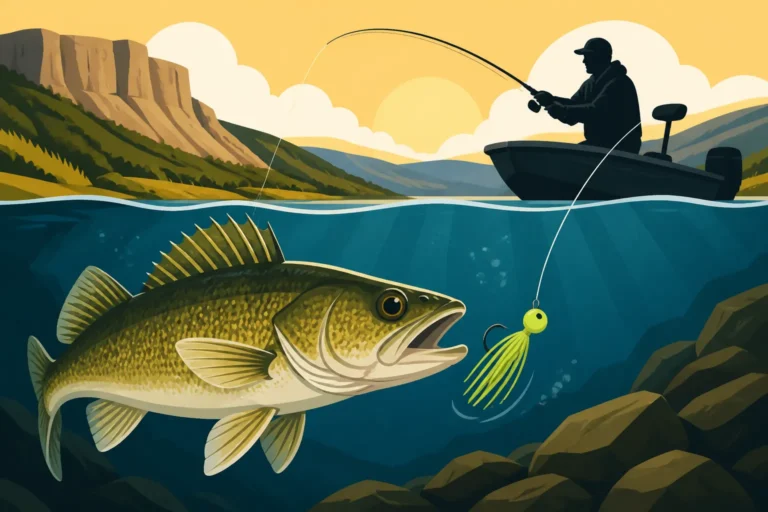
The Ned Rig has exploded in popularity for a good reason – it simply catches fish. This small, mushroom-head jig paired with a buoyant, typically 2-3 inch plastic worm, stands straight up off the bottom, creating a very natural, subtle presentation. It’s perfect for slowly dragging or hopping along rocky bottoms in depths up to 20 feet, especially for neutral or negative smallmouth. Its small profile and enticing action are hard for even a finicky fish to resist.
Soft plastic tubes and grubs also remain staples for smallmouth anglers. Rig them on a jig head and work them slowly along the bottom, mimicking crawfish or small baitfish. The spiraling fall of a tube can be incredibly effective when smallmouth are feeding on vertical structure. Experiment with scent and different plastic densities to find what the fish prefer on any given day. A good selection of these baits can easily be found and ordered from Amazon to stock your tackle box for Smallmouth Bass Fishing Techniques for Rocky Shorelines.
Adapting to Conditions: Beyond Just Depth
While knowing the general depth smallmouth prefer in June is vital, fishing isn't a static science. Conditions change constantly, and the best anglers are those who can read the water and adapt their approach on the fly. This goes beyond just depth and delves into understanding the nuances of the fishing environment.
Leveraging Modern Electronics
In today's fishing world, your boat's electronics are your eyes underwater, and they are absolutely indispensable for targeting deep-water smallmouth. A quality fish finder with side imaging or down imaging capabilities allows you to scan vast areas and pinpoint submerged structures like rock piles, humps, ledges, and even individual boulders that hold bass. This saves immense time and helps you identify prime real estate before you even make a cast. You can also monitor your lure's position relative to the fish, ensuring your presentation is spot-on.
GPS mapping, often integrated into modern fish finders, is equally crucial. It allows you to mark waypoints on productive spots, follow contour lines with precision, and navigate back to proven fish-holding structure time and again. Understanding how to interpret your sonar returns – distinguishing baitfish from larger game fish – is a skill that develops with practice but is invaluable for consistently catching South Dakota Walleye Limits or smallmouth. Exploring options for Best Fish Finders for South Dakota Lakes is a worthwhile investment for any serious angler.
The Dynamic Influence of Weather and Light
Weather patterns and light conditions can significantly alter smallmouth behavior and depth preferences, even within a single day. On bright, sunny days with clear skies, smallmouth will often retreat to deeper, cooler water or seek the shade of submerged cover to escape the intense light. Their eyes are sensitive, and reduced light makes them feel more secure.
Conversely, on overcast days, or when there's a good chop on the water from wind, light penetration is reduced, and smallmouth may feel more comfortable pushing shallower to feed. Strong winds can also position fish on the windy side of structures, as the wave action disorients baitfish and washes food into those areas. Pay close attention to recent cold fronts or warm fronts as well; these can cause fish to become lethargic and drop deeper, or conversely, become more active and move shallower to feed aggressively. The key is to observe and adjust.
Boat Control for Precision Fishing
Effective boat control is paramount when you're targeting smallmouth in deeper water, especially with vertical presentations. You need to be able to hold your boat precisely over a deep rock pile, drift along a contour line, or present a dropshot to a specific depth without being pulled off course by wind or current.
A reliable trolling motor is a game-changer here. Many modern trolling motors feature GPS anchoring capabilities, allowing you to "spot-lock" your boat over a specific piece of structure, even in wind or current. This frees you up to focus on your fishing, making precise casts or vertical drops directly to the fish. You can find a range of powerful and efficient trolling motors on Amazon that will vastly improve your deep-water fishing experience.
Using drift socks can also be beneficial in windy conditions to slow your drift and allow for a more controlled presentation, particularly when covering deep flats or long ledges. Mastering your boat positioning and maintaining contact with your lure in deeper water are skills that will lead to more consistent smallmouth catches throughout June and into the heart of summer.
Disclaimer
This article is for general informational purposes only and does not constitute professional advice. Laws, prices and regulations vary by location and change over time. Consult a qualified professional for guidance on your specific situation.