Spinning Reel vs Baitcaster for Bass Fishing
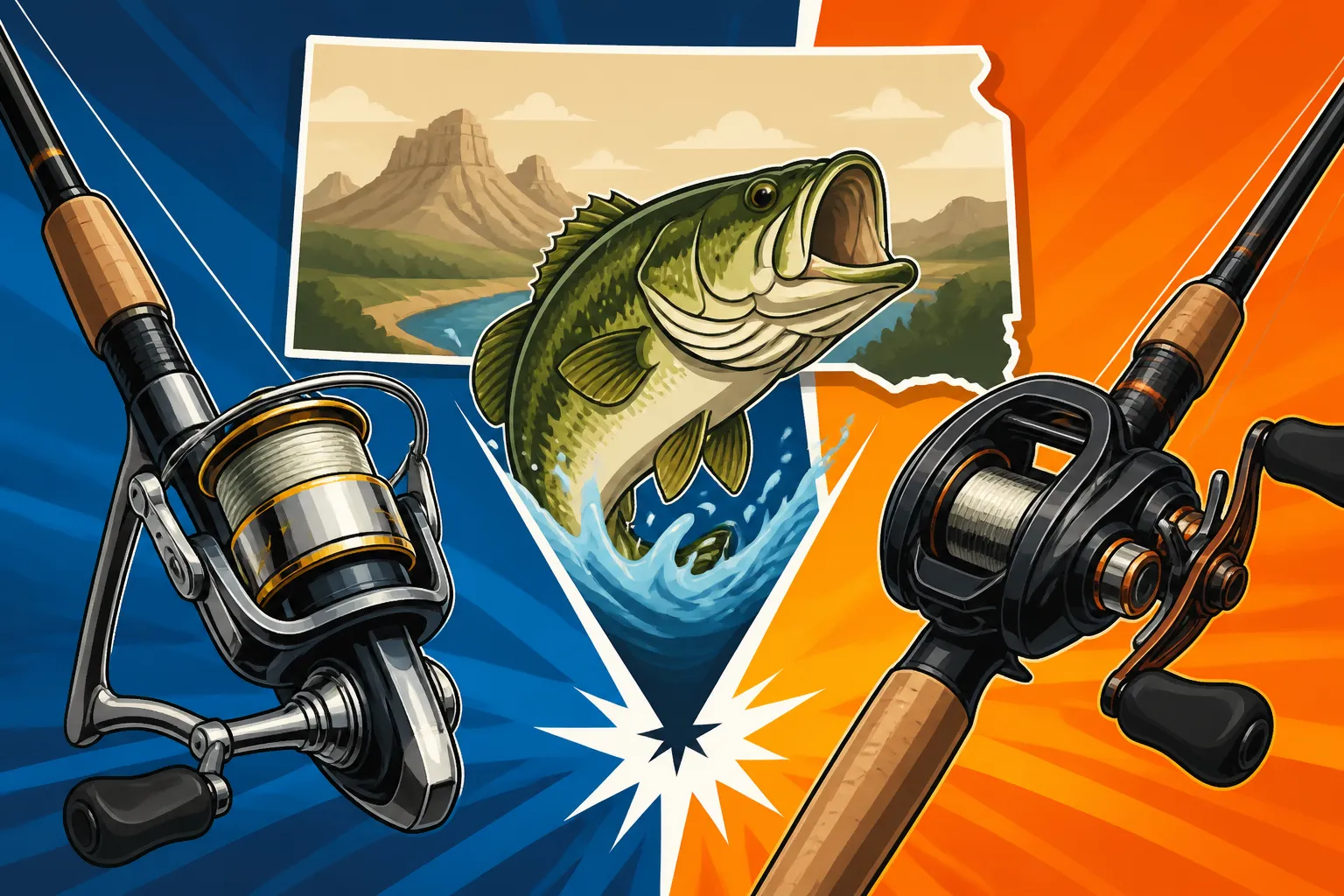
Navigating the world of bass fishing in South Dakota can be thrilling, but one of the most common dilemmas anglers face, especially when staring at a wall of gear, is choosing between a spinning reel and a baitcasting reel. It's not just a matter of preference; these two types of reels offer fundamentally different experiences and excel in various situations. This guide aims to clear up the confusion, helping you understand when to grab which reel so you can maximize your success on our beautiful lakes and rivers, whether you're chasing a trophy largemouth in a weed-choked pond or a feisty smallmouth on the Missouri River.
Understanding the Basics: Spinning Reels for South Dakota Bass
Let's start with the workhorse for many anglers, the spinning reel. It's often the first reel a new angler learns to use, and for good reason. Its design inherently minimizes some of the biggest frustrations newcomers face, making it incredibly approachable for anyone dipping their toes into bass fishing in South Dakota.
The Spinning Reel Advantage: Ease of Use and Versatility
Spinning reels are characterized by their open-face design where the spool remains stationary, and a bail arm rotates around it to wind the line. This simple mechanism is a huge plus for ease of use. You press a button, open the bail, cast, and reel it back in. What's not to love? The biggest advantage here is the drastically reduced chance of a "bird's nest" or backlash – that tangled mess of line that can bring a fishing trip to a screeching halt. With a spinning reel, you're far less likely to spend precious fishing time picking out knots, which is a major relief, especially when the bite is hot.
This ease of use also translates into incredible versatility. Spinning reels handle lighter lines and lures with grace. If you're fishing smaller, clear bodies of water like some of the Black Hills lakes or even urban fishing spots where finesse is key, a spinning reel allows you to present tiny jigs, small soft plastics, or ultralight crankbaits naturally. This delicate presentation can be absolutely crucial when bass are finicky or pressured. It's also fantastic for those times when you're targeting bass but might also encounter panfish or smaller trout; a spinning setup is perfectly suited for those incidental catches, making it a truly multi-purpose tool in your South Dakota Fishing Gear Checklist.
Ideal Scenarios and Lure Pairings
When should you absolutely reach for that spinning reel? Think finesse. When bass are less aggressive, perhaps in colder water during early spring or late fall, or when they're hiding out in clear water during the bright summer sun, a subtle approach can be a game-changer. This is where a spinning reel shines. Techniques like drop-shotting, Ned rigging, or throwing a weightless wacky-rigged worm become effortless. The lighter line (often 6-10 lb test monofilament or fluorocarbon, or even lighter braided lines with a fluoro leader) casts beautifully off a spinning spool, allowing those delicate baits to fall naturally and tempt wary bass.
Consider fishing the rocky shorelines of Lake Francis Case, where smallmouth bass often hug tight to structure in clear water. A spinning reel allows you to cast a light jig-and-plastic combo a long distance with precision, letting it sink slowly into crevices without spooking the fish. Similarly, on smaller glacial lakes in eastern South Dakota, where you might be targeting largemouth around sparse cover with lighter soft plastics, a spinning setup ensures a quiet entry into the water and a natural retrieve. Many anglers find great deals on these specialized finesse lures and the perfect spinning rod and reel combos for them on platforms like Amazon, ensuring you have the right tools for the job without breaking the bank.
Diving Deep: Baitcasting Reels for South Dakota Bass
Now, let's talk about the baitcasting reel – a tool often associated with experienced anglers, and for good reason. While it has a steeper learning curve, the rewards in terms of power, precision, and efficiency for certain bass fishing applications are undeniable.
Mastering the Baitcaster: Power and Precision
Baitcasting reels operate differently than spinning reels. When you cast, the spool itself rotates, directly letting line out. This direct line feed offers several distinct advantages. First and foremost is control. With practice, a skilled angler can achieve unparalleled accuracy, pinpointing casts into tight pockets, under overhanging branches, or right next to a submerged log where a trophy bass might be hiding. This precision is difficult to replicate with a spinning reel, especially with heavier baits.
Beyond accuracy, baitcasters offer immense power. Their gearing systems are designed to handle heavier lines (typically 12-25 lb test monofilament or fluorocarbon, or even heavier braided lines) and bigger, bulkier lures. When you hook into a really strong bass that immediately tries to bury itself in thick cover, the robust drag system and direct retrieve of a baitcaster give you the leverage to pull it out. This strength also makes it ideal for handling thicker monofilament or braided lines, which are essential when fishing around abrasive structures or heavy vegetation. It’s a workhorse, truly, and once you get the hang of it, you’ll appreciate its raw capability for battling big fish.
When a Baitcaster Shines: Heavy Cover and Bigger Baits
If you're planning on tackling dense vegetation, heavy submerged timber, or punching through matted grass, a baitcasting setup is your best friend. Imagine fishing the weed lines on one of South Dakota’s prairie lakes for a massive largemouth, or exploring the fallen trees and brush piles of the Missouri River reservoirs like Lake Sharpe. This is where a baitcaster truly shines. Techniques like flipping and pitching jigs and soft plastics into tight cover, skipping frogs across lily pads, or burning large spinnerbaits and deep-diving crankbaits are all made more efficient and effective with a baitcaster. The ability to quickly retrieve line and generate torque allows you to muscle fish out of heavy cover before they can wrap you up and break off.
For example, when you're targeting the big smallmouth bass that inhabit the rocky points and riprap banks of places like Lake Sharpe Smallmouth Bass Near Big Bend Dam, you might be throwing heavier jigs or crankbaits to probe those deeper structures. A baitcaster allows you to cast these heavier lures further and more accurately, and then quickly reel in any slack to get a solid hookset when a fish strikes. You can find specialized baitcasting rods and reels designed for these exact heavy-duty applications, often with detailed specifications on reputable online retailers like Amazon, making it easier to select the perfect gear for chasing those larger, harder-fighting fish.
The Head-to-Head: Performance Factors for South Dakota Bass Anglers
Deciding between these two reels often comes down to specific performance factors that directly impact your fishing experience on the water. It’s not just about what they can do, but what they do best in real-world scenarios across South Dakota’s diverse fisheries.
Casting Distance and Accuracy in Varying Conditions
When it comes to pure casting distance, both reels can achieve impressive throws, but they do so differently and excel with different lure weights. Spinning reels generally offer superior casting distance with very light lures. The line peels off the stationary spool smoothly, encountering minimal friction. This makes them perfect for those tiny crappie jigs, finesse worms, or lightweight spoons you might use to tempt a wary bass or incidental panfish in clear waters. However, with heavier lures, the physics of a spinning reel can sometimes introduce a bit more friction as the line unfurls, potentially limiting max distance compared to a perfectly tuned baitcaster.
Baitcasters, on the other hand, truly excel in both distance and accuracy with medium to heavy lures. Once you've mastered the thumb control, the rotating spool allows for an incredibly efficient, low-friction release of line, catapulting heavier baits a significant distance. But where they really shine is accuracy. The ability to feather the spool with your thumb gives you unparalleled control over the trajectory and landing spot of your lure. This is a massive advantage when you need to drop a jig into a specific hole in a weed bed or skip a frog under a dock. Wind is a common factor on many South Dakota lakes, especially the large Missouri River reservoirs. While wind can wreak havoc on any cast, a skilled baitcaster user can often maintain better control and accuracy in breezy conditions than with a spinning reel, thanks to that direct thumb-on-spool braking capability.
Line Management and Backlash Prevention
Ah, the infamous "bird's nest." This is where many aspiring baitcaster users get discouraged. Because the spool rotates freely, if the lure slows down in the air or hits the water before enough line has left the spool, the spool can continue to spin, creating an explosive tangle of line. Modern baitcasting reels come equipped with sophisticated magnetic or centrifugal braking systems that help manage spool speed and significantly reduce the likelihood of backlash. Learning to properly set these brakes and, most importantly, mastering the art of "thumbing" the spool during the cast are crucial skills. It takes practice, but it's a skill that once acquired, opens up a new world of fishing possibilities.
Spinning reels, conversely, are much more forgiving when it comes to line management. The stationary spool virtually eliminates the possibility of a bird's nest. However, they aren't entirely without their quirks. Line twist can be an issue, especially if you're frequently retrieving lures that spin or if you're not careful about how you spool your line. Also, lighter, smaller diameter lines can sometimes "jump" off the spool in loose coils, creating minor tangles or wind knots, particularly with braided line. For techniques that might induce line twist, like continuously retrieving certain types of crankbaits, you might want to periodically let out a long section of line behind the boat to let it untwist. When considering your line choices, whether it's for bass or for Best Fishing Rods and Reels for Walleye, understanding these nuances will help you rig up for success.
Making Your Choice for South Dakota Bass Fishing
Ultimately, the choice between a spinning reel and a baitcaster isn't about one being inherently "better" than the other. It's about finding the right tool for the job, tailored to your fishing style, the conditions you face, and the specific bass techniques you plan to employ in South Dakota.
Matching Your Reel to Your Technique and Target
As you’ve probably gathered, each reel type excels in different scenarios. For lighter presentations, subtle retrieves, and situations where you need maximum casting distance with minimal weight, a spinning reel is almost always the superior choice. Think about those clear, calm mornings on a small pond, or when you’re patiently working a finesse worm along a drop-off. If your goal is to coax a shy smallmouth from a rocky point on Lake Francis Case Smallmouth Bass Fishing, a spinning reel paired with a light fluorocarbon leader could be your secret weapon.
However, when you need brute strength, pinpoint accuracy into tight spots, and the ability to throw heavy, wind-resistant lures all day long, the baitcaster is unmatched. If you're going to spend your day flipping heavy jigs into thick cattails, throwing big swimbaits to ambush predators, or burning large crankbaits through deep water to entice a monster largemouth, a baitcaster will give you the control and power you need. Many serious bass anglers in South Dakota carry multiple rods, each rigged with a different reel type and suited for a specific technique, ensuring they’re prepared for whatever the fish throw at them. Consider what Best Lures to Keep in a South Dakota Tackle Box you prefer to throw and let that guide your reel choice.
Practical Considerations and Budgeting
Beyond performance, there are some practical aspects to consider. Generally speaking, good quality spinning reels tend to be a bit more affordable at entry-level prices compared to baitcasters of comparable quality. If you're just starting out, or if bass fishing isn't your primary target and you're looking for a versatile reel that can handle a variety of species, a spinning reel is often a more budget-friendly and less frustrating option to begin with. You can find excellent value spinning combos on platforms like Amazon that will serve you well.
For baitcasters, while you can find entry-level models, investing a bit more in a higher-quality reel often pays dividends in terms of smoother operation, more reliable braking systems, and overall durability. A cheaper baitcaster with a poor braking system can quickly lead to endless frustrating backlashes, which might turn you off from the experience entirely. Think about the long-term investment and the enjoyment of your time on the water. Both types of reels require some basic maintenance, like cleaning and lubricating, to keep them running smoothly through the seasons, a point highlighted in general guidelines like South Dakota Fishing Seasons Explained. Don't forget, whichever reel you choose, make sure to check current pricing and detailed specifications on the manufacturer's or retailer's website for the most up-to-date figures.
Ultimately, whether you're a seasoned pro or just beginning your journey into South Dakota bass fishing, understanding the strengths of both spinning and baitcasting reels will empower you to make more informed decisions. It might even lead you to embrace both, giving you the versatility to tackle any situation our fantastic fisheries present.
| Feature | Spinning Reel | Baitcasting Reel |
|---|---|---|
| Ease of Use | Very easy, ideal for beginners | Moderate to difficult, requires practice (thumbing) |
| Backlash Risk | Very low | Moderate to high (without proper technique) |
| Lure Weight | Excels with light to ultralight lures | Excels with medium to heavy lures |
| Line Weight | Best with lighter lines (4-10 lb test mono/fluoro) | Best with heavier lines (12-25 lb test mono/fluoro or braid) |
| Casting Accuracy | Good, but less precise than a mastered baitcaster | Excellent, pinpoint accuracy possible with practice |
| Casting Distance | Excellent for light lures, good for medium | Excellent for medium to heavy lures |
| Power/Torque | Moderate, good for general fighting | High, great for battling big fish & heavy cover |
| Common Uses | Finesse techniques, light jigs, small plastics, open water | Flipping, pitching, frog fishing, heavy jigs, large crankbaits |
| Cost (Entry) | Generally more affordable | Can be more expensive for reliable performance |
Disclaimer
This article is for general informational purposes only and does not constitute professional advice. Laws, prices and regulations vary by location and change over time. Consult a qualified professional for guidance on your specific situation.