Best Vertical Jigging Technique for Winter Walleye
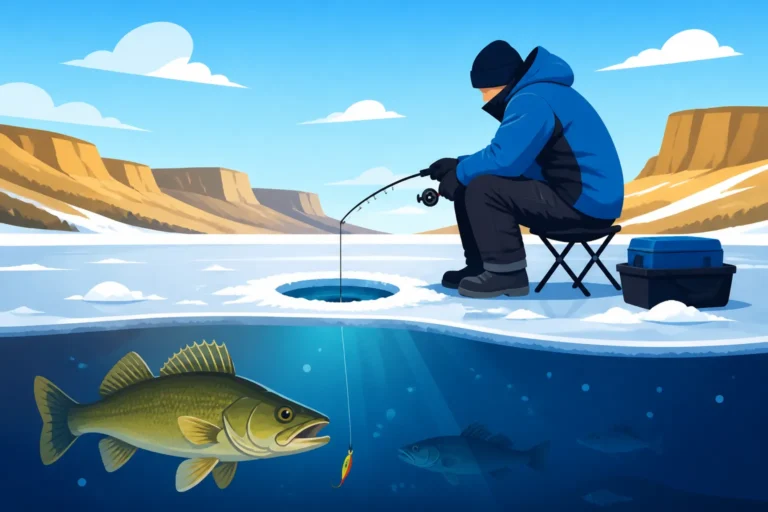
The frozen expanse of a South Dakota lake can feel like a vast, empty canvas when you're chasing winter walleye. They seem to vanish, and getting them to bite through the ice is a whole different ballgame than open-water fishing. But don't despair! This comprehensive guide is all about equipping you with the knowledge and tactics to master vertical jigging, one of the most effective techniques for coaxing those elusive walleye into biting when the mercury drops and the lakes turn to ice.
Understanding Winter Walleye Behavior
Winter walleye aren't just smaller versions of their summer selves; they move, feed, and react entirely differently. This isn't just a slight shift; it's a fundamental change dictated by dropping water temperatures and a scarcity of readily available food. Ignoring these changes is a surefire way to come home with an empty bucket, which is a frustration many ice anglers know all too well.
Where Walleye Go in Winter
When the water gets cold, walleye often gravitate towards deeper water, especially structure that offers them cover and access to food. Think about those steep breaks, deep points, humps, and even old river channels if you're on one of the larger Missouri River reservoirs like Lake Oahe or Lake Sharpe. They're looking for stable temperatures and places where schools of baitfish, their primary food source, will also congregate. Often, these spots might be just off a significant drop-off or near a submerged island, where they can ambush prey without expending too much energy.
It's not uncommon to find them suspended over deeper basins, following schools of ciscoes or smelt, which become crucial forage in the colder months. Other times, they might hug the bottom in specific depressions or troughs. The key here is not just deep, but structured deep. Flat, featureless deep areas are usually barren, but a subtle change in depth, a rock pile, or a weed edge (even sparse winter weeds) can hold a concentration of fish. Understanding this migration is your first step to even finding them before you can even think about what lure to use. For a deeper dive, check out our guide on Where Walleye Go in Winter.
Why They Bite Differently Under Ice
The biggest reason walleye act differently in winter is their metabolism. As water temperatures drop, their body functions slow down significantly. This means they don't need to eat as often, and when they do, they're not nearly as aggressive as they are in the summer. That frantic chase for a fast-moving crankbait is largely gone. Instead, they become lethargic, conserving energy, and looking for an easy meal.
This reduced activity translates directly into their bite. Instead of a strong, definitive strike, you're more likely to feel a subtle tap, a slight weight, or even just your line going slack. It's often so faint that many inexperienced anglers miss it entirely, thinking it's just their jig settling. This is where patience and an extremely sensitive setup become paramount. You're not just fishing; you're deciphering micro-signals from a cold, sluggish predator.
Essential Gear for Vertical Jigging Winter Walleye
You wouldn't try to hammer a nail with a screwdriver, and you shouldn't try to catch winter walleye with ill-suited gear. The right tools make all the difference, transforming a frustrating day into a successful one. When it comes to vertical jigging through the ice, every piece of your setup needs to be finely tuned for sensitivity and precision.
Rods, Reels, and Line
For optimal vertical jigging, you need a rod designed for ice fishing, typically between 28 and 36 inches long, with a sensitive tip but enough backbone to set the hook. A "medium-light" power with a "fast" or "extra-fast" action is often ideal. The sensitive tip helps you detect those incredibly subtle winter bites, while the faster action ensures that when you do feel a bite, you can set the hook quickly and effectively without too much rod flex. Companies like St. Croix or Fenwick offer excellent options that provide this balance.
Pair your rod with a small spinning reel, something in the 500 or 1000 size. It should have a smooth drag system, which is crucial when a big walleye makes a dash under the ice hole. For line, many serious ice anglers opt for a low-stretch braided line, often 4-6 pound test, for its incredible sensitivity. However, braid is visible in clear water, so it's usually tied to a short fluorocarbon leader (2-4 feet) of similar or slightly heavier test. The fluorocarbon is nearly invisible in the water, providing that stealth factor, while the braid transmits every little tap directly to your hand. If you're looking to upgrade your setup, you can find a wide range of options, from budget-friendly to high-end, on marketplaces like Amazon. Our guide on Best Ice Fishing Rods and Reels offers more detailed recommendations.
Lures of Choice: Jigs and Spoons
Vertical jigging revolves around getting your lure down quickly and presenting it effectively right in the walleye's strike zone. For winter walleye, this usually means spoons or various jig styles.
- Jigging Spoons: These are probably the most iconic winter walleye lures. Spoons like Northland Fishing Tackle's Buck-Shot Rattle Spoon or a simple Swedish Pimple flutter and flash as they fall, mimicking a wounded baitfish. They come in various weights, from 1/8 oz to 1/2 oz, with the lighter ones being effective in shallower water or for finicky fish, and heavier ones for deep water or strong currents. Colors often include glow-in-the-dark, silver, gold, perch patterns, or fire tiger. The key is to find one that falls with an enticing wobble or flutter.
- Lipless Crankbaits/Rattling Jigs: Lures like a Rapala Rippin' Rap or a VMC Rattle Spoon are excellent for calling in fish from a distance thanks to their internal rattles. They vibrate aggressively and can be incredibly effective when walleye are a bit more active, perhaps during a feeding window. A sharp, quick snap of the rod will make them dart and vibrate, then let them settle back down.
- Plastics on Jigs: Sometimes, walleye want a more subtle presentation. A small plastic grub, minnow, or paddle tail on a lead head jig (like a traditional ball head or mushroom head jig) can be deadly. Colors often match natural baitfish or use bright attractors. The softness of the plastic often makes walleye hold on longer, giving you more time to set the hook. You might explore a variety of these lures from different brands available on Amazon, ensuring you have a diverse tackle box. For more ideas, check out our article on the Best Lures for Ice Fishing Walleye.
Electronics: The Ice Angler's Best Friend
If you're serious about vertical jigging for winter walleye, a flasher or a modern fish finder is not optional; it's absolutely essential. Imagine trying to drive a car blindfolded – that's what ice fishing without electronics feels like. These devices allow you to see your lure, the fish, and the bottom structure in real-time, giving you an incredible advantage.
A flasher, like those from MarCum or Vexilar, provides a real-time display of what's directly beneath your hole. You'll see the bottom, your jig, and any fish that come into view. This allows you to precisely position your lure just above a fish, enticing it to strike. You can watch how the fish reacts to your jigging motion – does it rise to meet it? Does it shy away? This immediate feedback is invaluable for refining your presentation. Some of the best options for Best Fish Finders for Ice Fishing can be found online or at your local bait shop. Learning to interpret the signals from your flasher is a skill in itself, but it’s one that will drastically improve your catch rate.
Mastering the Vertical Jigging Technique
Finding the fish is only half the battle; getting them to bite is the other, often more challenging, half. Vertical jigging isn't just about dropping a lure down a hole; it's an art form that requires finesse, patience, and a keen understanding of fish behavior.
Locating Prime Spots
Before you even drop a line, you need to understand where to drill your holes. This is where pre-scouting and good mapping come into play. Look for those deep points, humps, or subtle depressions that funnel baitfish. Use a good lake map, either paper or digital on a GPS unit, to identify promising contours. Don't be afraid to drill a grid of holes over a suspected spot, especially if you're targeting a larger area like the broad expanses of Lake Oahe or Lake Sharpe. This allows you to quickly cover ground and pinpoint where the fish are holding.
Once you drill a hole, immediately drop your flasher transducer in. Watch for baitfish schools, individual fish marks, and the bottom composition. Walleye often relate to the bottom, sometimes sitting right on it, or suspended a few feet above. If you don't see anything promising after a few minutes, don't be afraid to move. "Run and gun" is a common strategy in ice fishing for a reason – active fish often move, and so should you. Sometimes, just moving 20-30 feet can put you right on top of a hot school. Understanding the overall South Dakota Fishing Seasons Explained can also help you predict where fish might be.
The Jigging Cadence
This is where the "art" of vertical jigging truly comes alive. There's no single "best" cadence because what works one day might be ignored the next. However, the general principle is to attract attention, then offer an easy meal.
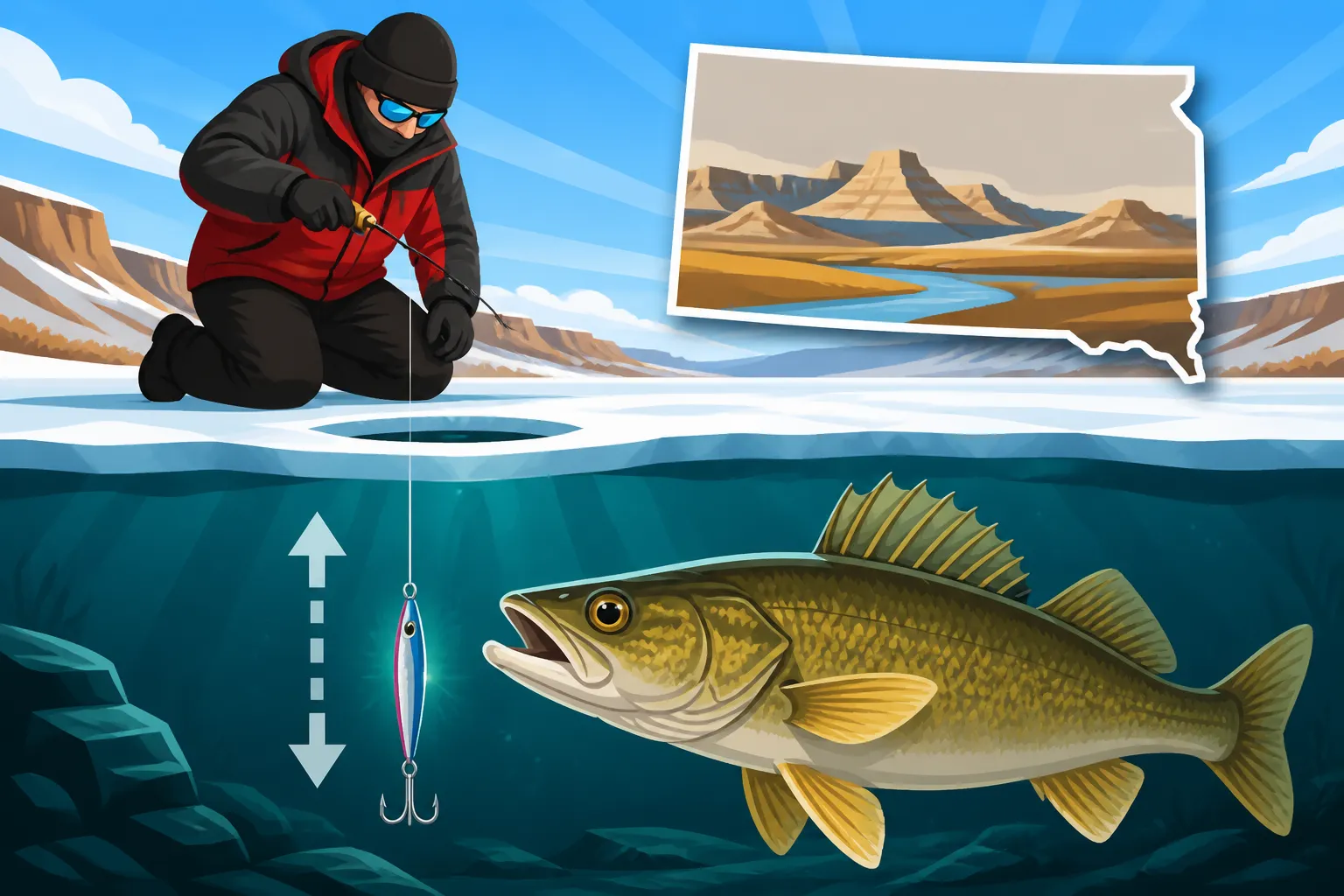
Start with a more aggressive jigging motion: a few sharp snaps upward, perhaps lifting the lure 6-12 inches, followed by a controlled fall. This creates flash and vibration, helping to call in curious walleye. Watch your flasher carefully; if you see a fish respond (it moves towards your lure), immediately change your retrieve. Slow down. Tiny twitches, barely moving the lure, or just holding it completely still for 10-20 seconds can be incredibly effective. Often, a walleye will follow your lure, rise up to it, and then… just hover. This is when the subtle movements, or lack thereof, seal the deal. Think "dead stick" or "quiver." The idea is to make your lure irresistible without seeming like too much effort for the sluggish fish. Sometimes, just raising or lowering your jig an inch or two is enough to trigger a strike from a hesitant fish.
| Jigging Cadence Style | Description | Best For | Walleye Activity Level |
|---|---|---|---|
| Aggressive Snap | Sharp, quick 6-12 inch lifts followed by a controlled drop. Creates flash and vibration. | Initial attraction, calling fish in, activating a school. | Active / Moderately Active |
| Subtle Flutter | Gentle 2-4 inch lifts with a slower, almost teasing fall. Less noise, more visual. | Fish that have approached but are hesitant, slightly active. | Moderately Active / Neutral |
| Dead Stick/Hold | Lifting the lure a tiny bit (1 inch) and holding it perfectly still for 10-30 seconds. | Extremely finicky or lethargic fish that need an easy meal. | Neutral / Inactive |
| "Quiver" Shake | Barely shaking the rod tip to make the lure vibrate in place. Minimal vertical movement. | When fish are looking but not committing to a full bite. | Neutral / Inactive |
| Lift & Drop | A steady, slow 6-inch lift, then a deliberate, slow drop back to the starting point. | Mimicking slow-moving baitfish. | Moderately Active / Neutral |
Detecting Subtle Bites
This is arguably the most challenging aspect of winter walleye fishing and where many anglers get frustrated. As mentioned earlier, winter walleye bites are often incredibly light. You won't always feel that aggressive "thump."
Instead, pay close attention to your line and rod tip. If your rod tip dips slightly, even a millimeter, or if your line goes slack when it shouldn't, that's often a bite. Sometimes, it's just a feeling of "heaviness" when you try to lift your jig. If you're using a flasher, you might see the fish mark "eat" your lure mark – that's your cue to set the hook! When in doubt, set the hook. A quick, sharp upward sweep of the rod is usually sufficient. Don't go for a violent "bass pro" hookset; it's often unnecessary and can tear the lure free. It's better to set on a phantom bite than to miss a real one. The more time you spend on the ice, the more you'll develop a feel for these subtle indicators.
Advanced Tips for Consistent Winter Walleye Success
Once you've got the basics down, there are always ways to refine your approach and increase your odds. Winter walleye fishing is a game of fine details, and these advanced tips can help you turn slow days into memorable ones.
Incorporating Live Bait
While artificial jigs and spoons are highly effective, sometimes walleye just can't resist the real thing. Tipping your jig with a live minnow, a minnow head, or even a small piece of a nightcrawler (if legal in your area for walleye) can be a game-changer. The natural scent and subtle movement of live bait can entice even the most stubborn walleye.
Hook a minnow lightly through the back, just behind the dorsal fin, or through both lips, allowing it to swim naturally. For minnow heads or pieces of worm, thread them onto the hook of your jig. The live bait provides scent and organic movement that your artificial lure might lack. It can make a walleye commit to a bite when they're simply following or nudging your presentation. Often, a jig tipped with a minnow is placed on a separate "dead stick" rod in a rod holder, while you actively jig with another rod nearby. This increases your chances significantly, offering two different presentations at once. Always double-check South Dakota Fishing Regulations Explained for specific bait restrictions in certain areas.
Adapting to Conditions
Winter conditions are rarely static, and successful anglers are those who can quickly adapt. The bite can change dramatically throughout the day, or even within an hour, due to factors like light penetration, barometric pressure, and even noise on the ice.
- Light: On bright, sunny days, walleye might retreat to deeper, darker water or hug the bottom more tightly. Overcast days, however, can encourage them to move shallower or suspend higher in the water column. Adjust your depth accordingly.
- Barometric Pressure: A stable, high-pressure system often means a more consistent bite. Falling pressure before a storm can trigger a feeding frenzy, while rapidly rising pressure after a front can shut the bite down completely. During tough high-pressure days, slow down your presentation even further.
- Noise: Walleye can be incredibly sensitive to noise on the ice. Minimize loud stomping, drilling, or dropping gear. Fish your hole quietly, especially if you're in shallower water or fishing over an active school. Remember, sound travels very well through water.
- Time of Day: Just like in open water, there are often peak feeding times. Dawn and dusk are prime low-light periods when walleye are most active. However, don't dismiss midday, especially on overcast days, or if you're targeting deeper, light-sensitive fish. Keep a log of your catches and the conditions to identify patterns for your favorite spots.
Safety First on the Ice
No matter how good the fishing is, safety always comes first. South Dakota winters can be brutal, and ice conditions can be unpredictable. Always check ice thickness before venturing out, and continue to monitor it as you move. A minimum of 4 inches of clear, solid ice is generally recommended for walking, but 5-7 inches is safer, especially if you're bringing an ATV or a portable ice shelter. Never assume the ice is safe, especially near current areas, inlets, or outlets, where the ice can be thinner.
Always carry essential safety gear: ice picks around your neck, a spud bar for checking ice ahead of you, and a throw rope. Dress in layers, wear proper insulated boots, and inform someone of your fishing plans and expected return time. Fishing with a buddy is always a good idea. Knowing How Thick Ice Should Be Before Fishing in South Dakota is crucial before you even step foot on the frozen water. Enjoy the incredible winter fishing opportunities South Dakota offers, but do so responsibly and safely.
Disclaimer
This article is for general informational purposes only and does not constitute professional advice. Laws, prices and regulations vary by location and change over time. Consult a qualified professional for guidance on your specific situation.