Missouri River Tailwater Fishing Techniques
There’s nothing quite like the raw power and beauty of the Missouri River in South Dakota, but let's be honest, fishing its tailwaters can feel like a whole different beast compared to tranquil lakes or small streams. The constantly moving water, the deep scour holes, the swirling eddies – it’s enough to make even seasoned anglers scratch their heads, wondering where to even begin and how to keep their lure in the strike zone. This comprehensive guide is dedicated to breaking down the mystique of Missouri River tailwater fishing, offering practical techniques and insights to help you confidently tackle these dynamic waters and land some impressive fish.
Understanding the Missouri River Tailwater Environment
Tailwaters are those stretches of river immediately downstream from a dam. On the mighty Missouri, which is punctuated by several massive dams in South Dakota, these areas are unique and incredibly productive fishing grounds. The controlled release of water from these dams creates a consistent, often powerful current, along with stable water temperatures and an abundant food supply that makes these sections prime habitat for a variety of game fish.
What Makes Tailwaters Unique
Unlike a free-flowing river that might fluctuate wildly with rainfall or snowmelt, tailwaters have a more regulated environment thanks to the dams. This regulation brings both blessings and challenges. The water temperature, for instance, tends to be colder and more stable than the upstream reservoir, especially directly below the dam, because it's drawn from the deeper, cooler layers of the lake. This can be fantastic for cold-water species like trout, though in South Dakota, it's often about what it does for walleye and other cool-water fish. The consistent current also constantly reshapes the riverbed, creating deep scour holes, gravel bars, and current breaks where fish love to ambush prey. The dams themselves often act as natural barriers, concentrating baitfish and forage as they're flushed through, providing a continuous buffet for game fish. This stable food source and thermal environment can mean some of the most consistent fishing you'll find, but you've got to learn how to read these unique flows.
Key Tailwater Sections in South Dakota
South Dakota's stretch of the Missouri River is graced by four major dams, each creating its own distinct tailwater fishery. Understanding these sections is crucial because while the general principles apply, local nuances are everything.
- Below Oahe Dam (near Pierre): This is a legendary walleye fishery, known for producing massive fish. The tailwater here, feeding into Lake Sharpe, is characterized by powerful currents and deep water, often with strong eddies and backcurrents. Anglers often focus on the immediate discharge areas and downstream structure. For more detailed information on this specific area, check out our guide on Missouri River Tailwater Fishing Below Oahe Dam.
- Below Big Bend Dam (near Fort Thompson): As the Missouri flows from Lake Sharpe into Lake Francis Case, the tailwater below Big Bend Dam is another hotspot. It’s slightly different from Oahe, often a bit shallower in spots, with varied current seams and numerous rock piles and submerged structures that hold fish. It’s a fantastic area not just for walleye, but also for smallmouth bass.
- Below Fort Randall Dam (near Pickstown): This tailwater, flowing from Lake Francis Case into Lewis and Clark Lake, offers diverse fishing opportunities. The currents can be quite strong, and the immediate area below the dam is known for its walleye and sauger population. There are also significant sand and gravel flats that create excellent habitat downstream. You can find more specific advice in our Missouri River Tailwater Fishing Below Fort Randall Dam article.
- Below Gavins Point Dam (near Yankton): The southernmost tailwater in South Dakota, flowing into the "river" section of the Missouri, is a dynamic fishery known for its walleye, sauger, and fantastic channel catfish opportunities. The river here begins to feel more like a traditional river, with many snags, log jams, and sandbars. Our guide on Missouri River Tailwater Fishing Below Gavins Point Dam provides more details for this unique stretch.
Seasonal Changes and Their Impact
Just like any fishery, the tailwaters on the Missouri River are constantly changing with the seasons. What works in spring might not cut it in summer or fall.
- Spring: As ice recedes and water temperatures slowly climb, walleye move into the tailwaters for their annual spawn. This is a prime time for vertical jigging near the dam, but fishing pressure can be intense. The fish are often aggressive but can be sensitive to rapidly changing water levels from dam releases.
- Summer: Once the spawn is over, fish spread out. Summer fishing often means targeting deeper holes and current breaks during the day, or moving shallower and fishing during low light hours. Trolling becomes a very effective method as fish might be chasing baitfish schools in open water or along contours. Catfish become incredibly active in summer as well.
- Fall: This is arguably one of the best times to fish the tailwaters. As water temperatures drop, fish begin to feed heavily, packing on weight for the winter. Walleye can be found in a variety of depths and structures, often moving shallower to feed. Jigging, trolling, and even casting crankbaits can all be highly effective. The cooler, crisp air makes for a beautiful day on the water, too.
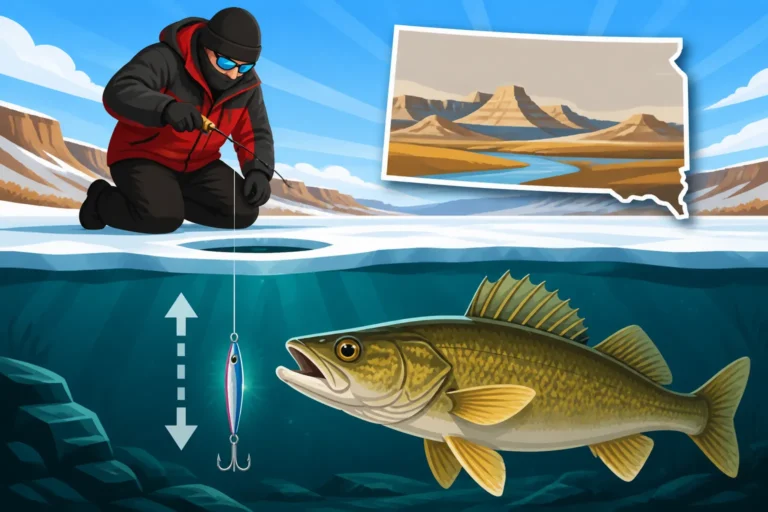
- Winter: Yes, you can still fish the tailwaters in winter, even from a boat if the river remains open below the dam. Ice forms further downstream, but the dam's release often keeps the immediate tailwater free of ice. This can be an incredible time for big walleye, especially when they stack up in deep holes. Slow, methodical presentations are key. Ice fishing further downstream on the main reservoirs is also popular, but that's a different game entirely.
Essential Gear for Missouri River Tailwater Fishing
You wouldn't bring a butter knife to a steak dinner, and you certainly don't want to bring underpowered gear to the Missouri River tailwaters. The powerful currents and potentially large fish demand specific equipment that can handle the stress and deliver your bait effectively.
Rods, Reels, and Line Choices
Having the right setup makes all the difference when you're battling current and big fish.
- Rods: For vertical jigging or bottom bouncing in strong current, you'll want a medium-heavy to heavy power rod, typically 6'6" to 7'6" in length, with a fast action tip. This combination gives you the backbone to fight fish and the sensitivity to detect subtle bites in moving water. Brands like St. Croix, Fenwick, and Abu Garcia make excellent rods that can stand up to this kind of abuse. If you're trolling, longer, more moderate action rods (7' to 9' medium-heavy) are preferred for their ability to absorb the shock of a strike and keep fish pinned.
- Reels: Matching your rod with a quality spinning or baitcasting reel is paramount. For jigging, a spinning reel in the 2500-4000 series is ideal, offering smooth drag and good line capacity. For baitcasting, a low-profile reel with a strong drag system is perfect for bottom bouncing or heavy jigging. Ensure your reel has a good retrieve ratio to quickly take up slack or fight fish out of the current.
- Line: This is where things get really important. Braided line (10-20 lb test) is often the top choice for its zero stretch, providing incredible sensitivity for detecting light bites in current and the strength to pull through snags. However, braid is highly visible, so you'll almost always want to tie on a fluorocarbon leader (8-15 lb test) for stealth and abrasion resistance. Fluorocarbon sinks faster than mono, which can also be an advantage in current. Monofilament (10-14 lb test) can be used for trolling or if you prefer a bit more stretch for fighting larger fish, but it won't give you the same feel as braid. You can find a wide selection of quality fishing lines from various brands on Amazon.
Lures and Bait Strategies
The Missouri River tailwaters are diverse, and so should be your tackle box. Don't be afraid to experiment! Our guide on Best Lures for South Dakota Walleye has some excellent suggestions.
- Jigs: Jigs are the bread and butter of tailwater walleye fishing. You'll need a variety of weights (from 1/4 oz up to 1 oz, sometimes even heavier depending on current) to ensure your presentation stays near the bottom. Lead-head jigs tipped with live minnows, plastic swimbaits, or soft plastics like Berkley Gulp! are incredibly effective. Blade baits are also fantastic for vertical jigging, mimicking distressed baitfish.
- Crankbaits: Trolling crankbaits can be deadly, especially when fish are spread out or suspended. Dive depths are crucial here; you'll want baits that can get down to where the fish are holding without constantly dragging bottom. Stickbaits, lipless crankbaits, and deep-diving minnow imitations are all good choices. Colors should vary with water clarity, but natural patterns, firetiger, and chartreuse are often reliable.
- Bottom Bouncers and Live Bait Rigs: When the current isn't too extreme, or you're fishing along slower current seams, bottom bouncers with a crawler harness or a plain snell with a minnow or leech are classic walleye producers. Use enough weight to maintain bottom contact without dragging too heavily. The "Slow Death" rig is particularly effective with half a nightcrawler for a subtle, enticing action.
- Other Baits: For catfish, cut bait (shad, suckers), chicken livers, or commercial stink baits are hard to beat. For smallmouth bass, small crankbaits, tubes, grubs, and spinnerbaits often work well. Always check the current South Dakota Fishing Regulations Explained regarding bait use, especially if fishing near special regulation areas like Pactola Dam.
Boat and Safety Considerations
Navigating the Missouri River tailwaters safely and effectively requires the right boat and a strong commitment to safety.
- Boat Type: A sturdy, deep-V hull fishing boat is ideal for these big waters. The ability to cut through waves and withstand strong currents is critical. Smaller boats or canoes might struggle with stability and control, especially if the dam is generating power or the wind picks up. Consider an aluminum or fiberglass boat designed for large lakes and rivers.
- Motor and Trolling Motor: A reliable outboard motor with plenty of horsepower is essential for getting around and fighting the current. A robust electric trolling motor with good thrust and a spot-lock feature (like those from Minn Kota or Garmin) is a game-changer for precise boat positioning, especially when vertical jigging over specific structure. You can find excellent deals on trolling motors on Amazon.
- Anchoring System: You'll absolutely need a reliable anchoring system. Dual anchors (bow and stern) are often necessary to keep your boat from swinging in strong currents. Heavy anchors (20-30 lbs or more) are typical, often with plenty of rope or an anchor winch. Consider a drift sock (sea anchor) to slow your drift when covering larger areas or to maintain boat control in windy conditions.
- Safety Gear: The Missouri River is a powerful waterway, and safety is paramount. Always have enough U.S. Coast Guard-approved life jackets for everyone on board – in South Dakota, children under 7 must wear one when underway on any vessel. A working fire extinguisher, sound-producing device (horn or whistle), navigation lights, and a throw cushion are also required. Familiarize yourself with all South Dakota Boat Safety Requirements before you hit the water. It’s also wise to have a first-aid kit, communication device, and tell someone your float plan.
Proven Techniques for Catching Walleye in Tailwaters
Walleye are the undisputed kings of the Missouri River tailwaters, and mastering the techniques to catch them here will make you a formidable angler. These tactics are tailored to the unique challenges and opportunities presented by constant current.
Vertical Jigging in Current
Vertical jigging is perhaps the most iconic and effective technique for walleye in the Missouri River tailwaters, especially in the deeper, faster-moving sections directly below the dams. The idea is to keep your jig directly below your boat, allowing the current to impart action without sweeping your lure downstream.
To do this successfully, you need to use enough weight to maintain bottom contact. This often means jigs from 1/2 ounce to a full ounce, or even heavier if the dam is really cranking out water. Position your boat just upstream of where you expect fish to be holding, typically in deeper holes, along current breaks, or behind submerged structure. Use your electric trolling motor, especially with a spot-lock function, to hold your position precisely. Drop your jig to the bottom, then lift it a few inches (6-18 inches) with a sharp snap of the wrist, letting it fall back down on a semi-slack line. Many bites occur on the fall, so pay close attention to any hesitation or tap. Experiment with the height and speed of your jigging action; sometimes a subtle lift and drop is all it takes, while other days a more aggressive snap is needed. The key is maintaining that vertical presentation, adjusting your weight as needed for current changes. For more in-depth instruction, check out our guide on Jigging Techniques for Missouri River Walleye.
Bottom Bouncing and Live Bait Rigs
When the current is slightly less intense, or you're trying to cover more ground along flats or gradual breaks, bottom bouncing with live bait rigs shines. This technique allows you to present a live minnow, nightcrawler, or leech right in the fish's strike zone, dragging it slowly along the bottom.
Choose a bottom bouncer weight that allows you to maintain consistent bottom contact at a slow trolling or drifting speed (typically 0.5 to 1.5 mph) without the bouncer rolling over too much. This might range from 1 ounce to 3 ounces, depending on depth and current. Attach a crawler harness or a plain snell with a hook about 2-4 feet behind the bouncer. Drift downstream with the current, or use your main motor or trolling motor to slowly push upstream against the current, keeping your line at a roughly 45-degree angle to the water. The bottom bouncer acts like a feeler, ticking along the bottom and presenting your bait just above the rocks and snags. When you feel a bite, don't set the hook immediately. Instead, drop your rod tip back slightly to give the fish a moment to take the bait, then slowly reel down and sweep the rod to set the hook firmly. This is particularly effective in areas like the lower Big Bend tailwater or the upper stretches of Fort Randall.
Trolling Specific Structures
Trolling is a fantastic way to cover water and find active fish in the tailwaters, especially during the summer and fall when walleye might be more spread out or chasing baitfish schools. The trick is to troll specific structures and contours, not just random open water.
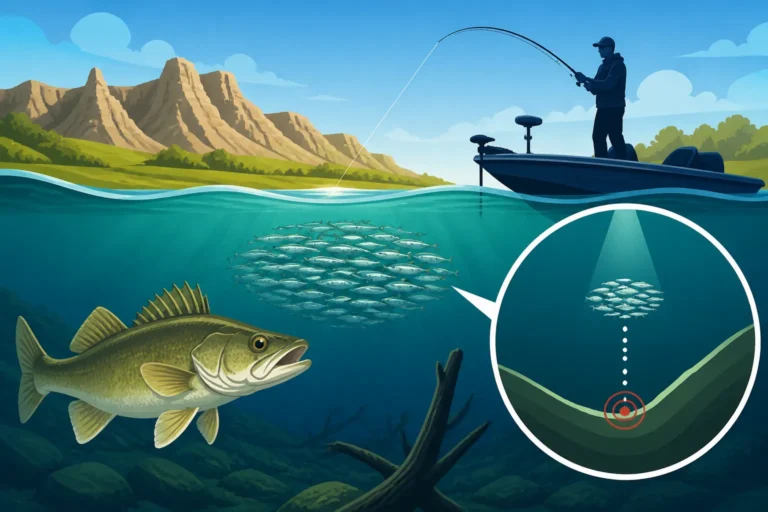
Focus your trolling efforts on defined features like underwater humps, points, submerged creek channels, or the edges of deep scour holes. Use your fish finder to identify these structures and mark waypoints. Pick crankbaits or spinner rigs that dive to the depth where you're marking fish or where you expect them to be holding. For instance, if fish are suspended at 15 feet over a 30-foot bottom, you want a crankbait that runs around that 15-foot mark. Experiment with different trolling speeds (usually 1.5-2.5 mph for walleye, but sometimes slower or faster) and lure colors until you find what triggers a strike. Don't be afraid to make turns; these changes in speed and lure action often provoke bites. Using planer boards can help you spread out multiple lines and cover a wider swath of water, especially useful on larger sections of the river like Lake Sharpe or Lake Francis Case as they transition from tailwater to reservoir. Always be mindful of your South Dakota Fish Limits and Size Restrictions when keeping your catch.
Targeting Other Species in Tailwater Flows
While walleye often steal the spotlight, the Missouri River tailwaters are teeming with other exciting fish species. Diversifying your techniques can lead to a truly memorable day on the water, and sometimes, those other species can save a slow walleye day.
Smallmouth Bass Tactics
Smallmouth bass absolutely thrive in the turbulent, rocky environments of the Missouri River tailwaters. They love current, rocky bottoms, riprap shorelines, and eddies where they can ambush prey. Areas around Big Bend Dam and Fort Randall Dam are particularly good for smallmouth.
- Targeting Structure: Look for smallmouth around current breaks, eddies, submerged rock piles, and especially riprap shorelines. They’ll often sit just out of the main current, darting out to grab anything that drifts by. Cast parallel to riprap walls or into eddies.
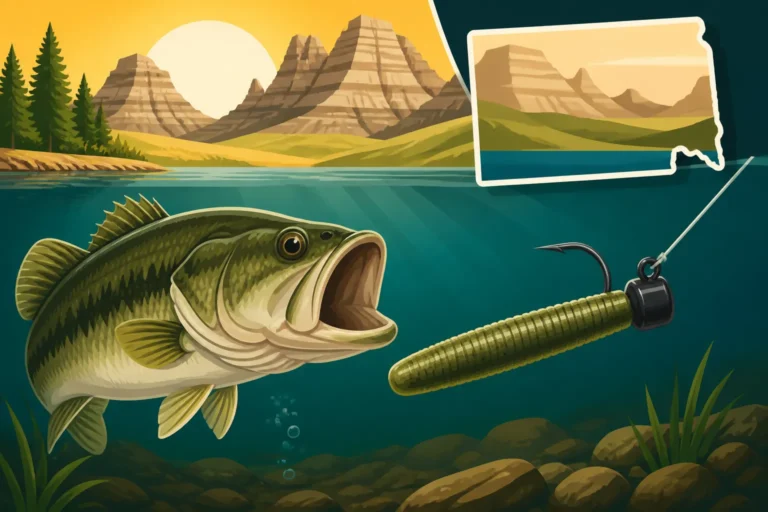
- Lure Selection: Small crankbaits (like a Rapala Shad Rap or Berkley Flicker Shad), tube jigs, grubs, and spinnerbaits are all excellent choices. For tube jigs, use a heavier jig head than you might in calmer water to ensure it gets down and stays in the strike zone. Drop shot rigs with small soft plastics can also be incredibly effective for finicky smallmouth, allowing you to present a bait above the bottom without snagging. Look for these types of lures and related gear on Amazon.
- Technique: Work your lures slowly but deliberately. Let the current do some of the work, carrying your bait into likely holding areas. For tubes and grubs, a drag-and-pause retrieve along the bottom or a slow lift-and-drop works well. Smallmouth are feisty fighters, so be prepared for a strong battle, especially in the current.
Catfish Strategies
Channel catfish are abundant throughout the Missouri River system, and the tailwaters, with their rich forage base and diverse bottom structures, are prime spots for them. They often grow to impressive sizes here, offering a powerful fight.
- Location, Location, Location: Catfish often congregate in deeper holes, along the edges of current seams, and near submerged log jams or brush piles, especially in the more riverine sections downstream of Gavins Point Dam. They're scavengers, so they'll be where food collects.
- Bait of Choice: Cut bait is king for catfish in these waters. Freshly cut shad, sucker, or even carp pieces often outperform other options. Chicken livers, shrimp, or commercial stink baits are also very effective. Use a fairly heavy sinker (1-4 ounces, depending on current) to keep your bait pinned to the bottom, and a circle hook (2/0 to 5/0) to ensure good hooksets.
- Technique: A simple slip-sinker rig is usually all you need. Cast your bait upstream and let it drift naturally into a likely holding area, then tighten your line to hold it in place. Wait for a solid bite before setting the hook – catfish often "mouthing" the bait before committing. Night fishing can be particularly productive for big cats during warmer months. Remember to keep an eye on your Catfish Limits and Size Rules.
Northern Pike and Other Predators
While not as prevalent as walleye or smallmouth in the immediate tailwaters, northern pike do inhabit the Missouri River system and can offer an exciting fight. Other predatory fish like white bass and even occasional muskies can also be found.
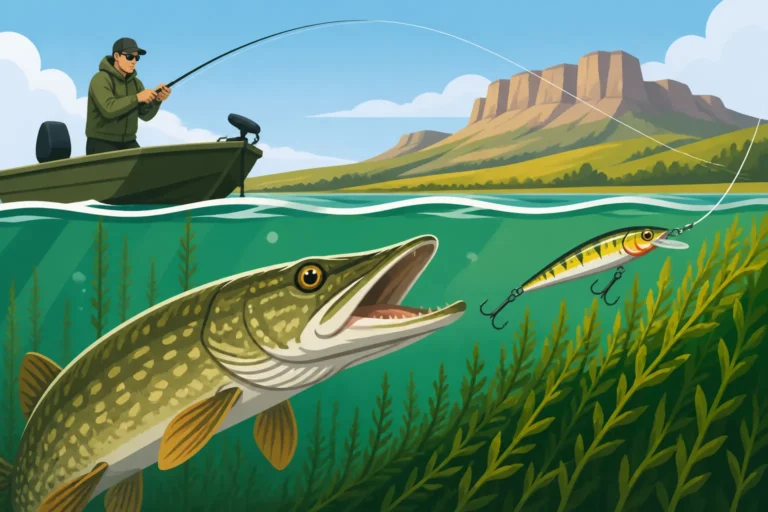
- Northern Pike: Look for pike in areas with slower current, often near weed beds (if present) or submerged timber and fallen trees that provide ambush cover. Large spinnerbaits, spoons, and jerkbaits are excellent choices. Trolling large crankbaits can also entice a strike from a hungry pike. Early spring and late fall are often prime times for these toothy critters.
- White Bass: These schooling fish can provide fast and furious action when you find a school actively feeding. Look for them breaking the surface chasing baitfish, or suspended over humps and points. Small spoons, inline spinners, and Kastmasters are highly effective. If you catch one, cast back immediately – where there's one, there are usually many!
- Sauger: Often confused with walleye, sauger are another fantastic species found in the Missouri River tailwaters, particularly below Fort Randall and Gavins Point. They prefer deeper, murkier water and often hold tighter to the bottom than walleye. The same jigging and bottom bouncing techniques used for walleye will catch sauger.
Reading the Water and Adjusting Your Approach
Success in tailwater fishing often boils down to your ability to "read" the water. The currents, depths, and structures are constantly interacting, creating subtle clues that tell you where fish might be holding.
Interpreting Current Breaks and Eddies
Current breaks and eddies are prime real estate for predatory fish in moving water. Fish use these areas to escape the constant energy drain of the main current while still being close enough to ambush prey that drifts by.
- Current Breaks: These are areas where the main current flow is interrupted, creating a calmer zone. This could be behind a large rock, a submerged log, a bend in the river, or even a subtle hump on the bottom. Fish will position themselves just out of the main current, facing upstream, ready to dart out. Identify these breaks by observing the water's surface; you'll see a distinct line where fast water meets slower water. Focus your casts or drifts along these seam lines.
- Eddies: Eddies are circular currents that form behind obstructions or in protected pockets, often characterized by water flowing upstream. These are incredible fish magnets, as they collect food and provide a comfortable resting spot. Fish will typically face into the eddy's flow, waiting for food to cycle through. Try casting into the upstream side of an eddy and letting your lure wash into the calm water, or working jigs and plastics along the eddy's edge. Pay attention to floating debris; if it's circling in an eddy, fish might be down below.
Locating Fish with Electronics
In the vastness of the Missouri River tailwaters, electronics are an indispensable tool for finding fish and understanding the underwater topography. Learning to interpret what your fish finder is telling you will dramatically increase your success.
- Sonar and Down Imaging: Use your traditional 2D sonar to identify fish arches (or "bananas") and understand the bottom contour. Pay close attention to changes in depth, ledges, and humps. Down imaging can provide a more photographic-like view directly below your boat, helping you discern between rock piles, brush, or even schools of baitfish. When you see strong returns near the bottom in a good location, mark a waypoint immediately. For a deep dive into using this tech, check out our guide on How to Read a Fish Finder for Walleye.
- Side Imaging/SideVu: If your unit has side imaging, use it to scan wide swaths of the riverbed on either side of your boat. This is incredibly effective for finding submerged structure, rock piles, or even schools of fish that are off to the side of your immediate path. This allows you to locate productive spots quickly without having to drive directly over them, potentially spooking fish.
- GPS and Mapping: Your GPS is vital for navigation and marking productive spots. Before you even launch, study detailed lake maps or river charts that show depth contours and bottom features. Pre-mark potential fishing spots, then use your GPS to navigate to them and precisely position your boat. When you catch a fish or find a good concentration, mark a waypoint so you can easily return later.
Adapting to Changing Conditions
The Missouri River is a living, breathing system, and conditions can change rapidly. Being adaptable is key to consistent success.
- Water Level and Current Flow: Dam releases dictate current strength and water levels. High flows often push fish tighter to the bottom or into stronger current breaks, requiring heavier jigs or weights. Lower flows might allow fish to spread out more or move shallower. Always check dam release schedules if available, as these can drastically alter fishing conditions.
- Water Clarity: Heavy rains or increased flows can stir up sediment, reducing water clarity. In murkier water, fish rely more on scent and vibration, so louder baits (rattling crankbaits, blade baits) and brighter colors (chartreuse, orange, white) can be more effective. In clear water, more natural colors and subtle presentations are usually preferred, and fluorocarbon leaders become even more important.
- Weather and Wind: Wind can make boat control incredibly challenging in strong currents. Learn to use your trolling motor effectively to fight the wind and hold position. On windy days, fish might move to the downwind side of structure or into calmer bays to avoid the chop. Barometric pressure changes associated with fronts can also impact fish activity; fish often feed heavily before a front and become less active during or immediately after.
Common Challenges and Troubleshooting
Even the most experienced anglers face challenges on the Missouri River tailwaters. Knowing how to anticipate and troubleshoot these common issues will save you frustration and keep you on the fish.
Dealing with Snags and Lost Gear
The bottom of the Missouri River tailwaters can be a minefield of rocks, logs, and other debris, making snags an almost inevitable part of fishing here. Losing expensive lures or valuable time re-rigging can be incredibly frustrating.
- Preventative Measures: The best way to deal with snags is to prevent them. Pay close attention to your line and rod tip to maintain bottom contact without dragging excessively. When vertically jigging, lift your jig just enough to clear the bottom debris. Use heavier line and fluorocarbon leaders that can withstand some abrasion. Consider using a "sacrificial" snap or loop knot for your lures, which is designed to break before your main line, saving you more of your expensive braid.
- Retrieval Techniques: When you do get snagged, don't just yank. Often, a combination of steady pressure from different angles, and sometimes even motoring your boat directly over the snag, can free your lure. A heavy-duty lure retriever, a device that slides down your line to help dislodge the snag, can be a worthy investment, often paying for itself after just a few saved lures. You can often find these specialized tools online through retailers like Amazon.
- Re-rigging Efficiency: Have spare leader material, hooks, and pre-tied rigs readily accessible. Practice your knots so you can re-tie quickly and get back to fishing. Keeping a small tackle tray with your most-used tailwater jigs and hooks can save precious minutes.
Managing Boat Control in Strong Current
Controlling your boat in the powerful and often unpredictable currents of the Missouri River tailwaters is one of the biggest hurdles, but it's a skill that can be mastered.
- Electric Trolling Motor Mastery: Your electric trolling motor is your best friend here. Learn its capabilities and how to use it to precisely position your boat. The spot-lock feature (also known as anchor mode) on motors like those from Minn Kota's Terrova or Ultrex series is invaluable for holding your boat over a specific spot against the current. Practice using it to 'walk' your boat slowly upstream or downstream along a contour.
- Anchor Management: As mentioned before, a good anchoring system is crucial. Learn to deploy and retrieve your anchors efficiently. In very strong current, you might need to drop your bow anchor first, allow your boat to swing downstream, and then drop a stern anchor to fix your position. Always be mindful of other boaters when anchoring or pulling anchors.
- Reading the River: Anticipate changes in current. Look for visual cues on the surface – boils, eddies, calm spots – that indicate how the water is moving below. Try to position your boat to use the current to your advantage, whether it's by drifting slowly through a prime area or by holding just upstream of a current break.
When the Bite is Tough
There will be days when the fish seem to have lockjaw, no matter what you throw at them. This is when patience and strategic adjustments are vital.
- Change Your Presentation: If what you're doing isn't working, change something. Vary your retrieve speed, jigging action, or trolling speed. Try a different lure color, size, or type. Switch from a jig to a bottom bouncer, or from live bait to a soft plastic. Often, a subtle change is all it takes to trigger a strike.
- Adjust Depth and Location: If fish aren't biting where you think they should be, they've likely moved. Use your electronics to scan different depths. They might have gone deeper, shallower, or moved to a different type of structure (e.g., from a rock pile to a sand flat). Don't be afraid to move to a completely different area of the tailwater if an hour or two passes without action.
- Slow Down and Be Patient: Sometimes, fish are simply lethargic. In cold water or during a post-front lull, a super slow, methodical presentation might be the only thing that works. Let your bait sit longer, or impart only the slightest movement. Pay excruciatingly close attention to your line for the faintest indication of a bite. These are the days when a valid South Dakota Annual Fishing License proves your commitment to the sport!
Fishing the Missouri River tailwaters in South Dakota is an incredible experience, offering the chance to catch some truly magnificent fish in a dynamic and challenging environment. By understanding the unique conditions, equipping yourself with the right gear, and mastering these proven techniques, you'll be well on your way to consistent success and unforgettable days on the water.
Disclaimer
The information provided in this guide is for general informational purposes only. Fishing regulations, conditions, and best practices can change. Always consult the official South Dakota Game, Fish and Parks regulations handbook or website for the most current and accurate information before fishing. Be aware of weather conditions and practice safe boating habits.