Difference Between a Crappie and a Sunfish
Have you ever been out on a beautiful South Dakota lake or a quiet Black Hills stream, reeling in a fish, only to hold it up and think, "Wait, what exactly is this?" It's a common dilemma, especially when you're trying to distinguish between a crappie and a sunfish. They're both panfish, they often live in similar waters, and at a quick glance, they can look pretty similar. But knowing the true difference isn't just about showing off your fish ID skills; it's crucial for understanding regulations, finding the best fishing spots, and even knowing what to expect for dinner. This guide is here to help you confidently tell your crappies from your sunfish, ensuring you're always in the know on the water.
Why Does It Matter: The Importance of Identification
It might seem like a small detail to a casual angler, but being able to correctly identify the fish you catch, particularly between crappie and various sunfish species, carries significant weight in South Dakota. It's more than just a fun fact; it impacts your fishing experience, your legal compliance, and even your success on the water.
Regulations and Limits
The most immediate and practical reason to know your crappie from your sunfish is strictly legal. South Dakota has specific rules for nearly every species, and these rules often differ wildly between what might seem like similar fish. You see it with South Dakota Walleye Limits versus those for pike, and the same applies here. For instance, the daily limit for crappie might be quite generous in a particular lake, while the limit for bluegill or other sunfish could be different, or there might even be length restrictions. Imagine a scenario where you've had an amazing day, caught a cooler full of what you think are crappie, only to find out later they were a protected size of a particular sunfish, putting you in violation of the rules. Ignorance of the law is never an excuse, and a conservation officer isn't going to be sympathetic if you claim you "thought it was a crappie." Knowing the exact species means you can stay within the legal harvest limits and avoid potential fines or even losing your fishing privileges. Always check the current South Dakota Fishing Regulations Explained before heading out.
Habitat and Behavior
Beyond the legalities, understanding the distinction between crappie and sunfish gives you a significant edge in finding and catching them. While they both fall under the broad "panfish" category, their preferred habitats and feeding behaviors are distinct. Crappies, especially larger ones, tend to school up in open water around submerged structure, brush piles, or weed lines. They often suspend at certain depths, following baitfish. Sunfish, like bluegill or green sunfish, are more commonly found closer to shore, near docks, lily pads, or shallower cover. Their diets differ too, influencing what baits and lures work best. If you're targeting crappie with a small jig under a bobber in open water and not getting bites, it might be because the fish you're looking for (sunfish) are actually tucked into the thick weeds closer to the bank, and your presentation is completely off. Knowing the species you're after helps you tailor your approach, making you a much more effective angler.
Taste and Culinary Preferences
Let's be honest, for many of us, fishing is also about the fresh meal afterward! And here's where crappie and sunfish can diverge in terms of table fare. Both are generally considered excellent eating fish, especially when fresh from South Dakota's clean waters. However, many anglers will argue that crappie have a slightly flakier, milder white meat, often preferred for frying. Sunfish, while also delicious, can sometimes have a slightly firmer texture or a more "fishy" flavor, depending on the species and the water quality. For instance, a fat bluegill from a cold, clear lake can be absolutely phenomenal, but some might prefer the consistently delicate flavor of crappie. If you're planning a specific fish fry and want a particular taste and texture, knowing which fish you're catching and keeping becomes important. Plus, the average fillet size will differ, with crappies typically offering a bit more meat for the effort.
Crappie vs. Sunfish: Key Physical Differences
Alright, let's get down to brass tacks. When you pull a fish out of the water, how do you actually tell the difference? It boils down to a few key anatomical features that, once you know them, make identification a breeze. Forget about just general size or color for a moment, as these can vary widely; focus on these distinct body characteristics.
Body Shape and Profile
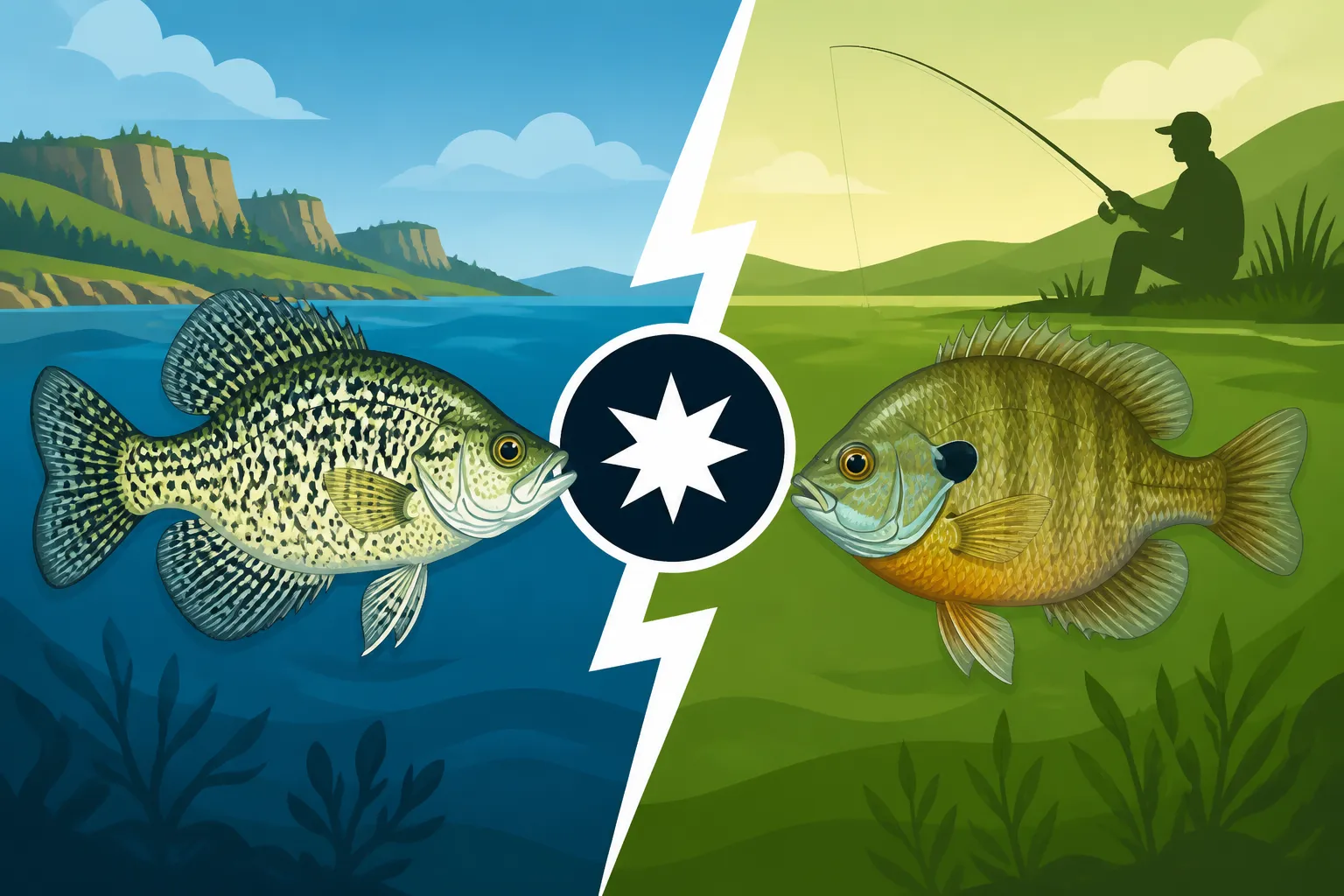
This is often the first visual cue. Crappies (both black and white crappie) tend to have a more discus-shaped or flattened, taller body profile. Imagine taking a regular fish and squishing it from front to back, making it taller than it is wide. That's a crappie. They often look almost "round" when viewed from the side.
On the other hand, most sunfish, like bluegill or pumpkinseed, have a more oval or rounded body shape that is also compressed laterally (side-to-side), but they don't have the same exaggerated "height" as a crappie. They are typically wider and don't appear quite as tall or thin. Think of a classic cartoon fish shape – that's often closer to a sunfish. This difference can be subtle in smaller fish, but it becomes quite pronounced in larger specimens.
Dorsal Fin Details
This is arguably the most reliable way to distinguish between the two, and it's all about counting spines!
- Crappie: Look at the spiny dorsal fin (the one closer to the head). Crappies have a distinctly separated dorsal fin or a deeply notched one, with a high number of spines.
- Black Crappie: Typically have 7 or 8 dorsal spines. Their dorsal fin base length is roughly equal to the anal fin base length.
- White Crappie: Typically have 6 dorsal spines. Their dorsal fin base length is noticeably longer than the anal fin base length.
- Sunfish (e.g., Bluegill): The spiny dorsal fin and the soft-rayed dorsal fin are usually connected, forming one continuous fin, and they have fewer spines.
- Most common South Dakota sunfish like bluegill will have 10-11 dorsal spines in their continuous dorsal fin.
- The "ear flap" (operculum) usually has a distinct spot, and sometimes a colored margin, which is absent or much less pronounced in crappie.
This spine count is a dead giveaway. You can gently count them with your finger (carefully, they are sharp!), and you'll quickly see the difference. If you're unsure, Amazon sells affordable fish identification guides that often include detailed drawings to help illustrate these spine counts.
Mouth Size and Shape
Another excellent indicator is the size of the mouth. This is directly related to what these fish eat and how they feed.
- Crappie: Crappies are predators that feed on smaller fish (like minnows), insects, and crustaceans. Therefore, they have a larger, more protrusible mouth that extends back to at least the middle of their eye, and often even behind it. This allows them to flare their gills and create a vacuum, sucking in prey.
- Sunfish: Sunfish, especially bluegill, are primarily insect and invertebrate feeders. They have a much smaller, terminal mouth that rarely extends back past the front margin of their eye. Their mouths are designed for nibbling and picking, not for engulfing larger prey.
If you can fit more than your pinky finger easily into the mouth, it's probably a crappie. If it's a tiny, neat little puckered mouth, you're almost certainly holding a sunfish.
Coloration and Markings
While color can be variable based on water clarity, diet, and even breeding season, there are some general patterns to look for.
- Crappie:
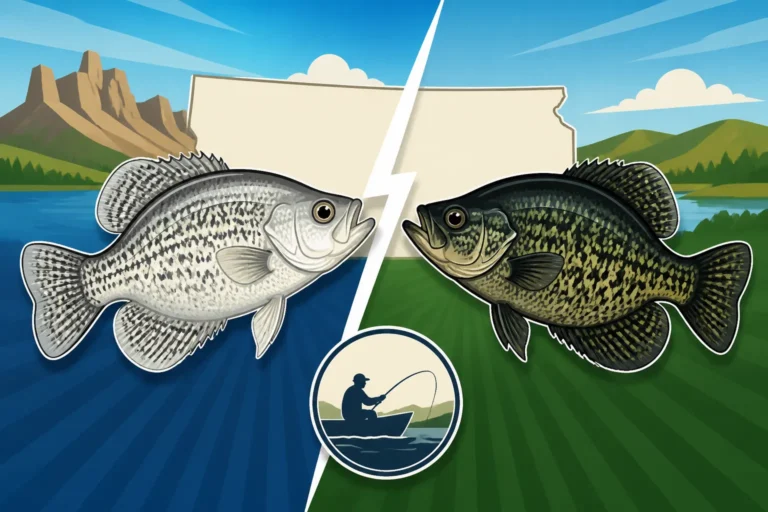
- Black Crappie: Tend to have an overall darker, mottled or speckled appearance with irregular black spots scattered across their silvery-green or olive body. These spots don't form distinct vertical bars.
- White Crappie: Generally lighter, more silvery body with distinct, often faint, vertical bars or blotches on their sides. Their coloring can sometimes appear more muted.
- Sunfish:
- Bluegill: Named for the blue coloration on their gill plates and jaw, they typically have a dark spot on the "ear flap" (operculum) and can display dark vertical bars on their sides, particularly when stressed or during spawning. Their body color can range from dark olive to light brown, with a yellowish or orange belly.
- Pumpkinseed: Known for their vibrant, almost iridescent spots of orange, yellow, and blue on their operculum, often with a bright red or orange spot on the tip of the ear flap. They have a mottled, spotted body pattern.
- Green Sunfish: Usually a darker olive-green with iridescent blue-green spots on their sides and sometimes a bright orange-yellow margin on their fins. They also have a dark opercular spot.
While useful, always prioritize fin spine counts and mouth size over coloration, as color can be deceiving.
Size and Growth Potential
Generally speaking, crappie tend to grow larger than most individual sunfish species.
- Crappie: It's not uncommon to catch crappie in South Dakota that are 10-14 inches long, with trophy specimens pushing 15-17 inches and weighing 2-3 pounds. They are popular for their larger size among panfish.
- Sunfish: While giant bluegill and other sunfish exist, the average catch is usually in the 6-9 inch range. A 10-inch bluegill is considered a fantastic trophy, significantly less common than a 10-inch crappie.
This isn't a definitive ID method, as a small crappie can be the same size as a large bluegill, but it gives you a general expectation. If you're consistently catching "panfish" over a foot long, you're likely into a school of crappie.
Common South Dakota Crappie and Sunfish Species
South Dakota is blessed with an abundance of fantastic fishing opportunities, and that includes a healthy population of both crappie and various sunfish species. Understanding which specific types you're likely to encounter can further refine your identification skills and help you target them more effectively.
The Crappie Family in South Dakota
In South Dakota, when we talk about crappie, we're primarily referring to two distinct but related species, both highly sought after for their fighting spirit and delicious white meat.
Black Crappie ( Pomoxis nigromaculatus )
Black crappies are common throughout many of South Dakota's lakes and reservoirs, from the Missouri River reservoirs like Lake Sharpe Fishing Guide to various glacial lakes in the eastern part of the state. They typically prefer clearer water with more vegetation and submerged timber, which provides cover for both them and their prey. As mentioned, their key identification marks include 7-8 dorsal spines and a more mottled, speckled appearance with irregular black spots. Their body shape is usually very tall and compressed, giving them that classic "dinner plate" profile. They are often found suspended around brush piles, fallen trees, or weed lines, especially in deeper water during the day, moving shallower at dawn and dusk to feed. For techniques, think small jigs, minnows, or tiny crankbaits presented slowly near structure.
White Crappie ( Pomoxis annularis )
White crappies are also widespread in South Dakota, often coexisting with black crappies, though they tend to tolerate slightly more turbid (cloudy) water and open areas than their black-bodied cousins. They are easily identified by their 6 dorsal spines and the distinct, though sometimes faint, vertical bars on their silvery-white bodies. Their body is also tall and compressed, similar to the black crappie, but often not quite as round in profile. White crappie are notorious for schooling up in large numbers, particularly around larger submerged structures like old bridge pilings, river channel edges, or dam tailwaters. They are a staple catch on the Missouri River reservoirs. Tactics that work well for black crappie, such as jigging with minnows or plastics, also apply here, but don't shy away from trolling small crankbaits or spinner rigs when they are spread out in open water.
The Sunfish (Panfish) Family in South Dakota
The term "sunfish" is a broad one, encompassing several species in South Dakota that are generally smaller than crappie but offer fantastic action, especially for family fishing trips or beginners. They are often grouped under the general term "panfish" alongside crappie.
Bluegill ( Lepomis macrochirus )
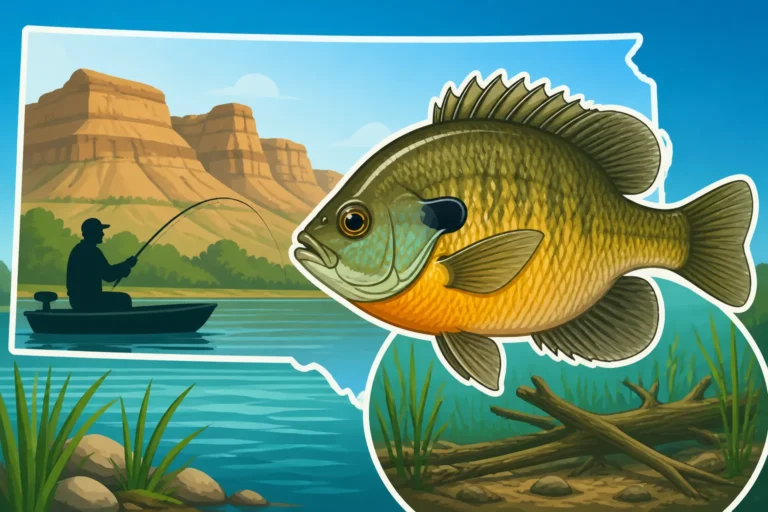
The bluegill is perhaps the most iconic sunfish in South Dakota, beloved by anglers of all ages. You'll find them in almost every pond, lake, and slow-moving river throughout the state. They are easily recognizable by the distinct dark spot on their opercular flap (the "ear"), the blue coloration on their gill plates and chin, and often faint vertical barring on their sides. Their mouth is small, and their dorsal fins are connected, typically showing 10-11 spines. Bluegill thrive in warm, shallow waters with plenty of aquatic vegetation, submerged logs, and docks. They are primarily insect eaters, making them eager biters on small worms, crickets, or tiny artificial baits like micro jigs and flies. They often school in large numbers, offering continuous action. Consider visiting South Dakota State Park Fishing Ponds for prime bluegill opportunities.
Pumpkinseed ( Lepomis gibbosus )
Pumpkinseeds are less common than bluegill in some areas but can be found in similar habitats, especially in clearer waters with abundant plant life. Their most striking feature is the incredibly vibrant, almost jewel-like coloration on their operculum, which often includes wavy blue lines and orange or red spots, culminating in a distinctive red or orange spot on the tip of their "ear." Their body is often a mottled greenish-brown with flecks of gold. Like bluegill, they have a small mouth and connected dorsal fins. They are another excellent target for light tackle, readily biting on small baits.
Green Sunfish ( Lepomis cyanellus )
Green sunfish are exceptionally hardy and adaptable, often found in less-than-pristine waters, including small creeks, farm ponds, and sluggish rivers where other sunfish might struggle. They have a slightly more elongated body than bluegill, a larger mouth for a sunfish (though still smaller than a crappie's), and very distinct blue-green iridescent spots along their sides. The dark opercular spot is usually prominent, often with a white or yellow margin. Despite their smaller average size, green sunfish are aggressive eaters and will readily strike a variety of baits, from worms to small spinnerbaits, making them fun to catch, especially for kids. They are a good option for Rapid City Urban Fishing Spots.
Rock Bass ( Ambloplites rupestris )
While often found in similar panfish habitats, rock bass belong to a different genus but are still considered part of the sunfish family. They are most common in rocky, clear-water environments, particularly in parts of the Black Hills streams and reservoirs. Rock bass have a chunkier body, a larger mouth than bluegill (though again, smaller than a crappie's), and distinctive red eyes. Their body is typically brassy green or brownish, with dark spots arranged in rows. They are aggressive biters and will take small jigs, spinners, or natural baits like worms and crayfish pieces. If you're South Dakota Fly Fishing for Black Hills Trout, don't be surprised if a rock bass grabs your fly!
Habitat, Behavior, and Fishing Techniques
Understanding where these fish like to hang out and what makes them tick is half the battle when you're trying to fill your livewell. While crappie and sunfish share some commonalities as panfish, their preferences often differ enough to warrant distinct approaches.
Crappie Hotspots and Habits
Crappies are notorious for being structure-oriented fish. They love cover that offers both ambush points for feeding and protection from larger predators.
- Submerged Structure: Think brush piles, fallen trees, old fence rows, or even man-made fish attractors. These are crappie magnets. They will suspend in or around these structures, often at a specific depth, waiting for baitfish or insects to drift by. Lakes Oahe, Sharpe, and Francis Case on the Missouri River system are prime for this kind of crappie fishing.
- Weed Lines and Edges: Healthy weed beds, especially those with sharp breaks or channels running through them, provide excellent crappie habitat. They'll cruise these edges, picking off bait.
- Deeper Water: During the day, especially in warmer months, crappies will often retreat to deeper, cooler water, still relating to structure. They are known for suspending in the water column, rather than always being on the bottom.
- Schooling Behavior: Crappies are highly social fish and tend to school up. If you catch one, there are often many more nearby! This makes them incredibly rewarding to target once you find a school.
- Seasonal Movements: In spring, crappies move into shallower waters for spawning, making them easier to target near shorelines. As summer progresses, they move deeper, and in fall, they will again school up and feed aggressively before winter. Ice fishing for crappie is a very popular pastime in South Dakota, often found suspended over deeper holes or structure.
Sunfish Hangouts and Habits
Sunfish, while also loving cover, tend to prefer different types of cover and often much shallower water than crappie.
- Shallow Cover: Docks, lily pads, reeds, emergent vegetation, and shoreline brush are all prime sunfish territory. They love areas where they can dart in and out of cover.
- Warm Water: Being smaller, sunfish are often found in warmer, shallower waters, making them accessible even from shore. They are perfect for targeting with a simple bobber and bait setup.
- Nesting Beds: In late spring and early summer, male sunfish will fan out circular nests in shallow, hard-bottomed areas. This is a fantastic time to find them, as they aggressively guard their nests.
- Solitary or Small Groups: While you can find large concentrations of sunfish, especially bluegill, they don't always form the tight, massive schools that crappie do. You might find a dozen bluegill under one dock, but it's not the same as the hundreds you might find on a crappie brush pile.
- Diet: Sunfish primarily eat insects, insect larvae, small crustaceans, and sometimes aquatic vegetation. Their small mouths are perfectly adapted for picking these tiny morsels off plants or the bottom.
Effective Techniques for Each
Tailoring your approach to each species will dramatically increase your success.
-
Crappie Techniques:
- Jigging: Small jigs (1/32 oz to 1/8 oz) tipped with a minnow or a small plastic grub are classic crappie killers. Vertical jigging over submerged brush or casting and retrieving slowly around structure are common approaches. Look for versatile options on Amazon that include multiple colors and sizes.
- Bobber Fishing: A slip bobber is incredibly effective for crappie, allowing you to present a bait (minnow or jig) at a precise depth over structure.
- Trolling: For white crappie, especially on larger reservoirs, slow trolling with small crankbaits or spinner rigs can be very productive when they're scattered.
- Electronics: A good fish finder is invaluable for locating crappie schools and the structure they relate to, especially if you're fishing deeper water or large reservoirs like Lake Francis Case Fishing Guide.
- Find more details in South Dakota Crappie Fishing Guide.
-
Sunfish Techniques:
- Live Bait: Worms (nightcrawlers, redworms), crickets, or grasshoppers are irresistible to most sunfish. A small hook (size 8 or 10) under a bobber near cover is the quintessential sunfish setup.
- Micro Jigs and Flies: Tiny jigs (1/64 oz or smaller) with a wisp of plastic or marabou, or small panfish flies, are deadly when presented to sunfish. Fly fishing for sunfish can be incredibly fun.
- Simple Bobber Fishing: For bluegill and other panfish, a traditional clip-on bobber and a small bait cast near lily pads or docks is often all it takes, making it perfect for kids.
- Light Tackle: Ultralight spinning gear or a simple cane pole makes catching even small sunfish an exciting fight.
- Check out South Dakota Panfish Fishing Guide for more tips.
Here’s a quick reference table to help keep these differences straight:
| Feature | Crappie | Sunfish (e.g., Bluegill) |
|---|---|---|
| Body Shape | Taller, more discus-shaped, laterally compressed | Rounder, oval, laterally compressed |
| Dorsal Fins | Spiny and soft dorsal fins usually separated or deeply notched; 6-8 spines | Spiny and soft dorsal fins usually continuous; 10-11 spines |
| Mouth Size | Large, extends to or beyond middle of eye | Small, rarely extends past front of eye |
| Color/Markings | Black Crappie: Irregular black mottling; White Crappie: Faint vertical bars | Bluegill: Blue on gill cover, dark opercular spot, sometimes faint vertical bars |
| Average Size | 10-14 inches common, can exceed 15 inches | 6-9 inches common, 10+ inches rare |
| Habitat Focus | Submerged structure, brush piles, weed lines, deeper water | Shallow cover, docks, lily pads, emergent vegetation |
| Primary Diet | Minnows, insects, crustaceans | Insects, insect larvae, small crustaceans |
By paying attention to these distinct features and understanding their preferred environments, you'll not only be able to correctly identify your catch but also dramatically improve your fishing game. Happy fishing in South Dakota!
Disclaimer
This article is for general informational purposes only and does not constitute professional advice. Laws, prices and regulations vary by location and change over time. Consult a qualified professional for guidance on your specific situation.