Water Temperature That Triggers Smallmouth Bass Spawning
One of the biggest frustrations for any angler, especially those chasing hard-fighting smallmouth bass in South Dakota, is trying to perfectly time your trip with their behavior. It feels like a constant puzzle, doesn't it? You know they're out there, but when are they most active, and what makes them bite? This comprehensive guide will pull back the curtain on one of the most critical factors influencing smallmouth bass activity: water temperature, specifically what triggers their spawning ritual in our beautiful South Dakota waters, helping you unlock better angling success.
Understanding the Smallmouth Bass Spawning Trigger: Water Temperature is King
If you want to consistently catch smallmouth bass, you absolutely have to understand their relationship with water temperature, especially when it comes to spawning. It's not just a preference; it's a primal, biological trigger that dictates when they'll move, feed, and reproduce. Missing this window can mean the difference between an epic day on the water and a frustrating, fishless outing.
The Ideal Temperature Range for Smallmouth Spawning
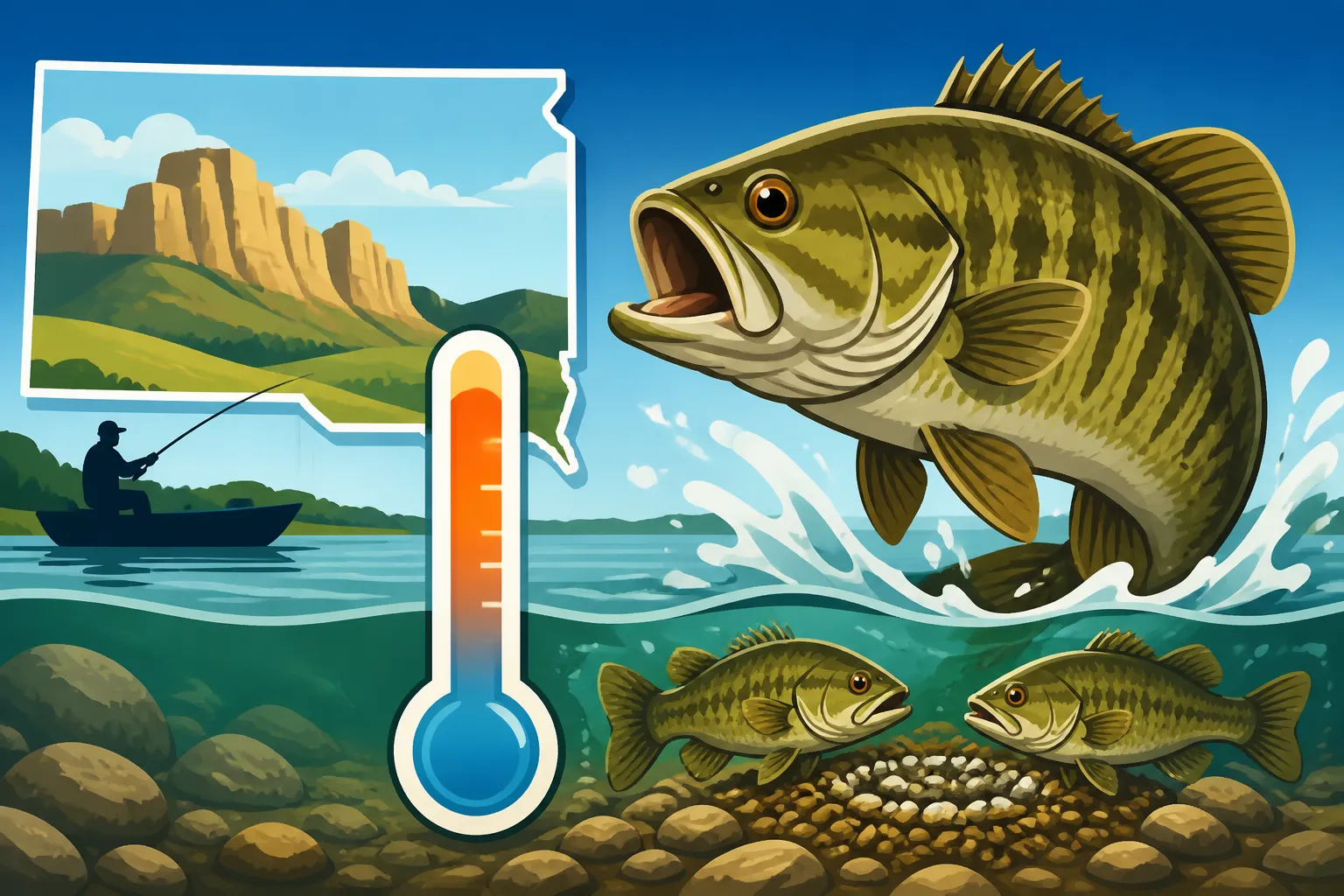
Smallmouth bass are particular about their nurseries. They're not going to just drop eggs anywhere, anytime. The magic really starts to happen when water temperatures consistently hold within a specific range. Generally, we're talking about temperatures from the mid-50s (around 55°F) up to the low 60s (around 64°F). Once the water starts to creep up into that 55-58°F range, smallmouth will begin to move from their deeper wintering grounds into shallower staging areas, scouting out suitable spots. The actual spawning—when they build nests and deposit eggs—typically kicks off when the water hits that sweet spot of 59-64°F.
Think about it from their perspective: they need water that's warm enough for their eggs to develop, but not so warm that it encourages fungal growth or too many predators. It's a delicate balance, and Mother Nature has programmed them to hit that precise temperature window. In South Dakota, this usually means late spring to early summer, but it can shift a bit depending on how quickly a particular body of water warms up. A warm, early spring will push the spawn earlier, while a prolonged cold spell can delay it considerably.
Beyond Just Temperature: Other Factors Influencing the Spawn
While water temperature is undeniably the primary trigger, it's not the only factor influencing when and how smallmouth bass spawn. If it were that simple, we'd all be fishing pros! Other environmental cues play supporting roles, shaping the timing and intensity of the spawn.
One significant factor is light penetration and day length. As the days grow longer in spring, increased daylight hours signal to the fish that conditions are becoming more favorable. This, combined with warming water, creates a powerful one-two punch that initiates the pre-spawn movements. Cloud cover or prolonged periods of overcast skies can sometimes slow down the warming trend in shallow water, subtly impacting when fish decide to commit to bedding.
Water levels and clarity also play a part. Stable water levels are crucial for successful spawning. Rapid fluctuations, like those experienced after heavy rains or significant dam releases on the Missouri River system, can wash out beds, stress fish, and even interrupt the spawning process. Clear water allows more sunlight to penetrate and warm the bottom, which is essential for nest building. On the flip side, extremely clear water can also make fish more wary, especially during the vulnerable spawning period. Additionally, the availability of suitable bottom structure – gravel, small rocks, or firm sand – is paramount. Smallmouth prefer these hard-bottomed areas for nest construction, often near submerged cover like stumps, rocks, or weed lines for protection. For a deeper dive into their habitat, check out South Dakota Smallmouth Bass Fishing Guide.
Tracking Water Temperature for Smallmouth Bass Success
You can't just guess the water temperature and hope for the best. Taking precise measurements is paramount to understanding where the smallmouth are in their seasonal cycle and adjusting your tactics accordingly. Relying on air temperature alone is a rookie mistake; water takes much longer to warm up and cool down than air.
Essential Tools for Measuring Water Temperature
Thankfully, in this day and age, anglers have several excellent tools at their disposal to accurately gauge water temperature. The most basic and accessible tool is a simple fishing thermometer. You can find excellent, durable models at most sporting goods stores or easily browse options on Amazon. Look for one that's designed for fishing, often weighted to sink quickly and made with robust materials to withstand being tossed in a boat or tackle box. A good practice is to tie it to a piece of line and drop it to the depth you're fishing, letting it sit for a few minutes to get an accurate reading.
For those with a bit more tech in their boat, a modern fish finder with a temperature sensor is an absolute game-changer. Almost all contemporary fish finders, from basic models to advanced units, come equipped with this feature. These transducers usually read the surface water temperature, which is a good starting point, especially in shallower spawning areas. Some more sophisticated units can even give you temperature readings at different depths, which can be incredibly useful for locating fish that might be staging just below the thermocline or in deeper pockets. Knowing the temperature stratification of the water column can help you pinpoint exactly where those fish are most comfortable. You can explore a wide range of these devices by searching "fish finder with temperature" on Amazon.
| Tool Type | Accuracy | Ease of Use | Depth Capability | Best Use Cases |
|---|---|---|---|---|
| Handheld Thermometer | High | Very Easy | Manual (any depth) | Spot-checking specific depths, confirming fish finder readings. |
| Fish Finder (Transducer) | Good (Surface) | Very Easy (Integrated) | Surface (some units multi-depth) | General area temperature, identifying temperature breaks. |
| Dedicated Depth/Temp Unit | High | Moderate | Excellent (precise depth) | Targeting fish at specific temperature-sensitive depths. |
Interpreting Temperature Changes and Their Impact
Water temperature isn't static, and neither are smallmouth bass. Understanding how they react to fluctuations is key. A slow, steady warming trend is ideal. This allows fish to gradually acclimate, move into shallower areas, and begin their pre-spawn feeding frenzy without getting shocked. This is often the time when they are most aggressive and easiest to catch, packing on calories before the energy-intensive spawning ritual. For more on this, check out Pre-Spawn Bass Fishing Techniques.
However, sudden drops in temperature, often caused by a cold front, heavy rain, or a late spring snowfall, can halt the spawn in its tracks. Fish that were shallow and active might retreat to deeper, more stable water, becoming lethargic and tight-lipped. They'll often hold in transition areas, waiting for conditions to stabilize again. Conversely, an abrupt spike in temperature can push the spawn faster than normal, potentially shortening the pre-spawn window or making fish less predictable. These rapid changes stress the fish and can make them difficult to pattern. Observing these trends, not just a single reading, is crucial for long-term success.
Smallmouth Bass Spawning Behavior and What It Means for Anglers
The spawning period is a fascinating time in the life cycle of a smallmouth bass, and their behavior shifts dramatically through its various stages. As anglers, understanding these shifts allows us to adapt our strategies and, importantly, ensures we respect the fish during their most vulnerable time.
Pre-Spawn Aggression: The Feast Before the Fast
As water temperatures climb into the mid-50s (around 55-58°F), smallmouth bass start their serious pre-spawn movements. They begin migrating from their deeper winter haunts to shallower staging areas. These areas are typically adjacent to potential spawning flats, often featuring submerged points, rock piles, or transition zones between deep and shallow water. Their primary goal during this phase is to feed aggressively. They need to pack on fat reserves to sustain themselves through the demanding spawning period, where feeding often takes a backseat to reproduction.
This is a fantastic time for anglers because the fish are often very catchable and willing to strike a wide variety of lures. They're looking for substantial meals, so larger crankbaits, jerkbaits, spinnerbaits, and even swimbaits can be highly effective. They'll often chase down baits with gusto. Look for them on the sunny side of points or along secondary drop-offs that lead into protected bays. The fish are often schooled up, too, so if you catch one, there are likely more nearby! Consider exploring areas mentioned in Lake Francis Case Smallmouth Bass Fishing in May for potential pre-spawn hot spots.
The Spawning Window: Nests, Protection, and Patience
Once the water temperature consistently hits that golden range of 59-64°F, the actual spawning begins. Male smallmouth bass move onto hard-bottomed flats, typically in 2-8 feet of water, and fan out circular nests. These nests, or "beds," are cleared-out depressions where the females will deposit their eggs. A male will then guard these eggs, and later the fry, aggressively. During this phase, females visit the beds to lay eggs and then often retreat to slightly deeper water to recover, sometimes returning to spawn multiple times with different males.
Fishing during the actual spawn can be both frustrating and incredibly rewarding. Fish on beds are often highly defensive. They may not be actively feeding, but they'll strike at anything they perceive as a threat to their nest. This can lead to sight-fishing opportunities where you cast to visible fish on beds, often using jigs, tubes, or soft plastics to annoy them into striking. However, it's crucial to practice ethical angling during the spawn. Repeatedly catching fish off their beds can disrupt the spawning process and leave the eggs vulnerable to predators, ultimately impacting future generations. Many conservation-minded anglers choose to avoid targeting bedding fish directly, focusing instead on pre-spawn or post-spawn individuals.
Post-Spawn Recovery and Beyond: Re-Energizing and Relating to Fry
After the eggs hatch and the fry emerge, the male bass continues to guard them for a period. Eventually, both male and female smallmouth will transition out of the immediate spawning areas. The females, especially, are often quite lean and lethargic immediately after spawning. They need time to recover and regain their energy. They'll often move to nearby deeper cover, like brush piles, rock ledges, or deep weed edges, to rest and start feeding again, though usually not with the same aggression as pre-spawn.
As the water continues to warm and summer sets in, smallmouth bass will establish their summer patterns. This typically involves relating to deeper offshore structures, submerged points, rock humps, or deep current breaks, especially in larger reservoirs like Lake Oahe or Lake Sharpe. They'll follow baitfish into these areas and can be targeted with a variety of deep-water techniques, from drop-shotting to deep cranking. Understanding the progression from spawn through post-spawn helps you follow the fish and maintain angling success throughout the season. Learn more about this period in Post-Spawn Bass Fishing Techniques.
South Dakota Specifics: Smallmouth Spawning Across Our Waters
South Dakota offers an incredible diversity of waters, from the vast Missouri River reservoirs to the glacial lakes of the northeast, and each has its own subtle nuances when it comes to smallmouth bass spawning. While the general temperature triggers remain the same, local conditions can shift the timing.
General Timing Across South Dakota
Across South Dakota, smallmouth bass spawning typically kicks off in late May and can extend into early to mid-June, sometimes even later in colder years or in specific northern lakes. The large, deep Missouri River reservoirs like Lake Oahe and Lake Sharpe, with their massive water volume, tend to warm up a bit slower than smaller, shallower glacial lakes in eastern South Dakota. This means the spawn might occur slightly later on the big reservoirs, or at least be more staggered, with fish in different sections of the lake spawning at different times as localized areas warm.
For instance, a shallow, protected bay on Lake Sharpe might warm faster than an exposed main lake point, leading to earlier spawning activity in that bay. Anglers often find success by "following the warmth" across the lake, targeting the earliest warming areas first and then moving to deeper, more exposed areas as the season progresses. Conversely, a shallow glacial lake like Lake Kampeska or Lake Poinsett might see an earlier, more compressed spawn due to its quicker warming profile. Staying informed on local conditions and water temperature reports is key.
Key Smallmouth Bass Waters and Their Nuances
South Dakota is blessed with some incredible smallmouth bass fisheries, each with its own character:
- Lake Francis Case: This reservoir on the Missouri River is renowned for its excellent smallmouth population. Here, anglers often find smallmouth relating to rocky shorelines, riprap, and submerged humps and points. The spawning activity will concentrate in these rocky areas as water temperatures rise, particularly in the upstream sections and protected bays. Fishing around the many islands and main lake points can be very productive during the pre-spawn and spawn. Lake Francis Case Smallmouth Bass Fishing offers great insights.
- Lake Sharpe: Another Missouri River gem, Lake Sharpe offers diverse smallmouth habitat. Anglers will find them around the rocky bluffs, riprap along the causeways, and the numerous points and islands. The spawn on Sharpe can be influenced by current, so understanding current breaks and eddies is crucial. Look for protected coves and shorelines that get good sun exposure for early spawners. Lake Sharpe Smallmouth Bass Near Big Bend Dam details specific areas.
- Lewis and Clark Lake: Downstream on the Missouri, Lewis and Clark Lake also boasts a strong smallmouth population. Here, the fish often relate to the steep, rocky banks and bluffs, as well as the rocky points and gravel flats that line the reservoir. Spawning activity will be concentrated in these areas, often in fairly shallow water if there's good cover nearby. Lewis and Clark Lake Smallmouth Bass Fishing Report can provide real-time updates.
- Glacial Lakes (e.g., Lake Kampeska, Lake Poinsett, Bitter Lake): These eastern South Dakota lakes often have a mix of rock, sand, and submerged vegetation. Smallmouth here will utilize rocky points, gravelly shorelines, and even scattered rock piles within weed beds for spawning. The spawn in these lakes can often be a bit earlier and more concentrated due to their typically shallower nature and quicker warming.
Adapting Your Approach for Different Spawning Phases
Knowing the water temperature isn't enough; you have to adapt your lure choice and presentation to match the smallmouth's mood during each phase of the spawn.
During the pre-spawn phase, when fish are aggressive and feeding heavily, you want to use baits that mimic large baitfish or crawfish. Erratic retrieve jerkbaits, lipless crankbaits, or spinnerbaits in baitfish patterns are excellent choices. Cover water quickly to find active fish. Target transition areas where they are moving between deep wintering holes and shallow spawning grounds. Think about covering depths from 8-15 feet, but don't ignore shallower sun-baked areas where baitfish might be congregating.
When fish are actively on the beds and the water is in that 59-64°F range, their feeding instinct diminishes, replaced by a strong territorial drive. This is when sight fishing becomes an option, if you choose to pursue it ethically. Small jigs, tubes, or creature baits in natural colors, fished slowly and deliberately into the nest, can provoke a strike. The key is to irritate the fish until it grabs the "intruder." However, remember the discussion about the ethical implications of targeting bedding fish; consider if it's the right choice for you and the health of the fishery.
In the post-spawn phase, smallmouth bass are often sluggish and less aggressive. They're still recovering, and while they'll eat, they're not chasing down meals like they were pre-spawn. Slower presentations are often more effective. Drop shots, Ned rigs, or small finesse jigs fished near deeper cover where they are recuperating can coax a bite. They'll often be found near the edges of drop-offs, submerged timber, or deep rock piles, relating to structure that offers both cover and a nearby food source without expending too much energy.
By closely monitoring water temperature and understanding how it influences smallmouth bass behavior through these different spawning phases, you'll be much better equipped to plan your South Dakota fishing adventures and, hopefully, experience some fantastic smallmouth action!
Disclaimer
This article is for general informational purposes only and does not constitute professional advice. Laws, prices and regulations vary by location and change over time. Consult a qualified professional for guidance on your specific situation.