Minimum Length for a Trophy Walleye in South Dakota
It's an age-old question that sparks excitement in every angler's heart: what exactly counts as a "trophy" walleye here in South Dakota? You've battled the wind on Lake Oahe, spent countless hours jigging the deep breaks of Lake Sharpe, or trolled the expanses of Lake Francis Case, all with the dream of landing that one fish that makes your jaw drop. But when it comes to bragging rights, or even official recognition, knowing the benchmark is key. This guide will dive deep into what constitutes a trophy walleye in the Mount Rushmore State, both by official standards and the unspoken rules of seasoned anglers.
Understanding South Dakota's Trophy Fish Program (and the Walleye Standard)
There's nothing quite like the thrill of a big walleye on the end of your line. The head shakes, the deep runs, the sheer power of it all. When that fish finally surfaces, often the first thought is, "Is this a trophy?" For many of us, it's a personal question, but South Dakota actually has an official answer.
Why "Trophy" Isn't Just a Feeling, It's a Measurement
We all have our personal bests, don't we? That one walleye that felt like a submarine, or the one you landed after a particularly challenging day on the water. For some, a "trophy" might be their first walleye over 20 inches, a significant personal milestone. For others, it's about seeing that fish push the 25-inch mark. The beauty of fishing is that these personal achievements are absolutely worth celebrating. They represent the culmination of patience, skill, and sometimes, a little bit of luck.
However, when it comes to statewide recognition or comparing catches with a broader community of anglers, having a standardized measure becomes incredibly helpful. It moves the conversation beyond subjective feelings to an objective benchmark. The South Dakota Game, Fish and Parks (GFP) understands this desire for recognition, and they've established criteria through their South Dakota Trophy Fish Award Program. This program provides a clear goal for anglers who dream of catching truly exceptional fish and having their achievement formally recognized. It’s a wonderful way to honor those standout catches and the anglers who put in the effort to find them.
The Official Minimum Length for Walleye
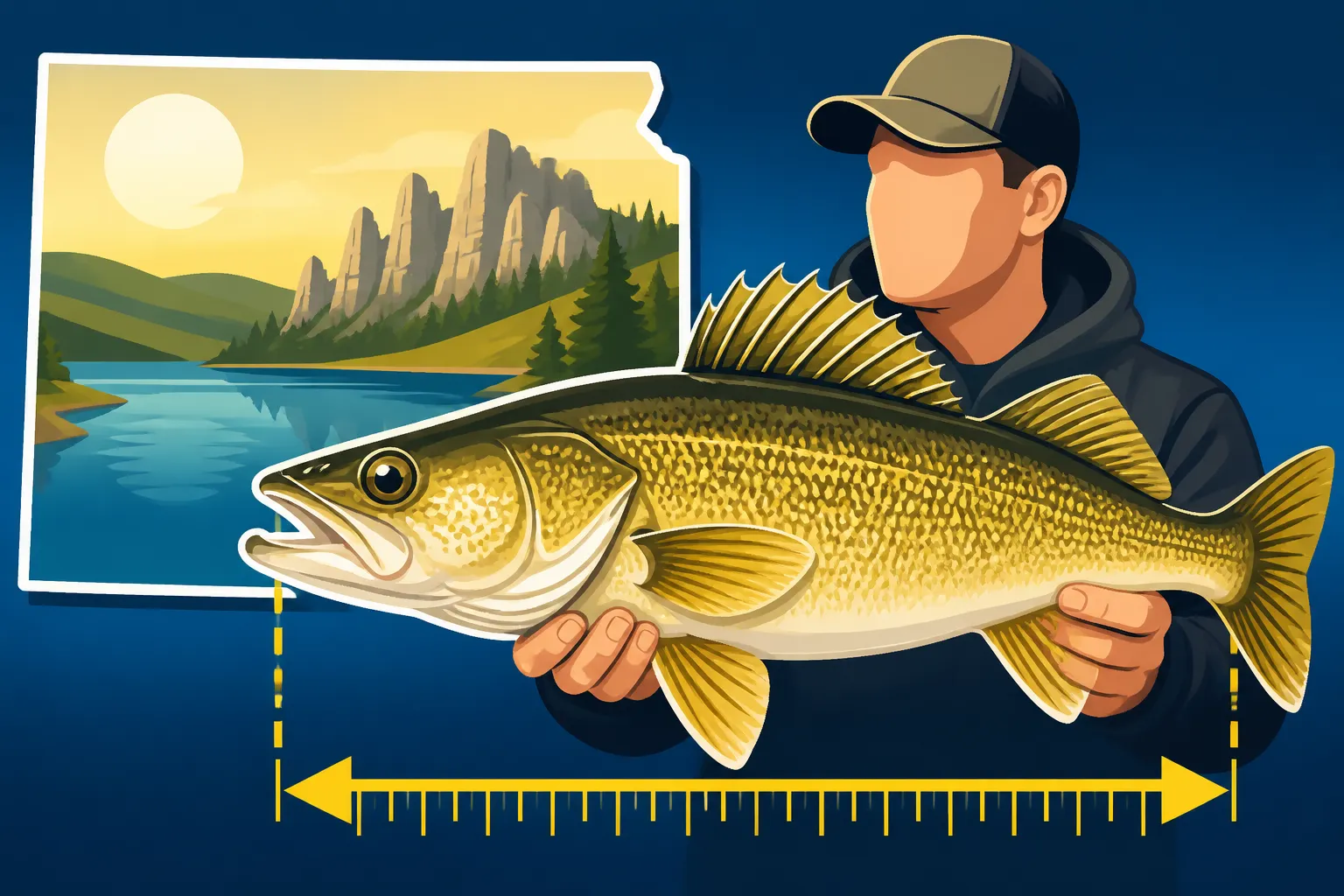
So, let's get right to the heart of the matter. If you're looking to have your walleye officially recognized as a "trophy" by the South Dakota Game, Fish and Parks, you're aiming for a specific length. The official minimum length for a walleye to qualify for a South Dakota Trophy Fish Award is 28 inches.
That's right, 28 inches! This isn't just a number pulled out of thin air; it's a carefully considered standard designed to recognize truly exceptional fish within the state's diverse walleye populations. This standard is consistent across all public waters in South Dakota, whether you're fishing the mighty Missouri River reservoirs or the smaller, fertile glacial lakes in the eastern part of the state.
When you land a walleye that measures 28 inches or longer, you've not just caught a great fish; you've caught a fish that the state considers worthy of special recognition. This information, along with other critical details about regulations and species, can always be found in the official South Dakota GFP Fishing Handbook Guide. It’s your go-to source for all the rules and opportunities available to anglers.
Here’s a quick look at the trophy minimums for a few popular species in South Dakota:
| Species | Minimum Length for Trophy Award (Inches) |
|---|---|
| Walleye | 28 |
| Northern Pike | 40 |
| Smallmouth Bass | 19 |
| Chinook Salmon | 28 |
| Channel Catfish | 30 |
| Largemouth Bass | 20 |
Keep in mind that these lengths are for the Trophy Fish Award program, which is about recognizing exceptional catches. They are different from daily limits or slot limits, which are designed for fisheries management.
Beyond the Number: What Makes a Walleye a True Trophy?
While the 28-inch mark is the official standard for a South Dakota trophy walleye, ask any seasoned angler, and they'll tell you there's more to a "trophy" than just length. It's about the entire package – the fish's build, the story behind the catch, and the sheer memory it creates.
The "Weight" Factor and Condition
Imagine two walleyes, both precisely 28 inches long. One is long and slender, maybe a bit on the lean side. The other is a thick, fat football, with a huge girth that makes it look like it swallowed a bowling ball. Which one feels more like a "trophy" in your hands? For most anglers, it’s the latter.
Length is a fantastic objective measure, but a fish's weight and overall condition often play a huge role in its perceived trophy status. A plump, healthy walleye with a big belly and broad shoulders feels heavier, fights harder, and simply looks more impressive in a photograph. This girth usually indicates an older, well-fed fish that has been successful in its environment. It's not uncommon for anglers to estimate the weight of a fish as much as they focus on its length when discussing "trophies." Sometimes, a shorter fish with exceptional girth can even feel more like a trophy than a longer, skinnier one. It's a testament to the abundant forage base and rich waters these fish call home.
Location, Fight, and Memories
The story behind the catch can elevate a fish from merely "big" to genuinely "trophy-worthy." Was it caught during a brutal spring storm on Lake Oahe, where the waves were crashing over the bow? Or perhaps it was a solitary battle on a quiet evening on Lake Sharpe, under a stunning prairie sunset. The location and conditions of the catch often embed that fish deeper into our memories.
A walleye caught in a particularly challenging spot, like a deep river channel with strong current, or one that put up an incredible, drag-screaming fight, often holds a special place in an angler's heart. It's not just about the size of the fish itself, but the effort, skill, and persistence required to bring it to the net. These experiences are what transform a simple fishing trip into a truly unforgettable adventure. Whether you were trolling for hours trying to crack the code of a new pattern, or jigging vertically in a precise spot, the narrative of the chase makes the catch even sweeter.
Your Personal Best vs. the State Record
It's important to distinguish between the official 28-inch trophy length, your own personal best, and the elusive South Dakota State Record Walleye Weight. The 28-inch benchmark is designed to celebrate significant individual catches, making them eligible for the Trophy Fish Award program. It's a fantastic goal for any angler to strive for, and achieving it is a huge accomplishment!
A personal best is exactly that – the biggest fish you have ever caught. It could be 20 inches, 24 inches, or maybe even that glorious 28-incher. Your personal best might not qualify for the state's trophy program, but it's still a monumental achievement for you, and that's what truly matters. We've all been there, holding up a fish that means the world to us, regardless of what the record books say.
The state record, however, is a whole different beast. These are fish of truly monumental proportions, often caught once in a lifetime (or more likely, never). While a 28-inch walleye is impressive, the state record will be significantly larger, often much heavier, and represents the absolute pinnacle of what the state's waters can produce. While it's fun to dream of catching a state record, setting your sights on the 28-inch trophy mark is a much more attainable and equally rewarding goal. Celebrate every fish, big or small, but cherish those personal bests and aspire for that official trophy status!
Practicalities of Measuring Your Potential Trophy Walleye
So, you've hooked into what feels like a monster, and it's looking like it might be that 28-inch trophy walleye you've been dreaming of. Now what? Getting an accurate measurement and a good photo is crucial, especially if you plan to submit it for the Trophy Fish Award program. More importantly, we want to ensure the fish's health, especially if you're practicing catch and release.
Proper Measuring Techniques
To accurately measure your potential trophy walleye, follow these steps to ensure you get a precise length:
- Preparation is Key: Before you even land the fish, have your measuring device ready. A bump board or a flexible measuring tape is ideal. Many anglers keep a specific measuring board in their boat or ice shanty for this exact purpose. You can find a variety of reliable measuring devices on Amazon to ensure you're always prepared.
- Lay it Flat: Carefully lay the walleye on a flat surface, such as a measuring board, the bottom of your boat, or a wet mat. It's important to have the fish as still and straight as possible.
- Nose to Tail: Gently push the nose of the fish against the bump of the measuring board (or the zero mark of your tape). Its mouth should be closed.
- Compress the Tail: While holding the nose against the starting point, gently squeeze the tail lobes together to get the maximum length. Read the measurement at the end of the longest tail lobe. Don't stretch the fish; simply compress the tail naturally.
- Minimize Out-of-Water Time: This is paramount. Trophy-sized walleye are often older and more susceptible to stress. Measure quickly and efficiently. The less time they spend out of the water, the better their chances of survival upon release.
Remember, accuracy matters if you're aiming for that South Dakota Trophy Fish Award Program. A half-inch can make all the difference!
Photographing Your Trophy for Documentation
Once you have that measurement, a good photograph is essential. Not only is it a cherished memory, but it's also often required for official recognition. Here's how to snap a great shot:
- Wet Hands & Clean Background: Always wet your hands before handling the fish. This protects its slime coat. Try to have a clean, uncluttered background that highlights the fish.
- Highlight the Size: For the Trophy Fish Award, a photo showing the fish next to the measuring device is often required. This provides tangible proof of its length. Hold the fish horizontally, supporting its body, and show the full length.
- Angle is Everything: A slight angle can make the fish look even more impressive. Get down low to the fish's level. If possible, have someone else take the picture so you can focus on holding the fish correctly.
- Quick Snaps: Again, minimize the time the fish is out of the water. Get a few quick, clear shots from different angles and then prepare for release. Modern phone cameras often work great, but if you're serious, a waterproof digital camera can be a good investment.
- Avoid "Hero Shots" that Harm: While a "hero shot" with the fish held out towards the camera can look impressive, be mindful of how you're supporting the fish. Avoid holding it solely by the jaw if it’s a heavy fish, as this can damage its jaw structure. Support its belly and tail, especially for larger specimens.
Releasing Your Trophy: Conservation Mindset
Catching a 28-inch walleye is a monumental achievement, and for many, the greatest reward is the opportunity to release that fish to fight another day and contribute to future generations. These large, older walleyes are often the most productive spawners, and their survival is vital for the health of South Dakota's fisheries.
Here's how to ensure a successful release:
- Gentle Handling: Handle the fish as little as possible. Use a rubber-coated net to minimize damage to its scales and slime coat.
- Minimize Air Exposure: Keep the fish in the water as much as you can. If you need to remove it for a quick measurement and photo, do so quickly and carefully.
- Proper Hook Removal: Use needle-nose pliers or a hook remover tool to extract hooks quickly and cleanly. If a hook is deeply embedded and cannot be removed without causing significant trauma, it's often best to cut the line as close to the hook as possible.
- Revive if Necessary: If the fish seems sluggish or disoriented after being landed, gently hold it in the water, facing into the current. Move it back and forth slightly to push water over its gills until it regains its strength and swims off on its own. This is especially important after a long fight, like when you're How to Catch Walleye at Night in Summer and they've had a tough battle.
- Let Them Go: There's immense satisfaction in watching a trophy swim away strongly. This ensures that others might have the chance to catch it, and it can continue to reproduce, keeping our walleye populations strong.
Where and How to Target Trophy Walleye in South Dakota
Now that you know what you're aiming for, let's talk about where and how to increase your chances of landing that elusive 28-inch South Dakota trophy walleye. It takes a combination of knowing the right spots and employing effective techniques.
Top South Dakota Waters for Big Walleye
South Dakota is famous for its walleye fishing, and some waters consistently produce larger fish due to their vast size, rich forage, and excellent management. If you're chasing a true trophy, these are the places you'll want to concentrate your efforts:
- The Missouri River Reservoirs: This is undoubtedly the premier trophy walleye fishery in the state. The chain of reservoirs – Lake Oahe, Lake Sharpe, Lake Francis Case, and Lewis and Clark Lake – offers immense habitat, abundant baitfish, and a perfect environment for walleye to grow to impressive sizes.
- Lake Oahe: This massive reservoir is legendary for its walleye. Its vast expanses and deep, clear waters are home to giants. Anglers often find success focusing on the main lake points, submerged islands, and deep humps. Check out our comprehensive Lake Oahe Walleye Fishing Guide for detailed hotspots and seasonal patterns.
- Lake Sharpe: Located just downstream from Oahe, Lake Sharpe is another phenomenal fishery, particularly known for its consistent production of quality walleye. Its shallower, more turbid waters compared to Oahe can make it easier to locate fish, especially in spring and fall. Explore our Lake Sharpe Fishing Guide for tips on specific areas.
- Lake Francis Case: Further south, Lake Francis Case also offers excellent opportunities for big walleye, especially in its deeper sections and around submerged structure.
- For a broader overview, our South Dakota Missouri River Fishing Guide covers techniques and locations across this incredible river system.
- Glacial Lakes: While the Missouri River reservoirs are kings for sheer size, don't overlook some of the larger glacial lakes in eastern South Dakota. Lakes like Lake Thompson, Lake Poinsett, and Lake Kampeska can also produce impressive walleye, though they might not churn out as many giants as the Missouri River. These lakes often offer fantastic Best South Dakota Lakes for Walleye listings and can be less intimidating for some anglers.
The key to finding big walleye in any of these waters is often about finding the right depth, structure, and forage. Big fish get big by being smart and efficient eaters, so they'll be wherever the food is most accessible.
Techniques for Landing Larger Fish
Catching a truly big walleye often requires a slightly different approach than simply catching numbers of eaters. Trophy walleyes are typically older, wiser, and often prefer larger baits or specific presentations.
- Deep Water Trolling: This is a tried-and-true method on the large reservoirs. Big walleyes often suspend or relate to deep structure. Trolling large crankbaits at various depths, using lead core or downriggers, can be incredibly effective. Pay close attention to your electronics – a good fish finder (many excellent options available on Amazon) is your best friend for locating deep fish and structure. Our Trolling for Walleye on Lake Oahe guide dives into the specifics of this technique.
- Live Bait Rigs: While artificial lures are great, sometimes nothing beats live bait for a cautious, big walleye. Large shiners, creek chubs, or good-sized nightcrawlers presented on a simple live bait rig or Lindy rig can be irresistible. Fishing these rigs slowly along break lines, humps, or points can entice the biggest fish.
- Jigging Deep Structure: When walleye are holding tight to specific pieces of structure, like submerged timber, rock piles, or deep humps, vertical jigging with heavier jigs tipped with large plastics or minnows can be deadly. This requires precise boat control and a keen eye on your sonar.
- Understand Seasonal Movements: Big walleyes move throughout the year. In spring, they might be shallower for spawning, while summer often sees them move to deeper, cooler waters. Fall can bring them shallower again as they feed heavily before winter. Understanding these patterns, as detailed in our South Dakota Walleye Fishing Guide, is crucial.
Remember, big fish are not always easy to find, and they don't always bite aggressively. Patience and persistence with the right techniques are paramount.
Patience and Persistence: The Trophy Hunter's Mantra
Let's be real: catching a 28-inch walleye isn't an everyday occurrence. It takes time, effort, and often, a lot of trips where you might catch plenty of good fish, but not "the one." The journey to catching a trophy walleye is a marathon, not a sprint.
Embrace the process. Learn from every cast, every bite, and even every empty retrieve. Pay attention to details: water temperature, wind direction, baitfish presence, and how the fish reacted to your presentation. The more hours you put in on the water, the higher your chances of encountering that special fish. Sometimes, it's just about being in the right place at the right time, but "being there" consistently is what makes the difference.
Equip yourself with a solid South Dakota Fishing Gear Checklist and ensure your gear is reliable. Durability and quality matter when you're battling big fish, and many anglers rely on trusted brands found easily on platforms like Amazon. Don't get discouraged by slow days; every trip builds experience. The moment that trophy walleye hits your net, all those hours and all that patience will be undeniably worth it. Keep casting, keep learning, and keep dreaming big – South Dakota's waters hold true treasures!
Disclaimer
This article is for general informational purposes only and does not constitute professional advice. Laws, prices and regulations vary by location and change over time. Consult a qualified professional for guidance on your specific situation.