How to Identify a Trophy Smallmouth Bass
There's nothing quite like that jolt when a fish strikes, and your rod bends, telling you this isn't just any bite. For smallmouth bass anglers in South Dakota, that feeling often comes with the burning question: "Is this it? Is this a trophy?" It’s a moment of pure excitement mixed with a little uncertainty. This guide is here to help you confidently identify a trophy smallmouth bass, understand what makes them special in our waters, and appreciate these feisty fighters.
What Defines a Trophy Smallmouth Bass in South Dakota?
When we talk about a "trophy" fish, it's not always a single, universally agreed-upon measurement. Sometimes it's about state records, sometimes it's about a recognition program, and sometimes, honestly, it's just about the biggest fish you've ever caught. South Dakota offers a clear path for official recognition, but let's dive into what truly sets a trophy apart.
The South Dakota Master Angler Program Standards
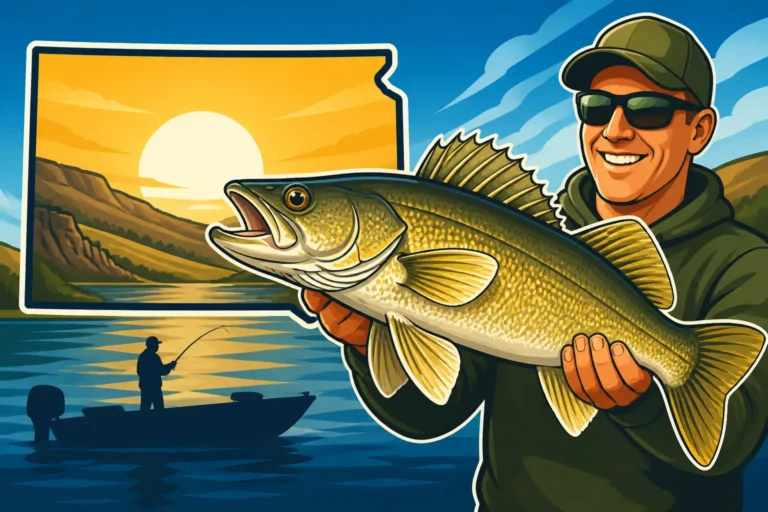
The South Dakota Game, Fish and Parks (GFP) has an excellent South Dakota Trophy Fish Award Program that recognizes exceptional catches, and smallmouth bass are definitely on that list. For a smallmouth bass to qualify for a Master Angler award, it needs to meet specific minimum length or weight requirements. These aren't necessarily the state record, but they represent a significant catch that few anglers achieve. Think of these as the gold standard for public recognition. Catching a smallmouth that qualifies is a fantastic accomplishment, a testament to your skill, patience, and perhaps a little bit of luck. It's a way to officially document that truly memorable day on the water and gain some well-deserved bragging rights. You can find all the details on How to Qualify for a South Dakota Master Angler Award.
| Category | Minimum Length (Inches) | Minimum Weight (Pounds) |
|---|---|---|
| Adult | 18.0 | 3.0 |
| Youth | 16.0 | 2.5 |
Note: These are general guidelines; always check the latest South Dakota GFP regulations for current Master Angler criteria.
Understanding State Records vs. Personal Best
While the Master Angler program sets a high bar, the ultimate trophy is undoubtedly the state record. South Dakota maintains a South Dakota State Fish Record List for various species, including smallmouth bass. Breaking a state record is an incredibly rare feat, often requiring a unique combination of skill, prime conditions, and a truly exceptional fish. Most anglers will never come close, and that's perfectly fine!
For many of us, a "trophy" is a personal best – a fish that shatters our previous biggest catch. Maybe you've always struggled to break the two-pound mark, and suddenly you land a healthy three-pounder. That's a trophy! Or perhaps you've fished Lake Francis Case for years and finally pulled out a smallmouth over four pounds. That's a huge victory in your personal fishing journey. The beauty of defining a personal trophy is that it’s deeply meaningful to you, reflecting your growth as an angler and your experiences on the water. It’s about the challenge and the triumph, regardless of what the record books say.
Factors Influencing Trophy Potential
South Dakota's waters, especially the Missouri River reservoirs like Lake Sharpe and Lake Francis Case Smallmouth Bass Fishing, are known for producing healthy smallmouth bass. Factors like abundant forage, water quality, and a suitable habitat play a massive role in how big these fish can get. A smallmouth needs plenty of food, like shad or crayfish, and clean, oxygenated water to grow to impressive sizes. Lakes with good rock structure, ledges, and drop-offs provide the perfect hunting grounds and cover for these predatory fish. Understanding these environmental factors can even help you target areas where bigger fish are likely to be found. Smallmouth Bass Growth Rate on Lake Francis Case is a fascinating topic that illustrates how these fish thrive in specific conditions.
Key Identification Features of a Smallmouth Bass
Before you can call a fish a trophy smallmouth, you need to be absolutely sure it is a smallmouth bass! It's surprisingly easy to confuse them with their larger, equally aggressive cousin, the largemouth bass, especially when they're young or in certain water conditions. Distinguishing them accurately is the first step toward celebrating your potential trophy.
Distinguishing Smallmouth from Largemouth Bass
This is where many anglers can get tripped up, and it's essential to know the differences. While both are members of the black bass family, they have distinct features.
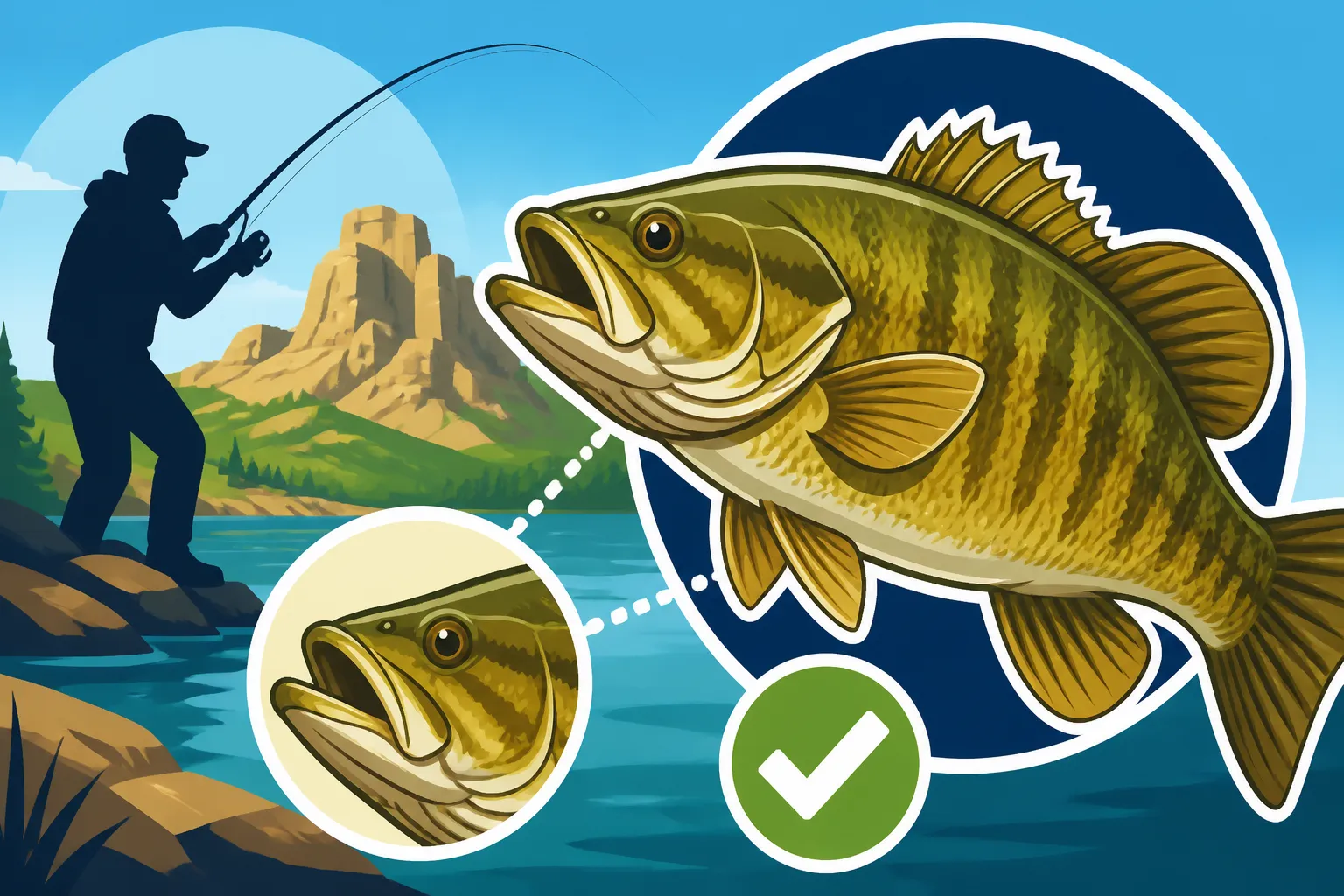
The easiest way to tell them apart is by the mouth. A largemouth bass's jaw extends past the back of its eye when its mouth is closed. Imagine a vertical line drawn down from the back of the eye – if the jawline goes beyond that, it's a largemouth. For a smallmouth bass, its jaw typically does not extend past the back of its eye. It's a subtler, more contained jawline.
Another key identifier is their coloration and markings. Smallmouth bass usually have vertical bars or blotches along their sides, which can vary from distinct stripes to mottled patterns, especially when they come out of cooler, clearer water. Their overall color often ranges from brown to bronze, sometimes with a yellowish tint, adapting to their environment. Largemouth bass, on the other hand, typically feature a prominent, horizontal dark stripe or band running along their sides. They tend to be greener in overall color.
The dorsal fins are also a giveaway. A smallmouth bass has a dorsal fin that appears almost as one continuous fin, though it is technically separated into spiny and soft-rayed sections. The separation is less pronounced, giving it a smoother profile. A largemouth bass has a much more distinct, deeper notch between its spiny and soft-rayed dorsal fins, making them look like two separate fins. This is a subtle but reliable characteristic once you know what to look for. You can learn more about these distinctions in How to Tell a Largemouth Bass From a Smallmouth Bass.
Physical Characteristics of a South Dakota Smallmouth Bass
Once you've confirmed it's a smallmouth, look at its specific features. South Dakota smallmouth bass are known for their powerful, muscular bodies, built for fighting current and ambushing prey. They possess a compact, torpedo-shaped build that speaks to their strength and agility.
Their eyes are typically reddish-brown or amber, giving them a keen, predatory look. The vertical bars or blotches on their sides are often more pronounced in clear water environments, helping them blend into rocky structures. In murkier or stained waters, these markings might be fainter, and the fish might appear more uniformly brown or bronze. Pay attention to the pectoral and caudal (tail) fins; they are usually a darker shade of brown or olive, contrasting slightly with the belly, which is often white, cream, or a lighter yellow. These subtle color variations and markings are important parts of Fish Identification for Beginners.
When you catch a larger, trophy-sized smallmouth, these features are often even more striking. The head might appear more robust, the fins more developed, and the overall coloration richer. These older, bigger fish have usually navigated many seasons and battles, and their appearance often reflects that hardy history. Their condition will also tell a story – a thick, healthy body indicates a prime specimen.
Measuring and Documenting Your Catch
So, you’ve got a potential trophy smallmouth in your hands! Now comes the critical part: accurately measuring and documenting it. This isn't just for Master Angler applications; it's also for your own records and to share your amazing catch with friends and family. Careful handling is key here, especially if you plan to release the fish.
Accurate Length and Weight Measurement
For length, the standard is to measure from the tip of the jaw (mouth closed) to the very end of the tail (pinched). A reliable measuring board is your best friend here. Lay the fish flat on the board, with its snout touching the bumper at one end, and gently pinch the tail lobes together to get the longest possible measurement. Tools like a sturdy bump board, readily available on Amazon, ensure consistent and accurate readings. Avoid using a flexible tape measure on a squirming fish; it's rarely accurate and can stress the fish more.
For weight, a quality digital scale is indispensable. Zero out your scale before weighing the fish. If you're using a weigh sling or net, make sure it's wetted down and factor its weight into your reading. For the most accurate weight, it's often recommended to use a cradle or sling to support the fish's entire body, minimizing stress on its jaw or gills. Avoid hanging large fish by just a lip gripper for extended periods, as this can cause internal damage, especially to heavier fish. Always prioritize the fish's health for a quick and successful release.
High-Quality Photography for Proof and Memories
A great photo not only serves as proof for a Master Angler application but also as a cherished memory. The goal is a clear, well-lit photo that shows the fish's full length and distinct features.
Here are a few tips:
- Hold the fish horizontally: Support its body with two hands, one under the belly and one near the tail, to avoid damaging its jaw or internal organs.
- Keep it wet: A wet fish looks healthier and minimizes harm to its protective slime coat.
- Clean background: Try to position yourself so the background isn't too cluttered.
- Lighting: Natural, indirect light is best. Avoid harsh midday sun that can cause glare or dark shadows. Overcast days are ideal.
- Measure first, then photo: If you're on your own, get the measurement quickly and accurately, then take your photos. If you have a fishing buddy, one can measure while the other preps the camera.
- Proof of size: If you're applying for an award, a photo of the fish on a measuring board is often required. Make sure the numbers are clearly visible.
- Bring a waterproof camera: A good waterproof camera or phone case, available on Amazon, can make all the difference when you're on the water.
Remember, the quicker you can get the measurement and photo and release the fish, the better its chances of survival, allowing it to grow even bigger for another angler to enjoy.
Habitat and Behavior Clues for Trophy Smallmouth
Knowing where trophy smallmouth bass live and how they behave is like having a secret roadmap to finding them. These aren't just random catches; they are often found in specific environments and exhibit certain characteristics that set them apart. Understanding their preferred haunts can significantly increase your chances of landing a truly memorable fish.
Preferred Structures and Cover
Trophy smallmouth bass are creatures of structure. They love rocky areas, ledges, drop-offs, points, and humps. These features offer them prime ambush points for prey and protection from larger predators. In South Dakota's Missouri River reservoirs, you'll often find them congregating around rocky shorelines, riprap along causeways, and submerged rock piles. They prefer areas with clean, clear water, which is why the main lake channels and deeper stretches of reservoirs like Lake Sharpe and Lewis and Clark Lake are so productive.
Consider a place like the rocky points on Lake Oahe or the extensive riprap areas along the causeways near Pierre. These locations provide abundant crayfish and baitfish, which are staple foods for smallmouth, as well as plenty of crevices and shadows for them to hide in. How to Fish a Drop-Off for Smallmouth Bass is a technique many seasoned anglers employ, as these underwater cliffs are magnets for big bass. They'll stage themselves along these vertical structures, waiting for an unsuspecting meal to swim by. Using your fish finder to locate these subtle underwater structures can be a game-changer.
Seasonal Movements and Feeding Patterns
Smallmouth bass, especially the bigger ones, are highly influenced by water temperature and the availability of food. Their behavior changes significantly with the seasons:
- Spring: As water temperatures rise into the 50s and 60s, smallmouth move into shallower, rocky areas to spawn. This is a prime time to catch large, pre-spawn and spawning fish. They’ll be aggressive and territorial. Look for them around rocky flats and protected coves.
- Summer: In the heat of summer, trophy smallmouth often move to deeper, cooler waters, usually around deep structure like humps, submerged islands, or along river channels. They'll make forays into shallower water during low light conditions (early morning, late evening, or overcast days) to feed. Smallmouth Bass Fishing Techniques for Rocky Shorelines become crucial here, as they'll relate to rocks even in deeper water.
- Fall: As water temperatures cool down, smallmouth return to shallower areas, often migrating to transitional zones between deep and shallow water, bulking up for winter. This can be another fantastic time for catching big fish, as they feed heavily. Look for baitfish schools and target structure nearby.
- Winter: During winter, smallmouth become much less active, retreating to deep holes, slower currents, or the warmest available deep structure. Ice fishing for smallmouth is less common than for walleye or perch, but it's certainly possible if you can find their deep-water wintering grounds.
Understanding these patterns and knowing where to cast your line at the right time can mean the difference between an average day and landing that trophy you’ve been dreaming of. Having a reliable fishing map, often enhanced by digital versions accessible through apps on your phone or tablet (many available on Amazon), can help you pinpoint these prime locations throughout the year.
Disclaimer
This article is for general informational purposes only and does not constitute professional advice. Laws, prices and regulations vary by location and change over time. Consult a qualified professional for guidance on your specific situation.