Origin of Chinook Salmon Stocked in South Dakota
It's a common head-scratcher for anyone new to fishing in South Dakota: Chinook salmon? In a landlocked state, hundreds of miles from the nearest ocean? It feels almost like a mirage, doesn't it? But these powerful, elusive fish have a fascinating story here, and understanding their journey explains a lot about the unique fishery we enjoy. This guide will dive deep into the fascinating origin story of Chinook salmon in South Dakota, shedding light on why and how these incredible Pacific giants made their way to our prairie waters.
The Unlikely Introduction: Why Chinook Salmon Came to South Dakota
The idea of bringing a Pacific salmon species to the heart of the Great Plains might seem bizarre at first glance, but it was a calculated and necessary move driven by a critical need in one of South Dakota's largest and most important fisheries: Lake Oahe. This massive reservoir, formed by the damming of the Missouri River, presented a unique challenge and opportunity.
Back in the day, the ecosystem of Lake Oahe was undergoing significant changes. The construction of the dam and the subsequent formation of the reservoir created an enormous body of deep, cold water. While this was great for some fish species, it also led to a burgeoning population of a particular forage fish: rainbow smelt. Smelt thrive in cold, deep water, and they multiplied rapidly, becoming a dominant food source. However, there was a gap in the predatory fish population. Walleye, while abundant, tend to prefer warmer, shallower waters and are not always efficient at hunting smelt in the open, deep water where they often congregate. This left a massive, untapped food source and an ecological imbalance.
Fishery managers began looking for a large, cold-water predator that could effectively utilize this vast population of rainbow smelt. They needed a fish that could grow large, provide an exciting sport fishing opportunity, and ideally, wouldn't negatively impact the existing valuable fisheries like walleye. Chinook salmon, known for their preference for cold water, their pelagic (open water) lifestyle, and their voracious appetite for smaller baitfish, emerged as a promising candidate. The vision was to create a new, distinct cold-water fishery that would complement the existing warm-water species, maximizing the potential of the reservoir.
Tracing Their Roots: Where South Dakota's Chinook Originated
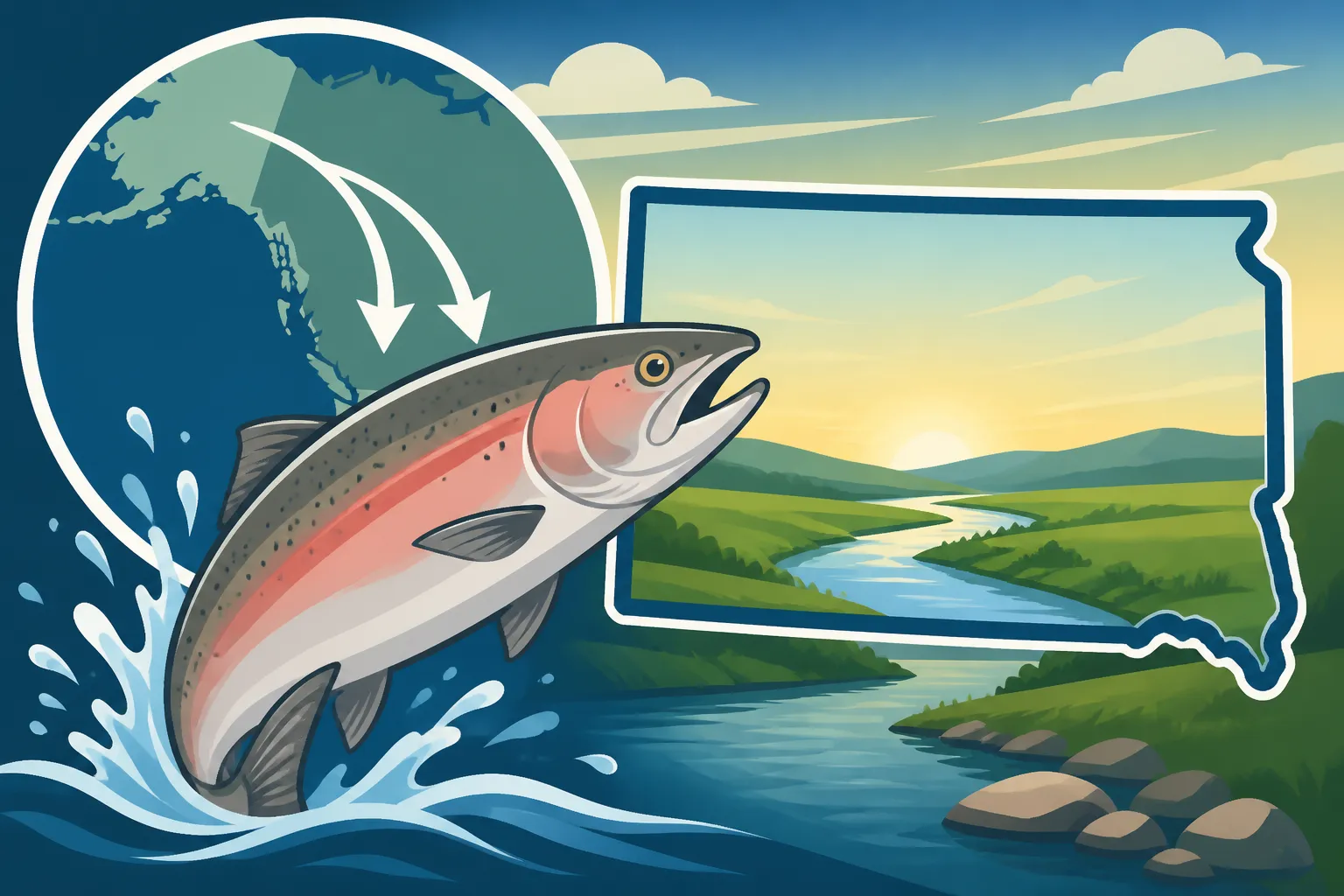
So, once the decision was made, the next big question was: where do you get Pacific salmon for a prairie state? You can't just scoop them out of the Pacific Ocean! The answer lies in careful broodstock management and the cooperation of federal and state hatcheries. The Chinook salmon introduced into Lake Oahe were not wild fish transplanted directly from the Pacific Coast. Instead, their origins trace back to established hatchery programs.
The initial stock for South Dakota's Chinook salmon program often came from federal hatcheries with a long history of raising these powerful fish. While specific hatchery names and exact lineages can vary over time due to management needs, a significant portion of the early Chinook salmon broodstock was sourced from hatcheries associated with the Great Lakes. The Great Lakes themselves had successful Chinook salmon stocking programs that began decades earlier, utilizing strains of Chinook that had adapted somewhat to a freshwater, landlocked environment. These fish, while still genetically Pacific salmon, had gone through generations of hatchery propagation in a non-oceanic setting. It's a testament to the adaptability of the species and the dedicated work of aquaculture specialists. For those interested in the broader history of these programs, there are many detailed reports and even books available online via platforms like Amazon that cover the intricate science behind such large-scale species introductions.
Once these initial eggs or fingerlings (small juvenile fish) were acquired, they were brought to South Dakota's own state hatcheries, like the McNenny State Fish Hatchery, where they would be carefully reared. Hatcheries play a crucial role in the survival and success of these programs. They provide a controlled environment where young salmon can grow past their most vulnerable stages, increasing their chances of survival significantly once released into the vast waters of Lake Oahe. This ongoing process of rearing and stocking ensures that a healthy population of Chinook salmon continues to thrive in South Dakota's cold waters. If you're wondering how the state manages these populations, exploring resources like the South Dakota Fish Stocking Report Basics can offer great insight into the continuous efforts.
| Year Range | Key Development | Purpose/Impact |
|---|---|---|
| Early 1970s | Introduction and initial stocking | Establish a cold-water pelagic predator, utilize abundant rainbow smelt forage. |
| Mid 1970s-1980s | Broodstock development and sustained stocking | Build a self-sustaining (through stocking) sport fishery. |
| 1990s-Present | Refinement of stocking strategies | Optimize growth, survival, and angler opportunities based on forage fluctuations. |
Life in a New Home: The Chinook's Role and Management
Once released into Lake Oahe, the Chinook salmon found an environment that, while not the Pacific Ocean, offered suitable conditions for growth and survival. The reservoir’s deep, cold waters, especially in its northern reaches, mimic the thermal preferences of these fish. More importantly, the abundant rainbow smelt provided a rich, high-energy food source. This allowed the salmon to grow to impressive sizes, much to the delight of anglers. You can learn more about these impressive fish by checking out South Dakota Chinook Salmon Average Size.
The salmon quickly established themselves as a premier sport fish, offering a unique trolling fishery that attracts anglers from across the region. They became a vital part of the lake's ecosystem, acting as a top predator that helps manage the smelt population. However, because Lake Oahe is a reservoir and not a natural salmon river system with direct access to the ocean, the Chinook salmon here cannot complete their natural life cycle by returning to their birth stream to spawn successfully and naturally reproduce to sustain the population. While they do attempt to spawn in some of the lake's tributaries, the conditions generally aren't conducive to successful natural reproduction on a scale needed to maintain the fishery. This means that the South Dakota Chinook salmon fishery is entirely dependent on continuous stocking efforts by the state's Game, Fish and Parks (GFP) department.
These stocking programs are carefully managed. Fishery biologists monitor the health of the salmon population, the abundance of rainbow smelt, and the overall ecological balance of Lake Oahe. Adjustments are made to stocking numbers based on these factors to ensure the fishery remains healthy and productive. This careful management is crucial to balancing the needs of the salmon with those of other species like walleye. For a deeper dive into their diet, consider reading What Chinook Salmon Eat in South Dakota.
Sustaining the Fishery: Ongoing Efforts and Future Outlook
Maintaining a vibrant Chinook salmon fishery in a landlocked state is no small feat; it requires continuous dedication, scientific monitoring, and flexible management strategies. The South Dakota Game, Fish and Parks (GFP) works tirelessly to ensure that anglers can continue to experience the thrill of battling these magnificent fish. This involves more than just raising and releasing fish; it’s about understanding the intricate dynamics of the entire Lake Oahe ecosystem.
One of the most critical aspects of sustaining this fishery is the continuous monitoring of the rainbow smelt population. Smelt are the lifeblood of the Chinook in Lake Oahe, and their abundance directly impacts the growth and survival of the salmon. If smelt numbers decline, the salmon's condition can suffer, impacting angler success and the overall health of the fishery. Conversely, an explosion in smelt numbers might allow for increased salmon stocking. This delicate balance means that South Dakota Chinook Salmon Stocking History isn't just about how many fish went in, but why those numbers were chosen based on ecological data.
Anglers also play a crucial role in the future of this fishery. By adhering to regulations, practicing responsible catch and release when appropriate, and reporting their catches, they provide valuable data that helps fishery managers make informed decisions. Understanding regulations like South Dakota Fishing Season Dates and Limits is key to responsible angling. For those passionate about targeting these powerful fish, resources like South Dakota Chinook Salmon Trolling Techniques or even browsing specialized fishing gear on Amazon can greatly enhance the experience. The GFP also maintains the Whitlock Bay Salmon Spawning Station, a vital facility where Chinook salmon are collected during their fall spawning run to gather eggs for future generations. This station is not just for egg collection; it's also a popular spot for anglers during the Chinook Salmon Spawning Run Dates on Lake Oahe, where they can try How to Catch Chinook Salmon From Shore on Lake Oahe.
The future of Chinook salmon in South Dakota looks promising, largely due to this proactive and adaptable management approach. While challenges like fluctuating water levels, forage fish dynamics, and climate variations always exist, the commitment to providing a unique cold-water fishery remains strong. This means anglers can look forward to many more years of targeting these impressive Pacific giants right here in the heartland.
Disclaimer
This article is for general informational purposes only and does not constitute professional advice. Laws, prices and regulations vary by location and change over time. Consult a qualified professional for guidance on your specific situation.