Why Chinook Salmon Die After Spawning
It's a bittersweet moment for any angler or nature enthusiast to witness the majestic Chinook salmon complete their life cycle. You see these incredible fish, often vibrant and powerful, push themselves to their absolute limits to reproduce, only to then succumb to their fate. It can be a perplexing and even sad sight if you don't understand the profound biological drive behind it. This guide will take a deep dive into why Chinook salmon die after spawning, exploring the biological imperatives, the epic journey they undertake, and what this natural cycle means for the South Dakota waters they call home for their final act.
The Salmon's Fated Journey: What is Semelparity?
The fundamental reason Chinook salmon die after spawning lies in a biological strategy called semelparity. This fancy scientific term essentially means "single reproduction." Unlike many other fish species that can spawn multiple times over several years (known as iteroparity), semelparous species like Chinook salmon dedicate all their energy and resources to one massive reproductive event. It's a one-and-done deal, a biological gamble where everything is thrown into ensuring the next generation survives.
Imagine putting every ounce of your physical and mental energy into one monumental task – not just for a few hours, but for weeks or even months. That's what these salmon do. From the moment they commit to their spawning run, their bodies begin to undergo irreversible changes. Their digestive systems start to shut down, their fat reserves are completely depleted, and their muscles begin to atrophy. They literally sacrifice their bodies for their offspring. This isn't a failure or an accident; it's a meticulously evolved survival strategy that has allowed salmon populations to thrive for millennia.
The Biological Cost of Reproduction
The journey itself is incredibly taxing. Chinook salmon, whether they've spent years in the vast expanse of Lake Oahe or a different system, undergo profound physiological transformations as they prepare for spawning. Hormonal changes trigger not only the development of eggs and milt but also a series of degenerative processes. Their immune systems weaken, making them highly susceptible to disease and parasites. Their skin often darkens and thickens, sometimes developing fungal growths as their protective mucous layer diminishes.
Think about the sheer energy required to migrate upstream, often battling strong currents, leaping over obstacles, and navigating treacherous waters. For the Chinook in Lake Oahe, while not a true river migration in the same sense as ocean-run salmon, they still undertake significant upstream movements to reach suitable spawning grounds like those near Whitlock Bay. This continuous exertion, without feeding, completely exhausts their energy reserves. They are running on fumes, fueled only by the last vestiges of stored fat and muscle. By the time they successfully deposit their eggs and fertilize them, their bodies are utterly spent, leaving them no capacity for recovery or survival.
The Epic South Dakota Run: Chinook Salmon in Lake Oahe
South Dakota's Chinook salmon story is unique. While many people associate Chinook with the Pacific Northwest, here in the heartland, Lake Oahe provides a thriving, albeit landlocked, environment for these magnificent fish. These are not anadromous salmon that return from the ocean, but rather a robust, stocked population that has adapted to the immense freshwater reservoir. Despite their landlocked nature, their biological drive to spawn and the subsequent fate remain identical to their ocean-going cousins.
When the cooler fall temperatures arrive, typically in September and October, the Chinook salmon in Lake Oahe begin their final, desperate push. They migrate towards specific areas of the reservoir, seeking out gravelly riverbeds and shallower areas where they can dig their redds (nests). This journey is their ultimate purpose, and nothing will deter them. You can often witness this incredible spectacle at places like Whitlock Bay, where the fish congregate, their bodies already showing the wear and tear of the impending end. Seeing them, bruised and battered, yet still powerfully fighting for the future, is truly a testament to nature's resilience. For those interested in this period, understanding Chinook Salmon Spawning Time on Lake Oahe is key.
The Ritual of Spawning and Its Aftermath
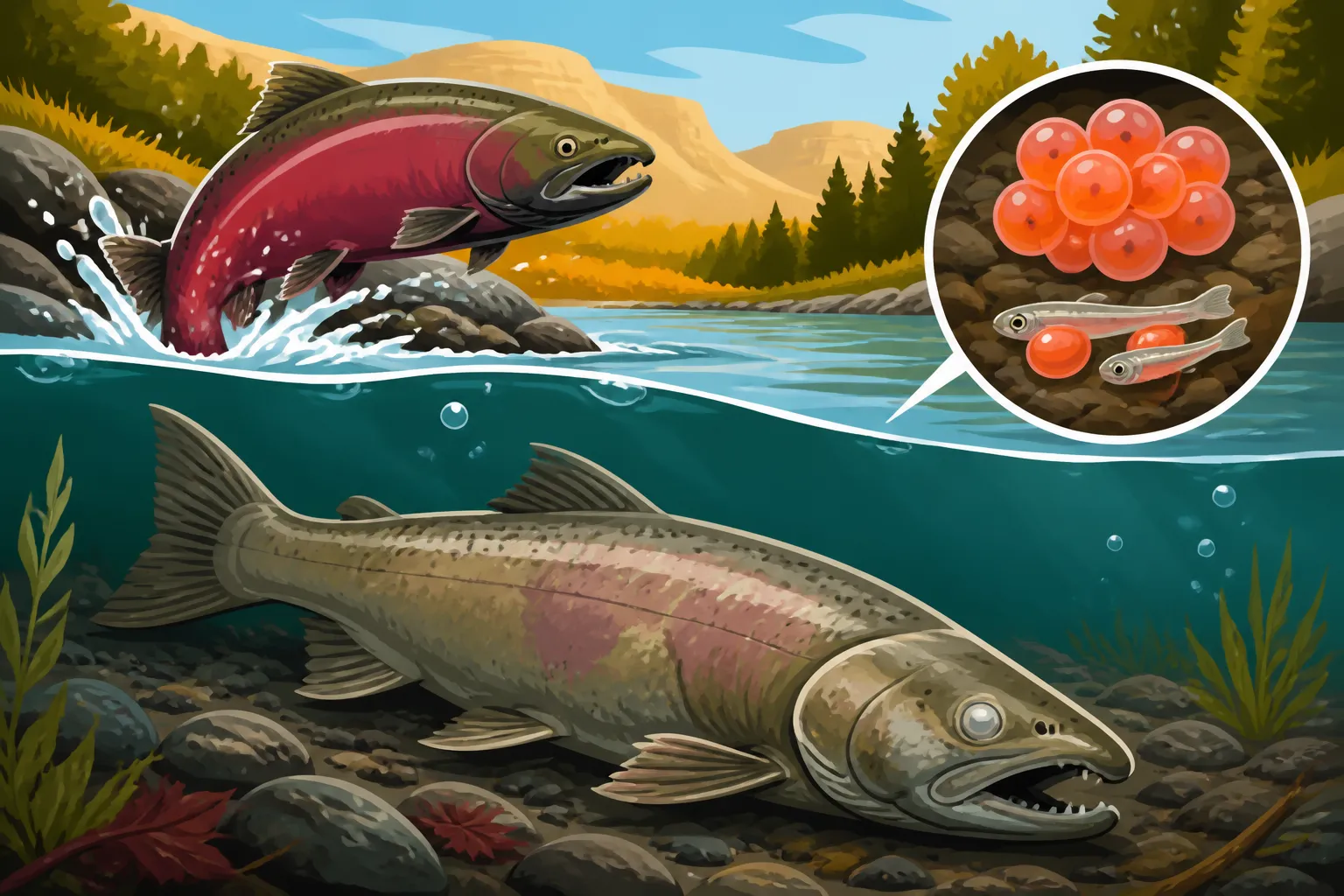
Once they reach the spawning grounds, the male and female salmon engage in an elaborate and energy-intensive mating ritual. The female, using her tail, digs a depression in the gravel, depositing thousands of bright orange eggs. The male then fertilizes them with his milt. This process can be repeated several times, with the female digging multiple redds and covering the fertilized eggs with more gravel to protect them. The males, often sporting a hooked jaw (kype), will fiercely defend their territory and their chosen female, battling rival males with incredible ferocity.
This intense physical activity is the final straw for their already depleted bodies. Their immune systems are completely compromised, their organs are shutting down, and their internal systems are failing. After the eggs are laid and fertilized, and their duty is done, the salmon simply lose the will and the ability to fight on. Their bodies give out, and they drift with the current or are washed ashore, leaving behind the next generation of Chinook salmon to hatch and begin the cycle anew. If you want to learn more about the species, check out What Chinook Salmon Eat in South Dakota for insights into their diet.
Nature's Cycle: The Ecological Impact of Post-Spawn Salmon
While the death of so many magnificent fish might seem like a tragic waste, it's a vital and integral part of the ecosystem. The decaying bodies of post-spawn salmon, often referred to as "carcasses," contribute an enormous amount of marine-derived nutrients back into the freshwater system. This influx of nutrients enriches the water and the surrounding shoreline, providing essential sustenance for countless other organisms.
Think about it: after spending years growing large and strong, accumulating biomass, all that organic matter is returned to the environment. This natural fertilization process supports everything from microscopic organisms to insects, which in turn become food for other fish species, birds, and even mammals. It's a complex web of life, and the salmon's death isn't an ending, but a continuation, a crucial transfer of energy that fuels the entire food chain. Without this nutrient boost, the ecosystem would be significantly less vibrant and productive.
Fueling the Next Generation and Beyond
The decomposition of salmon carcasses isn't just about general nutrient cycling; it directly benefits the future generations of fish. The young salmon that hatch from the redds often feed on the aquatic insects and invertebrates that thrive in the nutrient-rich waters created by their parents' sacrifice. It's a self-sustaining cycle where the parents' death literally provides the foundation for their offspring's survival and growth.
Furthermore, scavengers play a crucial role. Eagles, gulls, coyotes, and other wildlife eagerly feast on the salmon carcasses. This provides a significant food source during a time of year when other prey might be scarcer, supporting a diverse array of animal life along the lake shores and riverbanks. This natural process helps maintain the overall health and balance of the South Dakota aquatic environment. If you're observing this process, a good pair of binoculars, perhaps found on Amazon, can greatly enhance your experience. Consider also checking out resources on South Dakota Fish Consumption Advisories Explained to understand broader ecological health.
Witnessing the End: What Anglers and Observers Should Know
For those who venture to Lake Oahe during the fall spawning run, witnessing the salmon's final journey can be a profound experience. It’s a powerful reminder of nature’s relentless drive and the interconnectedness of all living things. As anglers and observers, it's important to approach these areas with respect and understanding.
The salmon at this stage are not interested in feeding; their sole focus is reproduction. While some might still strike a lure out of aggression or instinct, they are often in poor condition, and catching them provides little sporting value and can interrupt their critical spawning efforts. Many conservation-minded anglers choose to simply observe during this time, allowing the salmon to complete their life's work undisturbed. If you are fishing, being mindful of the regulations regarding snagging or targeting spawning fish is vital. Information on South Dakota Fishing Regulations Explained can provide details.
Respecting the Spawning Grounds
When visiting areas known for salmon spawning, especially places like Whitlock Bay, it’s crucial to minimize your impact. Stick to designated paths, avoid disturbing the redds (which can be hard to spot in the water but are essentially shallow gravel depressions), and never interfere with the fish themselves. The carcasses, while part of the natural cycle, should also be left undisturbed. They are contributing to the ecosystem's health, and moving them can disrupt this delicate balance.
For those interested in fishing for Chinook salmon at other times, or with different techniques, there's a wealth of information available. For instance, South Dakota Chinook Salmon Trolling Techniques or Best Lures for Lake Oahe Salmon in October might be useful for targeting them when they are actively feeding and not solely focused on their final, fatal mission. You can find a wide array of fishing gear, from lures to downriggers, on Amazon to prepare for those active fishing periods. Understanding South Dakota Chinook Salmon Average Size can also help manage expectations for your catches.
| Life Stage | Description | Energy Expenditure | Feeding Behavior | Body Condition |
|---|---|---|---|---|
| Egg | Laid in gravel redds, developing for weeks to months depending on water temperature. | Minimal | None | Undeveloped |
| Alevin/Fry | Hatch from eggs, live off yolk sac, then emerge from gravel to feed on plankton/insects. | Low to Moderate | Actively feeding | Developing, growing |
| Smolt | Develop migratory instincts, move from freshwater nursery areas towards larger bodies of water (Lake Oahe). | Moderate | Actively feeding | Strong, adapting |
| Adult (Feeding) | Live for several years in Lake Oahe, growing rapidly, feeding on other fish (e.g., smelt). | Moderate | Actively feeding | Robust, healthy |
| Adult (Spawning) | Migrate to spawning grounds, undergo extreme physical changes, stop feeding, dedicate all energy to reproduction. | Extremely High | None (digestive system shuts down) | Deteriorating, diseased |
| Post-Spawn | After successful spawning, bodies are completely exhausted and failing; death occurs naturally. | Exhausted | None | Deceased |
This entire phenomenon, from the vigorous upstream journey to the final, peaceful drift of a spent salmon, is a powerful cycle of life, death, and renewal. It's a privilege to witness it and a testament to the incredible design of the natural world.
Disclaimer
This article is for general informational purposes only and does not constitute professional advice. Laws, prices and regulations vary by location and change over time. Consult a qualified professional for guidance on your specific situation.