White Crappie vs Black Crappie
It's a common scene on the water: you've landed a beautiful crappie, a silver flash of promise, but then the nagging question hits you – is it a white crappie or a black crappie? This isn't just about curiosity; for anglers in South Dakota, correctly identifying your catch can directly impact whether you're following local regulations or accidentally overfilling your creel. This guide will help you confidently distinguish between these two popular panfish, enhancing your understanding and success on South Dakota's diverse waters.
The Crappie Conundrum: Why Distinguishing Matters
Many anglers, especially those new to South Dakota fishing, might think "a crappie is a crappie," and while both are fantastic panfish that offer a thrilling fight and delicious table fare, they're distinct species with different habits and, sometimes, different regulatory implications. Without a clear understanding of their unique characteristics, you could inadvertently run afoul of the rules, or simply miss out on optimizing your fishing strategy for one species over the other.
South Dakota Regulations and Why ID is Key
South Dakota's Game, Fish and Parks (GFP) sets specific regulations for various fish species, and while crappie often fall under general panfish limits, there can be nuances or specific situations where knowing the exact species becomes critical. Imagine you're fishing a lake with a special management plan; sometimes, one species might have a slightly different size limit or daily creel limit than the other, though this is less common for crappie than for, say, walleye or bass. More often, it's about making sure you're not mistakenly thinking you've caught a different species entirely. Understanding the distinctions ensures you stay within the legal Crappie and Panfish Possession Limits and avoid any potential fines or, worse, conservation impacts.
Beyond just avoiding trouble, a seasoned angler understands that responsible identification is part of respecting the resource. Each fish contributes to the overall ecosystem, and our ability to differentiate them helps us appreciate the biodiversity of South Dakota's waters. When you know what you've caught, you can better understand its role, its life cycle, and how best to ensure its populations thrive for future generations of anglers. It’s about becoming a more informed and ethical participant in the sport we all love.
Impact on Your Fishing Experience and Success
Imagine you're out on a new lake, perhaps one of the Best South Dakota Lakes for Crappie Fishing, and you're getting bites. If you can quickly identify whether it's a white crappie or a black crappie, you can start to form a pattern. Maybe the black crappie are hitting jigs near dense cover, while the white crappie are suspended in open water. Knowing the difference allows you to adjust your presentation, depth, or even your location to target more of the specific species you're finding. It's like having a secret weapon in your tackle box – knowledge!
Furthermore, these subtle differences in behavior and preferred habitat mean that a technique that's deadly for one might be less effective for the other. Are you casting into heavy brush or trolling open water? Your success often hinges on matching your approach to the fish's natural tendencies. This article will dive deep into these differences, giving you the insights you need to become a more versatile and successful crappie angler, no matter which species you're after. After all, the goal is always to have a more productive and enjoyable day on the water, right?
Black Crappie: The Speckled Beauties of South Dakota Waters
Black crappie, often just called "blacks" by locals, are incredibly popular throughout South Dakota. They're known for their aggressive bites and tendency to hang out in structure, making them a fun challenge for any angler. If you've ever pulled a beautifully mottled crappie from a brush pile, chances are good it was a black crappie. They truly are speckled beauties.
Key Physical Characteristics and Markings
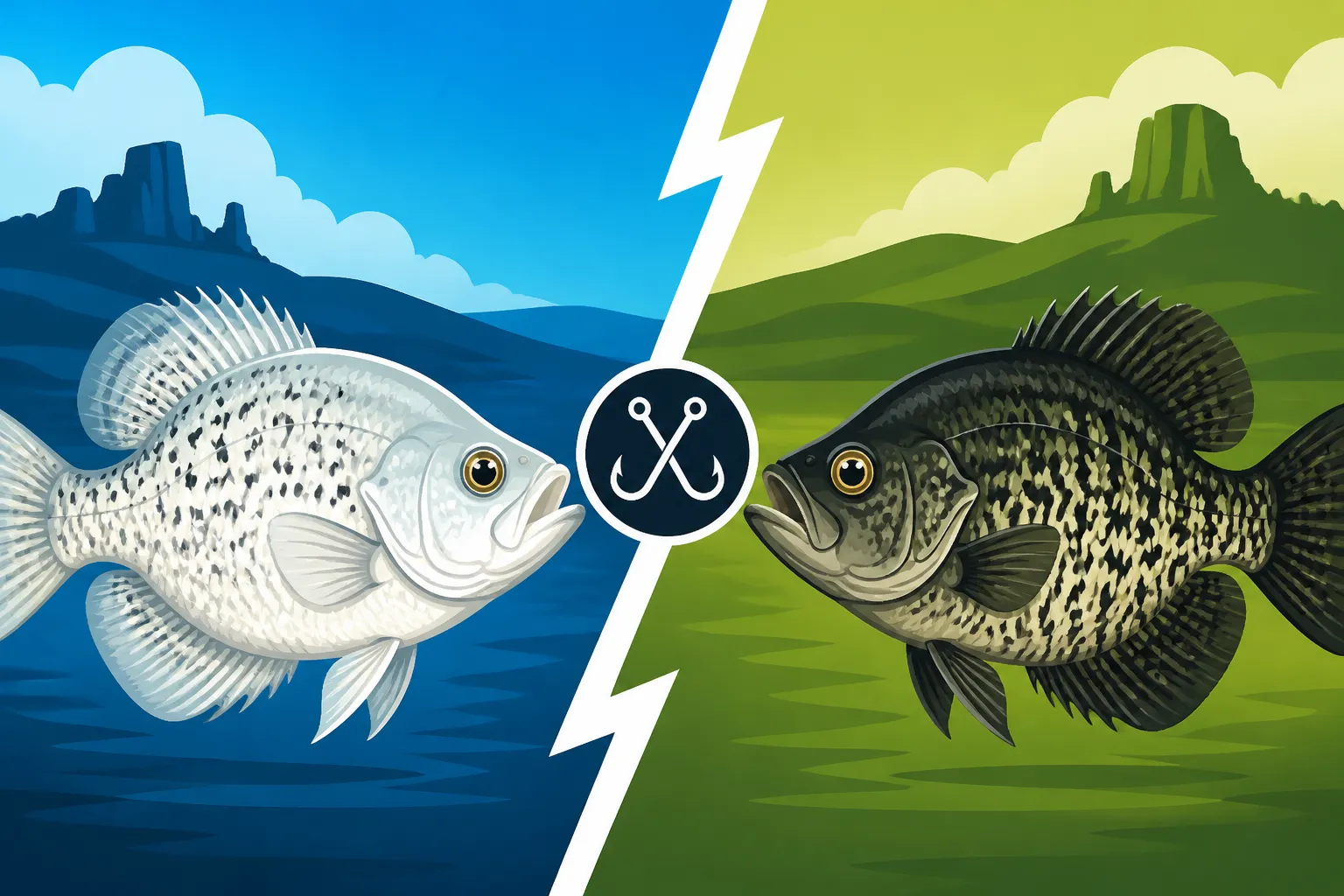
When you hold a black crappie, the first thing you'll likely notice is its overall darker appearance compared to its white crappie cousin. Their bodies are typically deep and compressed, giving them a "panfish" shape. What really sets them apart are the irregular, scattered black spots and speckles all over their silvery-gold or olive-green bodies. These spots don't usually form distinct vertical bars like you might see on white crappie; instead, they're more haphazardly distributed, almost like a painter splattered a brush.
Another tell-tale sign is the dorsal fin. Black crappie almost always have 7 or 8 dorsal spines, which is generally one more than a white crappie. Counting these spines can be a definitive way to tell them apart if the spotting isn't clear, though it requires careful handling. Their mouth is also somewhat smaller than a white crappie's, extending back only to the middle of the eye. Their eyes tend to be quite large in relation to their head, which aids them in feeding in lower light conditions. You can find many identification charts on sites like Amazon if you're looking for a quick reference guide to keep in your boat.
Preferred Habitat and Behaviors
Black crappie are classic structure-oriented fish. They absolutely love cover – the denser, the better. You'll often find them congregating around submerged timber, brush piles, fallen trees, weed beds, docks, and bridge pilings. They thrive in clearer, cooler waters with plenty of vegetation and protection, often found in smaller, deeper lakes or in protected backwater areas of larger reservoirs like parts of Lake Sharpe or even slow-moving river sections. Think of them as the introverts of the crappie world, preferring to stay tucked away where they feel safe and where their prey also hides.
They are less tolerant of turbidity (murky water) and strong currents than white crappie. This preference for cleaner water often means they'll be found in lakes and reservoirs where water clarity is higher. Their diet primarily consists of smaller baitfish like minnows, shad, and insect larvae. They are visual predators, and their large eyes help them hunt effectively in low light conditions, making dawn, dusk, and even night fishing productive times. When fishing for black crappie, focus on these areas of dense cover where they feel most comfortable.
Fishing Techniques and Baits for Black Crappie
To catch these speckled beauties, you'll want to focus your efforts around their preferred cover. Vertical jigging is a highly effective technique, dropping small jigs (1/16 to 1/8 ounce) directly into brush piles or along the edges of weed lines. Tipping your jig with a live minnow, a piece of a nightcrawler, or even a small plastic grub can dramatically increase your bites. Spider rigging, where multiple rods are spread out with jigs or minnows at various depths, is also popular when drifting slowly over submerged timber.
Another excellent approach is using a slip bobber rig. This allows you to present a live minnow or a jig at a precise depth above or within the structure without getting snagged constantly. The key is patience and precision. Often, black crappie will suspend just above or within the cover, so finding that exact depth is crucial. Small crankbaits or spinnerbaits can also work, especially when casting parallel to weed lines or along rocky points where they might be ambushing baitfish. Remember, black crappie often hold tight to cover, so don't be afraid to get your lure right in their living room! For more in-depth strategies, check out our Crappie Fishing Techniques for Suspended Fish guide.
White Crappie: The Striped Sensations of Our Lakes and Rivers
White crappie are another cornerstone of South Dakota's panfish angling scene. While they share the same genus as black crappie, their slightly different body shape, markings, and habitat preferences make them a distinct species that anglers can learn to target specifically. They're robust and readily available, particularly in the larger, more turbid waters of the Missouri River system.
Key Physical Characteristics and Markings
White crappie have a more elongated, slender body compared to the rounder, deeper black crappie. Their coloration tends to be lighter, often silvery with a hint of green or gold, but their most distinctive feature is a series of 5 to 10 dark, vertical bars or stripes running down their sides. These bars are typically more distinct and evenly spaced than the scattered spots on a black crappie, almost like zebra stripes.
Just like with black crappie, the dorsal fin offers a reliable clue. White crappie typically have 5 or 6 dorsal spines, which is generally fewer than their black crappie relatives. Counting these spines can be a definitive identification method. Their mouth is also noticeably larger, often extending past the middle of the eye, sometimes even past the back of the eye. This larger mouth indicates their preference for slightly larger prey. Their overall build often seems a bit more streamlined, perhaps an adaptation to living in areas with more current.
Preferred Habitat and Behaviors
Unlike their cover-loving cousins, white crappie are more tolerant of turbid (murky) waters and moderate currents. This is why you'll often find them thriving in the main channels and larger bays of the Missouri River reservoirs like Lake Francis Case Smallmouth Bass Fishing or Lewis and Clark Lake Crappie and Perch Fishing. While they still appreciate structure, they tend to use it differently, often relating to more open-water structures like channel breaks, main lake points, submerged roadbeds, and larger rock piles, rather than dense brush. They are also frequently found in backwater areas with slower currents but can handle more movement than black crappie.
White crappie are often schooling fish, moving in larger groups than black crappie might. They are highly migratory, often moving in and out of shallower bays and deeper channels depending on water temperature, current, and the availability of baitfish. Their diet is similar to black crappie, consisting of small minnows, shad, and insect larvae, but their larger mouth allows them to take slightly bigger baitfish. They are very active during daylight hours, though low-light periods can still be productive.
Fishing Techniques and Baits for White Crappie
Given their preference for more open water and larger schools, trolling is an incredibly effective technique for white crappie, especially on vast reservoirs like Lake Oahe or Lake Sharpe. Small crankbaits, jigs tipped with minnows, or even bare jigs can be trolled at slow speeds to cover large areas and locate schooling fish. Spider rigging, as mentioned for black crappie, is also fantastic, allowing you to present baits at various depths while drifting or slowly motoring along contour lines.
When white crappie are found relating to structure, like a submerged creek channel or a long point, casting small jigs or spinnerbaits to these areas can be very productive. They often respond well to a slow, steady retrieve. Live minnows fished under a bobber or on a tight-line rig are perennial favorites, especially when How to Catch Crappie in Spring as they move into shallower spawning areas. Don't be afraid to experiment with different depths; white crappie can be found anywhere from just below the surface to 20 feet or more, often suspending over deeper water.
Side-by-Side Showdown: White Crappie vs Black Crappie
Understanding the individual traits of white and black crappie is one thing, but truly mastering their identification and targeting requires a direct comparison. It's not just about the spots or stripes; it's about the entire picture of their physical form, their preferred environment, and how they behave. This side-by-side comparison will solidify your knowledge and make you a more confident crappie angler in South Dakota.
Distinctive Features Table
Let's break down the key differences into an easy-to-read table. This summary can be a handy reference the next time you're on the water and need a quick refresher. It's often the small details that make all the difference when you're trying to quickly identify a fish.
| Feature | Black Crappie | White Crappie |
|---|---|---|
| Body Shape | Deeper, more rounded (like a dinner plate) | More elongated, slender (like an oval) |
| Markings | Irregular, scattered black spots/speckles | 5-10 distinct vertical bars/stripes |
| Dorsal Spines | 7-8 dorsal spines | 5-6 dorsal spines |
| Mouth Size | Smaller, typically extends to middle of eye | Larger, often extends past middle of eye |
| Head Profile | Concave curve over the eye (more pronounced) | Straighter profile from snout to dorsal fin |
| Coloration | Darker, often olive-green to bronze | Lighter, silvery-white |
| Primary Habitat | Clearer, cooler water, dense cover (weeds, brush) | More tolerant of turbidity/current, open-water structure |
This table provides a quick visual and anatomical guide, making it easier to identify your catch. Remember, sometimes individuals can be a little ambiguous, but typically, a combination of these factors will point you in the right direction. For further detailed visual aids, an online search on platforms like Amazon for "South Dakota fish identification guide" can yield great results.
Habitat Preferences and How They Differ
The habitat differences between white and black crappie are perhaps the most significant factors in where and how you'll find them. Black crappie are the homebodies, preferring to stick close to complex, dense cover in clearer, calmer waters. Think of quiet coves, flooded timber stands, or dense aquatic vegetation in lakes like Lake Kampeska or some of the Black Hills ponds. They rely on this cover for ambush points and protection from predators. If you're fishing a spot with excellent clarity and heavy wood, you're likely in black crappie territory.
White crappie, on the other hand, are more adaptable and often found in larger, more dynamic environments. They don't shy away from a bit of current or murkier water, making them prevalent in the vast Missouri River reservoirs. While they still relate to structure, it's usually less dense – channel edges, roadbeds, subtle drop-offs, or scattered rock piles. They are more likely to suspend over open water in pursuit of baitfish. Knowing these preferences helps you choose the right lake or even the right section of a lake when you're specifically targeting one species.
Fishing Strategy Adjustments
These habitat and behavioral differences directly translate into adjusting your fishing strategy. If you're going for black crappie, focus on precision casting or vertical presentations right into heavy cover. Use jigs with weed guards, or employ sensitive bobber rigs to detect subtle bites. Fishing during low light can often be more productive due to their visual feeding habits in clearer water. Techniques might include spider rigging over flooded timber or casting small tube jigs into thick brush piles.
For white crappie, a more aggressive, covering-water approach often pays off. Trolling is a fantastic way to locate schools in open water or along channel breaks. Look for them suspending off points or humps. When they are on structure, they might be a bit more scattered, so fan-casting or drifting baits can be more effective than pinpointing a single brush pile. Using slightly larger baits can sometimes appeal to their larger mouths. Understanding South Dakota Crappie Fishing Guide will really help you tailor your approach depending on the species and conditions you encounter.
Common Crappie Hotspots in South Dakota
South Dakota is blessed with an abundance of fantastic crappie fishing opportunities, whether you prefer the vastness of the Missouri River reservoirs or the charm of the Glacial Lakes region. Each area offers a unique experience, and often, a prevalence of one crappie species over the other. Knowing these hotspots can help you plan your next crappie adventure.
Missouri River System Crappie Fishing
The Missouri River system, particularly the large reservoirs like Lake Oahe, Lake Sharpe, Lake Francis Case, and Lewis and Clark Lake, are prime white crappie territory. These expansive bodies of water, often with varying degrees of turbidity and significant current in certain areas, provide ideal conditions for white crappie to thrive. Anglers often find large schools of white crappie suspended over submerged roadbeds, creek channels, or along the main river channel edges.
Areas like Lake Sharpe Crappie Fishing at Joe Creek are well-known for their crappie populations, particularly in the spring and fall when fish move into shallower bays and coves. The tailwaters below the dams can also be productive, though careful attention to current and safety is always paramount. In these larger waters, trolling with small crankbaits or spider rigging with live minnows is a popular and effective method for locating scattered schools of white crappie. Don't forget to check the specific regulations for the Missouri River system, as they can sometimes vary slightly from inland lakes.
Glacial Lakes Crappie Opportunities
Eastern South Dakota's Glacial Lakes region offers a different but equally rewarding crappie experience, often leaning more towards black crappie, though white crappie are certainly present. Lakes like Lake Kampeska, Lake Poinsett, and Bitter Lake, among others, feature more defined shorelines, shallower depths, and abundant aquatic vegetation and submerged timber, which are perfect havens for black crappie. These lakes often have clearer water conditions, especially in the spring and early summer.
Anglers targeting black crappie in these lakes will often find success by focusing on weed lines, brush piles, and submerged tree falls in protected bays and coves. Ice fishing for crappie is also a huge draw in the Glacial Lakes, with anglers setting up over deeper holes near structure. When the ice thickens, having the right gear, like that you might find on Amazon, can make a huge difference in staying comfortable and effective on the ice. Remember to always be mindful of South Dakota Fishing Regulations Explained regardless of where you fish.
Conclusion
Distinguishing between white crappie and black crappie isn't just a matter of trivial pursuit; it's a vital skill for any South Dakota angler. From understanding and adhering to South Dakota Fish Limits and Size Restrictions to fine-tuning your fishing techniques, knowing your crappie species enhances every aspect of your time on the water. We've explored their distinct physical traits, the habitats they prefer, and the best ways to entice them to bite.
Next time you pull a crappie from a South Dakota lake or river, take a moment to observe. Count those dorsal spines, look for the spots or the bars, and appreciate the subtle differences that make each species unique. Armed with this knowledge, you're not just a crappie angler; you're a crappie connoisseur, ready to tackle any crappie challenge South Dakota throws your way. Happy fishing, friends!
Disclaimer
This article is for general informational purposes only and does not constitute professional advice. Laws, prices and regulations vary by location and change over time. Consult a qualified professional for guidance on your specific situation.