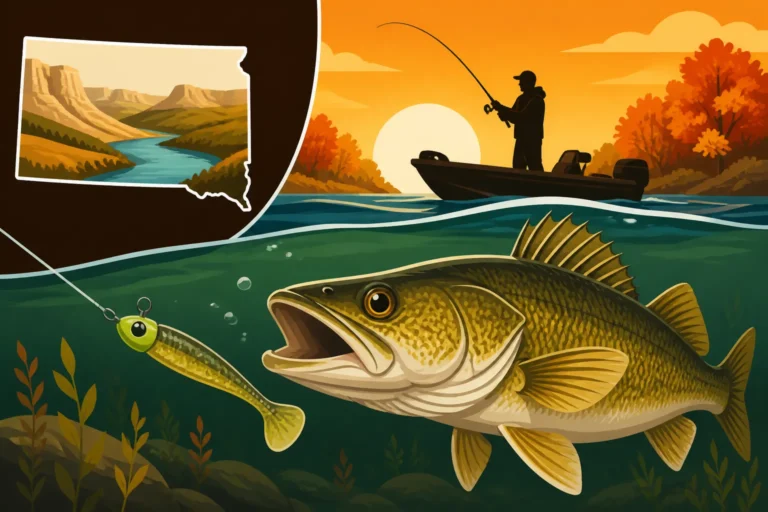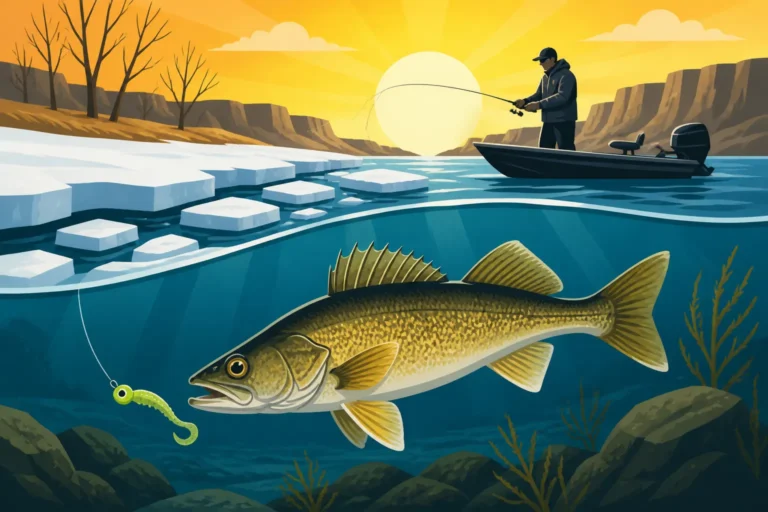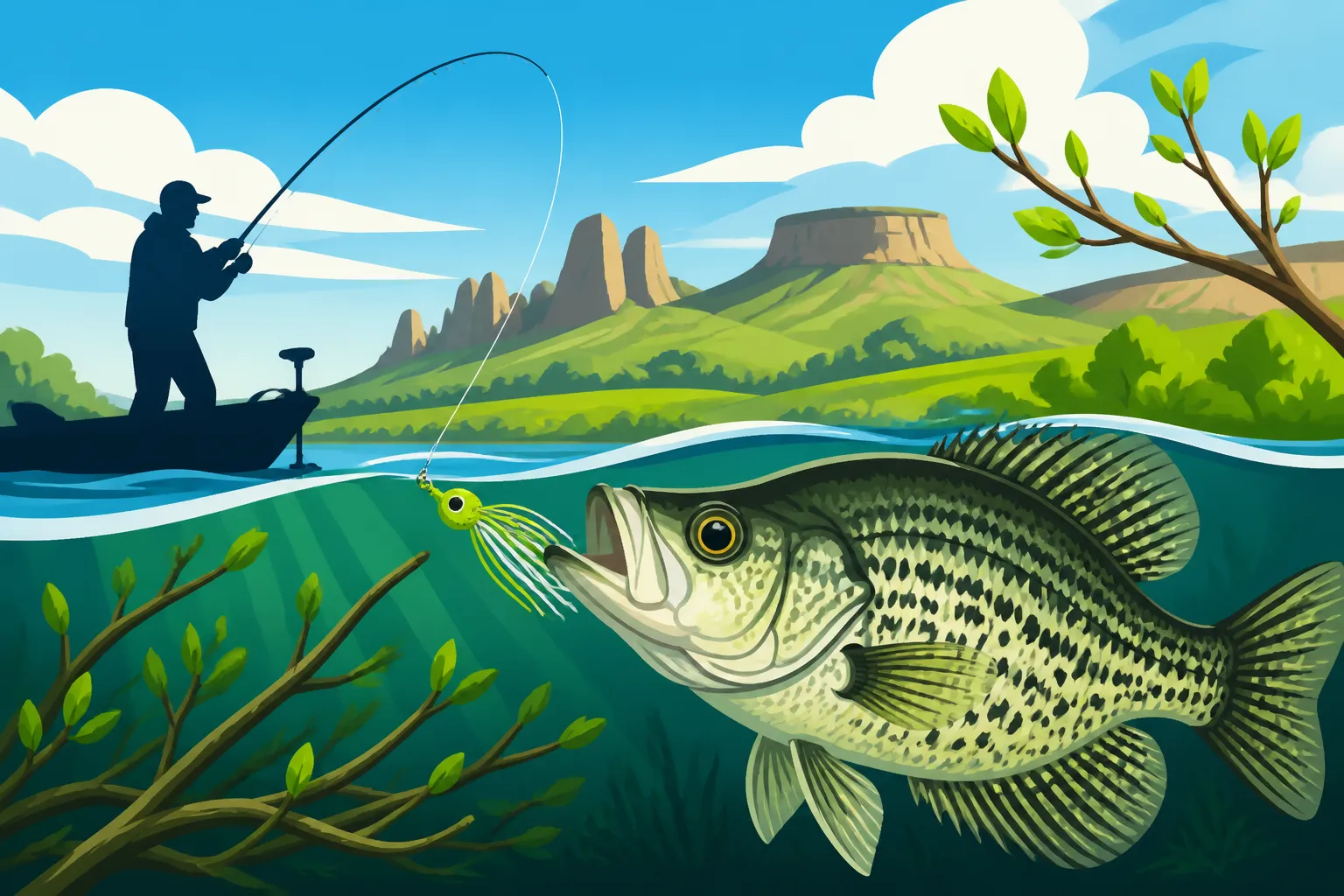
How to Catch Crappie in Spring
Ah, spring! That glorious time of year when the ice finally relinquishes its grip on our beloved South Dakota waters, and the thought of open-water fishing sparks joy in every angler's heart. But let's be real, chasing crappie in the spring isn't always a walk in the park. The weather can be fickle, the water temperatures are a constant mystery, and those finicky fish can seem to vanish overnight. If you've ever found yourself scratching your head, wondering where the crappie went or why they're not biting, you're not alone. This guide is dedicated to helping you unravel the mysteries of spring crappie behavior and arm you with the strategies to fill your livewell.
Understanding Spring Crappie Behavior in South Dakota
Spring crappie fishing in South Dakota is a dynamic dance dictated by rising water temperatures and the fish's instinctual drive to spawn. Understanding these patterns is absolutely key to finding and catching them. They're not going to be in the same spots or respond to the same presentations all season long, and that's where many anglers get stumped.
Early Spring Migration and Habitat
Right after ice-out, when the water is still pretty chilly, crappie are often holding in deeper, more stable water. They're recovering from the long winter and might not be super active, but they're definitely starting to think about moving. Think of them like us after a long hibernation – we're awake, but maybe not ready to run a marathon just yet.
In the eastern Glacial Lakes region, like Lake Poinsett or Lake Kampeska, you'll often find crappie congregating in the deeper basins or along the edges of channels leading into shallower spawning grounds. They're looking for that slightly warmer water, but also easy access to safety and food. On the Missouri River reservoirs, such as Lake Sharpe or Lake Francis Case, crappie might be tucked away in the backs of bays, in the deeper creek channels, or near submerged timber that offers a bit of a current break and warmth. The water might still be in the low 40s to low 50s (Fahrenheit), and their metabolism is still a bit sluggish. This is not the time for fast retrieves; patience is your biggest virtue. They're often suspended, too, making a good fish finder indispensable. Learning how to read a fish finder for walleye can be easily adapted to finding crappie schools in these transitional depths.
Pre-Spawn and Spawning Patterns
As spring progresses and the sun works its magic, those water temperatures start climbing into the mid-50s and eventually the 60s. This is the crappie equivalent of the spring break rush! Crappie will begin their earnest migration from those deeper holding areas to shallower water, seeking out prime spawning locations. They're actively feeding now, trying to pack on energy for the big event, which makes this phase one of the most exciting times to target them.
They'll seek out protected coves, shallow flats with submerged brush, weed beds, fallen trees, and even boat docks in just a few feet of water. These areas offer cover from predators, warmer water, and suitable structure for attaching their eggs. The actual spawn usually happens when water temperatures consistently hit the high 50s to mid-60s. During the spawn itself, which can last for several weeks depending on the weather, crappie can become a bit more focused on reproduction than on eating. While you can still catch them, they might be less aggressive, requiring very subtle presentations. Once the spawn is complete, the larger females often retreat to slightly deeper water to recover, while the males stay to guard the nests for a short period. This post-spawn period can also be tricky, as fish are often scattered and recuperating. For a more general overview of the fishing calendar, check out our guide on South Dakota fishing seasons explained.
Essential Gear and Tackle for Spring Crappie
Having the right tools for the job can make a world of difference when you're trying to coax a spring crappie to bite. We're talking sensitive setups that let you feel those subtle taps.
Rods, Reels, and Line Selection
For spring crappie, an ultralight or light-action spinning rod, typically 5 to 7 feet long, is your best friend. The sensitivity of a graphite rod is paramount; you need to feel every bump and whisper of a bite, especially when fish are sluggish in colder water. Many anglers swear by a 6' ultralight graphite rod for its perfect balance of casting distance and finesse. Pair that with a small spinning reel, size 500 or 1000, spooled with light line.
For line, 4-pound test monofilament is a classic choice for its manageability and stretch, which can act as a shock absorber for light hooks. However, some anglers prefer 6-pound test fluorocarbon for its near-invisibility and increased sensitivity, especially in clear waters. Braided line, typically 6-8 pound test with a fluorocarbon leader, offers the ultimate sensitivity and strength, which can be fantastic for detecting those light bites, though it might take a bit of getting used to for finesse fishing. You can find a huge selection of these specialized ultralight rods, reels, and lines on Amazon, making it super convenient to get exactly what you need delivered right to your door before your next outing. Remember, matching your rod and reel setup to the light tackle used for crappie is crucial for feeling those often-subtle bites. Our general South Dakota fishing gear checklist can help ensure you don't forget any essentials.
Baits and Lures That Get Bites
Crappie are notoriously attracted to small presentations. In spring, when their metabolism is still ramping up or they're focused on spawning, live bait is often hard to beat. Small live minnows, hooked lightly through the lip or back, are crappie magnets. Sometimes a tiny piece of a worm can also entice a bite.
When it comes to artificial lures, small jigs are the undisputed kings. We're talking 1/32 to 1/16 ounce jigs, often tipped with small plastic bodies. These soft plastics come in an incredible array of shapes, sizes, and colors. Popular choices include grub tails, tube jigs, and small minnow imitations. Colors can vary widely in effectiveness depending on water clarity and light conditions. In stained or murky water, brighter colors like chartreuse, orange, or pink often work well. In clearer water, more natural colors like white, pearl, or smoke with glitter tend to be more effective. Brands like Bobby Garland Baits, Strike King Mr. Crappie jigs, and even simple plain lead heads with soft plastics are frequently mentioned by successful anglers. These are also readily available on Amazon, giving you plenty of options to experiment with different patterns and colors to see what the crappie are biting on that day. In addition to jigs, very small crankbaits or spinnerbaits, especially those designed for panfish, can also be effective when crappie are more aggressive in the pre-spawn phase.
Proven Techniques for Catching Spring Crappie
Knowing where the crappie are is half the battle; the other half is knowing how to present your bait in a way that makes them want to bite. Spring crappie can be finicky, so having a few tricks up your sleeve will definitely pay off.
Vertical Jigging and Drifting Strategies
When crappie are suspended in deeper water during early spring or holding tight to submerged brush piles, vertical jigging is incredibly effective. This involves positioning your boat directly over the fish or structure you've identified with your fish finder. Drop your jig straight down to the depth where you're marking fish, then use subtle lifts and drops of your rod tip. The key is often a very slow, almost imperceptible movement, followed by a pause. Many bites occur on the fall or during the pause, so pay close attention to any slack in your line or a slight twitch of the rod tip.
In windier conditions or when crappie are more spread out, drifting can be a great way to cover water. Let the wind or a very slow trolling motor (like a Minn Kota or MotorGuide) move your boat while you present your jig vertically. On the Missouri River system, drifting can be challenging due to current, so you'll often be focusing on slack water areas or using your trolling motor to hold position against the flow, similar to techniques used for Missouri River tailwater fishing techniques for other species. Pay attention to how the drift affects your lure's presentation – sometimes a slower drift with a slightly heavier jig is needed to keep it in the strike zone.
Slip Bobber and Cast-and-Retrieve Methods
As crappie move shallower during the pre-spawn and spawn, casting and retrieve methods become more prominent, and the slip bobber truly shines. A slip bobber allows you to set your bait at a precise depth, whether it's just a few feet under the surface over a shallow weed bed or a little deeper over a brush pile. The advantage of a slip bobber is that it slides freely on your line, allowing you to cast much farther than with a fixed bobber, and it collapses down to your weight for easy reeling.
To use a slip bobber effectively, thread your line through the bobber, tie on a small lead weight (like a split shot or small bullet weight) about 6-12 inches above your hook, and then attach your jig or live minnow. A small bobber stop, usually a piece of string or rubber, is then placed on your line to set the depth. Cast your setup near fallen trees, docks, or submerged cover, and let it sit. The bobber will signal the bite, and because the crappie don't feel the resistance of the bobber until they've really taken the bait, it often results in more solid hookups. For fishing tight to cover, a slow, steady retrieve with a small jig can also be deadly. Cast parallel to a weed line or dock, and just reel it in slowly, adding slight twitches. This mimics a wounded baitfish, an irresistible meal for hungry crappie.
Reading the Water and Locating Crappie
Successful crappie anglers are masters at reading the water and understanding what different conditions mean for fish location. Water temperature is perhaps the most critical factor in spring. Use a thermometer to identify warmer pockets of water, which are often found in shallow, dark-bottomed bays, against riprap that absorbs sunlight, or near the mouths of creeks and rivers where warmer runoff might be entering.
Wind can also play a significant role. A steady wind pushing into a bay can stack up warmer surface water and baitfish, creating a feeding frenzy zone. However, too much wind can make boat control and feeling bites challenging. Look for areas with submerged timber, rock piles, or weed beds – these are classic crappie hangouts. On the big Missouri River lakes, points and breaks leading into bays are prime transitional spots. On the Glacial Lakes, structure like old roadbeds, rock reefs, and distinct changes in depth can hold fish. Keep an eye out for any signs of baitfish activity, like ripples on the surface or sudden movements on your fish finder. Where the baitfish are, the crappie won't be far behind. Knowing how to locate these hidden structures and temperature breaks is a skill honed over time, but always worth the effort.
Maximizing Your Spring Crappie Success in South Dakota
Beyond just catching them, there are a few other considerations that can enhance your spring crappie experience in South Dakota, from understanding regulations to ethical practices.
Understanding South Dakota Crappie Limits
Before you even launch your boat or cast your line, it's absolutely essential to be familiar with the current South Dakota fishing regulations. Crappie, like all other species, have specific daily and possession limits that can vary by water body and year. These regulations are put in place to ensure the health and sustainability of our fisheries, so respecting them is non-negotiable.
The South Dakota Game, Fish and Parks (GFP) website is your go-to source for the most up-to-date information. They publish an annual fishing handbook that details all the rules, and it's always a good idea to have a physical or digital copy with you when you're on the water. For more specific details on what you can keep, you'll want to review the South Dakota fish limits and size restrictions, and specifically the section on Crappie and Panfish Possession Limits. These rules help ensure that future generations of anglers can enjoy the same fantastic crappie fishing that we do today. Don't risk a fine or, worse, impacting the fishery by not knowing the rules.
Best Practices for Handling and Keeping Crappie
Once you've caught those beautiful spring crappie, how you handle them matters, whether you plan to release them or take them home for a delicious meal. If you're practicing catch-and-release, try to minimize the time the fish spends out of the water. Handle them gently with wet hands to protect their slime coat, which is vital for their health and disease resistance. Use needle-nose pliers or a hook remover for quick and easy hook extraction, especially if you're using single, barbless hooks.
If you intend to keep your crappie, preserving their freshness is key. A livewell in your boat is ideal for keeping them alive and healthy until you're ready to clean them. If you don't have a livewell, immediately place them on ice in a cooler. This rapidly chills the fish, stopping bacterial growth and ensuring the best possible table fare. Never just let them sit in a bucket of warm water or on a stringer for extended periods, especially on warmer spring days. The quality of the meat degrades quickly. Crappie are renowned for their delicate, flaky white meat, making them one of the best eating fish in South Dakota, so treating them right from catch to kitchen is a rewarding part of the fishing experience.
Here's a quick reference for typical spring crappie scenarios:
| Spring Phase | Typical Water Temperature | Crappie Location | Recommended Technique(s) | Go-To Baits/Lures |
|---|---|---|---|---|
| Early Spring | 40-50°F (4-10°C) | Deeper channels, basin edges, suspended over brush | Vertical Jigging, Slow Drifting | Live Minnows, 1/32 oz jigs w/ small plastics |
| Pre-Spawn | 50-58°F (10-14°C) | Moving to shallower bays, creek mouths, timber | Vertical Jigging, Cast & Retrieve, Slip Bobber | Live Minnows, 1/16 oz jigs w/ plastics, tiny crankbaits |
| Spawn | 58-65°F (14-18°C) | Shallow flats, weed beds, docks, brush piles | Slip Bobber, Slow Cast & Retrieve | Live Minnows, 1/16 oz jigs w/ plastics, tube jigs |
Disclaimer
The information provided in this guide is for general informational purposes only and is not intended as legal advice. Fishing regulations, conditions, and best practices can change. Always consult the official South Dakota Game, Fish and Parks (GFP) website and their most current fishing handbook for the precise and up-to-date regulations before heading out on the water. Your safety and adherence to all local and state laws are your responsibility.