South Dakota Crappie Identification Guide
There's nothing quite like the thrill of feeling a gentle tug on your line, setting the hook, and pulling in a beautiful crappie from a South Dakota lake or river. But once you've landed that silvery slab, do you ever find yourself staring at it, wondering if it's a white crappie or a black crappie? It's a common confusion among even seasoned anglers, and knowing the difference isn't just a fun fact; it can sometimes be crucial for adhering to regulations or simply understanding the fish you're targeting. This comprehensive guide will walk you through the distinct characteristics of each crappie species, helping you become a master of crappie identification in South Dakota waters.
Understanding Crappie in South Dakota Waters
Crappie, belonging to the genus Pomoxis, are a beloved panfish species throughout North America, and South Dakota is no exception. These tasty fish offer fantastic sport for anglers of all ages and skill levels, making them a popular target whether you're out on the mighty Missouri River reservoirs or exploring the tranquil glacial lakes.
Why Crappie are a Favorite Among Anglers
For many, crappie represent the essence of accessible, enjoyable fishing. They're often abundant, can be caught using a variety of simple techniques, and their fillets are considered a true delicacy. There's a certain magic to finding a large school of crappie, whether it's suspended over deep water or tucked into submerged brush, and reeling them in one after another. They put up a respectable fight on light tackle, offering an exciting experience without demanding heavy gear. Families often target crappie because they provide consistent action, keeping kids engaged and creating lasting memories on the water. It’s no wonder they’re a staple of the South Dakota fishing scene, drawing anglers from all corners of the state and beyond.
Beyond the sheer fun of catching them, crappie are highly valued for their delicate, flaky white meat. A fresh crappie fry-up is a quintessential experience for any angler, a reward for a day spent outdoors. Their popularity is so widespread that many local tournaments and fishing reports specifically focus on crappie, highlighting their economic and recreational importance to communities around lakes like Sharpe, Francis Case, and Lewis and Clark. This sustained interest means that knowing your crappie species contributes to a deeper appreciation of the resource.
The Importance of Accurate Crappie Identification
While both white and black crappie are fantastic fish to catch, being able to tell them apart is more than just academic. Sometimes, regulations can vary slightly between species, particularly concerning Crappie Daily Limit or Crappie and Panfish Possession Limits on specific bodies of water. Misidentifying your catch could lead to unintentional violations, which no angler wants. Beyond legalities, accurate identification can inform your fishing strategy. Each species tends to prefer slightly different habitats and responds to different presentations, so knowing which one you're primarily catching can help you refine your techniques and become a more effective angler.
Furthermore, accurate identification plays a role in fishery management. When anglers can correctly report their catches, it provides valuable data to wildlife agencies like the South Dakota Game, Fish and Parks. This data helps biologists understand population dynamics, assess health trends, and make informed decisions about stocking, habitat improvements, and future regulations. Think of it as contributing to the bigger picture of keeping our South Dakota fisheries healthy and thriving for generations to come. It’s all part of being a responsible steward of our natural resources, ensuring that the South Dakota Crappie Fishing Guide remains vibrant and productive.
White Crappie vs. Black Crappie: The Visual Distinctions
When you’ve got a crappie in hand, the differences might seem subtle at first glance, especially if you’re new to identifying them. However, once you know what to look for, these distinctions become quite clear. It's like telling apart two similar-looking breeds of dog – once you learn the key traits, it's second nature. This section will break down the primary visual cues to help you master crappie identification. For an even deeper dive, you can check out our guide on White Crappie vs Black Crappie.
Analyzing Color and Pattern Differences
The most immediate clue for many anglers lies in the coloration and the pattern of markings on the fish's sides. While both species can show variations depending on water clarity, diet, and even stress levels, there are general patterns to observe.
White crappie tend to have a lighter, more silvery body color, often appearing silvery-green or silvery-brown on their backs and flanks, fading to a creamy white on their bellies. The key identifier here is their pattern of dark, vertical bars or stripes that run down their sides. These bars are usually distinct, forming 7 to 9 clear bands. Imagine gently drawing lines down the fish's body with a ruler, and you've got the general idea. These bars are quite pronounced, giving the white crappie a somewhat "striped" appearance.
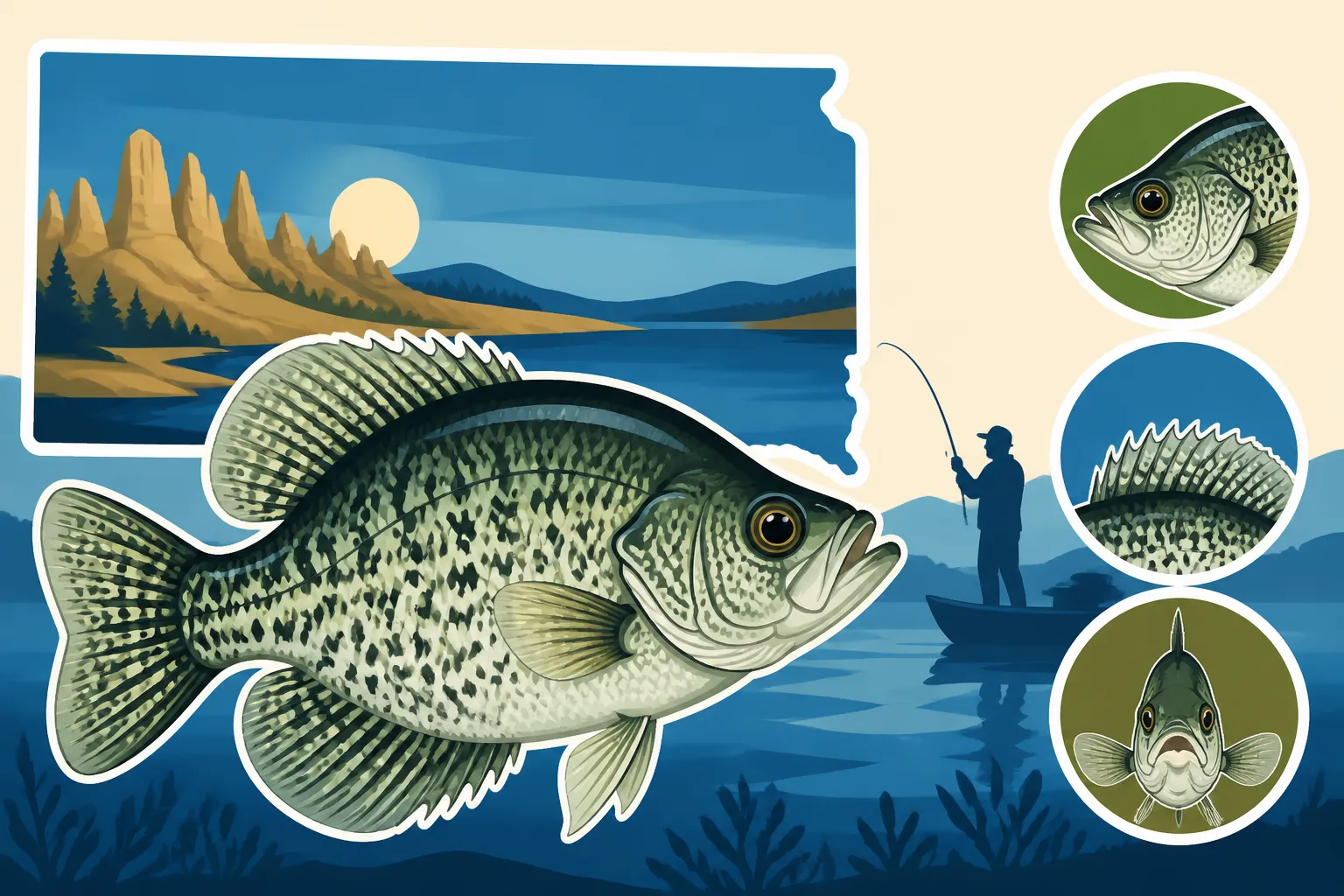
Black crappie, on the other hand, typically exhibit a darker, more mottled appearance. Their bodies are often flecked with irregular dark spots and blotches that seem to randomly cover their sides, creating a "peppered" or "splattered" look rather than distinct bars. Their base color can range from a deep olive green to almost black on their backs, gradually lightening to a silvery or yellowish white on their underside. There's no consistent vertical bar pattern; instead, it's a jumble of dark pigmentation. This makes them often look more "speckled" or "splotchy" compared to their white crappie cousins.
Dorsal Fin Spines: A Key Indicator
If you're still not sure after looking at the color and pattern, don't fret! The dorsal fin is perhaps the most reliable and consistent way to tell white and black crappie apart. This fin is located on the fish's back, just behind the head. What you're looking for here are the rigid, bony spines within the fin.
White crappie consistently have six (6) dorsal fin spines. It's a precise count, and they don't typically deviate from it. These spines are usually quite stout and easily countable. To identify them, carefully (and gently!) spread the dorsal fin and count the rigid, unbranched rays at the front of the fin. This characteristic is so dependable that it's often the first thing experienced anglers check when there's any doubt about a crappie's identity.
Black crappie, by contrast, possess seven (7) or sometimes eight (8) dorsal fin spines. Seven is the most common count, but having eight is not unheard of. This extra spine or two is the definitive biological difference that separates the species. Once you've counted the spines on a few of each species, you'll likely develop a keen eye for this distinction, making future identifications much quicker. It's a foolproof method that biologists use, and it's just as effective for anglers on the water. Learning this trick will make you feel like a real pro when it comes to South Dakota crappie.
Mouth and Body Shape Clues
Beyond the dorsal fin, there are also subtle differences in mouth size and overall body shape that can help you distinguish between the two crappie species, especially once you've seen a few of each. These are less definitive than the spine count but can be good supporting evidence.
White crappie tend to have a more elongated, somewhat "taller" body profile compared to their length, often giving them a more streamlined appearance. Their mouth is also generally larger and more upturned, extending further back past the middle of the eye. This larger gape might be why they're often associated with feeding on larger baitfish in open water. While not always obvious, if you have both species side-by-side, you'll likely notice the white crappie’s jaw extending further back relative to its eye.
Black crappie, meanwhile, typically have a more rounded, deeper body profile, appearing almost "chunkier" or "disk-shaped" from a side view. Their mouth is usually smaller and positioned more directly in front of the eye, not extending as far back as a white crappie's. This smaller mouth is often attributed to their preference for feeding on smaller prey items like insects and crustaceans, in addition to baitfish. Observing these subtle body and mouth distinctions can be particularly helpful for anglers who are actively fishing and quickly glancing at their catch before release or placement in the livewell. How to Tell a White Crappie From a Black Crappie goes into even more detail on these physical attributes.
Here’s a quick comparison table to help solidify these distinctions:
| Feature | White Crappie | Black Crappie |
|---|---|---|
| Body Color/Pattern | Lighter, silvery with distinct vertical bars (7-9) | Darker, mottled with irregular spots/blotches (no distinct bars) |
| Dorsal Fin Spines | Exactly 6 rigid spines | 7 or 8 rigid spines |
| Body Shape | More elongated, "taller" body | More rounded, "deeper" body, often "chunkier" |
| Mouth Size | Larger, extends past the middle of the eye | Smaller, typically ends below or at the front of the eye |
Habitat and Behavior: Where Each Crappie Species Thrives
Understanding where each crappie species prefers to live can be a huge asset in identification, as their environment often influences their appearance and behavior. While there's always overlap, knowing the general preferences can help you anticipate which type of crappie you're likely to encounter in certain areas of South Dakota's diverse waterways.
White Crappie's Preferred Environments
White crappie tend to thrive in larger, more turbid (cloudy) waters. Think of the big Missouri River reservoirs like Lake Oahe, Lake Sharpe, Lake Francis Case, and Lewis and Clark Lake, especially the lower reaches with more current or areas impacted by run-off. They are quite tolerant of varying water conditions and are often found in open water, congregating around submerged structure like old river channels, humps, or scattered brush piles. These fish are more migratory than their black crappie counterparts, often following baitfish schools across expansive flats or along deep river bends.
You'll often find white crappie at moderate depths, frequently suspended in the water column, especially during the warmer months. They're more inclined to roam and chase down schools of shad or other small baitfish. Because of their preference for larger, often murkier bodies of water, their lighter, silvery coloration with distinct bars might offer better camouflage against the cloudier backdrop. If you're out on Lake Sharpe Crappie Fishing at Joe Creek or Lewis and Clark Lake Crappie and Perch Fishing and the water has a bit of a stain, chances are you'll be running into more white crappie than black.
Black Crappie's Favorite Haunts
Black crappie, on the other hand, typically prefer clearer, vegetated waters. You’ll find them more commonly in smaller lakes, ponds, or the clearer, less-disturbed bays and upstream sections of the larger reservoirs. They have a strong affinity for dense cover, such as aquatic vegetation (lily pads, submerged weeds), brush, fallen trees, and docks. They love to ambush prey from these hidden spots, which makes sense given their mottled, speckled pattern that helps them blend seamlessly into dappled sunlight and shadows.
These fish are generally less tolerant of turbidity and strong currents compared to white crappie. Their diet often includes a higher proportion of insects and crustaceans, which are abundant in these calmer, vegetation-rich environments. When you're fishing in pristine, clear glacial lakes or the quieter backwaters of a reservoir, you're more likely to encounter black crappie. They tend to be less migratory, often holding tight to specific structures or weed lines for extended periods. If you're pursuing South Dakota Panfish Fishing Guide, especially in a clear water lake, expect to see plenty of black crappie.
Seasonal Movements and How They Affect Identification
Both crappie species exhibit seasonal movements, largely driven by spawning cycles, water temperature, and food availability. Understanding these patterns can indirectly aid in identification by narrowing down what you expect to catch.
In spring, as water temperatures rise, both species will move shallower to spawn. White crappie might gravitate towards submerged brush and stake beds in slightly stained water, while black crappie will often nest in denser vegetation or brush in clearer, shallower areas. During this time, they might be found in closer proximity, making visual ID more critical. As the water warms further into summer, crappie generally move to deeper water, often suspending over structure or holding to thermoclines. White crappie might suspend more freely in open water, while black crappie might still cling to deep submerged timber or weed edges. Crappie Fishing Techniques for Suspended Fish are particularly effective during these periods.
Come fall, both species will again move shallower as water temperatures cool, feeding aggressively to build up fat reserves for winter. This can be an excellent time to catch large numbers. Finally, in winter, both species are targets for Best Bait for Ice Fishing Crappie. They typically relate to deep water structure, but black crappie may still prefer areas with some remnant vegetation or timber, while white crappie might be found more on open basin humps or points. Observing these seasonal shifts helps you target areas where a specific species is more likely to be found, enhancing your identification game.
On-the-Water Identification: Tips for Anglers
Even with all the knowledge in your head, identifying crappie quickly on the boat or shore can sometimes be a challenge, especially when the bite is hot, or the conditions aren’t ideal. But with a few practical tips and a keen eye, you'll be confidently calling out "white crappie!" or "black crappie!" in no time.
Observing Crappie in Different Water Conditions
The clarity and color of the water can play tricks on your eyes when it comes to fish identification. In very clear water, both white and black crappie might appear more vibrant in their markings. The vertical bars on a white crappie will be crisp, and the speckled pattern on a black crappie will stand out. However, in stained or murky water, the distinctions can blur. A white crappie might take on a darker hue, and its bars might be less defined, while a black crappie's spots could seem to disappear into its overall dark body.
When fishing in less-than-clear water, rely more heavily on the dorsal fin spine count. This anatomical feature remains constant regardless of the water conditions. If you're quickly reeling in fish, try to pay attention to the overall "feel" of the pattern – are you seeing distinct, albeit faded, vertical bands, or more of a general dark mottling? Sometimes, taking a quick glance at the dorsal fin as you unhook the fish is all you need. Remember, practice makes perfect; the more crappie you handle in varying conditions, the faster your brain will register the subtle cues.
Using Your Catch for Close Examination
The best way to get good at identification is to examine the fish you catch directly. Don't be afraid to take a moment before releasing or keeping your fish to really look at its features.
Gently hold the crappie and spread its dorsal fin. Carefully count the spines. This is your primary diagnostic tool. Then, observe the body pattern. Does it have those distinct vertical bars or more of a scattered, peppered look? Pay attention to the overall body shape and mouth size. Does it look more elongated with a bigger mouth, or rounder with a smaller mouth? A quick comparison to mental images or even a photo on your phone (there are many great fish ID apps available on Amazon for quick reference!) can really help. Even if you're planning to release the fish, a brief moment of respectful examination will hone your skills.
If you plan on keeping fish, examining them carefully before putting them on a stringer or in a cooler will help ensure you're compliant with any specific regulations that might differentiate between the two species. Make it a habit to quickly identify each fish as it comes aboard. This also makes for better stories later – "I caught a whole limit of big black crappie today!" sounds a lot more informed than just "I caught a bunch of crappie."
Recording Your Observations
Keeping a simple fishing log can be incredibly beneficial for improving your identification skills and overall fishing success. Note down details about the crappie you catch:
- Species identified: White crappie or black crappie.
- Key identifiers: How many dorsal spines did it have? What was its pattern like?
- Location: Specific spot, depth, type of cover (e.g., "south side of Weed Beds at Joe Creek," "suspended over old river channel").
- Water conditions: Clarity, temperature (if you have a thermometer).
- Lure/bait used: What did it bite on? How to Fish a Hair Jig for Crappie or a simple minnow?
Over time, you'll start to see patterns. You might notice that in certain bays of Lake Francis Case, you consistently catch black crappie, while out in the main lake, it's mostly white crappie. This information is invaluable for future trips and for truly mastering South Dakota Crappie Fishing Guide. Think of your journal as a personalized "South Dakota Crappie Identification Guide" that continually updates with your own experience. It’s a habit that pays dividends in both knowledge and future catches.
Why Identification Matters: Regulations and Conservation
Beyond the satisfaction of knowing what you've caught, accurate crappie identification in South Dakota plays a critical role in adhering to fishing regulations and contributing to sound conservation practices. Ignoring these differences can lead to unintended consequences, both for individual anglers and the health of the crappie populations.
Understanding Species-Specific Regulations
While South Dakota's crappie regulations are often quite broad, treating both species similarly for general crappie daily limit and possession limits across most waters, there can be exceptions. Specific lakes or unique management zones might have different rules for white versus black crappie, especially if one species is thriving more than the other, or if there's a particular effort to protect a certain size class of one species.
For example, a lake that is primarily a black crappie fishery might have a specific size restriction or a slightly different daily limit if biologists determine it's necessary to maintain a healthy population balance. If you mistakenly identify a white crappie as a black crappie (or vice versa) and unknowingly violate a specific regulation, you could face penalties. It’s always your responsibility as an angler to check the current South Dakota Game, Fish and Parks regulations handbook for the specific body of water you're fishing. Even if you think you know the rules, they can change, so a quick check each season is a good practice. Always err on the side of caution.
Contributing to Crappie Management Efforts
Every angler who can accurately identify their catch becomes an informal "citizen scientist" contributing to the larger effort of fisheries management. When you participate in angler surveys, creel checks, or even just provide accurate anecdotal information, that data is more valuable if it distinguishes between white and black crappie. This helps fisheries biologists understand the health and distribution of each species separately.
If, for instance, a Fish Population Survey Measures a decline in one crappie species but not the other, managers can then tailor their strategies – perhaps by adjusting stocking programs, implementing habitat improvements targeted at one species' preferred environment, or even setting species-specific limits. Your ability to correctly identify these fish, especially when reporting catches through platforms or apps (many of which are available for smartphones from stores like Amazon), directly aids these conservation efforts. It ensures that the actions taken are precise and effective, safeguarding the future of crappie fishing in South Dakota. By being a knowledgeable angler, you’re not just catching fish; you’re helping to protect the very resource we all enjoy.
Disclaimer
This article is for general informational purposes only and does not constitute professional advice. Laws, prices and regulations vary by location and change over time. Consult a qualified professional for guidance on your specific situation.